Microsoft(MSFT)

Search documents
AI leaders argue software will adapt — not die — but valuations are stretched
Fox Business· 2026-02-07 23:03
Core Viewpoint - The recent $1 trillion decline in U.S. software giants like Microsoft and Salesforce has raised concerns, but many industry leaders believe the narrative of a software "Armageddon" is exaggerated, despite acknowledging that AI valuations appear inflated [1][5]. Group 1: AI Valuations and Market Sentiment - Arvind Jain, founder of Glean, a $7 billion AI unicorn, believes AI will not render software-as-a-service obsolete, emphasizing the importance of integration for future success [2][5]. - Andrey Khusid, founder of Miro, a $17 billion decacorn, acknowledges that AI valuations are excessive but predicts normalization within the next two years [5]. - Larry Li, founder of Amino Capital, suggests that the AI bubble is deflating, particularly for larger companies, indicating a potential market correction [5]. Group 2: IPO Market and Company Strategies - Discussions at the Web Summit highlighted that AI giants like OpenAI and Anthropic are competing to go public, aiming to attract investor interest in the rapidly growing sector [7]. - Khusid prefers to remain private, citing profitability and operational efficiency without the pressures of public markets [7][9]. - Many AI startups, including OpenAI, are not yet profitable, with OpenAI projected to lose $14 billion this year, yet investment in the sector remains robust, with over $340 billion directed towards global startups in 2025, 65% of which is in AI [9][10]. Group 3: Funding Landscape and Competitive Dynamics - Non-AI startups are facing a tougher funding environment, as they are often compared to AI companies that are experiencing extreme growth rates [10][11]. - The U.S.-China AI race is a significant topic, with the U.S. leading in innovation while China excels in scaling due to its supply chain advantages and a larger pool of AI engineers [13]. - Despite recent stock market volatility, the Dow Jones has surpassed the 50,000 mark, reflecting ongoing optimism in the AI sector, although a valuation reset is anticipated [14].




Software Bear Market: 3 Stocks With 47% to 63% Upside, According to Wall Street
The Motley Fool· 2026-02-07 21:46
Core Viewpoint - Wall Street analysts maintain a positive outlook on software businesses despite recent market declines, suggesting that the sell-off may be overdone and presenting potential investment opportunities in select software stocks [1][3]. Software Sector Overview - The iShares Expanded Tech-Software Sector ETF has experienced a decline of over 22% since December 10, officially entering bear market territory as of February 3 [3]. - Analysts believe that certain software stocks could offer significant upside potential, with average price targets indicating increases of 47% to 63% [3]. Company-Specific Insights Datadog - Datadog's stock has fallen from nearly $200 per share in early November to around $120, indicating a potential upside of 61% according to analysts [5][9]. - The company provides cloud monitoring and security solutions, and is expected to grow revenue by 20% by 2026, leveraging AI to enhance operations and create new capabilities [6][8]. - Of the 33 analysts covering Datadog, 30 have a buy rating, reflecting strong confidence in its business model and future growth [9]. Snowflake - Snowflake's stock has an average price target suggesting a 63% upside, despite challenges in convincing investors of its AI strategy and its current lack of profitability [10][14]. - The company has formed partnerships with AI leaders and completed a $200 million deal with OpenAI, indicating its relevance in the AI space [13]. - Analysts remain optimistic, with 30 out of 33 providing buy ratings, highlighting confidence in its long-term potential [14]. Microsoft - Microsoft, while primarily known as a software company, is also seen as a major beneficiary of the AI boom, despite a 23% decline in stock price over the past six months [15][19]. - The company faced a sell-off following lower-than-expected growth in its Azure cloud business, which is critical for its AI-related revenue [16][18]. - Analysts have a strong positive outlook, with 34 out of 35 providing buy ratings, suggesting a 47% upside potential for the stock [19].



The U.S. construction industry’s need for labor is soaring and will need half a million new workers next year while AI giants ramp up spending
Yahoo Finance· 2026-02-07 20:56
Recent data on the U.S. job market has flashed some worrying signs lately, but the construction industry sees greater demand for workers. The Associated Builders and Contractors trade group estimated in a report last month the industry will need to bring in 456,000 new workers in 2027, up 30.7% from the 349,000 needed this year. “Failing to do so will worsen labor shortages, especially in certain occupations and regions, placing further upward pressure on labor costs,” ABC Chief Economist Anirban Basu ...




There's a Rout in Tech Stocks. What's Going On?
Yahoo Finance· 2026-02-07 19:38
Core Viewpoint - The technology sector has experienced significant losses over the past week, with major companies facing double-digit declines, marking a three-month downturn in tech stocks [1][2]. Group 1: Market Trends - The slump in U.S. technology stocks has persisted for three months, primarily affecting growth stocks, which are companies that typically increase earnings faster than the market average [2]. - Investors have shifted their preference from growth stocks to value stocks, which are less volatile and often have cheaper valuations relative to their earnings and long-term growth potential [3]. - The Russell 1000 Value index has increased by 8.4% since Halloween, while the tech-heavy Russell 1000 Growth index has decreased by 3.7% [4]. Group 2: Investor Sentiment - There has been a notable decline in investor optimism regarding artificial intelligence, which had previously driven technology stock prices higher [6]. - The recent downturn in tech stocks has been exacerbated by a lack of confidence in AI's ability to significantly enhance corporate financial performance and the broader economy [6]. - The rapid rise in tech stock prices has made them vulnerable to sharp declines upon any signs of disappointment, as evidenced by Microsoft's recent stock drop despite beating Wall Street expectations [7]. Group 3: Company-Specific Performance - Advanced Micro Devices (AMD) has seen a decline of almost 21%, Intuit (INTU) is down more than 17%, Micron Technology (MU) has dropped nearly 13%, Microsoft (MSFT) is down about 7%, Nvidia (NVDA) has fallen 9%, and Salesforce (CRM) has decreased by 12.5% [8]. - Microsoft experienced its largest one-day stock drop since March 2020, falling 11% due to signs of slowing cloud revenue, which is closely tied to AI [9].


The Best Stocks to Invest $5,000 in Right Now
The Motley Fool· 2026-02-07 16:45
Investment Opportunities in AI Sector - The AI sector presents several strong investment opportunities, particularly for stocks that are expected to benefit from significant AI spending [1] - Companies identified as excellent buys include Nvidia, Broadcom, Taiwan Semiconductor Manufacturing (TSMC), and Microsoft, all of which are positioned to outperform the market [2] Nvidia - Nvidia is the world's most valuable company by market cap, driven by high demand for its GPUs, which are essential for training and running AI models [4] - The company has a market cap of $4.5 trillion, with a current price of $185.65 and a gross margin of 70.05% [5][6] - Analysts project a 52% growth for Nvidia in fiscal 2027, indicating strong long-term potential despite concerns about an AI bubble [6] Broadcom - Broadcom is competing with Nvidia in the AI chip sector by focusing on ASICs, which are optimized for specific workloads and can outperform GPUs in certain applications [7] - The company has a market cap of $1.6 trillion, with a current price of $333.06 and a gross margin of 64.71% [8][9] - Broadcom expects its AI semiconductor revenue to double year over year, indicating rapid growth potential [9] Taiwan Semiconductor Manufacturing (TSMC) - TSMC is a leading chip foundry with unmatched technology and capacity, making it a key player in the AI industry [10] - The company has a market cap of $1.8 trillion, with a current price of $348.85 and a gross margin of 59.02% [11] - Analysts forecast a 31% growth for TSMC this year and 22% next year, supported by sustained AI spending [11] Microsoft - Microsoft operates in both AI application and infrastructure markets, with its Azure cloud platform experiencing significant revenue growth of 39% year over year [13] - The company has a substantial backlog of $625 billion in its cloud business, indicating further growth potential [13] - Despite a recent stock decline, Microsoft is viewed as a buying opportunity, trading at 25 times forward earnings, the lowest in some time [14][16]



AI and The Software Rout: Lessons From the Handset Industry and Why Indian IT is Still Not Cheap
BusinessLine· 2026-02-07 16:28
Core Insights - The recent volatility in global enterprise software stocks has been unprecedented, with significant underperformance over the past year, raising concerns about the impact of AI on the software industry [1][2] - The introduction of a new AI plug-in by Claude has sparked fears regarding AI's potential to disrupt the software sector, leading to a broader discussion among industry experts [2] Historical Context - The launch of the iPhone in January 2007 marked a significant turning point in the mobile industry, surprising competitors and leading to a shift in market dynamics [3][4] - Following the iPhone's unveiling, Google pivoted its strategy towards developing a sophisticated operating system, resulting in the creation of Android, which now holds a 70% market share [4] - The iPhone's introduction also contributed to the decline of major players like Nokia and BlackBerry, who failed to recognize the disruptive potential of the new technology [5][8] Market Performance - By the end of 2007, Nokia and BlackBerry had market capitalizations of $150 billion and $100 billion respectively, but these figures would drastically decline in the following years due to the iPhone's impact [7][9] - By 2012, Apple captured approximately 70% of global mobile handset industry profits, despite holding only a 10% unit share, illustrating the profound effect of the iPhone on competitors [9] Current Industry Dynamics - Recent concerns about AI disruption have led to a significant decline in the stock prices of SaaS companies, despite their strong business performance in recent years [15] - For instance, Adobe, which reported 11% revenue growth and 15% net profit growth, is currently trading at a trailing PE of 15.5 times, indicating a disconnect between performance and market valuation [15] Investment Considerations - Investors are advised to approach the current market with caution, considering multiple potential outcomes rather than adopting a "buy the dip" mentality [13][16] - The Indian IT services sector is currently not priced for disruption, trading at high PE multiples despite lower revenue and profit growth compared to SaaS companies [19][21] - Historical data shows that during previous disruptions, leading IT services companies traded at lower PE multiples, suggesting that current valuations may not reflect the risks posed by ongoing technological changes [21][22]




周末总结篇:AI叙事分化、AI Agent和Memory超级周期
傅里叶的猫· 2026-02-07 15:46
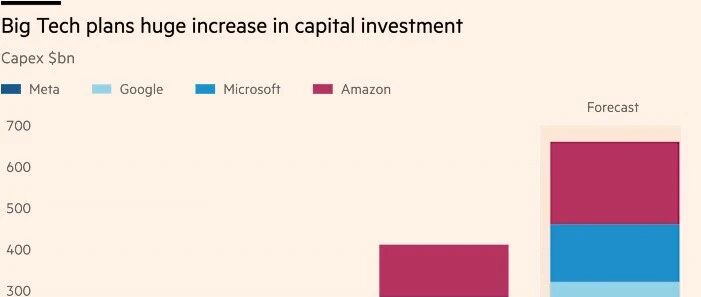
AI叙事分化 最近北美大厂的财报又陆续出来了,亚马逊、谷歌、Meta 和微软计划在 2026 年投入约 6600 亿美元 的资本支出。 但这次,市场对大厂们激进的资本开支和前段时间甲骨文的RPO的反应,跟去年完全不同了,只画 大饼已经不再被认可了。 现在市场对AI价值的评判标准已从技术先进性或用户规模转向对收入结构、盈利能力及现金流的实 际贡献。AI不再是统一估值加分项,市场开始区分"已兑现收益"与"投入期远景",定价差异更多反 映企业所处商业化阶段。能够率先证明AI投入转化为可持续盈利的公司更易获得市场认可,ROI与 自由现金流成为关键定价指标。随着AI需求扩张,市场对玩家的定价差异将聚焦于商业化阶段,而 非长期价值分歧。 SemiAnalysis又是连着两天出了两篇文章,内容都比较长,我们还是只讲里面的主要观点。 AI 智能体发展的核心转折点 1、Claude Code 是 AI 智能体发展的核心转折点 这并非单纯因其实现了 AI 写代码的功能升级,而是它完成了从 AI 模型被动响应 到 AI 智能体主动 执行的范式突破,彻底重构了人机交互的底层逻辑,同时成为 AI 从单一工具向通用协作体进化的标 志性产 ...
Microsoft (MSFT) Has a Lot of Firepower, Says Jim Cramer
Yahoo Finance· 2026-02-07 15:07
We recently published 12 Stocks Jim Cramer Talked About. Microsoft Corporation (NASDAQ:MSFT) is one of the stocks that Jim Cramer talked about. Software giant Microsoft Corporation (NASDAQ:MSFT)’s shares dipped by 7% in extended trading after it reported its fiscal third-quarter earnings report. The results saw the firm post $81 billion in revenue and $4.14 in adjusted earnings per share to beat analyst estimates of $80.27 billion and $3.97. Following the earnings, Stifel downgraded Microsoft Corporation ...
Big Tech Dominates Market Coverage as AI Narrative Intensifies
Yahoo Finance· 2026-02-07 13:50
Quick Read Nvidia (NVDA) delivered $57.01B in Q3 revenue with Blackwell sales off the charts. Nvidia trades down 0.58% year-to-date. Amazon shares dropped 12.11% in one week and Microsoft fell 17.03% in one month despite strong cloud AI growth at both companies. Meta reported $59.89B Q4 revenue and aggressive multi-year AI infrastructure CapEx guidance. Meta stock trades flat year-to-date. A recent study identified one single habit that doubled Americans’ retirement savings and moved retirement fro ...
Big Tech earnings: What do investors do now?
Youtube· 2026-02-07 13:08
Core Insights - Amazon's Q4 earnings report showed an EPS of $1.95, slightly below the expected $1.96, while net sales reached $213.39 billion, exceeding the estimate of $211.49 billion [1] - AWS net sales grew by 24%, surpassing the expected 21%, with total sales of $35.58 billion compared to the street's estimate of $34.88 billion [1] - The company guided for Q1 net sales between $173.5 billion and $178.5 billion, lower than the street's expectation of $175.54 billion [1] - Amazon's capex forecast for 2026 is set at $200 billion, significantly higher than the previous estimate of $146.1 billion, raising concerns among investors [1][2] - Despite the initial drop in stock price, 95% of analysts maintain a "buy" rating on Amazon, indicating strong long-term confidence in the company's growth potential [1] Amazon's Financial Performance - Q4 operating margins were reported at 11.7%, aligning with market expectations [1] - North American net sales for Q3 were $127.08 billion, matching consensus estimates [1] - AWS margins have been stable, hovering around the mid-30% range, with potential for growth above 40% in the future [2] Market Reactions and Analyst Insights - The significant increase in capex has led to a nearly 11% drop in Amazon's stock price in after-hours trading, reflecting investor concerns about the sustainability of such high spending [1][2] - Analysts suggest that the elevated capex is necessary to meet growing demand for AI and cloud services, with Amazon needing to invest aggressively to maintain its competitive edge [2] - The bullish sentiment among analysts is driven by Amazon's strong position in the cloud market and the potential for significant operating margin expansion in the coming years [2][3] Competitive Landscape - Amazon's capex forecast is compared to Alphabet's, which announced a capex range of $175 billion to $185 billion, indicating a broader trend of increased investment in technology infrastructure among major players [1][2] - The competition in the cloud space is intensifying, with AWS facing pressure from Azure and Google Cloud, both of which are also ramping up their investments [2][3] - Analysts believe that the demand for compute power will continue to drive spending across the tech sector, benefiting companies involved in semiconductor manufacturing and AI technologies [2][3]