Microsoft(MSFT)

Search documents
3 AI Stocks to Buy in 2026 and Hold Forever
The Motley Fool· 2026-02-01 05:00
Core Viewpoint - The article emphasizes the long-term impact of artificial intelligence (AI) on the market and identifies three stocks—Alphabet, Microsoft, and Taiwan Semiconductor Manufacturing—as strong investment opportunities for the future [1][2]. Group 1: Alphabet - Alphabet has regained its position as a leading player in the AI sector, with its Gemini generative AI model being one of the best available [3]. - The company possesses unique advantages, such as access to personal information, which allows Gemini to create tailored experiences for users, a feature that competitors cannot replicate [3][5]. - Alphabet's substantial resources enable it to sustain operations at a loss longer than smaller competitors, positioning it to dominate the market in the future [5][6]. Group 2: Microsoft - Microsoft adopts a partnership approach in the AI landscape, holding a significant stake in OpenAI and providing access to multiple AI models through its Azure cloud platform [7]. - This neutrality in AI model selection has contributed to Azure's rapid growth compared to its competitors [7][9]. - Microsoft is viewed as a solid investment in the AI sector, with its strategy likely to yield gradual gains as AI adoption increases [9]. Group 3: Taiwan Semiconductor Manufacturing - Taiwan Semiconductor is crucial for AI technology, as it manufactures chips that power major computing players like Nvidia, which only designs chips [10]. - Despite concerns about the longevity of AI computing capacity, the short lifespan of GPUs (typically one to three years) suggests ongoing demand for chips, ensuring a steady market for Taiwan Semiconductor [12]. - The company is still in the early stages of benefiting from AI growth, with many announced data centers not expected to become operational until several years later, making it a compelling long-term investment [13].





微软Copilot测试新提醒功能,面向所有移动端用户
Huan Qiu Wang Zi Xun· 2026-02-01 02:56
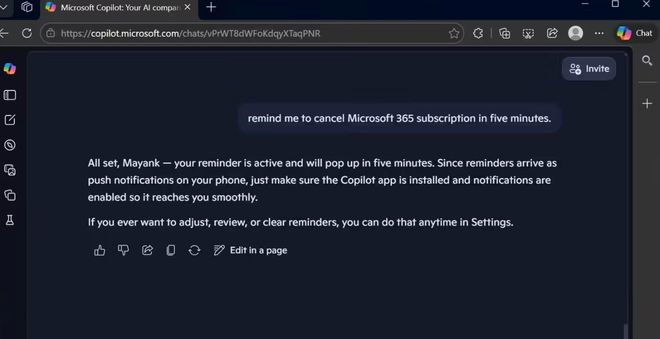
例如,用户可以让Copilot在五分钟后提醒自己取消Microsoft 365订阅,Copilot会向绑定了该应用的移动 设备发送提醒通知;也能让它提醒自己参加重要会议。Copilot能够精准获取用户设备的日期与时间信 息,甚至可以在一分钟内触发提醒。但需要留意的是,如果用户在安卓或iOS系统中关闭了Copilot的通 知权限,相关提醒弹窗将不会显示。 微软声明中透露,提醒功能具备跨设备同步的特性,不过提醒通知仅会发送至移动设备。目前,尚不清 楚后续版本的Windows 11内置Copilot是否会新增对提醒功能的支持。微软在相关说明中明确指出:"要 接收提醒,需安装Copilot应用,并开启应用的通知权限。"(青山) 来源:环球网 值得一提的是,微软此次在提醒功能的开放策略上十分友好。即便用户未订阅Copilot每月20美元的付费 服务,依然能够正常使用提醒功能,因为该功能同时向免费用户敞开了大门。不过,对于订阅了 Microsoft 365个人版的用户,将会解锁额外的提醒功能权益。 【环球网科技综合报道】2月1日消息,据科技媒体Windows Latest报道,微软Copilot正在测试一项名 为"提醒( ...
高盛交易员:大逻辑没有变化,不要"过度解读"过去两天的暴跌,尤其要考虑1月的大涨
Hua Er Jie Jian Wen· 2026-02-01 02:39
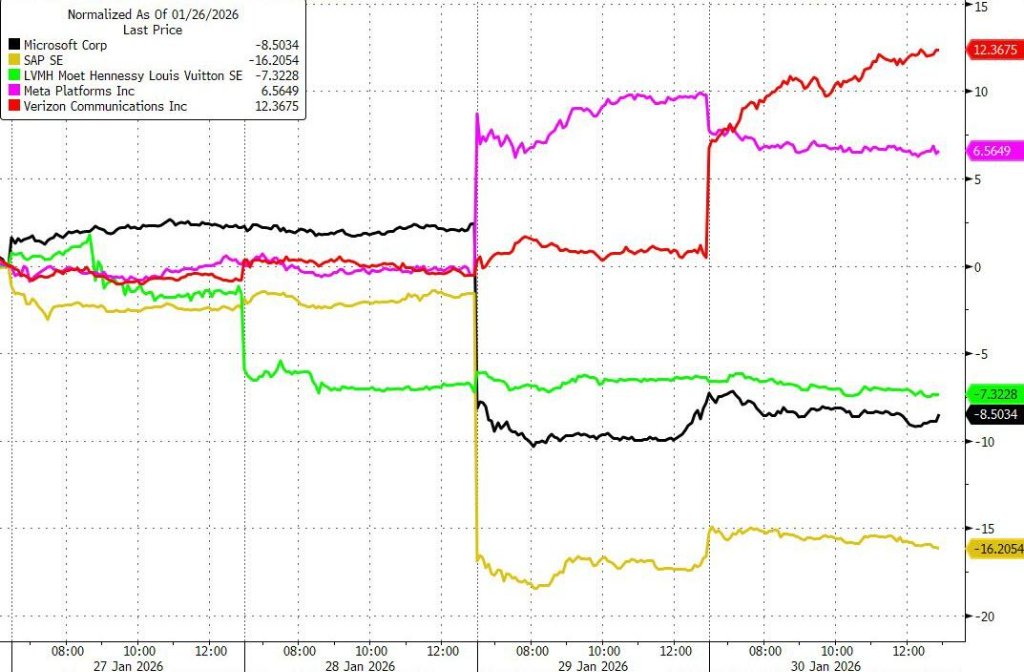
高盛交易部门负责人Mark Wilson表示,尽管市场近期出现剧烈波动,但投资者不应过度解读这场"持仓清洗",因为年初至今推动市场的核心驱动 因素并未发生实质性改变。 年初核心驱动因素未变 Wilson强调,从大局来看,年初至今推动市场的最大变量和驱动因素并未真正改变。美元走势持续延伸,随着美元价格挑战千禧年以来的区间以 及新任美联储主席开始阐述其政策路径,后续演变将令人着迷。 市场本周创下多项极端纪录。微软遭遇史上第二大单日市值损失,SAP暴跌16%,白银单日重挫30%。白银ETF SLV的名义交易量超过320亿美 元,黄金ETF GLD连续两个交易日成交额超过300亿美元。白银波动率飙升至仅在全球金融危机和新冠疫情封锁期间出现过的极端水平。 Wilson在周度报告中指出,评估此次调整的严重程度时,应将其与1月以来的涨幅相提并论。他强调,美元走势延续、AI投资热情不减、美国经济 增长势头强劲以及地缘政治重塑等关键变量均未改变。年初至今的市场表现依然反映这些核心趋势——稀土涨35%,核能股涨21%,欧洲防务涨 20%。 这场调整的直接诱因是投资者持仓过度拥挤。总敞口已处于99百分位数的极端水平,系统化量化策略 ...
OpenAI and Anthropic Now Rival Public Software Giants for Revenue. That Makes These 3 Stocks Strong Buys for 2026.
The Motley Fool· 2026-02-01 02:15
Core Insights - The rising adoption of generative AI models from OpenAI and Anthropic is significantly impacting major cloud computing platforms, with trillions of dollars committed to future infrastructure projects by these companies [1] Group 1: OpenAI and Microsoft - OpenAI's partnership with Microsoft has provided the latter with a first-mover advantage in integrating generative AI, with ChatGPT being heavily utilized across Microsoft's Azure cloud services [3][5] - The increasing use of OpenAI's software has led to a surge in AI workloads on Azure, driving demand for incremental cloud services [4] Group 2: Amazon's Role in AI Infrastructure - Amazon Web Services (AWS) has entered a $38 billion GPU leasing deal to support OpenAI, highlighting the competitive landscape among cloud providers [7] - Amazon has invested $8 billion in Anthropic, positioning itself strategically in the AI sector, with Anthropic utilizing AWS's GPU clusters and custom-designed chips [8][9] - If Amazon's AI accelerators can compete effectively with Nvidia and AMD's GPUs, AWS could gain significant pricing power and increase customer retention [10][11] Group 3: Google Cloud's Position - Google Cloud has experienced impressive growth, with OpenAI and Anthropic as key customers, leveraging its computing power and custom chips [12][13] - Anthropic's use of Google Cloud's Tensor Processing Units (TPUs) is expected to enhance Google Cloud's competitive position in the AI infrastructure market [14] - As OpenAI addresses its capacity challenges, Google Cloud is likely to benefit from increased user adoption and ongoing data center expansion [15]



FTEC vs. SOXX: Is Broad Tech Diversification Better Than Targeted Semiconductor Exposure?
Yahoo Finance· 2026-01-31 20:00
Core Viewpoint - The iShares Semiconductor ETF (SOXX) and the Fidelity MSCI Information Technology Index ETF (FTEC) provide different investment strategies within the technology sector, with SOXX focusing solely on semiconductor companies and FTEC covering a broader range of tech stocks [1] Cost & Size - SOXX has an expense ratio of 0.34% and AUM of $18 billion, while FTEC has a lower expense ratio of 0.08% and AUM of $17 billion [2] - The 1-year return for SOXX is 52.84%, significantly higher than FTEC's 20.80% [2] - SOXX offers a dividend yield of 0.57%, compared to FTEC's 0.43% [3] Performance & Risk Comparison - SOXX has a maximum drawdown of -45.75% over 5 years, while FTEC's maximum drawdown is -34.95% [4] - An investment of $1,000 in SOXX would grow to $2,573 over 5 years, compared to $2,133 for FTEC [4] Composition of Funds - FTEC holds 289 stocks, with 98% in technology, 1% in communication services, and a small portion in industrials, featuring top positions like Nvidia, Microsoft, and Apple [5] - SOXX is concentrated with only 30 holdings, all in the semiconductor sector, with top stocks including Nvidia, Micron Technology, and Advanced Micro Devices [6] Implications for Investors - FTEC's broader approach with nearly 10 times as many holdings as SOXX offers greater diversification, potentially reducing risk and volatility during market downturns [7] - SOXX's focused strategy on semiconductor stocks can yield high returns during industry booms, as evidenced by its performance over the last 12 months, which has more than doubled that of FTEC [8]


Here is what caused the wild swings in our 34-stock portfolio last week
CNBC· 2026-01-31 18:24
Market Overview - The S&P 500 closed lower on Friday but was slightly higher for the week, with a 0.34% gain for the week and a 1.37% gain for January, briefly topping 7,000 for the first time ever [1] - The Nasdaq was flat for the week and gained 0.95% for January [1] Tech Earnings - Meta Platforms reported earnings that exceeded estimates, leading to a nearly 9% increase in its stock, while Microsoft saw an 8% drop due to disappointing results from its cloud computing business [1] - Apple broke an eight-week losing streak with a strong quarter driven by a 23% increase in iPhone sales, but concerns over memory shortages impacted its stock [1] - GE Vernova and Corning reached all-time highs, with Corning's stock rising after a $6 billion deal with Meta [1] Non-Tech Companies - Starbucks shares fell over 6% despite a promising quarter and a bullish Investor Day, indicating potential for a buying opportunity if the decline continues [1] - Honeywell shares reached an all-time high following a strong earnings report and news of accelerated aerospace spinoff plans, gaining nearly 3% for the week [1] - Dover's stock fell over 2% due to profit-taking after a strong earnings report, while Danaher and Boeing closed lower for the week [1] Software Sector - The software sector faced significant sell-offs, with Salesforce dropping 7% and ServiceNow falling 10% despite better-than-expected results [1] - Concerns over AI-driven disruptions led to a revaluation of SaaS companies, compressing price-to-earnings ratios [1] - Cybersecurity stocks like Palo Alto Networks and CrowdStrike also declined, but were viewed as buying opportunities [1] Federal Reserve Developments - The Federal Reserve held interest rates steady after three consecutive rate cuts, with Chairman Jerome Powell noting solid economic activity and stabilization in the unemployment rate [1] - President Trump nominated Kevin Warsh to succeed Powell, which is seen as a more hawkish move, impacting gold and silver prices negatively [1]


Microsoft Shares Slide Despite Strong Cloud Growth. Is It Time to Buy the Dip?
The Motley Fool· 2026-01-31 17:25
The recent share price drop in Microsoft stock looks like an overreaction.The share price of Microsoft (MSFT 0.74%) sank despite the tech giant reporting strong quarterly results for its fiscal 2026 second quarter. The drop appears to be largely attributed to higher operating expense guidance and its dependence on OpenAI. The stock is now down slightly over the past year, as of this writing.Let's dig into the company's report and prospects to see if this dip is a buying opportunity.NASDAQ : MSFTMicrosoftTod ...
Notable analyst calls this week: J&J, Applied Materials and Pinterest among top picks
Seeking Alpha· 2026-01-31 15:05
Core Viewpoint - The S&P 500 closed lower on Friday following earnings reports from major tech companies such as Apple, Microsoft, and Meta Platforms [1] Group 1: Market Performance - The Nasdaq rose by 0.4% for the week, indicating a slight positive performance in the tech sector [1] - The Dow Jones Industrial Average fell by 0.7% over the same period, reflecting a decline in traditional industrial stocks [1]


Jim Cramer on Microsoft’s Capex Budget: “That’s Not What the Market Wants”
Yahoo Finance· 2026-01-31 13:48
Core Viewpoint - Microsoft Corporation reported better-than-expected quarterly results but experienced a significant stock sell-off in after-hours trading due to concerns over capital expenditures and growth projections for its Azure cloud business [1][2]. Group 1: Financial Performance - Microsoft achieved a top and bottom line beat in its latest quarter, indicating strong financial performance [1]. - Despite the positive financial results, the stock price declined sharply after the earnings announcement [1]. Group 2: Capital Expenditures (CapEx) - Jim Cramer highlighted that Microsoft's CapEx budget was perceived as "too high," which contributed to the stock's decline [1]. - The company initially projected lower CapEx growth for fiscal 2026 compared to fiscal 2025 but later reversed this stance, indicating that CapEx growth would actually be higher this year than last year, negatively impacting the stock [2]. Group 3: Azure Cloud Business - Microsoft projected a slight decline in the growth rate of its Azure cloud business, which was attributed to supply constraints rather than a decrease in demand [2]. - Management clarified that the decline in growth rate was not indicative of weakening demand, but rather a result of external supply issues [2].
SanDisk, UnitedHealth, Meta Platforms And More: 5 Stocks Investors Couldn't Stop Buzzing About This Week
Benzinga· 2026-01-31 13:31
Core Viewpoint - Retail investors are actively discussing five prominent stocks driven by retail hype, earnings reports, AI developments, and corporate news flow during the week of January 26 to January 30 [1] Company Summaries Microsoft (MSFT) - The stock is trading around $433 to $435 per share, with a 52-week range of $344.79 to $555.45 - It has risen by 4.46% over the year but declined by 15.54% over the last six months - The stock shows a weaker price trend in the short, medium, and long terms, despite a solid quality ranking [7] SanDisk (SNDK) - The stock is trading around $539 to $546 per share, with a 52-week range of $27.90 to $546.75 - It has advanced by 1,398.06% over the year and 1,142.91% in the last six months - The stock demonstrates a stronger price trend across all time frames [7] Meta Platforms (META) - The stock is trading around $730 to $739 per share, with a 52-week range of $479.80 to $796.25 - It has returned 7.47% over the year and 6.20% in the last six months - The stock shows a stronger price trend in the short, medium, and long terms, with a moderate value score [7] Apple (AAPL) - The stock is trading around $258 to $260 per share, with a 52-week range of $169.21 to $288.61 - It has increased by 8.71% over the year and 23.55% over the last six months - The stock maintains a stronger long-term price trend but a weaker trend in the short and medium terms, with a solid quality score [7] UnitedHealth (UNH) - The stock is trading around $291 to $293 per share, with a 52-week range of $234.60 to $606.36 - It has dropped by 46.42% over the year but increased by 9.87% over the last six months - The stock shows a weaker price trend across all time frames, with a moderate value ranking [7] Market Overview - Retail investor sentiment is influenced by a blend of meme-driven narratives, earnings outlooks, and corporate news flow, while major indices like the S&P 500, Dow Jones, and Nasdaq exhibited mixed market action during the week [8]