
Micron Technology(MU)

Search documents
Why analysts think there is more to come in Micron's rally?
Invezz· 2025-12-11 14:05
Core Viewpoint - Micron Technology's stock is experiencing significant growth, reaching new all-time highs as analysts on Wall Street increase their earnings expectations ahead of the company's fiscal first-quarter earnings report [1] Group 1: Stock Performance - Micron Technology's stock has hit fresh all-time highs this week, indicating strong market confidence [1] - The rapid ascent of Micron's stock reflects positive sentiment among investors and analysts [1] Group 2: Analyst Expectations - Wall Street analysts are raising their expectations for Micron Technology ahead of the upcoming fiscal first-quarter earnings report [1] - Increased analyst expectations may contribute to the stock's upward momentum [1]


The Week Ahead: Nike, Micron Put a Bow on 2025 Earnings
Schaeffers Investment Research· 2025-12-11 13:38
Core Insights - The final trading week of 2025 is approaching, with significant earnings reports and economic data expected to be released [1] - Key companies reporting earnings include Nike, BlackBerry, Conagra, CarMax, Darden Restaurants, FedEx, KB Home, Lennar, Micron Technology, and Paychex [2] Economic Data Schedule - The week begins on December 15 with the Empire State manufacturing survey and home builder confidence index [3] - December 16 will feature the U.S. unemployment rate, hourly wages, retail sales, and S&P flash services and manufacturing PMI readings, along with business inventories [3] - On December 18, weekly jobs data, blanket CPI, core CPI, and the Philadelphia Fed manufacturing survey will be released [3] - December 19 will include existing home sales and the final consumer sentiment reading for December [4]

Micron Stock Has Gained More Than 200% This Year. Why Experts See Additional Record Highs on the Horizon.
Investopedia· 2025-12-11 10:50
Core Insights - Micron Technology's shares have reached all-time highs, driven by analysts raising their price targets ahead of the upcoming earnings report [1][8] - The demand for advanced memory chips, particularly for artificial intelligence applications, is expected to lead to significant capital inflows, enhancing Micron's manufacturing capabilities [2][5] Price Target Adjustments - Citi analysts increased their price target for Micron from $275 to $300, marking a doubling of their target since early September [2] - Deutsche Bank raised their price target from $200 to $280, highlighting Micron's strong position in the memory-chip market [6] - Morgan Stanley upgraded their target to $325 from $220, emphasizing the potential for increased sales and profits due to rising memory product prices [6] Stock Performance - Micron's stock price surged over 4% to close just below $264, with the stock having more than tripled since the beginning of the year [3][4] - Micron is currently the top-performing stock in the Nasdaq 100 for the year, with only four stocks in the S&P 500 showing larger gains in 2025 [4] Market Dynamics - The rapid demand for memory chips is leading to a shortage, resulting in unprecedented price increases that are expected to further enhance Micron's sales and profits [5][8] - Micron supplies memory components to major manufacturers like Nvidia and AMD, positioning it as a key beneficiary of the AI market growth [4] Analyst Sentiment - Analysts are generally bullish on Micron, with a majority rating it as a "buy" while some are cautious, awaiting the earnings report before adjusting their views [7] - The average price target among analysts is approximately $237, indicating a mix of optimism and caution regarding the stock's future performance [7]
存储芯片,大涨400%
半导体芯闻· 2025-12-11 10:11
Group 1 - The core viewpoint of the article highlights the significant price increases in memory products, with DRAM and NAND Flash prices rising nearly fourfold and twofold respectively over the past year, leading to a severe supply chain imbalance [2] - Major manufacturers such as Samsung, SK Hynix, and Micron have implemented a quota system, resulting in tighter supply than during the pandemic, with industry insiders expressing that the inability to secure products is more concerning than price hikes [2] - The three major manufacturers are prioritizing AI clients and high-margin enterprise products, while also adopting a more cautious pricing strategy by refusing long-term contracts and shifting to monthly or quarterly pricing adjustments [2][3] Group 2 - Module manufacturers are facing direct pressure, with companies like ADATA increasing inventory levels to 16 billion yuan in November, aiming to reach 20 billion yuan by Q1 2026 to avoid scheduling delays [3] - The industry is shifting from a "business cycle" approach to "precise supply management" in response to structural changes driven by AI and high bandwidth memory (HBM), indicating that the market disorder may persist until at least the end of 2026 [3]

芯片科技股盘前普跌,英伟达下跌1.9%
Mei Ri Jing Ji Xin Wen· 2025-12-11 09:22
Core Viewpoint - The semiconductor technology stocks experienced a decline in pre-market trading on December 11, with notable drops in major companies [1] Company Performance - Nvidia saw a decrease of 1.9% [1] - Micron Technology declined by 2.1% [1] - Microsoft experienced a drop of 1.1% [1] - CoreWeave fell by 3.6% [1] - AMD's stock decreased by 1.6% [1]



存储芯片巨头突然宣布退出,29年经典品牌即将谢幕
2 1 Shi Ji Jing Ji Bao Dao· 2025-12-11 05:08
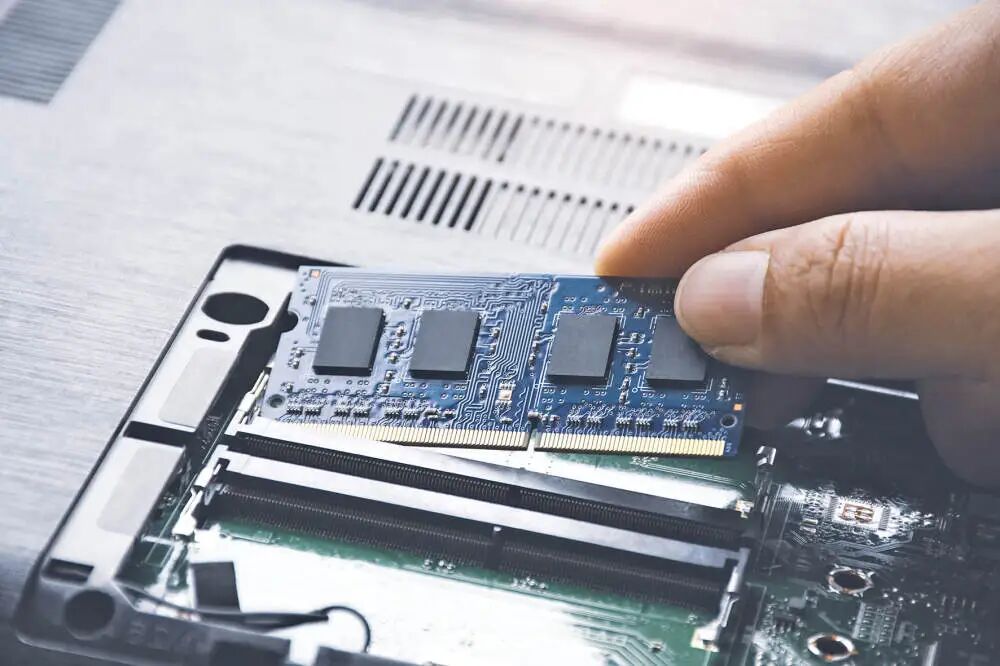
Core Viewpoint - Micron Technology has announced its exit from the consumer storage brand Crucial, effective March 2026, to reallocate resources towards enterprise and AI-driven clients due to the explosive growth in data center demand driven by AI [2][3]. Group 1: Company Strategy - Micron's decision to withdraw from the Crucial business is described as a difficult one, aimed at focusing on higher-margin enterprise and AI strategic customers [2]. - The company is one of the top three memory manufacturers globally, holding a 25.7% market share in DRAM and 14.2% in NAND as of Q3 2025 [3]. Group 2: Market Dynamics - The exit of Micron from the consumer storage market adds uncertainty to the already imbalanced supply-demand dynamics in the storage industry [3]. - The ongoing price surge in storage chips is expected to increase costs for smartphones and computers, driven by a shift in demand towards high-bandwidth, low-power products due to AI [4]. Group 3: Financial Performance - In Q3 2025, Samsung's storage business reported sales of 26.7 trillion KRW (approximately $18.7 billion), a 20% year-on-year increase, while SK Hynix's revenue reached 24.45 trillion KRW (approximately $17.1 billion), a 39% year-on-year increase [3]. - Micron's revenue for Q4 FY2025 was $11.32 billion, a 46% year-on-year increase, with a gross margin of 45.7%, up 9.2 percentage points year-on-year [3]. Group 4: Future Market Trends - The current price increase in storage chips is expected to last longer and cover a broader range than previously anticipated, with AI server investments driving future growth [4][5]. - The supply of DDR4 chips is predicted to remain tight until at least mid-2026 due to the shift in production capacity towards advanced processes [5]. Group 5: Opportunities for Domestic Manufacturers - The exit of major players from the consumer storage market creates opportunities for domestic manufacturers to fill the supply gap, particularly in the DDR4 segment [7]. - Companies like GigaDevice have already begun to benefit from the strategic shift of larger firms, with their DRAM business showing significant recovery in profitability [7][8].
存储芯片巨头突然宣布退出,29年经典品牌即将谢幕
21世纪经济报道· 2025-12-11 05:03
Core Viewpoint - Micron Technology has announced its exit from the consumer storage brand Crucial, effective March 2026, to reallocate resources towards enterprise and AI-driven markets, reflecting a strategic shift in response to the explosive growth in data center demand driven by AI [2][6]. Group 1: Company Strategy and Market Position - Micron is one of the top three memory manufacturers globally, holding a 25.7% market share in DRAM and 14.2% in NAND as of Q3 2025 [3]. - The decision to exit the consumer storage market is seen as increasing uncertainty in the consumer segment, while the major players like Samsung and SK Hynix benefit from rising prices in the memory market [3][6]. - Micron's revenue for Q4 FY2025 reached $11.32 billion, a 46% year-on-year increase, with a gross margin of 45.7%, up 9.2 percentage points [4]. Group 2: Market Dynamics and Trends - The demand for high-bandwidth, low-power memory products has surged due to the rise of AI applications, prompting major manufacturers to shift their focus towards high-value products like HBM and DDR5 [6][7]. - The current price increase in memory chips is driven by a structural shift in demand, primarily due to AI server investments, which is expected to continue into 2026 [6][8]. - The supply of mature memory products like DDR4 is anticipated to remain tight until at least mid-2026, as manufacturers prioritize advanced process technologies [7][8]. Group 3: Impact on the Domestic Market - The exit of major players from the consumer storage segment creates opportunities for domestic memory manufacturers to fill the supply gap, potentially gaining market share [10][11]. - Companies like GigaDevice have already begun to benefit from the strategic shift of larger firms, with their DRAM business showing significant recovery in profitability [10][11]. - Recent advancements in domestic memory products, such as the launch of DDR5 series by ChangXin Memory, indicate a competitive shift in the market landscape [11].

内存芯片价格飙涨400%! 法巴:巨头停产旧型号 美光、Sandisk直接受益全球抢货潮
Zhi Tong Cai Jing· 2025-12-11 03:12
Core Viewpoint - The memory industry is entering a historic upcycle driven by artificial intelligence (AI), with companies like Micron Technology (MU.US) and Sandisk (SNDK.US) expected to benefit significantly from this trend [1][2]. Group 1: Market Trends - DRAM and NAND spot prices have seen significant year-on-year increases of 408% and 165% respectively in November, indicating a strong upward trend in pricing [1]. - The average selling price of DRAM is projected to rise by 35% quarter-on-quarter in Q4 and by 10% in Q1 2026, driven by ongoing supply constraints [1]. - NAND prices are also expected to increase by 15% in Q4 and by 7% in the following quarter, reflecting similar supply dynamics [1]. Group 2: Historical Context - Historically, DRAM upcycles last about 8 months with an average price increase of 53%, while NAND upcycles last around 6 months with a 40% average price increase [2]. - Currently, the DRAM upcycle is in its 5th month with prices up 55% from the trough, and the NAND upcycle is in its 4th month with prices up 51% from the trough [2]. Group 3: Competitive Landscape - Major players like Samsung and SK Hynix, which control approximately 70% of the global DRAM market, are shifting focus towards high-end chips, planning to phase out DDR4 production by late 2025 to early 2026 [3]. - Tech giants such as Google, Amazon, Meta, and Microsoft are expected to invest $400 billion in AI infrastructure this year, further driving demand for memory chips [3]. Group 4: Supply Dynamics - The memory chip industry is experiencing a "super cycle," with manufacturers aggressively stockpiling chips due to surging demand [4]. - Semiconductor distributors report a significant increase in demand over the past couple of months, with customers adopting strategies of ordering double or triple the usual quantities [4].
SK海力士筹备美国上市
Sou Hu Cai Jing· 2025-12-11 03:08
Core Viewpoint - SK Hynix is considering issuing American Depositary Receipts (ADRs) and plans to list in the United States, which could broaden its investor base and address its low stock valuation [1] Group 1: Company Overview - If successful, SK Hynix will become the ninth South Korean company to be listed in the U.S. [1] - The company has seen its market capitalization exceed that of Micron Technology due to recent strong gains [1] Group 2: Financial Metrics - SK Hynix's price-to-earnings (P/E) ratio stands at 10.8, significantly lower than Micron Technology's P/E ratio of 24.7 [1] - The company's profitability is notably higher than that of Micron, indicating it is still undervalued [1] Group 3: Shareholder Value Initiatives - SK Hynix has developed a plan to enhance shareholder value, with stock prices potentially reaching 910,000 KRW [1]
内存芯片价格飙涨400%! 法巴:巨头停产旧型号 美光(MU.US)、Sandisk(SNDK...
Xin Lang Cai Jing· 2025-12-11 03:03
Core Viewpoint - The memory industry is entering a historic upcycle driven by artificial intelligence (AI), with companies like Micron Technology (MU.US) and Sandisk (SNDK.US) expected to benefit significantly from this trend [1][2]. Group 1: Market Trends - Consumer-grade DRAM and NAND TLC spot prices increased by 408% and 165% year-on-year in November, indicating a strong upward trend in pricing [1]. - The average selling price (ASP) of DRAM is projected to rise by 35% quarter-on-quarter in Q4 and by 10% in Q1 2026, driven by ongoing supply constraints [1]. - NAND prices are also expected to increase, with a forecasted rise of 15% in Q4 and 7% in the following quarter [1]. Group 2: Historical Context - Historically, DRAM upcycles last about 8 months with an average price increase of 53%, while NAND upcycles last around 6 months with a 40% average price increase [2]. - Currently, the DRAM upcycle is in its 5th month with prices up 55% from the trough, and the NAND upcycle is in its 4th month with prices up 51% from the trough [2]. Group 3: Competitive Landscape - Major players like Samsung and SK Hynix, which control approximately 70% of the global DRAM market, are shifting focus towards high-end chips, planning to phase out DDR4 production by late 2025 to early 2026 [3]. - The demand for AI infrastructure is expected to reach $400 billion this year from tech giants like Google, Amazon, Meta, and Microsoft, further straining supply for non-HBM memory chips [3]. Group 4: Supply Dynamics - The memory chip industry is experiencing a "super cycle," with manufacturers stockpiling chips due to surging demand [4]. - Semiconductor distributors report a significant increase in demand over the past couple of months, with customers adopting double or triple ordering strategies reminiscent of previous shortages [4].