
DDR5内存颗粒

Search documents
存储芯片飙涨!大疆躺赢,市值狂飙近千亿!
是说芯语· 2026-03-13 00:41
Core Viewpoint - The article discusses the significant price increases in memory cards and chips, particularly driven by AI demand, and how DJI is navigating this landscape effectively, leveraging its scale and ecosystem to maintain supply and pricing power [5][11][12]. Price Surge Analysis - The price of TF cards has surged over 50% post-holiday, with enterprise-grade DDR5 memory chips seeing price increases exceeding 455% [5][8]. - UBS predicts a 72% quarter-over-quarter increase in DDR contract prices and a 65% increase in NAND contract prices for Q1 2026, marking the sixth consecutive quarter of price rises [8]. Supply Chain Dynamics - The current market faces a "price but no goods" scenario, where even willing buyers struggle to secure sufficient stock [10]. - The supply-demand mismatch is primarily due to AI's insatiable appetite for memory, leading major manufacturers to prioritize AI server production over consumer electronics [11][12]. DJI's Competitive Position - DJI is projected to achieve revenues between 85 billion to 90 billion yuan in 2025, significantly outpacing competitors like GoPro [16]. - DJI's procurement strategy allows it to secure long-term contracts with suppliers, enabling it to maintain stable prices even as the market experiences volatility [18]. Product Strategy and Ecosystem - DJI is shifting from a hardware-centric model to a service-oriented approach, offering cloud services to alleviate consumer storage concerns [22]. - The introduction of cloud services and advanced compression technology allows DJI to mitigate hardware cost increases while enhancing user experience [25]. Risks and Challenges - DJI's reliance on a global supply chain poses risks, particularly if geopolitical tensions disrupt access to critical components [29][30]. - The cyclical nature of the semiconductor industry raises concerns about potential price drops and inventory issues if demand does not meet expectations [30]. Talent Retention Issues - The article highlights concerns over talent retention as former DJI employees establish competing ventures, indicating a potential brain drain [36][39]. - The disparity in compensation and equity opportunities between DJI and emerging competitors may exacerbate this issue [38][40]. Conclusion - The current price surge in memory components presents both challenges and opportunities for industry players, with DJI positioned to leverage its scale and ecosystem to navigate these changes effectively [42][43].


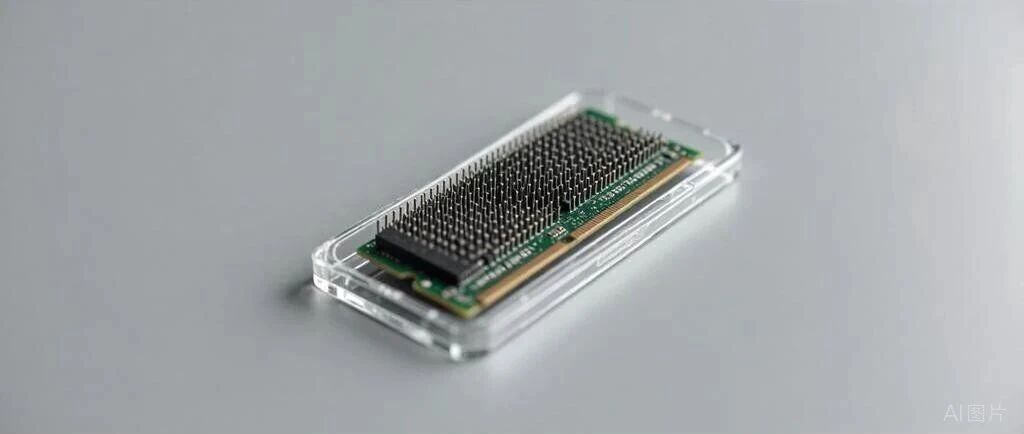
DDR5突然提价40%
是说芯语· 2026-03-03 07:00
Core Insights - SK Hynix has announced a 40% price increase for DDR5 memory chips, leading to a significant impact on consumer prices, with potential increases for the 32GB DDR5 module price reaching around NT$20,000 from NT$10,000 [1][2] - The memory market is shifting to a seller's market due to a severe imbalance in supply and demand, with current inventory levels at approximately four weeks [2] - The demand for DRAM from AI servers is significantly affecting consumer-grade production capacity, contributing to structural shortages in the memory market [2] Market Dynamics - The anticipated price increase is expected to be exacerbated by the depletion of low-cost inventory, which will lead to higher prices for new products [2] - IDC forecasts that memory supply challenges will persist through 2026 and possibly into 2027, with prices remaining elevated and not returning to 2025 levels in the short term [2] - Companies with stronger purchasing power and supplier relationships will be better positioned to secure memory allocations at manageable prices, while smaller suppliers may struggle [3] Competitive Landscape - The market share is expected to shift significantly towards the largest global OEMs by 2026, as they have the capacity to commit to large contracts and negotiate better terms [3]
DDR5突然提价40%!
国芯网· 2026-03-03 04:53
Core Viewpoint - The semiconductor industry is experiencing a significant price increase in DDR5 memory chips, driven by supply-demand imbalances and strong demand from AI servers, which is expected to continue into 2026 and possibly 2027 [2][4][5]. Group 1: Price Increase and Market Dynamics - SK Hynix has announced a 40% price increase for DDR5 memory chips, leading some memory module manufacturers to pause external quotations [2][4]. - The current market price for a mainstream DDR5 32GB chip is around NT$10,000, and if the 40% cost increase is fully passed on to consumers, prices could surge to NT$20,000, effectively doubling in a short period [4]. - The semiconductor market has shifted to a seller's market, with overall inventory levels down to approximately four weeks, indicating a severe supply-demand imbalance [4]. Group 2: Factors Influencing Demand - The strong demand for DRAM from AI servers is significantly impacting consumer-grade production capacity, coinciding with the traditional PC industry stocking season [4]. - IDC forecasts that memory supply challenges will persist throughout 2026, with prices expected to remain high and not return to 2025 levels in the short term [4]. Group 3: Competitive Landscape - Companies with stronger purchasing power and supplier relationships will be better positioned to secure memory allocations at manageable prices, while smaller and regional suppliers may struggle [5]. - The market share is anticipated to shift significantly towards the largest global OEM manufacturers by 2026 [5].
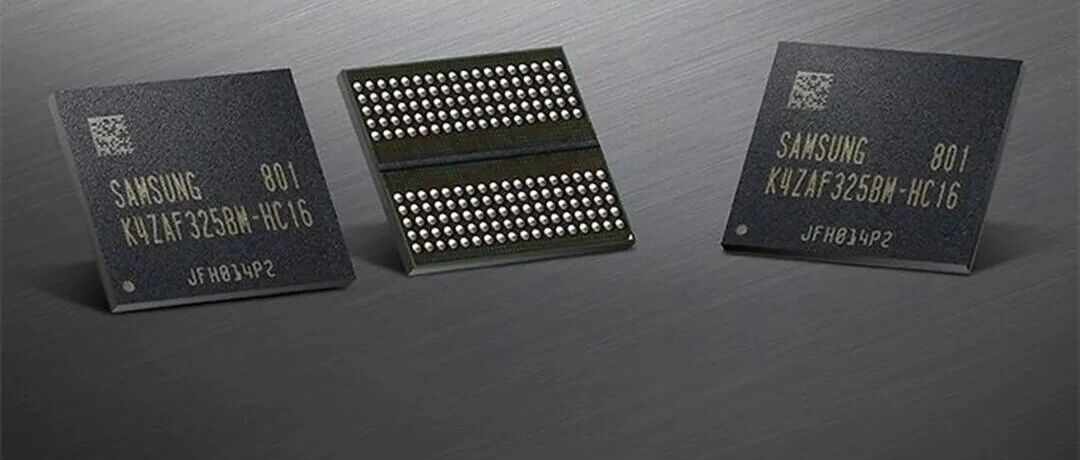
186.68%!业绩爆表!聚焦芯片产业最锋利的“矛”
Ge Long Hui· 2026-01-22 08:06
Group 1 - The semiconductor industry is experiencing a significant surge, with South Korea's semiconductor exports reaching $10.73 billion in the first 20 days of the year, marking a year-on-year increase of over 70% [1] - The Philadelphia Semiconductor Index rose by 3.18%, reaching a historical high, indicating strong market performance in the semiconductor sector [1] - The current chip market is undergoing an unprecedented price surge driven by the wave of generative AI, indicating a structural change rather than a traditional cyclical recovery [2][3] Group 2 - The price of DDR5 memory chips has increased by over 300%, with some server memory prices exceeding 40,000 yuan, highlighting the unprecedented bargaining power of storage giants [4] - The chip design segment, characterized by high margins and flexibility, is becoming a hot investment area, as evidenced by the 20.58% increase in the Tianhong ETF tracking the Sci-Tech Innovation Board Chip Design Index over 13 trading days [4][8] - The domestic market is experiencing a similar structural change, with increasing importance placed on independent chip design capabilities amid rising external challenges and internal demand for computing power [7] Group 3 - The Tianhong ETF tracking the Sci-Tech Innovation Board Chip Design Index shows a remarkable net profit growth of 186.68% year-on-year for the first three quarters of last year, indicating strong fundamentals in chip design companies [8] - The index is expected to see revenue growth rates of 38.48% and 31.33% in 2025 and 2026, respectively, with net profit growth rates projected at 247.70% and 75.42%, outperforming many similar chip indices [12] - The focus on chip design is not just an industry-level discussion but is tied to national security, technological pathways, and long-term competitiveness in the context of China's evolving chip industry [14][15] Group 4 - The Tianhong ETF, launched on January 23, tracks the Sci-Tech Innovation Board Chip Design Index, reflecting the connection between industry evolution and market mechanisms [16] - The external environment, including ongoing trade tensions, is increasing the difficulty of obtaining high-end chips, accelerating the push for self-sufficiency in the semiconductor supply chain [16] - The Chinese cloud AI chip market is projected to reach $4 billion by 2027, with the domestic GPU market share expected to rise significantly, alleviating key supply issues in AI training and inference [16]
发生了什么?沪指午后一度翻绿 这只ETF成交额超169亿元 创10年以来天量
Mei Ri Jing Ji Xin Wen· 2026-01-21 07:50
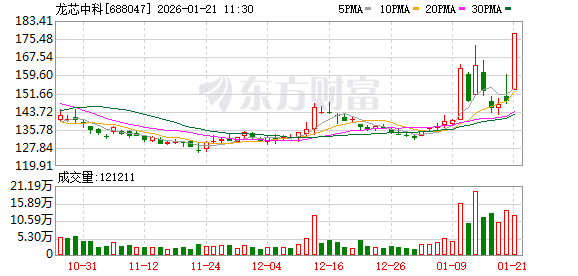
Market Overview - The market experienced fluctuations with the Shanghai Composite Index closing up 0.08%, the Shenzhen Component Index up 0.7%, and the ChiNext Index up 0.54% [2] - Over 3,000 stocks in the market rose, with a total trading volume of 2.6 trillion yuan, a decrease of 177.1 billion yuan from the previous trading day [2] - The A-share market has shown a retreat since last Wednesday, with large funds redeeming from broad-based ETFs, leading to a pause in significant upward movement while maintaining levels above 4,100 points for the Shanghai Composite Index [2] Sector Performance - Active sectors included precious metals, semiconductor industry chain, lithium mining, and oil and gas, while the consumer sector, particularly liquor, saw declines [2] - Precious metals have shown significant growth, with a rise of over 23% in the last five trading days, indicating a new leading sector [11] ETF Trading Activity - The trading volume of major ETFs has fluctuated, with the total trading volume for four large-scale CSI 300 ETFs recorded at 435 billion yuan, 674 billion yuan, 390 billion yuan, 363 billion yuan, and 693 billion yuan over recent days [5] - The trading volume of the SSE 50 ETF exceeded 16.9 billion yuan, marking the highest volume since July 2015 [7] Investment Trends - Investors are advised to focus on performance-driven sectors as the earnings season approaches, shifting from previous popular themes to those with solid fundamentals [13][18] - The semiconductor sector is experiencing growth due to rising demand for storage chips and AI server procurement, with significant price increases noted in DDR5 memory chips [19] Future Outlook - Analysts suggest that the market may continue to favor technology and non-ferrous metal sectors, especially with the upcoming Chinese New Year in mid-February, which may limit rapid shifts in market focus [18] - The potential for gold prices to reach 5,000 USD per ounce in the first half of the year is highlighted, driven by concerns over the independence of the Federal Reserve [13]
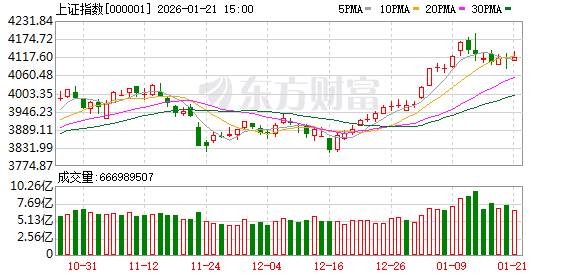
688047!6分钟垂直20%涨停!A股芯片板块 全线爆发!
Zheng Quan Shi Bao Wang· 2026-01-21 04:54
Market Overview - The A-share market opened lower but rebounded strongly, with technology stocks leading the gains. The Sci-Tech Innovation 50 index surged over 4%, surpassing 1500 points, marking a two-and-a-half-month high. The ChiNext index also climbed back above 3300 points, while major indices like the Shanghai Composite, Shenzhen Component, and Northbound 50 experienced significant upward movements. However, overall market trading volume showed a declining trend [2]. Chip Sector - The chip sector continues to thrive, with various sub-sectors such as automotive chips, advanced packaging, storage chips, and MCU chips reaching historical highs. Notably, Longxin Zhongke (688047) hit a 20% limit up within just six minutes of opening, while Jianghua Micro also achieved a limit up for the third consecutive day [3]. - Storage chip prices have been on the rise since September 2025, with DDR5 memory prices increasing over 300%, and the price of a single 256GB DDR5 server memory module exceeding 40,000 yuan. This year, the price of storage chips is accelerating upward [5]. - Morgan Stanley predicts a potential 50% price increase for traditional DDR4 memory in Q1, while Citigroup forecasts an 88% year-on-year increase in average DRAM prices by 2026. NAND Flash prices are also expected to rise significantly, with predictions of a 20%-30% increase for NOR Flash and over 50% for MLC and SLC NAND [6]. Precious Metals - The precious metals sector saw a significant rise, with the index climbing over 5% to reach a historical high. Notable stocks include Hunan Silver, which has surged 97.11% this year, and other companies like Zhaojin Mining and Sichuan Gold also showing strong gains [7]. - The Hong Kong gold sector experienced similar gains, with Lingbao Gold rising over 10% and trading volume nearly doubling compared to the previous day. U.S. gold stocks also saw substantial increases, with Iamgold soaring over 15%, marking a 14-year high [9]. - The price of gold has reached a historical high of $4,846 per ounce, driven by rising geopolitical tensions and market risk aversion. UBS anticipates that gold prices will continue to rise in the first half of the year, potentially reaching $5,000 per ounce if concerns about the independence of the Federal Reserve persist [9].

一盒=一套房?内存条何以成“抢手货”
21世纪经济报道· 2026-01-14 03:49
Core Insights - The global storage chip market has entered a "super bull market" phase, with DDR5 memory prices increasing over 300% since September last year, surpassing historical highs from 2018 [1] - Major players in the DRAM market, including Samsung, SK Hynix, and Micron, control over 90% of the market, leading to synchronized production decisions that significantly impact pricing [1][2] - The shift in production focus from DDR4 to HBM (High Bandwidth Memory) to meet the demands of AI computing has drastically reduced the supply of consumer-grade memory, driving prices up [2] Market Dynamics - The demand for HBM is driven by tech giants like Microsoft, Google, Alibaba, and Tencent, who are investing heavily in data centers for AI model training, requiring 8 to 10 times more memory than standard servers [2] - Over 80% of advanced production capacity is now allocated to the AI server market, leading to a significant supply shortage for consumer memory products [2] - The current pricing trend for ordinary memory is expected to remain high in the short term due to sustained AI demand and production focus on higher-margin products [3] Future Outlook - While short-term prices for ordinary memory are unlikely to return to previous low levels, historical trends indicate that prices will eventually decline due to cyclical overproduction once the AI investment frenzy stabilizes [3]

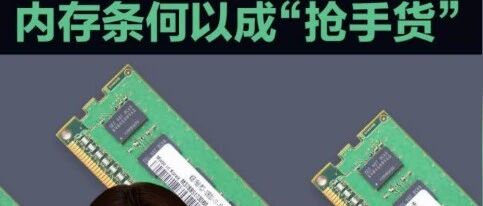
一盒=一套房?内存条何以成“抢手货”
2 1 Shi Ji Jing Ji Bao Dao· 2026-01-14 02:53
Core Insights - The storage chip market, particularly DDR5 memory, has seen a dramatic price increase, surpassing gold as a safe-haven investment for the first time in history [1][2] - The market is currently in a "super bull market" phase, with prices expected to rise an additional 40%-50% by Q1 2026 and another 20% in Q2 2026 [2] Group 1: Market Dynamics - The global storage chip market is highly concentrated, with Samsung, SK Hynix, and Micron controlling over 90% of the DRAM market [3] - These companies have collectively decided to reduce or halt production of DDR4 memory in favor of more profitable High Bandwidth Memory (HBM) used for AI applications [3][4] - The demand for memory in AI data centers is significantly higher, requiring 8 to 10 times more memory than standard servers, leading to increased competition among tech giants [3][4] Group 2: Supply and Demand - Over 80% of advanced production capacity is now directed towards AI server markets, resulting in a significant reduction in supply for consumer-grade memory [4] - The HBM market is expected to experience explosive growth by 2025, with prices for related products increasing by over 30% [4] - As long as AI demand remains high and production capacity is focused on high-margin products, prices for standard memory will likely remain elevated [4] Group 3: Long-term Outlook - Historically, memory prices are cyclical, and after periods of significant price increases, a downturn typically follows due to oversupply [4] - Once the current AI investment frenzy stabilizes, supply and demand for memory products are expected to rebalance, potentially leading to lower prices in the long term [4]
一盒=一套房?内存条何以成“抢手货”丨财经早察
2 1 Shi Ji Jing Ji Bao Dao· 2026-01-14 02:52
Core Insights - The storage chip market, particularly DDR5 memory, has seen a dramatic increase in investment returns, surpassing gold, traditionally viewed as a safe haven asset [2] - The market for storage chips has entered a "super bull market," with DDR5 prices rising over 300% since September of last year, and further increases of 40%-50% expected by Q1 2026, followed by an additional 20% in Q2 2026 [3] Group 1: Market Dynamics - The global storage chip market is highly concentrated, with Samsung, SK Hynix, and Micron controlling over 90% of the DRAM memory market [4] - These companies have collectively decided to reduce or halt production of DDR4 memory in favor of more profitable high-bandwidth memory (HBM) used for AI applications [4][5] - The demand for memory in AI server training is significantly higher, requiring 8 to 10 times more memory than standard servers, leading to tech giants paying 50%-60% premiums for procurement [4] Group 2: Supply and Demand - Over 80% of advanced production capacity is now directed towards AI server markets, resulting in a significant reduction in supply for consumer-grade memory [5] - The HBM market is expected to experience explosive growth by 2025, with prices for related products increasing over 30%, leading to a "chip shortage" scenario [5] - As long as AI demand remains high and production capacity is focused on high-margin products, prices for consumer memory are unlikely to return to previous low levels [5] Group 3: Future Outlook - Historically, memory prices are cyclical, and after periods of significant price increases, a correction due to oversupply typically follows [5] - Once the fervor surrounding AI construction stabilizes, supply and demand for memory products are expected to rebalance [5]
AI算力浪潮驱动存储市场量价齐升
Zheng Quan Ri Bao Zhi Sheng· 2026-01-08 17:09
Core Insights - The price of storage chips, particularly DDR5 server memory, has surged due to explosive demand driven by AI, with prices exceeding 50,000 yuan and approaching 60,000 yuan [1] - The current supply-demand imbalance is expected to persist until 2028, primarily due to the increased memory requirements of AI servers, which are 8 to 10 times higher than traditional servers [1] - Major cloud service providers like Google, Meta, Microsoft, and Amazon AWS are projected to invest a historical high of 600 billion USD in AI infrastructure by 2026, further driving demand for storage chips [2] Market Trends - Since September 2025, the spot price of DDR5 memory chips has increased by over 300%, while DDR4 memory chips have risen by 158% [2] - The rapid expansion of AI data centers is expected to lead to further increases in storage chip demand and prices in 2026 [2][3] - The global supply of DRAM is anticipated to grow by 15% to 20%, while demand is expected to increase by 20% to 25% in 2026, indicating a continued supply shortage [3] Industry Opportunities - The domestic storage industry is seen as entering a historic opportunity phase, with a focus on domestic substitution and benefits across the supply chain [4] - Companies like Changxin Technology are accelerating their investments, with plans to raise 29.5 billion yuan for technological upgrades and R&D, aiming to complete most equipment installations by the end of 2027 [4] - Xi'an Yiswei Materials Technology and Ningbo Jiangfeng Electronic Materials are also expanding their production capabilities to meet the growing global demand for high-end semiconductor materials [4] Market Size Projections - The storage chip market in China is expected to approach 500 billion yuan by 2026, driven by strong demand from AI models, data centers, and smart terminals [5]