
Micron Technology(MU)

Search documents
Lithium Chile Provides Update on the Transaction for the Sale of Arizaro Project
Thenewswire· 2026-01-14 13:00
Core Viewpoint - Lithium Chile Inc. is progressing towards closing the sale of its Arizaro project for US $175,000,000, with key steps being taken to advance the transaction [1][3]. Transaction Details - The transaction involves the sale of the Arizaro project through the company's Argentinian subsidiary, Argentum Lithium S.A. [1][2]. - A US $5,000,000 deposit from China Union Holdings Ltd. has been secured and will be held in escrow as security for the purchaser's payment obligations [3]. Transaction Progress - An Annual General and Special Shareholder Meeting is scheduled for May 15, 2026, to seek shareholder approval for the transaction [3]. - The company is considering a Substantial Issuer Bid (SIB) to distribute a portion of the net proceeds from the transaction to shareholders, which would reduce the number of issued and outstanding common shares [3][10]. Next Steps - The company is working to satisfy all remaining closing conditions while China Union Holdings is advancing its regulatory approval process [4]. - Further updates will be provided as milestones are achieved [4]. Arizaro Operations - The project team is maintaining the Arizaro asset and fulfilling all operational, environmental, and community-related obligations [5]. Market Awareness - The company plans to enhance market communications to improve awareness of its underlying value, as current trading levels are perceived to be below its net asset value [6]. - A services agreement has been established with Departures Capital Inc. for digital marketing and investor awareness services at a cost of CAD $100,000 over 12 months [7]. Company Overview - Lithium Chile Inc. holds a portfolio of 11 properties covering 106,136 hectares in Chile and 29,245 hectares in Argentina [8]. - The company has completed a NI 43-101 compliant Resource Report, Preliminary Economic Assessment, and Prefeasibility Study for the Arizaro project [8].



99%计算闲置?推理时代,存力比算力香
3 6 Ke· 2026-01-14 12:12
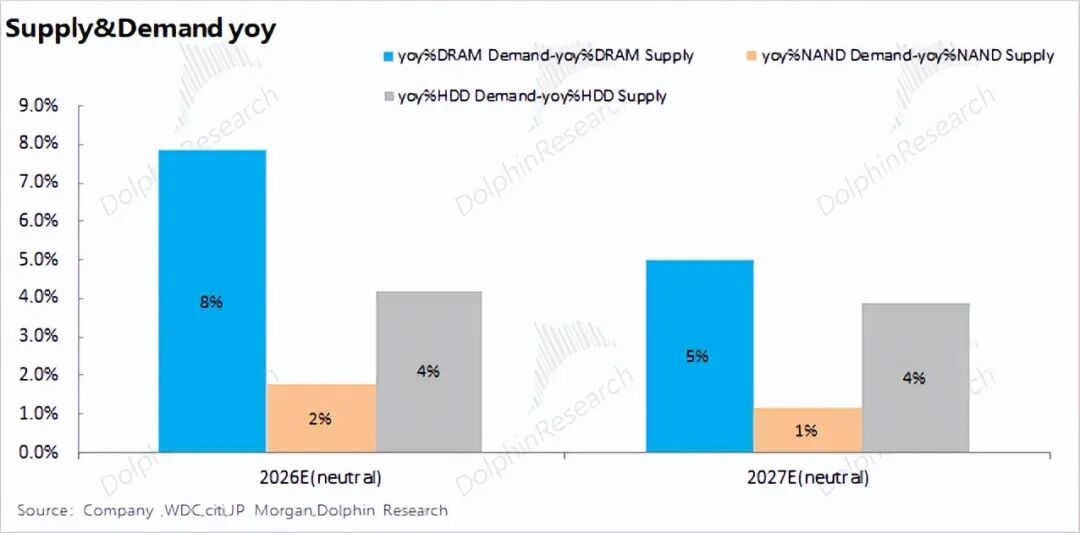
Core Insights - Huang Renxun's speech at CES 2026 has reignited market enthusiasm for storage, particularly with the new Rubin architecture requiring more DDR and NAND compared to the previous Blackwell architecture, leading to a rise in storage stock prices [1] - The market focus has shifted from HBM to traditional storage areas like DDR and NAND, with supply-demand dynamics driving a comprehensive increase in storage prices [1] Group 1: DRAM Market - The supply-demand imbalance for DRAM (including HBM and DDR) is expected to persist until 2027, with demand growth outpacing supply growth during 2026-2027 [2][5] - DRAM production expansion is challenging due to the need for new production lines, leading major manufacturers to focus capital expenditures on DRAM [4] - The demand for DRAM in AI servers is expected to create a significant supply gap by 2027, with a projected demand increase of 222% in 2026 and 80% in 2027 [20][21] Group 2: NAND Market - NAND prices have nearly doubled since the beginning of 2025, driven by supply constraints and increased demand from AI applications [26][28] - The capital expenditure for NAND is expected to rise modestly, with a projected increase to $18.3 billion by 2027, reflecting a compound growth rate of only 6% [30] - The supply-demand gap for NAND is anticipated to remain at 5-6% during 2026-2027, as demand continues to outstrip supply [45] Group 3: HDD Market - HDDs are primarily used for cold storage in AI data centers, with their cost advantage making them a viable option despite slower performance compared to SSDs [48][51] - The supply of Nearline HDDs is expected to grow at 29% in 2026 and 19% in 2027, while demand is projected to increase by 33% and 23% respectively, indicating a tightening supply-demand situation [55]

Retail traders pile into memory chipmakers as AI boom squeezes supplies, lifts prices
Yahoo Finance· 2026-01-14 11:57
Industry Overview - Retail investors have significantly increased their purchases of U.S. memory and data storage chipmakers in January 2026, driven by expectations of rising prices due to booming artificial intelligence infrastructure demand and a global shortage of memory chips [1] - The memory chip shortage is described as "unprecedented" by Samsung's co-CEO TM Roh, with industry rivals warning that supply constraints may last for months or even years as AI infrastructure continues to consume available supplies [2] Company Performance - SanDisk has experienced a remarkable surge in its stock price, rising approximately 65% in 2026, with over $7.1 million in retail inflows recorded in a single day, marking the largest one-day move on record [2] - Western Digital has attracted nearly $10 million in inflows in the first two weeks of January 2026, indicating a strong monthly performance, while Seagate Technology has seen over $2.1 million in inflows this year [3] - Micron Technology, one of the leading memory makers, has increased by 18% in 2026 after a substantial rise of 240% in 2025, highlighting its strong market position alongside Samsung and SK Hynix [4] Retail Investor Trends - In 2025, U.S. retail inflows reached a record high, with individual investors contributing significantly to the market rally, particularly in memory chip stocks, which saw total flows exceeding $117.2 million for the year [3] - Micron and SanDisk were among the five most actively traded stocks on Interactive Brokers' platform recently, indicating strong retail interest [5]


Best Growth Stocks to Buy for Jan. 14
ZACKS· 2026-01-14 10:06
Core Insights - Three stocks with strong growth characteristics and buy ranks are highlighted for investors: Dollar General Corporation, Dycom Industries, and Micron Technology [1][2][5] Group 1: Dollar General Corporation - Dollar General Corporation (DG) has a Zacks Rank 1 and a 5.4% increase in the Zacks Consensus Estimate for its current year earnings over the last 60 days [1] - The company has a PEG ratio of 2.71, which is lower than the industry average of 3.12 [1] - Dollar General possesses a Growth Score of B [1] Group 2: Dycom Industries, Inc. - Dycom Industries, Inc. (DY) also carries a Zacks Rank 1, with a 7% increase in the Zacks Consensus Estimate for its current year earnings over the last 60 days [2] - The company has a PEG ratio of 1.78, compared to the industry average of 3.16 [5] - Dycom Industries possesses a Growth Score of B [5] Group 3: Micron Technology, Inc. - Micron Technology, Inc. (MU) holds a Zacks Rank 1, with an impressive 82.6% increase in the Zacks Consensus Estimate for its current year earnings over the last 60 days [5] - The company has a PEG ratio of 0.21, significantly lower than the industry average of 1.16 [5] - Micron Technology possesses a Growth Score of A [5]



DRAM三巨头产能,1800万片
半导体芯闻· 2026-01-14 09:42
Core Viewpoint - The global memory market is experiencing a severe shortage due to explosive demand for high-performance memory from AI servers, which is expected to drive price increases throughout 2026 [1][3]. Group 1: Market Dynamics - Major memory manufacturers, including Samsung, SK Hynix, and Micron, have initiated capacity expansion plans, but these efforts are insufficient to alleviate the current memory shortage [1]. - Samsung plans to increase its DRAM wafer input to nearly 8 million pieces by 2026, a 5% increase from 2025 [1]. - SK Hynix's DRAM production is expected to rise from 5.97 million pieces in 2025 to 6.48 million pieces in 2026, an 8% increase, driven by expansion at its Cheongju M15X plant [2]. Group 2: Production Challenges - Despite increased wafer input, actual chip output faces technical bottlenecks, particularly for Samsung as it transitions to 10nm 6th generation DRAM, which may temporarily reduce production capacity [2]. - The supply-demand imbalance is critical, with DRAM suppliers meeting only about 60% of customer demand, and server-specific DRAM satisfaction rates falling below 50% [3]. Group 3: Price Trends - DRAM contract prices are expected to rise sharply, with a forecasted increase of 55% to 60% in Q1 2026 [3]. - NAND Flash contract prices are also projected to increase by 33% to 38% during the same period, particularly driven by server demand [3]. - Despite a weak PC market, DRAM prices for PCs are anticipated to continue rising due to reduced supply allocations to PC manufacturers [4]. Group 4: Long-term Outlook - Experts believe that the current supply crisis will not see fundamental relief until Samsung's P4 factory becomes operational, which is not expected until after 2027 [4][5]. - SK Hynix also requires the launch of its Yongin semiconductor cluster to significantly enhance production capacity [5].

半导体资本设备-2025 年第四季度设备前瞻:晶圆厂设备(WFE)超级周期开启,上调目标价-Semiconductor Capital Equipment-Q4 Semicap preview beginning of a WFE supercycle, raising POs
2026-01-14 05:05
Summary of Key Points from Semiconductor Capital Equipment Conference Call Industry Overview - The conference call focuses on the **Semiconductor Capital Equipment (Semicap)** industry, particularly the **Wafer Fab Equipment (WFE)** segment, which is expected to enter a multi-year upcycle starting in CY26 [1][2]. Core Insights and Arguments - **WFE Supercycle**: Anticipation of a robust demand for WFE, with expectations of broad-based beats and raises in Q4 and Q1, driven by AI constraints and upgrades in leading-edge technologies [1]. - **China's Impact**: The suspension of the "50% affiliate" rule for companies like LRCX and KLAC is expected to provide a significant boost, with potential revenue increases of $200 million for LRCX in Q4 and $600 million in CY26, and $300-$350 million for KLAC in CY26 [1]. - **Growth Projections**: Initial guidance for CY26 WFE growth is expected to be at least mid-single digits (MSD) YoY, with a target of $131 billion (+10% YoY) for CY26 and $150 billion (+13% YoY) for CY27 [2]. - **Historical Performance**: The top five WFE vendors are projected to grow at only 8%/13% in CY26/27, suggesting potential upside to estimates based on historical outperformance [2]. - **Capital Intensity**: Historical capital intensity trends indicate potential upside to WFE estimates, with expectations of nearly $20 billion of upside through CY27 [2]. Key Drivers of Growth - **Leading-edge Technologies**: Anticipated strength in leading-edge F/L WFE due to competitive capacity constraints at TSMC, alongside growth in DRAM and NAND upgrades [3]. - **Process Control**: Companies like KLAC and NVMI are expected to outperform due to a broadening customer base and rising DRAM capital intensity [3]. - **Memory Demand**: The pricing environment for DRAM and NAND is expected to remain robust, with Micron's pricing trends indicating a strong outlook into 1Q26 [4][18]. Price Objective Changes - Price objectives (POs) for several semicap companies have been raised due to a stronger demand outlook: - LRCX: $245 (up from $195) - KLAC: $1,650 (up from $1,450) - MU: $400 (up from $300) [6][9]. - The overall sentiment is that the semiconductor industry is poised for a significant upturn, with increased visibility and customer diversification [4]. Additional Insights - **NVIDIA's BlueField-4**: This platform is expected to drive memory demand, particularly for NAND, in the medium term [4]. - **Capex Trends**: Overall DRAM and NAND capex have been muted since 2023, indicating a cautious approach from major players [10][12]. - **Future Growth**: Leading-edge WFE is projected to grow at a 17% CAGR from CY25-28, with significant investments expected from TSMC and other major foundries to support AI and HPC demand [27]. Conclusion - The semiconductor capital equipment industry is entering a promising phase with strong growth projections driven by AI demand, leading-edge technology upgrades, and favorable pricing trends in memory. The raised price objectives reflect a bullish outlook for key players in the sector, indicating potential investment opportunities.


三大原厂DRAM产能约1800万片晶圆!
国芯网· 2026-01-14 04:46
国芯网[原:中国半导体论坛] 振兴国产半导体产业! 不拘中国、 放眼世界 ! 关注 世界半导体论坛 ↓ ↓ ↓ 第一步:扫描下方二维码,关注国芯网微信公众号。 | | 2026 年 | 2025 年 | 增幅 | | --- | --- | --- | --- | | 三星电子 | 793 | 759 | ~4.5% | | SK 海力士 | 648 | 597 | ~8.5% | | 美光 | 360 | 360 | 0 | | 合计 | 1801 | 1716 | ~5% | 由于 DRAM 晶圆厂建设需要较长的时间,因此 今年的内存产能增幅主要来自对现有生产线的更高效率利用以及 SK 海力士清州 M15X 的 全面投运 ; 同时不可忽略的是,向 1c / 1γ 制程的技术升级也必然会影响到产量。三大原厂的新一波 DRAM 产能将在 2027~2028 年正式落地。 ***************END*************** 半导体公众号推荐 半导体论坛百万微信群 加群步骤: 1月14日消息,据韩媒报道,根据最新数据,全球三大 DRAM 内存原厂的 2026 年总产能将在 1800 万片晶圆上下, ...
一盒=一套房?内存条何以成“抢手货”
21世纪经济报道· 2026-01-14 03:49
Core Insights - The global storage chip market has entered a "super bull market" phase, with DDR5 memory prices increasing over 300% since September last year, surpassing historical highs from 2018 [1] - Major players in the DRAM market, including Samsung, SK Hynix, and Micron, control over 90% of the market, leading to synchronized production decisions that significantly impact pricing [1][2] - The shift in production focus from DDR4 to HBM (High Bandwidth Memory) to meet the demands of AI computing has drastically reduced the supply of consumer-grade memory, driving prices up [2] Market Dynamics - The demand for HBM is driven by tech giants like Microsoft, Google, Alibaba, and Tencent, who are investing heavily in data centers for AI model training, requiring 8 to 10 times more memory than standard servers [2] - Over 80% of advanced production capacity is now allocated to the AI server market, leading to a significant supply shortage for consumer memory products [2] - The current pricing trend for ordinary memory is expected to remain high in the short term due to sustained AI demand and production focus on higher-margin products [3] Future Outlook - While short-term prices for ordinary memory are unlikely to return to previous low levels, historical trends indicate that prices will eventually decline due to cyclical overproduction once the AI investment frenzy stabilizes [3]
一盒=一套房?内存条何以成“抢手货”
2 1 Shi Ji Jing Ji Bao Dao· 2026-01-14 02:53
Core Insights - The storage chip market, particularly DDR5 memory, has seen a dramatic price increase, surpassing gold as a safe-haven investment for the first time in history [1][2] - The market is currently in a "super bull market" phase, with prices expected to rise an additional 40%-50% by Q1 2026 and another 20% in Q2 2026 [2] Group 1: Market Dynamics - The global storage chip market is highly concentrated, with Samsung, SK Hynix, and Micron controlling over 90% of the DRAM market [3] - These companies have collectively decided to reduce or halt production of DDR4 memory in favor of more profitable High Bandwidth Memory (HBM) used for AI applications [3][4] - The demand for memory in AI data centers is significantly higher, requiring 8 to 10 times more memory than standard servers, leading to increased competition among tech giants [3][4] Group 2: Supply and Demand - Over 80% of advanced production capacity is now directed towards AI server markets, resulting in a significant reduction in supply for consumer-grade memory [4] - The HBM market is expected to experience explosive growth by 2025, with prices for related products increasing by over 30% [4] - As long as AI demand remains high and production capacity is focused on high-margin products, prices for standard memory will likely remain elevated [4] Group 3: Long-term Outlook - Historically, memory prices are cyclical, and after periods of significant price increases, a downturn typically follows due to oversupply [4] - Once the current AI investment frenzy stabilizes, supply and demand for memory products are expected to rebalance, potentially leading to lower prices in the long term [4]
一盒=一套房?内存条何以成“抢手货”丨财经早察
2 1 Shi Ji Jing Ji Bao Dao· 2026-01-14 02:52
Core Insights - The storage chip market, particularly DDR5 memory, has seen a dramatic increase in investment returns, surpassing gold, traditionally viewed as a safe haven asset [2] - The market for storage chips has entered a "super bull market," with DDR5 prices rising over 300% since September of last year, and further increases of 40%-50% expected by Q1 2026, followed by an additional 20% in Q2 2026 [3] Group 1: Market Dynamics - The global storage chip market is highly concentrated, with Samsung, SK Hynix, and Micron controlling over 90% of the DRAM memory market [4] - These companies have collectively decided to reduce or halt production of DDR4 memory in favor of more profitable high-bandwidth memory (HBM) used for AI applications [4][5] - The demand for memory in AI server training is significantly higher, requiring 8 to 10 times more memory than standard servers, leading to tech giants paying 50%-60% premiums for procurement [4] Group 2: Supply and Demand - Over 80% of advanced production capacity is now directed towards AI server markets, resulting in a significant reduction in supply for consumer-grade memory [5] - The HBM market is expected to experience explosive growth by 2025, with prices for related products increasing over 30%, leading to a "chip shortage" scenario [5] - As long as AI demand remains high and production capacity is focused on high-margin products, prices for consumer memory are unlikely to return to previous low levels [5] Group 3: Future Outlook - Historically, memory prices are cyclical, and after periods of significant price increases, a correction due to oversupply typically follows [5] - Once the fervor surrounding AI construction stabilizes, supply and demand for memory products are expected to rebalance [5]