
Micron Technology(MU)

Search documents
一盒=一套房?内存条何以成“抢手货”
2 1 Shi Ji Jing Ji Bao Dao· 2026-01-14 02:53
Core Insights - The storage chip market, particularly DDR5 memory, has seen a dramatic price increase, surpassing gold as a safe-haven investment for the first time in history [1][2] - The market is currently in a "super bull market" phase, with prices expected to rise an additional 40%-50% by Q1 2026 and another 20% in Q2 2026 [2] Group 1: Market Dynamics - The global storage chip market is highly concentrated, with Samsung, SK Hynix, and Micron controlling over 90% of the DRAM market [3] - These companies have collectively decided to reduce or halt production of DDR4 memory in favor of more profitable High Bandwidth Memory (HBM) used for AI applications [3][4] - The demand for memory in AI data centers is significantly higher, requiring 8 to 10 times more memory than standard servers, leading to increased competition among tech giants [3][4] Group 2: Supply and Demand - Over 80% of advanced production capacity is now directed towards AI server markets, resulting in a significant reduction in supply for consumer-grade memory [4] - The HBM market is expected to experience explosive growth by 2025, with prices for related products increasing by over 30% [4] - As long as AI demand remains high and production capacity is focused on high-margin products, prices for standard memory will likely remain elevated [4] Group 3: Long-term Outlook - Historically, memory prices are cyclical, and after periods of significant price increases, a downturn typically follows due to oversupply [4] - Once the current AI investment frenzy stabilizes, supply and demand for memory products are expected to rebalance, potentially leading to lower prices in the long term [4]

一盒=一套房?内存条何以成“抢手货”丨财经早察
2 1 Shi Ji Jing Ji Bao Dao· 2026-01-14 02:52
Core Insights - The storage chip market, particularly DDR5 memory, has seen a dramatic increase in investment returns, surpassing gold, traditionally viewed as a safe haven asset [2] - The market for storage chips has entered a "super bull market," with DDR5 prices rising over 300% since September of last year, and further increases of 40%-50% expected by Q1 2026, followed by an additional 20% in Q2 2026 [3] Group 1: Market Dynamics - The global storage chip market is highly concentrated, with Samsung, SK Hynix, and Micron controlling over 90% of the DRAM memory market [4] - These companies have collectively decided to reduce or halt production of DDR4 memory in favor of more profitable high-bandwidth memory (HBM) used for AI applications [4][5] - The demand for memory in AI server training is significantly higher, requiring 8 to 10 times more memory than standard servers, leading to tech giants paying 50%-60% premiums for procurement [4] Group 2: Supply and Demand - Over 80% of advanced production capacity is now directed towards AI server markets, resulting in a significant reduction in supply for consumer-grade memory [5] - The HBM market is expected to experience explosive growth by 2025, with prices for related products increasing over 30%, leading to a "chip shortage" scenario [5] - As long as AI demand remains high and production capacity is focused on high-margin products, prices for consumer memory are unlikely to return to previous low levels [5] Group 3: Future Outlook - Historically, memory prices are cyclical, and after periods of significant price increases, a correction due to oversupply typically follows [5] - Once the fervor surrounding AI construction stabilizes, supply and demand for memory products are expected to rebalance [5]
半导体行业复苏“温差”大:存储芯片火爆,其他品类疲软,大摩看好这些AI受益股
智通财经网· 2026-01-14 02:43
Core Viewpoint - Global semiconductor sales showed slight slowdown in November, but the memory chip market remains strong [1] Group 1: Semiconductor Sales Performance - November semiconductor sales increased by 7.1% month-over-month, lower than Morgan Stanley's forecast of 10.4%, but significantly above the 10-year historical average of 2.5% [1] - Year-over-year growth for the semiconductor industry reached 29.8%, up from 27.2% previously, with a monthly year-over-year increase of 29.5% [1] - Asia-Pacific region saw a remarkable sales increase of 71.9%, while China recorded a 28.9% growth; the Americas and Europe followed with year-over-year growth rates of 12.4% and 10.8%, respectively [1] Group 2: Product Category Performance - Discrete devices underperformed with a month-over-month sales decline of 4.1%, worse than Morgan Stanley's zero growth prediction and the historical average decline of 0.7% [1] - Analog chip segment also showed weakness, with a month-over-month sales drop of 4.4%, exceeding the forecasted decline of 3% and the historical average of 3.2% [2] - Microcontrollers experienced a significant month-over-month decline of 7.3%, falling short of the zero growth forecast and the historical average decline of 0.6% [2] - Memory chip market showed mixed results: NAND flash sales surged by 47.3%, exceeding the forecast of 40.8% and the 5-year historical average of 21.9% [3] - DRAM sales grew by 18.9%, below the forecast of 43.4% and the 5-year historical average of 26.3% [3] Group 3: Industry Outlook - Despite the slight month-over-month decline in semiconductor sales, analysts maintain an optimistic outlook for the industry, particularly for companies like NXP Semiconductors (NXPI.US) and Analog Devices (ADI.US) [3] - Analysts are increasingly positive about the semiconductor sector, favoring companies with structural competitive advantages and cyclical recovery opportunities [4] - In the AI sector, companies such as NVIDIA (NVDA.US), Broadcom (AVGO.US), and Micron Technology (MU.US) are expected to continue benefiting from strong demand [4][5] - The growth in AI demand is penetrating the analog chip sector, particularly in power management chips, with significant growth anticipated from the deployment of 800-volt architectures [5]


今日A股市场重要快讯汇总|2026年1月14日
Xin Lang Cai Jing· 2026-01-14 00:56
Macroeconomic and Market Analysis - The State Council Information Office will hold a press conference on January 14, 2026, to introduce the full-year import and export situation for 2025, which is significant for assessing China's external demand performance and related industry prosperity [1][5] Sector Hotspots and Rotation - The U.S. has relaxed export controls on Nvidia's H200 chips to China, as announced on January 13, 2026. This adjustment, previously indicated by former President Trump, allows for the sale of this AI chip, with the U.S. Department of Commerce responsible for approval and security review, potentially benefiting the domestic semiconductor industry and AI-related sectors [2][6] Peripheral Markets and Related Assets - On Tuesday, U.S. stock indices closed lower, with the Dow Jones down 0.80%, Nasdaq down 0.10%, and S&P 500 down 0.19%. Large tech stocks showed mixed results, with Intel up over 7% and AMD up over 6%, while Micron and Qualcomm fell over 2%. The Nasdaq Golden Dragon China Index dropped 1.84%, with notable declines in Chinese concept stocks, which may exert pressure on A-share sentiment [3][7] Commodity Market Dynamics - In domestic commodity futures, methanol rose 2% to 2308.00 yuan, fuel oil increased 5% to 2560.00 yuan, silver surged 6% to 22336.00 yuan, and tin climbed 4% to 398380.00 yuan, indicating significant volatility in energy and base metals [4][8] - Internationally, spot gold reached a historical high of $4631.34 per ounce, with New York futures surpassing $4640 per ounce. Spot silver and New York futures both exceeded $89 per ounce, reflecting heightened market risk aversion [4][8]


韩媒:三星DRAM年产量将提高5% 仍难满足市场需求
Xin Lang Cai Jing· 2026-01-14 00:00
Core Viewpoint - Samsung Electronics is expected to increase its DRAM production to nearly 8 million wafers this year, representing a growth of approximately 5% compared to last year, with quarterly average production exceeding 2 million wafers for the first time [1] Group 1: Production Forecasts - Samsung's DRAM production is projected to reach close to 8 million wafers, with a quarterly average surpassing 2 million wafers for the first time [1] - SK Hynix's DRAM production is expected to grow by about 8%, reaching approximately 6.48 million wafers [1] - Micron's annual production is estimated to be around 3.6 million wafers, remaining roughly flat compared to last year [1] Group 2: Market Demand and Supply Gap - Despite the increase in production from the three major DRAM manufacturers, there remains a significant gap between supply and market demand [1] - The fulfillment rate for customer DRAM demand is only about 60%, with server DRAM fulfillment below 50% [1] Group 3: Price Trends - The transition to the sixth generation 10nm-class 1c DRAM process is expected to cause temporary production losses, which may hinder the anticipated increase in output [1] - The ongoing supply shortage in the global memory market is expected to continue driving upward trends in prices for high bandwidth memory (HBM) and DRAM [1]
2 No-Brainer AI Stocks to Buy Hand Over Fist in 2026
Yahoo Finance· 2026-01-13 22:20
Amazon - Amazon's diversified business model mitigates risks associated with over-reliance on AI-related revenue, unlike companies such as Nvidia and CoreWeave [2] - The company may consider up to 30,000 layoffs this year due to increased efficiency from new technology, potentially saving billions by avoiding the need to fill 600,000 warehouse roles [3] - Amazon holds a 14% stake in Anthropic, which has a 42% market share in coding LLMs, providing Amazon with noncash income as Anthropic's valuation reaches approximately $350 million [4] Micron Technology - Micron Technology's shares have increased by 247% over the last 12 months, reflecting strong market recognition of its potential in generative AI hardware [5] - The company is positioned to benefit from a global memory hardware shortage, as memory is essential for training and running large language models [6] - Micron's high-bandwidth memory devices are in high demand as data centers seek to enhance their capabilities [5][6]
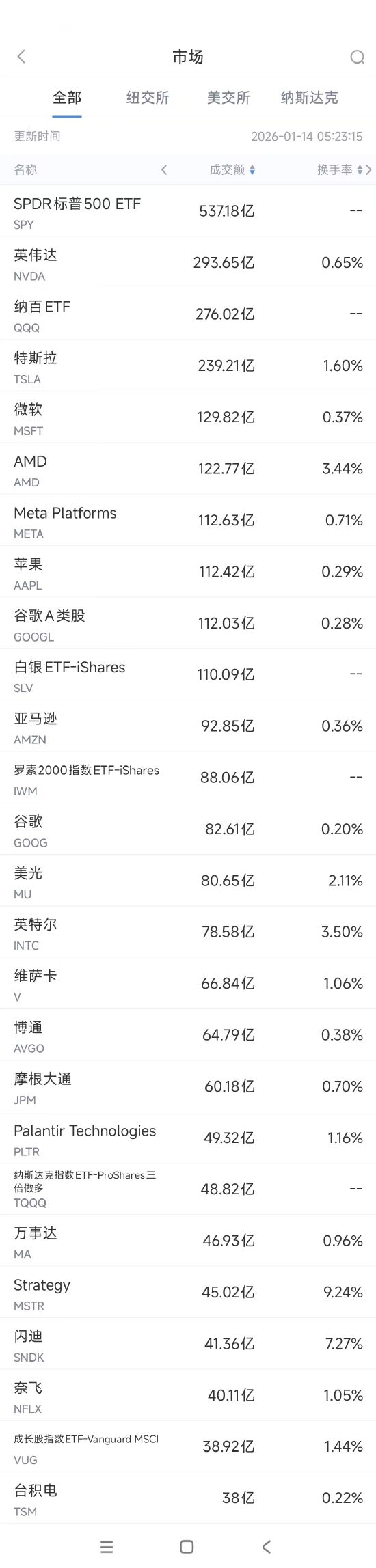
1月14日美股成交额前20:谷歌再创新高,花旗重申买入评级
Xin Lang Cai Jing· 2026-01-13 21:49
Group 1: Nvidia - Nvidia's stock rose by 0.47% with a trading volume of $29.365 billion, and the company stated it will not require customers to pay upfront for H200 chips, countering reports of strict payment terms for Chinese clients [1] - The company emphasized it will never ask customers to pay for products not yet received, addressing concerns over potential policy changes affecting its ability to sell H200 chips in China [1] Group 2: Tesla - Tesla's stock fell by 0.39% with a trading volume of $23.921 billion, as Elon Musk announced plans to make the platform's recommendation algorithm public within a week, aiming for regular updates every four weeks [1] - Musk indicated that the recommendation algorithm will increasingly rely on AI, particularly the Grok chatbot, to enhance the quality of information flow [1] Group 3: Microsoft - Microsoft's stock declined by 1.36% with a trading volume of $12.982 billion, as the company committed to covering operational electricity costs for its U.S. data centers amid concerns over rising utility costs for consumers [2] - Microsoft plans to collaborate with utility companies to ensure power supply and improve data center efficiency while reducing water usage [2] Group 4: AMD and Intel - AMD's stock increased by 6.42% with a trading volume of $12.277 billion, as KeyBanc Capital Markets upgraded both AMD and Intel to "overweight" with target prices of $270 and $60 respectively, citing strong demand for server CPUs [2] - Intel's stock rose by 7.33% with a trading volume of $7.858 billion, reflecting similar positive sentiment in the semiconductor market [3] Group 5: Meta Platforms - Meta Platforms' stock decreased by 1.69% with a trading volume of $11.263 billion, as estimates suggest that a recent nuclear data center agreement may require over $14 billion in investment [3] Group 6: Google - Google's Class A shares rose by 1.24%, reaching a historical high with a trading volume of $11.203 billion and a market capitalization of $4.05 trillion, following a significant partnership with Apple to support AI functionalities in upcoming products [3] - Citigroup's report highlighted Google's Gemini model's capabilities and infrastructure advantages, reaffirming its position as a top choice in the internet sector with a target price of $350 [3] Group 7: Amazon - Amazon's stock fell by 1.57% with a trading volume of $9.285 billion, as reports indicated the company is seeking discounts from suppliers, with reductions ranging from low single digits to as high as 30% [3] Group 8: Financial Sector - Visa's stock dropped by 4.46% with a trading volume of $6.684 billion, amid concerns over potential impacts on profitability from proposed credit card interest rate caps [4] - JPMorgan's stock fell by 4.19% with a trading volume of $6.018 billion, as the bank reported projected total revenue of $185.6 billion for 2025, a 3% increase year-over-year, but a decrease in net profit compared to 2024 [5]





Micron Has Tripled in 2025 - Still a Discounted Strong Buy
ZACKS· 2026-01-13 21:00
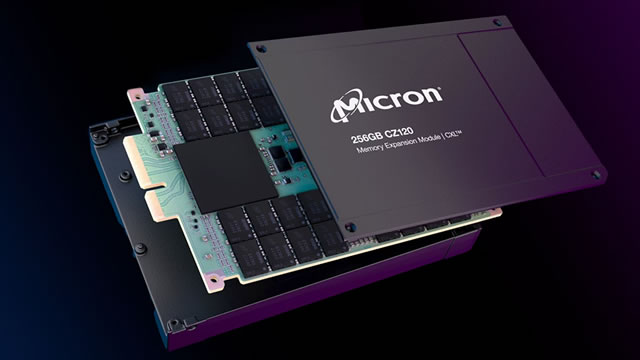
Core Insights - Micron Technology, Inc.'s shares increased over 200% in 2025, outperforming NVIDIA Corporation, driven by strong demand for high-bandwidth memory (HBM) chips [1][7] - The company reported fiscal Q1 2026 revenues of $13.64 billion, a 56.8% year-over-year increase, exceeding analysts' expectations [2][7] - Micron anticipates strong fiscal Q2 2026 results, with projected revenues between $18.3 billion and $19.1 billion and diluted EPS estimated at $8.22 to $8.62 [3] Revenue Performance - All four business segments of Micron experienced revenue growth, with the cloud memory business unit achieving sales of $5.28 billion, up 99.5% year-over-year [2] - Micron's non-GAAP net income reached $5.48 billion, or $4.78 per diluted share, surpassing analysts' expectations of $3.94 [2] Market Outlook - The HBM market is expected to grow at a CAGR of 25.5%, reaching $7,721.41 million by 2035 from $1,516.31 million in 2026, indicating strong growth prospects for Micron [4] - The company reported a record cash flow of $3.9 billion in fiscal Q1 2026, providing substantial resources for future growth initiatives [4] Technical Analysis - Micron's shares are trading above both the long-term 200-day moving average and the short-term 50-day moving average, indicating an uptrend [5] Investment Consideration - Micron is considered a strong buy, with shares positioned for further gains amid the AI-driven memory boom [8] - The company's forward price-to-earnings (P/E) ratio of 11.03 is below the industry average of 17.89, making it an attractive growth stock [9]
Broadcom, Marvell In Focus As Semicondcutor Analyst Flags AI-Driven Supply Crunch, Custom Silicon Upside
Benzinga· 2026-01-13 18:57
Core Viewpoint - A fresh analysis of global semiconductor supply chains indicates that hyperscaler demand is increasing, leading to tighter memory supply and reshaping the competitive landscape in the industry. Group 1: Hyperscaler Demand and Memory Pricing - Hyperscalers are securing Dynamic Random-Access Memory (DRAM) and NAND capacity in anticipation of a 50% growth in data center bits by 2026, resulting in higher contract prices [2] - DRAM contract prices are expected to rise by approximately 25% in Q1 2026 and 10%-12% in Q2 2026, while NAND prices are projected to increase by about 20% in Q1 2026 and 10%-15% in Q2 2026 [2] Group 2: Company Performance and Upgrades - Intel and AMD are highlighted as leading companies, with both upgraded to Overweight due to being largely sold out of 2026 server CPU capacity, with potential price increases of 10%-15% in Q1 2026 [4] - Micron Technology's price forecast has been raised to $450 from $325, reflecting positive views on AI compute and infrastructure demand [5] Group 3: Custom Silicon and Market Dynamics - Custom silicon is identified as a key battleground for hyperscalers, with Broadcom's Chip on Wafer on Substrate (CoWoS) supply for 2026 revised upward by 30% to 250K units, a significant increase compared to 2025 [6] - OpenAI's custom ASIC timeline has shifted to Q1 2027, with an expected lifetime unit opportunity of 1.5 million to 2 million, potentially adding $8 billion to $10 billion to Broadcom's AI backlog [7] Group 4: Challenges and Market Outlook - Higher memory prices and shortages are negatively impacting handset demand and margins, leading to lowered estimates for Qualcomm and highlighting Arm Holdings as a potential headwind due to anticipated smartphone market contraction in 2026 [9] - Memory constraints and price increases may affect PCs, smartphones, and automotive sectors, despite strong demand in AI and data center markets [9]




1 Reason Buying Micron Stock Now Could Pay Off
Yahoo Finance· 2026-01-13 18:52
Key Points Micron is capitalizing on the growing demand for high-performance memory in AI data centers. The shift from AI training to inferencing could be beneficial to Micron's business over the long term. Analysts call for record earnings over the next few years. 10 stocks we like better than Micron Technology › Shares of Micron Technology (NASDAQ: MU) have rocketed 247% over the last 12 months (as of Jan. 12). Given the quick rise, the stock may appear expensive at these levels, especially wh ...