
Qualcomm(QCOM)

Search documents
QCOM Rides on Strength in Premium Handset Market: Will it Sustain?
ZACKS· 2025-12-26 16:36
Core Insights - Qualcomm Incorporated generated approximately $6.96 billion in handset revenues in the latest quarter, reflecting a year-over-year increase of 14% and an estimated $27.8 billion in fiscal 2025, contributing around 63% of the company's total revenues [1][8] Group 1: Market Position and Competition - Qualcomm faces strong competition from rivals like MediaTek, particularly in the mid-range and budget smartphone segments, which pressures its market share and pricing [2] - U.S.-China trade tensions have significantly reduced handset demand, impacting Qualcomm's business as global smartphone demand continues to decline [2] - Major manufacturers such as Apple and Samsung are increasingly developing in-house chips, posing a significant challenge for Qualcomm [2][5] Group 2: Product Development and Innovation - To address challenges in the smartphone market, Qualcomm is focusing on premium Snapdragon chips, recently launching the Snapdragon 8 Gen 5, which offers high-speed performance and advanced features for flagship smartphones [3][8] - The global 5G chipset market is projected to grow from $18.7 billion in 2022 to $126.4 billion by 2030, with a CAGR of 27%, indicating strong growth potential for Qualcomm's handset segment [4] Group 3: Financial Performance and Estimates - Qualcomm shares have increased by 11.1% over the past year, compared to the industry's growth of 35.3% [7] - The company's shares currently trade at a price/earnings ratio of 14.26, which is lower than the industry average of 34.54 [9] - Earnings estimates for 2025 have risen by 2% to $12.15, while estimates for 2026 have increased by 3.4% to $12.60 over the past 60 days [10]



100页深度报告:半导体产业的发展复盘与方向探索
材料汇· 2025-12-26 14:58
Global Semiconductor Market Analysis - The global semiconductor market is projected to reach $659.1 billion in 2024, representing a year-on-year growth of 20.0%, and is expected to grow to $789.3 billion by 2025 [2][14] - Integrated circuits will account for the largest share at 73.9%, while artificial intelligence chips will see the fastest growth at 49.3% [2][14] - In 2023, the top ten companies in the global semiconductor market are primarily from the US, Taiwan, and South Korea, with no mainland Chinese companies in the top ranks [2][16] China Semiconductor Market Analysis - China's semiconductor market is expected to reach $176.9 billion in 2024, with a year-on-year growth of 15.9%, and is projected to reach $206.7 billion by 2025 [2][16] - Integrated circuits will dominate the Chinese market, accounting for $139.3 billion, or 78.7% of the total market, with artificial intelligence chips growing at 48.3% [2][16] Historical Development of the Semiconductor Industry - The global semiconductor industry has evolved through four major phases: the rise of personal computers and the internet (1986-1999), network communications and consumer electronics (2000-2010), the smartphone and 3G/4G/5G era (2010-2020), and the current AI technology and data center phase (2023-present) [3][21][24] Semiconductor Industry Chain Overview - The semiconductor industry chain consists of upstream (EDA/IP, semiconductor equipment, semiconductor materials), midstream (semiconductor design, wafer manufacturing, and packaging/testing), and downstream (packaging and testing) segments [6][62] - Upstream EDA/IP is dominated by companies like Synopsys and Cadence, while semiconductor equipment is led by ASML for EUV lithography, with high industry concentration [6][62] Future Development Directions in the Semiconductor Industry - Key future development areas in the semiconductor industry include third-generation semiconductor materials, computing chips, RF communication chips, and high-bandwidth memory [8][10] Investment Recommendations - The domestic semiconductor industry is expected to make breakthroughs in upstream core equipment, materials, and software, driven by national policies and international dynamics [9] - Investment opportunities are particularly promising in third-generation semiconductor materials, computing chips, RF communication chips, and high-bandwidth storage [9][10]






爱建电子深度报告:半导体产业的发展复盘与方向探索
Shanghai Aijian Securities· 2025-12-26 11:31
Investment Rating - The report rates the semiconductor industry as "Outperform" compared to the market [1] Core Insights - The global semiconductor market is projected to reach USD 659.1 billion in 2024, with a year-on-year growth of 20.0%, and is expected to grow to USD 789.3 billion in 2025 [2][13] - Integrated circuits will account for the largest share of the market at 73.9% in 2024, while artificial intelligence chips are anticipated to grow the fastest at 49.3% [2][13] - The report identifies four key future development directions for the semiconductor industry: third-generation semiconductor materials, computing chips, RF communication chips, and high-bandwidth memory [2] Summary by Sections 1. Semiconductor Market Analysis - The global semiconductor market is expected to grow significantly, with integrated circuits leading the market share [13][15] - The Chinese semiconductor market is projected to reach USD 1,769 billion in 2024, with a year-on-year growth of 15.9% [15][17] 2. Historical Development of the Semiconductor Industry - The semiconductor industry has evolved through four major phases, driven by technological advancements and market demands [20][22] - The current phase is characterized by AI technology and data centers driving growth [22][23] 3. Semiconductor Industry Chain - The semiconductor industry chain consists of upstream (EDA/IP, semiconductor equipment, materials), midstream (design, wafer manufacturing, packaging), and downstream (packaging and testing) segments [64][73] - The report highlights the importance of domestic companies in advancing technology and achieving breakthroughs in core areas [2][64] 4. Future Development Directions - The report emphasizes the potential of third-generation semiconductor materials, computing chips, RF communication chips, and high-bandwidth memory as key growth areas [2][4]


车圈俩月换了6个CEO,29家企业327名高管变动,掀起年终人事巨变
3 6 Ke· 2025-12-22 23:18
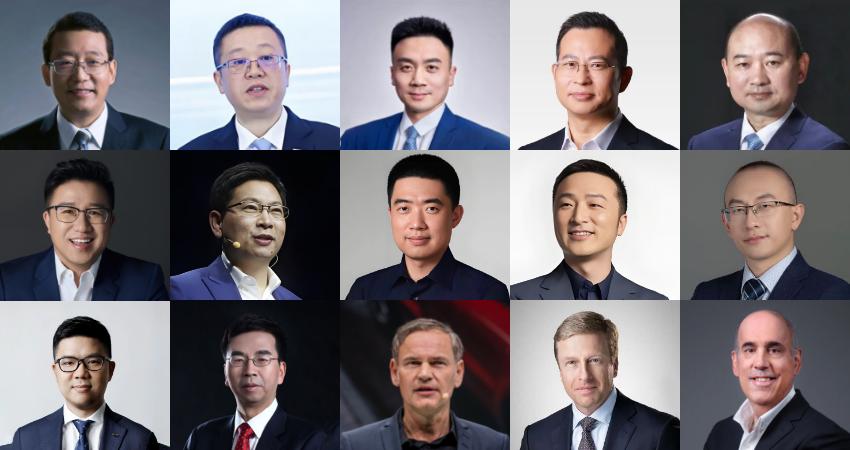
Core Insights - The automotive industry is experiencing a significant wave of executive changes, with over 327 high-level personnel adjustments reported in the last two months, including six CEOs [2][3][4] - The restructuring reflects a strategic shift among companies as they prepare for intensified competition in 2026, focusing on leadership renewal, efficiency, and core business enhancement [4][5][6] Group 1: Executive Changes in State-Owned Enterprises - Major state-owned automotive groups such as Dongfeng, Changan, GAC, and BAIC have undergone frequent personnel changes, aiming for younger and more professional decision-making teams [5][6][7] - GAC has appointed its first "post-70s" general manager, indicating a move towards clearer internal responsibilities and optimized decision-making [7] - Dongfeng has brought in external talent to drive its smart transformation, while Changan has filled its long-vacant president position, reflecting a commitment to leadership stability [11][13][15] Group 2: Executive Departures in Private Enterprises - Private automakers like BYD, Geely, and Great Wall have seen significant executive turnover, with key figures leaving amid fierce market competition [17][19] - Chery has emerged as an active talent poacher, recruiting from competitors to enhance its marketing and technology capabilities [19][21] Group 3: New Forces in the Automotive Sector - New energy vehicle companies are making urgent personnel adjustments to tackle pressing challenges, with Li Xiang of Li Auto taking direct control of human resources to streamline operations [22][24] - Xiaomi's automotive division is focusing on sales growth, with top executives taking on additional responsibilities to drive performance [26][28] - XPeng Motors is enhancing its technical capabilities by hiring AI experts, indicating a strategic focus on core technology development [29] Group 4: Changes in Foreign and Joint Venture Brands - Major foreign automotive companies, including GM and Tesla, are undergoing significant executive changes, with GM's software and AI teams experiencing notable turnover [32][34][36] - German luxury brands are also reshuffling their leadership, with key executives transitioning to new roles to align with future strategic goals [38][40][42] Group 5: Supply Chain and Component Manufacturers - The supply chain sector is also witnessing high-frequency personnel changes, with Huawei's Yu Chengdong taking on additional leadership roles to strengthen its market position [46][49] - Traditional component manufacturers like Continental and ZF are focusing on efficiency and business concentration through their leadership adjustments [51][52] Conclusion - The recent wave of personnel changes in the automotive industry signifies a critical reassessment of survival strategies amid the ongoing transition towards electrification and intelligence [53]




The Big 3: ROKU, QCOM, SLM
Youtube· 2025-12-22 18:01
Group 1: Market Overview - The market is experiencing a potential rally, with expectations for a "Santa rally" during the holiday season [2][3]. Group 2: Roku - Roku is favored due to its position as a streaming platform, benefiting from the trend of consumers leaving cable [3]. - Technical indicators show bullish sentiment, with the stock trading above key moving averages, including the 200 and 50 simple moving averages [3][9]. - The larger swing targets for Roku are identified at 124 and 132, with a current trading price around 111.27, reflecting a year-to-date increase of approximately 50% [12]. Group 3: Qualcomm - Qualcomm is also receiving bullish sentiment, particularly after completing the Alpha Wave semi acquisition [12]. - The stock has strong technical support between 163 and 172, with a defined risk if it falls below 163 [14][15]. - A call debit spread is suggested with a risk of 92 to potentially make 408, targeting prices of 218 and 235 [15]. Group 4: SLM Corp - SLM Corp is viewed bearishly, with all moving averages indicating a bearish trend and a significant resistance cluster between 27 and 30 [25][26]. - A broken wing butterfly strategy is proposed, risking 40 to make 80, with targets set at 24 and 22 [25]. - The stock has shown a decline of 1.5% over the last 12 months, indicating a challenging market position [34].



Can Completion of Qualcomm's Alphawave Buyout Deal Propel Its Shares?
ZACKS· 2025-12-22 14:21
Core Insights - Qualcomm has completed the acquisition of Alphawave Semi for an enterprise value of approximately $2.4 billion, aiming to enhance its presence in high-growth sectors such as data centers, AI, data networking, and data storage [1][7] - The acquisition of Alphawave Semi provides Qualcomm with advanced technology solutions that complement its power-efficient CPU and NPU cores, enabling faster and more reliable data transfer for 5G, AI, and data center applications [2] Qualcomm's Strategic Moves - Qualcomm has been focusing on expanding its footprint in AI chips through strategic acquisitions and R&D initiatives, including the acquisition of MovianAI, which has accelerated its AI research capabilities [3] - The integration of VinAI's expertise in generative AI and machine learning with Qualcomm's R&D has facilitated the development of advanced AI-driven solutions across various industries [3] Competitive Landscape - Other tech firms like Advanced Micro Devices (AMD) and Intel Corporation are also enhancing their positions in the AI chip market, with AMD's MI300 series and Intel's Core Ultra processors showcasing significant advancements in AI capabilities and performance [4][5] - AMD's MI300 series supports up to 192 GB of HBM3 memory, enabling efficient training and inference for generative AI workloads, while Intel's new processors are designed for diverse applications, including gaming and industrial IoT [4][5] Financial Performance - Qualcomm's shares have increased by 10.7% over the past year, compared to the industry's growth of 35.3% [6] - Earnings estimates for Qualcomm's fiscal years 2026 and 2027 have risen by 2% and 3.4%, respectively, indicating positive market sentiment [7][10] - The company's shares currently trade at a forward price/earnings ratio of 14.3, which is lower than the industry average of 33.8 [9]

England High Court Sanctions QUALCOMM Incorporated (QCOM)’s Alphawave IP Group Acquisition
Yahoo Finance· 2025-12-22 13:40
Group 1 - Qualcomm Incorporated (NASDAQ:QCOM) has received approval from the High Court of Justice in England for its acquisition of Alphawave IP Group plc, valued at $2.4 billion, which is expected to enhance Qualcomm's capabilities in data centers [2][5] - The acquisition will be executed through Qualcomm's subsidiary, Aqua Acquisition Sub LLC, and follows the approval from Alphawave's shareholders [2] - Alphawave Semi is recognized for its leadership in high-speed wired connectivity and compute technologies, providing essential products for faster and more reliable data transfer [3] Group 2 - The CEO of Alphawave Semi, Tony Pialis, emphasized that the merger will allow both companies to expand their product offerings, reach a wider customer base, and enhance technological capabilities, particularly in AI compute and connectivity solutions [4] - Cantor Fitzgerald has raised Qualcomm's price target from $170 to $185, reflecting expectations that the company will benefit from AI-driven demand across various sectors [5] - Qualcomm is a leading innovator in wireless technology, supplying chips, software, and platforms for mobile devices, cars, and IoT, significantly contributing to the advancement of 5G, Wi-Fi, and AI technologies [6]

《第八届进博会传播影响力报告》发布 高通荣获2025年“进博之星”
Ren Min Wang· 2025-12-22 06:33
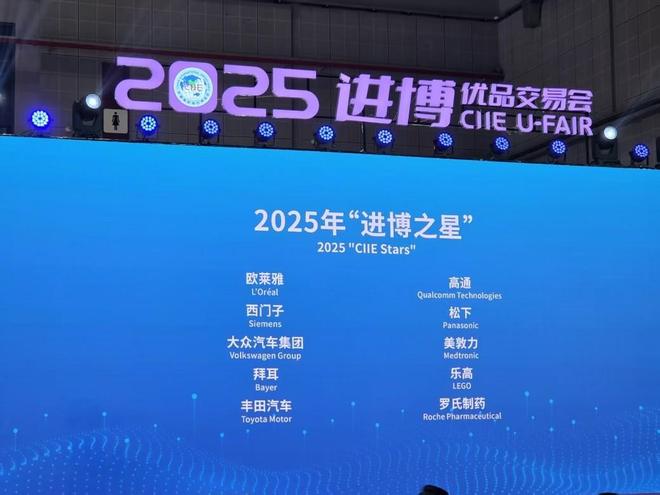
Core Insights - The "8th China International Import Expo Communication Influence Report" was released, highlighting the event's extensive communication impact and participation [1][3] - Qualcomm was recognized as a "2025 Import Star," ranking sixth overall and third in the technology equipment sector for communication influence [1][3] Group 1: Event Overview - The Import Expo featured 4,108 companies from 138 countries and regions, including 290 Fortune Global 500 and industry-leading enterprises [3] - The report utilized a combination of qualitative and quantitative methods to assess communication impact, indicating a high level of engagement throughout the year [3] Group 2: Qualcomm's Participation - Qualcomm showcased over 60 key innovations in collaboration with 26 partners, emphasizing the theme "Together, We Achieve Progress for Everyone" [3] - The company presented a range of products, including flagship smartphones powered by the Snapdragon 8 Gen 2, AI glasses from various brands, and interactive experiences [3] Group 3: Future Engagement - Qualcomm has signed up for the 9th Import Expo, promising to bring even more collaborative achievements next year [4]
Analysts Bullish on Qualcomm Inc. (QCOM) As It Completes Alphawave Semi Acquisition
Yahoo Finance· 2025-12-21 17:58
Core Viewpoint - Qualcomm Inc. is recognized as one of the most undervalued semiconductor stocks, with a maintained Buy rating and an increased price target from $150 to $185 by Cantor Fitzgerald, although this target is still below the median target of $200 from 36 analysts [1][2]. Group 1: Analyst Ratings and Market Position - C J Muse of Cantor Fitzgerald has raised Qualcomm's price target, indicating confidence in the company's future performance despite current market conditions [1]. - The acquisition of Alphawave Semi is aimed at re-entering the data center market, which Qualcomm had exited in 2018, signaling a strategic shift and growth opportunity [2]. Group 2: Technological Advancements - Qualcomm's Snapdragon Cockpit Elite technology will be showcased at CES 2026, highlighting the company's commitment to innovation in automotive AI applications [3]. - The AI Cabin Platform powered by Qualcomm technology will perform AI calculations on-device, enhancing real-time assistance and reducing vulnerabilities associated with cloud connections [4]. Group 3: Business Operations - Qualcomm operates through three main segments: Qualcomm Technology Licensing (QTL), Qualcomm CDMA Technologies (QCT), and Qualcomm Strategic Initiatives (QSI), which collectively support its foundational technologies for the wireless industry [5].
今日财经要闻TOP10|2025年12月20日
Xin Lang Cai Jing· 2025-12-20 11:53
Group 1 - ByteDance is reported to potentially achieve a net profit of approximately $50 billion for the year, following a claim of around $40 billion in net profit for the first three quarters of 2025, but insiders have stated that these figures are inaccurate and significantly deviated from reality [1][7] - The world's first commercial supercritical carbon dioxide power generation unit, named "Super Carbon No. 1," has successfully commenced operations in Guizhou, China, with a capacity of 15 megawatts, achieving over 85% efficiency improvement and over 50% increase in net power generation compared to traditional steam generation methods [2][7] Group 2 - The U.S. military is reportedly conducting strong retaliatory actions against ISIS in Syria, following the killing of American personnel, with full support from the Syrian transitional government [4][9] - The National Development and Reform Commission, the State Administration for Market Regulation, and the National Internet Information Office have issued rules prohibiting platform operators from colluding to manipulate market prices using platform rules, data, and algorithms [5][9] Group 3 - Beijing Tongrentang has issued an apology regarding the controversy surrounding its Antarctic krill oil products, announcing a comprehensive brand rectification initiative, including a thorough investigation and immediate product recall [3][10] - The Shanghai Consumer Protection Committee has expressed support for Tongrentang's acknowledgment of the issue and its proposed corrective measures, emphasizing the importance of consumer feedback in assessing the effectiveness of these actions [5][11] Group 4 - Moore Threads has launched a new GPU architecture named "Huagang," which boasts a 50% increase in computing density and a tenfold improvement in energy efficiency, capable of supporting clusters of over 100,000 cards [6][12] - U.S. stock markets saw gains, with the Dow Jones up 0.38%, the Nasdaq up 1.31%, and the S&P 500 up 0.89%, driven by strong performances from major tech stocks [6][13]



