
Starbucks(SBUX)

Search documents
宗馥莉不得挪用!娃哈哈宗氏“百亿”财产纠纷案判决书曝光;网传汪林朋“绝笔信”为假;智元机器人获国际集团战略投资丨邦早报
创业邦· 2025-08-02 01:09
Group 1 - The court ruling in the inheritance dispute of Wahaha Group founder Zong Qinghou confirmed that the assets in a specific bank account are trust property for three plaintiffs, prohibiting Zong Fuli from withdrawing or transferring any assets from the account until a final ruling is made by the courts in Hangzhou [3] - The plaintiffs, who are half-siblings of Zong Fuli, claim their rights to the trust property, which includes a request for interest earnings based on a principal of $2.1 billion and compensation for unauthorized transfers amounting to $108,500 [3] Group 2 - Major food delivery platforms, including Meituan and Taobao, announced a commitment to regulate promotional activities and curb irrational subsidies, aiming to foster healthy competition within the industry [5][6] - The platforms will implement measures such as adhering to anti-monopoly laws, ensuring transparency in subsidy information, and protecting the pricing autonomy of merchants [6] Group 3 - Apple reported a quarterly revenue of $94.04 billion, a nearly 10% year-on-year increase, despite facing an $800 million loss due to tariffs [11] - iPhone sales grew by 13.5% to $44.58 billion, and sales in Greater China reached $15.37 billion, marking a 10% increase [11] - Apple has acquired approximately seven companies this year, focusing on enhancing its AI capabilities [11] Group 4 - Nintendo's first-quarter sales reached 572.36 billion yen, a 132.1% year-on-year increase, with a net profit of 96.03 billion yen, up 18.6% [12] - The CEO of Jaguar Land Rover, Adrian Mardell, announced his retirement after nearly three years in the role, during which he led the company to its best profitability in a decade [12] Group 5 - The global tech industry has seen over 80,000 layoffs this year, with a 36% decline in job postings compared to early 2020 [21] - A report indicated that 171 tech companies have announced layoffs, totaling 80,250 employees [21]





估值超350亿,星巴克中国确认要卖了
3 6 Ke· 2025-08-02 00:32
Core Insights - Starbucks reported Q3 FY2025 earnings with revenue of $8.918 billion from coffee shop operations, slightly exceeding market expectations, driven by the opening of 1,151 new stores globally, contributing $0.927 billion in incremental revenue [2] - In North America, revenue was $6.927 billion, a year-on-year increase of 1.6%, accounting for approximately 73% of total coffee shop revenue [2] - In China, revenue reached $0.790 billion, a year-on-year growth of 8%, marking one of the top three revenue performances since FY2023, supported by the opening of 522 new stores and strategic pricing adjustments [2] Group 1: Market Position and Competition - Starbucks' market share in China has declined from a peak of 42% in 2017 to 14% in 2024, despite the overall coffee market growing significantly [4][5] - Luckin Coffee's revenue for the same period was approximately $1.2359 billion, a year-on-year increase of 47.1%, indicating that its revenue is now roughly equivalent to 2.5 times that of Starbucks in China [4][5] - The shift in consumer preferences has led to a redefinition of coffee consumption, with Luckin positioning coffee as a daily beverage rather than a luxury item, challenging Starbucks' traditional "third space" concept [5][10] Group 2: Strategic Adjustments - Starbucks has introduced a "study room" concept in select locations to enhance its brand's spatial advantage, aiming to attract students and freelancers while avoiding direct price competition with lower-cost alternatives [12][13] - The company has also implemented price adjustments on key products, with average price reductions of 5 yuan, to remain competitive in a market increasingly defined by lower price points [8][9] - Starbucks is exploring strategic partnerships and potential equity sales to leverage local expertise and improve its competitive position in the Chinese market [15][17] Group 3: Financial and Operational Insights - As of June 2025, Starbucks operated 7,828 stores in China, representing nearly 20% of its total global store count of 41,097, but contributing only about 8% of total revenue [2] - The average annual revenue per store for Starbucks in China is approximately 730,000 yuan, compared to Luckin's 540,000 yuan, highlighting the disparity in operational efficiency [8] - The valuation of Starbucks' Chinese operations is estimated at $5 billion to $6 billion, significantly lower than its global market valuation, indicating a shift in perception from a key growth market to a discounted asset [18]

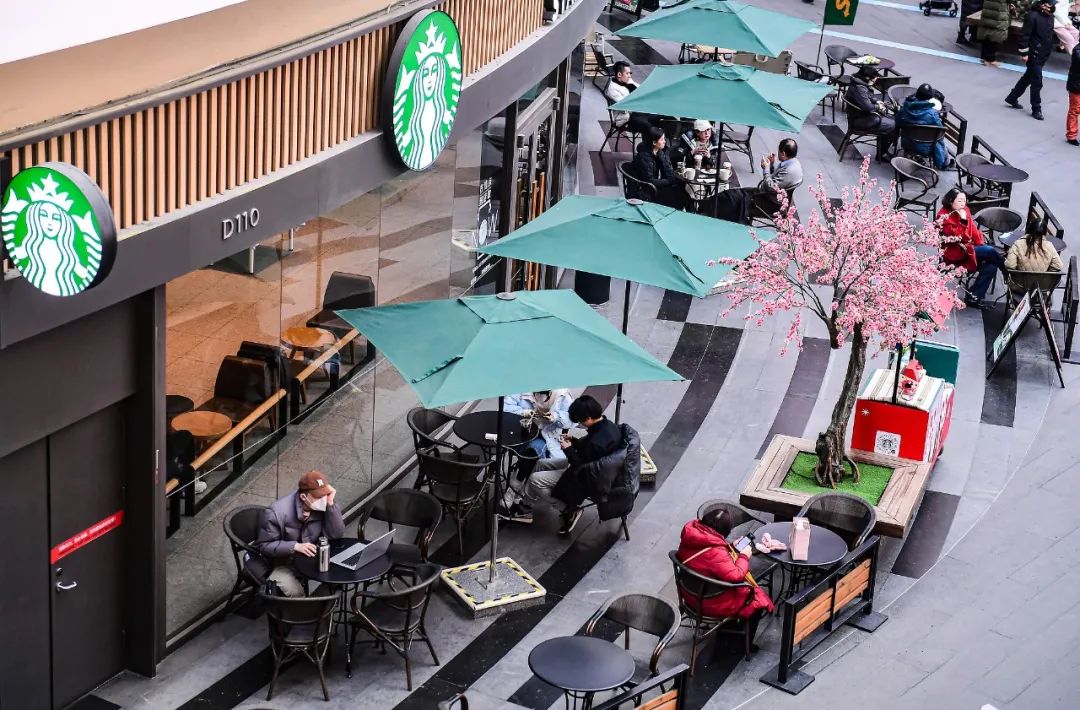
X @Bloomberg
Bloomberg· 2025-08-01 19:09
Starbucks is working on adding ordering kiosks to busy locations in the US that cater to on-the-go customers https://t.co/VYOAHnf6MN ...
8月2日电,星巴克计划在机场门店设置自助服务亭,以缓解排队长龙问题。
news flash· 2025-08-01 18:57
Group 1 - Starbucks plans to set up self-service kiosks in airport locations to alleviate long queue issues [1]
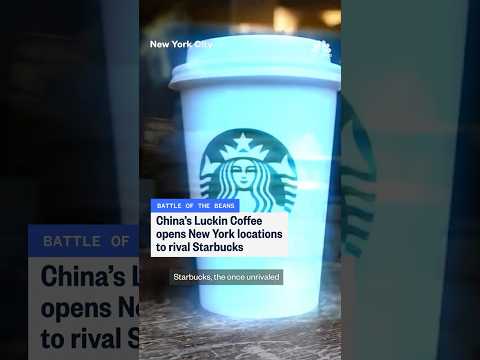
China's Luckin Coffee opens New York locations to rival Starbucks
NBC News· 2025-08-01 18:30
Starbucks, the once unrivaled global coffee shop king, now facing some tough competition from Lucken, a nimble Chinese startup, breaking into the US market this summer. With its first two stores in New York City, Lucken lures in customers with cheap, often colorful drinks and coupons galore. >> It's good. It's uh very affordable, quick.>> It's really cheaper than, you know, compared to the other coffee shop >> back in China. Those price points helping Lucken gain traction. That growth fueled by investors th ...
食饮吾见 | 一周消费大事件(7.28-8.1)
Cai Jing Wang· 2025-08-01 08:35
Group 1: Budweiser APAC - Budweiser APAC reported a 5.6% decrease in revenue to $3.136 billion for the first half of 2025, with normalized EBITDA down 8% to $983 million [1] - Sales volume declined by 6.1% to 4.363 billion liters, with a 7.4% drop in sales volume in the Chinese market during Q2 2025 [1] - The company focused on non-immediate consumption channels to drive premiumization, achieving growth in both sales and revenue from these channels [1] Group 2: Unilever - Unilever's revenue for the first half of 2025 was €30.1 billion, a 3.2% year-on-year decline, with ice cream business revenue growing by 0.2% [2] - The company plans to spin off its ice cream business by mid-November 2025, with operational separation already completed [2] Group 3: Daodaoquan - Daodaoquan reported a 563.15% increase in net profit to ¥181 million for the first half of 2025, with total revenue reaching ¥2.792 billion, a 1.16% increase [3] - Revenue from packaged oil increased by 20.53% to ¥1.751 billion [3] Group 4: Food Safety Issues - Taoli Bread issued an apology after a batch of its sliced bread failed quality checks, with 498 bags produced and 21 sold online [4] - The company has initiated a recall and implemented measures to enhance quality control and monitoring [4] Group 5: Regulatory Actions - The State Administration for Market Regulation reported 12,000 instances of non-compliance related to food additives in the first half of the year, with 4,727 companies penalized [5][6] - The agency emphasized the importance of strict monitoring and compliance regarding food additives to ensure food safety [5][6] Group 6: Luckin Coffee - Luckin Coffee's Q2 2025 net revenue reached ¥12.359 billion, a 47.1% year-on-year increase, with a gross merchandise volume of ¥14.179 billion [8] - The company opened 2,109 new stores, bringing the total to 26,206 globally, with significant growth in self-operated stores [8] Group 7: Starbucks China - Starbucks China reported an 8% revenue increase to $790 million for Q3 2025, marking three consecutive quarters of growth [9] - The company is evaluating partnerships with over 20 interested institutions to retain a significant equity stake in its Chinese operations [9] Group 8: L'Oréal - L'Oréal's sales for the first half of 2025 increased by 3.2% to €22.47 billion, with North Asia's skincare division maintaining double-digit growth [10][11] - The company noted strong performance from high-end brands, offsetting weaknesses in the skincare category [11] Group 9: Yonghui Supermarket - Yonghui Supermarket announced plans to raise up to ¥3.992 billion through a private placement of A-shares, with funds allocated for store upgrades and logistics improvements [13]




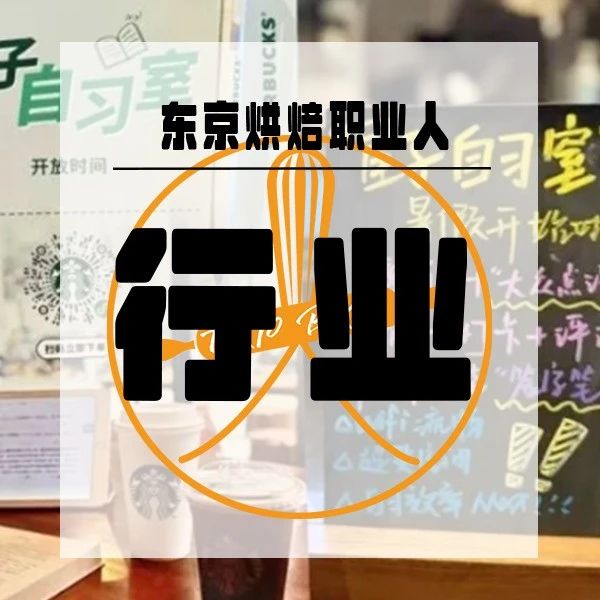
推出自习室,星巴克中国为增长拼了
东京烘焙职业人· 2025-08-01 08:33
Core Viewpoint - Starbucks is innovating its business model by introducing "Starbucks Study Rooms" in multiple cities in South China, allowing customers to use the space for studying without mandatory purchases, thus redefining its role in the competitive coffee market [4][10][12]. Group 1: "Starbucks Study Rooms" Implementation - The "Starbucks Study Rooms" have been launched in at least 30 stores in Guangzhou, primarily located in areas with high concentrations of schools and tutoring centers [4][5]. - The design of these study rooms utilizes existing seating areas without independent partitions, promoting a comfortable environment with free amenities such as power outlets, water, and WiFi [5][8]. - The initiative has gained significant attention on social media, with millions of views and positive feedback from users who find the space conducive for studying [10][11]. Group 2: Competitive Landscape - The coffee market is highly competitive, with brands like Luckin Coffee and Heytea offering lower-priced alternatives, which has led to a significant loss of market share for Starbucks among price-sensitive consumers [12][14]. - Other brands are also adopting similar strategies by combining beverage offerings with social spaces, further fragmenting Starbucks' customer base [12][14]. Group 3: Strategic Response - Starbucks aims to differentiate itself by providing a zero-threshold service that avoids direct price competition while enhancing its brand image as a provider of public learning spaces [15][16]. - The study room initiative is designed to convert non-paying customers into potential buyers, with data showing that approximately 70% of new morning customers make purchases [15][16]. - This strategy aligns with Starbucks' broader "non-coffee scene" initiative, creating a comprehensive consumption ecosystem throughout the day [16][22]. Group 4: Industry Trends - The trend of integrating study rooms into retail spaces is gaining traction, with various brands like IKEA and McDonald's exploring similar concepts to enhance customer experience and increase foot traffic [17][19][20]. - The evolution of retail spaces from single-function to multi-functional environments reflects changing consumer demands for flexible and efficient learning and social settings [20][21]. - This shift is driven by both upgraded user needs and competitive pressures, as brands seek to maximize space utilization and attract customers through added value [21][22]. Group 5: Future Implications - The introduction of free study rooms serves as a tool for brands to attract customers while alleviating pricing pressures and enhancing user loyalty [22][23]. - The transformation of commercial spaces towards experiential services may lead to the emergence of paid value-added services, blurring the lines between commercial and public services [22][23].
X @The Wall Street Journal
The Wall Street Journal· 2025-08-01 08:13
The coffee chain that won't leave Starbucks alone is now coming for America. 🔗 https://t.co/Tfx0Abj2aI https://t.co/Sdjc7Za9rs ...
消息称京东、腾讯拟投资星巴克中国业务 已入围第二轮
Feng Huang Wang· 2025-08-01 05:51
Core Insights - Starbucks is in the process of selecting investors for its China operations, with around 12 companies advancing to the second round, including private equity firms and tech companies [1] - The selected companies will have access to Starbucks' financial statements for evaluation and future bidding [1] - Starbucks aims to leverage new capital and local operational expertise to expand its store footprint in China, enhance its supply chain, and optimize its mobile platform and brand strategy for Chinese consumers [1] Group 1 - Starbucks CEO Brian Niccol stated that the search for partners in China is not primarily for funding, but to ensure better brand development in the future [1] - The number of Starbucks stores in China is projected to increase from approximately 7,800 to 20,000 [1] - Over 20 potential investors have shown interest in Starbucks' China business, with the company aiming to retain a significant equity stake [1] Group 2 - China is Starbucks' second-largest market, but the company has fallen behind local competitors like Luckin Coffee, which has achieved rapid growth through lower-priced products and frequent updates [2] - As of the report, Starbucks, Fountain Capital, KKR, Hillhouse Capital, and Springhill Capital declined to comment, while Tencent, JD.com, Boyu Capital, and Carlyle Group have not responded to requests for comments [2]


X @Bloomberg
Bloomberg· 2025-08-01 04:24
Starbucks has shortlisted about a dozen parties including private equity firms and technology companies into the second round of a process to invest in its China business, sources say https://t.co/ogO4gZjn4k ...