
Starbucks(SBUX)

Search documents
X @Bloomberg
Bloomberg· 2025-08-01 04:24
Starbucks has shortlisted about a dozen parties including private equity firms and technology companies into the second round of a process to invest in its China business, sources say https://t.co/ogO4gZjn4k ...

谁在“围猎”星巴克?
3 6 Ke· 2025-08-01 01:18
Core Insights - Starbucks' market share in China has significantly declined from a peak of 42% in 2017 to 14% in 2024, despite a strong performance in its Chinese operations with a 7% increase in store count year-over-year [3][6] - Luckin Coffee has shown remarkable growth, reporting a total net revenue of 12.36 billion yuan, a 47.1% year-over-year increase, and a GAAP operating profit growth of 61.8% to 1.7 billion yuan [3][19] - The coffee market in China is experiencing intense competition, particularly in lower-tier cities and price-sensitive segments, with various brands aggressively expanding their presence [4][12] Market Performance - Starbucks' global net profit has decreased by 47.1%, while its Chinese operations have seen a 2% increase in same-store sales and a 6% increase in transaction volume [1][3] - The number of registered coffee shops in China has surged, with nearly 30,000 new registrations, marking a 19.54% increase in the first half of the year [4][6] Competitive Landscape - Brands like Luckin Coffee and Mixue Ice City are targeting the lower-tier markets and one- to two-line cities, with Mixue aiming to exceed 10,000 stores by the end of the year [3][15] - The coffee market is shifting towards a "store-in-store" model, allowing brands to leverage existing retail spaces, which has become a common strategy among various coffee brands [9][11] Consumer Behavior - The average coffee consumption in China has increased from 9 cups per year in 2021 to approximately 22 cups in 2024, indicating significant growth potential compared to countries like the U.S. and Japan [14][18] - Price remains a critical factor in consumer decision-making, with brands competing aggressively on pricing to capture market share [18][19] Strategic Focus - Starbucks is expanding into 166 new county-level markets in China, but faces challenges due to its higher price point compared to competitors [6][12] - The coffee market is transitioning from rapid store expansion to a focus on operational efficiency and product quality, as brands seek to establish a sustainable presence [19]


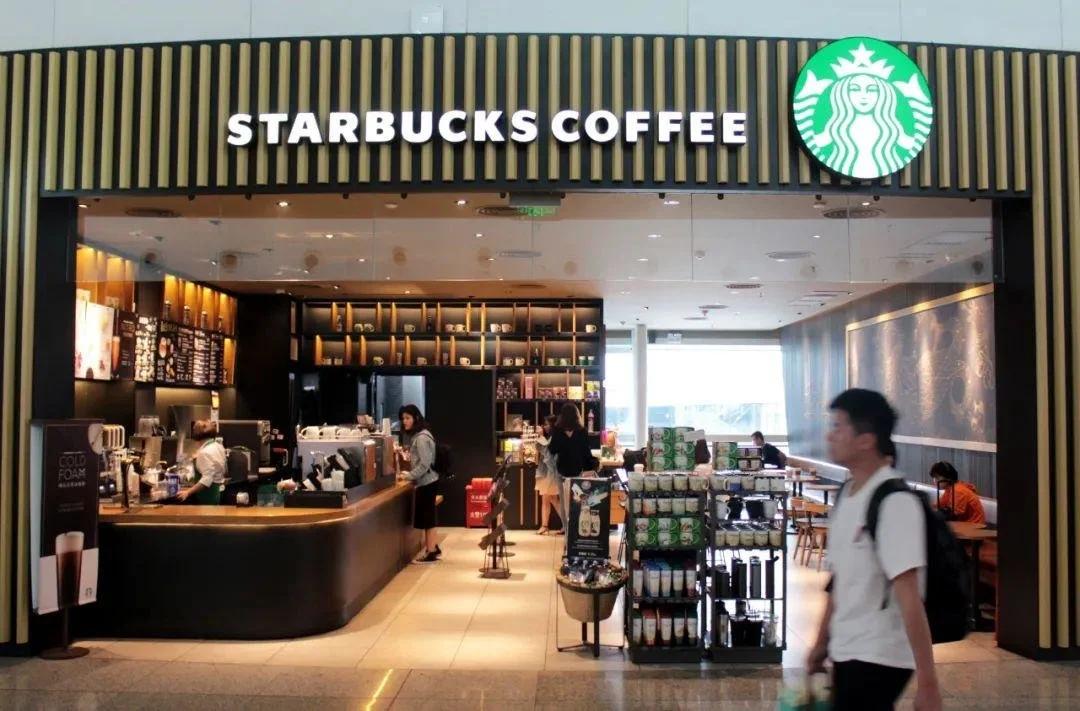
星巴克中国已有20个潜在追求者
虎嗅APP· 2025-08-01 00:28
Core Viewpoint - Starbucks has shown a recovery in its China operations, with a 8% year-on-year revenue growth to $790 million in Q3 of FY2025, marking three consecutive quarters of growth. Same-store sales increased by 2%, the first growth in six quarters, indicating a positive trend in customer engagement and spending [1][3]. Group 1: Financial Performance - In Q3 FY2025, Starbucks reported a revenue of $790 million in China, reflecting an 8% year-on-year increase [1]. - Same-store sales saw a 2% increase, marking the first growth in six quarters [1]. - The total number of Starbucks stores in China reached 7,828, with 70 new stores opened and entry into 17 new county-level markets [3]. Group 2: Strategic Initiatives - Starbucks has implemented significant operational adjustments, including product innovation and a focus on non-coffee offerings to cater to a broader consumer base [4][6]. - The introduction of the "True Flavor Sugar-Free" series and collaboration with Disney for themed beverages are part of the product innovation strategy [4]. - A systematic price adjustment was made for non-coffee beverages, with an average price reduction of 5 yuan for large products, while core coffee products remain above 30 yuan [5]. Group 3: Business Development and Partnerships - Starbucks is evaluating over 20 interested institutional partners for a potential sale of a stake in its China business, aiming to retain a significant portion of ownership [3][8]. - The CEO emphasized the importance of finding partners that share Starbucks' vision and values, indicating a strategic approach to future collaborations [8]. - The company is leveraging its strong brand and operational capabilities to attract potential partners, enhancing its market position in China [11]. Group 4: Leadership and Management Changes - The management team at Starbucks has undergone significant changes, with the appointment of Brian Niccol as CEO, who has a track record of crisis management and operational reform [10]. - Niccol's strategy focuses on fundamentally changing the company's approach, including simplifying the menu and restructuring pricing [10]. - The recent operational adjustments in China align with Niccol's vision for revitalizing the brand and enhancing customer experience [10].
Starbucks Q3 Earnings Hurt by Lower Comps, Signs of Turnaround Emerge
ZACKS· 2025-07-31 17:50
Core Insights - Starbucks Corporation (SBUX) reported mixed results for Q3 fiscal 2025, with earnings missing estimates while net revenues exceeded expectations. The top line showed year-over-year growth, but the bottom line declined [1] Group 1: Financial Performance - In Q3 fiscal 2025, Starbucks experienced a 2% decline in global comparable store sales, mirroring a 2% decline in the U.S. market, influenced by internal strategic shifts and external challenges [2] - U.S. comparable transactions fell nearly 4%, primarily due to the company facing tough year-over-year comparisons from aggressive discounting in the previous year. However, U.S. company-operated transaction comps improved for the third consecutive quarter [3][9] - The average ticket size increased by 2%, indicating a shift away from deep discounting, as Starbucks reduced the share of discounted transactions by one-third to enhance transaction quality and customer value perception, particularly among younger demographics [4] Group 2: International Performance - Internationally, comparable store sales were supported by a 2% growth in China, with a 6% increase in transactions, driven by beverage innovation, new pricing strategies, and stronger delivery sales [5][9] Group 3: Future Outlook - Although Starbucks did not provide formal guidance, management expressed a conservative outlook for Q4 fiscal 2025, acknowledging an unpredictable consumer environment and uncertainty regarding ticket and transaction growth. The company is focusing on scaling its "Green Apron Service" operating model and foundational changes expected to gain traction through fiscal 2026 [6][7] Group 4: Market Position - Starbucks currently holds a Zacks Rank 4 (Sell), while other companies in the retail-wholesale sector, such as Cracker Barrel, Yum China, and Yum! Brands, have better rankings and positive growth projections [8]
Starbucks getting rid of an ordering option as CEO pushes turnaround
Fox Business· 2025-07-31 16:11
Core Insights - Starbucks is closing its pickup-only grab-and-go stores in fiscal 2026 to realign its coffeehouse portfolio and enhance in-store experiences [1][2] - CEO Brian Niccol emphasizes the need for a more engaging customer experience, moving away from overly transactional models [3][4] - The company is implementing a "Back to Starbucks" strategy to rebuild its culture and improve profitability while addressing unionization pressures [6][8] Strategic Changes - The decision to sunset the mobile order and pickup-only concept is part of a broader evaluation of the North American portfolio to ensure optimal locations for profitability [2] - Niccol aims to revitalize the coffeehouse aesthetic to encourage longer customer visits and enhance the mobile ordering experience [4][9] - The company is streamlining operations by cutting 1,100 support partner roles and closing unfilled positions to create more agile teams [8] Employee and Customer Experience - Starbucks is enhancing employee benefits, including doubling parental leave, to improve the work environment [11] - The company is simplifying its menu by removing under-performing drinks to foster innovation and reduce wait times [9] - To improve customer retention, Starbucks is reintroducing personal touches like condiment bars and offering free refills on brewed coffee and tea [9]
X @Bloomberg
Bloomberg· 2025-07-31 16:00
Howard Schultz, who built Starbucks into a global behemoth, called on employees to rally behind CEO Brian Niccol’s plan to revive growth — including a new requirement to be in the office more often. https://t.co/n2vp5qOAk4 ...
X @The Wall Street Journal
The Wall Street Journal· 2025-07-31 13:35
Market Strategy - Luckin Coffee chose a location in New York City less than 200 feet from a Starbucks [1] - The company is focusing on app-ordered drinks and coupons to attract customers [1] Company Overview - Luckin Coffee is described as China's biggest coffee chain [1]
星巴克中国已有20个潜在追求者
Hu Xiu· 2025-07-31 13:03
Core Viewpoint - Starbucks has reported a recovery in its China operations, with a 8% year-on-year revenue growth to $790 million in Q3 FY2025, marking the third consecutive quarter of growth. Same-store sales increased by 2%, the first rise in six quarters, indicating a positive trend in customer engagement and sales performance [1][2]. Financial Performance - Q3 FY2025 net revenues reached $790 million, up from $733.8 million in Q3 FY2024, reflecting an increase of 8% [2]. - Comparable store sales improved by 2%, a significant turnaround from a decline of 14% in the previous year [2]. - Transaction volume increased by 6%, compared to a 7% decline in the same quarter last year [2]. - The total number of stores in China reached 7,828, with 70 new stores opened and expansion into 17 new county-level markets [2]. Strategic Initiatives - Starbucks is actively evaluating over 20 interested institutional partners for a potential partial sale of its China business, aiming to retain a significant equity stake [3][7]. - The company has implemented a series of operational adjustments, including product innovation and a focus on non-coffee offerings to cater to diverse consumer needs throughout the day [4][5]. - A systematic price adjustment strategy was introduced, reducing prices on non-coffee beverages while maintaining higher price points for core coffee products [6]. Market Positioning - The introduction of customizable drink options has led to an increase in the proportion of customized orders from 15% to 28%, contributing to a 9% rise in average transaction value [6]. - Starbucks is leveraging its established supply chain to minimize risks associated with new product launches, focusing on refreshing existing product lines rather than creating entirely new categories [5][10]. - The company aims to balance maintaining its premium brand image while penetrating the mass market through strategic pricing and product offerings [10]. Leadership and Management Changes - The recent leadership changes, including the appointment of Brian Niccol as CEO, are seen as pivotal for Starbucks' strategic transformation, emphasizing a shift in operational focus and customer experience [8][9]. - Niccol's previous experience in crisis management and operational reform is expected to drive Starbucks' recovery and growth in the competitive Chinese market [9]. Competitive Landscape - Despite the positive performance, Starbucks faces increasing competition from local coffee brands and tea beverage companies, which are appealing to younger consumers seeking value [10]. - The ongoing operational adjustments and potential equity partnerships are part of Starbucks' strategy to enhance its market position and adapt to evolving consumer preferences in China [10].

星巴克中国业绩回暖,正评估超20个潜在收购者
Guan Cha Zhe Wang· 2025-07-31 11:45
7月31日,茶咖日报的主要内容有: 星巴克三季度中国同店销售额增长,回应中国股权出售传闻 据第一财经,日前,星巴克(Nasdaq:SBUX)公布了截至2025年第三财季财务业绩。2025财年第三财 季,公司总收入为94.56亿美元,同比增长3.8%;归母净利润为5.58亿美元,同比下滑47.1%。 在中国市场,星巴克本财季收入同比增长8%至7.9亿美元,同店销售额同比增长2%,同店交易量和同店 客单价均取得环比提升。星巴克方面表示,增长主要得益于过去两年新开门店同店销售的高速增长,以 及及时捕捉并满足快速增长的线上需求。 另外,截至2025年第三财季末,星巴克全国门店数量达到7828家,新开70家门店,新进入17个县级市 场。 值得一提的是,面对中国市场激烈的竞争,今年星巴克对"非咖产品"进行了降价,也提升了午间和晚间 场景消费。 早在去年11月,就有媒体报道星巴克正在考虑出售其中国业务的股权。今年6月,据知情人士透露,高 瓴资本参与了星巴克中国区的反向管理层路演,目前交易结构尚未敲定。星巴克中国业务估值约为50- 60亿美元,该交易预计将持续到2026年。 彼时,星巴克中国表示,坚信中国市场蕴藏的巨大增长机 ...

茶咖日报|星巴克中国业绩回暖,正评估超20个潜在收购者
Guan Cha Zhe Wang· 2025-07-31 11:38
Group 1: Starbucks Financial Performance - Starbucks reported total revenue of $9.456 billion for Q3 2025, a year-on-year increase of 3.8% [1] - The company's net profit attributable to shareholders was $558 million, down 47.1% year-on-year [1] - In the Chinese market, revenue grew by 8% to $790 million, with same-store sales increasing by 2% [1] Group 2: Store Expansion and Market Strategy - As of the end of Q3 2025, Starbucks had 7,828 stores in China, having opened 70 new locations and entered 17 new county-level markets [1] - To address intense competition in China, Starbucks has reduced prices on non-coffee products and enhanced consumption during lunch and evening hours [1] Group 3: Ownership and Strategic Partnerships - Starbucks is exploring strategic partnerships and evaluating over 20 interested institutions while aiming to retain a significant stake in its Chinese operations [2] - The valuation of Starbucks' Chinese business is estimated to be between $5 billion and $6 billion, with potential transactions expected to continue until 2026 [1] Group 4: Nestlé's Coffee Business Changes - Nestlé China is undergoing management changes, with Pamela Takai set to replace Jiang Haiying as head of the coffee business starting September 1, 2025 [3] - The adjustment follows a decline in sales for Nestlé's coffee business, which is a key revenue driver for the company [3][4] Group 5: Nestlé's Financial Performance - In the first half of 2025, Nestlé's sales in the Greater China region were CHF 2.47 billion (approximately RMB 20.765 billion), down from CHF 2.639 billion (approximately RMB 21.414 billion) in the same period last year [4] - The coffee business accounts for about 4% of Nestlé's overall coffee revenue, with an estimated revenue of CHF 960 million (approximately RMB 7.9 billion) for 2023 [4] Group 6: Tea Industry Developments - Fujian Province exported 10,000 tons of tea in the first half of the year, a year-on-year increase of 18%, with a total value of 630 million yuan [6] - The 19th Beijing International Tea Expo will take place from September 12 to 15, 2025, featuring over 700 tea companies and a wide range of tea products [7]
