
Starbucks(SBUX)

Search documents
Starbucks baristas escalate strike on Black Friday: Here's what to know
Youtube· 2025-11-28 16:52
Core Viewpoint - The Starbucks Workers Union is expanding its strike, which began on November 13, and is now in its third week, marking the longest strike since the union's formation in 2021 [1] Group 1: Strike Details - More than 120 stores in over 85 cities are participating in the strike, with over 200 baristas involved [1] - The union represents 11,000 workers across 550 stores and is threatening to make this the largest and longest strike in its history [1] - The union is seeking improved hours, higher wages, and resolution of hundreds of unfair labor practice charges against Starbucks [1] Group 2: Company Response - Starbucks has stated that 99% of its 17,000 US locations remain open during the holiday season, including many stores that were expected to strike but did not close [1] - The company does not anticipate any meaningful disruption from the strike and is ready to negotiate when the union is prepared to return to the bargaining table [1] Group 3: Sales Performance - Holiday sales have been strong, with the company reporting its best sales day ever and the strongest Red Cup Day in store history [2] - The strike has not significantly impacted sales, as the stores involved represent a small percentage of Starbucks' overall store count and workforce [3] Group 4: Political Involvement - Over 100 lawmakers, including Senator Bernie Sanders, have urged Starbucks to respond to the strike and return to negotiations [5] - Previous CEO Howard Schultz has testified on Capitol Hill regarding accusations related to the unionization efforts [6]


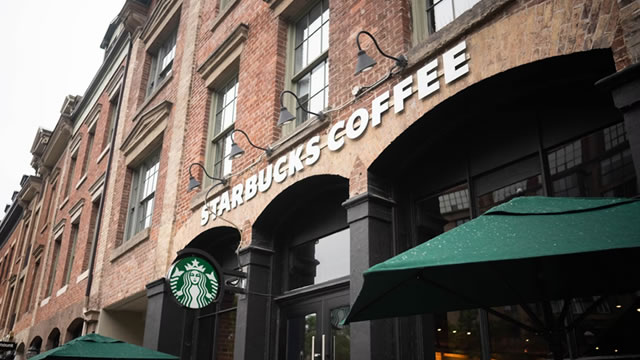
Starbucks workers' union escalates strike on Black Friday
Reuters· 2025-11-28 13:05
Core Points - The Starbucks workers' union is escalating an indefinite strike to over 120 stores across 85 cities, focusing on demands for higher pay and improved staffing levels at the coffee chain [1] Company Summary - The strike involves more than 120 stores, indicating a significant expansion of labor actions within the company [1] - The union's demands center around higher wages and better staffing, which may impact operational efficiency and customer service [1] Industry Summary - The escalation of strikes in the coffee industry reflects broader labor movements advocating for better working conditions and compensation [1] - The situation may influence other companies in the food and beverage sector to reassess their labor practices and employee relations strategies [1]

Is Starbucks Stock Underperforming the Dow?
Yahoo Finance· 2025-11-28 06:28
Core Insights - Starbucks Corporation operates as a global roaster, marketer, and retailer of coffee, with a market cap of $98.6 billion, and segments including North America, International, and Channel Development [1][2] Financial Performance - Starbucks stock reached a three-year high of $117.46 on March 3 but is currently trading 26.2% below that peak [3] - Year-to-date, Starbucks stock has dropped nearly 5%, and over the past 52 weeks, it has declined 13.9%, while the Dow Jones has gained 11.5% in 2025 and 5.7% over the past year [4] - The company has been trading below its 200-day moving average since early April and below its 50-day moving average since late July, indicating a bearish trend [4] Sales and Strategy - Under the new CEO Brian Niccol's "Back to Starbucks" strategy, comparable sales have consistently declined for several quarters, with North America comps remaining flat year-over-year in Q4 2025, while international comps improved by 3% [5] - Overall topline revenue increased 5.5% year-over-year to $9.6 billion, surpassing expectations, but margins were squeezed due to lower average ticket sizes in international markets [6] - Adjusted EPS for the quarter fell 35% year-over-year to $0.52, missing consensus estimates by 5.5%, leading to a 1.2% drop in stock prices following the Q4 results release [6]
SBUX Green Apron Gains Traction: Will Staffing Boost Traffic?
ZACKS· 2025-11-27 16:21
Core Insights - Starbucks Corporation (SBUX) is implementing the Green Apron Service to enhance customer connection and drive transaction growth after experiencing several soft quarters [1] - The initiative prioritizes staffing and service quality, with early results showing improved customer experience scores and record low turnover [2] Group 1: Operational Improvements - Management has increased labor hours, expanded staff rosters, and adjusted store opening times to meet high-demand periods [2] - Over 80% of U.S. company-operated stores are achieving café service times of four minutes or less, aided by the Smart Queue sequencing algorithm [3] - The first 650 pilot stores are outperforming the broader system, indicating that improved service familiarity will accelerate results [4] Group 2: Strategic Focus - The company aims to "win the morning" and "earn the afternoon" through better staffing and operational discipline, despite labor investments impacting margins [5] - Starbucks views the Green Apron initiative as both a defensive and offensive strategy to compete effectively across café, mobile, and drive-thru channels [4] Group 3: Competitive Landscape - Competitors like Dutch Bros Inc. and Restaurant Brands International are also enhancing their operational strategies, focusing on efficiency and value [6][7] - Dutch Bros emphasizes speedy service and personalized interactions, while Tim Hortons invests in equipment and digital ordering to boost guest satisfaction [7][8] Group 4: Financial Performance - Starbucks shares have gained 0.8% over the past six months, contrasting with a 6.7% decline in the industry [9] - The Zacks Consensus Estimate for SBUX's fiscal 2026 and 2027 EPS indicates a year-over-year gain of 13.6% and 25.6%, respectively [13]
What’s open and closed on Thanksgiving Day 2025? Stores, banks, stocks, groceries, pharmacies
Fastcompany· 2025-11-27 11:01
Core Points - Thanksgiving is a federal holiday in the United States, celebrated on the fourth Thursday of November, with November 27 being the date in 2025 [3] - Various services, including mail delivery and banking, will be closed on Thanksgiving, with exceptions for certain express services [4][6][7][8] Service Availability - The United States Postal Service (USPS) will not deliver mail on Thanksgiving, except for Priority Mail Express [4] - UPS and FedEx will also be closed, with only UPS Express Critical and FedEx Custom Critical services available [6] - Banks will be closed, but ATMs and online banking will remain accessible [7] Retail and Grocery Store Operations - Many grocery stores and retailers will be open on Thanksgiving, with varying hours [12] - Notable stores that will be open include Whole Foods, Sprouts, Kroger, Meijer, and Walmart, among others [12] - Some pharmacies, like Walgreens, will have 24-hour locations open, while CVS will operate with limited hours [11][12]

点杯奶茶像签卖身契,实时位置广告推送边界何在
2 1 Shi Ji Jing Ji Bao Dao· 2025-11-27 10:50
Core Viewpoint - The article discusses the increasing reliance of tea and coffee brands, including Starbucks, on self-built apps and mini-programs for user data collection and targeted marketing, while highlighting the privacy concerns associated with excessive personal information collection [1][3][10]. Group 1: Privacy Concerns - Starbucks China is facing a privacy complaint due to its app sending location-based promotional notifications, raising concerns about user tracking [1][3]. - The use of "geo-fencing" technology by Starbucks has been criticized for potentially violating privacy regulations, as users were not adequately informed about the marketing use of their location data [5][6][7]. - The company's privacy policy did not clearly state the use of location data for marketing purposes, which is a requirement under China's personal information protection laws [7][10]. Group 2: Industry Practices - The article notes that excessive data collection practices are common in the tea and coffee industry, with consumers expressing dissatisfaction over the collection of personal information such as phone numbers and location [10][11]. - Regulatory bodies have begun to scrutinize these practices, with Starbucks and other brands like Luckin Coffee and CoCo being called out for improper data collection [10][11]. - The competitive landscape in the digitalized restaurant market is driving brands to rely heavily on user data for targeted marketing and customer retention strategies [10][11]. Group 3: Company Response - In response to the complaints, Starbucks confirmed that it has discontinued the location-based promotional feature and emphasized its commitment to user privacy and experience improvement [8][11]. - The company is under pressure to enhance its promotional strategies, as indicated by a recent decline in average transaction value despite a growth in store transaction volume [11].
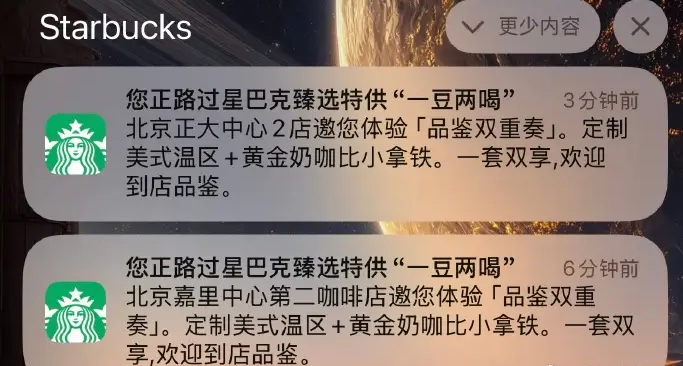
点杯奶茶像签卖身契,实时位置广告推送边界何在
21世纪经济报道· 2025-11-27 10:33
Core Viewpoint - The article discusses the increasing reliance of tea and coffee brands, including Starbucks, on self-built apps and mini-programs for user data collection and targeted marketing, while highlighting the privacy concerns associated with excessive personal information collection [1][10]. Group 1: Privacy Concerns - Starbucks China is facing a privacy complaint due to its app sending location-based promotional notifications, raising concerns about user tracking [1][3]. - The use of "geo-fencing" technology by Starbucks to send notifications when users are near stores has been criticized for not being clearly stated in the app's privacy policy [4][5]. - The article emphasizes that location information is sensitive personal data and must be handled with care, requiring clear consent and purpose disclosure according to domestic regulations [7][8]. Group 2: Industry Practices - The article notes that the collection of user data, including phone numbers and location, has become standard practice in the food and beverage industry, leading to consumer dissatisfaction [10]. - Regulatory bodies have begun to scrutinize companies like Starbucks for their practices of inducing users to provide personal information, with multiple companies being called out for similar issues [10][11]. - The competitive landscape in the food and beverage sector is driving brands to rely heavily on data for digital operations, marketing, and customer retention strategies [10][11]. Group 3: Company Responses - In response to the complaints, Starbucks confirmed that the location-based promotional feature has been discontinued and expressed commitment to improving privacy protection and user experience [8][11]. - The article highlights that Starbucks is under pressure to enhance promotions and customer engagement through its app, especially as it faces competition from other brands like Luckin Coffee, which has successfully built a large user base [11].

卖身后的星巴克,欲为“二流”而不可得?
3 6 Ke· 2025-11-27 09:35
Core Viewpoint - Starbucks has announced a strategic partnership with Boyu Capital to establish a joint venture for its retail operations in China, retaining 40% ownership while Boyu will hold 60% and manage major operational decisions. The plan includes expanding the current 8,000 stores to 20,000, indicating a shift towards lower-tier markets, which may lead to a decline in brand perception and customer base [1] Group 1: Market Position and Strategy - Starbucks aims to compete with lower-priced coffee brands like Luckin Coffee and Kudi, which have seen rapid growth and market share gains [3][4] - The partnership with Boyu Capital is seen as a move to penetrate deeper into the Chinese market, particularly targeting lower-tier cities [1][21] - Despite the expansion plans, Starbucks faces significant challenges in cost management compared to its competitors, making it difficult to compete on price [9][7] Group 2: Financial Performance - Starbucks China reported a 14% decline in net revenue for the fiscal year 2022, with same-store sales dropping 23% and transaction volume down 20% [6] - In Q4 of fiscal year 2023, same-store sales further declined by 16%, indicating ongoing struggles in the market [6] - The company has initiated a price reduction strategy for the first time in 25 years, but this has not significantly improved its competitive position against lower-cost rivals [6][22] Group 3: Product Innovation and Consumer Preferences - Starbucks has lagged behind competitors like Luckin in product innovation, launching only 78 new products in its most prolific year compared to Luckin's over 100 [10][12] - The lack of popular new offerings has contributed to a decline in consumer interest, as younger consumers prioritize social value and innovative products [13][14] - The traditional approach of Starbucks contrasts sharply with the data-driven, rapid iteration model employed by Luckin, which has successfully created popular products that resonate with consumers [12][19] Group 4: Operational Challenges - Starbucks' operational costs are significantly higher than those of its competitors, with raw material costs at 26% and total costs exceeding 26 yuan per cup, compared to competitors' costs around 9-10 yuan [8][7] - The company's attempt to introduce smaller, more cost-effective store formats has not yielded the expected results, as operational costs remain high and consumer engagement has declined [21][22] - The challenge lies in balancing the brand's premium image with the need to appeal to price-sensitive consumers in lower-tier markets [19][21]

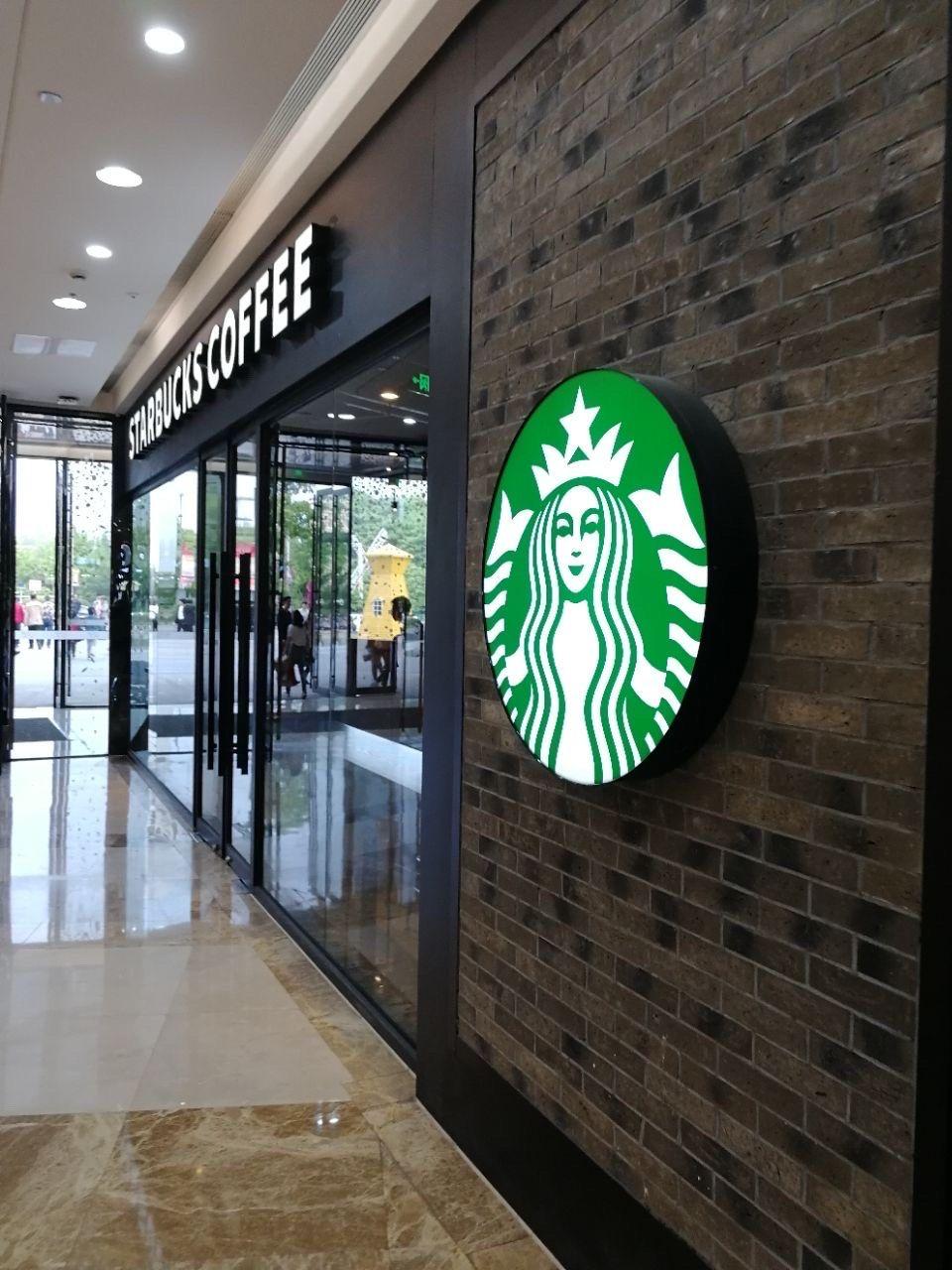
一步一广告推送,地理围栏“追杀式营销”边界何在?
2 1 Shi Ji Jing Ji Bao Dao· 2025-11-27 09:02
Core Viewpoint - The article discusses the growing concern over privacy issues related to location-based marketing strategies employed by coffee and tea brands, particularly Starbucks China, which has faced complaints regarding excessive personal data collection and marketing push notifications based on users' real-time locations [1][4][8]. Group 1: Privacy Concerns - Starbucks China is facing a privacy complaint due to its app sending location-based promotional notifications, raising concerns about being "tracked" by the app [4][8]. - The use of "geo-fencing" technology by Starbucks, which triggers notifications when users are near a store, has been criticized for not being clearly outlined in the app's privacy policy [5][6][8]. - The article highlights that many consumers have expressed dissatisfaction with the excessive collection of personal information by digital food and beverage services, indicating a broader trend in the industry [4][9]. Group 2: Regulatory Environment - Regulatory bodies have begun to scrutinize the practices of companies like Starbucks for frequently soliciting sensitive personal information, leading to multiple investigations and warnings [9][10]. - The article notes that in June 2023, Starbucks was among 64 mobile applications cited for improper collection and use of personal information [9]. Group 3: Industry Trends - The competitive landscape in the beverage industry is driving companies to rely heavily on data for digital operations, marketing, and customer retention strategies [9][10]. - Starbucks reported a 4% increase in store transaction volume for 2025, but a 5% decrease in average transaction value, prompting the company to enhance promotional efforts through its app [9][10]. - Other brands in the industry, such as Luckin Coffee and CoCo, have also faced similar complaints regarding data privacy, indicating a widespread issue across the sector [9][10].
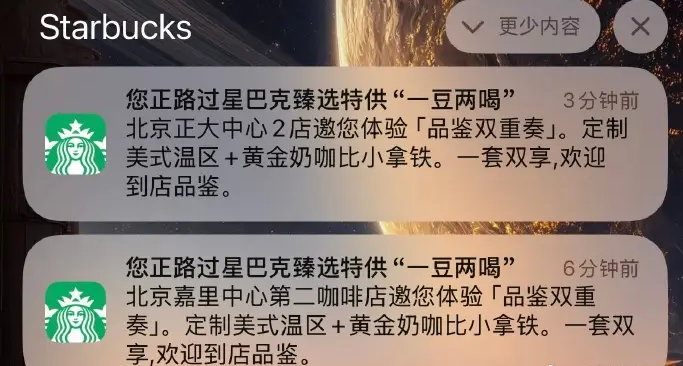
一步一广告推送,地理围栏“追杀式营销“边界何在?
2 1 Shi Ji Jing Ji Bao Dao· 2025-11-27 09:00
Core Viewpoint - The article discusses the implications of location-based marketing in the food and beverage industry, particularly focusing on Starbucks China and the privacy concerns arising from its use of geofencing technology for targeted promotions. Group 1: Company-Specific Insights - Starbucks China has faced privacy complaints regarding its app's use of geolocation to send promotional notifications to users, raising concerns about being "tracked" [1][2] - The company confirmed that it has discontinued the geolocation-based promotional feature in response to user feedback and is committed to improving privacy protection [5] - Starbucks has previously been criticized for excessive data collection practices, including the solicitation of personal information such as phone numbers and location data [5][6] Group 2: Industry Trends and Challenges - The food and beverage industry is increasingly relying on digital tools and data collection for competitive advantage, with many brands, including Luckin Coffee and CoCo, also facing scrutiny for similar privacy issues [6][7] - The competitive landscape has intensified, with Starbucks reporting a 4% increase in store transaction volume but a 5% decrease in average transaction value, prompting the company to enhance promotional efforts [6][7] - The reliance on user data for personalized marketing raises significant privacy concerns, necessitating compliance with regulations that require clear user consent and purpose disclosure [4][7]