Starbucks(SBUX)

Search documents
博裕投资将控股星巴克中国
Mei Ri Jing Ji Xin Wen· 2025-11-04 13:20
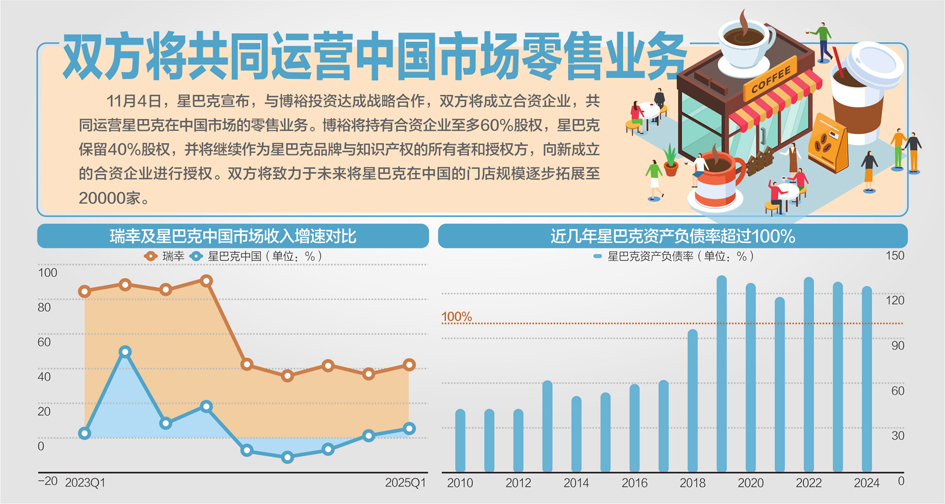
Core Viewpoint - Starbucks has entered a strategic partnership with Boyu Capital to establish a joint venture for its retail operations in China, marking a new chapter after 26 years in the market [1][3]. Group 1: Joint Venture Details - Boyu Capital will hold up to 60% equity in the joint venture, while Starbucks retains 40% and continues to own and license its brand and intellectual property [1]. - The enterprise value of the joint venture is approximately $4 billion, excluding cash and debt, which will determine Boyu Capital's corresponding equity [1]. Group 2: Market Potential and Growth Plans - Starbucks anticipates that the total value of its retail business in China will exceed $13 billion, comprising the equity transferred to Boyu Capital, retained equity, and future licensing revenue [3]. - The new joint venture will be headquartered in Shanghai and aims to expand Starbucks' store count in China from over 8,000 to 20,000 [4]. Group 3: Strategic Insights and Leadership - Starbucks' CEO Brian Niccol emphasized that Boyu Capital's local market expertise will accelerate Starbucks' expansion, particularly in smaller cities and emerging regions [4]. - Boyu Capital's partner Huang Yuzheng expressed a commitment to enhancing customer experiences through innovative and localized offerings [4]. Group 4: Historical Context and Comparisons - Boyu Capital, founded in 2011, has a diverse investment portfolio and has previously invested in notable projects such as Alibaba and NetEase Cloud Music [5][6]. - The partnership reflects a trend seen with other companies like Yum China and McDonald's, which have successfully accelerated growth in China by partnering with local investors [10][11].


中产最爱的咖啡「易主」,价格会降吗?|深氪
36氪· 2025-11-04 13:14
Core Viewpoint - The acquisition of Starbucks China by Boyu Capital for a valuation of $13 billion marks the largest merger in the consumer sector in nearly a decade, highlighting the challenges Starbucks faces in the Chinese market and the strategic shift needed to regain competitiveness [6][7][8]. Group 1: Acquisition Details - The deal involved Boyu acquiring a 60% stake in Starbucks China, with the valuation split into $4 billion for the joint venture and the remainder attributed to brand value [11]. - The acquisition process was lengthy, involving over 30 top investment institutions and multiple rounds of negotiations, reflecting the high stakes and interest in the deal [7][10]. - Boyu Capital's strategy includes leveraging its real estate resources to enhance Starbucks' property portfolio and proposing significant store expansion plans [12]. Group 2: Market Position and Challenges - Starbucks China has seen a decline in market position, with its operating profit margin dropping from a peak of 28% in 2013 to around 12-13% currently [55]. - The company has struggled to adapt to the competitive landscape, particularly against rivals like Luckin Coffee, which has aggressively pursued a lower price point strategy [39][44]. - The high operational costs, including supply chain expenses that are 1.5-2 times higher than competitors, have hindered Starbucks' ability to lower prices [52][53]. Group 3: Strategic Shifts and Future Directions - Following the acquisition, there is a consensus that Starbucks needs to focus on cost reduction, price adjustments, and expansion into smaller cities to regain market share [69]. - The company plans to increase its store count in China to 20,000, particularly targeting smaller cities and emerging regions, indicating a shift in strategy post-acquisition [69]. - The need for product innovation and faster adaptation to market trends has been highlighted, as Starbucks has lagged behind competitors in introducing new offerings [60][61].

星巴克怎么办
3 6 Ke· 2025-11-04 13:04
Core Insights - Starbucks has entered a new phase in China after 26 years, with Boyu Capital acquiring approximately 60% of Starbucks China for $4 billion, valuing the business at over $13 billion [1][2] - The acquisition is seen as a strong positive signal for the consumer market, with bidders offering valuations of 10 to 15 times the expected EBITDA for 2025 [2][3] - The competitive landscape has intensified, with new entrants like Luckin Coffee reshaping consumer preferences and market dynamics [9][13] Investment and Market Dynamics - Over 30 bidders participated in the acquisition process, including major private equity firms and tech companies, indicating strong interest in Starbucks China's potential [4][5] - The competitive bidding process reflects a broader trend of private equity and large corporations entering the Chinese consumer market [4][5] - Starbucks' previous market dominance is challenged by the rapid expansion of competitors like Luckin Coffee, which has surpassed Starbucks in store count [9][13] Operational Challenges - Starbucks faces increasing difficulties in expanding its store footprint, as landlords are now favoring emerging brands over established ones [13][14] - The company has closed several flagship stores in major cities, indicating a potential oversaturation in certain areas [14][15] - Expansion into lower-tier markets has not met expectations, with some stores struggling to break even [16][17] Strategic Recommendations - Investors have suggested that Starbucks should consider opening smaller stores and lowering prices to compete effectively [19][20] - However, Starbucks has rejected these suggestions, fearing that it would dilute its brand image [20][21] - The new partnership with Boyu Capital aims to expand the store count to 20,000, nearly doubling the current number of over 8,000 stores [21][22] Brand and Consumer Perception - Starbucks has historically been viewed as a premium brand, but changing consumer preferences and competition have eroded its market position [13][18] - The company is perceived as less innovative compared to competitors, with a slower pace of product development and marketing [27][28] - The need for a more localized approach to product offerings and marketing strategies is emphasized, similar to the successful model adopted by McDonald's in China [33][34] Future Outlook - The partnership with Boyu Capital is expected to enhance Starbucks' operational efficiency and market responsiveness [40][44] - The focus will be on improving customer experience, accelerating product innovation, and deepening localization efforts [44][45] - The success of this new joint venture will depend on effective resource integration and building trust between Starbucks and its new partner [45]

博裕投资40亿美元入主,星巴克中国换挡
Bei Jing Shang Bao· 2025-11-04 12:24
Core Viewpoint - Starbucks has announced a strategic partnership with Boyu Capital to establish a joint venture for its retail operations in China, aiming to expand its store count from 8,000 to 20,000 locations [1][5][6]. Group 1: Partnership Details - The joint venture will see Boyu Capital holding up to 60% equity, while Starbucks retains 40% [3][5]. - The enterprise value of the deal is approximately $4 billion, excluding cash and debt, with Starbucks' retail business in China valued at over $13 billion [3][5]. - The new joint venture will be headquartered in Shanghai and will manage the existing 8,000 Starbucks stores in China [3][5]. Group 2: Growth Strategy - The partnership aims to enhance customer experience, accelerate product and digital innovation, and expand into new cities and regions [3][5]. - Starbucks plans to focus on non-first-tier cities for its expansion, leveraging Boyu's local market expertise [5][7]. - The company is expected to innovate and possibly introduce sub-brands to penetrate deeper into the market [8]. Group 3: Market Context - The Chinese coffee market is highly competitive, with rivals like Luckin Coffee and Kudi Coffee rapidly expanding their store networks [7][8]. - Starbucks has been adapting its business model to local consumer preferences, emphasizing the need for a balance between speed of expansion and maintaining brand quality [6][8]. - The collaboration is seen as a way to enhance Starbucks' competitive edge by combining its brand strength with Boyu's local operational capabilities [6][7].
不够“中国”:星巴克中国130亿美元卖身始末 | 深氪
36氪未来消费· 2025-11-04 12:21
Core Viewpoint - The era of foreign capital premium has ended, as evidenced by the significant acquisition of Starbucks China, marking a pivotal shift in the competitive landscape of the coffee market in China [2][4][17]. Group 1: Acquisition Details - The acquisition of Starbucks China by Boyu Capital for a valuation of $13 billion represents the largest merger in the consumer sector in nearly a decade, involving over 30 top investment institutions [5][6]. - The deal was structured with a $4 billion valuation for the joint venture, which includes assets such as stores and a roasting factory, while the brand value is tied to a royalty fee based on annual GMV [10][11]. - The final valuation corresponds to a price-to-earnings ratio of approximately 26 times, indicating that Starbucks China's valuation is comparable to that of Luckin Coffee [10]. Group 2: Strategic Implications - The primary concerns for both buyers and sellers revolve around the price and the strategy to turn around Starbucks China's performance [9]. - Boyu Capital plans to leverage its real estate resources to introduce high-quality properties for Starbucks, while other proposals include expanding the store count to 15,000, with a significant number in county-level cities [11]. - The competitive landscape has shifted, with Boyu Capital recognized as a professional and low-profile private equity firm, actively pursuing acquisitions in a challenging market [14][15]. Group 3: Market Dynamics - Starbucks China has faced increasing competition, particularly from Luckin Coffee, which has aggressively expanded its market presence and pricing strategy [20][41]. - The high-end positioning of Starbucks has become a liability, as it has failed to adapt to changing consumer preferences and the rise of affordable coffee options [38][39]. - The company's internal divisions regarding its high-end strategy have led to operational inefficiencies and a decline in profitability, with operating margins dropping from a peak of 28% to around 12-13% [55]. Group 4: Future Outlook - Following the acquisition, Starbucks aims to expand its store count significantly, with plans to reach 20,000 locations, particularly in smaller cities and emerging regions [71]. - The new leadership is expected to focus on cost reduction, pricing strategies, and a renewed expansion approach to regain market share [71][72]. - The transition to a new operational model post-acquisition will be critical for Starbucks to navigate the evolving competitive landscape in China [71].
星巴克迎中国合伙人 能否撑起下沉市场的盈利预期?
Jing Ji Guan Cha Wang· 2025-11-04 11:53
Core Insights - Starbucks has entered a strategic partnership with Boyu Capital to form a joint venture for its retail operations in China, with Boyu holding up to 60% equity and Starbucks retaining 40% [2] - The estimated enterprise value of Starbucks' retail business in China exceeds $13 billion, which includes the value from the joint venture and ongoing brand licensing fees [2] - The partnership indicates a shift in control of Starbucks' operations in China to a local entity, reflecting a broader trend of foreign brands seeking local partnerships to enhance competitiveness [5][8] Financial Performance - In fiscal year 2024, Starbucks China reported revenues of $2.958 billion, a decline of 1.4% year-on-year, while fiscal year 2025 is expected to show a slight recovery with revenues projected at $3.105 billion, representing a 5% increase [3] Boyu Capital Overview - Boyu Capital is recognized as a top private equity firm in China, co-founded by former executives from China Ping An Group and TPG Capital, focusing on sectors like technology, consumer retail, and healthcare [4] - The firm has a diverse investment portfolio, including notable companies such as NetEase Cloud Music and Perfect Diary, and is known for its strategic investments in emerging markets [4] Market Dynamics - The Chinese consumer market is characterized by intense competition, with local brands employing aggressive pricing strategies to capture market share, posing challenges for foreign brands like Starbucks [5] - The partnership with Boyu Capital is seen as a necessary evolution for Starbucks to adapt to local market conditions and optimize its operations in lower-tier cities [6][7] Future Expansion Plans - The newly formed joint venture aims to expand Starbucks' store count in China from 8,000 to 20,000, indicating a significant growth strategy in the Chinese market [6] - The operational headquarters will remain in Shanghai, and the joint venture will focus on adapting to the unique challenges of the lower-tier market [6] Strategic Shift - Starbucks is transitioning from a direct operator to a brand licensor, which reduces operational risks and allows for a more flexible approach to market expansion [6][7] - This shift mirrors similar strategies employed by other foreign brands, such as McDonald's, which have sought local partnerships to enhance their market presence in China [8]

Starbucks to form joint venture with Boyu Capital to run China business
CNBC Television· 2025-11-04 11:48
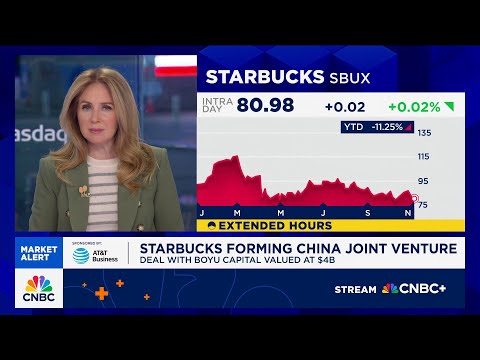
Starbucks is forming a joint venture with Chinese alternative asset management firm Buoyu Capital to operate the coffee chains locations in China. That deal is valued at $4 billion. Buyu will hold up to a 60% interest in the joint venture with Starbucks holding the 40% stake.The company though has conducted a monthslong review of options for its China business which includes about 8,000 coffee shops. Boy's founders include the grandson of one of China's former presidents. And if you look at Starbucks shares ...
Starbucks to form joint venture with Boyu Capital to run China business
Youtube· 2025-11-04 11:48
Starbucks is forming a joint venture with Chinese alternative asset management firm Buoyu Capital to operate the coffee chains locations in China. That deal is valued at $4 billion. Buyu will hold up to a 60% interest in the joint venture with Starbucks holding the 40% stake.The company though has conducted a monthslong review of options for its China business which includes about 8,000 coffee shops. Boy's founders include the grandson of one of China's former presidents. And if you look at Starbucks shares ...

Wall Street Breakfast Podcast: Palantir’s Big Gains, Big Drop
Seeking Alpha· 2025-11-04 11:44
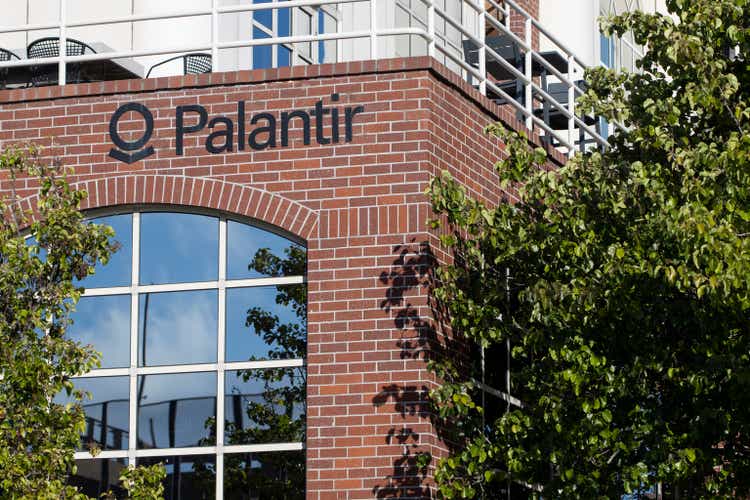
Palantir Technologies (PLTR) - Palantir reported Q3 revenue of $1.18 billion, a 63% year-over-year increase, driven by a 77% surge in U.S. revenue, with U.S. commercial revenue growing by 121% and U.S. government revenue by 52% [3][4] - The company closed 204 deals worth over $1 million, totaling $2.76 billion in contract value, and increased its customer count by 45% year-over-year [4] - Palantir raised its Q4 revenue guidance and lifted its full-year revenue outlook, along with higher forecasts for operating profit and free cash flow [4] Denny's (DENN) - Denny's will be taken private in a deal valued at approximately $620 million, including debt, with shareholders receiving $6.25 per share, representing a 52% premium to the closing stock price [5] - The acquisition is led by TriArtisan Capital Advisors, Treville Capital, and Yadav Enterprises, one of Denny's largest franchisees [5] Starbucks (SBUX) - Starbucks has agreed to sell a majority stake in its China business to Boyu Capital for an enterprise value of $4 billion, with Boyu Capital set to operate the retail business in China [6] - Under the agreement, Boyu will hold up to a 60% stake, while Starbucks retains the remaining interest, expecting the total value of its China retail business to exceed $13 billion [6]


Wall Street Breakfast Podcast: Palantir's Big Gains, Bigger Drop
Seeking Alpha· 2025-11-04 11:44
Palantir Technologies (PLTR) - Palantir reported Q3 results with a revenue increase of 63% year-over-year, reaching $1.18 billion, driven by a 77% surge in U.S. revenue, including 121% growth in U.S. commercial and 52% growth in U.S. government segments [3][4] - The company closed 204 deals worth over $1 million, totaling $2.76 billion in contract value, and saw a 45% year-over-year increase in customer count [4] - Palantir raised its Q4 revenue guidance and lifted its full-year revenue outlook, along with higher forecasts for operating profit and free cash flow [4] Denny's (DENN) - Denny's will be taken private in a deal valued at approximately $620 million, including debt, with shareholders receiving $6.25 per share, representing a 52% premium to the closing stock price [5] - The acquisition is led by TriArtisan Capital Advisors, Treville Capital, and Yadav Enterprises, one of Denny's largest franchisees [5] Starbucks (SBUX) - Starbucks has agreed to sell a majority stake in its China business to Boyu Capital for an enterprise value of $4 billion, with Boyu expected to hold up to a 60% stake [6] - Starbucks anticipates that the total value of its China retail business will exceed $13 billion [6]