Sandisk Corporation(SNDK)

Search documents
索罗斯Q3持仓:亚马逊(AMZN.US)晋升第一重仓股 清仓存储芯片股闪迪(SNDK.US)、西部数据(WDC.US)及特斯拉(TSLA.US)
智通财经网· 2025-11-15 00:54
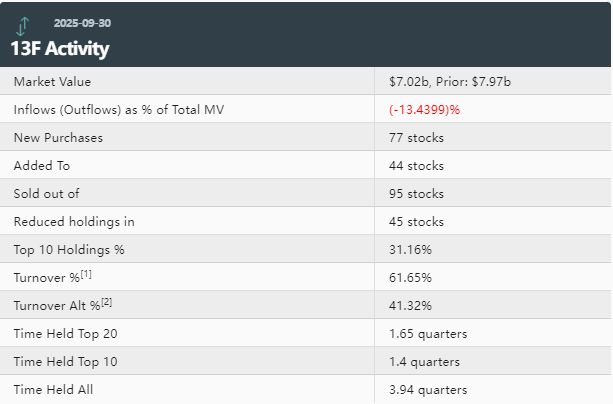
Core Insights - Soros Fund Management reported a total market value of $7.02 billion for Q3 2025, down 13% from $7.97 billion in the previous quarter [1][2] - The fund added 77 new stocks and increased holdings in 44 stocks, while reducing positions in 45 stocks and completely selling out of 95 stocks [1][2] - The top ten holdings accounted for 31.16% of the total market value [1][2] Holdings Overview - The largest holding is Amazon (AMZN.US) with approximately 2.23 million shares valued at about $488.8 million, representing 6.96% of the portfolio, with a significant increase of 481.47% in shares held [3][4] - Smurfit WestRock (SW.US) is the second largest holding with around 7.75 million shares valued at approximately $329.8 million, making up 4.70% of the portfolio, with a 3.56% increase in shares [3][4] - Spotify (SPOT.US) ranks third with about 185 million shares valued at approximately $253.1 million, accounting for 3.61% of the portfolio, with a 29.68% increase in shares [3][4] - Other notable holdings include Globant (GLOB.US) and Google (GOOGL.US), with significant increases in shares of 17.08% and 2341.11% respectively [3][4] Trading Activity - The top five purchases by percentage change in portfolio were Amazon, Invesco S&P 500 Equal Weight ETF (RSP.US), Google, Ford Motor Company (FORD.US), and VanEck Semiconductor ETF (SMH.US, PUT) [5][6] - The top five sales included First Solar (FSLR.US, CALL), iShares Russell 2000 ETF (IWM.US, PUT), Invesco QQQ Trust (QQQ.US, CALL), SPDR S&P 500 ETF (SPY.US, PUT), and Liberty Broadband (LBRDK.US) [5][6]


今夜,大逆转!
Zhong Guo Ji Jin Bao· 2025-11-14 16:23
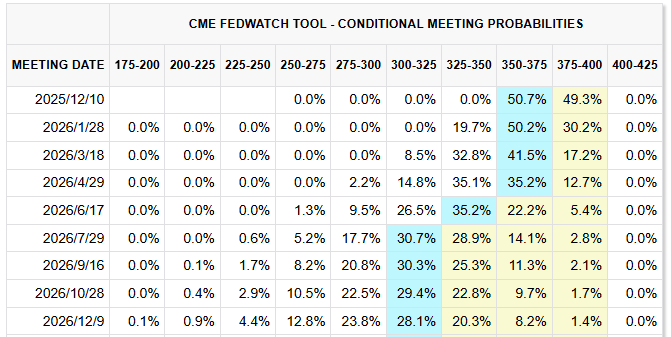
Market Performance - On November 14, U.S. stock markets experienced a dramatic turnaround after a pre-market decline, with the Dow Jones Industrial Average initially dropping over 500 points and the Nasdaq Composite falling nearly 2% before rebounding [2] - The semiconductor sector led the Nasdaq's recovery, with significant gains from companies such as Sandisk, which surged nearly 10%, and Micron Technology, which rose over 7% [2] Semiconductor Sector - Due to AI demand causing supply shortages, Samsung Electronics raised the prices of some memory chips by 30%-60% compared to September, with the price of a 32GB DDR5 memory module increasing from $149 to $239, a rise of over 60% [3] - Other DDR5 products also saw substantial price increases, with 16GB and 128GB modules rising approximately 50% to $135 and $1194, respectively, and 64GB and 96GB modules increasing by over 30% [3] Investor Sentiment - Billionaire investor Ron Baron expressed confidence during the recent tech stock sell-off, viewing the market pullback as an opportunity to find undervalued stocks, particularly not selling his Tesla shares [4][5] - Rick Gardner from RGA Investments noted that the market's recent volatility was expected and attributed it to the lack of economic data, suggesting that the market needs time to stabilize [5][6] Federal Reserve Outlook - Despite the absence of economic data support, some analysts expect the Federal Reserve to lower interest rates in December, although market volatility is anticipated in the coming months due to the potential release of economic data [6] - Current market expectations for a 25 basis point rate cut in December are slightly above 51%, down from earlier expectations of 62.9% and significantly lower than 95.5% a month ago [6]


存储概念股逆势拉升 SanDisk Corp(SNDK.US)涨超5%
Zhi Tong Cai Jing· 2025-11-14 16:16
Core Viewpoint - The storage sector in the U.S. stock market experienced a rally, driven by significant price increases in storage chips by Samsung Electronics due to soaring demand from AI data centers and cloud computing giants [1] Group 1: Market Performance - U.S. storage stocks saw gains, with SanDisk Corp rising over 5%, Micron Technology increasing over 4%, Western Digital up over 2%, and Seagate Technology turning positive [1] Group 2: Price Adjustments - Samsung Electronics has reportedly raised prices for certain critical storage chips by up to 60% compared to September, reflecting a severe shortage driven by the exponential demand from AI data center construction [1] Group 3: Demand Dynamics - Morgan Stanley noted a fundamental shift in the drivers of the storage supercycle, with demand now coming from AI data centers and cloud service giants rather than traditional price-sensitive consumer electronics customers [1] - The strategic necessity of acquiring storage products, including DRAM and NAND, has led to a significant reduction in price sensitivity among these new demand sources [1] - The substantial capacity required for High Bandwidth Memory (HBM) is structurally constraining the production capacity of DDR4 and DDR5 for the three major storage giants [1]


美股异动 | 存储概念股逆势拉升 SanDisk Corp(SNDK.US)涨超5%
智通财经网· 2025-11-14 15:08
Core Viewpoint - The storage sector in the U.S. stock market experienced a significant rally, driven by a substantial price increase in critical storage chips by Samsung Electronics, attributed to soaring demand from AI data centers and cloud computing giants [1] Group 1: Market Performance - U.S. storage stocks saw notable gains, with SanDisk Corp rising over 5%, Micron Technology increasing over 4%, Western Digital up over 2%, and Seagate Technology turning positive [1] Group 2: Price Adjustments - Samsung Electronics has raised prices for certain essential storage chips by up to 60% compared to September, reflecting a severe shortage due to increased demand from AI data centers [1] Group 3: Demand Dynamics - Morgan Stanley highlighted a shift in the core drivers of the storage supercycle, noting that the demand is now primarily from AI data centers and cloud service giants rather than traditional price-sensitive consumer electronics customers [1] - The strategic importance of acquiring storage products, including DRAM and NAND, has increased for these entities, leading to a minimal sensitivity to price changes [1] - The substantial capacity required for High Bandwidth Memory (HBM) is structurally impacting the production capacity of DDR4 and DDR5 by the three major storage manufacturers [1]
铠侠财报带崩全球存储公司股价 A股存储板块大跌
Jing Ji Guan Cha Wang· 2025-11-14 05:52
Core Viewpoint - Kioxia's disappointing financial results reflect uncertainties at the tail end of the industry's cyclical low, yet there is optimism regarding the overall upward trend in NAND prices [2][7]. Financial Performance - Kioxia reported a net profit of 40.7 billion yen (approximately 1.873 billion RMB) for Q2 of FY2025 (July-September), a significant decline of 62% year-on-year, falling short of market expectations of around 47.4 billion yen [4][5]. - The poor performance is attributed to seasonal smartphone demand, which led to a high proportion (35%) of low-margin smart device products, while the share of high-margin AI data center products remained low [4]. Market Reaction - Following Kioxia's financial report, its stock price plummeted by 23.03% to 10,025 yen, causing a ripple effect in the U.S. market, with major storage companies like SanDisk, Seagate, and Western Digital experiencing declines of 15.6%, 7.31%, and 5.39% respectively [5][6]. - Concerns over global storage chip supply-demand imbalances were heightened, despite strong AI and data center demand, as Kioxia's results revealed profitability pressures [5]. A-Share Market Impact - The negative impact of Kioxia's report extended to the A-share market, with stocks like Zhaoyi Innovation and Baiwei Storage dropping by over 3% and 11% respectively [6]. - The A-share storage sector had previously benefited from a "price surge" in the global storage chip market and the explosive demand from AI [6]. Future Outlook - Analysts remain optimistic about the storage sector's rebound, driven by AI demand, despite the short-term panic triggered by Kioxia's results [7]. - Kioxia anticipates record revenue and profit for Q3 of FY2025 (October-December), primarily due to higher average selling prices and increased NAND demand related to AI [7].

高飞股集体跳水,美股为何突发暴跌?
智通财经网· 2025-11-14 00:46
Core Viewpoint - The uncertainty caused by the U.S. government shutdown is impacting the Federal Reserve's decision-making, leading to a risk-averse sentiment in the market, which has resulted in significant declines in high-growth and AI-related stocks [1][9]. Market Reaction - The U.S. stock market experienced its largest drop in nearly a month, with the Nasdaq 100 index falling by 2% and the S&P 500 and Dow Jones Industrial Average both down by 1.7% [3]. - High-growth stocks, particularly those favored by retail investors, saw their largest declines since April, with a notable drop in AI-related stocks [2][6]. Economic Data Impact - The government shutdown has delayed the release of key economic data, including unemployment claims and inflation figures, contributing to market anxiety [10]. - The lack of critical economic reports has left investors struggling to assess the economic landscape, further exacerbating market volatility [10]. Interest Rate Expectations - Swap traders have reduced the probability of a rate cut in December to approximately 50%, down from 72% a week prior, reflecting a shift in market sentiment [1]. - The uncertainty surrounding the Federal Reserve's future actions, particularly in light of high inflation and a weak job market, is a primary source of market anxiety [9][13]. Stock Performance - AI-related stocks have seen significant declines, with companies like Sandisk and Astera Labs dropping 14% and 8.4% respectively, while Nvidia and Broadcom also faced losses [6]. - The retail investor sentiment index has shown a notable decrease, with the Citi U.S. Retail Favorites Index down 6%, marking its largest drop since April [8].



美股存储芯片股下跌,闪迪下跌7%
Mei Ri Jing Ji Xin Wen· 2025-11-13 14:46
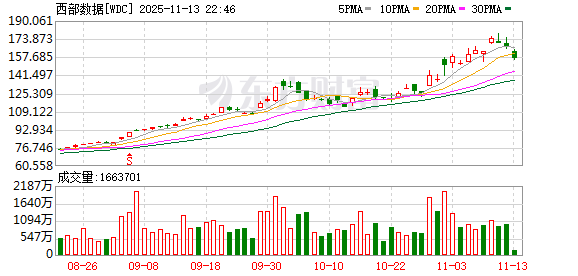
Core Viewpoint - U.S. storage chip stocks experienced a decline, with significant drops in major companies such as SanDisk, Western Digital, and Seagate Technology [2] Company Performance - SanDisk's stock fell by 7% [2] - Western Digital's stock decreased by 4% [2] - Seagate Technology's stock dropped by 4.3% [2]
美国存储芯片股下跌,西部数据下跌4%,闪迪下跌7%,希捷科技下跌4.3%
Xin Lang Cai Jing· 2025-11-13 14:44
Core Viewpoint - The storage chip stocks in the United States have experienced a decline, with significant drops in major companies such as Western Digital, SanDisk, and Seagate Technology [1] Company Summaries - Western Digital shares fell by 4% [1] - SanDisk shares decreased by 7% [1] - Seagate Technology saw a decline of 4.3% [1]
GFHK - 十一月电子月报
2025-11-13 13:40
Summary of Key Points from the Conference Call Industry Overview - **Sector**: Technology, specifically focusing on AI and semiconductor industries - **Market Dynamics**: The technology sector is experiencing a range-bound market with significant attention on memory and optical segments due to political uncertainties affecting semiconductors [1][2] Core Insights - **Memory Pricing**: - TrendForce has raised the 4Q25 DRAM pricing growth expectation to 18-23% QoQ, slightly below the previous estimates of 20-25% [1] - Anticipation of another 20-25% QoQ increase in 1Q26 [1] - The DRAM upcycle is expected to extend into at least 1H26, with pricing dynamics stronger than previously expected [9] - NAND contract prices are projected to increase by 20-25% in both 4Q25 and 1Q26 [9] - **AI Demand**: - AI is expected to drive significant demand in the semiconductor sector, with the total addressable market (TAM) for AI accelerators projected to reach $308 billion and $440 billion in 2026 and 2027, respectively, representing a YoY growth of +54% and +33% [3] - Companies like Nvidia, Google, and AWS are leading the demand for AI accelerators [11] - **Optical Sector Recovery**: - The optical sector has regained strength, with companies like Lumentum, Coherent, and Tower providing strong guidance [1] - A bullish outlook on 1.6T demand into 2026/2027 is maintained [1] Company-Specific Highlights - **TSMC**: - Reported October revenue of NT$367.5 billion, up 11% MoM and 16.9% YoY, driven by AI [14] - Full-year sales guidance raised to a 30% increase in USD terms [14] - Expected price hikes for leading nodes in 1Q26 [14] - **SanDisk**: - Strong FY1Q26 results with revenue at $2.3 billion and margin at 29.9% [8] - FY2Q26 guidance indicates a margin increase to 41-43% [8] - **Teradyne**: - Initiated with a Buy rating, expected revenue of $4.07 billion and $5.43 billion in 2026 and 2027, respectively [10] - Positioned well for AI market share gain [10] - **AMD**: - Inline results with solid guidance, focusing on the MI450 product ramp [12] - Expected EPS contribution of ~27% to 2027 [12] Risks and Considerations - **Market Risks**: - Concerns regarding alternative technologies and potential slowdowns in AI demand and capital expenditures [6] - Risks associated with product delays and IT demand slowdown [6] Additional Insights - **Consumer Electronics**: - The PC market is expected to see a 4% YoY increase in shipments in 2025, driven by commercial demand, but consumer concerns over memory pricing may pose risks [18] - **Smartphone Market**: - MediaTek reported a slight decline in sales, with expectations for a sequential increase in 4Q [19] - **Non-AI Semiconductor Performance**: - Companies like UMC and Vanguard are experiencing mixed results, with UMC showing a 6.9% MoM increase but a slight YoY decline [20] This summary encapsulates the key points discussed in the conference call, highlighting the current state of the technology sector, particularly in AI and semiconductors, along with company-specific performances and market risks.


高盛调高闪迪目标价,NAND供不应求,推动定价力与利润增长
Sou Hu Cai Jing· 2025-11-12 22:08
Core Viewpoint - Goldman Sachs has doubled the target price for SanDisk from $140 to $280, maintaining a "buy" rating, indicating a significant shift in market dynamics driven by NAND supply shortages and increased pricing power [1][3]. Financial Performance - SanDisk reported Q3 2025 revenue of $2.31 billion with a gross margin of 29.9%, and Non-GAAP EPS of $1.22, exceeding market expectations [3]. - The guidance for Q4 2025 includes a revenue midpoint of $2.60 billion, a gross margin midpoint of 42.0%, and a Non-GAAP EPS midpoint of $3.20, reflecting strong growth potential [3][7]. Industry Dynamics - The demand for high-end memory, particularly from AI servers, is driving manufacturers to prioritize production of high-margin DDR5 and HBM, leading to a squeeze on consumer-grade NAND and DDR4 supplies [5]. - Reports indicate a 50% increase in NAND contract prices in November, with DRAM prices up 171.8% year-over-year, highlighting significant supply constraints [5]. Valuation Adjustments - Goldman Sachs raised SanDisk's normalized EPS forecast from $7.80 to $14.00 and adjusted the valuation multiple from 18x to 20x, resulting in the target price doubling [7]. - Future EPS estimates have been significantly increased, with 2025 projected at $4.86 (up from $2.88), 2026 at $19.00 (up from $10.35), and 2027 at $23.25 (up from $12.57) [7]. Market Sentiment - The combination of SanDisk's strong performance, rising market prices, and Goldman Sachs' target price increase creates a positive feedback loop, enhancing the outlook for the NAND sector [11]. - The current market environment is characterized by tight supply leading to price increases, which in turn boosts profit margins and supports higher valuations [11].