TME(TME)

Search documents
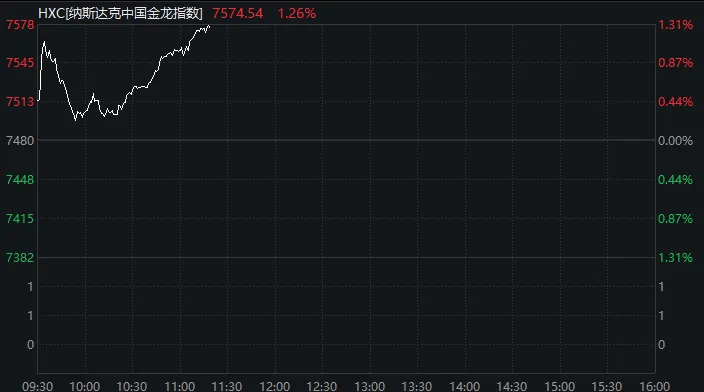
腾讯音乐领涨12%带动中概股走强,纳指中国金龙指数涨1.49%
Jin Rong Jie· 2025-08-13 01:18
Group 1 - The Nasdaq China Golden Dragon Index recorded a 1.49% increase, reflecting strong interest in popular Chinese concept stocks [1] - Tencent Music Entertainment Group was a standout performer, with its stock price soaring nearly 12% after reporting Q2 revenue of 8.44 billion yuan, a year-on-year increase of 17.9% [1] - Online music service revenue for Tencent Music grew by 26.4% to 6.85 billion yuan, with adjusted net profit rising by 33.0% to 2.64 billion yuan [1] - Weibo's stock rose over 3%, while e-commerce giants JD.com and Alibaba also saw gains exceeding 3%, indicating investor optimism in the Chinese e-commerce sector [1] - Baidu and iQIYI experienced increases of over 2%, contributing to an overall upward trend in technology stocks [1] Group 2 - Tencent Music reported a 6.3% year-on-year increase in online music paying users, reaching 124.4 million, with average revenue per paying user rising from 10.7 yuan to 11.7 yuan [1] - The company aims to continue its long-term growth strategy by focusing on product innovation and enhancing user engagement, while collaborating with industry partners to advance the Chinese music industry [2]
腾讯音乐娱乐集团2025Q2收入84.4亿元同比增长17.9%,调整后净利润26.4亿元
Jin Rong Jie· 2025-08-13 00:58
Core Insights - Tencent Music Entertainment Group reported solid growth in its Q2 financial performance for the period ending June 30, 2025, with total revenue reaching 8.44 billion yuan, a year-on-year increase of 17.9%, and adjusted net profit of 2.64 billion yuan, up 33.0% [1] Financial Performance - Total revenue for Q2 2025 was 8.44 billion yuan, reflecting a 17.9% year-on-year growth [1] - Adjusted net profit for the same period was 2.64 billion yuan, marking a 33.0% increase compared to the previous year [1] - Online music service revenue grew by 26.4% to 6.85 billion yuan [1] - Online music subscription revenue increased by 17.1% to 4.38 billion yuan [1] - The number of paying users for online music reached 124.4 million, with ARPPU rising to 11.7 yuan [1] - The number of Tencent Music's Super VIP users surpassed 15 million recently [1] Market Sentiment - The market generally holds a positive outlook on Tencent Music's financial performance, with several brokerage firms, including Morgan Stanley, Goldman Sachs, and CMB International, issuing "overweight" or "buy" ratings [2] - Morgan Stanley noted that the contribution of Tencent Music's SVIP business continues to rise, enhancing user spending willingness and driving ARPPU growth [2] - Jefferies highlighted Tencent Music's provision of a one-stop music service and its efforts in content creation and cross-cultural collaborations, which enhance user engagement and create additional growth opportunities [2]
创纪录!美国国债总额:37004817625842美元
Sou Hu Cai Jing· 2025-08-13 00:56
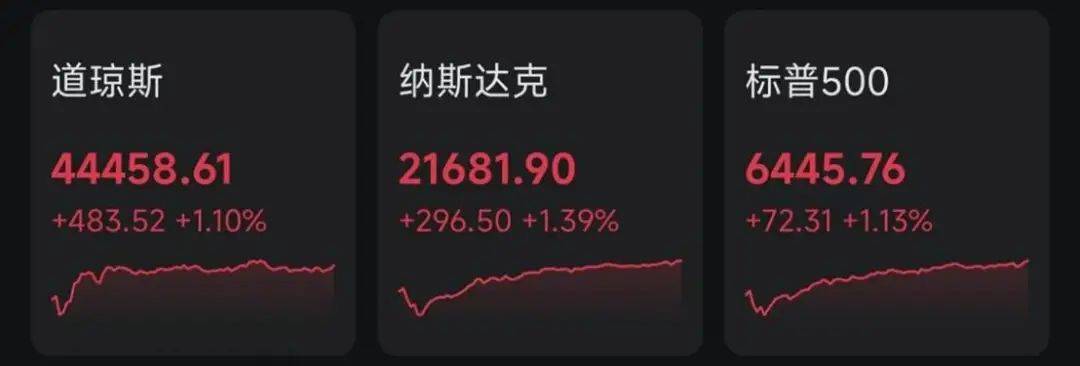
Market Performance - The three major U.S. stock indices rose over 1%, with the S&P 500 and Nasdaq reaching new highs. The Dow Jones increased by 1.10% to 44,458.61 points, the Nasdaq rose by 1.39% to 21,681.90 points, and the S&P 500 gained 1.13% to 6,445.76 points [2][3]. CPI Data - The U.S. Labor Department reported that the Consumer Price Index (CPI) for July increased by 2.7% year-over-year, which is below the market expectation of 2.8%. The core CPI rose by 3.1%, exceeding both the previous month's 2.9% and the market expectation of 3% [7][8]. Federal Reserve Expectations - Following the CPI data release, market expectations for a Federal Reserve rate cut in September increased significantly, with a 93.4% probability of a 25 basis point cut and only a 6.6% chance of maintaining the current rate [8]. Technology Stocks - Major technology stocks experienced gains, with Intel rising over 5%, Meta increasing by over 3% (approaching a market cap of $2 trillion), and other tech giants like Apple, Microsoft, and Google rising over 1%. Notably, Meta and Nvidia reached new closing highs [5]. Chinese Stocks - The Nasdaq Golden Dragon China Index rose by 1.49%, with Tencent Music increasing nearly 12%, and other companies like Weibo, JD, and Alibaba rising over 3%. However, NIO fell nearly 9%, and XPeng dropped over 6% [5]. International Relations - U.S. President Trump is scheduled to meet with Russian President Putin on March 15 in Anchorage, Alaska, to discuss the resolution of the Russia-Ukraine conflict. The meeting will focus on listening to Putin's perspective [10]. National Debt - The total U.S. national debt has surpassed $37 trillion for the first time, attributed to the federal government accumulating debt at a record pace [12].


8月13日早餐 | 大消费再迎催化;美联储9月降息几率增加
Xuan Gu Bao· 2025-08-13 00:06
Group 1: Market Overview - Global trade optimism boosts investor confidence, with US July CPI data reinforcing expectations for a Fed rate cut in September. Risk assets see significant inflows, with the Nasdaq and S&P 500 both rising over 1% to reach all-time highs. The S&P 500 closes up 1.13%, the Dow up 1.10%, and the Nasdaq up 1.39% [1] - The Russell 2000 index surges by 3%, indicating strong performance in small-cap stocks [1] - The Nasdaq Golden Dragon China Index rises by 1.49%, with notable gains from companies like Zhengye Bio (+40%), Tencent Music (+12%), and Jiayin Technology (+9.35%). However, companies like Xiaoma Zhixing and NIO see declines of 3.49% and 8.96%, respectively [1] Group 2: Economic Indicators - US Treasury yields drop significantly following inflation data, although they recover slightly later. The 2-year yield ends down nearly 3 basis points [2] - The US dollar declines by 0.47%, while gold fluctuates around $3,350 [3] - Crude oil prices fall, with WTI oil dropping nearly 2% from its daily high [4] Group 3: Corporate Developments - AI company Perplexity proposes a $34.5 billion acquisition of Google's Chrome, indicating a competitive shift in the AI search market [5][13] - In the lithium battery sector, a closed-door meeting among key dry-process lithium battery separator manufacturers in Shenzhen results in agreements on price discipline, capacity management, and industry cooperation [14] - The insurance sector sees a strong performance in Hong Kong, with companies like China Pacific Insurance and China Taiping rising by 6.77% and 5.89%, respectively. Analysts suggest that the Chinese insurance industry has significant growth potential compared to international standards [15] Group 4: Financial Announcements - Notable financial results include Kweichow Moutai reporting a net profit of 45.403 billion yuan for the first half of the year, a year-on-year increase of 8.89%. China Unicom's net profit for the same period is 6.349 billion yuan, up 5.1% [23]




美股全线拉升,多只中概股涨超10%
Zheng Quan Shi Bao· 2025-08-13 00:02
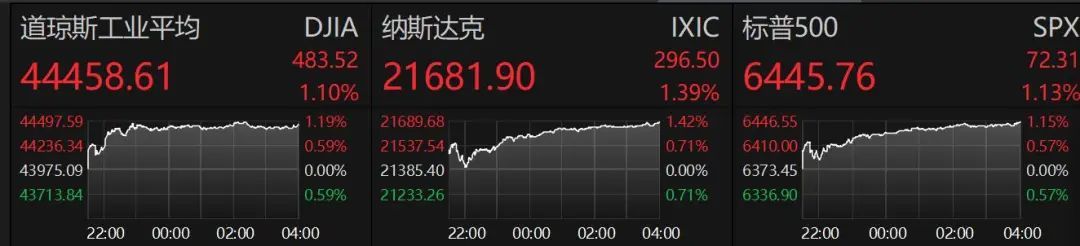
Market Performance - US stock markets experienced a significant rally, with all three major indices closing up over 1%. The Nasdaq rose by 1.39%, the S&P 500 increased by 1.13%, and the Dow Jones gained 1.1%. Both the Nasdaq and S&P 500 reached all-time highs [2][3] - Major technology stocks saw widespread gains, with Intel rising over 5%, Meta increasing by over 3% (approaching a market cap of $2 trillion), and Apple, Microsoft, and Google each rising by more than 1%. Notably, Meta and Nvidia achieved new closing highs [2][3] Chinese Stocks - The Nasdaq Golden Dragon China Index rose by 1.49%, with several Chinese stocks performing well. Tencent Music surged nearly 12%, NIO increased over 11%, and other companies like Weibo, JD.com, and Alibaba rose over 3%. However, NIO fell nearly 9%, and XPeng Motors dropped over 6% [4] Inflation and Federal Reserve Expectations - The US Consumer Price Index (CPI) for July increased less than expected, leading to heightened market expectations for a Federal Reserve rate cut in September. The probability of a rate cut was raised from 85% to 91% according to the CME FedWatch tool, with increased expectations for cuts in October and December as well [6] Cryptocurrency Market - The cryptocurrency market saw a broad increase, with Bitcoin trading at $119,909.7 and Ethereum surpassing $4,600 for the first time since December 2021. Dogecoin also rose nearly 6%. Over the past 24 hours, more than 100,000 traders experienced liquidations [8][9] US National Debt - The total US national debt exceeded $37 trillion for the first time, reaching $37,004,817,625,842. This increase is attributed to the federal government accumulating debt at a record pace, raising concerns about the fiscal situation [10][11]

美股突然全线拉升,多只中概股涨超10%!
Sou Hu Cai Jing· 2025-08-12 23:57
Market Performance - US stock market experienced a significant rally, with all three major indices closing up over 1%. The Nasdaq rose by 1.39%, the S&P 500 increased by 1.13%, and the Dow Jones gained 1.1%. Both the Nasdaq and S&P 500 reached all-time highs [2][3] - Major tech stocks saw widespread gains, with Intel rising over 5%, Meta increasing by more than 3% (approaching a market cap of $2 trillion), and Apple, Microsoft, and Google all up over 1%. Nvidia and Meta both achieved new closing highs [2][3] Chinese Stocks - The Nasdaq Golden Dragon China Index rose by 1.49%, with notable increases in Tencent Music (up nearly 12%) and NIO (up over 11%). Other Chinese stocks like Weibo, JD.com, and Alibaba rose over 3%, while NIO and XPeng Motors saw declines of nearly 9% and over 6%, respectively [4] Economic Indicators - The US Consumer Price Index (CPI) for July increased less than expected, leading to heightened market expectations for a Federal Reserve rate cut in September. The probability of a rate cut was raised from 85% to 91% according to the CME FedWatch tool [6] - Federal Reserve official Barkin indicated that inflation may be more moderate than previously thought, suggesting consumer sentiment is under pressure [6] Cryptocurrency Market - The cryptocurrency market saw a broad increase, with Bitcoin at $119,909.7 (up 0.87%) and Ethereum surpassing $4,600 for the first time since December 2021, rising by 8.22% [7] - Over the last 24 hours, more than 100,000 traders experienced liquidation events in the crypto market [7][8] US National Debt - The total US national debt exceeded $37 trillion for the first time, attributed to the federal government accumulating debt at a record pace. Concerns were raised about the serious imbalance in the US fiscal situation [8]
深夜,全线大涨!中国资产亮眼
Sou Hu Cai Jing· 2025-08-12 23:51
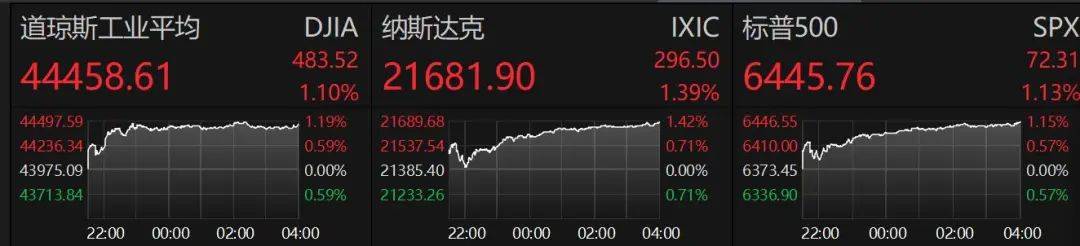
Market Performance - Major US stock indices opened higher, with the Nasdaq China Golden Dragon Index rising over 1% [1] - The Dow Jones Industrial Average increased by 1.07%, the Nasdaq Composite rose by 0.89%, and the S&P 500 gained 0.82% [7] - Chinese assets also performed well, with the Wande China Technology Leaders Index up over 1.6% [2] Notable Stocks - Tencent Music saw a significant increase of 13.02%, while other notable stocks like One Natural Gas and Niu Technologies rose by 8.15% and 7.82% respectively [2][4] - Xiaomi Group's ADR rose by 3.37%, JD's stock increased by 2.62%, and Pinduoduo's stock was up by 2.44% [3] Chinese Market Insights - A-shares showed strong performance, with all three major indices reaching new highs for the year, and the Shanghai Composite Index achieving a seven-day winning streak [6] - The financing balance in the Shanghai and Shenzhen markets surpassed 2 trillion yuan for the first time in ten years [6] - International institutions have increased their focus on Chinese assets, with several foreign institutions upgrading their ratings for the Chinese stock market [6] Economic Indicators - The S&P Global Ratings maintained China's sovereign credit rating at "A+" with a stable outlook, reflecting confidence in China's economic resilience and debt management [6] - The offshore RMB against the US dollar also appreciated, rising by over 90 basis points [8]



符合条件的个人消费贷款可享贴息;美国国债总额首次超过37万亿美元|南财早新闻
2 1 Shi Ji Jing Ji Bao Dao· 2025-08-12 23:37
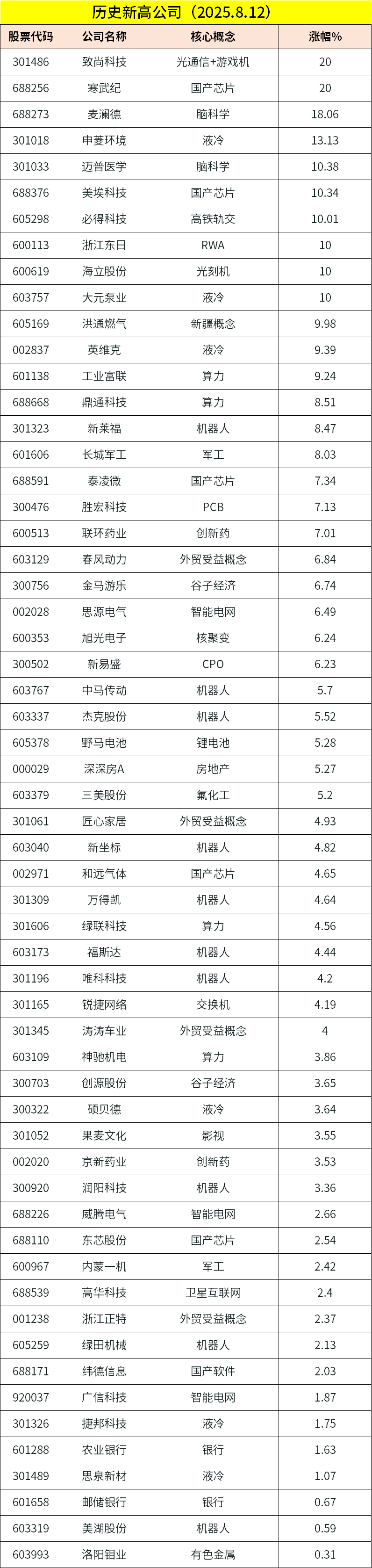
Economic Policy - The U.S. and China have agreed to suspend the implementation of 24% tariffs on each other's goods for 90 days starting August 12, 2023 [2] - The Chinese government has introduced a subsidy policy for personal consumption loans and service industry loans to stimulate consumer spending [2][5] Macro Economy - In the first half of the year, 13.278 million new business entities were established in China, showing stable growth across various types of businesses [4] - The National Development and Reform Commission reported that the recent round of fuel price adjustments will not change gasoline and diesel prices due to insufficient price changes [4] - The Ministry of Commerce has initiated anti-dumping investigations on Canadian canola and pea starch imports, indicating trade tensions [4] - The Yangtze River Delta region's economic data shows Shanghai leading with a GDP of 26,222.15 billion yuan, while Zhoushan recorded the highest growth rate at 6.9% [4] Investment News - The A-share financing balance has reached 2 trillion yuan, marking a significant increase and indicating a strong market sentiment [7] - Hong Kong's IPO market has seen robust growth, with 53 companies raising approximately 127 billion HKD in the first seven months of the year, a year-on-year increase of over 600% [7] - More than 50 listed companies in China have announced interim dividend plans, with total cash dividends exceeding 82 billion yuan [7] Company Developments - Cambricon Technologies' stock hit a historical high amid rumors of increased procurement, although the company advised against believing external speculation [8] - Kweichow Moutai reported a revenue of 89.389 billion yuan in the first half of the year, a year-on-year increase of 9.1% [8] - China Unicom's revenue surpassed 200 billion yuan in the first half, with a 1.5% year-on-year growth, and announced an interim dividend of 0.2841 yuan per share, up 14.5% [8] - Golden Dragon Fish achieved a revenue of 115.682 billion yuan, a 5.67% increase, and a net profit of 1.756 billion yuan, a 60.07% increase [8]





美股再创历史新高
财联社· 2025-08-12 23:35
Core Viewpoint - The recent CPI data has positively influenced the US stock market, leading to significant gains in major indices, with the S&P 500 and Nasdaq reaching all-time highs [1]. Market Performance - The S&P 500 index rose by 1.13% to 6445.76 points, the Nasdaq composite increased by 1.39% to 21681.9 points, and the Dow Jones Industrial Average climbed by 1.1% to 44458.61 points [1]. - The Russell 2000 index, which is seen as a beneficiary of interest rate cuts, surged nearly 3% [3]. Sector Highlights - Technology stocks rebounded, with notable performances from major companies: Apple up 1.09%, Microsoft up 1.43%, Amazon up 0.08%, Nvidia up 0.6%, Google-A up 1.16%, Tesla up 0.53%, and Meta up 3.15% [7]. - Intel experienced a significant increase of 5.62%, with a two-day gain of 11% following a shift in Trump's stance [8]. - Other companies such as Electronic Arts, BlackRock, Goldman Sachs, and Morgan Stanley also reached historical highs [9]. International Market - The Nasdaq Golden Dragon China Index rose by 1.49%, with Alibaba up 3.19%, JD.com up 3.01%, Baidu up 2.14%, and Pinduoduo up 3% [10]. - However, some Chinese companies faced declines, such as NIO down 8.96% and XPeng down 6.08% [10].





暴涨11.85%!在线音乐服务业务增速超预期,腾讯音乐Q2收入同比增长17.9%,净利润同比大增43.2%
美股IPO· 2025-08-12 22:54
在一个流媒体竞争日趋激烈的市场环境下,腾讯音乐交出了一份超预期的成绩单:Q2实现了收入和利润的双重加速 增长,在线音乐服务业务强劲增长。 更值得关注的是用户价值的持续提升。月均ARPPU从去年同期的10.7元增长至11.7元,同比增长9.3%,这一增长主 要得益于SVIP会员计划的成功推广。管理层透露,SVIP订阅用户已突破1500万,创下历史新高,反映出用户对高 端音乐体验的强烈需求和支付意愿。 周二下午,腾讯音乐公布二季度财报。核心要点如下: 财务表现 核心业务进展 总收入84.4亿元人民币,同比增长17.9%,主要受在线音乐服务强劲增长驱动。 在线音乐服务收入68.5亿元,同比增长26.4%;音乐订阅收入43.8亿元,增长17.1%。 净利润24.1亿元,同比增长43.2%;非国际财务报告准则净利润25.7亿元,增长37.4%。 毛利率提升至44.4%,去年同期为42.0%。 现金及等价物349.2亿元,财务状况稳健。 SVIP用户突破1500万,月均ARPPU提升至11.7元(同比增长9.3%)。 在线音乐付费用户1.244亿,同比增长6.3%,但月活用户5.53亿,同比下降3.2% 社交娱乐服务收入 ...