
TME(TME)

Search documents
港股异动 腾讯音乐-SW(01698)高开近13% 二季度调整后净利同比增三成 在线音乐业务高质量增长
Jin Rong Jie· 2025-08-13 02:00
Group 1 - Tencent Music's stock opened nearly 13% higher and is currently up 12.8%, trading at HKD 99.6 with a transaction volume of HKD 10.448 million [1] - The company released its unaudited financial performance report for the second quarter ending June 30, 2025, showing a total revenue increase of 17.9% year-on-year to RMB 8.44 billion [1] - Adjusted net profit for the second quarter increased by 33.0% year-on-year to RMB 2.64 billion [1] Group 2 - Online music business continues to show high-quality growth, with online music service revenue increasing by 26.4% year-on-year to RMB 6.85 billion [1] - Online music subscription revenue grew by 17.1% year-on-year to RMB 4.38 billion [1] - The number of paid online music users increased by 6.3% year-on-year to 124.4 million, with ARPPU rising to RMB 11.7 [1]
港股高开,腾讯音乐-SW涨近15%,恒生科技HKETF(513890)上涨1.26%,最新规模、份额均创新高
Xin Lang Cai Jing· 2025-08-13 01:58
Group 1 - The Hang Seng Technology HKETF (513890) has seen a 1.26% increase, with a trading volume of 12.54 million yuan and a turnover rate of 2.17% [1] - The Hang Seng Technology Index (HSTECH) rose by 1.27%, with notable increases in constituent stocks such as Tencent Music (01698) up 14.95%, Bilibili (09626) up 4.09%, and Sunny Optical Technology (02382) up 3.49% [1] - As of August 12, the latest scale of the Hang Seng Technology HKETF reached 568 million yuan, with a total of 515 million shares, marking a new high since its inception [1] Group 2 - CITIC Securities anticipates that the semi-annual report performance period in August will be a crucial point for the continuation of the Hong Kong stock market, shifting from liquidity-driven to performance-driven and policy validation phases [2] - The focus of the market is expected to shift from "expectations" to "realization," with stocks that exceed performance expectations and have upward guidance likely to benefit [2] - Recommended sectors include those directly benefiting from the "anti-involution" policy such as photovoltaic, rare earth, lithium, and express delivery, as well as pharmaceuticals and technology with high growth potential [2]
腾讯音乐大涨15%,再创新高
Mei Ri Jing Ji Xin Wen· 2025-08-13 01:56
每经AI快讯,腾讯音乐-SW短线拉升,涨幅扩大至15%,报102.1港元,再创新高。 ...
帮主郑重:美股狂欢夜!中概股起舞,波音坠落,三幕大戏谁主沉浮?
Sou Hu Cai Jing· 2025-08-13 01:55
Group 1: US Stock Market Performance - The US stock market reached new historical highs, with the Nasdaq and S&P 500 both setting records, and the Dow Jones soaring by 483 points, with all three major indices rising over 1% [3] - The primary driver was the US July CPI, which came in at 2.8% year-on-year, lower than expected, and a core CPI of 3.1%, indicating manageable inflation [3] - Market expectations for a Federal Reserve rate cut in September surged to 94.4%, with traders optimistic about a favorable economic environment [3] Group 2: Chinese Concept Stocks Divergence - Chinese concept stocks saw a mixed performance, with the Nasdaq Golden Dragon Index rising by 1.49% due to a 90-day tariff extension [4] - Winners included Tencent Music, which surged by 11.85% driven by policy benefits and a resurgence in performance, while Alibaba and JD.com also saw gains of 3% [5] - Losers included NIO, which plummeted by 8.86%, and XPeng, down 6%, due to intensified competition in the electric vehicle sector and rising costs [6] Group 3: Boeing's Challenges and Competition - Boeing faced significant challenges, with July deliveries plummeting by 27% year-on-year to only 43 aircraft, impacted by supply chain issues and quality control crises [7] - The company is losing market share to Airbus, which is set to deliver 766 aircraft to China in 2024, and the domestic C919 aircraft is also gaining traction [8] Group 4: Tech Giants' Competition - Elon Musk criticized Apple's exclusion of X and Grok from its "essential apps" list, accusing the company of monopolistic practices [9] - This conflict highlights a broader struggle for control over AI and platform transparency, especially in light of the EU's Digital Markets Act [9] Group 5: Oil Market Dynamics - OPEC raised its 2026 demand forecast while increasing production by 548,000 barrels per day in August, primarily to pressure US shale oil producers [10] - Despite a brief drop, oil prices rebounded, establishing a new support level at $65 per barrel due to geopolitical tensions and supply chain issues [10] Group 6: Investment Strategies - Companies are advised to increase allocations to rate-sensitive stocks, particularly in technology and regional banks, while also considering opportunities in aviation maintenance due to Boeing's crisis [11] - Focus on consumer recovery and domestic alternatives in the Chinese market, while avoiding pitfalls in the electric vehicle sector and data security controversies [12] - Energy stocks should be positioned with a focus on the $65 per barrel oil price floor [12]


港股早盘高开高走 腾讯音乐涨超15%
Mei Ri Jing Ji Xin Wen· 2025-08-13 01:53
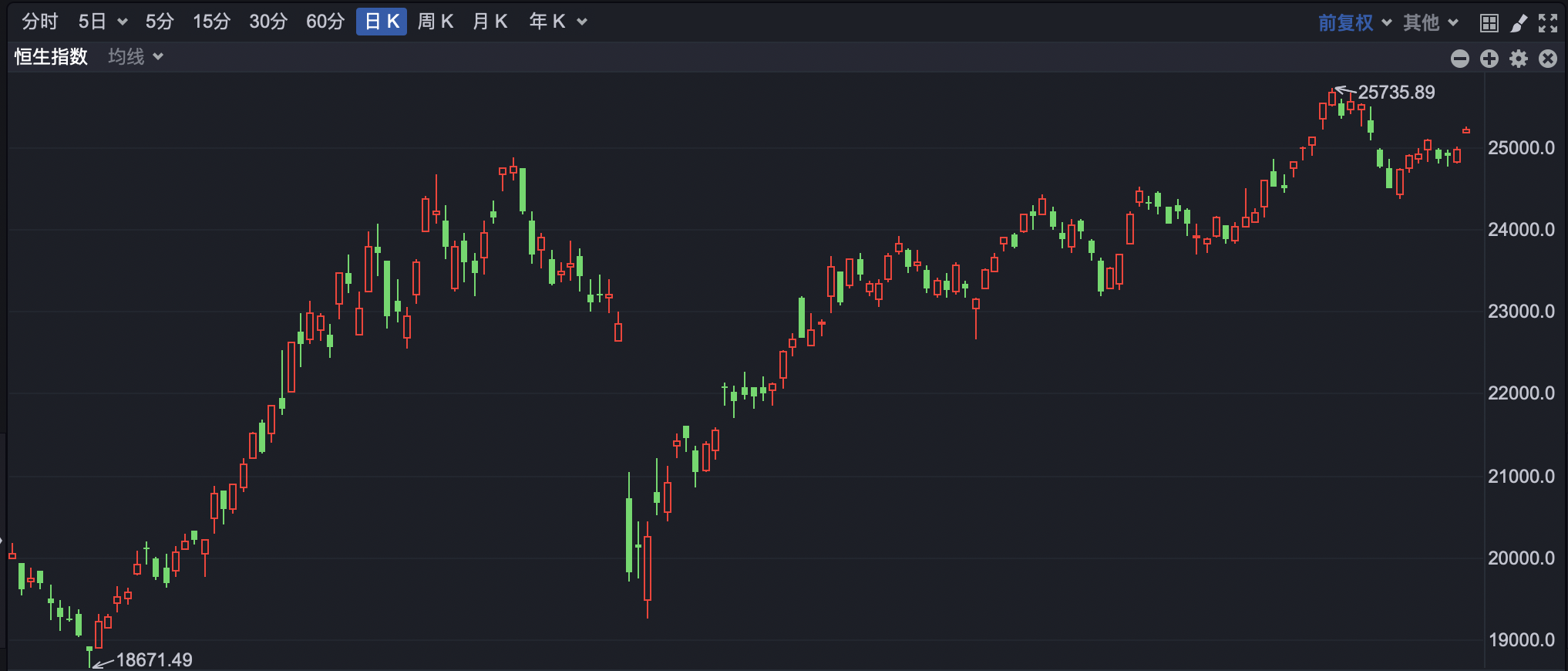
Market Overview - The Hong Kong stock market opened higher on August 13, with the Hang Seng Index at 25,236 points, up 1.07% [1] - The Hang Seng Tech Index reached 5,508 points, increasing by 1.27% [1] Capital Flow - As of August 12, the cumulative net inflow of southbound funds this year exceeded 910 billion HKD, marking a historical high for annual net inflow, surpassing the total net inflow of 807.87 billion HKD for the entire year of 2024 [3] Company Performance - Tencent Music saw a significant increase of over 15% in its stock price after announcing its Q2 earnings, which reported total revenue of 8.44 billion CNY, a year-on-year growth of 17.9% [3] - The net profit attributable to equity holders was 2.41 billion CNY, up 43.2% year-on-year, while the non-IFRS net profit attributable to equity holders was 2.57 billion CNY, reflecting a 37.4% increase [3] - The overall net profit increased by 33.0% to 2.64 billion CNY [3] Sector Performance - Technology stocks generally performed well, with Alibaba and JD.com both rising over 2%, and Bilibili increasing nearly 2% [3] - The innovative drug sector showed signs of recovery, with Lijun Pharmaceutical rising over 2% [3] - Cryptocurrency-related stocks opened high, with Huajian Medical increasing by 8% [3] - Domestic brokerage stocks experienced a broad increase, with CICC rising over 1% [3] ETF Performance - Cross-border ETFs such as the Hong Kong Internet ETF, Southeast Asia Technology ETF, and China Concept Internet ETF all rose over 2% [4] - Other ETFs, including the NASDAQ Technology ETF, Hong Kong Technology ETF, and Hong Kong Medical ETF, increased by more than 1.5% [4]
AH股齐涨!沪指突破“924”高点,军工、通信设备拉升,恒科指涨超1%,腾讯音乐大涨超16%,国债跌,商品分化
Hua Er Jie Jian Wen· 2025-08-13 01:52
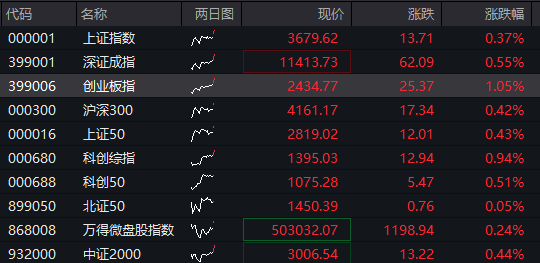
Market Overview - A-shares collectively rose in early trading, with the Shanghai Composite Index breaking above the high since October 8 of last year, reaching the highest point in three years [1] - The Hang Seng Index opened over 1% higher, with major tech stocks experiencing significant gains, including Tencent Music which surged over 13% [1][2] A-shares Performance - As of the report, the Shanghai Composite Index rose by 0.37% to 3679.62, the Shenzhen Component increased by 0.55% to 11413.73, and the ChiNext Index climbed by 1.05% to 2434.77 [1][9] - The performance of various indices includes: - CSI 300 Index: up 0.42% to 4161.17 [1] - STAR Market 50 Index: up 0.43% to 2819.02 [1] Hong Kong Market Performance - The Hang Seng Index rose by 1.04% to 25230.17, while the Hang Seng Tech Index increased by 1.21% to 5504.87 [2][3] - The Hang Seng China Enterprises Index also saw a rise of 0.90% to 8997.18 [3] Bond Market - In the bond market, government bond futures declined, with the 30-year main contract down by 0.02% and the 10-year main contract also down by 0.02% [2][4] Commodity Market - The domestic commodity futures market showed mixed results, with soybean meal rising over 3% while lithium carbonate fell over 2% [4][5] - Key commodity performances include: - Soybean meal: up 3.09% to 3169 [5] - Carbonate lithium: down 2.36% to 83600 [5] Sector Highlights - The aerospace and military sector saw significant gains, with companies like Changcheng Aerospace and Beifang Changlong leading the rise [6][7] - The communication equipment sector also performed well, with Guangku Technology hitting the daily limit up of 20% [8]
腾讯音乐2025Q2财报:总收入84.4亿元,调整后净利润26.4亿元
Zhong Guo Jing Ji Wang· 2025-08-13 01:50
Core Viewpoint - Tencent Music Entertainment Group reported solid growth in its financial performance for the second quarter ending June 30, 2025, with significant increases in revenue and net profit [1] Financial Performance - Total revenue for the second quarter reached 8.44 billion RMB, representing a year-on-year growth of 17.9% [1] - Adjusted net profit was 2.64 billion RMB, showing a year-on-year increase of 33.0% [1] Online Music Business - Online music service revenue grew by 26.4% year-on-year to 6.85 billion RMB [1] - The number of paying online music users increased by 6.3% year-on-year to 12.44 million [1] - Average revenue per paying user per month rose from 10.7 RMB in the same period of 2024 to 11.7 RMB [1] Strategic Initiatives - The company continues to deepen collaborations with global record labels and innovate content co-creation formats [1] - Tencent Music is focused on creating a rich content ecosystem to meet diverse user preferences through various concerts for domestic and international artists [1] - The company emphasizes product innovation to enhance user engagement and provide unique music experiences [1]
腾讯音乐-SW高开近13% 二季度调整后净利同比增三成 在线音乐业务高质量增长
Zhi Tong Cai Jing· 2025-08-13 01:35
消息面上,腾讯音乐发布了截至2025年6月30日止的第二季度未经审计财务业绩报告。财报显示,公司 二季度总收入同比增长17.9%达84.4亿元,调整后净利润同比增长33.0%达26.4亿元。其中,在线音乐业 务持续高质量增长,在线音乐服务收入同比增长26.4%至68.5亿元,在线音乐订阅收入同比增长17.1%至 43.8亿元,在线音乐付费用户数同比增长6.3%至1.244亿,ARPPU进一步提升至11.7元。 腾讯音乐-SW(01698)高开近13%,截至发稿,涨12.8%,报99.6港元,成交额1044.8万港元。 ...
港股异动 | 腾讯音乐-SW(01698)高开近13% 二季度调整后净利同比增三成 在线音乐业务高质量增长
智通财经网· 2025-08-13 01:32
Core Viewpoint - Tencent Music's stock opened nearly 13% higher, reflecting strong financial performance in its latest earnings report, with significant growth in revenue and net profit [1] Financial Performance - For the second quarter ending June 30, 2025, Tencent Music reported total revenue of 8.44 billion yuan, a year-on-year increase of 17.9% [1] - Adjusted net profit for the same period reached 2.64 billion yuan, representing a year-on-year growth of 33.0% [1] Online Music Business - The online music segment showed robust growth, with online music service revenue increasing by 26.4% to 6.85 billion yuan [1] - Online music subscription revenue grew by 17.1% to 4.38 billion yuan [1] - The number of paid online music users rose by 6.3% to 124.4 million, with ARPPU (Average Revenue Per Paying User) increasing to 11.7 yuan [1]
美国7月CPI温和上涨,低于预期!美联储9月降息概率大增
Mei Ri Jing Ji Xin Wen· 2025-08-13 01:22
Market Overview - On August 12, Hong Kong's three major indices showed mixed results, with the Hang Seng Index rising by 0.25% to 24,969.68 points, while the Hang Seng Tech Index fell by 0.38% to 5,439.16 points, and the National Enterprises Index increased by 0.32% to 8,916.85 points. The energy and financial sectors led the gains, while pharmaceutical stocks generally retreated, and AI concept stocks remained sluggish [1] Southbound Capital - On August 12, southbound capital recorded a net inflow of 9.45 billion HKD, bringing the total net inflow for the year to 910.288 billion HKD, significantly exceeding last year's total net purchase amount [2] U.S. Market Performance - U.S. stock indices closed higher overnight, with the Dow Jones rising by 1.1%, the S&P 500 increasing by 1.13%, and the Nasdaq gaining 1.39%. Both the S&P 500 and Nasdaq reached historical highs. Notably, UnitedHealth Group and Goldman Sachs rose over 3%, leading the Dow [3] Key Financial Data - Tencent Music reported its Q2 2025 earnings on August 12, showing a total revenue increase of 17.9% year-on-year to 8.44 billion CNY, and an adjusted net profit growth of 33% to 2.64 billion CNY. The number of paid online music users grew by 6.3% year-on-year to 124.4 million [4] Short Selling Data - On August 12, a total of 634 Hong Kong stocks were short-sold, with a total short-selling amount of 23.369 billion HKD. The top three stocks by short-selling amount were Alibaba (1.546 billion HKD), Tencent Holdings (1.265 billion HKD), and Xiaomi Group (1.188 billion HKD) [5] Institutional Insights - According to Zhongtai Securities, the July CPI in the U.S. continued its previous upward trend, but the growth rate of commodity prices remained stable, while service prices showed an increase. The core service CPI growth rate rose, indicating a potential for continued inflation. The expectation is for the Federal Reserve to initiate interest rate cuts in September, with two cuts anticipated within the year [6]
