
台达

Search documents
SST技术与国内外厂商布局
傅里叶的猫· 2025-10-10 12:18
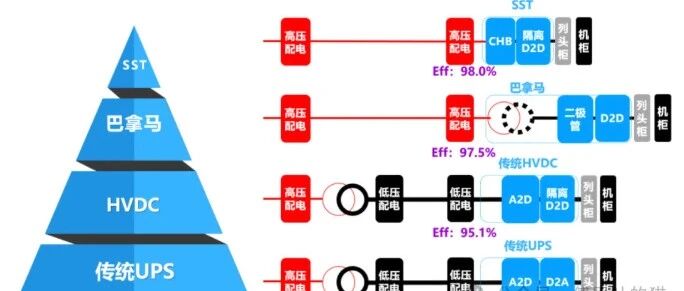
Core Insights - The article discusses the advancements in Solid State Transformers (SST) technology and its implications for the power and data center industries, highlighting the competitive landscape and key players involved in the development and application of SST technology [2][3]. SST Progress and Fundamentals - SST technology shows significant potential in data centers and renewable energy sectors, with NVIDIA's Rubin architecture likely to adopt SST earlier than the expected supply timeline of late 2027 or early 2028 [2]. - North American SST orders have high profitability, with gross margins reaching 50-55%. The demand for transformers in overseas data centers currently exceeds supply, leading to order fulfillment cycles of 9-12 months, and up to 18 months for major North American manufacturers [2]. Domestic and International Manufacturer Layouts - Various global manufacturers are actively advancing SST technology. Eaton, a leader in the VIGC field, has introduced energy router power supply architectures and is accelerating entry into emerging markets through acquisitions [3]. - Delta has launched HBDC power solutions based on third-generation silicon carbide devices, which are adaptable to data center load requirements and facilitate integration with renewable energy systems [3]. - In China, companies like Sifang, Xidian, and Jinpan Technology are expanding into SST technology, leveraging their technical strengths to explore commercial applications in data centers and renewable energy [3]. Jinpan Technology - Jinpan Technology has shown robust performance in the first half of 2025, with significant growth in its electromechanical business and a 64% year-on-year increase in overseas revenue [4]. - The company has successfully secured contracts for data center projects in Malaysia and anticipates an annual compound growth rate of approximately 80% in data center revenue from 2022 to 2024 [4]. - Jinpan has developed a 2.4 MW solid-state transformer prototype suitable for HVDC800V power supply architecture, laying the groundwork for further expansion into overseas markets and AIDC sectors [5]. Other Key Players - Eagle and New Special Electric have accumulated technology in phase-shifting transformers and are actively developing SST technology to meet data center demands [6]. - Sungrow Power Supply has made significant breakthroughs in photovoltaic inverters and is expanding into new applications, including data center HVDC power supply systems [7]. - Weiguang Energy, supported by Baiyun Electric Group and Xi'an Jiaotong University, focuses on SST energy routers and has delivered 92 units for various applications [8]. - Teradyne has demonstrated strong technical and supply chain advantages in charging stations and SST fields, leveraging its experience in power electronics [9]. Conclusion - The SST technology landscape is rapidly evolving, with numerous companies making strides in research and application, indicating a promising future for the integration of SST in data centers and renewable energy systems [2][3][4][5][6][7][8][9].


AI数据中心的下半场:电力和节能
傅里叶的猫· 2025-10-09 12:10
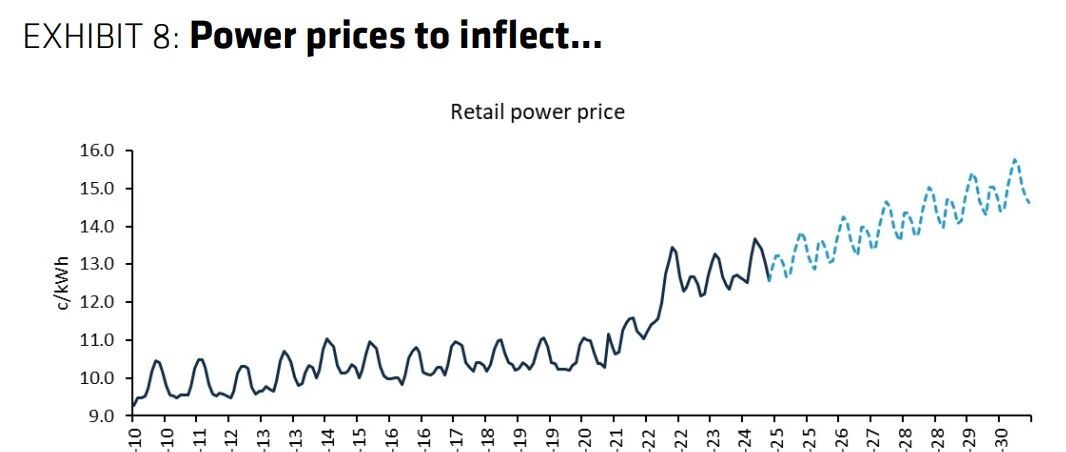
Core Insights - The article emphasizes that electricity supply is becoming a critical bottleneck for AI development, with China potentially having an advantage over the U.S. in this regard [1][3]. Group 1: Electricity Demand and Supply - The demand for electricity in AI data centers is expected to grow exponentially, with predictions indicating that by 2030, a single AI data center could require up to 8 GW of power, equivalent to eight large nuclear reactors [2]. - The existing electricity infrastructure in the U.S. is struggling to meet this surging demand, with some data centers in Northern Virginia facing power supply wait times of up to seven years [2]. - Companies like xAI are resorting to renting portable gas generators due to prolonged electricity supply wait times, leading to increased operational costs [2]. Group 2: U.S. Electricity Grid Challenges - The U.S. electricity grid is under significant strain, with Bernstein predicting that the average annual growth rate of electricity demand will reach 2.3% from 2024 to 2030, with regional variations as high as 13.4% in Texas [7]. - Investment in the electricity grid is primarily focused on maintaining existing infrastructure rather than expanding capacity, with only 28% of distribution investment allocated for expansion [8]. - The article highlights the risk of grid failures, citing historical outages that stemmed from insufficient investment in infrastructure [11]. Group 3: Innovations in Power Supply - Solid State Transformers (SST) are proposed as a solution to the electricity supply challenges faced by data centers, offering higher efficiency and reduced space requirements compared to traditional systems [16][21]. - SST technology can achieve an efficiency of up to 98%, significantly improving power delivery for AI workloads and reducing copper usage by 45% [21][27]. - The market potential for SST is substantial, with estimates suggesting a market size of 800-1000 billion yuan by 2030 if penetration reaches 20% in new AI data centers [27]. Group 4: Future Outlook - The article suggests that as the demand for electricity continues to rise, technology companies will likely engage in large-scale procurement of power resources, further straining the already tight electricity grid [7]. - The transition to renewable energy sources poses additional challenges for grid stability, necessitating innovative solutions to balance supply and demand [11].
AI算力爆发的幕后英雄:碳化硅的“供电”与“散热”双重材料变革(附45页PPT)
材料汇· 2025-09-30 12:21
Core Insights - The article discusses the critical role of silicon carbide (SiC) in addressing the energy and heat challenges faced by AI servers, highlighting its transformative impact on power supply and thermal management in data centers [3][4]. Group 1: AI Server Power Supply Challenges - AI server power supply systems face a "trilemma" of efficiency, density, and power, with traditional silicon-based devices reaching physical limits as power requirements increase [4]. - The report predicts that high-power power supply units (PSUs) will account for 80% of the market, indicating a shift from a fragmented market to a high-value, customized segment [4]. Group 2: SiC's Role in Chip Packaging - SiC is positioned as a game-changer in chip packaging, particularly as GPU power consumption exceeds 1 kW, necessitating improved thermal management solutions [5]. - The demand for SiC could be twice that of CoWoS capacity, indicating potential supply chain risks as AI chip packaging competes with the automotive sector for SiC substrates [5]. Group 3: Data Center Power Architecture - The report categorizes data centers into enterprise, high-performance computing, and hyperscale, each with distinct power requirements and sensitivities to SiC integration [7][12][13]. - AI data centers, particularly those with power demands up to 2 GW, represent a strategic battleground for SiC adoption, influencing future technology development [15]. Group 4: Efficiency and Cost Implications - A comparison of efficiency improvements shows that a shift from 94% to 98% efficiency can save significant energy costs and reduce heat management expenses, making SiC solutions economically attractive despite higher initial costs [21][23]. - The report emphasizes that increasing power density in AI data centers is not just a technical goal but a commercial imperative, with SiC enabling a threefold increase in deployment density [23]. Group 5: Evolution of Power Distribution - The evolution of data center power distribution from 12V to 400V/800V reflects a trend towards higher voltage systems to reduce transmission losses [25]. - The report outlines the advantages of an idealized pure DC data center architecture, which integrates seamlessly with renewable energy sources and enhances efficiency [29][30]. Group 6: SiC Manufacturing and Market Dynamics - The report highlights the challenges in SiC substrate manufacturing, particularly the need for larger wafer sizes and the high costs associated with SiC processing [81][82]. - The competitive landscape for SiC substrates is highly concentrated, with a few companies dominating the market, indicating significant barriers to entry for new players [85]. Group 7: Future Market Opportunities - The report identifies the automotive sector, particularly electric vehicles, as the primary driver for SiC demand, while also recognizing the emerging AI data center market as a new growth area [122]. - China's investment in SiC technology reflects a strategic push towards self-sufficiency in the supply chain, aiming to reduce reliance on foreign suppliers [130].
威尔高:公司工控和服务器电源业务占比较大
Zheng Quan Ri Bao Wang· 2025-09-29 11:42
证券日报网讯威尔高(301251)9月29日在互动平台回答投资者提问时表示,公司工控和服务器电源业 务占比较大,主要客户有台达、施耐德、欧陆通(300870)、长城电源等,终端应用十分广泛,根据客 户需求而定,因涉及商业保密条款,公司不便透露,敬请谅解。 ...
台达首席品牌官: 品牌如何成就“一个台达”
Di Yi Cai Jing Zi Xun· 2025-09-29 08:09
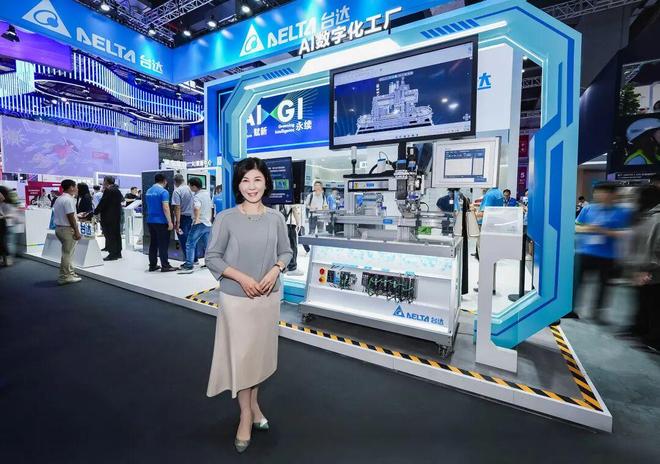
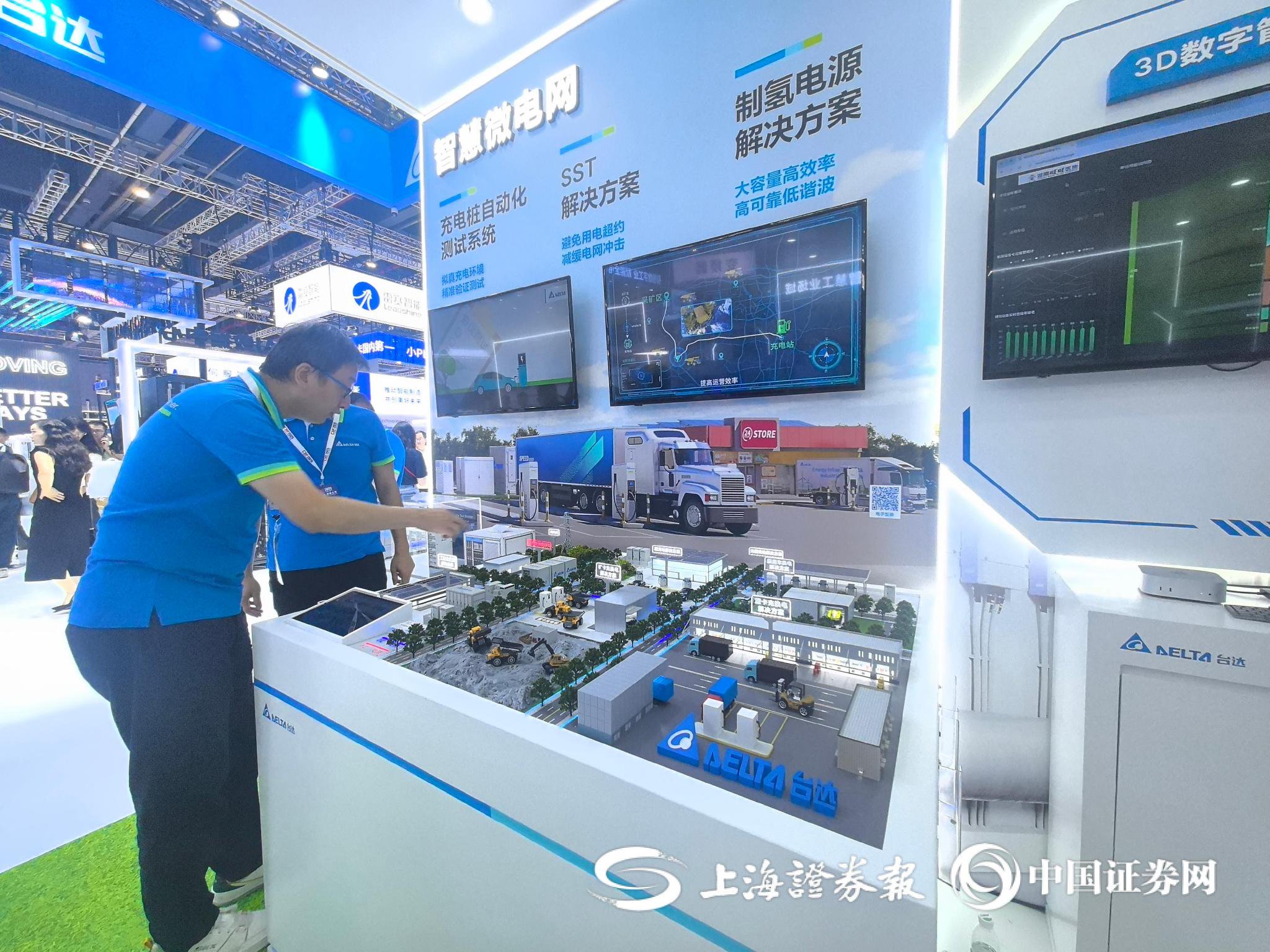
Core Insights - Delta showcased its commitment to sustainability and innovation at the 25th China International Industry Fair with the theme "AI Empowerment, GI Sustainability" [1][5] - The company has transformed from an ODM supplier to a provider of integrated system solutions, with over 200 production and operational sites globally and more than 80,000 employees [5][6] Group 1: Product and Technology Innovations - Delta presented various innovative green products and solutions, including AI digital factories, AI data centers, smart industrial fields, and smart microgrids [3][5] - The solid-state transformer (SST), which utilizes silicon carbide (SiC) technology, was a highlight, achieving over 98% energy efficiency and reducing equipment size by over 50% [3][5] - The company emphasized the integration of digital twin software platforms to showcase its new business capabilities [3][6] Group 2: Brand Development and Strategy - Delta's brand unification efforts began in 2010, focusing on creating a cohesive identity that reflects its mission of "Environmental Protection, Energy Saving, Love the Earth" [5][6] - In 2021, Delta reassessed its brand value propositions, introducing three key themes: "Intelligent Connectivity," "Sustainable Energy," and "Value Co-Creation" [6][8] - The brand strategy aims to enhance collaboration across industries and promote sustainable practices [8][9] Group 3: Sustainability and AI Integration - Delta is committed to balancing AI development with sustainability, as highlighted in a global research report presented at the fair [9][10] - The report revealed that 96% of surveyed AI application companies expect their suppliers to have sustainability goals within the next year, with energy efficiency and grid resilience as primary challenges [9][10] - Delta aims to leverage technological innovation to support sustainable AI initiatives, including smart microgrids and AI data centers designed for edge computing [9][10]
宏盛股份:和宏智通过其另一股东和信向广达供应液冷散热器
Ge Long Hui· 2025-09-29 07:53
Core Viewpoint - Hongsheng Co., Ltd. (603090.SH) clarified on the interactive platform that it is not a supplier to Quanta and Delta, but operates through a joint venture [1] Group 1: Company Operations - Hongsheng holds a 49% stake in a joint venture named Wuxi Hehongzhi Thermal Technology Co., Ltd. (Hehongzhi) [1] - Hehongzhi supplies liquid cooling radiators to Quanta through its other shareholder, Suzhou Hexin Precision Technology Co., Ltd. (Hexin) [1] - Currently, Hehongzhi's business scale is small, but it is actively expanding its product application customer base by leveraging Hexin's customer channels [1]

宏盛股份(603090.SH):公司不是台达的供应商
Ge Long Hui· 2025-09-29 07:47
Core Viewpoint - Hongsheng Co., Ltd. (603090.SH) clarified on the interactive platform that it is not a supplier of Delta Electronics, and the company's operational status should be based on publicly disclosed information [1] Company Summary - Hongsheng Co., Ltd. is not associated as a supplier to Delta Electronics [1] - The company emphasizes that its operational conditions are to be referenced from publicly available information [1]
看好AIDC技术迭代,关注SST技术进展
2025-09-28 14:57
Summary of AIDC Power Technology Conference Call Industry Overview - The conference call focuses on the AIDC (Artificial Intelligence Data Center) power technology sector, particularly the transition from traditional UPS systems to 800V HVDC and SST technologies aimed at improving power supply efficiency and reducing maintenance and expansion difficulties [1][2]. Key Points and Arguments - **Technology Transition**: The industry is witnessing a significant shift towards high-voltage direct current (HVDC) systems, with major Chinese internet companies like BAT (Baidu, Alibaba, Tencent) adopting HVDC technology extensively, with Tencent's data centers reporting over 90% HVDC usage as of 2023 [1][5]. - **Market Dynamics**: The North American market has faced challenges in adopting HVDC due to initial setbacks, but the increasing power demands from GPUs and the competitive edge of renewable energy sources are driving a clearer trend towards HVDC adoption [1][5]. - **SST Advantages**: Solid-state transformers (SST) are highlighted for their ability to save space, reduce line losses, and improve overall efficiency compared to traditional transformer and HVDC combinations. SSTs are composed of electronic modules and high-frequency transformers, making them more competitive for companies with mid-to-low voltage electronic capabilities [1][7][8]. - **Concentration of Market**: The HVDC market is more concentrated than the dispersed UPS market, with a CR3 market share exceeding 90%, and companies like Zhongheng Electric holding about 50% market share. This concentration is expected to continue with the introduction of 800V HVDC and SST technologies [3][9]. Important but Overlooked Content - **Opportunities for Chinese Companies**: Chinese firms are positioned favorably in the overseas AIDC power market due to their cost advantages and the relatively low price sensitivity of power technology compared to chip segments. Companies with clear technological advantages and strong distribution channels, such as Zhongheng Electric, Jinpan Technology, and others, are recommended for investment [3][10]. - **Future Trends**: The call emphasizes the importance of channel advantages and R&D capabilities in selecting companies for investment, particularly in the SST sector, which is expected to see significant growth in the coming years [4][10]. - **Impact of Power Demand**: The increasing demand for power in data centers, particularly noted during peak usage periods in July and August, is pushing the need for more efficient power solutions, further enhancing the relevance of HVDC and SST technologies [5]. This summary encapsulates the critical insights from the conference call regarding the AIDC power technology landscape, highlighting the ongoing technological shifts, market dynamics, and investment opportunities within the sector.
台达:AI能源效率关注上升 以科技创新推动AI可持续发展
Shang Hai Zheng Quan Bao· 2025-09-26 12:31
Core Viewpoint - The ongoing 25th China International Industry Fair highlights Delta's commitment to promoting sustainable AI development through a global research report titled "Green AI in Progress: Exploring a Sustainable Future," prepared by Economist Impact [1][3] Group 1: Research Findings - The report is based on a survey of 608 senior executives conducted from November 2024 to January 2025, focusing on companies familiar with AI applications and services [3] - The importance of sustainable AI development is increasing for global enterprises, with a significant rise in energy demand from AI prompting companies to balance innovation and environmental concerns [3] - 96% of surveyed AI application companies expect AI suppliers to have sustainability goals within the next year, indicating a strong industry push towards sustainable practices [3] Group 2: Challenges and Solutions - Companies face challenges in enhancing grid resilience and energy efficiency as they pursue sustainable AI development, with current power systems under pressure from climate fluctuations, aging infrastructure, and rising energy demands [3] - Businesses are addressing these challenges through energy audits, partnerships with professional organizations to improve energy efficiency, and optimizing hardware performance, rather than viewing costs as the main barrier to sustainable AI [3] Group 3: Delta's Innovations - Delta is committed to advancing sustainable AI through technological innovation, including the development of smart microgrids and AI data centers designed for edge computing [4] - At the fair, Delta showcased various innovative green products and solutions under the theme "AI Empowering New GI Sustainability," including a digital factory, smart industrial environments, and a solid-state transformer (SST) [4][7] - The SST, featuring next-generation power electronics technology, achieved a breakthrough efficiency of over 98% and reduced equipment size by more than 50%, highlighting Delta's focus on modular and easily deployable designs [7] Group 4: Future Directions - Delta's industrial automation division emphasizes value-driven principles, offering practical, scenario-based solutions to support clients' digital transformation from automation to intelligence [9] - The company aims to enhance grid resilience through distributed architectures, microgrids, and new energy power structures, while optimizing data center energy efficiency and enabling smart manufacturing through comprehensive digital management [9]
AI“探电”:SST重塑未来AIDC供电架构
2025-09-24 09:35
AI"探电":SST 重塑未来 AIDC 供电架构 20250923 摘要 固态变压器(SST)凭借高效率(全链路效率提升 4-5%)、体积小 (占地面积为传统方案的 1/3 至 1/2)、灵活性高和预制化设计等优势, 有望成为下一代数据中心供电架构的优选方案,尤其是在高密度、空间 紧张的数据中心。 北美市场变压器供应紧张,单位成本自 2019 年来上升超 77%,交付周 期长达 46 周,SST 凭借其快速部署特性,更适配北美 AIDC 建设需求, 有望成为下一代供电方案。 国内政策利好频出,如绿电直连政策和新型电力系统建设试点,强调算 力与电力协同及绿色算力,为数据中心增效减碳提供机会,SST 高度适 配绿电直连和源网荷储一体化系统。 尽管 SST 初始投资成本较高,但通过精简中间环节和紧凑设计减少设备 和线缆使用量及施工量,全生命周期成本具备优势,且随着技术成熟, 降本空间大,投资竞争力强。 典型 SST 采用三级能量转换结构,包括 ACDC 输入级、高频 DCDC 隔 离级和输出级。主流拓扑方案基于 ISOP 架构,即输入端串联输出端并 联,设计成熟且拓展方便。 Q&A 固态变压器(SST)在数据中心 ...