小鹏汇天

Search documents
消息称小鹏旗下飞行汽车公司已启动香港IPO筹备
Feng Huang Wang· 2026-01-12 07:04
尽管目前的商议仍在进行中,具体的IPO计划细节可能会随市场情况发生变动,但这一动作显示出小鹏 在低空经济领域的资本化步伐正在加快。截至发稿,小鹏汽车、摩根大通及摩根士丹利的代表均拒绝就 此事置评。早在去年,便有消息称多家投行受邀参与竞标小鹏汇天在香港或美国的上市辅导工作。 公开资料显示,小鹏汇天近期已将国际品牌重塑为"Aridge"。在产能布局方面,公司位于广州的智能制 造基地占地面积达12万平方米,按照设计规划,该工厂未来有望实现每30分钟下线一台飞行汽车的高效 生产能力。据悉,其首款量产飞行汽车计划于2026年年底正式开启客户交付。此外,作为小鹏汽车生态 链的重要一环,小鹏汇天曾在2024年完成了1.5亿美元的融资,小鹏汽车董事长何小鹏也是其共同持有 者之一。(作者/于雷) 凤凰网科技讯1月12日,据彭博社援引知情人士消息,小鹏汽车旗下飞行汽车部门——小鹏汇天(Xpeng Aeroht)已委聘银行筹备其在香港的首次公开募股(IPO)事宜。据悉,这家中国电动汽车制造商选择了摩 根大通和摩根士丹利作为联席保荐人,负责推进相关上市工作。消息人士指出,小鹏汇天已秘密提交了 股份发售申请,上市时间最早可能定在今年。 ...


“空中服务”走进现实!长沙低空经济发展推介活动成功举办
Chang Sha Wan Bao· 2026-01-11 02:20
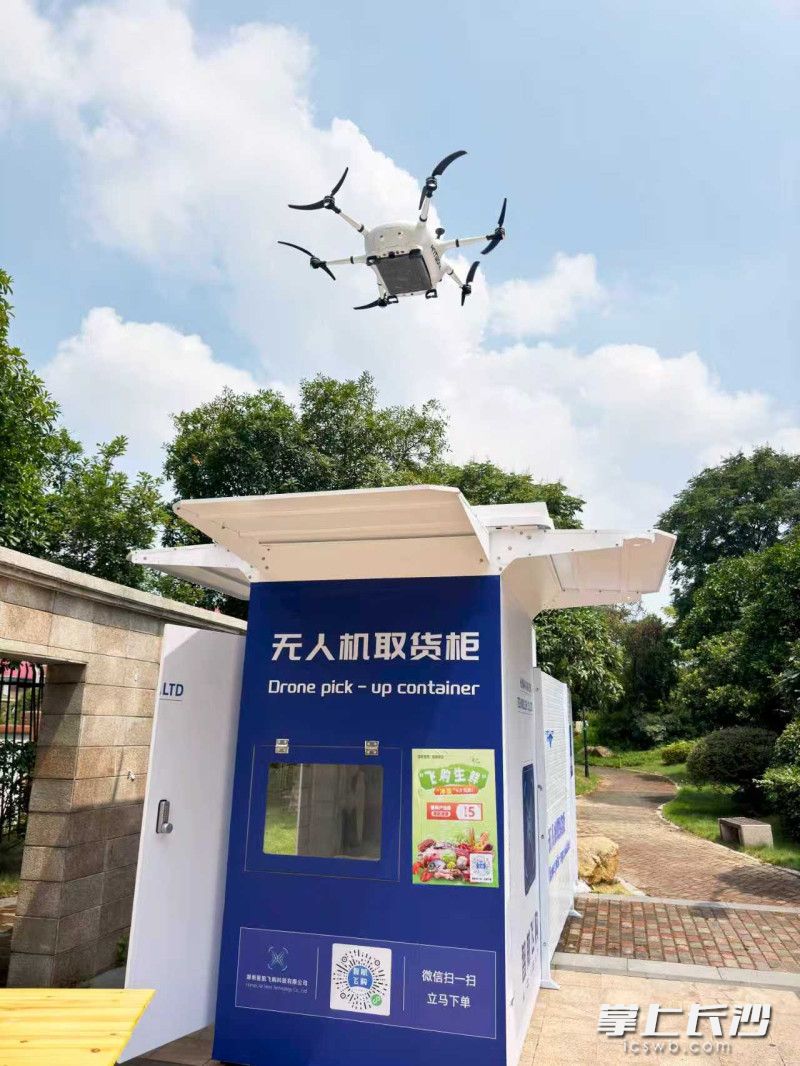
Group 1 - The event held in Changsha on January 10 aimed to promote the development of the low-altitude economy, marking a key initiative for the city to seize new opportunities in this sector [1] - The event featured a multi-dimensional presentation outlining the top-level design, implementation paths, and regional layout for the development of the low-altitude economy in Changsha [1] - Guangdong Xpeng Huitian Aerospace Technology Co., Ltd. showcased its core product, the split-type flying car "Land Carrier," which is designed for urban commuting and low-altitude sightseeing, significantly reducing operational difficulty with its single-rod control system [1] Group 2 - Hunan Zhihang Feigou Technology Co., Ltd. focused on the low-altitude logistics sector, presenting its self-developed low-altitude digital operation service platform, which has launched 26 drone delivery routes in Changsha County [1] - A series of strategic cooperation agreements were signed between Changsha Low-altitude Industry Development Group Co., Ltd. and various leading enterprises, financial institutions, and research institutes, covering key areas such as technology development and data sharing [4] - The establishment of the Changsha Low-altitude Group aims to focus on capital operations, scene development, and digital empowerment, accelerating the construction of low-altitude infrastructure and promoting the establishment of a complete industrial ecosystem [7] Group 3 - The low-altitude economy is recognized as a strategic emerging industry, becoming a new engine for economic transformation and growth [7] - Changsha has released a three-year implementation plan for high-quality development of the low-altitude economy, including the layout of vertical take-off and landing facilities and the construction of a comprehensive regulatory service platform [7] - The city aims to integrate low-altitude communication, navigation, monitoring, and meteorological infrastructure, supporting diverse low-altitude application scenarios and fostering an ecological industrial chain [7]
人文交流与“智造出海”助力中国与海湾国家合作
Xin Hua She· 2026-01-07 07:47
Group 1: Cultural Exchange and Human Connection - The "China-Saudi Cultural Year" has led to increased cultural exchanges, with over 60 events promoting mutual understanding and strengthening the strategic partnership between China and Saudi Arabia [2][6] - Activities included exhibitions of Chinese minority heritage and tea culture, performances of operas, and immersive experiences in Saudi Arabia, enhancing cultural appreciation among Gulf nations [2][3] Group 2: Technological Collaboration and Economic Opportunities - Chinese companies are entering the Gulf market with innovations in autonomous driving, exemplified by the launch of the first self-driving taxi service in Saudi Arabia [4] - Approximately 300 Chinese tech firms showcased advancements in AI, IoT, and digital governance at the Gulf Information Technology Exhibition in Dubai, indicating strong interest in Chinese technology products [4] - The partnership in renewable energy is growing, with companies like BYD signing contracts for energy storage projects in Saudi Arabia, highlighting the shift towards sustainable energy solutions [5] Group 3: Strengthening Multilateral Cooperation - The ASEAN-China-GCC summit in May 2025 emphasized enhanced cooperation in trade, investment, and energy transition, signaling a commitment to future collaboration [5][6] - The Gulf Cooperation Council (GCC) Secretary-General expressed a desire for a free trade agreement with China, indicating a high level of trust and strategic partnership [5][6]
特稿丨人文交流与“智造出海”助力中国与海湾国家合作
Xin Hua She· 2026-01-07 06:44
Group 1: Cultural Exchange and Human Connection - The "China-Saudi Cultural Year" has led to over 60 cultural exchange activities, enhancing mutual understanding and strengthening the strategic partnership between China and Saudi Arabia [2] - Events included exhibitions of Chinese minority heritage and tea culture, performances of operas, and immersive experiences in Saudi Arabia, fostering deeper cultural interactions [2] - Similar cultural activities have been organized in other Gulf countries, such as Qatar and Kuwait, increasing local interest in Chinese culture [2] Group 2: Technological Collaboration and Market Expansion - Chinese companies are entering the Gulf market with innovative technologies, such as autonomous driving services launched by WeRide in Saudi Arabia [4] - Approximately 300 Chinese tech firms showcased advancements in AI, IoT, and digital governance at the Gulf Information Technology Exhibition in Dubai, indicating strong regional interest in Chinese technology [4] - Partnerships in renewable energy are emerging, with companies like BYD signing contracts for energy storage projects in Saudi Arabia, highlighting the growth of the "new energy + storage + manufacturing" model [4][5] Group 3: Future Cooperation and Strategic Partnerships - The ASEAN-China-GCC summit in May 2025 emphasized enhanced cooperation in trade, investment, and energy transition, signaling a commitment to future collaboration [5] - The Gulf Cooperation Council (GCC) Secretary-General expressed a desire for a free trade agreement with China and anticipation for upcoming summits, indicating a high level of diplomatic engagement [6] - The ongoing collaboration between China and Gulf countries is expected to evolve into more concrete and sustainable partnerships, driven by mutual learning and shared development goals [6]
FINE2026 未来智能终端火热招展丨机器人、无人机、eVTOL、智能汽车、AI手机、AI眼镜......
DT新材料· 2026-01-06 16:04
未来智能终端展 2026年6月10-12日 上海新国际博览中心(N5馆) 主办单位: DT新材料 联合主办: 中国生产力促进中心协会新材料专业委员会 上海化育兴材企业管理有限公司(化育新材) 上海埃米汇创新材料集团有限公司(埃米空间) FINE 2026 总展(N1-N5馆)预计数据 展览面积: 50000平 参展企业: 800+家 终端&资本: 5000+ 专业观众: 100000+人次 论坛活动: 30+场 媒体曝光: 500+万次 展会介绍 在 "人工智能+"科技革命的驱动下, 机器人、无人机 /eVTOL、智能网联汽车、AI消费电子等 未来智能终 端 ,正汇聚成一股产业新浪潮。这不仅源于市场自发的活力,更获得了国家顶层设计的强劲支撑 ——从 国家发改委专设"低空经济发展司"、工信部成立"人形机器人与具身智能标准化技术委员会",到"十五 五"规划明确将低空经济、具身智能、智能网联汽车等列为重点产业,其战略地位已空前清晰。 产业爆发之势,蓄力待发,抢抓时代机遇,就在 FINE 2026! 本届展会将于 2026年6月10-12日在上海新国际博览中心举行,以 50,000平 方米的宏大展区全景呈现未来 科技 ...

低空经济寻路:商业化加速与资本分化并行
2 1 Shi Ji Jing Ji Bao Dao· 2026-01-05 12:40
Group 1: Core Insights - The E40H unmanned aerial vehicle system developed by Yufeng Future's subsidiary, Fukun, has successfully obtained a Type Certificate (TC) from the Civil Aviation Administration of China (CAAC) [1][2] - E40H is the first medium composite wing and hybrid power unmanned aerial product to receive TC certification in China, marking a significant milestone in the country's low-altitude economy [1][2] - The certification indicates that E40H meets the stringent airworthiness standards set by the CAAC, enabling it for large-scale commercial operations [1][2] Group 2: Industry Developments - The low-altitude economy sector is accelerating its airworthiness certification process, with several models expected to complete TC certification by 2026, including Yufeng Future's M1B and others [1][3] - The low-altitude economy market in China is projected to reach 1.5 trillion yuan by 2025 and is expected to exceed 2 trillion yuan by 2030, indicating strong growth potential [3][4] Group 3: Investment Trends - In 2025, the low-altitude economy is experiencing a "capital explosion year," with 244 financing events totaling 220.89 billion yuan reported by November 24, 2025 [4][5] - Major investments are concentrated in leading companies within the industry, with significant single financing amounts reported for companies like Xiaopeng Huitian and Yufeng Future [5] Group 4: Market Dynamics - Despite the robust activity in the primary market, the secondary market for low-altitude economy stocks has cooled, with leading companies experiencing stock price declines of over 20% [5][7] - Industry experts highlight ongoing challenges such as insufficient infrastructure, complex airspace management, and the need for improved safety guarantees as critical issues facing the low-altitude economy [7]

孚能科技:目前半固态电池出货量已达GWh级别
Mei Ri Jing Ji Xin Wen· 2025-12-31 09:23
Core Viewpoint - The company has achieved significant recognition in the semi-solid battery sector, with a substantial volume of shipments reaching GWh levels, indicating strong market acceptance and demand for its products [1]. Group 1: Company Performance - The company has received widespread customer recognition for its semi-solid batteries, with shipment volumes now at GWh levels [1]. - The semi-solid battery shipments represent a high proportion of the company's overall output, showcasing its competitive position in the market [1]. Group 2: Client Base - The company's semi-solid batteries have been recognized by leading clients across various sectors, including SANY Heavy Truck, FAW Liberation, top eVTOL clients in the U.S., and companies like Xiaopeng Huitian and Wofei Chang Kong [1].

2025汽车行业年鉴|供应链篇:整零深度绑定、场景决定未来
Jing Ji Guan Cha Wang· 2025-12-30 10:23
Core Insights - In 2025, the Chinese automotive industry will experience a deepening transformation towards intelligence, shifting the supply chain from "price competition" to "value competition" and evolving towards a "fully intelligent ecosystem co-construction" [2] - Level 3 autonomous vehicles will be legally operational in China, marking a significant milestone for companies like Robotaixi, which is expected to achieve profitability [2] - The supply chain's global competitiveness will accelerate as the intelligent wave drives the evolution from component assembly to technological ecosystems, with advancements in areas like unmanned delivery and flying cars [2] Group 1: Industry Trends - The most notable feature of the automotive intelligent supply chain in 2025 will be "ecological integration" replacing "single-point cooperation," with leading automakers and core suppliers forming deep collaborative barriers through strategic investments and equity binding [3] - Capital injection is crucial for resource binding, exemplified by Chery and Luxshare's joint investment of $100 million in Lightyear, and other strategic investments by major players like FAW and Geely [3] - The restructuring of major automotive companies, such as Changan becoming a new central enterprise, will lead to the establishment of intelligent manufacturing and asset management platforms [3] Group 2: Technological Advancements - Core suppliers are transitioning from "component providers" to "full-stack solution enablers," with companies like Huawei leading the charge in defining products and channels through their HarmonyOS [4] - The implementation of a 60-day payment term by major automakers aims to restore the credit system within the supply chain, fostering a shift from competition to strategic partnerships [4] - Significant regulatory changes include the mandatory adoption of Advanced Emergency Braking Systems (AEBS) and the introduction of stringent safety standards for power batteries [5] Group 3: Commercialization and Market Expansion - The commercialization of Level 4 autonomous driving technology is entering a verification phase, with the Ministry of Industry and Information Technology granting licenses for Level 3 systems to specific models [6] - The Robotaxi sector is witnessing critical breakthroughs, with companies like Pony.ai and WeRide achieving dual listings and significant advancements in autonomous driving systems [6] - Unmanned delivery is transitioning from pilot projects to large-scale applications, with companies like New Stone and JD Logistics deploying thousands of unmanned vehicles [7] Group 4: Challenges and Future Outlook - Despite significant breakthroughs in 2025, the Chinese automotive supply chain faces three major challenges: reliance on external sources for raw materials like lithium and cobalt, dependency on imported chips, and limitations in foundational software technologies [8]

比亚迪将推出飞行汽车?李云飞回应
Guan Cha Zhe Wang· 2025-12-29 08:16
Group 1 - BYD Group's General Manager of Brand and Public Relations, Li Yunfei, denied rumors about the company launching flying cars, stating that the information is false and that there are no such plans or arrangements [1] - Li emphasized the importance of restraint in the face of public interest and speculation [1] Group 2 - XPeng Huizhou has initiated trial production at its electric vertical takeoff and landing (eVTOL) flying car production base in Guangzhou, which is the first in the country with a capacity of tens of thousands [2] - GAC High Domain announced that its Guangzhou production base is set to officially start trial production next month, while also advancing the airworthiness certification and mass production of flying cars [2] - The multi-rotor flying car product, GOVY AirCab (GAC-A6), has received multiple orders and is undergoing full-process airworthiness review, with plans to complete certification by the end of 2026 and begin market delivery [2]


广东穿越周期的三大“超能力”
2 1 Shi Ji Jing Ji Bao Dao· 2025-12-28 15:46
Economic Overview - Guangdong is recognized as China's "economic leader," maintaining over 10% of the national GDP share for a long time, with a GDP that has surpassed 14 trillion yuan [1] - The province has consistently ranked first in GDP for 36 years and has crossed significant GDP milestones since 2019 [1] - Despite its economic size, Guangdong faces challenges in achieving high growth rates, especially compared to other provinces [1] Industrial Transformation - Traditional industries have historically driven Guangdong's rapid economic growth, with six out of ten strategic pillar industries being traditional, contributing over 70% to manufacturing value added [3] - The province is actively guiding enterprises to innovate and upgrade, as seen in the case of Monalisa Group's investments in the semiconductor sector [3][4] - Guangdong is promoting the transformation of manufacturing towards digitalization and sustainability, with over 300 "lighthouse" projects established to support this shift [4] Innovation and Technology - Guangdong is fostering a new production capacity by integrating technological and industrial innovation, with significant advancements in strategic emerging industries [5] - The establishment of companies like Yuexin Semiconductor has transformed the semiconductor landscape in the Guangdong-Hong Kong-Macau Greater Bay Area, addressing previous supply chain concerns [6] - The province has developed a dense ecosystem for AI chips, with a production capacity of 80,000 12-inch wafers per month [6][7] Competitive Advantages - Guangdong's unique advantages include a complete industrial chain, a large consumer market of 1.5 billion people, and diverse application scenarios that foster innovation [9][10] - The province's market contributes over 10% of the national retail sales, providing significant opportunities for businesses across various sectors [10] - The integration of smart technologies with traditional industries in Guangdong is creating new business models and applications, enhancing the region's attractiveness to global investors [11]