
康师傅控股

Search documents
魏氏家族80后少帅接班,能拯救失血的康师傅帝国吗
创业家· 2026-01-11 10:11
Core Insights - The article discusses the challenges faced by Master Kong (康师傅) as it transitions leadership from long-time CEO Chen Yingran to new CEO Wei Hongcheng, highlighting the need for growth amidst declining revenues and a shrinking dealer network [5][10][20]. Group 1: Leadership Transition - Chen Yingran, the long-serving CEO of Master Kong, has announced his retirement, with Wei Hongcheng set to take over in January 2026, marking a complete transition of leadership to the second generation of the Wei family [5][10]. - The Wei family retains significant control over the company, with their holding company owning 33.42% of Master Kong's shares, equal to that of Japanese shareholder Sanyo Foods [10][11]. Group 2: Financial Performance - Master Kong reported a revenue of 40.092 billion yuan for the first half of 2025, a decrease of 1.109 billion yuan (2.69%) compared to the previous year [6][14]. - The number of dealers has decreased from 67,215 at the end of 2024 to 63,806 in the first half of 2025, indicating a loss of 3,409 dealers [7][16]. Group 3: Market Challenges - The rise of the food delivery industry has significantly impacted the demand for instant noodles, which were once a staple for consumers, leading to increased competition from major internet companies like Alibaba, Meituan, and JD [12][13]. - The beverage segment, which contributes 65.74% of total revenue, saw a decline of 2.61%, while the instant noodle segment, accounting for 33.59%, also experienced a decrease of 2.52% [14][20]. Group 4: Strategic Responses - Master Kong is attempting to maintain profitability despite declining revenues, achieving a net profit of 2.271 billion yuan, up over 20% from the previous year, through asset sales and cost management strategies [20][21]. - The company has implemented a new pricing strategy, raising prices on key products, which poses a risk of losing market share in price-sensitive segments [23][24]. Group 5: Competitive Landscape - The competitive landscape in the ready-to-drink tea market is shifting, with competitors like Nongfu Spring's Dongfang Shuli and Suntory's Ulong tea gaining significant market share, impacting Master Kong's position [25]. - Master Kong's market share in the ready-to-drink tea segment has decreased from 29.5% to 27.7%, while Dongfang Shuli's share increased from 19.9% to 24.8% [25].


2025年中国老母鸡汤方便面行业发展历程、市场政策、产业链图谱、市场规模、竞争格局及发展趋势分析:锁鲜技术将成为企业突破增长瓶颈的核心抓手[图]
Chan Ye Xin Xi Wang· 2026-01-11 01:03
Core Insights - The domestic consumption trend is shifting from "cost-effectiveness" to "high quality and convenience," with consumers increasingly willing to pay for healthy convenience foods [1][8] - The market for old hen soup instant noodles is projected to reach 2.19 billion yuan by 2025, representing a year-on-year growth of 75.2%, although its market share remains below 5% compared to traditional instant noodle varieties [1][8] Industry Overview - Old hen soup instant noodles are made primarily from wheat flour and feature a soup base that simulates the flavor of old hen broth, complemented by dehydrated vegetables and meat [2] - The product is categorized into three types based on packaging: bagged, bucket, and cup, catering to different consumer needs and scenarios [2] Development History - The industry has evolved from traditional flavors to a focus on quality and authenticity, driven by consumer upgrades and technological advancements since 2021 [2][8] - Key innovations include temperature-controlled cooking and freshness-locking techniques, enhancing the authenticity and stability of the chicken soup flavor [2] Regulatory Environment - Recent policies emphasize food safety and quality control across all stages of production, processing, and distribution, pushing the industry towards standardization and high-quality development [4] Industry Chain - The upstream supply chain includes suppliers of old hens, wheat flour, dehydrated vegetables, and other ingredients, while the downstream consists of sales channels like supermarkets, convenience stores, and e-commerce platforms [4] Consumer Insights - The primary consumer demographic for old hen soup instant noodles is aged 18-35, with a significant focus on health and quality [6] - The most common consumption scenarios include late-night snacks and quick meals, with flavor authenticity being the top priority for 78% of consumers [6] Competitive Landscape - The market is dominated by major players like Kang Shifu and Uni-President, with increasing competition as more brands enter the old hen soup instant noodle segment [8] - Companies are focusing on product differentiation through health-oriented branding and innovative cooking techniques [8] Future Trends - The industry is expected to adopt freshness-locking technologies as standard, enhancing the authenticity of flavors and nutritional value [10] - There will be a shift towards using natural ingredients and reducing artificial additives in response to rising health consciousness among consumers [10]


港股收盘:恒生指数涨0.315%,恒生科技指数涨0.155%
Xin Lang Cai Jing· 2026-01-09 08:18
阿里健康涨4.719%,申洲国际涨4.390%,康师傅控股涨4.018%,恒隆地产涨3.968%,腾讯音乐-SW涨 3.933%,快手-W涨3.894%,长和涨3.721%。 来源:滚动播报 ...
大行评级|麦格理:上调康师傅目标价至15港元 维持“跑赢大市”的评级
Ge Long Hui· 2026-01-09 08:07
Core Viewpoint - Macquarie maintains an "outperform" rating for Master Kong, believing that the new management will focus on strict cost management and revenue recovery, leading the company to achieve sustainable growth starting in 2026 [1] Group 1: Financial Projections - Macquarie expects attractive dividend returns from Master Kong, with projected dividend yields of 7% and 8% for 2025 and 2026, respectively [1] - Based on confidence in strict operational cost control, Macquarie has raised its earnings forecasts for Master Kong by 2.1% for 2025 and 2026, and by 2.0% for 2027 [1] Group 2: Valuation - Macquarie maintains a target price of HKD 15, up from HKD 14.7, while keeping the valuation at 15 times the projected earnings for 2026 [1]
连续两个交易日“吸金”超3600万元,聚焦港股消费ETF(513230)把握消费转型红利
Mei Ri Jing Ji Xin Wen· 2026-01-09 05:59
Group 1 - The Hong Kong stock consumer sector experienced narrow fluctuations, with the Hong Kong Consumer ETF (513230) turning from decline to increase during midday trading on January 9. Notable gainers included Lao Pu Gold, Mao Ge Ping, Kang Shi Fu Holdings, Bosideng, and Shenzhou International, while major decliners were Mixue Group, Pop Mart, Smoore International, Mengniu Dairy, and WH Group [1] - The Hong Kong Consumer ETF (513230) has seen a net inflow of funds for two consecutive trading days, accumulating a total of 36.63 million yuan [1] - On January 5, the Ministry of Commerce and nine other departments released a notice on implementing green consumption promotion actions, outlining 20 specific measures across seven areas to accelerate the green transformation of consumption patterns and support high-quality economic development [1] Group 2 - Galaxy Securities believes that the notice on green consumption aligns with the requirements of the 14th Five-Year Plan, embedding green consumption into the overall development strategy and providing core support for green transformation from the consumption end [1] - The Hong Kong Consumer ETF (513230) tracks the CSI Hong Kong Stock Connect Consumer Theme Index, encompassing leading companies across various consumer sectors, including Pop Mart, Yum China, Anta Sports, Nongfu Spring, and WH Group [2]
港股复盘|太子集团创始人、电诈头目陈志落网 其控股港股上市公司股价诡异拉升
Mei Ri Jing Ji Xin Wen· 2026-01-08 18:18
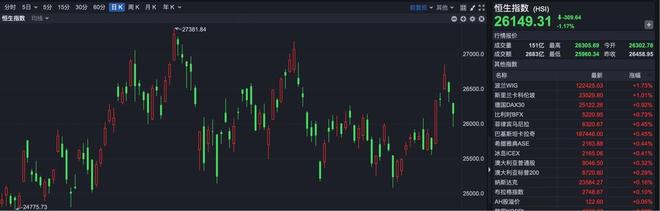
Market Overview - The Hong Kong stock market continued to decline, with the Hang Seng Index closing at 26,149.31 points, down 309.54 points, a decrease of 1.17% [2] - The Hang Seng Tech Index closed at 5,678.34 points, down 60.18 points, a decrease of 1.05% [4] Company Focus: Zhihua Holdings - Zhihua Holdings' controlling shareholder, Chen Zhi, is linked to the recently apprehended founder of the Taizi Group, who is involved in fraud [5] - Zhihua Holdings, listed in 2017, has seen its stock price never exceed HKD 1, peaking at HKD 0.82, and dropping to below HKD 0.10 in 2023, with a low of HKD 0.031 at the end of last year [5] - Following sanctions against Chen Zhi by the US and UK, he resigned from his executive roles in October 2022, and his successor also resigned shortly after [5][9] Stock Performance - Zhihua Holdings experienced a significant stock price increase, with an intraday peak rise of 120% and a closing increase of over 94.29%, bringing its market capitalization to approximately HKD 114 million [6] - Chen Zhi also controls another Hong Kong-listed company, Kun Group, with a 55% stake, which has a market capitalization of about HKD 139 million [11] Sector Performance - Among the Hang Seng Index constituents, New World Development rose over 3%, China Shenhua increased over 2%, and Hansoh Pharmaceutical gained over 1% [12] - Conversely, Lenovo Group fell over 5%, and Tingyi Holdings dropped over 4% [12] - In the Hang Seng Tech Index, Horizon Robotics rose over 3%, Bilibili increased over 2%, while Alibaba fell over 2% and Sunny Optical Technology dropped over 4% [12] Capital Flow - There was a significant net sell-off by southbound funds, exceeding HKD 4.9 billion by the end of the trading day [13] Market Outlook - Analysts from Galaxy Securities expect active trading in the Hong Kong market to continue, predicting an overall upward trend [15] - Everbright Securities also anticipates continued upward movement due to domestic policy support and a weaker US dollar [15] - However, Zheshang International notes that the market's fundamentals remain weak, suggesting a cautious but optimistic approach to the market's short-term outlook [15]
魏氏家族80后少帅接班,能拯救失血的康师傅帝国吗
商业洞察· 2026-01-08 09:08
Core Viewpoint - The retirement of Chen Yingrang marks a significant transition for Master Kong, as the new CEO Wei Hongcheng faces the challenge of revitalizing growth in a changing market landscape [5][7][20]. Group 1: Leadership Transition - Chen Yingrang, the long-serving CEO of Master Kong, will retire at the end of 2025, with Wei Hongcheng set to take over as CEO from January 1, 2026 [5][6]. - Wei Hongcheng is the third son of the founder and has been involved in the company’s leadership, indicating a complete handover to the second generation of the Wei family [6][8]. Group 2: Financial Performance - In the first half of 2025, Master Kong reported revenues of 40.092 billion yuan, a decrease of 1.109 billion yuan or 2.69% year-on-year [6][12]. - The beverage segment contributed 65.74% of total revenue, generating 26.359 billion yuan, down 2.61%, while the instant noodle segment accounted for 33.59% with revenues of 13.465 billion yuan, down 2.52% [12][18]. Group 3: Market Challenges - The rise of the food delivery industry has significantly impacted the demand for instant noodles, with major competitors like Alibaba, Meituan, and JD.com reshaping the market dynamics [11][20]. - The number of distributors for Master Kong decreased from 67,215 at the end of 2024 to 63,806 in the first half of 2025, indicating potential issues in the distribution network [6][13]. Group 4: Strategic Responses - Master Kong has implemented a "one code for one item" strategy to enhance channel control and reduce gray market profits, but this has led to a reduction in distributor engagement [14][18]. - Despite revenue declines, the company managed to increase net profit to 2.271 billion yuan, up over 20% from the previous year, through cost-cutting measures and price increases [18][19]. Group 5: Competitive Landscape - The competitive landscape for ready-to-drink tea has shifted, with competitors like Nongfu Spring's Oriental Leaf capturing significant market share, leading to a decline in Master Kong's market share from 29.5% to 27.7% [22][23]. - The market capitalization of new tea brands has surpassed that of Master Kong, highlighting the intense competition and changing consumer preferences [11][12].

港股收盘 | 恒指收跌1.17% 科网股、金融股走低 三新股首挂集体大涨
Zhi Tong Cai Jing· 2026-01-08 09:00
Market Overview - The Hong Kong stock market experienced a decline, with the Hang Seng Index falling by 1.17% to close at 26,149.31 points, and a total trading volume of 268.275 billion HKD [1] - The Hang Seng Tech Index dropped by 1.05%, while the Hang Seng China Enterprises Index decreased by 1.09% [1] - Everbright Securities noted that domestic policy support and a weaker US dollar may lead to continued fluctuations and potential upward movement in the Hong Kong market [1] Blue-Chip Performance - New World Development (00016) led blue-chip stocks, rising by 3.21% to 102.8 HKD, contributing 7.39 points to the Hang Seng Index [2] - Morgan Stanley predicts a 10% increase in Hong Kong residential property prices this year due to rising demand from mainland buyers and limited supply [2] - Other notable blue-chip movements included China Shenhua (01088) up 2.56% and Huaneng Power (00322) down 4.18% [2] Sector Highlights - Large tech stocks faced pressure, with Alibaba and Tencent both declining [3] - The commercial aerospace sector saw significant gains, with Asia Pacific Satellite rising over 20% [4] - Semiconductor stocks performed well, with Tian Shu Zhi Xin (09903) increasing by 8.44% [3] - The brain-computer interface sector gained traction, with companies like Brainhole Technology (02203) rising by 9.33% [4][6] New Listings and Market Activity - New listings included Zhipu AI (02513), which rose by 13.17% on its debut, marking it as the "first stock of large models" [7] - COSCO Shipping Energy (01138) saw a strong performance, increasing by 7.09% amid rising demand for legal oil tankers due to geopolitical dynamics [8] - Xindong Company (02400) also performed well, rising by 6.46% following the global launch of its mobile game [9] Corporate Actions - HSBC Holdings (00005) faced pressure, declining by 2.28% as it proposed a privatization plan valued at approximately 290.3 billion HKD, with a buyout price of 155 HKD per share, representing a 30.3% premium [10]
港股收盘(01.08) | 恒指收跌1.17% 科网股、金融股走低 三新股首挂集体大涨
智通财经网· 2026-01-08 08:50
Market Overview - The Hong Kong stock market experienced a decline, with the Hang Seng Index falling by 1.17% or 309.64 points, closing at 26,149.31 points, and a total trading volume of 268.275 billion HKD [1] - The Hang Seng Tech Index dropped by 1.05%, while the Hang Seng China Enterprises Index decreased by 1.09% [1] - Everbright Securities noted that domestic policy support and a weaker US dollar may lead to continued fluctuations and potential upward movement in the Hong Kong market, highlighting strong overall profitability and relatively low valuations [1] Blue-Chip Stocks Performance - New World Development (00016) led blue-chip stocks with a rise of 3.21%, closing at 102.8 HKD, contributing 7.39 points to the Hang Seng Index [2] - China Shenhua (01088) increased by 2.56%, while Hansoh Pharmaceutical (03692) rose by 1.75% [2] - Sands China (01928) fell by 4.49%, and Tingyi (00322) dropped by 4.18%, negatively impacting the index [2] Sector Highlights - Large tech stocks faced pressure, with Alibaba and Tencent both declining [3] - The commercial aerospace sector saw significant gains, with Asia Pacific Satellite rising over 20% [4] - Semiconductor stocks performed well, with Tian Shuo Zhi Xin (09903) increasing by 8.44% and Shanghai Fudan (01385) rising by 5.27% [3] - The brain-computer interface sector gained attention, with companies like Brainhole Technology (02203) and Micro-Innovation Brain Science (02172) seeing notable increases [4][5] New Listings and Market Movements - New listings included Zhipu AI (02513), which rose by 13.17% on its debut, becoming known as the "first stock of large models" [7] - COSCO Shipping Energy (01138) saw a strong performance, increasing by 7.09% amid rising demand for legal oil tankers due to geopolitical dynamics [8] - Xindong Company (02400) also performed well, rising by 6.46% following the global launch of its mobile game [9] HSBC Holdings Update - HSBC Holdings (00005) faced pressure, declining by 2.28% as it held a court meeting and shareholder meeting to vote on a privatization proposal valued at approximately 290.3 billion HKD [10] - The proposed buyout price is set at 155 HKD per share, representing a 30.3% premium over the previous closing price [10]


传2026年“苏超”赞助超2亿元, 官方回应
Xin Lang Cai Jing· 2026-01-08 08:12
Core Insights - The sponsorship amount for the 2026 season of the "Su Super League" is reported to be 202 million yuan, but this information is currently deemed inaccurate as the sponsors have not yet been announced [1] - The 2026 season is expected to see an increase in the number of matches from 85 to 91, with the season set to kick off in April [1] Group 1: Sponsorship Details - The sponsorship for the 2026 season is anticipated to include a continuation of support from Jiangsu Bank at 45 million yuan, along with new sponsorship from Suhao Group at 30 million yuan [1] - The total sponsorship amount for the new season is projected to reach 202 million yuan, with the sponsorship recruitment nearing completion [1] Group 2: Growth and Popularity - The "Su Super League" has rapidly gained popularity since its inception in 2025, driven by a model of "mass participation + cultural tourism integration," leading to a total cultural and tourism consumption of over 120 billion yuan during the event [1] - The number of sponsors increased from 6 to 41 in the 2025 season, with individual sponsorship fees rising from hundreds of thousands to 3 million yuan, indicating high demand [1][2] - The league has set a new benchmark for amateur sports events in China, with an average attendance of 28,000 per match and a peak of 62,000 for the finals, alongside over 2 billion online views [2] Group 3: Future Plans - The Jiangsu Provincial Sports Bureau has confirmed that the 2026 Jiangsu City Football League will continue, with plans for optimizing player selection rules to enhance the league's characteristics and quality [2]

