中信银行

Search documents
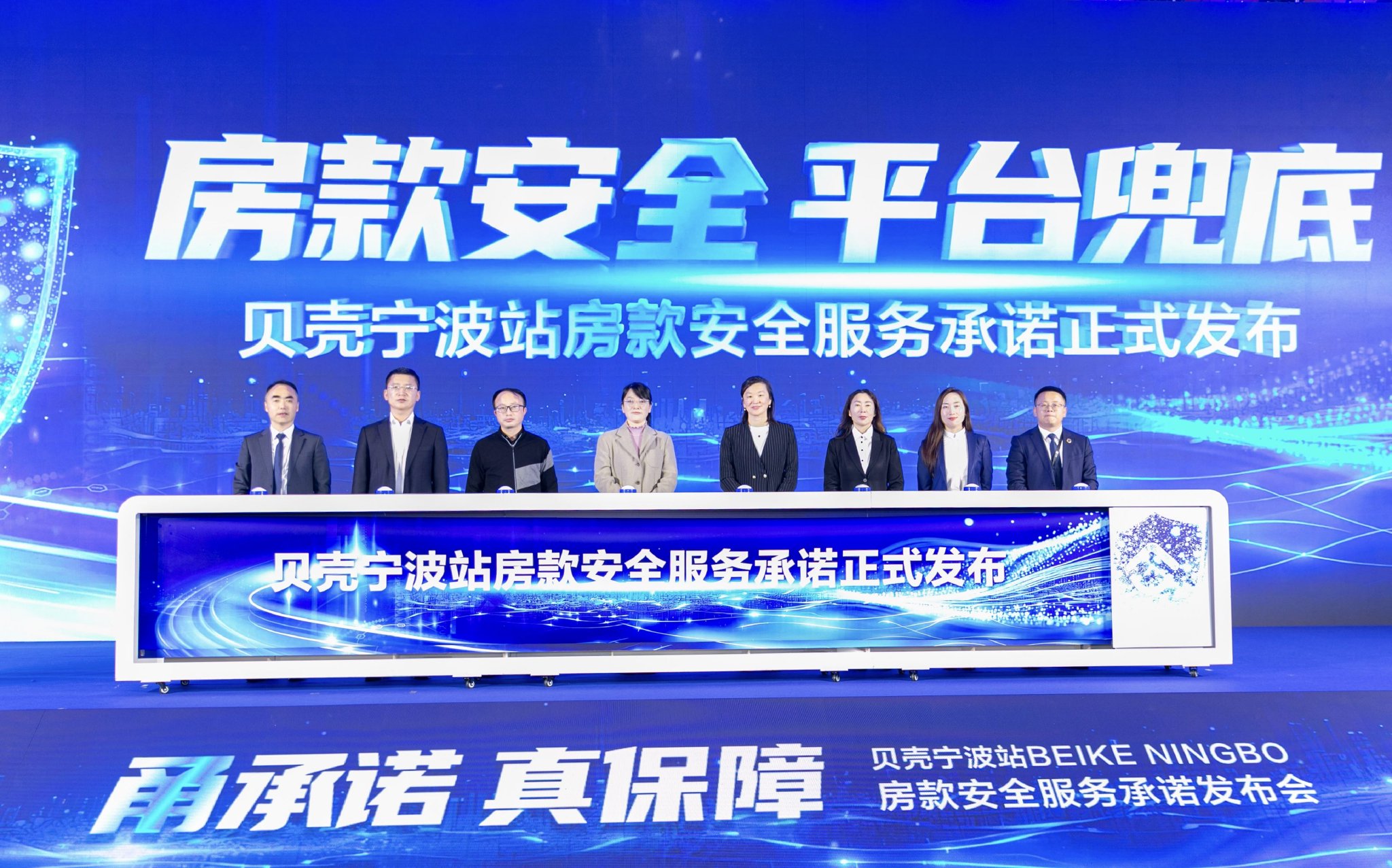
全流程保障房款安全!宁波贝壳上线服务承诺 为消费者兜底
Xin Lang Cai Jing· 2025-12-19 11:47
Core Viewpoint - Beike has launched a "House Payment Security, Platform Guarantee" service commitment in Ningbo, aimed at providing comprehensive transaction security for consumers in real estate transactions [1][3]. Group 1: Service Commitment Details - The service commitment is designed to address transaction risks and enhance the security of house payments, which is a major concern in the complex and high-value second-hand housing market [3][5]. - Beike's commitment includes a "3+3" platform-level service promise and a "first C then B, shared compensation" mechanism to ensure consumer trust and reduce financial risks [5][10]. Group 2: Consumer Protection and Process Upgrades - The commitment expands the security guarantee from just fund custody to the entire transaction cycle, utilizing standardized process management to evolve from "static notification" to "dynamic protection" [7][9]. - Beike has implemented a series of innovative measures, including risk awareness videos and real-time fund information sharing, to enhance transparency and consumer confidence during transactions [9][14]. Group 3: Industry Impact and Expectations - The initiative has been positively received by local consumer protection authorities, who expect Beike to continue leading the industry in consumer rights protection and service innovation [7][10]. - The commitment has increased Beike's platform-level service promises to five, including guarantees for real listings, commission refunds, and compensation for property issues, thereby enhancing overall consumer trust [14][16]. Group 4: Financial Assurance Statistics - Beike's Ningbo station has already provided security for 3,331 transactions, amounting to 30.28 million yuan, highlighting the effectiveness of the new service commitment in safeguarding consumer interests [16].

渤海银行聘任首席信息官
Xin Lang Cai Jing· 2025-12-19 11:24
Group 1 - Bohai Bank announced the appointment of Xie Kai as Chief Information Officer, pending approval from the National Financial Regulatory Administration. Xie Kai is currently the Vice President of Bohai Bank [1] - Citic Bank's Chengdu branch was fined 2.3 million yuan for imprudent management of credit, trade financing, bill business, investment business, and fee management [2] - Qingdao Jimo District Finance Bureau announced plans to revoke the pilot qualification of Qingdao Hisense Microfinance Co., Ltd., which was established in August 2018 with an initial capital of 300 million yuan, currently having a registered capital of 910 million yuan [3]

港股高股息ETF(159302)跌0.08%,成交额2430.23万元
Xin Lang Cai Jing· 2025-12-19 10:36
来源:新浪基金∞工作室 12月19日,港股高股息ETF(159302)收盘跌0.08%,成交额2430.23万元。 港股高股息ETF(159302)成立于2024年8月23日,基金全称为银华中证港股通高股息投资交易型开放 式指数证券投资基金,基金简称为港股高股息ETF。该基金管理费率每年0.50%,托管费率每年0.10%。 港股高股息ETF(159302)业绩比较基准为中证港股通高股息投资指数收益率(经估值汇率调整)。 股票代码股票名称持仓占比持仓股数(股)持仓市值(元)01919中远海控7.63%77.70万859.07万03668 兖煤澳大利亚5.59%25.51万628.83万01308海丰国际5.05%20.80万568.94万02611国泰海通4.31%33.08万 485.03万00316东方海外国际4.00%3.90万449.71万01988民生银行3.86%115.80万434.52万00998中信银行 3.61%66.50万406.17万00857中国石油股份3.55%61.80万399.47万01088中国神华3.47%11.50万390.57万 01339中国人民保险集团3.44%62. ...
银行业2026年投资策略:盈利改善与资金驱动共振,看好行业配置价值
Dongxing Securities· 2025-12-19 10:26
Group 1 - The report indicates that the banking sector is expected to see a marginal improvement in profitability in 2026, driven by a stabilization in net interest margins and a recovery in net interest income [4][24]. - The banking sector's performance in 2025 was characterized by significant fluctuations, with state-owned banks outperforming others, particularly in the first half of the year [16][21]. - The report highlights that the core revenue growth is expected to shift from "other non-interest income + provisions" to "net interest income + middle-income" as the main support for bank profitability [4][24]. Group 2 - The report forecasts that net interest margins will stabilize in 2026 due to a continued improvement in funding costs, with an estimated increase of approximately 11.6 basis points from deposit repricing [6][42]. - It is anticipated that credit growth will continue to slow down, with a projected year-on-year increase of around 5.6% in 2026, influenced by structural changes in the economy and financing demand [49][52]. - Non-interest income is expected to recover moderately, while contributions from other non-interest income are likely to decline [4][24]. Group 3 - Long-term capital is expected to maintain strong allocation momentum, particularly from insurance capital, which is anticipated to continue increasing its investment in banks [5][48]. - The report suggests that passive funds are likely to flow into bank stocks due to market stabilization expectations and the expansion of ETFs [5][48]. - Active funds are currently underweight in the banking sector, but this is expected to change as performance benchmarks are reformed [5][48]. Group 4 - Investment recommendations include focusing on state-owned banks, leading city commercial banks benefiting from regional economic growth, and small to medium-sized banks with high elasticity in a recovering economy [4][5]. - The report emphasizes the importance of banks with strong customer bases, robust loan organization capabilities, and solid provisioning in demonstrating strong performance resilience [4][24].
金融行业双周报(2025、12、5-2025、12、18)-20251219
Dongguan Securities· 2025-12-19 09:15
Investment Ratings - Banking: Overweight (Maintain) [1] - Securities: Market Weight (Maintain) [1] - Insurance: Overweight (Maintain) [1] Core Insights - The financial indices for banks, securities, and insurance showed varied performance, with banks declining by 0.93%, securities increasing by 3.47%, and insurance rising by 15.61% as of December 18, 2025 [9] - The report highlights a trend of increasing social financing, with corporate bonds contributing significantly, while demand for loans from both residents and enterprises remains weak [43] - Regulatory changes in the insurance sector aim to encourage long-term investments and improve the competitive landscape for leading insurance companies [47] Summary by Sections Market Review - As of December 18, 2025, the banking index decreased by 0.93%, while the securities and insurance indices increased by 3.47% and 15.61%, respectively [9] - Xiamen Bank, Zhongyin Securities, and China Ping An were noted for their strong performance, with increases of 5.49%, 12.39%, and 16.99% [9] Valuation Situation - The banking sector's price-to-book (PB) ratio stands at 0.77, with state-owned banks at 0.83, joint-stock banks at 0.62, city commercial banks at 0.73, and rural commercial banks at 0.65 [20] - The securities sector's PB ratio is at 1.48, indicating potential for valuation recovery [22] Recent Market Indicators - The one-year Medium-term Lending Facility (MLF) rate is 2.0%, with the one-year and five-year Loan Prime Rates (LPR) at 3.0% and 3.50%, respectively [27] - The average daily trading volume in A-shares was 17,440.20 billion, reflecting a decrease of 9.91% [33] Industry News - The Ministry of Industry and Information Technology and the People's Bank of China issued a notice to support green finance for green factory construction [38] - The China Securities Regulatory Commission emphasized differentiated development paths for securities firms, encouraging mergers and resource integration for leading firms [45] Company Announcements - China Life reported total premiums exceeding 700 billion as of November 30, 2025 [41] - New China Life announced a 16% year-on-year increase in original premium income as of November 30, 2025 [41] Weekly Insights - The banking sector is advised to focus on regional banks with strong performance and stable earnings, such as Ningbo Bank and Chengdu Bank [44] - The securities sector should consider firms with restructuring potential and strong operational capabilities, including Zheshang Securities and CITIC Securities [46] - The insurance sector is encouraged to invest in companies with strong growth in new business value, such as China Pacific Insurance and Ping An [47]
多家银行年末加速“甩包袱”→
Jin Rong Shi Bao· 2025-12-19 06:37
Group 1 - The core viewpoint of the articles highlights a significant increase in the transfer of non-performing retail assets by banks as they approach year-end, driven by financial optimization and risk clearance [1][2] - The number of non-performing asset packages listed for transfer has surged, with over 30 announcements made in just two days, indicating a rapid acceleration in the pace of asset disposals by major banks [1][2] - Retail non-performing loans have become the primary type of assets being transferred, as banks aim to optimize year-end financial statements by reducing non-performing loan ratios and improving capital indicators [2][3] Group 2 - The trend of transferring retail non-performing assets is supported by data showing a 761.4% year-on-year increase in the scale of personal non-performing loan batch transfers, with personal consumption loans making up over 70% of these transfers [2] - The current phase of retail banking is characterized by a shift from rapid expansion to structural adjustment and refined management, with a focus on high-quality customer operations and wealth management [3][4] - Experts predict that the wave of non-performing loan disposals may continue until mid-2026, with an expected increase in the scale of disposals and a shift towards regional small and medium-sized banks as the primary entities involved [3]





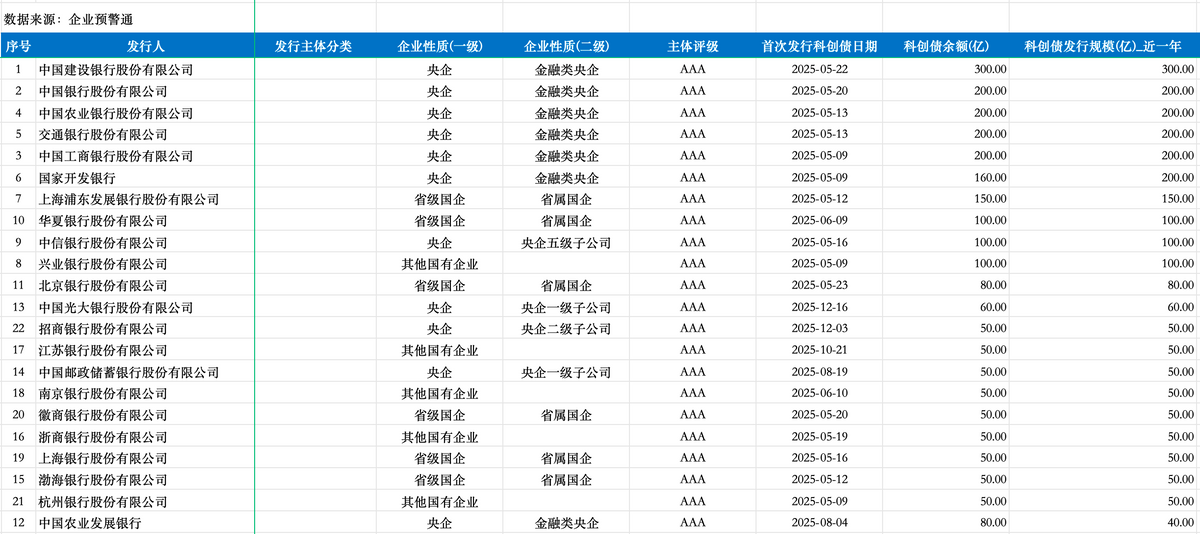
利率1.65%-2.07%!银行科创债破3000亿元,城商行成新主力
Xin Lang Cai Jing· 2025-12-19 05:29
Core Viewpoint - The issuance of technology innovation bonds (科创债) by banks has significantly increased, with a total issuance scale reaching 301.4 billion yuan as of December 18, indicating a strong market response to the regulatory support initiated in May 2023 [3][14]. Issuance Scale - A total of 67 banks have issued 75 technology innovation bonds, with the largest share coming from state-owned banks, which account for 38.16% of the total issuance [3][15]. - The six major state-owned banks have collectively issued bonds worth 115 billion yuan, while city commercial banks and rural commercial banks have also become significant players, with issuance scales of 74.9 billion yuan and 15 billion yuan respectively [4][17]. Interest Rates - The interest rates for technology innovation bonds vary, with state-owned banks offering rates between 1.65% and 1.81%, while city and rural commercial banks have higher rates ranging from 1.67% to 2.07% [7][21]. - Notably, some city and rural commercial banks have rates exceeding 1.8%, indicating a competitive pricing environment [3][18]. Maturity Periods - The majority of the issued bonds have a maturity period concentrated around 5 years, which accounts for over 70% of the total, followed by 3-year bonds at over 20% [11][22]. - This maturity structure is designed to meet the medium to long-term funding needs of technology enterprises for research and development, as well as for project implementation [22]. Funding Allocation - The funds raised through these bonds are primarily directed towards technology innovation sectors, including the issuance of loans for technology projects and investments in innovative enterprises [6][17].
推进智能化银行建设 中信银行金融科技创新结硕果
Huan Qiu Wang· 2025-12-19 03:23
Core Insights - China’s central bank has officially announced the winners of the 2024 Financial Technology Development Award, with CITIC Bank winning five awards across various categories [1][2] - CITIC Bank has accumulated a total of 75 awards since participating in the program in 2009, including 4 first prizes, 32 second prizes, and 39 third prizes, covering areas such as architecture transformation, IT innovation, digital transformation, data governance, and risk prevention [1][2] Group 1: Award-Winning Projects - The first prize project, "Sky Project," provides robust technological support for enterprise digital transformation, achieving multiple domestic innovations and securing 11 authorized invention patents [1][2] - The second prize project, "Dual-Engine Intelligent Risk Control," integrates large language models with traditional AI technologies, enhancing risk control capabilities across various dimensions and significantly improving risk prevention efficiency [2] - The third prize project, "Core Big Data Comprehensive Upgrade," establishes a self-controlled digital infrastructure and offers standardized big data solutions for the bank's branches and subsidiaries [2] Group 2: Strategic Focus - CITIC Bank is committed to the "Digital CITIC" strategy, focusing on major innovations and applications to accelerate the development of leading technological capabilities and promote the construction of an intelligent banking system [2] - The bank aims to leverage "digital finance" as a foundation to contribute to the construction of a strong financial nation, advancing its strategy of becoming a leading digital bank [3]
银行业助力海南打造金融开放新高地
Jin Rong Shi Bao· 2025-12-19 01:21
Core Viewpoint - The official closure of Hainan Free Trade Port marks a significant step in China's commitment to high-level opening-up and the construction of an open world economy, demonstrating that China's doors to openness will continue to expand [1] Group 1: Infrastructure Development - The full island closure of Hainan Free Trade Port is seen as a strategic choice to align with international high-standard economic and trade rules, marking the beginning of a new phase in Hainan's open development [2] - The Hainan Financial Regulatory Bureau issued guidelines to support the construction of hardware facilities and financial infrastructure for the port's closure operations, emphasizing the importance of financial support from banking and insurance sectors [2] Group 2: Government Financing Channels - Efficient local government financing channels are crucial for solidifying development foundations and ensuring the implementation of major projects during the port's closure phase [3] - China Bank's Hainan branch is actively collaborating with the provincial government to create supportive policies and allocate resources in areas such as credit and technology to facilitate the port's construction [3] Group 3: Financial Services for Enterprises - The closure of Hainan Free Trade Port is expected to enhance trade finance operations, creating new opportunities for banking institutions [4] - Banks are developing specialized cross-border financial service plans to support local enterprises in engaging in cross-border transactions and investments, leveraging agreements like RCEP [5]



银行科创债破3000亿元,六大国有行占比超 38%,部分城农商行利率破2%
Tai Mei Ti A P P· 2025-12-19 01:13
Core Viewpoint - The issuance of technology innovation bonds by banks has significantly increased since the announcement by the central bank and the China Securities Regulatory Commission on May 7, with a total issuance scale reaching 301.4 billion yuan by December 18, 2023 [1][2]. Issuance Scale - A total of 67 banks have issued 75 technology innovation bonds, with state-owned banks being the primary issuers, accounting for 38.16% of the total issuance [1][3]. - The six major state-owned banks have collectively issued bonds worth 115 billion yuan, while city commercial banks and rural commercial banks have issued 74.9 billion yuan and 15 billion yuan, respectively [1][5]. - The issuance period is mainly concentrated in 5-year bonds, followed by 3-year bonds, with a small number of 6-month and 7-year bonds [1][9]. Interest Rates - The interest rates for the issued bonds range from 1.67% to 2.07%, with state-owned banks having slightly lower rates between 1.65% and 1.81% [1][7]. - City commercial banks and rural commercial banks have higher rates, with many exceeding 1.8% [1][9]. - The policy banks have rates of 1.4% for the National Development Bank and 1.65% for the Agricultural Development Bank [1][7]. Fund Allocation - The funds raised from technology innovation bonds are directed towards technology innovation sectors, including issuing loans for technology and investing in technology innovation enterprises [6].