航发动力

Search documents
航发动力(600893) - 2025 Q1 - 季度财报
2025-04-29 12:40
Financial Performance - The company's operating revenue for Q1 2025 was ¥6,164,858,155.55, a decrease of 1.71% compared to ¥6,272,295,886.18 in the same period last year[4] - The net profit attributable to shareholders was ¥7,511,371.77, representing a significant decline of 95.15% from ¥154,854,528.80 year-on-year[4] - The basic earnings per share dropped by 95.18% to ¥0.0028 from ¥0.0581 year-on-year[4] - Net profit for Q1 2025 was ¥35,129,600.57, a significant decline of 81.1% from ¥185,796,641.69 in Q1 2024[19] - Total profit for Q1 2025 was ¥70,297,487.08, a decrease of 67.8% from ¥218,144,023.47 in Q1 2024[19] - The company's total revenue for Q1 2025 was CNY 2,611,903,470.76, a decrease of 27.2% compared to CNY 3,584,153,486.36 in Q1 2024[30] - The net profit for Q1 2025 was CNY 40,446,336.08, down 25.7% from CNY 54,422,775.93 in Q1 2024[30] Cash Flow and Liquidity - The net cash flow from operating activities increased by 168.54%, reaching ¥2,063,115,227.25, compared to a negative cash flow of ¥3,009,892,150.92 in the previous year[4] - Cash flow from operating activities for Q1 2025 was ¥2,063,115,227.25, a recovery from a negative cash flow of ¥3,009,892,150.92 in Q1 2024[22] - The company reported a significant increase in sales cash inflow to ¥15,122,815,624.49 in Q1 2025, compared to ¥6,764,319,733.42 in Q1 2024[22] - The company incurred a net cash outflow from financing activities of ¥5,883,073,171.56 in Q1 2025, compared to a net outflow of ¥1,421,279,638.80 in Q1 2024[23] - The company's cash and cash equivalents were CNY 747,805,365.41 as of March 31, 2025, down from CNY 1,111,766,562.25 on December 31, 2024[26] - The company reported a significant decrease in cash and cash equivalents from CNY 7.73 billion to CNY 3.22 billion, highlighting liquidity concerns[13] - The total cash and cash equivalents at the end of Q1 2025 were approximately $747.81 million, a decrease from $1.43 billion at the end of Q1 2024[35] Assets and Liabilities - The company's total assets decreased by 2.68% to ¥112,812,044,875.41 from ¥115,913,298,911.68 at the end of the previous year[4] - As of March 31, 2025, the total assets of China Aviation Engine Group Co., Ltd. amounted to CNY 112.81 billion, a decrease from CNY 115.91 billion as of December 31, 2024[12] - The company's current assets decreased to CNY 80.60 billion from CNY 83.90 billion, primarily due to a reduction in cash and cash equivalents[13] - Total liabilities decreased to CNY 65.06 billion from CNY 70.40 billion, reflecting a reduction in short-term borrowings[15] - The total liabilities decreased from CNY 18,163,414,040.39 on December 31, 2024, to CNY 17,169,757,022.83 on March 31, 2025[27] Research and Development - Research and development expenses increased by 76.14%, indicating a rise in investment in R&D activities[6] - Research and development expenses rose to ¥79,488,949.10 in Q1 2025, an increase of 76% compared to ¥45,129,453.71 in Q1 2024[18] - The company's R&D expenses for Q1 2025 were CNY 6,054,157.81, indicating ongoing investment in innovation[30] Financial Expenses - The financial expenses surged by 97.32%, primarily due to an increase in interest expenses from interest-bearing liabilities[6] - The company reported a financial expense of CNY 36,672,577.58 in Q1 2025, significantly higher than CNY 5,158,743.27 in Q1 2024, primarily due to increased interest expenses[30] Inventory and Receivables - Accounts receivable stood at CNY 35.05 billion, slightly down from CNY 35.72 billion, indicating a stable collection period[13] - Inventory increased significantly to CNY 37.25 billion from CNY 31.70 billion, suggesting potential overstocking or increased production[13] - The company's inventory increased to CNY 8,612,573,859.29 as of March 31, 2025, from CNY 8,409,707,894.18 as of December 31, 2024[26] Shareholder Information - The number of ordinary shareholders at the end of the reporting period was 140,870[8] - The company has not reported any significant changes in its shareholder structure or major financing activities during the reporting period[10] Other Observations - There are no new product launches or technological advancements mentioned in the current report, focusing instead on financial metrics[11]

转债周记(4月第5周):自主可控相关板块转债标的梳理-20250429
Huaan Securities· 2025-04-29 11:55
Report Industry Investment Rating The provided content does not mention the report industry investment rating. Core Viewpoints of the Report - The escalation of the tariff event has accelerated the process of self - controllability in key areas. China is using "independent innovation" to drive "import substitution" and upgrading the high - end manufacturing supply chain [2]. - The semiconductor, computer, AI, and military industries are expected to benefit from the trend of self - controllability. The semiconductor industry is in an upward cycle, the computer industry is gradually recovering, the AI industry has more development opportunities, and the military industry shows strong resilience [7]. - Some convertible bonds, such as Xingfa Convertible Bond, Weil Convertible Bond, Daotong Convertible Bond, and Kelan Convertible Bond, are worthy of key attention [9]. Summary According to the Directory 1. Breakthrough and Establishment: Accelerated Implementation of Self - Controllability in Key Areas 1.1 Tariff Event Review - In early April 2025, the Sino - US tariff event escalated. The US continuously increased tariffs on Chinese goods, and China took counter - measures. The event objectively accelerated the process of domestic substitution [15]. 1.2 Semiconductor Industry - The self - autonomy process of the Chinese semiconductor industry has accelerated. China is considering strengthening cooperation with other regions to diversify the supply chain, but the key lies in independent innovation. The "integrated circuit origin rule" promotes the transfer of the industrial chain to the domestic market [19][20]. - In terms of semiconductor materials, China is trying to break through the import dependence on key materials such as CMP polishing materials, high - end photoresists, and electronic special gases. Some domestic companies have achieved certain results [21]. - For semiconductor chips, the tariff event has a short - term impact on imports, but it also accelerates domestic substitution. In the long run, it promotes the construction of a "de - Americanized" supply chain [24][25]. 1.3 Information Technology Application Innovation (ITAI) - The tariff event has a short - term impact on the ITAI industry but catalyzes long - term domestic substitution. The ITAI industry is upgrading from "usable" to "good - to - use" [26]. - Huawei's HarmonyOS has achieved breakthroughs in technology and ecological construction. It faces challenges in application and developer ecosystems but has the potential to form a tripartite situation with Android and iOS [28][30]. - The tariff event accelerates the R & D and iteration of domestic industrial software, promoting its market penetration and competitiveness [32][35]. 1.4 Satellite Internet - The satellite Internet industry in China has transformed from policy - driven to technology and market - driven, with a complete industrial chain. It has achieved technological breakthroughs but also faces challenges such as security protection and standardization [36][39]. 1.5 Domestic Computing Power - The domestic computing power industry is in a critical turning point from following to leading in technology. It has achieved multi - dimensional breakthroughs in basic software and hardware, and the market is in a virtuous cycle of investment and application [42][43]. 1.6 National Defense and Military Industry - The national defense and military industry has a high degree of self - controllability in the supply chain, showing strong resilience in the tariff event. The military electronics and aerospace industries have achieved system - level development [45][46]. 2. The US Imposes Tariffs on China, and the Self - Controllable Sector May Become the Dominant Force 2.1 Semiconductor Industry - The global semiconductor industry is recovering, entering an upward cycle. AI development and automotive intelligence drive the industry. Some leading companies have achieved significant performance growth. Key convertible bonds to focus on are Weil Convertible Bond and Xingfa Convertible Bond [47]. 2.2 Military Industry - In 2024, the performance of military industry listed companies showed a more significant structural differentiation. Leading enterprises maintained growth, while small and medium - sized manufacturers faced challenges [50]. 2.3 Computer Industry - In 2024, the computer industry gradually recovered. Leading enterprises achieved performance growth through innovation and market expansion. Daotong Convertible Bond is worthy of attention [56]. 2.4 AI Industry - In 2024, the AI industry had more development opportunities. Leading enterprises achieved performance growth through innovation. The industry is expected to benefit from the expansion of application scenarios and policy support. Kelan Convertible Bond is worthy of attention [58]. 3. There Are Many Relevant Convertible Bonds, and Some Can Be Focused on 3.1 Xingfa Convertible Bond - Xingfa Group has transformed from a traditional chemical enterprise to a high - end chemical new material supplier. Its business is distributed at home and abroad, and its net profit has increased significantly [61]. 3.2 Weil Convertible Bond - Weil Semiconductor is a leading global semiconductor design enterprise. Its performance has grown significantly, and it is in a leading position in the industry [63][65]. 3.3 Daotong Convertible Bond - Daotong Technology is a leading global enterprise in automotive intelligent diagnosis. Its net profit has increased steadily, and its overseas business revenue accounts for a high proportion [67]. 3.4 Kelan Convertible Bond - Kelan Software is an important participant in the financial technology field. Its performance has grown steadily, and it continues to expand its business areas [70].




主动基金持仓超配比例修复,军工电子系配置反弹先锋
Tianfeng Securities· 2025-04-29 05:42
行业报告 | 行业专题研究 国防军工 证券研究报告 2025 年 04 月 29 日 | 投资评级 | | | --- | --- | | 行业评级 | 强于大市(维持评级) | | 上次评级 | 强于大市 | 总体视角: 2025 年一季度主动+被动型基金对军工板块持股占比超配比例逐步修复,超配比例达-0.66%,相较于 24Q4 超配比例提升 0.04%。目前已有连续 7 个季度板块配比处于标配比例之下,我们认为,25 年 Q1 板块配比有所修复或意味着基本面修复逐步出现,配比有望出现渐进式反弹,25 年 Q2 超配比 例有望进一步提升,且仍存后续较大增长空间。 主动配置总量视角: 2025 年一季度主动型基金军工板块持股占比为 2.35%,超配比例为-0.21%,相较于 24Q4 超配比例提 升 0.04%,主动基金持仓超配比率逆转 2024Q4 的下降趋势,有望进入持续增长区间。我们认为,2025 年为"十四五"收官、"十五五"开端之年,军工板块景气度有望持续修复,同时地缘政治复杂程度 加深,系统性避险属性不断加强,军工行业有望进入新地缘变化下新估值阶段,主动型基金对军工 板块超配比例有望不断修复。 ...
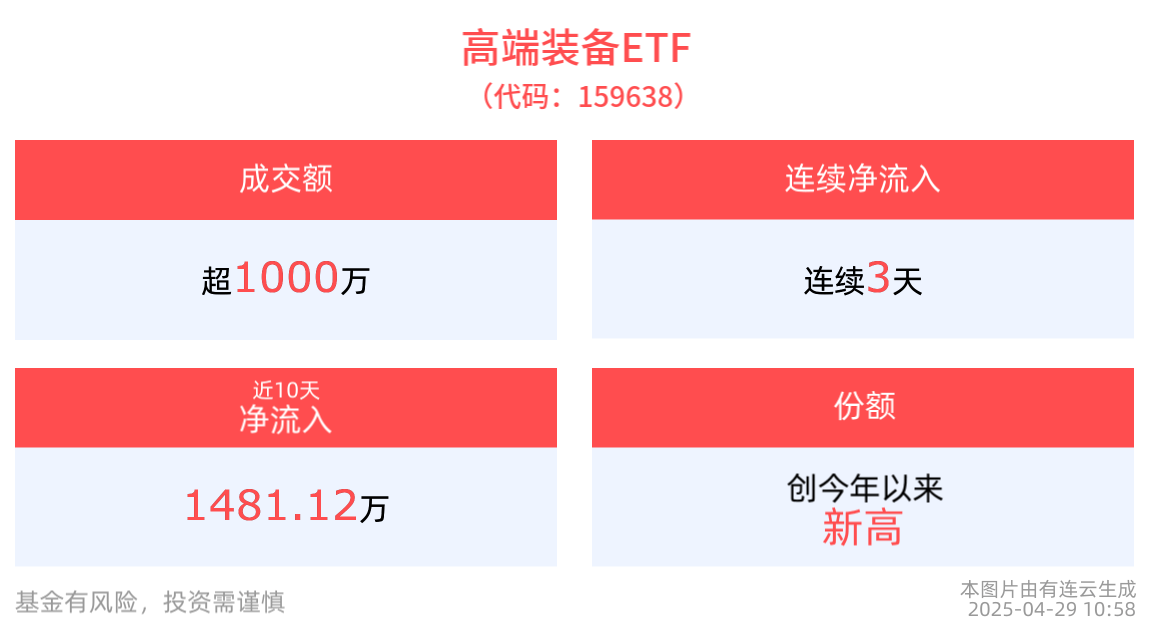
低空经济产业链格局初显,高端装备ETF(159638)连续3天净流入,最新份额创今年以来新高!
Sou Hu Cai Jing· 2025-04-29 04:43
Group 1 - The Zhongzheng High-end Equipment Sub-index 50 has decreased by 0.22% as of April 29, 2025, with mixed performance among constituent stocks [1] - The leading stocks include Guangdian Co., which rose by 6.62%, and Gaode Hongwai, which increased by 4.90% [1] - The High-end Equipment ETF (159638) has seen a turnover of 1.64% with a transaction volume of 18.1359 million yuan [1] Group 2 - The latest scale of the High-end Equipment ETF has reached 1.115 billion yuan, with a total of 1.522 billion shares, marking a new high for the year [3] - The ETF has experienced continuous net inflows over the past three days, totaling 12.5652 million yuan [3] - The ETF closely tracks the Zhongzheng High-end Equipment Sub-index 50, focusing on leading companies in aerospace, military equipment, and satellite navigation sectors, and is expected to benefit from the low-altitude economy trend [3] Group 3 - Guoxin Securities indicates that the low-altitude economy supply chain in China has formed a comprehensive development pattern, with significant market potential [4] - The core of the low-altitude economy industry chain is centered around eVTOL and drone manufacturing, with rapid technological iterations and capacity expansion [4] - The market space for eVTOL power systems is estimated to reach 100 billion yuan, based on a 250 billion yuan market size for complete machine sales [4]


航发科技:航发主机龙头之一,迎来装备&大飞机发展新机遇-20250428
Tianfeng Securities· 2025-04-28 14:23
Investment Rating - The report assigns a "Buy" rating to the company, Hangfa Technology [6]. Core Viewpoints - Hangfa Technology has established itself as a core supplier in the aerospace engine sector over the past two decades, benefiting from both domestic and international demand [1][14]. - The company has shown a stable growth trajectory in revenue and profit, with a projected significant increase in net profit for 2024 [2][4]. - The demand for aerospace engines is expected to grow significantly, with the Chinese market projected to capture 21% of the global market share from 2023 to 2042 [3][46]. Summary by Sections Company Overview - Hangfa Technology was founded in 1999 and has developed into a key player in the aerospace engine components market, with a successful IPO in 2001 [1][14]. - The company has undergone significant transformations, including a stock reform in 2006 and a capital increase in 2011 to enhance its manufacturing capabilities [1][14]. Financial Performance - Revenue increased from 2.36 billion yuan in 2018 to 4.52 billion yuan in 2023, with a CAGR of 13.8% [2][21]. - The company anticipates a revenue decline to 3.85 billion yuan in 2024, primarily due to lower domestic demand, but expects a rebound to 4.46 billion yuan in 2025 [2][5]. - Net profit is projected to grow significantly, with a 43% increase expected in 2024 [2][4]. Market Demand - The commercial aerospace engine market is projected to see a total demand of approximately 649.7 billion USD in China from 2023 to 2042, with the C919 aircraft entering commercial operation [3][46]. - The demand for small to medium thrust turbofan engines is expected to rise due to advancements in drone technology and new fighter jets [3][4]. Profitability and Valuation - The company is expected to achieve revenues of 4.48 billion yuan, 5.45 billion yuan, and 6.85 billion yuan from 2025 to 2027, with corresponding PS ratios of 1.73, 1.43, and 1.13 [4][5]. - The target market capitalization is estimated at 11.211 billion yuan, with a target price of 33.96 yuan per share [4][6].

航发科技(600391):航发主机龙头之一,迎来装备&大飞机发展新机遇
Tianfeng Securities· 2025-04-28 09:33
Investment Rating - The report assigns a "Buy" rating to the company, Hangfa Technology [6]. Core Insights - Hangfa Technology has established itself as a core supplier in the aerospace engine sector over the past two decades, benefiting from both domestic and international demand [1][14]. - The company has shown a stable growth trajectory in revenue and profit, with a projected significant increase in net profit for 2024 [2][4]. - The demand for aerospace engines is expected to grow significantly, with the Chinese market projected to capture 21% of the global market share from 2023 to 2042 [3][46]. Summary by Sections Company Overview - Hangfa Technology was founded in 1999 and has developed into a key player in the aerospace engine components market, with a successful IPO in 2001 [1][14]. - The company has undergone significant transformations, including a stock reform in 2006 and a capital increase in 2011 to enhance its manufacturing capabilities [1][14]. Financial Performance - From 2018 to 2023, the company's revenue grew from 2.36 billion to 4.52 billion, with a CAGR of 13.8% [2][21]. - In 2024, revenue is expected to decline by 14.8% to 3.85 billion due to lower-than-expected demand in domestic aviation parts [2][21]. - The net profit is projected to increase by 43% in 2024, reflecting effective management strategies [2][4]. Market Demand - The commercial aerospace engine market is anticipated to see a total demand of approximately $649.7 billion in China from 2023 to 2042, with significant growth in domestic aircraft production [3][46]. - The demand for small to medium thrust turbofan engines is expected to rise due to advancements in drone technology and new military aircraft [3][46]. Profitability Forecast - The company is expected to achieve revenues of 4.48 billion, 5.45 billion, and 6.85 billion for the years 2025, 2026, and 2027, respectively [4][5]. - The projected net profit for 2025 is 1.12 billion, indicating a growth rate of 63.33% compared to 2024 [5][4]. Valuation - The report estimates a target price of 33.96 per share based on a 2.5x PS ratio for 2025, leading to a target market capitalization of 11.21 billion [4][6].
航发动力(600893) - 中国航发动力股份有限公司投资者活动记录表
2025-04-28 07:46
答:2024 年度,公司毛利率 10.06%,同比下降 0.54 个百分点。由于航空发动机 新产品研制涉及较多的新技术、新材料、新工艺,且资金投入强度高,现阶段新 产品成熟度有待提升,新产品利润贡献尚未显现,导致毛利受到一定影响。公司 将持续提升管理水平,降低经营成本,以强化运营体系建设、加快数智化转型等 方式促进企业经营业绩提升。 3. 公司的发动机跟国外的发动机的差距? 答:公司是国内唯一能够研制涡喷、涡扇、涡轴、涡桨、活塞等全谱系军用航空 发动机的企业,在国际上,公司是能够自主研制航空发动机产品的少数企业之一。 除我国在军用航空发动机领域已实现自主研发外,全球只有美国、英国、法国、 俄罗斯等少数国家能够独立研制高性能航空发动机。为应对复杂多变的国际形势, 以及客户对发动机性能的要求,我国航空发动机主力产品换代加速,逐步缩小了 与发达国家的差距。 4. 公司每年提计产品跌价损失 3 亿左右,降低了净收益,主要原因是? 股票简称:航发动力 股票代码:600893 | | 中国航发动力股份有限公司 | | --- | --- | | | 投资者活动记录表 | | 投资者关系活动 | □特定对象调研 □分析师会 ...
航发集团召开集体业绩说明会,航发赛道保持高景气度
NORTHEAST SECURITIES· 2025-04-28 03:12
Investment Rating - The report does not explicitly state an investment rating for the defense and military industry Core Insights - The defense and military sector is experiencing a recovery in demand, with significant growth potential driven by military aircraft quantity and generational structure improvements [4][5] - The report highlights the importance of the low-altitude economy, which is entering a phase of accelerated commercialization and policy support, indicating a promising investment opportunity [34][36] - The report emphasizes the long-term growth certainty of the defense and military sector, with a clear roadmap for modernization by 2035 and 2050 [5] Summary by Sections Market Review - The Shenwan Defense and Military Index rose by 0.15%, ranking 22nd among 31 Shenwan primary industries [3][14] - The PE (TTM) for the Shenwan Defense and Military sector is 72.51 times, with sub-sectors showing varied valuations: Aerospace Equipment at 104.77 times, Aviation Equipment at 59.03 times, Ground Armament at 115.87 times, Marine Equipment at 83.42 times, and Military Electronics at 82.55 times [3][23] Key Recommendations - Focus on downstream manufacturers: Hongdu Aviation, AVIC Shenyang Aircraft, AVIC Xifei [5] - Highlight military new technologies: Lianchuang Optoelectronics, Guangqi Technology, Zhongjian Technology [5] - Emphasize shipbuilding: Hailanxin [5] - Target missile industry chain: Feilihua, Guoke Military Industry [5] - Military titanium materials: Western Superconducting [5] - Military trade direction: Aerospace Nanhu, Zhongwu Drone [5] Industry Dynamics - The military aviation engine market is expected to grow due to the increase in military aircraft numbers and the introduction of new engine models [4][38] - The report notes that the domestic commercial aircraft production has made significant progress, with over 1,000 orders for the C919 aircraft [4][46] - The aftermarket for aviation engines is substantial, supporting a large maintenance market even if new aircraft purchases decline [4] Company Performance - Aviation Industry Corporation of China (AVIC) reported a revenue of 478.8 billion yuan for 2024, with a year-on-year growth of 9.48%, although net profit decreased by 39.48% due to high R&D costs [37][39] - Other subsidiaries of AVIC showed stable growth in net profit [37]
刘逸博:把科学的“种子”种进孩子心里
Ke Ji Ri Bao· 2025-04-28 01:19
Core Insights - The article highlights the importance of science popularization and the role of young engineers in inspiring the next generation of scientists [1][4] - It showcases the journey of Liu Yibo, a young engineer at China Aviation Engine Group, who balances his work in aviation engine design with efforts in science communication [1][4] Group 1: Science Communication Efforts - Liu Yibo emphasizes the significance of cultivating children's interest in science, drawing from his own childhood experiences with aviation-related toys [1][2] - He actively participates in science popularization competitions and engages with students through interactive lessons, enhancing his public speaking skills [2][3] - Liu's efforts have been recognized, as he won the second prize in the 11th National Science Popularization Explanation Competition [1][4] Group 2: Technical Contributions - Liu Yibo is involved in the structural design of combustion chambers for small and medium-sized aviation engines, focusing on plasma ignition technology [3][4] - His team successfully innovated the design of a sliding arc igniter, significantly improving ignition speed and expanding the operational boundaries of engines in extreme conditions [4] - The project has received multiple awards, including the Third Prize for Technological Progress from China Aviation Power and an Excellent Award at the Air Force's First Aviation Creative Challenge [4]

预见2025:《2025年中国航空发动机行业全景图谱》(附市场现状、竞争格局和发展趋势等)
Qian Zhan Wang· 2025-04-26 01:11
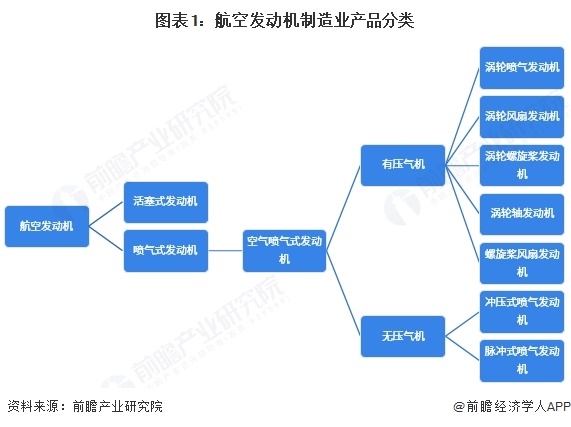
Industry Overview - The aviation engine industry is crucial for national economy and security, serving as the power source for various aircraft and representing a country's comprehensive strength [1] - Aviation engines can be categorized into several types based on thrust generation principles and oxidizer sources, including piston engines, rocket engines, ramjet engines, and turbine engines [1] Industry Chain Analysis - The aviation engine industry chain includes research and design, manufacturing (raw materials, components, complete machine manufacturing), operation, and maintenance [3] - China has established a complete research and production system for aviation engines, with key participants including universities and research institutes [4] Development History - The Chinese aviation engine industry has evolved from imitation to independent research and development, achieving significant self-innovation capabilities supported by national policies [5][8] Policy Background - The "14th Five-Year Plan" emphasizes accelerating the research and development of advanced aviation engine materials and technologies, promoting the development of civil large bypass ratio turbofan engines [10] Current Market Status - The aviation engine industry has vast market potential, with a global annual output of over 14,000 units and an estimated annual value of around $70 billion [12] - The Chinese commercial aviation engine market is expected to experience explosive growth, with projected deliveries reaching 19,000 units and a market value exceeding $300 billion over the next 20 years [12] Demand Trends - Both military and civil aviation sectors in China are witnessing an upward trend in aircraft numbers, with the military fleet expected to reach 3,309 aircraft by the end of 2024 [14] - The number of civil passenger and cargo aircraft in China has also been increasing, with approximately 4,400 aircraft expected in 2024 [15] Competitive Landscape - The aviation engine market is primarily dominated by foreign manufacturers, with significant gaps in capabilities compared to the US, Russia, and other military powers [17][19] - The global commercial aviation engine market is largely controlled by a few companies, with CFM International and Pratt & Whitney holding substantial market shares [20] Future Development Trends - The Chinese aviation engine manufacturing industry is expected to focus on independent innovation, quality improvement, international cooperation, and sustainable development [24]