
中国铁建

Search documents
东兴证券晨报-20250813
Dongxing Securities· 2025-08-13 09:55
Core Insights - The report highlights a significant shift in China's consumption structure from goods to services, with per capita service consumption expected to reach 46.1% of total consumption by 2024, contributing 63% to the growth of consumer spending [2] - The establishment of the Xinjiang-Tibet Railway Company marks the beginning of a major infrastructure project that is expected to enhance regional economic collaboration and reduce logistics costs, with an estimated investment of around 500 billion yuan [7][8] - The report emphasizes the positive impact of major infrastructure projects on China's economic stability and growth, particularly in the context of external uncertainties [9][10] Economic News - The Ministry of Commerce indicates a rapid transition in China's consumption structure, with service consumption growing at an annual rate of 9.6% from 2020 to 2024 [2] - The Ministry of Finance has introduced a one-year "dual interest subsidy" policy aimed at boosting consumer loans for various sectors, including automotive and healthcare [2] - The People's Bank of China is encouraging increased credit support for the service consumption sector to ensure effective policy implementation [4] Company Insights - Alibaba Health has signed a strategic cooperation agreement with Innovent Biologics to enhance supply chain solutions for cold-chain delivery of specific medications [5] - Didi has recently invested in a driverless commercial vehicle company, indicating a strategic move towards autonomous transportation [5] - Jiangfeng Electronics is planning to integrate its flat panel display target material business with Japan's Aifuka Corporation, showcasing international collaboration [5] Infrastructure Projects - The Xinjiang-Tibet Railway is expected to significantly lower logistics costs and enhance economic cooperation between regions, with a construction period projected to exceed 20 years [8][9] - The report outlines that the construction of the Xinjiang-Tibet Railway will provide a safety net for China's economy against external uncertainties, contributing approximately 0.18% to GDP growth annually [8][9] - Other major infrastructure projects are also set to commence, which will serve as important engines for domestic demand and economic stability [10] Investment Recommendations - The report suggests that leading companies in the construction and materials sector will benefit significantly from the Xinjiang-Tibet Railway project, including major state-owned enterprises [9] - It emphasizes that the implementation of major projects will not only yield long-term benefits but also stabilize the economy amid external challenges [11]





志高机械(920101):中国工程机械制造商30强,凿岩设备和空气压缩机“小巨人”
Shanxi Securities· 2025-08-13 07:59
Investment Rating - The report does not explicitly state an investment rating for the company Core Insights - Zhigao Machinery is recognized as a "small giant" in the rock drilling equipment and air compressor sectors, ranking among the top 30 engineering machinery manufacturers in China. The company focuses on R&D, production, sales, and service of rock drilling equipment and air compressors, with products widely used in mining, construction, equipment manufacturing, and petrochemical industries. Its mobile air compressors and supporting drilling rigs have ranked among the top three in market share from 2021 to 2023 in China, demonstrating strong market competitiveness and industry influence [2][29]. Summary by Sections 1. Valuation Analysis - Zhigao Machinery's revenue for 2022-2025 is projected to be 795.04 million, 840.37 million, 888.44 million, and 469 million yuan, with year-on-year growth rates of -9.75%, 5.70%, 5.72%, and 4.99% respectively. The net profit attributable to the parent company is expected to be 88.99 million, 103.50 million, 105.05 million, and 59.58 million yuan, with growth rates of 32.93%, 16.31%, 1.49%, and 25.15% respectively. The company’s post-issue market capitalization is estimated at 1.552 billion yuan, corresponding to a PE ratio of 14.78 for 2024, which is relatively discounted compared to comparable companies [5][27][28]. 2. Core Competitiveness - The company possesses high-end manufacturing capabilities and a complete production system, being one of the few domestic manufacturers that master the core components of underground drilling rigs and screw compressors. It has established a robust product R&D system and has received various technological achievements, with multiple models recognized as provincial industrial new products. The company has a mature quality control system and has passed several management system certifications, which has earned customer trust through stable product quality [4][48][49]. 3. Industry Situation - The drilling equipment industry is moving towards integration, automation, and intelligence. The demand for energy-saving and environmentally friendly solutions is increasing, with integrated drilling rigs becoming a significant development direction. The screw compressor industry is also experiencing trends towards energy efficiency and increased intelligence, driven by industrial automation and the emphasis on energy conservation and emission reduction in downstream industries [3][5].
榆树绿色甲醇项目合作单位集中签约会在北京举行 共启绿色燃料发展新篇章
Zhong Guo Neng Yuan Wang· 2025-08-13 02:56
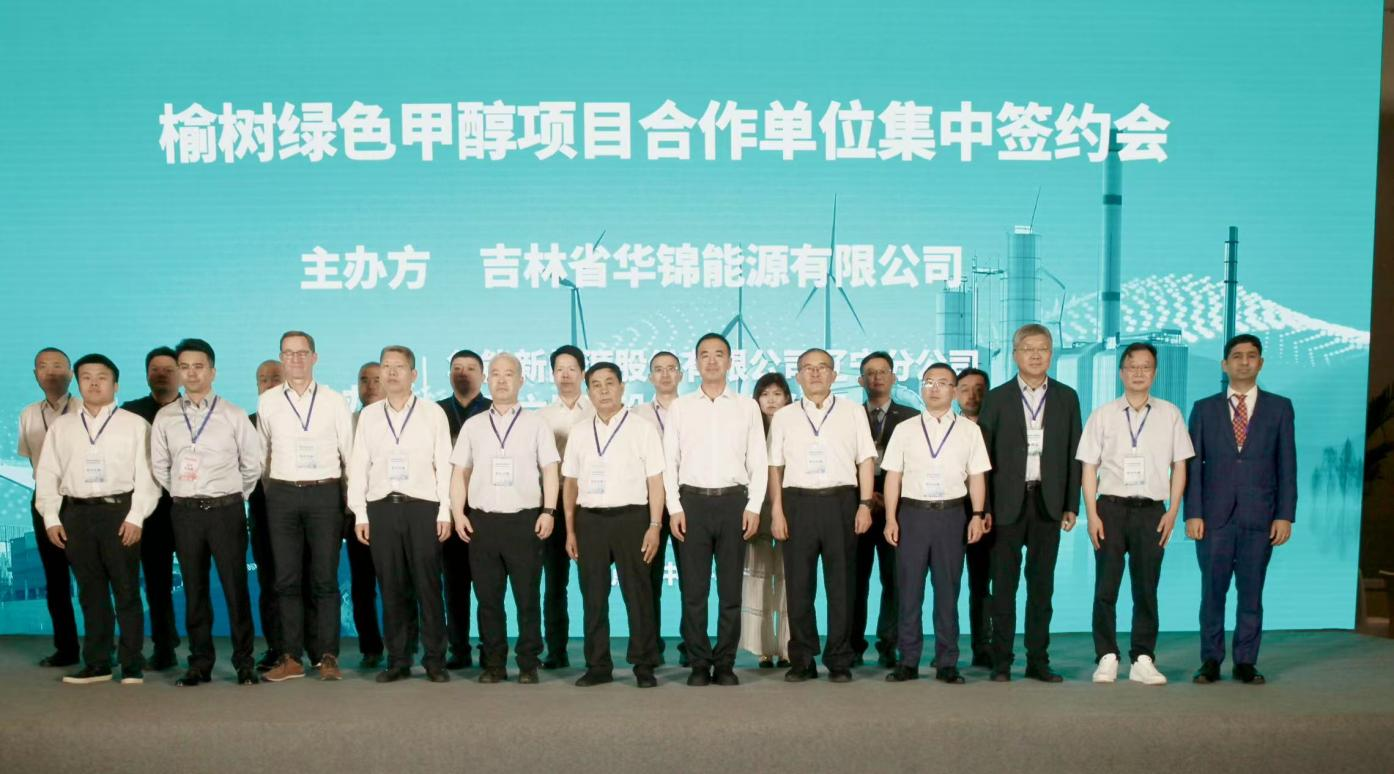
Core Insights - The signing ceremony for the Yushu Green Methanol Project took place in Beijing, marking a significant step in promoting the green methanol industry and contributing to global carbon reduction efforts [2][3] - The project is positioned as a leading comprehensive demonstration base for green methanol in China, with a total planned investment of 21.4 billion yuan [6] Group 1: Project Overview - The Yushu Green Methanol Project utilizes a dual-path production process combining renewable energy and biomass, aiming for "negative carbon production" and "zero carbon emissions" [6] - The project is expected to reduce CO₂ emissions by 410,000 tons annually compared to traditional methods, with energy consumption reduced by 4% [6] Group 2: Collaboration and Support - The signing event involved 18 core units across six groups, showcasing strong industry collaboration [4] - Key participants included representatives from the Yushu municipal government, Huaneng New Energy, China State Construction Engineering Corporation, and international partners such as Iceland's Carbon Recycling International [5][6] Group 3: Market Potential - The project has secured substantial market support, with intentions for annual procurement of 120,000 tons from Carbon Recycling International and 500,000 tons from a partnership with the Korean Green Fuel Alliance [7] - The successful signing event signifies the project's transition into a substantive development phase, with expectations to set a benchmark in the green fuel industry [7]

趋势研判!2025年中国非合金钢行业相关政策、产业链、产量、重点企业及发展趋势分析:非合金钢产业升级加速,2024年产量达4371万吨[图]
Chan Ye Xin Xi Wang· 2025-08-13 01:17
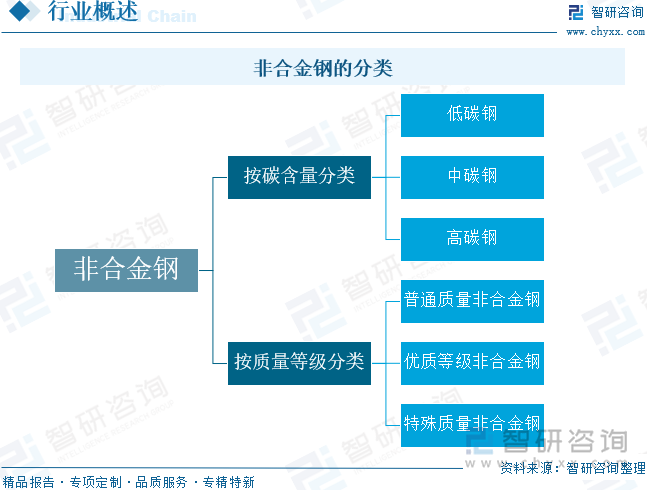
Core Viewpoint - The non-alloy steel industry in China plays a crucial role in national economic construction, showing steady growth and quality improvement through optimized smelting processes and innovative heat treatment technologies [1][15]. Industry Overview - Non-alloy steel, also known as carbon steel, is primarily composed of iron and carbon, with a carbon mass fraction not exceeding 0.8% [4]. - The production of non-alloy steel in China increased from 33.11 million tons in 2015 to 43.71 million tons in 2024, with a compound annual growth rate (CAGR) of 3.14% [1][15]. - The industry is expected to accelerate production process innovation and product structure optimization under the "dual carbon" goals and green manufacturing concepts [1][15]. Policy Environment - The non-alloy steel sector is supported by national policies aimed at promoting high-performance special steel and optimizing the steel product structure [6][7]. - Recent policies include the "2024-2025 Energy Saving and Carbon Reduction Action Plan" and guidelines for upgrading equipment in key industrial sectors [6][7]. Industry Chain - The upstream of the non-alloy steel industry includes raw material supply such as iron ore and coke, which directly impacts the performance of final products [9]. - The midstream focuses on the production processes, including ironmaking, steelmaking, continuous casting, and rolling, which are critical for value creation [9]. - The downstream applications are diverse, serving sectors like construction, transportation, machinery manufacturing, and petrochemicals [9]. Market Dynamics - The market for iron ore in China is projected to grow, with production increasing from 763 million tons in 2018 to 1.042 billion tons in 2024, reflecting a CAGR of 5.33% [11]. - The construction industry in China is also expanding, with total output value expected to rise from 21.39 trillion yuan in 2017 to 32.65 trillion yuan in 2024, a CAGR of 6.22% [13]. Key Companies - Major companies in the non-alloy steel industry include Fushun Special Steel, Jiangsu Shagang Group, and Tianjin Steel Group, among others [2][3][19]. - Fushun Special Steel reported a revenue of 8.373 billion yuan in 2024, focusing on high-temperature alloys and high-strength steel [21]. - Fangda Special Steel's revenue in 2024 was 21.177 billion yuan, with a focus on rebar and automotive components [23]. Development Trends - The industry is shifting towards high-performance and high-value-added products to meet the demands of high-end manufacturing and emerging fields [25]. - Green and low-carbon transformations are being prioritized, with an increase in the use of short-process electric furnaces and recycling technologies [26]. - Digitalization and intelligent technologies are being integrated into the production process to enhance efficiency and product quality [27].


建筑高股息投资机会有哪些?
2025-08-12 15:05
Summary of Key Points from Conference Call Records Industry Overview - The construction and infrastructure sector is experiencing a high dividend investment opportunity, with major state-owned enterprises like China Railway Construction and China Communications Construction having high shareholding ratios among top shareholders and significant dividend levels [1][11][30]. Company-Specific Insights Anhui Construction - Revenue has been stable with a slight increase, but net profit attributable to shareholders decreased in 2024. In Q1 2025, revenue grew by 7.42% year-on-year, and net profit increased by 0.31%. The cash dividend ratio has consistently exceeded 28%, reaching 34.46% in 2024, making it the highest dividend yield in the infrastructure industry [1][5]. Sichuan Road and Bridge - The company faced a revenue decline of approximately 7% in 2024 and a net profit drop of 19.92%. However, in Q1 2025, revenue increased by 3.98% and net profit by 0.99%. The cash dividend ratio rose from 39% in 2020 to around 50% in 2024, with plans for at least a 60% cash dividend ratio in the next three years [1][6]. Tunnel Corporation - As a leading enterprise under the Shanghai State-owned Assets Supervision and Administration Commission, the company has a relatively stable but fluctuating performance. Revenue fell by 7% in 2024, and further decreased by about 25% in Q1 2025. The cash dividend ratio increased from 30% in 2020 to 35% in 2024 [1][7]. Pudong Construction - The company has shown steady growth in revenue and net profit in recent years, with a gradually increasing cash dividend ratio. However, in Q1 2025, revenue dropped by over 40% year-on-year, and net profit decreased by 18%. The cash dividend ratio reached 43.66% in 2024 [2][9][10]. China Construction Company - The company reported revenues exceeding 2 trillion yuan, with a dividend ratio of 24.29% in 2024, close to the banking average of 26.2%. New contracts signed in 2024 reached 4.5 trillion yuan, a year-on-year increase of 4.13% [13]. Sector Performance and Trends - The overall performance of the infrastructure sector remains robust, supported by high levels of investment. The average dividend yield for 42 banks is 3.95%, with a dividend payout ratio of 26.2%. Many companies in the infrastructure sector exceed these averages [3][32]. Real Estate Sector Insights - The real estate investment in the first half of 2025 decreased by 11.2%, with sales area down by 3.5%. The sector is currently in a bottoming phase, with new construction projects down by 20% and completions down over 14% [12]. Dividend Trends Across Industries - The construction and engineering consulting sectors show a high overall dividend payout ratio, with 12 out of 37 companies in the engineering consulting sector having a dividend yield exceeding 3% [3][18]. The decoration and renovation industry exhibits a polarized dividend yield, with leading companies like Jianghe Group achieving a dividend payout ratio of 97.72% [16]. Recommendations - Recommended companies for investment in the infrastructure sector include Anhui Construction, Sichuan Road and Bridge, Tunnel Corporation, and Pudong Construction, among others [30][31].
新藏铁路等重大项目逐步落地拉动内需,保障经济行稳致远
Dongxing Securities· 2025-08-12 11:19
Investment Rating - The report maintains a "Positive" investment rating for the construction and building materials industry [2]. Core Insights - The establishment of the Xinjiang-Tibet Railway Company marks the beginning of the project's implementation phase, which has been in planning since 2008 and is expected to significantly boost domestic demand and ensure stable economic growth [4][5]. - The Xinjiang-Tibet Railway is one of the four major routes into Tibet, enhancing the "Belt and Road" initiative and reducing logistics costs, thereby accelerating economic collaboration among regions [5]. - The project is anticipated to have a total investment of approximately 500 billion, with an average annual investment of around 25 billion over an estimated 20-year construction period, contributing approximately 0.18 percentage points to GDP growth [5]. - The construction of the Xinjiang-Tibet Railway and other major projects will provide a safety net for the economy against external uncertainties, ensuring steady economic development [5][12]. Summary by Sections Project Implementation - The Xinjiang-Tibet Railway project is progressing in an orderly manner, with significant milestones achieved, including the establishment of the railway company and the commencement of preliminary work [4][5]. - The project is classified as an "extreme engineering" challenge due to its high altitude and harsh environmental conditions, necessitating advanced construction techniques [4]. Economic Impact - The implementation of major projects like the Xinjiang-Tibet Railway and the Yajiang Hydropower Station will serve as a driving force for domestic demand, especially in the face of external trade uncertainties [5][12]. - The report emphasizes that the ongoing and future major projects will not only yield long-term economic benefits but also play a crucial role in stabilizing the economy [6][12]. Beneficiary Companies - Companies that are expected to benefit from the Xinjiang-Tibet Railway construction include major railway engineering firms such as China Railway and China Railway Construction, as well as regional construction companies [6]. - The report highlights that construction materials companies, particularly those in the cement sector, will also see positive impacts from the project [6].
80后基建工人现断层 AI与机器人成“补位”主力
Zhong Guo Jing Ying Bao· 2025-08-12 11:16
Group 1 - The construction industry is currently facing a labor shortage, primarily among workers born in the 1960s, 1970s, and even 1980s, but innovations like AI and robotics are helping to address this issue [1] - The traditional infrastructure sector is undergoing a digital transformation, with AI technology injecting new momentum, effectively alleviating the challenges posed by structural labor shortages [1] - A company under China Railway Construction Corporation is utilizing remote control and AI technology for mining operations, allowing technicians to monitor and direct work from a control room in Beijing [1] Group 2 - The adoption of AI in repetitive and hazardous tasks is proving indispensable, filling the gap left by the shortage of workers from the 1980s and driving the industry’s transition from labor-intensive to technology-intensive [2] - Digitalization and AI are significantly impacting the infrastructure construction industry by reducing costs, improving efficiency, and enhancing competitiveness in international markets [2] - The industry aims to empower infrastructure construction through digital intelligence, with a focus on developing new infrastructure areas such as computing power centers and digital intelligence centers, which represent substantial market growth potential [2]

中国铁建(601186)8月12日主力资金净流出1645.09万元
Sou Hu Cai Jing· 2025-08-12 10:35
Core Insights - As of August 12, 2025, China Railway Construction Corporation (CRCC) shares closed at 8.2 yuan, down 0.36% with a turnover rate of 0.44% and a trading volume of 503,600 hands, amounting to 413 million yuan in transaction value [1] - The latest quarterly report shows CRCC's total operating revenue at 256.76 billion yuan, a year-on-year decrease of 6.61%, and a net profit attributable to shareholders of 5.15 billion yuan, down 14.51% year-on-year [1] - The company has a current ratio of 1.031, a quick ratio of 0.772, and a debt-to-asset ratio of 77.59% [1] Financial Performance - Total operating revenue for Q1 2025 was 256.76 billion yuan, reflecting a 6.61% decrease compared to the previous year [1] - Net profit attributable to shareholders was 5.15 billion yuan, which is a 14.51% decline year-on-year [1] - Non-recurring net profit stood at 4.98 billion yuan, down 13.87% year-on-year [1] Investment and Operations - CRCC has made investments in 126 companies and participated in 5,000 bidding projects [2] - The company holds 331 trademark registrations and 928 patents, along with 95 administrative licenses [2] - Established in 2007 and headquartered in Beijing, CRCC primarily engages in civil engineering construction [1][2]
建筑建材双周报(2025年第14期):新藏铁路有望加速落地,关注核心工程环节-20250812
Guoxin Securities· 2025-08-12 08:26
Investment Rating - The report maintains an "Outperform" rating for the construction materials sector, indicating expected performance above the market index by over 10% [7][77]. Core Viewpoints - The Xinjiang-Tibet Railway is anticipated to accelerate construction, with a total investment estimated between 300 billion to 400 billion yuan, and a construction period of 7-8 years. This project is expected to significantly boost demand in related industries such as cement, steel, and water-reducing agents [2]. - The construction materials sector is expected to benefit from the ongoing recovery in infrastructure investment, driven by key projects like the Xinjiang-Tibet Railway and the Yaxi Hydropower Station. The sector's valuation remains at a low point, suggesting potential for recovery in profitability [4]. - The report highlights the importance of supply-side adjustments and improving demand conditions, which are likely to create a positive feedback loop for the construction materials sector [4]. Summary by Sections Cement - National cement prices remained stable, with a recent increase of 20 yuan/ton in Henan and a decrease of 20 yuan/ton in Inner Mongolia. The average shipment rate is around 44%, with many prices touching or falling below cost lines due to rising coal prices [3][24]. - If self-regulatory measures are effectively implemented, cement prices may begin to recover [24]. Glass - The price of float glass has continued to decline, with reductions of 1-5 yuan per weight box in various regions. The production and sales rate has decreased, leading to increased inventory pressure [3][35]. - In the photovoltaic glass segment, prices have slightly increased due to improved downstream component operating rates and strong overseas demand, with 2.0mm coated panel prices rising to 10.5-11 yuan/square meter (+2.38%) [3][42]. Fiberglass - The price of non-alkali roving yarn has shown a slight decline, with mainstream prices at 3150-3700 yuan/ton, averaging 3521.25 yuan/ton, down 2.06% week-on-week [3][45]. Investment Recommendations - The report suggests focusing on cement and glass sectors, which are expected to benefit from supply-side adjustments and improving demand. Specific companies recommended include Qibin Group, Conch Cement, Huaxin Cement, and Tapai Group [4]. - For fiberglass, the report highlights opportunities driven by structural demand increases, particularly in high-end applications related to AI [4]. Construction Sector - The construction sector has seen a decline in new orders and profitability due to local governments focusing on debt reduction. However, infrastructure investment is expected to recover in the second half of the year, with new government bonds directed towards new projects [5]. - Recommended companies in the construction sector include China Railway Construction, China Communications Construction, and China State Construction [5].
广发证券:重申建筑业共同富裕投资主线 重视相关省区基建等工程服务标的
智通财经网· 2025-08-12 07:46
Group 1: Infrastructure Investment - The report emphasizes the importance of infrastructure investment in regions such as Xinjiang, Tibet, and Sichuan-Chongqing as part of the new era of western development [1] - In Xinjiang, railway investment is expected to remain strong, with significant projects like the New Tibet Railway and Yining-Aksu Railway set to commence this year [2] - The planned public road investment in Xinjiang for 2025 is projected at 80 billion yuan, reflecting a year-on-year increase of 13.5% [3] Group 2: Coal Chemical Industry - The coal chemical industry in Xinjiang is accelerating, with a projected coal output of 541 million tons in 2024, marking a year-on-year growth of 17.5% [4] - The coal consumption for thermal power generation in Xinjiang is expected to reach 195 million tons in 2024, accounting for approximately 36% of the total coal production [4] Group 3: Mining Development and Services - The acceleration of resource exploration and development in Xinjiang is highlighted, with the region set to add six large resource bases during the 14th Five-Year Plan [5] - Xinjiang has led the nation in the number of mining rights granted, with 146, 227, and 558 rights issued from 2022 to 2024 respectively [5]
