
宏和科技

Search documents
算力市场供不应求,电子布涨价趋势确立 | 投研报告
Zhong Guo Neng Yuan Wang· 2026-02-12 02:52
Core Viewpoint - The report highlights a significant acceleration in capital expenditures driven by AI among major US cloud service providers, which is expected to benefit the computing materials market substantially [1][2]. Group 1: Capital Expenditure Trends - Major US cloud service providers are increasing their capital expenditures significantly, with Meta projecting a capital expenditure of $115 to $135 billion for 2026, representing a year-over-year increase of 73%, focusing on superintelligent labs and AI infrastructure [1][2]. - Alphabet (Google's parent company) anticipates capital expenditures of $175 to $185 billion for 2026, with a year-over-year increase of 97%, primarily for AI functionality optimization and cloud infrastructure expansion [2]. - Amazon expects capital expenditures of approximately $200 billion for 2026, reflecting a year-over-year increase of 52% [2]. - Microsoft indicates that short-term assets (CPU and GPU servers) will constitute about two-thirds of its capital expenditures [2]. - All four major US cloud service providers expect to face supply constraints for critical computing resources in 2026, necessitating accelerated investments and optimized capacity configurations to meet rising demand [2]. Group 2: Transition in Electronic Fabric Production - Traditional electronic fabric production is shifting towards low-dielectric electronic fabric production, with companies like Taiyo stopping the production of certain E-glass electronic fabric series due to market structure changes and special product demand adjustments [3]. - The demand for Low-Dk electronic fabric is increasing, leading to a gradual reduction in the production of traditional E-glass products, with plans to cease production of specific series by 2026 [3]. Group 3: Price Trends in Electronic Fabrics - Prices for traditional electronic fabrics and low-dielectric electronic fabrics are expected to rise, with Showa Denko announcing price increases of over 30% for CCL and PCB due to tight supply and demand for raw materials [3]. - E-glass prices have already seen a 15% increase in January, with an expected further rise of 10-15% in February, while new price negotiations for Low-Dk fabrics aim for a 20% increase [3]. - The supply-demand mismatch, driven by high demand for high-end low-dielectric electronic fabrics, is leading to a contraction in traditional electronic fabric production and subsequent price increases [3]. Group 4: Investment Recommendations - The company remains optimistic about the continued growth in capital expenditures in the computing market, which is expected to drive technological iterations and demand growth, benefiting the computing materials market [4]. - The transition from traditional electronic fabric production to low-dielectric electronic fabric production is seen as a critical juncture, with anticipated price increases for both types of fabrics [4]. - Companies to watch include Zhongcai Technology, International Composites, Honghe Technology, and Feilihua [4].




电子布研究系列报告一:AI驱动电子布薄型化趋势,织布机短缺支撑涨价行情
ZHONGTAI SECURITIES· 2026-02-12 02:45
Investment Rating - The industry investment rating is "Overweight" [22] Core Insights - The electronic fabric industry is experiencing unexpected price increases during the off-season, indicating a tight supply situation. Recent price hikes include a rise of 0.55 CNY to 5.40 CNY (+11%) for Linzhou Guangyuan 7628 fabric and 0.60 CNY to 5.20 CNY (+12%) for International Composite 7628 fabric [4][8] - The core supply issue lies in the weaving segment, specifically the shortage of weaving machines. The supply-demand balance for electronic yarn in 2026 is projected at +6.1% supply versus +6.6% demand, establishing a foundation for price increases [5][8] - The demand for thinner electronic fabrics is driven by AI applications, leading to a structural shift in the industry towards thinner products, which in turn reduces weaving efficiency due to increased weft density and lower production speeds [11][7] Summary by Sections Industry Overview - The total market capitalization of the industry is approximately 426.27 billion CNY, with a circulating market value of about 360.41 billion CNY [1] Supply and Demand Analysis - The shortage of weaving machines is a critical bottleneck in the supply chain. The expected supply gap for weaving machines in 2026 is estimated to be over 6.1%, potentially increasing to 10.6% in 2027 [15][20] - The production capacity of weaving machines is significantly affected by the type of fabric being produced, with thinner fabrics requiring more weft threads, thus reducing the effective output of each machine [7][15] Investment Recommendations - The report recommends focusing on leading companies with scale and cost advantages, particularly China Jushi, which is expected to maintain a production capacity of 320,000 tons of electronic yarn by the end of 2026. Other companies to watch include Zhongcai Technology, International Composite, and Honghe Technology [18][19]
成都汇阳投资关于AI发展驱动PCB升级,上游材料迎发展良机
Quan Jing Wang· 2026-02-12 02:41
Industry Overview - The PCB industry is expected to expand significantly, driven by the development of AI technology and the demand from the electric vehicle sector, with a projected global market size of $96.8 billion by 2025 [1] - The industry is evolving towards high-density, small aperture, large capacity, and lightweight designs, leading to increased requirements for core materials such as copper-clad laminates and high-frequency, high-speed materials [1] Material Upgrades - The demand for high-end copper-clad laminates is increasing, with HVLP copper foil expected to become mainstream; foreign companies like Mitsui Metals dominate the high-end copper foil market, while domestic firms are gradually entering the supply chain [3] - Electronic fabrics are becoming thinner and lighter, with a positive outlook for Q fabric upgrades, where Japanese companies currently lead the high-end electronic fabric market, and domestic enterprises are increasing their investments [3] - The performance of copper-clad laminates is primarily determined by the resin formulation, with a shift from epoxy resins to advanced materials such as bismaleimide resins, cyanate esters, polyphenylene ether, hydrocarbon resins, and polytetrafluoroethylene [3] Specialized Products - The upgrade in PCB technology is driving the iteration of silicon micro-powder products, with spherical silicon micro-powder better meeting high-end demands; the market size for silicon micro-powder in China is projected to reach 1.73 billion yuan by 2024, with a demand of 418,000 tons, and the high-performance spherical silicon micro-powder market is expected to be 852 million yuan, accounting for 49.22% [5] - The market for PCB-specific chemicals is expected to expand alongside PCB development, with foreign companies currently leading the market while domestic firms are accelerating their catch-up efforts [5] Key Companies in the Industry - **Shengyi Technology**: A leading domestic manufacturer of copper-clad laminates, holding a significant global market share and excelling in high-frequency and high-speed material development [6] - **Huazheng New Materials**: A prominent domestic player with strong competitiveness in high-speed substrates and metal substrates [7] - **Jia Yuan Technology**: One of the leading domestic companies in the copper foil sector, focusing on high-end PCB copper foil [8] - **Zhongyi Technology**: Notable for significant breakthroughs in high-end copper foil technology and possessing deep technical reserves [9] - **China Jushi**: A global leader in the fiberglass industry, providing stable and high-quality raw materials for PCB upstream [9] - **Honghe Technology**: A global leader in mid-to-high-end electronic-grade fiberglass cloth, widely used in PCB manufacturing for AI servers and 5G base stations [10] - **Dongcai Technology**: The only producer of M9 grade hydrocarbon resin, breaking foreign monopolies and supplying to ShenNan Circuit, achieving domestic substitution in high-end resin [12]

电子布板块走强 宏和科技涨停
Xin Lang Zheng Quan· 2026-02-12 02:38
02月12日消息,截止10:30,电子布板块走强,宏和科技涨停,国际复材、中材科技、中国巨石等个股 涨幅居前。 声明:市场有风险,投资需谨慎。本文基于第三方数据库自动发布,不代表新浪财经观点,任何在本文 出现的信息均只作为参考,不构成个人投资建议。如有出入请以实际公告为准。如有疑问,请联系 biz@staff.sina.com.cn。 责任编辑:小浪快报 ...

盘中线索丨玻璃纤维板块反复活跃,机构:供需错配下建议关注这些公司
2 1 Shi Ji Jing Ji Bao Dao· 2026-02-12 02:38
Group 1 - The fiberglass sector is experiencing significant activity, with companies like Shandong Fiberglass and Honghe Technology hitting the daily limit up, while China National Materials and China Jushi also see gains [1] - Honghe Technology's stock price volatility is attributed to media reports linking the company to the "PCB concept," although the company clarifies that its main business remains unchanged [1] Group 2 - The recent surge in the fiberglass sector is driven by rising prices of electronic cloth and increased demand from AI computing, leading to supply-demand tension [2] - Traditional fiberglass electronic cloth prices have accelerated in February, confirming earlier reports that loom capacity is shifting towards AI electronic cloth, resulting in a supply gap for traditional cloth [2] - Analysts suggest that both traditional and low-dielectric electronic cloth prices are expected to rise due to a mismatch in supply and demand, recommending companies like China National Materials, International Composites, Honghe Technology, and Feilihua for investment [2]


600589,4连板!算力租赁概念,集体爆发!
Xin Lang Cai Jing· 2026-02-12 02:31
Group 1: Market Performance - The computing power leasing concept has seen significant gains, with Dawi Technology (600589) achieving four consecutive trading limits and Meili Cloud recording two trading limits in three days [1][2] - As of February 12, the Shenzhen Component Index rose by over 0.5% and the ChiNext Index increased by over 1% [1][2] Group 2: Company Announcements - UCloud announced a price increase for its products and services effective March 1, 2026, due to significant and structural increases in core hardware procurement costs amid global supply chain disruptions [4][13] - The Ministry of Industry and Information Technology issued a notice on February 6, 2026, regarding the construction of national computing power interconnection nodes, aimed at improving the efficiency and service level of public computing resources [4][13] Group 3: Industry Trends - Major domestic internet companies are increasing efforts to attract users to AI applications, which is expected to significantly boost the number of active users in AI applications [5][14] - The demand for AI applications is driving growth in the domestic computing power industry chain, presenting key development opportunities [5][14] Group 4: Supply Chain Dynamics - Recent reports indicate that the surge in demand for AI chips has led to a tightening supply of T-type glass fiber cloth, with major supplier Nitto Denko planning to triple its production capacity by 2028 [7][17] - Nitto Denko anticipates raising prices by up to 25% due to the supply-demand gap, which may impact the prices of end products like smartphones and laptops [7][17] Group 5: Company Clarifications - Jili Rigging issued a statement addressing false media claims regarding its status as a leader in commercial aerospace, clarifying that its primary products are general lifting rigging products and that it has not signed significant contracts in the aerospace sector [9][20][21] - The company reported minimal revenue from commercial aerospace orders, with amounts being less than 0.50% of its total revenue for 2025 [9][21]


山西证券研究早观点-20260212
Shanxi Securities· 2026-02-12 01:28
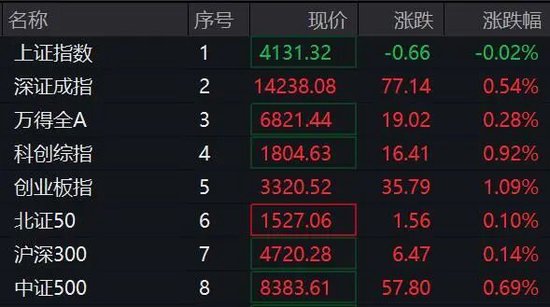
Core Insights - The report highlights strong growth in capital expenditures in North America, particularly in the AI new materials sector, suggesting investment opportunities in upstream developments [5][6] - The report indicates that the new materials index fell by 1.53%, outperforming the ChiNext index by 1.76%, with various sub-sectors showing mixed performance [5] Market Performance - The report provides a summary of the domestic market indices, noting the closing values and percentage changes for major indices such as the Shanghai Composite Index and Shenzhen Component Index [4] - The new materials sector experienced a decline, with specific indices like semiconductor materials and electronic chemicals showing significant drops of 3.70% and 1.61% respectively [5] Price Tracking - Weekly price tracking of various materials shows fluctuations, with amino acids like valine decreasing by 1.42% to 13,850 RMB/ton, while vitamin E increased by 2.70% to 57,000 RMB/ton [5] - Prices for biodegradable materials remained stable, with PLA and PBS prices unchanged, indicating a steady market for these products [5] Investment Recommendations - The report recommends focusing on AI new materials due to the anticipated increase in demand driven by major cloud service providers like Amazon AWS, Microsoft, Google, and Meta, whose combined capital expenditures are projected to exceed $670 billion in 2026, a year-on-year increase of over 60% [5] - Specific companies are highlighted for potential investment, including Shengquan Group and Dongcai Technology in the resin sector, and Zhongcai Technology and Honghe Technology in the electronic fabric sector [5][6]
中银晨会聚焦-20260212-20260212
Bank of China Securities· 2026-02-12 01:01
Group 1: Macro Insights - January CPI growth rate year-on-year was lower than expected, while PPI growth rate was slightly higher than expected, influenced by the Spring Festival timing and base period rotation [4][5] - The average impact of the base period rotation on CPI and PPI year-on-year indices is estimated to be approximately 0.06 and 0.08 percentage points, respectively, which is relatively small [4][5] - CPI in January increased by 0.2% month-on-month and year-on-year, with core CPI rising by 0.8%, indicating a mixed inflationary environment influenced by seasonal factors and external inputs [5] Group 2: Real Estate Sector - The traditional residential development sector is contracting, while commercial real estate is entering a policy-driven growth phase, with a focus on creating new consumption scenarios to meet diverse consumer needs [12][13] - The shift from traditional commercial spaces to new consumption scenarios emphasizes emotional engagement and immersive experiences, moving beyond mere transactional spaces [14][20] - The rise of non-standard commercial projects, characterized by innovative space and operational models, is gaining traction, particularly in major cities like Shanghai and Beijing [16][17] Group 3: Chemical Industry - The dye industry is experiencing price increases due to rising costs of intermediate products, with significant price hikes observed in January, benefiting integrated companies with stable market shares [24][25] - The concentration of supply in the dye industry is improving due to stringent safety and environmental regulations, which may lead to a more favorable market environment for leading companies [26][27] Group 4: Electronics Sector - The demand for AI computing materials is expected to rise significantly as cloud service providers increase capital expenditures, leading to a supply-demand mismatch in the electronic fabric market [29][30] - Traditional electronic fabric production is transitioning to low-dielectric materials, with price increases anticipated across both traditional and low-dielectric electronic fabrics due to supply constraints [32][33]
国泰海通晨报-20260212
GUOTAI HAITONG SECURITIES· 2026-02-12 00:45
Group 1: ETF Market Overview - The ETF market in China has rapidly developed over the past few years, forming a comprehensive product system that covers various asset types and investment markets, including domestic and international markets [3] - ETFs are categorized by asset type into three main categories: equities, bonds, and commodities, with equity ETFs further divided into broad-based, sector, thematic, and strategy types [3] - The complete and evolving ecosystem of ETFs provides essential tools for investors to conduct refined and diversified asset allocation [3] Group 2: Military Industry Developments - The successful flight test of the Long March 10 rocket and the Dream Chaser spacecraft marks a significant breakthrough in China's manned lunar exploration program, with expectations for rapid development in space economy sectors such as space tourism and resource development during the 14th Five-Year Plan [7][8] - The Chinese government aims to achieve its first manned moon landing by 2030, with a series of planned missions leading up to this goal, including the launch of the Chang'e 7 and Chang'e 8 missions [8] - The military industry is expected to see commercial space ventures become a core investment direction during the 14th Five-Year Plan, driven by advancements in space exploration projects [8][9] Group 3: Absolute and Relative Return Strategies - Five absolute return strategies have been constructed, with annualized returns ranging from 6.74% to 11.66% over various periods, indicating the potential for stable returns through diversified asset combinations [4] - Relative return strategies include style rotation and industry rotation, with annualized returns for style rotation strategies reaching up to 26.65% and industry rotation strategies achieving returns of 20.17% [5] Group 4: Service Industry Insights - The service industry in China has significant potential for growth, with the value-added share expected to increase as the economy transitions from goods to services, reflecting a shift in consumer behavior [15][16] - The analysis indicates that sectors such as retail, dining, and healthcare within the service industry have considerable room for improvement, driven by demand and productivity changes [18]