
DeepMind

Search documents
腾讯研究院AI速递 20251224
腾讯研究院· 2025-12-23 16:01
Group 1: Generative AI Developments - ChatGPT has launched its "Your Year with ChatGPT" annual review feature, providing users with insights such as message count and chat statistics, with some users ranking in the top 1% of activity [1] - Zhiyu AI has released GLM-4.7, which ranks first in global open-source coding evaluations, surpassing GPT-5.2, and has improved multi-language coding capabilities [2] - MiniMax has introduced the M2.1 model, enhancing multi-language programming capabilities and achieving a score of 88.6 in VIBE rankings, nearly matching Claude Opus 4.5 [3] Group 2: AI in Business Operations - DingTalk has launched an AI-driven work intelligence operating system, evolving its task processing agent "Wukong" from a conversationalist to an executor, and aims to help enterprises reduce costs by 15% [4] Group 3: Aerospace Innovations - The Long March 12甲 rocket successfully completed its first flight, achieving its second-stage orbital goal, although the first stage was not recovered, marking a significant step in reusable rocket technology [6] Group 4: AI Chip Market Insights - Peter Thiel predicts that AI chips will eventually become inexpensive, attributing Nvidia's past profits to its monopolistic position and lack of alternatives [7] - AMD's hardware performance has caught up with or surpassed GPUs, and ASICs are outperforming general-purpose GPUs, indicating a shift in the competitive landscape [7] Group 5: AI and General Intelligence Debate - A debate between LeCun and Hassabis highlights differing views on the existence of "general intelligence," with LeCun arguing against it and Hassabis emphasizing the potential of scalable architectures [8] Group 6: AI Startup Trends - Anthropic has seen a 52% user growth, surpassing OpenAI as the most used API among YC entrepreneurs, indicating a shift in preference towards specific models for AI tasks [9] - The AI economy is transitioning from an "installation phase" to a "deployment phase," with a clearer structure emerging for AI-native companies [9]


国家下场
小熊跑的快· 2025-12-23 00:57
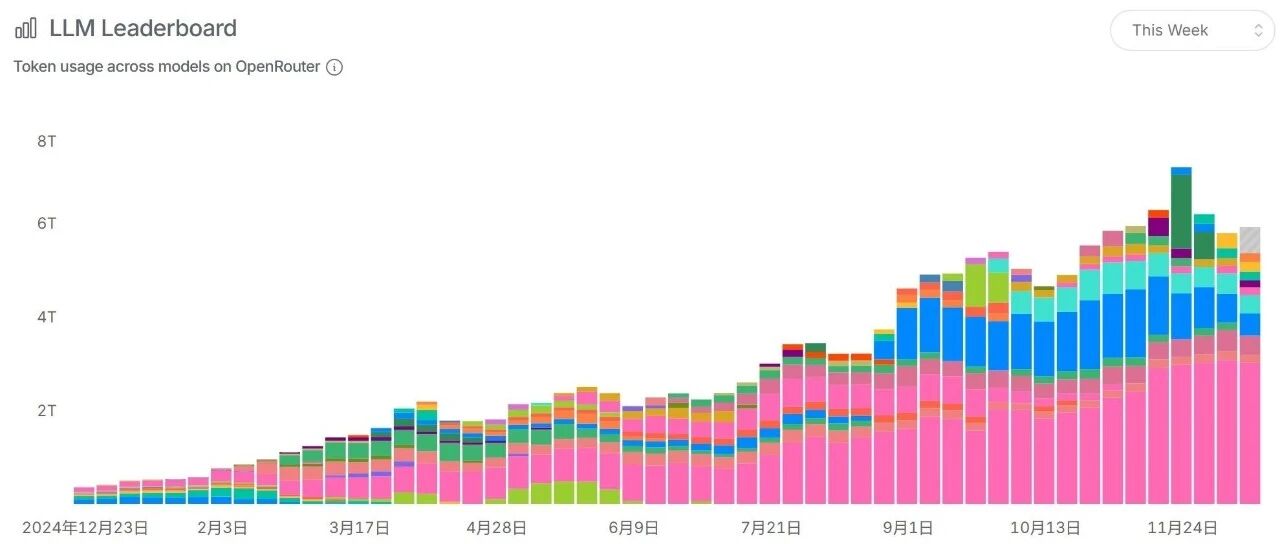
Group 1 - The U.S. Department of Energy has launched a national AI "Genesis Project" in collaboration with major companies like OpenAI, Google, Microsoft, and NVIDIA, marking a strategic shift towards collective efforts in technology development [1] - The AI models and computing platforms will be applied to significant scientific research areas such as controlled nuclear fusion, energy material discovery, climate simulation, and quantum computing algorithms [1] - This initiative signifies a transition from individual efforts to a systematic approach in tackling major scientific challenges in the U.S. technology sector [1] Group 2 - The U.S. Department of Energy has previously been a major client for companies like AMD and NVIDIA, indicating strong ties between government projects and these tech firms [2] - NVIDIA has seen a rebound in its stock performance, while Tesla's robotaxi profitability logic is gaining recognition among overseas investment banks [3] - The total AI model performance metrics indicate a significant weekly pace of +819 billion, with the total reaching 5.16 trillion [5]
腾讯研究院AI速递 20251223
腾讯研究院· 2025-12-22 16:08
Group 1: Generative AI Developments - Gemini 3 Flash outperformed Gemini Pro with a score of 78% in SWE-Bench Verified tests, surpassing Pro's 76.2%, and is 3 times faster than 2.5 Pro while reducing token consumption by 30% [1] - MiniMax has open-sourced its VTP (Visual Tokenizer Pre-training Framework), discovering a Scaling Law in AI visual generation, which resolves the paradox of training performance [3] - Tongyi Qwen launched the Qwen-Image-Layered model, which disassembles images into multiple RGBA layers for independent manipulation, enhancing high-fidelity editing capabilities [4] Group 2: Company Updates and Financial Performance - MiniMax is preparing for an IPO in Hong Kong, with a team of 385 people averaging 29 years old and having spent $500 million, which is less than 1% of OpenAI's expenses [5] - MiniMax reported revenue of $53.44 million for the first nine months of 2025, a year-on-year increase of over 170%, with over 70% of revenue coming from overseas [6] Group 3: Technological Innovations - Shanghai Jiao Tong University introduced the LightGen chip, expanding photonic computing into large model semantic media generation, achieving high-resolution image generation and outperforming NVIDIA's A100 by two orders of magnitude [7] - DeepMind's research suggests that AGI may emerge from multiple smaller AGI agents collaborating rather than from a single large model, proposing a four-layer defense framework for distributed risks [8]

微软CEO纳德拉亲自抓AI产品:每周开会、反复问进展、施压负责人
Sou Hu Cai Jing· 2025-12-22 15:25
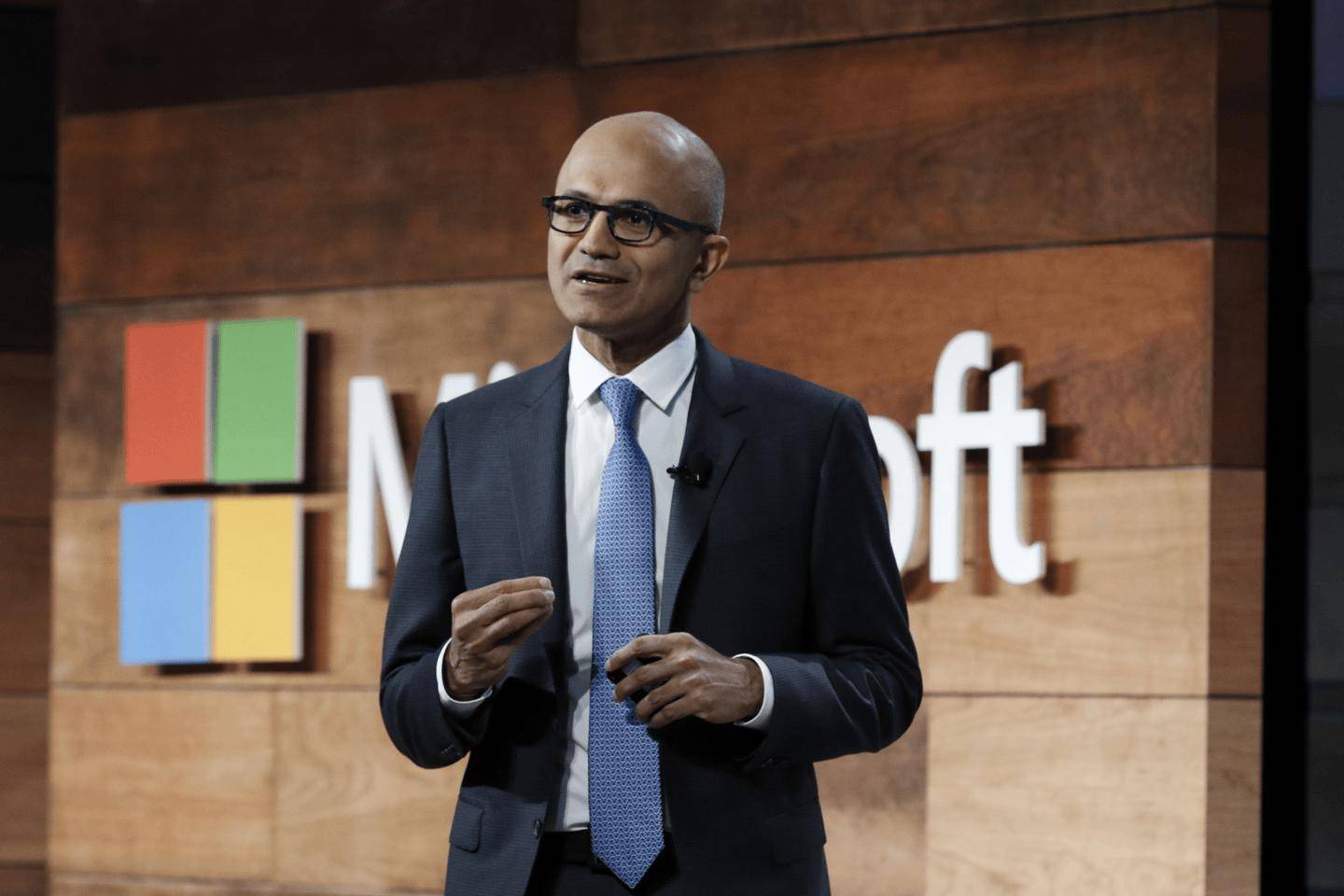
Core Insights - Microsoft CEO Satya Nadella has been actively engaging with a core team of about 100 technical personnel in a Teams channel, expressing dissatisfaction whenever AI product performance is deemed unsatisfactory [1][3] - Nadella holds weekly meetings with these technical staff to inquire about project progress and issue specific adjustment directives, such as integrating different teams' work during the post-training phase of AI models [1] - Recently, Nadella criticized Microsoft's Copilot functionality in comparison to Google's Gemini, stating that Microsoft's integration with Gmail and Outlook often fails to work properly and lacks intelligence [3] Group 1 - Nadella has become the most influential product leader within Microsoft, having shifted some management responsibilities to focus more on AI product development [3] - The pressure on tech CEOs is increasing due to fierce market competition and concerns that AI product revenues may not cover the costs of investment [3] - Nadella emphasizes that this is a critical phase for the company's success or failure in the AI sector [3] Group 2 - Nadella has intensified his involvement in AI talent recruitment, personally reaching out to candidates and approving competitive compensation packages to attract top researchers from organizations like OpenAI and Google DeepMind [3]

信仰与突围:2026人工智能趋势前瞻
3 6 Ke· 2025-12-22 09:32
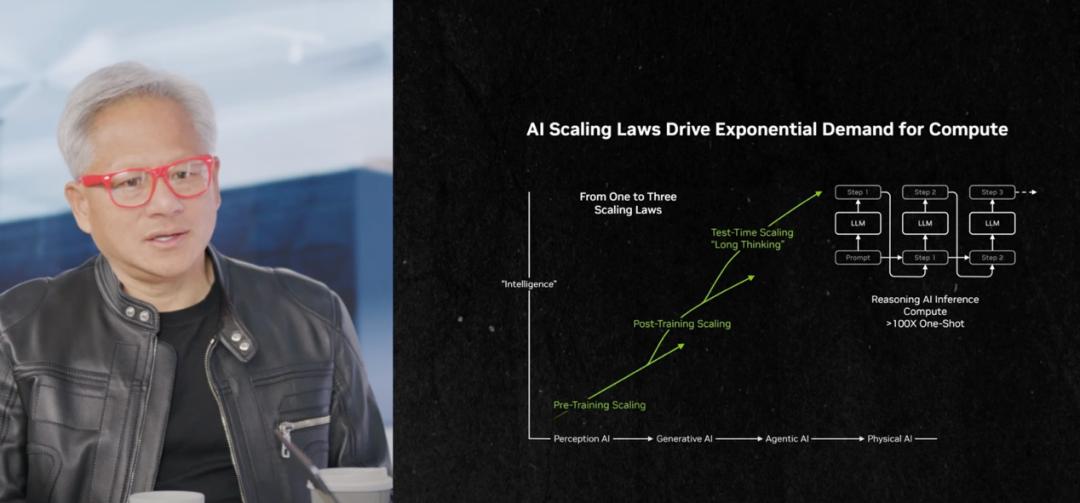
Core Insights - The AI industry is experiencing intense competition, particularly with the emergence of models like Gemini 3, prompting OpenAI to accelerate the release of GPT 5.2 to regain its competitive edge [1] - There is a growing skepticism regarding the scalability of large models, with some experts suggesting that the current scaling laws may be reaching their limits, indicating a potential shift in focus towards more innovative learning methods [2][3] - The future of AI is expected to be characterized by a combination of scaling and structural innovations, including advancements in multimodal models that could lead to significant leaps in AI capabilities [4][5] Group 1: Scaling and Innovation - The Scaling Law has been a driving force behind the evolution towards AGI, but recent trends indicate a slowdown in performance improvements, leading to questions about its long-term viability [2] - Despite criticisms, the Scaling Law remains a practical growth path, as it allows for predictable capability enhancements through increased training and data optimization [3] - The AI infrastructure in the U.S. is set to attract over $2.5 trillion in investments, with large data center projects exceeding 45 GW in capacity, reinforcing the importance of scaling in AI development [3] Group 2: Multimodal Models - The advent of multimodal models like Google's Gemini and OpenAI's Sora signifies a pivotal moment in AI, enabling deeper content understanding and the generation of diverse media formats [5] - Multimodal advancements are expected to drive a nonlinear leap in AI intelligence, as they allow for a more comprehensive understanding of the world through various sensory inputs [5][10] - The integration of multimodal capabilities could facilitate a closed-loop technology pathway for AI, enhancing its ability to perceive, decide, and act in real-world environments [10] Group 3: Research and Development - The research landscape for large models is diversifying, with numerous experimental labs emerging that focus on various aspects of AI, including safety, reliability, and multimodal collaboration [12][13] - Innovative approaches such as evolutionary AI and liquid neural networks are being explored to reduce reliance on traditional scaling methods and enhance model adaptability [13][14] - New evaluation methods are being developed to better assess AI capabilities, focusing on long-term task completion and dynamic environments rather than static benchmarks [15] Group 4: AI for Science - AI for Science (AI4S) is transitioning from academic breakthroughs to practical applications, with initiatives like DeepMind's automated research lab set to revolutionize scientific experimentation [22][23] - The U.S. government is prioritizing AI4S as a national strategy, aiming to create a nationwide AI science platform that integrates vast scientific datasets with supercomputing resources [25] - While widespread commercial adoption of AI4S may still be a few years away, significant advancements in research efficiency and automation are anticipated by 2026 [26] Group 5: AI Glasses and Consumer Electronics - AI glasses are projected to reach a critical sales milestone of 10 million units, marking a significant shift in consumer electronics towards wearable AI technology [45][47] - The success of AI glasses hinges on reducing hardware complexity and enhancing user experience, moving from traditional app-based interactions to intention-based commands [48] - The potential for AI glasses to generate vast amounts of data could lead to new algorithms and advertising models, fundamentally changing user interaction with technology [48] Group 6: AI Safety and Governance - As AI capabilities advance, safety and ethical considerations are becoming increasingly important, with a notable decline in public trust despite rising usage [50][51] - The industry is focusing on developing safety technologies and governance frameworks to ensure responsible AI deployment, with a significant portion of computational resources allocated to safety research [54] - Regulatory proposals are emerging that mandate systematic testing and monitoring of high-risk AI models, indicating a shift towards more stringent safety standards in AI development [54]



全自研仿真GPU求解器x虚实对标物理测量工厂,打造具身合成数据SuperApp,加速具身仿真生态丨光轮智能@MEET2026
量子位· 2025-12-22 08:01
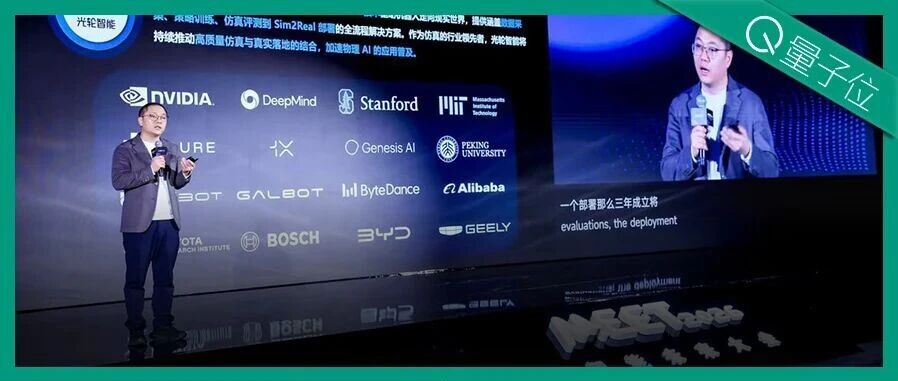
编辑部 整理自 MEET2026 量子位 | 公众号 QbitAI 从大模型智能的"语言世界"迈向具身智能的"物理世界",仿真正在成为连接落地的底层基础设施。 在本次量子位MEET2026智能未来大会上,光轮智能联合创始人兼总裁 杨海波 给出了他的观察: 具身智能的规模远大于文本与视觉模型,因为数据维度更真实、更复杂。 这也就意味着,具身智能时代的核心,不是算法本身,而是它所依赖的数据是否有效、可扩展——仿真是唯一能够解决数据问题的方案。 在仿真策略的路上,会遇到仿真不真实、Sim2Real不可靠等行业痛点, 光轮智能正在通过自研的一整套"测量、生成、求解"仿真基础设施来 解决这些问题 ,为具身智能提供数据、训练、评测的全流程解决方案。 △ 杨海波指出光轮智能深耕合成数据领域 另外杨海波还进一步指出, 仿真不是孤立的技术工具,需要以真实产业需求为锚点,通过应用场景构建生态。 其中, 具身仿真资产制作是生态的源头活水 ,依托自动化物理测量与生成技术,产出高物理真实的规范化数据资产,为具身训练提供核心燃 料; 大规模RL训练则通过并行的虚拟场景让智能体高效试错学习,将数据价值转化为具身实际技能 ,同时反向打磨仿真 ...
明星公司深跌 美股AI泡沫争议升级
Zhong Guo Zheng Quan Bao· 2025-12-21 20:13
上周,美股AI板块在市场质疑声中剧烈波动。此前,甲骨文等AI明星品种在资金担忧巨额投入能否转 化为利润、以及融资模式争议中集体承压,市场对"AI泡沫是否走到破裂边缘"的讨论迅速扩散。 12月17日甲骨文股价大跌逾5%,与9月的历史高点相比,跌幅接近50%。AI泡沫之争已成为美股市场的 焦点所在。 □本报记者 王雪青 王昱炟 AI泡沫讨论升级 近日,全球最大对冲基金桥水联席首席投资官格雷格·詹森警告称,随着大型科技公司越来越多地依赖 用"外部资本"来支撑不断上升的成本,人工智能支出热潮正进入一个"危险"阶段。 中金公司在12月17日发布的研报中认为,甲骨文在披露高额资本开支计划后,股价出现大幅回调。这一 现象反映出市场对人工智能投资的逻辑正在发生转向,单纯依赖资本开支驱动的乐观叙事或已不再占据 主导地位,投资者开始重新审视潜在风险。投资回报、融资条件以及企业间关联性三个维度存在潜在风 险点。 报告显示,尽管AI被视为未来最具潜力的技术方向,但其商业化路径仍不明确。随着投资规模不断扩 大,AI投资的边际效率大概率也会降低,但成本却未见下降。AI投资仍处于"规模不经济"阶段,市场担 忧正在推动股票估值重新评估。同时 ...

深度|DeepMind CEO Demis: AGI还需5-10年,还需要1-2个关键性突破
Sou Hu Cai Jing· 2025-12-21 06:05
Core Insights - Demis Hassabis, co-founder and CEO of Google DeepMind, emphasizes the transformative potential of AI and AGI, highlighting the need for societal readiness for these changes [4][5][6] - The conversation at the Axios AI+SF Summit reflects on the impact of Hassabis's Nobel Prize win, which has enhanced his platform for discussing critical issues like AI safety and responsible usage [4][5] - The timeline for achieving AGI is estimated to be within five to ten years, contingent on overcoming key challenges in AI capabilities [6][29] Group 1: AI and AGI Insights - AGI is viewed as one of the most transformative moments in human history, necessitating preparation at a societal level [6] - Current AI systems lack critical capabilities such as continuous learning and reasoning, which are essential for achieving AGI [6][29] - The development of multi-modal capabilities in AI, such as the Gemini model, is expected to yield significant advancements in the coming year [10][24] Group 2: Industry Dynamics - The AI industry may experience bubbles in certain areas, particularly with unsustainable early-stage funding, but the long-term potential of AI is deemed transformative [31] - The competition for talent in the AI sector is intensifying, with companies needing to attract mission-driven individuals to maintain a competitive edge [31] - The U.S. currently leads in AI development, but the gap with China is narrowing, particularly in algorithmic innovation [21] Group 3: Ethical Considerations and Risks - Concerns exist regarding the misuse of AI by malicious actors, highlighting the importance of robust security measures [17][20] - The potential for AI systems to operate autonomously raises questions about control and safety, necessitating ongoing research to ensure compliance with safety boundaries [18][20] - The discussion includes the philosophical implications of AI solving major societal issues, such as the meaning and purpose of humanity in a post-scarcity world [13][14]
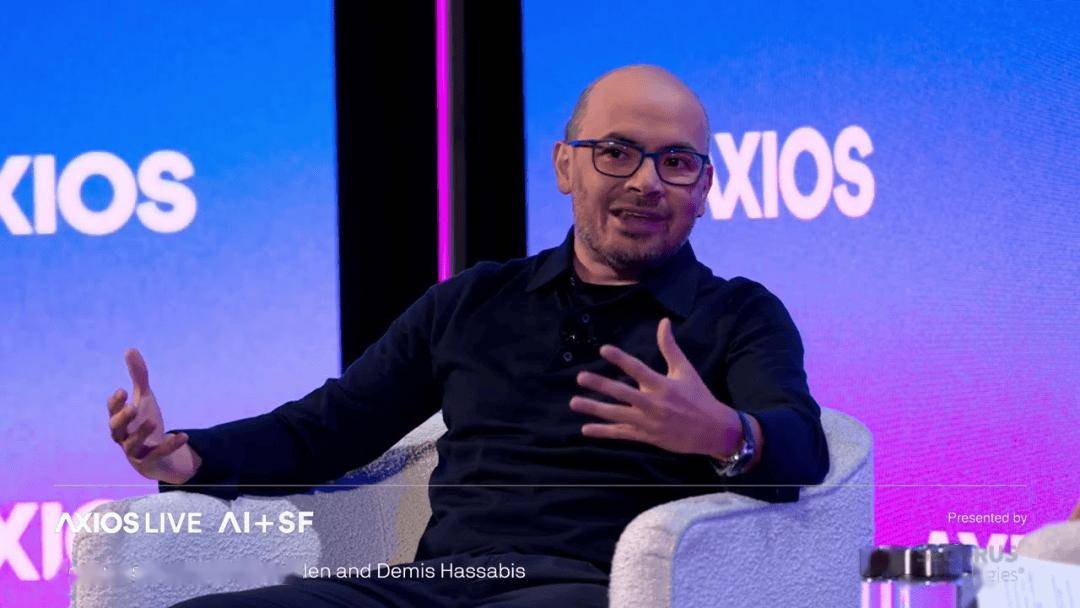
深度|DeepMind CEO Demis: AGI还需5-10年,还需要1-2个关键性突破
Z Potentials· 2025-12-21 02:24
Core Insights - The conversation highlights the transformative potential of AGI (Artificial General Intelligence) and the need for societal readiness for its arrival, which is estimated to be within five to ten years [6][30] - Demis Hassabis emphasizes the importance of responsible AI usage and the need for ongoing discussions about AI safety and societal impacts [8][15] - The dialogue also touches on the competitive landscape of AI, particularly the race between the US and China, with the US currently holding a slight edge in algorithmic innovation [21][22] Group 1: AGI and Its Implications - AGI is seen as one of the most transformative moments in human history, requiring careful preparation from governments and leaders [6][8] - Current AI systems lack critical capabilities such as continuous learning and reasoning, which are essential for achieving true AGI [31] - The timeline for achieving AGI is projected to be five to ten years, contingent on one or two significant breakthroughs [30][31] Group 2: AI Safety and Responsibility - There is a strong emphasis on the responsible use of AI, focusing on what AI can improve and accelerate while maintaining caution in its deployment [8][15] - The potential risks of AI misuse by malicious actors and the possibility of AI systems becoming uncontrollable are significant concerns [15][20] - The need for robust AI safety measures is underscored, especially as AI systems become more autonomous [20][19] Group 3: Competitive Landscape - The US and Western countries are currently leading in AI, but the gap with China is narrowing, with Chinese models showing impressive capabilities [21][22] - The competition for AI talent is intensifying, with companies needing to attract mission-driven individuals to stay at the forefront of innovation [33] - The importance of algorithmic innovation is highlighted, with the US still holding an advantage in this area despite China's rapid advancements [22] Group 4: Technological Advancements - The integration of multimodal capabilities in AI, such as the ability to process and generate text, images, and videos, is a key focus for future developments [11][12] - The introduction of systems like Gemini 3 showcases significant advancements in reasoning depth and the ability to generate nuanced outputs [25][27] - The potential for AI to assist in various domains, including sports analytics, is also discussed, indicating its broad applicability [37][38]

腾讯研究院AI每周关键词Top50
腾讯研究院· 2025-12-20 02:33
Group 1: Core Insights - The article presents a weekly roundup of the top 50 keywords in the AI sector, highlighting significant developments and trends in the industry [2]. - Key players mentioned include Google, Apple, ByteDance, NVIDIA, and OpenAI, indicating a competitive landscape in AI technology and applications [3][4]. Group 2: Chip Developments - Google is advancing its AI chip technology with the introduction of TorchTPU [3]. - Apple is focusing on AI server chips, which may enhance its capabilities in AI applications [3]. Group 3: Model Innovations - Google has launched the Gemini 3 Flash model, while ByteDance introduced Seed1.8, showcasing ongoing innovation in AI models [3]. - Other notable models include MiMo-V2-Flash from Xiaomi and Nemotron 3 from NVIDIA, indicating a diverse range of AI model developments [3]. Group 4: Application Trends - OpenAI is expanding its ecosystem with the ChatGPT application store and various applications like ChatGPT Images and SAM Audio [3][4]. - Companies like Tencent and xAI are also developing unique applications, such as the writing mode and Grok Voice, respectively [3][4]. Group 5: Technological Insights - The article discusses various technological insights, including AI memory systems and recursive self-improvement, which are critical for future AI advancements [4]. - The AI adult content market and AGI predictions are also highlighted, reflecting the broader implications of AI technology [4].




