
Figure AI

Search documents
人形机器人 “撕战” 升级!Figure CEO 怒锤优必选 CGI 造假,遭“一镜到底”实拍打脸?
机器人大讲堂· 2025-11-19 09:06
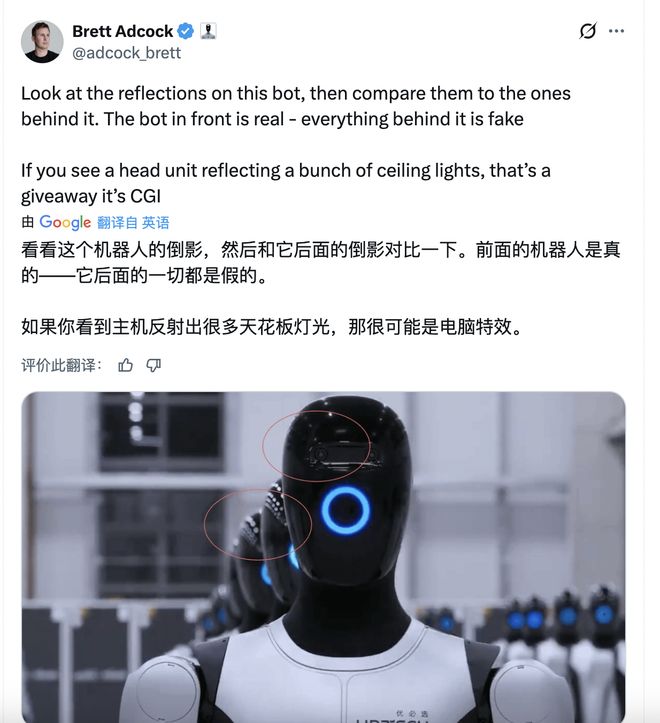
Core Viewpoint - The recent viral video showcasing the mass production of UBTECH's Walker S2 humanoid robots has sparked significant discussion and controversy regarding its authenticity and implications for the robotics industry [1][3][5]. Group 1: Controversy and Response - The video released by UBTECH on November 13, titled "Sword Gathering, All Out to Deliver," features hundreds of Walker S2 robots moving in unison, marking the start of mass production [5]. - Figure AI's CEO Brett Adcock publicly questioned the video's authenticity, suggesting that the reflections on the robots indicated some were likely created using CGI [3][7]. - In response, UBTECH released two follow-up videos to demonstrate the authenticity of the original footage, including one that showcased the robots in a real factory environment [9]. Group 2: Market Position and Orders - UBTECH's mass production capabilities are supported by substantial market orders, with the total order value for the Walker series exceeding 800 million yuan since early 2025 [11]. - The company has established partnerships with leading firms in various sectors, including BYD, Dongfeng Liuzhou, and Foxconn, indicating a strong foothold in key industries such as new energy vehicles and smart logistics [11]. Group 3: Industry Comparison - In contrast, Figure AI has been more cautious in its production announcements, aiming to deliver only 100,000 units over the next four years, highlighting a significant difference in production strategy [12]. - This disparity reflects broader differences in technological approaches and industrial strategies between Chinese and American robotics companies [12]. Group 4: Industry Trends and Expectations - The robotics industry is undergoing a critical transition, moving from technology demonstrations to actual mass production, with heightened expectations for real-world applications [14][16]. - The shift in user sentiment indicates a demand for robots to transition from laboratory settings to practical applications in factories and homes [16]. Group 5: China's Competitive Advantage - China's robotics industry benefits from a well-established supply chain, which facilitates lower manufacturing costs and accelerates the transition from design to mass production [17][19]. - In contrast, Western companies remain reliant on global supply chains for core components, increasing uncertainty in their production timelines [19]. - The competition in the humanoid robotics sector is intensifying, with Chinese firms like UBTECH leading the charge in mass production capabilities [19].


C端养老机器人融资潮起:企业单笔获15亿投资,资本入场不再“畏惧”?
3 6 Ke· 2025-11-19 01:11
Core Insights - The traditional elderly care model is under increasing pressure due to a large elderly population of 300 million and a growing shortage of caregivers, leading to a shift towards C-end products for home care robots [1][9] - Investment in "hard technology" related to elderly care robots is gaining momentum, with several companies successfully securing funding for C-end products aimed at family scenarios [2][4] Group 1: Investment and Market Trends - Companies like Huaxi Technology and Ruisen Robotics are attracting significant investment for their C-end elderly care robots, indicating a growing confidence in the market [2][4] - The global market for C-end home care robots is heating up, with notable investments from major tech companies like Nvidia and Intel in products like Figure AI's humanoid robot, which has reached a valuation of approximately $39 billion [6][7] Group 2: Demand and Supply Dynamics - By the end of 2024, China's elderly population aged 60 and above is expected to exceed 310 million, highlighting a critical demand for elderly care solutions [9] - The shortage of caregivers in China is severe, with a reported gap of 5.5 million caregivers and a high turnover rate of 40% to 50% among new hires [9][10] Group 3: Technological Advancements and Standards - The Chinese robotics industry is transitioning from quantity to quality, with significant advancements in technology and a robust supply chain for components essential for elderly care robots [12][13] - The establishment of international standards for elderly care robots, led by China, is expected to enhance industry development and set benchmarks for future products [12][13] Group 4: Future Outlook and Market Penetration - The penetration rate of smart elderly care robots is projected to reach 8% by 2025, with various segments like rehabilitation robots and emotional companionship robots showing significant growth potential [16][17] - The current environment presents an optimal opportunity for companies to develop consumer-grade robots, as demand has been validated and the industry chain is maturing [16][17]


优必选预计今年人形机器人营收4亿元,明年交付两千至三千台
Nan Fang Du Shi Bao· 2025-11-18 09:23
Core Insights - UBTECH Robotics has delivered approximately 200 humanoid robots in 2023, with an estimated revenue contribution of around 400 million yuan from this business. The company plans to deliver 500 units in 2025 and aims for 2,000 to 3,000 units in 2026 [1] - The company has set a production capacity ramp-up plan, targeting an annual production capacity of 5,000 humanoid robots by 2026 and expanding to 10,000 units by 2027 [1] - As of November 10, 2023, the total order value for the Walker series humanoid robots has exceeded 800 million yuan, primarily from clients in the automotive industry [1] Delivery and Production - UBTECH released a video showcasing the assembly of over a hundred humanoid robots, which faced skepticism from Figure AI's founder regarding its authenticity. UBTECH responded with a continuous shot video to counter the claims [2][4] - The company has conducted over a year of factory training for its humanoid robots, focusing on tasks such as handling, sorting, and quality inspection. The success rate for box handling tasks is reported at 99%, with an average handling time of 1.5 minutes, an improvement from 2 minutes in the first half of 2025 [4] Technological Developments - The VLA (Vision-Language-Action) model for intelligent operations is not yet commercially ready, with an accuracy of about 70%, which does not meet customer demands. The company plans to equip different tasks with corresponding specialized models [4] - A new version of the Walker series (Walker S3) is set to launch in the first half of 2026, featuring the Thor chip from NVIDIA, while another new model with high-performance mobility is also planned for release in the same timeframe [5]
刚刚,中美机器人爆发了一场论战
Hua Er Jie Jian Wen· 2025-11-18 08:41
Core Viewpoint - A video showcasing a humanoid robot from a Chinese startup, MindOn Tech, has sparked a global debate regarding its authenticity, with claims of "no acceleration, no remote control" being challenged by skeptics in the U.S. [1][4][10] Group 1: Video and Technology - The video features a humanoid robot performing tasks such as watering plants, throwing garbage, and playing with children, demonstrating impressive fluidity in its movements [2][4] - MindOn Tech claims that the robot operates autonomously without any external control, which has led to significant interest and skepticism [4][10] Group 2: Skepticism and Responses - Brett Adcock, CEO of Figure AI, expressed doubts about the video's authenticity, suggesting it may involve pre-recorded movements without real-time perception [5][7] - Adcock has previously criticized another Chinese robotics company, UBTECH, for allegedly using computer-generated imagery in their demonstrations [8][10] Group 3: Support for Authenticity - Supporters of MindOn Tech have provided backup footage to validate the video's claims, arguing that the robot's actions are feasible based on existing academic research [11][15] - Mike Kalil, a U.S. tech blogger, argues that the robot's capabilities are a result of integrating advanced research in imitation and reinforcement learning, indicating a significant engineering achievement [15] Group 4: Implications for the Industry - If MindOn Tech's software can deliver genuine functionality on cost-effective hardware like Unitree's G1, it could pose a serious threat to established players like Figure AI, 1X Technologies, and Tesla [17][18] - The current trend among U.S. companies focuses on vertical integration, developing both the AI software and the hardware, which may be challenged by MindOn Tech's approach [18][19] Group 5: Potential Market Shift - MindOn Tech's model suggests a decoupling of AI software and hardware, akin to the "Android model," which could disrupt the competitive landscape of humanoid robotics [19][20] - The competition may shift from hardware capabilities to the intelligence of the AI, potentially leading to a more open and flexible market environment [20][21] - This debate over the video's authenticity reflects a broader clash of technological approaches and business models, indicating a significant shift in the robotics industry [21]

具身智能曙光初现!机器人指数ETF(560770)获连续17日汹涌增仓,规模迭创历史新高
Sou Hu Cai Jing· 2025-11-14 07:08
资本持续加码与政策支持:资本市场正用"真金白银"为机器人产业的未来投下信任票。2025年前8个 月,我国机器人领域一级市场融资额已达386.24亿元,是2024年全年的1.8倍。在政策层面,国家高度重 视机器人产业发展,出台了一系列政策措施引导和支持。2025中国机器人产业发展大会的召开,也旨在 构建开放协同的产业生态。 分析指出,近期,机器人产业在技术突破、商业化落地及资本层面均有显著进展: 技术突破与量产加速:行业已进入量产破局的关键阶段。国内外主要企业如特斯拉、Figure AI、宇树科 技、优必选等均计划在2025年或2026年实现初步量产。这标志着人形机器人正从"能否造出来"转向"是 否卖得掉、用得爽、赚到钱"的商业化转变。 商业应用与"亿元订单"涌现:2025年被业内视为机器人商业化的爆发元年。一个明显的信号是"亿元订 单俱乐部"的浮出水面,优必选、智元机器人、银河通用等企业已斩获多笔亿元级别的大额订单。这些 订单覆盖了汽车制造、半导体显示、仓储物流等多个实体经济领域,证明机器人解决实际场景需求的能 力正得到市场认可。 11月14日,机器人板块再陷调整。截至13时21分,表征板块的机器人指数ETF ...

首发|Monolith第四年,曹曦又募了35亿
投中网· 2025-11-11 00:53
Core Insights - Monolith has successfully raised two new funds, totaling approximately $488 million (around 3.5 billion RMB), marking a significant achievement in fundraising within a challenging market environment [2][3][5] - The firm has surpassed 10 billion RMB in assets under management within four years, establishing itself as a leading player among emerging VC firms in China [3][4] - The new funds reflect a strategic focus on artificial intelligence and a market-oriented investment approach, with a notable emphasis on maintaining a high proportion of market-driven LPs [3][11][12] Fundraising Highlights - The new funds were raised quickly, with the dollar fund achieving its target in just one month, indicating strong demand from existing LPs [7][8] - Monolith's first dollar fund has performed well, contributing to the positive sentiment and renewed interest in Chinese tech assets among global investors [9][18] - The firm has chosen to limit the total fundraising amount despite high demand, reflecting a disciplined approach to capital management [8][11] Market Trends - The narrative around the revaluation of tech assets, particularly in AI, continues to attract global investors, contributing to a recovery in dollar fund fundraising [4][6] - There is a growing interest from LPs in Chinese tech assets, with new LPs from Europe, the Middle East, and Southeast Asia actively seeking exposure [9][18] - The valuation gap between Chinese and U.S. AI companies presents significant investment opportunities, as many Chinese firms are currently undervalued compared to their U.S. counterparts [18][19] Investment Strategy - Monolith's investment strategy has evolved to focus more on AI applications and hardware, moving away from a broader investment scope [17] - The firm aims to leverage its market position to invest in early-stage opportunities within the AI sector, which is seen as a key growth area [17][18] - The successful fundraising and strategic focus on AI are expected to enhance Monolith's competitive edge in the VC landscape [3][4][12]

抢占生态主导权:2025年,中国具身智能的“安卓时刻”来到了吗?
3 6 Ke· 2025-11-10 11:22
Core Insights - The embodiment intelligence industry is transitioning from the research and validation phase to initial commercialization in 2025, with a focus on practical applications rather than just development [1] - The Chinese embodiment intelligence market is projected to grow significantly, reaching 52.95 billion yuan in the first half of 2025, with expectations to exceed 100 billion yuan globally by 2026, reflecting a compound annual growth rate of over 60% [1][27] - Capital market activity in the robotics sector has surged, with domestic financing in the first half of 2025 reaching approximately 386.24 billion yuan, nearly 1.8 times the total for 2024 [2] Market Dynamics - Major companies are beginning to see a significant increase in commercial orders, with multiple billion-level contracts reported in Q3 2025, indicating a shift towards commercialization [3] - The competition in the embodiment intelligence sector is evolving from hardware capabilities to the establishment of content and ecological platforms that enable robots to understand tasks and execute them effectively [3][12] Ecological Strategies - Companies are focusing on building ecosystems, with different approaches: - Zhiyuan Robotics launched the "Lingchuang" platform, a zero-code robot content creation platform aimed at lowering development barriers and fostering an external developer ecosystem [4][8] - UBTECH and the Beijing Humanoid Robot Innovation Center introduced the "Hui Si Kai Wu" SDK, a comprehensive platform for multi-functional robots, emphasizing a closed yet consistent ecosystem [6] - Fourier Intelligence continues its open approach by releasing a robot application market with standardized interfaces, inviting external developers to create plugins and task modules [8] Competitive Landscape - The competition is increasingly centered around who can establish foundational standards and developer access points, with companies like Zhiyuan, UBTECH, and Fourier vying for dominance in this area [12][13] - The importance of ecological platforms is underscored by the need for standardization and modularization of tasks, which can significantly reduce deployment costs and accelerate commercialization [11][21] Challenges and Opportunities - Despite the apparent growth, the embodiment intelligence sector faces challenges in achieving scalable commercial applications due to market logic and industry structure constraints [19][20] - China's complete supply chain and mature B2B market present unique advantages for ecological development, allowing for rapid deployment of standardized solutions across various robotic applications [25][26] Future Outlook - The embodiment intelligence market in China is expected to reach 52.95 billion yuan in 2025, accounting for 27% of the global market, with humanoid robots projected to reach 82.39 billion yuan, representing about 50% of the global market [27] - The ongoing ecological competition is seen as a critical battleground, with the potential for companies to establish significant advantages through early ecosystem development and standardization [14][26]

黄仁勋的疯狂投资版图
投资界· 2025-11-10 02:38
Core Insights - The article emphasizes Nvidia's pivotal role in the AI revolution, highlighting its rapid growth and strategic investments in various AI sectors since the emergence of ChatGPT [4][5]. - Nvidia's investment strategy is characterized by a broad approach, targeting multiple AI technologies and companies to secure its position as a foundational player in the AI ecosystem [10][24]. Investment Strategy - Nvidia has participated in 50 venture capital deals in 2025 alone, surpassing its total of 48 deals in 2024, indicating an aggressive investment pace [5]. - The company has made significant investments in OpenAI, totaling $100 billion, to develop large-scale AI infrastructure, showcasing its commitment to being a key player in AI development [6][7]. - Nvidia's strategy includes investing in competing AI firms, such as xAI, to diversify its technological bets rather than aligning with a single winner [7][10]. AI Ecosystem Development - Nvidia is building a comprehensive AI ecosystem by investing in companies across various sectors, including data centers, energy solutions, and foundational technologies [16][24]. - The company has invested in firms like Ns c a l e and Cr us oe, which focus on AI data centers, ensuring that Nvidia's GPUs remain integral to AI operations [12][13]. - Nvidia's investments in energy technologies, such as nuclear fusion, aim to address the significant energy demands of AI, positioning the company as a leader in sustainable AI infrastructure [14][15]. Application Areas - Nvidia's investments span multiple AI application areas, including autonomous driving, robotics, healthcare, and content creation, ensuring its technology is embedded across industries [18][22]. - The company has backed various startups in the autonomous driving sector, such as Wa yve and Nu r o, reflecting its long-term vision for AI applications in transportation [18][19]. - In the robotics field, Nvidia has invested in companies like Fi g u r e AI and Bri g ht Ma c h i n e s, indicating its focus on making AI chips the "brains" of robots [20][22]. Strategic Goals - Nvidia's overarching goal is to become the foundational infrastructure for the AI era, akin to how Microsoft and Google established their operating systems [24][25]. - The company aims to create a dependency on its GPUs across all AI companies, ensuring that its technology is essential for AI development and deployment [24]. - By investing in a wide array of AI applications, Nvidia seeks to secure its position as a dominant player in the evolving AI landscape, with a focus on long-term growth and influence [25].


具身的大小脑路线都在这里了......
具身智能之心· 2025-11-10 00:02
Core Insights - The exploration towards Artificial General Intelligence (AGI) highlights embodied intelligence as a key direction, focusing on the interaction and adaptation of intelligent agents within physical environments [1] - The development of embodied intelligence is marked by the evolution of its core components, the brain and cerebellum, which are essential for perception, task understanding, and action execution [1] Industry Analysis - In the past two years, numerous star teams in the field of embodied intelligence have emerged, establishing valuable companies such as Xinghaitu, Galaxy General, and Zhujidongli, driving advancements in embodied intelligence technologies [3] - Major domestic companies like Huawei, JD, Tencent, and Ant Group are actively investing and collaborating to build a robust ecosystem for embodied intelligence, while international players like Tesla and Wayve are focusing on industrial applications and autonomous driving [5] Technological Evolution - The evolution of embodied intelligence technology has progressed through several stages, from low-level perception to high-level task understanding and generalization [6] - The first stage focused on grasp pose detection, while the second stage introduced behavior cloning, allowing robots to learn from expert demonstrations [6][7] - The introduction of Diffusion Policy methods in 2023 marked a significant advancement, enhancing stability and generalization in task execution [6][9] - The current phase emphasizes the integration of Vision-Language-Action (VLA) models, which enable robots to understand human instructions and perform complex tasks [7][9] Future Directions - The industry is exploring the fusion of VLA models with reinforcement learning, world models, and tactile sensing to overcome existing limitations [9][11] - This integration aims to enhance robots' capabilities in long-term tasks, future prediction, and multi-modal perception, expanding their operational boundaries [11][12] Educational Initiatives - There is a growing demand for engineering and system capabilities in the field of embodied intelligence, prompting the development of comprehensive educational programs [17] - These programs aim to equip participants with practical skills in simulation, model training, and the deployment of advanced embodied intelligence architectures [17][20]
“胸部造型”机器人惹争议,小鹏天塌了!
Xin Lang Cai Jing· 2025-11-07 15:23
Core Insights - The emergence of humanoid robots, particularly the "IRON" robot from Xiaopeng Technology, has captivated public attention and sparked discussions about the future of robotics and its implications for society [2][10][23] Group 1: Technological Advancements - The "IRON" robot features 82 degrees of freedom, surpassing industry averages, enabling it to perform complex human-like movements such as walking, climbing stairs, and bending to pick up objects [4] - The robot's hands are designed with the smallest harmonic reduction joints in the industry, achieving a 1:1 scale with human hands and possessing 22 degrees of freedom, allowing for delicate tasks like grasping eggs and opening bottles [4][10] Group 2: Public Reaction and Controversy - The realistic appearance of the "IRON" robot led to initial skepticism, with some audience members questioning whether a real person was hidden inside [4][10] - Following the unveiling, discussions arose regarding the robot's feminine design, with critics arguing that it perpetuates lowbrow aesthetic standards [14][18] - The design choices have divided opinions, with some viewing it as a technical showcase while others see it as a marketing strategy aimed at attracting male attention [18][35] Group 3: Market Potential and Future Applications - Xiaopeng plans to mass-produce the "IRON" robot by 2026, initially for commercial applications such as showroom guides and sales consultants, with broader industrial use expected in 3-5 years and household adoption in 5-10 years [19][20] - The competition in the humanoid robot market is intensifying, with major players like Tesla and Xiaopeng investing heavily in research and development, indicating a potential multi-billion dollar market [34][35] Group 4: Ethical and Societal Implications - The introduction of humanoid robots raises questions about gender representation and societal norms, particularly regarding the implications of robot companions on existing relationship dynamics [35][37] - As technology progresses, the focus should shift from mere anthropomorphism to practical applications that address real-world challenges, emphasizing the importance of functionality over appearance [37][38]

