格力电器

Search documents
险资松绑利好红利板块,300红利低波ETF(515300)震荡市场中优势凸显
Xin Lang Cai Jing· 2025-12-10 03:16
截至2025年12月10日10:48,沪深300红利低波动指数下跌0.54%。成分股华能水电领涨,川投能源、华 域汽车跟涨;招商银行领跌,农业银行、兴业银行跟跌。 消息面上,12月8日,工商银行、农业银行分别发布A股2025年半年度分红派息实施公告,两家银行此 次中期分红总额分别为503.96亿元、418.23亿元。Wind数据显示,截至12月9日,已有26家A股上市银行 披露2025年中期或季度分红方案,合计派息金额拟超2600亿元。 中国银河证券表示,上市银行中期分红力度不减且节奏提前,红利价值日益凸显。 西部证券指出,险资股票风险因子松绑,新规利好银行、公用事业、煤炭等红利板块。伴随新会计准则 即将全面落地,中小险企或将加强OCI股票配置,风险因子松绑下,红利板块有望充分受益。 数据显示,截至2025年11月28日,沪深300红利低波动指数前十大权重股分别为中国神华、双汇发展、 中国石化、格力电器、美的集团、华域汽车、大秦铁路、宝钢股份、中国移动、中国建筑,前十大权重 股合计占比35.7%。 没有股票账户的场外投资者可通过对应的沪深300红利低波动ETF联接基金(007606)把握投资机会。 300红利 ...
资金动向 | 自由现金流ETF(159201)连续23天净流入,合计“吸金”22.98亿元
Xin Lang Cai Jing· 2025-12-10 01:38
Group 1 - The Guozheng Free Cash Flow Index decreased by 1.87% as of December 9, 2025, with mixed performance among constituent stocks, including gains from Fujian Expressway, Lihu Co., and Hongqi Chain, while losses were seen in Luoyang Molybdenum, China Aluminum, and Shougang [1] - The Free Cash Flow ETF (159201) fell by 1.83%, with the latest price at 1.18 yuan, and had a turnover rate of 6.18% during the trading session, with a total transaction volume of 477 million yuan [1] - Over the past 23 days, the Free Cash Flow ETF experienced continuous net inflows, with a maximum single-day net inflow of 253 million yuan, totaling 2.298 billion yuan, averaging daily net inflows of approximately 99.91 million yuan [1] Group 2 - The Free Cash Flow ETF's net asset value increased by 17.83% over the past six months, with the highest monthly return since inception reaching 7% and the longest consecutive monthly gain lasting six months with a total increase of 22.69% [2] - The average monthly return during the rising months was 3.2%, with a monthly profit percentage of 77.78% and a monthly profit probability of 80.45%, while the historical probability of profit over six months was 100% [2] - The Free Cash Flow ETF outperformed the benchmark with an annualized excess return of 8.18% over the past six months [2] Group 3 - The management fee for the Free Cash Flow ETF is 0.15%, and the custody fee is 0.05% [3] - The ETF closely tracks the Guozheng Free Cash Flow Index, which as of November 28, 2025, had its top ten weighted stocks including China National Offshore Oil, SAIC Motor, Wuliangye, Gree Electric, China Aluminum, Luoyang Molybdenum, Shaanxi Coal, Xiamen International Trade, Shanghai Electric, and Zhejiang Chint Electrics, collectively accounting for 54.4% of the index [3] - The Free Cash Flow ETF has off-exchange connections, including the Huaxia Guozheng Free Cash Flow ETF Initiated Link A (023917) and Link C (023918) [3]
这一年,经济运行总体平稳、稳中有进
Ren Min Ri Bao· 2025-12-09 23:59
Economic Development - The year 2025 is significant for China's modernization process, with a focus on high-quality development and achieving major economic and social goals [1] - The Central Economic Work Conference has outlined systematic deployments for economic work in 2025, emphasizing the development of various economies such as the "first launch economy," "ice and snow economy," "silver economy," and others [1][2] First Launch Economy - The first launch economy is gaining traction, with cities like Beijing, Shanghai, and Chengdu enhancing policy support to attract new brands and stores, becoming a key driver for domestic demand [2] - Chengdu has seen the establishment of 631 first stores in the first three quarters of the year, indicating a growing trend towards first launches as a lifestyle choice [4][5] Ice and Snow Economy - The ice and snow economy is evolving from a seasonal focus to a year-round industry, with the scale expected to exceed 1 trillion yuan by 2025 [2] - Harbin's Ice and Snow World is under construction, featuring innovative attractions and a focus on diverse shopping and experiential dining to enhance consumer engagement [5][6] Silver Economy - The silver economy is expanding with new service models for the elderly, including specialized travel services that cater to their needs, reflecting a shift in consumption patterns towards quality and personalization [6][7] - In Yunnan, the elderly tourism market has seen significant growth, with over 80% of travelers being aged 60 and above [7] Platform Economy - The platform economy is transitioning from a "what to produce" model to a "what is needed" approach, enhancing consumer satisfaction through direct connections between platforms and manufacturers [8][9] - E-commerce platforms have facilitated significant growth in agricultural product sales, with rural online retail increasing by 7.5% year-on-year [9][10] County Economy - The county economy is thriving with initiatives like "Hundred Villages Thousand Lodgings," which promote eco-tourism and local agricultural products, leading to increased income for local residents [10][11] - In Luanchuan County, the integration of tourism and agriculture has resulted in a substantial rise in visitor numbers and revenue, with a focus on sustainable development [11] Marine Economy - The marine economy is advancing with innovations in shipbuilding and marine engineering, focusing on green technologies and zero-carbon emissions [12][13] - The Qingdao West Coast New Area has established a marine industry base that has seen a 16.9% increase in output value year-on-year [13] Bay Area Economy - The Guangdong-Hong Kong-Macao Greater Bay Area is fostering innovation and collaboration, with companies leveraging local resources for technological advancements [14] - The synergy between Hong Kong's research capabilities and the Pearl River Delta's industrial strengths is facilitating the commercialization of scientific achievements [14]
这一年 经济运行总体平稳、稳中有进(年终特别报道)
Ren Min Ri Bao· 2025-12-09 22:32
Economic Development - The year 2025 is significant for China's modernization process, with a focus on high-quality development and achieving major economic and social goals [1] - The Central Economic Work Conference has outlined systematic plans for 2025, emphasizing the development of various economies such as the "first release economy," "ice and snow economy," "silver-haired economy," "platform economy," "county economy," and "marine economy" [1][2] First Release Economy - The first release economy is gaining traction, with cities like Beijing, Shanghai, and Chengdu enhancing policy support to attract new brands and stores, thus tapping into domestic demand [1][3] - Chengdu has seen a significant increase in first stores, with 631 new stores established in the first three quarters of the year, making the concept of "catching the first release" a new lifestyle trend [5] Ice and Snow Economy - The ice and snow economy is evolving from a seasonal focus to year-round activities, with the industry expected to exceed 1 trillion yuan by 2025 [1][6] - Harbin is enhancing its ice and snow attractions with innovative features, including AI interactions and diverse shopping experiences, to boost consumer engagement during the ice and snow season [6][7] Silver-Haired Economy - The silver-haired economy is expanding, with tailored services for the elderly, such as specialized travel experiences and community engagement activities, reflecting a shift in consumption patterns towards quality and personalization [1][8] - In Yunnan, over 80% of tourists on specialized silver-haired travel trains are aged 60 and above, indicating the growing importance of this demographic in the tourism market [8][9] Platform Economy - The platform economy is transitioning from a "what to sell" model to a "what is needed" approach, enhancing consumer satisfaction through direct connections between platforms and manufacturers [1][10] - E-commerce platforms have significantly boosted domestic demand and facilitated foreign trade, with notable growth in agricultural product sales and a 5.5% increase in industry e-commerce transaction volumes [10][11] County Economy - The county economy is experiencing rapid growth, with initiatives like "Hundred Villages, Thousand Stays" promoting eco-tourism and local agricultural products, leading to increased income for rural communities [1][12] - In Luanchuan County, the integration of tourism and local agriculture has resulted in high occupancy rates for rural accommodations and significant revenue growth for local farmers [12][13] Marine Economy - The marine economy is advancing with a focus on green technologies, such as ammonia fuel for ships, aiming for zero carbon emissions in the shipping industry [1][14] - The marine engineering sector in Qingdao is witnessing robust growth, with a reported 16.9% increase in output value for the shipbuilding industry in the first ten months of the year [14][15] Bay Area Economy - The Guangdong-Hong Kong-Macau Greater Bay Area is fostering innovation and collaboration, with companies leveraging local resources for technological advancements and market expansion [1][16] - The synergy between Hong Kong's research capabilities and the manufacturing strengths of the Pearl River Delta is enhancing the commercialization of scientific innovations [16][17]
这一年,经济运行总体平稳、稳中有进(年终特别报道)
Ren Min Ri Bao· 2025-12-09 22:32
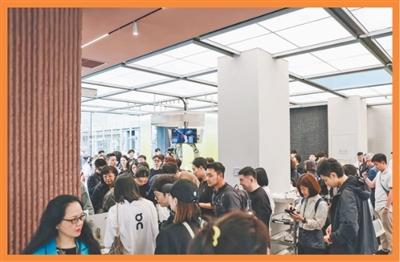
Group 1: Economic Development Trends - The year 2025 is significant for China's modernization process, with a focus on high-quality development and achieving major economic and social goals [10] - Key economic sectors highlighted include the "first launch economy," "ice and snow economy," "silver economy," platform economy, county economy, marine economy, and bay area economy, all of which are experiencing growth [11][12] Group 2: First Launch Economy - The first launch economy is gaining traction, with cities like Beijing, Shanghai, and Chengdu enhancing policy support to attract flagship stores and brands, becoming a vital driver for domestic demand [11] - Chengdu's first flagship store of the Swiss sports brand On opened in April, attracting significant customer traffic and showcasing a unique shopping experience [15][16] Group 3: Ice and Snow Economy - The construction of the Harbin Ice and Snow World is underway, with nearly 10,000 workers involved, and the park is set to cover 1.2 million square meters [17] - The ice and snow economy is evolving from a seasonal to a year-round industry, with projections indicating the industry scale will exceed 1 trillion yuan by 2025 [11][18] Group 4: Silver Economy - The silver economy is expanding, with tailored services for the elderly, such as the "Starry·Lanmei" themed tourist train, which caters to the needs of senior travelers [19] - The elderly demographic is becoming a significant force in the tourism market, with over 80% of travelers on certain routes being aged 60 and above [19][20] Group 5: Platform Economy - The platform economy is shifting from a "what to produce" model to a "what is needed" approach, enhancing consumer experience through direct subsidies and one-stop services [21][22] - E-commerce platforms are driving domestic demand growth and facilitating foreign trade transformation, with significant sales increases during promotional events [23] Group 6: County Economy - The county economy is thriving, with initiatives like "Hundred Villages, Thousand Lodgings" promoting rural tourism and local industries, leading to increased income for residents [24][25] - The county's tourism revenue reached 11.265 billion yuan, with over 15.45 million visitors recorded in the first ten months of the year [25] Group 7: Marine Economy - The marine economy is advancing with the delivery of the "Guoxin 1号2—2," a large smart fishing vessel, which will conduct year-round farming trials [26][27] - The focus on green and low-carbon initiatives is reshaping the shipping industry, with a significant portion of new vessels being designed for zero-carbon emissions [27] Group 8: Bay Area Economy - The Guangdong-Hong Kong-Macao Greater Bay Area is fostering innovation and collaboration, with companies leveraging regional strengths for technological advancements [29][30] - The integration of research and industry within the bay area is enhancing the commercialization of scientific achievements, creating a robust ecosystem for startups [30]

A股年内累计回购超1400亿元
Bei Jing Shang Bao· 2025-12-09 15:44
Core Viewpoint - The recent share buyback by Midea Group, amounting to 10 billion yuan, marks a significant event in the A-share market, reflecting a broader trend of companies engaging in buybacks to enhance shareholder value and market confidence [1][2][3]. Group 1: Share Buyback Details - Midea Group completed a share buyback of 1.35 million shares, representing 1.76% of its total share capital, with a total expenditure of approximately 10 billion yuan [2]. - This buyback is the largest single buyback in Midea's history and the second-largest in A-share history, following Gree Electric's buyback of 15 billion yuan in 2021 [2]. - As of now, 1,465 A-share companies have implemented buyback plans, with a cumulative buyback amount exceeding 140 billion yuan [3]. Group 2: Market Response and Performance - Among the 1,465 companies that executed buybacks, 1,172 stocks have seen price increases, accounting for 80% of the total [4]. - The stock with the highest increase is Shenghong Technology, which has risen by 655.64% year-to-date [4]. - The buyback actions are perceived as a signal of management's confidence in the company's value, which can attract investor interest and support stock price increases [5]. Group 3: Financial Performance of Buyback Companies - Over 81% of the companies that conducted buybacks reported profits in the first three quarters of the year, with Kweichow Moutai leading with a profit of 64.63 billion yuan [6]. - Other notable companies with significant profits include Ningde Times and China State Construction, with profits of approximately 49.03 billion yuan and 38.18 billion yuan, respectively [6]. - The pharmaceutical and electronics sectors have the highest number of companies engaging in buybacks, with 158 and 157 companies, respectively [6].

格力电器:未来将持续关注人形机器人产业发展
Zheng Quan Ri Bao Wang· 2025-12-09 14:16
证券日报网讯12月9日,格力电器(000651)在互动平台回答投资者提问时表示,公司深耕工业机器人 核心零部件与整机关键技术研究,在伺服电机、伺服驱动器、运动控制器、减速机及机器人动力学等方 向取得突破,成功开发六轴机器人、SCARA机器人、焊接机器人、协作机器人等全系列产品,负载范 围覆盖3kg至600kg,形成完整的产品谱系。目前公司已开发可用在人形机器人上的关节模组等核心零部 件,未来将持续关注人形机器人产业发展。 ...

格力电器:公司在越南市场采取本地区域代理营销模式
Zheng Quan Ri Bao Wang· 2025-12-09 14:12
证券日报网讯12月9日,格力电器(000651)在互动平台回答投资者提问时表示,公司在越南市场采取 本地区域代理营销模式,与当地经销伙伴的合作关系已持续十余年。 ...
格力电器:年轻消费者普遍青睐简约的主流浅色系设计
Zheng Quan Ri Bao Wang· 2025-12-09 14:10
Core Insights - Gree Electric Appliances (000651) has identified a trend among young consumers favoring minimalist designs in light color schemes, indicating a shift in consumer preferences towards aesthetic and material quality [1] Company Insights - The company conducted research revealing that young consumers prefer products made from materials such as glass and acrylic, which are perceived as having a higher quality [1]
【行业深度】洞察2025:中国全屋智能行业竞争格局及市场份额(附市场竞争派系、区域分布、出海情况、研发能力对比)
Qian Zhan Wang· 2025-12-09 13:45
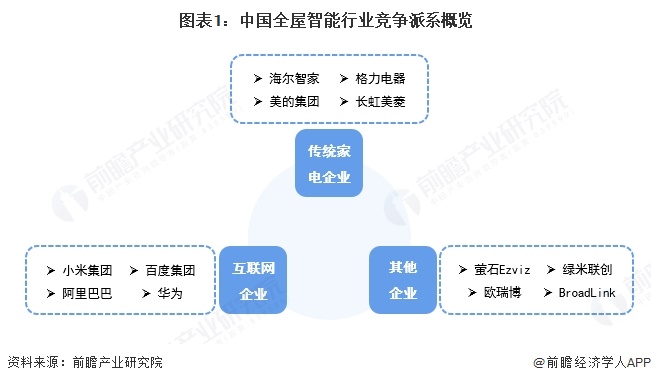
Core Insights - The article discusses the competitive landscape of China's whole-home smart industry, highlighting the key players and their strengths in the market. Group 1: Industry Overview - China's whole-home smart industry can be categorized into three competitive factions: traditional home appliance companies, internet companies, and other specialized firms [2][4]. - Major traditional home appliance companies include Haier Smart Home, Midea Group, and Gree Electric, which have strong supply chains and brand advantages [2]. - Internet companies like Xiaomi, Baidu, Alibaba, and Huawei possess significant technological and financial strengths [2]. Group 2: Competitive Landscape - The competitive landscape is diverse and layered, with Huawei focusing on high-end solutions, Xiaomi targeting the mass market, and traditional brands like Haier and Midea leveraging their appliance roots for comprehensive solutions [5]. - Companies such as UIOT and Aqara specialize in technical niches, while Tuya Smart empowers the industry with an open cloud platform [5]. Group 3: Company Profiles - **Huawei Harmony Smart Home**: Offers a wide range of smart ecosystem products with strong compatibility and stability, leveraging its communication technology [8]. - **Xiaomi Mi Home**: Focuses on a comprehensive ecosystem that includes mobile and smart home devices, known for high cost-performance [8]. - **Haier Smart Home**: Provides integrated smart home solutions with a strong global supply chain and localized service capabilities [8]. - **Gree Electric**: Primarily focuses on smart home products related to air conditioning, with a strong brand influence and product reliability [10]. - **Stone Technology**: Specializes in robotic vacuum cleaners with advanced technology and high user satisfaction [10]. Group 4: Market Dynamics - The industry shows a significant presence of registered companies in Anhui Province, with notable activity in Guangdong, Jiangsu, and Shandong [11]. - Companies like Stone Technology and Haier Smart Home have a high proportion of overseas business, indicating the importance of international markets [13]. - R&D investment varies significantly among companies, with Xiaomi leading with over 15 billion yuan in recent years [16]. Group 5: Competitive Threats and Customer Dynamics - The threat of new entrants is low due to high capital requirements and established ecosystems [18]. - The bargaining power of downstream customers is strong, with consumers being price-sensitive and B2B clients seeking cost reductions [18]. - The bargaining power of suppliers is moderately strong, particularly for core components like high-end chips and sensors [18]. Group 6: Overall Competition Status - The competition is intense and characterized by differentiation, with major players like Huawei and Xiaomi holding significant market shares [19]. - The focus of competition is on technological innovation, ecosystem compatibility, cost-effectiveness, and channel expansion [19].