科大讯飞

Search documents
科技独角兽竞相“入股”广东
21世纪经济报道· 2025-12-29 03:58
记者|杨期鑫 编辑丨蒋韵 独角兽企业通常是指成立十年以内,估值超过10亿美元,拥有独创性、颠覆性技术或难以复 制商业模式的公司。如今,全球独角兽数量已经成为衡量一个国家或地区创新生态和经济发 展活力的重要指标。 近日,独角兽工程院联合中国人民大学、清华大学等机构发布了《2025全球独角兽企业500强 报告》。报告显示,2025全球独角兽企业500强总估值达39.14万亿元,同比增长30.71%,规 模远超全球第三大经济体德国。其中,中国共有150家独角兽上榜,总估值12.83万亿元,位 居全球第二。 研究这些独角兽,大家一定会发现一些有意思的现象:独角兽集聚效应明显。在全球独角兽 企业数量排名前20的城市中,中国占据5席,依次为北京(39家)、上海(28家)、深圳(16 家)、杭州(16家)以及今年新晋上榜的广州(5家)。 广东凭借21家全球独角兽,表现亮眼。 值得注意的是,这一格局仍在动态演进。今年以来, 从科大讯飞、抖音集团,到宇树科技、智元机器人,一批科技独角兽与头部企业相继南下, 在深圳、广州、珠海等地加速布局。 当前,广东的创新生态展现出哪些独特吸引力,能够持续吸引头部科技企业纷纷南下布局? 这一轮 ...


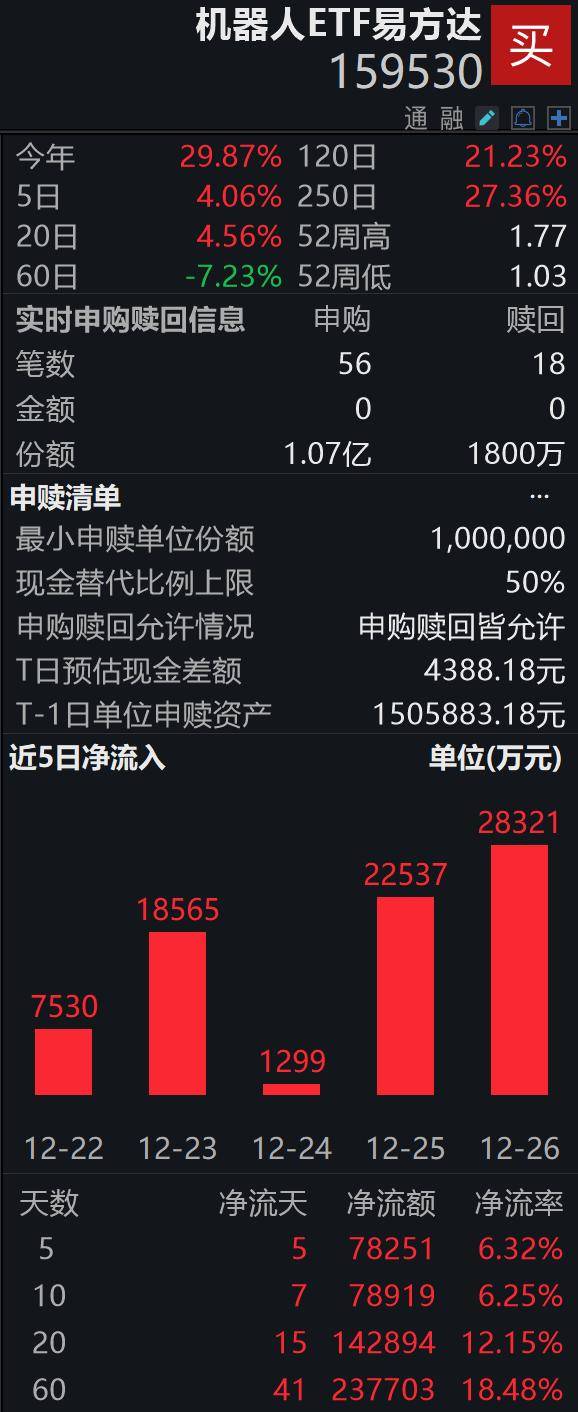
1.3亿新单落地,优必选年内订单近14亿领跑全球;机器人ETF(159530)连续5日“吸金”,盘中获净申购8900万份
Sou Hu Cai Jing· 2025-12-29 03:46
截至10:02,国证机器人产业指数(980022)飙涨0.7%,成分股中,昊志机电涨2.65%、步科股份涨 2.09%、领益智造涨1.88%,奥普光电跌2.61%、航天智装跌1.93%、奥普特跌1.92%。 资金方面,机器人ETF易方达(159530)跟踪国证机器人产业指数,资金连续5日净流入,合计"吸 金"超7.8亿,近20日"吸金"超14亿;最新基金规模达138.63亿,为跟踪国证机器人指数的ETF中,唯一 规模破百亿元的产品。截至发稿,机器人ETF易方达(159530)盘中获净申购8900万份。 国海证券认为,电动化与智能化浪潮下,国内外人形机器人产品问世并不断迭代,有望开辟比汽车更广 阔的市场空间,人形机器人产业链将迎来"从0至1"的重要投资机遇。机器人从本体到零部件商持续开展 产品迭代,同时快速推进业务合作和场景应用,积极探索人形机器人规模化量产和商业落地,人形机器 人产业或迎来"ChatGPT时刻"。 国证机器人产业指数特点鲜明:1.指数人形机器人含量居首:指数中人形机器人相关公司权重显著高于 同类指数;2.指数聚焦高成长龙头:前十大权重股占比约40%,涵盖汇川技术、科大讯飞、石头科技等 细分领域 ...

科技独角兽竞相“入股”广东
2 1 Shi Ji Jing Ji Bao Dao· 2025-12-29 03:45
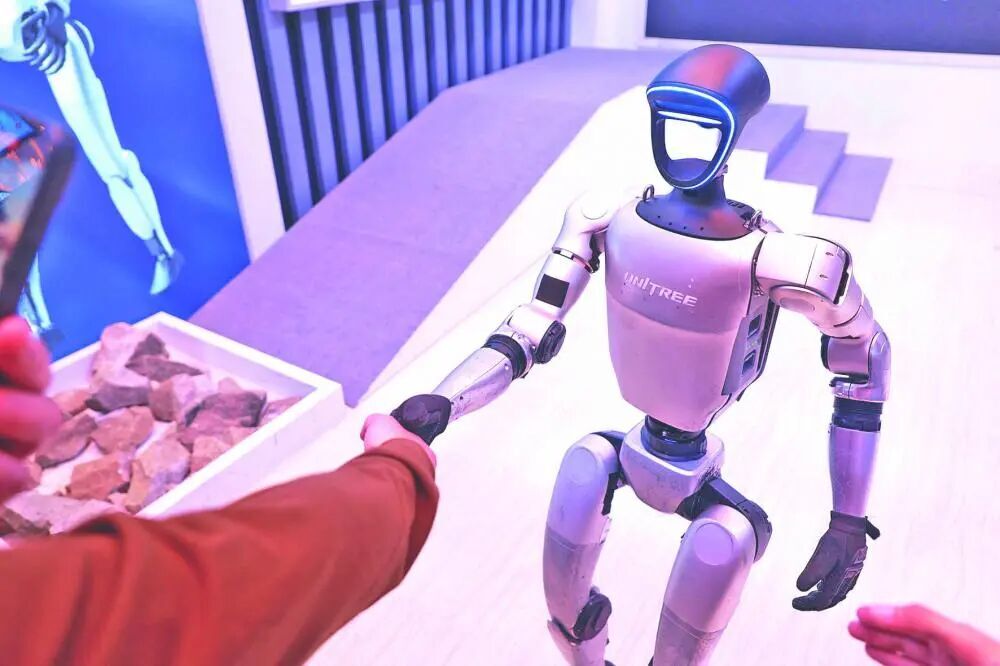
记者|杨期鑫 编辑丨蒋韵 宇树机器人在深圳设立子公司。本报记者 梁远浩 摄 AI与机器人企业成"南下主力" 独角兽企业通常是指成立十年以内,估值超过10亿美元,拥有独创性、颠覆性技术或难以复制商业模式的公司。如今,全球独角兽数量已经成 为衡量一个国家或地区创新生态和经济发展活力的重要指标。 近日,独角兽工程院联合中国人民大学、清华大学等机构发布了《2025全球独角兽企业500强报告》。报告显示,2025全球独角兽企业500强总 估值达39.14万亿元,同比增长30.71%,规模远超全球第三大经济体德国。其中,中国共有150家独角兽上榜,总估值12.83万亿元,位居全球 第二。 研究这些独角兽,大家一定会发现一些有意思的现象:独角兽集聚效应明显。在全球独角兽企业数量排名前20的城市中,中国占据5席,依次 为北京(39家)、上海(28家)、深圳(16家)、杭州(16家)以及今年新晋上榜的广州(5家)。 广东凭借21家全球独角兽,表现亮眼。值得注意的是,这一格局仍在动态演进。今年以来,从科大讯飞、抖音集团,到宇树科技、智元机器 人,一批科技独角兽与头部企业相继南下,在深圳、广州、珠海等地加速布局。 当前,广东的创新 ...
我省网络空间治理与正能量建设成效显著
Xin Lang Cai Jing· 2025-12-28 21:31
Group 1 - The province has achieved significant results in cyberspace governance and positive energy construction, with a total internet user base of 4.25 million and an internet penetration rate of 72.6% [1] - The digital economy in the province has exceeded 114 billion yuan, indicating solid progress in high-quality development through information technology [1] - The province has actively cultivated positive online energy, with a total of 1.18 million related articles published and a cumulative reading volume of 5 billion times, fostering a consensus among netizens to love and build Qinghai [1] Group 2 - The province has implemented strict measures against online illegal activities, clearing 13,500 pieces of illegal information and handling over 2,410 cases of internet-related crimes in the past two years [1] - A classification management system for "self-media" accounts has been established, with over 2,400 accounts with more than 5,000 followers placed on a "red, gray, and black" list [1] - The province has created a favorable atmosphere for public participation in internet governance through the establishment of a network media association and initiatives like "Internet + Law" promotion [2] Group 3 - The province has a total of 26,600 5G base stations, achieving full coverage in towns and actively integrating into the national "East Data West Computing" layout [2] - Major companies such as Baidu, 360, and iFLYTEK have been attracted to establish operations in the province [2]
NC重磅,浙江大学机械工程学院Grasp Lab赋予软体夹爪“类人感知”:大变形下的全覆盖多模态触觉突破
机器人大讲堂· 2025-12-28 12:30
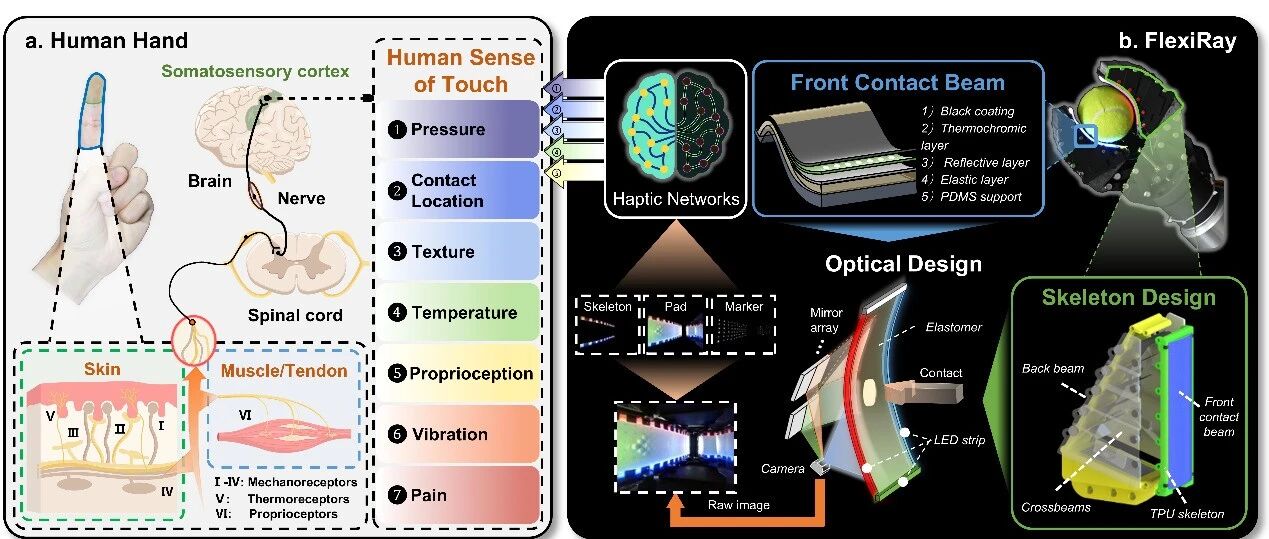
FlexiRay 与人手感知模态对比及应用场景示意图 在软体机器人交互领域,长期存在着一对核心矛盾:结构柔顺性与感知精确性难以兼顾。传统视触觉传感器( VTS )虽能提供高分辨率反馈,但往往依赖刚性结 构以维持光路稳定,牺牲了软体抓手本质的柔顺适应能力;而现有的柔性传感器设计,在大变形下又面临视野遮挡和感知盲区的难题。 浙江大学 Grasp Lab 研发的视触觉一体化软体夹爪 FlexiRay ,以"光学系统 - 柔性结构 -AI 感知"的深度融合为核心路径,创新性地结合了仿生 Fin Ray 效应与 多反射镜光学阵列,成功复现了人手的五大核心触觉模态。 FlexiRay 不仅保留了软体抓手的大变形自适应能力,更在剧烈形变下实现了超过 87% 的有效感知覆 盖率,为软体机器人的智能化交互开辟了"全域感知、柔顺操作"的新赛道。 FlexiRay 柔顺抓取的纹理效果及感知覆盖示意图 ▍ 结构与光学革新:化 "遮挡"为"视窗",重构柔性感知视野 机械结构与光学系统的协同设计是 FlexiRay 的硬件基石。 Grasp Lab 团队突破了"限制形变以保视觉"的传统思路,转而利用形变,通过系统级优化解决了软体抓 手大 ...
机器人治疗自闭症,竟胜在“眼神与微笑”!两大临床试验132名孩子给出答案
机器人大讲堂· 2025-12-28 06:58
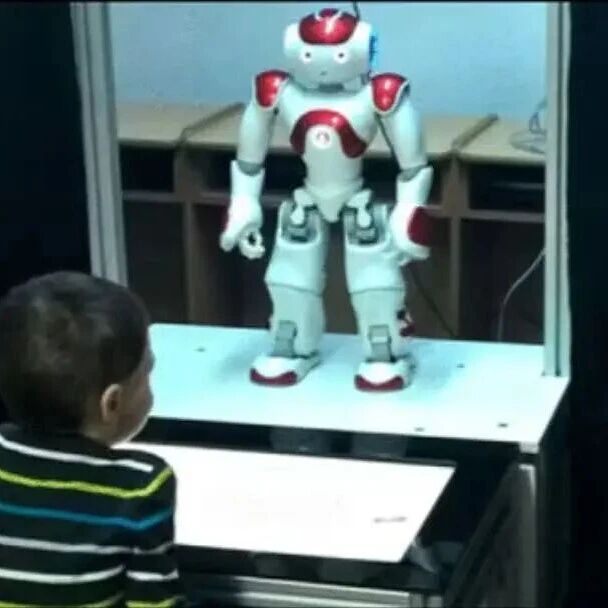
Core Insights - The article discusses a significant study published in "Science Robotics" that provides robust clinical evidence for the use of robotic therapy in treating children with Autism Spectrum Disorder (ASD) [1][4]. Group 1: Clinical Challenges - Traditional therapies for ASD face challenges due to children's difficulties in social interaction and communication, leading to a decline in interest and attention during repetitive training sessions [5]. - Robots are seen as potential ideal therapists due to their predictable behavior and ability to maintain children's interest, but past research has lacked sufficient clinical evidence [5] [6]. Group 2: Research Design - The study employed a rigorous methodology, conducting both efficacy and effectiveness trials to assess the therapy's performance under ideal and real-world conditions [6][7]. - The efficacy trial involved 69 children aged 4.4 years on average, comparing robot-assisted therapy (RAT) with standard human therapy (SHT) across three core skills: imitation, joint attention, and turn-taking [8][10]. Group 3: Key Findings - Both trials confirmed that robot-assisted therapy achieved statistically equivalent results to traditional therapy in improving core social skills [12]. - Children showed significantly higher engagement with robots, evidenced by increased eye contact (8.01 vs. 5.54) and smiles (7.72 vs. 3.80) during tasks, addressing the issue of declining interest in traditional therapies [16]. - The simplified version of the robot therapy platform was effective even in real educational settings, demonstrating its potential as a supplementary tool [18]. Group 4: Broader Implications - The study establishes a standardized protocol for robot-assisted interventions, moving beyond fragmented explorations in the field [20]. - The high engagement levels provided by robots offer new solutions to motivation issues in traditional therapies, transforming repetitive exercises into interactive games [21]. - Future research aims to enhance robot capabilities with advanced sensors and AI for more personalized interactions, making the technology accessible to a broader audience [21].
2026AI原生基础设施实践指南
Zhong Guo Yi Dong· 2025-12-28 06:16
Investment Rating - The report does not explicitly provide an investment rating for the industry. Core Insights - The report emphasizes the rise of AI-native infrastructure as a critical foundation for the digital transformation of industries, driven by the integration of AI technologies across various sectors. This infrastructure is essential for supporting AI-native applications and is seen as a key driver of economic and social transformation in China [8][9]. Summary by Sections 1. Background of AI-Native Infrastructure - The report outlines the increasing demand for AI-native infrastructure due to the ongoing digital transformation and the government's supportive policies. The AI industry in China is projected to exceed 900 billion yuan by 2024, with a year-on-year growth of 24% [23][24]. - The report highlights the shift in AI's role from a mere efficiency tool to a foundational infrastructure akin to electricity, reshaping industry dynamics [19][20]. 2. Development Path and Architecture of AI-Native Infrastructure - The concept of AI-native infrastructure has evolved through three stages: the emergence phase (1950-2009), the exploration phase (2010-2022), and the development phase (2023-present) [31][34]. - AI-native infrastructure is defined as a system designed from the outset to support AI applications, integrating hardware, software, and data to provide comprehensive lifecycle support for AI applications [35][36]. 3. Construction Ideas for AI-Native Infrastructure - The report details various components of AI-native infrastructure, including: - **Intelligent Computing Resources**: A combination of GPU, NPU, and traditional computing resources to support AI model training and inference [45]. - **Unified Scheduling Engine**: A system for dynamic allocation of computing, network, and storage resources tailored to different application scenarios [46]. - **Sandbox**: A secure environment for AI agents to interact with external tools while ensuring system stability [51]. - **Model Development and Production**: A comprehensive toolchain for model tuning, deployment, evaluation, and management [58]. - **Data Supply**: A robust data infrastructure that encompasses data collection, storage, processing, and quality assessment [60][61]. 4. Industry Practice Cases - The report includes various case studies across different sectors, such as telecommunications, government, manufacturing, finance, energy, transportation, and healthcare, showcasing the practical applications of AI-native infrastructure [12][12][12]. 5. Conclusion and Outlook - The report concludes that AI-native infrastructure is poised to become a cornerstone of future economic development, enabling new business models and operational efficiencies across industries [36][37].

“小巨人”富士智能冲刺北交所,索尼、科大讯飞为主要客户
Xin Jing Bao· 2025-12-28 06:03
Core Viewpoint - On December 26, 2023, five companies, including Zhuhai Fuji Intelligent Co., Ltd. ("Fuji Intelligent"), had their IPO applications accepted by the Beijing Stock Exchange, marking the highest single-day IPO acceptance in December [1]. Group 1: Company Overview - Fuji Intelligent, established in 2004, focuses on the R&D, production, and sales of precision structural components for consumer electronics and automotive applications, recognized as a national-level specialized and innovative "little giant" enterprise [1]. - The company's products are primarily used in smart TVs, digital cameras, and new energy vehicle batteries, with a fully autonomous production system from material development to product manufacturing [1]. Group 2: Financial Performance - Fuji Intelligent's revenue for the years 2022 to 2024 is projected to be 569 million yuan, 862 million yuan, and 975 million yuan, respectively, with 542 million yuan achieved in the first half of 2025 [1]. - The net profit attributable to the parent company for the same period is expected to be 29.72 million yuan, 30.93 million yuan, and 81.84 million yuan, with 47.47 million yuan in the first half of 2025 [1]. - R&D investment as a percentage of revenue for the respective years is 4.32%, 3.23%, 3.55%, and 2.93% [2]. Group 3: Client Base and Market Dynamics - Major clients in the consumer electronics sector include Sony, LGE, Hisense, TCL, Skyworth, Changhong, iFlytek, and Fujifilm, while in the automotive precision components sector, products are supplied to companies like CATL and EVE Energy through clients such as Zhenyu Technology and Zhejiang Zhongze [2]. - The concentration of sales from the top five clients decreased from 58.11% in 2022 to 41.81% in 2024, indicating improved customer diversification [2]. Group 4: New Business and Challenges - In June 2023, Fuji Intelligent launched a new business in battery cell structural components, generating revenues of 70.63 million yuan, 149.62 million yuan, and 129.14 million yuan for the periods of July to December 2023, the fiscal year 2024, and the first half of 2025, respectively [2]. - However, the overall sales growth of the domestic new energy vehicle industry has begun to slow, which may adversely affect the production and operation of this new business [2]. Group 5: IPO Details - Fuji Intelligent is pursuing an IPO under the first set of listing standards on the Beijing Stock Exchange, with expected market capitalization of no less than 200 million yuan and net profit requirements met for the last two years [3]. - The company aims to raise approximately 308 million yuan, which will be allocated to projects including precision structural components for battery cells and vehicle-mounted cameras, as well as R&D innovation center construction and working capital [3]. - The sponsor for this IPO is Changjiang Securities Co., Ltd., and the auditing firm is Zhongxinghua Accounting Firm [3].

AI+消费品:日常生活的智能重混
艺恩· 2025-12-28 06:01
Investment Rating - The report does not explicitly state an investment rating for the "AI + Consumer Products" industry. Core Insights - The integration of AI into consumer products is driven by technological advancements and evolving market demands, creating new value and experiences for consumers [14]. - The market for "AI + Consumer Products" is expected to grow significantly, with projections indicating that by 2027, the penetration rates for AI smartphones and AI personal computers will reach 40% and 68% respectively [12][14]. - Social media discussions around "AI + Consumer Products" have surged, with a 117% year-on-year increase in social media volume, indicating a deepening market education phase [22]. Summary by Sections Part 01: Development Progress - The historical evolution of the consumer goods industry has laid the groundwork for AI applications, with the rise of generative AI marking a significant milestone in consumer-facing AI hardware and applications [12][14]. - The report outlines the transition from "Internet +" to "AI +" phases, highlighting the rapid growth of AI-native applications and consumer hardware [12]. Part 02: Social Media Discussion Overview - The demographic profile of social media discussions indicates that males aged 25-34 in high-tier cities are the primary audience for "AI + Consumer Products," with significant interest also from individuals over 44 [23]. - Major brands like Xiaomi and DJI have effectively utilized social media to promote their products, leading to high engagement and interaction rates [25]. Part 03: Usage Scenario Content Analysis - The report identifies four core scenarios for "AI + Consumer Products": Learning, Home/Personal Care, Entertainment/Creation, and Travel/Wearable, each with distinct product categories and technologies [18]. - In the Learning scenario, products like AI learning machines and translation pens dominate, while in the Home/Personal Care scenario, smart cleaning and health products are gaining traction [48][51]. - The Entertainment/Creation scenario features products like AI cameras and smart musical instruments, which are becoming increasingly popular among consumers [38][40]. - The Travel/Wearable scenario highlights the emergence of smart vehicles and AR glasses, showcasing significant market potential [54][57].
国足缺席世界杯,但中国大模型们集体参赛
量子位· 2025-12-28 03:06
Core Viewpoint - The article discusses the upcoming AlphaGoal Prediction Cup, an AI competition organized by Lenovo, where Chinese large models will compete in predicting football match outcomes, marking a significant shift from traditional AI applications to real-world engagement [4][25][34]. Group 1: Event Overview - The AlphaGoal Prediction Cup will feature eight major Chinese AI models competing against each other and against AI agents created by fans and developers [6][10]. - This event is described as a historic first for public participation in AI predictions, potentially transforming the experience of football from mere observation to active involvement [8][27]. Group 2: Participating Models - The eight participating models include notable players such as Baidu's Wenxin Yiyan, Tencent's Hunyuan, and SenseTime, each with unique strengths in data processing and prediction capabilities [14][15]. - The competition aims to challenge these models to predict match outcomes using a variety of data points, including player statistics, historical match data, and even social media sentiment [22][17]. Group 3: Significance of the Event - The AlphaGoal Prediction Cup is positioned as a pivotal moment for AI, moving beyond traditional testing environments to engage with the complexities of the real world, akin to previous landmark human-AI competitions [29][34]. - The event is expected to demonstrate AI's ability to understand causality and not just correlation, marking a step towards general artificial intelligence [35][34]. Group 4: Lenovo's Role - Lenovo, as the organizer and official technology partner of FIFA, is facilitating this competition to connect AI models with real-world applications, positioning itself as an ecosystem organizer rather than just a hardware provider [38][39]. - The Lenovo Tianxi AI platform, with over 280 million monthly active users, serves as a crucial interface for these AI models to reach and engage with a broad audience [40][41].