国电南瑞

Search documents
锤炼过硬作风 展现担当作为(锲而不舍落实中央八项规定精神)
Ren Min Ri Bao· 2025-07-25 22:02
Group 1 - The article emphasizes the importance of theoretical learning and internalizing the spirit of the Central Eight Regulations among young cadres to enhance their political, ideological, and action consciousness [2][3] - Various regions and departments are implementing targeted educational measures, such as special courses and warning education films, to instill good work ethics in young cadres [2][3] - The National Energy Administration has developed learning materials to help young cadres learn from cases and maintain strict discipline [3] Group 2 - Regions are actively identifying risk points in key positions and conducting thorough investigations to address issues among young cadres [4][5] - The National Medical Insurance Administration has identified 61 risk points and developed over 100 preventive measures to enhance the capabilities of young cadres [4] - Jiangsu Province is reviewing problem lists of young cadres to ensure timely corrections and has encouraged over 1,800 young cadres to engage in community service [5] Group 3 - The article highlights the need for young cadres to improve their work styles and convert educational outcomes into actions that promote high-quality development and serve the public [6][7] - Shanghai has organized training for over 300 newly promoted and young cadres, focusing on transforming work style improvements into proactive actions [7] - Young cadres from China Life Insurance Group have conducted over 1,400 research topics to address pressing public issues, demonstrating their commitment to practical solutions [7]
美国电力系统都在用中文?中国行业专家:中国标准就是国际标准
Sou Hu Cai Jing· 2025-07-25 08:03
Core Viewpoint - The article highlights China's significant advancements in ultra-high voltage (UHV) transmission technology, which has positioned the country as a global leader in the power sector, surpassing Western nations in both technology and influence [2][29]. Group 1: Historical Context - China's electricity industry began with reliance on imported American equipment, with the first electric light in Shanghai in 1882 [5]. - Initially, China's power generation ranked 21st globally, but the demand surged post-economic reforms, revealing structural challenges in energy distribution [5][10]. Group 2: Technological Development - The geographical and demographic disparities in China necessitated efficient power transmission solutions, leading to the development of UHV technology [7][10]. - UHV transmission lines can increase capacity by approximately five times and significantly reduce transmission losses over long distances, with effective ranges exceeding 2000 kilometers [8][10]. Group 3: Implementation and Achievements - The first UHV AC demonstration project was operational in 2009, marking a significant technological breakthrough [14]. - By 2023, China had constructed 40,000 kilometers of UHV lines, capable of transmitting over 2 trillion kilowatt-hours annually, equivalent to reducing coal transport by 600 million tons [16][18]. Group 4: Global Influence - China's UHV technology has become the world's largest and most advanced network, with comprehensive mastery over design, manufacturing, construction, and operation [18][19]. - The successful application of this technology has not only addressed domestic energy distribution challenges but has also gained international recognition, with projects in Brazil and the Philippines utilizing Chinese technology [27][29]. Group 5: Challenges and Future Prospects - Despite the success, the global promotion of UHV technology faces challenges, particularly in developed countries like the United States, due to complex geographical and regulatory environments [33][35]. - China's advancements in UHV technology provide a viable solution to global energy, environmental, and climate issues, contributing to a sustainable future [37][40].



中国电力设备:超 1 万亿元的大型水电项目能否显著提振中国电网资本支出并加剧高压电力设备供应紧张?-China Power Equipment
2025-07-25 07:15
Summary of the Conference Call Industry Overview - The conference call discusses the **China Power Equipment** industry, particularly focusing on the implications of a new **Rmb 1.2 trillion mega-hydropower project** in Tibet, which is expected to significantly impact the power grid capital expenditure (capex) in China [2][5]. Key Points and Arguments 1. **Mega-Hydropower Project Announcement**: - The Yarlung Tsangpo River hydropower project commenced construction on **July 19, 2025**, with an installed capacity of approximately **60GW** and a total investment of **Rmb 1.2 trillion** [5]. - This announcement led to a rally in related stocks, with increases ranging from **2% to 65%** on July 21, 2025 [5][9]. 2. **Impact on Grid Capex**: - The project is expected to drive significant growth in grid capex, estimated to reach **Rmb 150-200 billion** due to the need for **3-5 ultra-high voltage (UHV) DC lines** for long-distance power transmission [2][6]. - The capex will also include investments in high-voltage equipment such as switchgear and transformers, as well as grid automation software and equipment [6][7]. 3. **Long-Term Outlook**: - The base case for China's grid capex growth is projected at **~5% per annum** during the 15th Five-Year Plan, which is a moderation compared to the **~7% CAGR** during the previous plan [7]. - However, the mega project indicates a potential upside to this growth rate if the State Grid increases investments in distribution and UHV infrastructure [7]. 4. **Beneficiary Companies**: - Companies likely to benefit from this project include: - **Xuji Electric** (UHV capex) - **Sieyuan Electric** (HV transmission equipment) - **Huaming Equipment** (HV transformers) - **Nari Technology** (UHV) [2][6]. - Top picks are **Huaming Equipment** and **Sieyuan Electric** due to their exposure to both domestic and overseas markets [2]. 5. **Supply Dynamics**: - There is a belief that the hydropower project will not lead to immediate tighter supply for high-voltage equipment in Asia, as the construction will take years, and Chinese manufacturers can efficiently ramp up capacity [2][8]. - The report suggests that while global supply for high-voltage transformers and switchgear may remain tight, the project itself will not be an immediate driver of demand [2][8]. Additional Important Information - The report emphasizes the importance of the high voltage transmission network in Northern and Western China, highlighting the need for more UHV lines to transmit hydropower from Tibet to consumption areas [7]. - The analysis includes valuation comparisons of relevant companies, providing insights into market capitalization, liquidity, and expected financial metrics [12]. This summary encapsulates the critical insights from the conference call regarding the implications of the mega-hydropower project on the China Power Equipment industry and the expected growth in grid capex.
抵制“内卷式”竞争,加强重组整合,国资央企迎最新部署!央企创新驱动ETF(515900)规模创近3月新高
Xin Lang Cai Jing· 2025-07-25 05:56
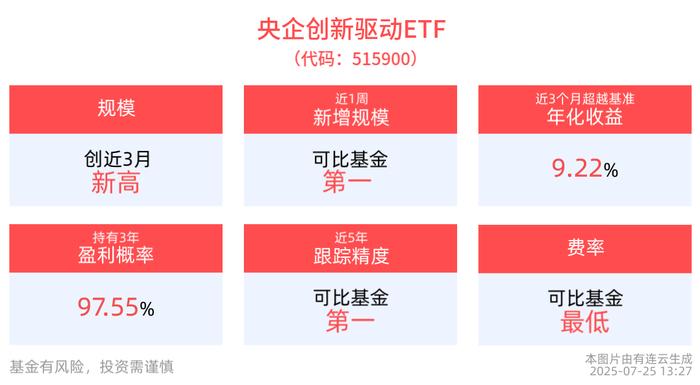
Core Viewpoint - The recent developments in the Central State-Owned Enterprises (SOEs) innovation-driven index and ETF indicate a mixed performance in the market, with a focus on high-quality reforms and price stabilization in various industries [3][4][5]. Group 1: Market Performance - As of July 25, 2025, the Central SOE Innovation-Driven Index (000861) decreased by 0.92%, with mixed performances among constituent stocks [3]. - Notable gainers included Zhongtung High-tech (000657) up by 10.00%, and Yangnong Chemical (600486) up by 8.94%, while major decliners included Iron Construction Heavy Industry (688425) down by 13.21% [3]. - The Central SOE Innovation-Driven ETF (515900) fell by 1.02%, with a latest price of 1.55 yuan, but showed a 5.32% increase over the past week [3]. Group 2: Policy and Industry Trends - The State-owned Assets Supervision and Administration Commission emphasized the need for high-quality reforms in SOEs, focusing on innovation, governance, and efficient capital allocation [3]. - The recent draft of the Price Law highlights anti-dumping measures and aims to stabilize market prices, particularly in the solar, lithium battery, wind power, and energy storage sectors [4]. - Industry analysts predict a price recovery trend in these sectors, with expectations for solar prices to exceed cost lines and wind turbine prices to rise, enhancing profitability [4]. Group 3: ETF Performance and Metrics - The Central SOE Innovation-Driven ETF reached a new high in scale at 35.62 billion yuan, ranking in the top quarter among comparable funds [4]. - The ETF has shown a net value increase of 12.71% over the past two years, with a maximum monthly return of 15.05% since inception [5]. - The ETF's management fee is 0.15%, and its tracking error over the past five years is 0.038%, indicating high tracking precision compared to peers [7]. Group 4: Top Holdings - As of June 30, 2025, the top ten weighted stocks in the Central SOE Innovation-Driven Index accounted for 34.87% of the index, including companies like Hikvision (002415) and China Southern Power Grid (600406) [7].
2025Q3产业债策略:挖掘“”反内卷”下的行业配置机会
Orient Securities· 2025-07-24 15:42
1. Report Industry Investment Rating No relevant content provided. 2. Core Viewpoints of the Report - The market's focus is shifting towards medium - quality entities within industries such as steel, coal, real estate, local state - owned construction enterprises, and non - bank finance. In Q3, it is advisable to explore large - scale medium - quality entities in each industry. For institutions with high risk tolerance, there are opportunities to compress the liquidity premium of some high - quality private enterprises. For industries with low overall risks like public utilities, regular allocation is sufficient [5]. - For ultra - long credit bonds, it is time to gradually take profits, shorten the duration for defense, and switch to more liquid varieties, waiting for the next opportunity to attack [6]. - In Q3, different industries present various investment opportunities and risks. For example, the construction industry may see marginal improvement in prosperity but still face pressure; the steel industry has strong expectations of marginal improvement in fundamentals; the coal industry needs to select high - quality entities for exploration; the real estate industry has high - valued state - owned enterprises with certain investment potential; the non - ferrous metal industry has a differentiated prosperity; and the cement industry has limited opportunities [7]. 3. Summary According to Related Catalogs 3.1 Q3 Ultra - long Credit Bond Strategy: Gradually Take Profits and Wait for Subsequent Attack Opportunities 3.1.1 Primary Issuance - In Q2, the supply of ultra - long credit bonds increased month - on - month, with large industrial central state - owned enterprises remaining the main financing force. The total issuance in H1 was 539.8 billion yuan, and Q2 increased by 63% month - on - month, accounting for 9.27% of all credit bonds, but still lower than Q3 last year. The issuers were mainly industrial, accounting for about 72%, and large central state - owned enterprises such as State Grid had large issuance volumes [16]. - Since early July, the bond market has adjusted, and the supply of ultra - long credit bonds may be frustrated in the short term, and its subsequent recovery remains to be observed [18]. 3.1.2 Yield Analysis - To obtain significant excess returns from extending the credit duration, either interest rate decline or spread compression must occur, and the amplitude should be large enough [31]. - The trigger for the sharp decline of ultra - long credit bonds in recent years is mostly the reversal of institutional behavior. Currently, although it is predicted that there will be a double - bull market for stocks and bonds in the second half of the year, the short - term risk cannot be ignored due to the impact of the "stock - bond seesaw" on market sentiment [34]. - In terms of capital gains, the odds of ultra - long credit bonds are decreasing; the one - two - level arbitrage space is difficult to find; and the coupon protection ability is weak, making it difficult to increase the winning rate. Therefore, it is recommended to gradually take profits and switch to more liquid varieties such as 5Y bank secondary perpetual bonds [37]. 3.1.3 Strategy - For most institutions, it is time to gradually take profits from ultra - long credit bonds. The reasons include the difficulty in continuing the excess returns in the future, the fragility of the market's optimistic sentiment, the lack of obvious coupon advantages and protection ability, and the relatively small advantage compared with 5Y bank secondary perpetual bonds [46][51]. 3.2 Q3 Industrial Bond Strategy: Explore Industry Allocation Opportunities under "Anti - involution" 3.2.1 Construction - In 2025, the construction industry has been under pressure since the beginning of the year, and the downward trend in prosperity continued into Q2. In Q3, although factors such as accelerated capital arrival, the "anti - involution" initiative, and overseas growth are expected to bring marginal improvement in prosperity, the industry will still be under pressure overall, and industry concentration may further increase, benefiting leading central state - owned enterprises [48][52]. - In terms of bond valuation, the industry's valuation declined steadily in the second quarter. The spread of central state - owned enterprises narrowed, and some local state - owned enterprises had a large decline in valuation, but the valuation of some enterprises was still unstable [55]. - The strategy is to mainly explore subsidiaries of central state - owned enterprises and selectively allocate local state - owned enterprises. For institutions with low risk tolerance, continue to explore high - valued subsidiaries of central state - owned enterprises or leading local state - owned enterprises; for institutions that can accept a certain degree of credit quality downgrade, local state - owned enterprises provide greater return space, but it is not recommended to over - explore them [56]. 3.2.2 Steel - In Q2, steel prices fluctuated downward, but rose rapidly in early July under the support of cost and the expectation of "anti - involution" policies [60]. - In terms of fundamentals, supply is cautiously released, demand recovery in Q2 was less than expected, and total inventory is expected to further decline. In the short term, steel prices and steel enterprise profits are expected to be strong, but there is a risk of a callback [61][65][67]. - Medium - quality entities have strong motivation to compress spreads, and it is expected that the spreads of medium - grade mainstream entities such as HBIS and Shandong Steel will continue to compress. They can be appropriately allocated [71]. 3.2.3 Coal - In the second quarter, the price of thermal coal fluctuated downward and then rebounded at the end of the quarter, while the price of coking coal rose briefly in April and then fell, also rebounding at the end of June [74]. - In terms of fundamentals, the supply structure is relatively loose, and production inspections may lead to subsequent tightening. The demand for thermal coal is seasonally improving, while the probability of "oversupply" of coking coal is relatively large. Port inventories are continuously being depleted [76][80]. - It is expected that the coal price rebound may continue, with thermal coal being stronger than coking coal. In Q3, exploration still needs to select high - quality entities, and Jinmei Group is still the target of exploration by mainstream institutions [7][80]. 3.2.4 Real Estate - In Q3, the downward pressure on the real estate industry may continue to increase. The real estate sector is currently the highest - valued sector among state - owned enterprises, with a certain thickness of coupon and potential for exploration. Although the market is concerned about the emotional fluctuations brought about by Vanke's support willingness, the fluctuations are relatively controllable under the attraction of absolute returns, and it has cost - effectiveness [7]. 3.2.5 Non - ferrous Metals - In the non - ferrous metals industry, for gold, the market is mainly speculating on the Fed's interest rate cut expectation, and the long - term upward trend of the central price remains unchanged; for copper, the mining end is generally tight but with marginal increments, and the demand side is weak; for aluminum, the inventory has been depleted more than expected, and the demand - side risk is small, and the profit space of electrolytic aluminum plants is expected to continue [7]. - In terms of strategy, the valuations of high - quality but over - valued entities such as Nanshan Group, Hongqiao New Materials, and Luoyang Aluminum Industry are expected to continue to decline, while there are few opportunities for other entities [7]. 3.2.6 Cement - In Q2, cement prices almost declined unilaterally, and manufacturers faced the risk of losses. Attention should be paid to the implementation of over - production governance under "anti - involution." Currently, except for Hongshi, the spreads of the cement sector are basically compressed within 30bp, and it is difficult to obtain excess returns, so the overall opportunities in the cement sector are limited [7]. 3.2.7 Strategy - In Q3, explore large - scale medium - quality entities in each industry. The current spread of entities with a spread of 40 - 50bp is about 20bp different from that of leading entities, and it is expected that the spread will be compressed in Q3 [5]. 3.3 Q2 Industrial Bond Market Review: Convergent Trends and Deviation from Fundamentals 3.3.1 Issuance and Financing Situation - In Q2, industrial bonds had a large net inflow of 732.1 billion yuan, and public utilities led in net financing [14]. 3.3.2 Yield and Spread Trends - After the yield was repaired in Q2, it fluctuated at a low level. The trading logic was that the loose capital tone ran through the entire quarter, and the performance of different industries in the industrial bond market was not significantly differentiated, and the spread trend deviated from fundamentals [9]. 3.3.3 Liquidity - Since Q2, the liquidity of credit bonds has been continuously improving, and the trading heat of ultra - long credit bonds reached its peak in mid - June [14]. 3.3.4 Credit Risk - In Q2, there were 2 entities with substantial bond defaults and 4 domestic entities with rating/ outlook downgrades, but the overall credit risk was controllable [9].
一文带你了解中国雅江集团产业链全景 超级工程加速产业链协同发展
Qian Zhan Wang· 2025-07-24 07:46
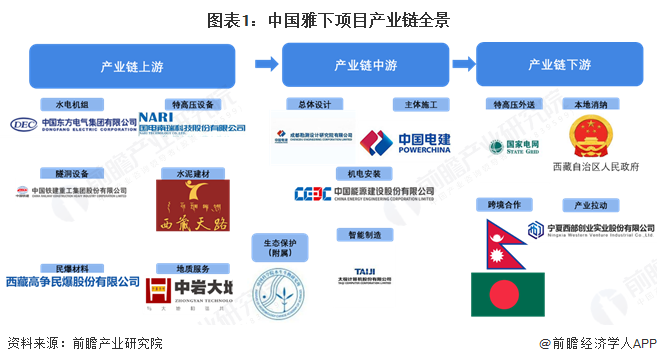
Core Insights - The article discusses the comprehensive development of the Yarlung Tsangpo River downstream hydropower project, led by China Yajiang Group, with a total investment of 1.2 trillion yuan and a planned capacity of 60 million kilowatts, aiming for an annual power generation of 300 billion kilowatt-hours [1][6]. Upstream Industry - The upstream high-end equipment manufacturing sector exhibits a multi-dimensional competitive landscape, with Dongfang Electric holding a 45% market share in the turbine sector, expected to capture over 40% of the turbine and auxiliary equipment value for the Yajiang project, translating to an order size exceeding 28 billion yuan [3][5]. - In the tunnel boring machine (TBM) sector, China Railway Construction occupies a dominant position with a 50% market share, anticipated to secure orders for 25 hard rock TBMs, accounting for 45%-68% of the total orders, with a median value of 3.675 billion yuan [3][5]. - The peak delivery period for high-end equipment is projected between 2028 and 2035, which will have a long-term stimulating effect on the industry chain [3][5]. Midstream Industry - The design and construction of hydropower projects face significant technical barriers and high industry concentration, with the Yajiang project expected to generate design contracts worth 24 billion yuan, based on a 2% design fee of the total investment [6][9]. - China Power Construction, as a leading player in global hydropower engineering, is expected to undertake over 50% of the main engineering volume for the Yajiang project, leveraging its expertise in complex geological engineering [8][9]. Downstream Industry - The Yajiang Group's electricity transmission primarily relies on "Tibetan electricity transmission," with over 70% of power sent out through ±1100 kV UHVDC technology, which allows for efficient long-distance transmission with losses below 10% [11][12]. - The investment in supporting transmission projects is estimated to exceed 240 billion yuan, contributing to a significant market opportunity in the UHV sector [12][14]. Supporting Services - The ecological restoration aspect of the Yajiang Group's operations focuses on smart monitoring technologies and ecological benefit transformation mechanisms, establishing a comprehensive ecological monitoring network [15][16]. - The fish species enhancement project has successfully bred rare fish species, contributing to biodiversity and receiving international recognition for its ecological restoration model [16][17].



央企现代能源ETF(561790)震荡上扬,近1周新增规模、份额均居同类第一,机构:风电火电水电等高景气方向备受关注
Sou Hu Cai Jing· 2025-07-24 06:59
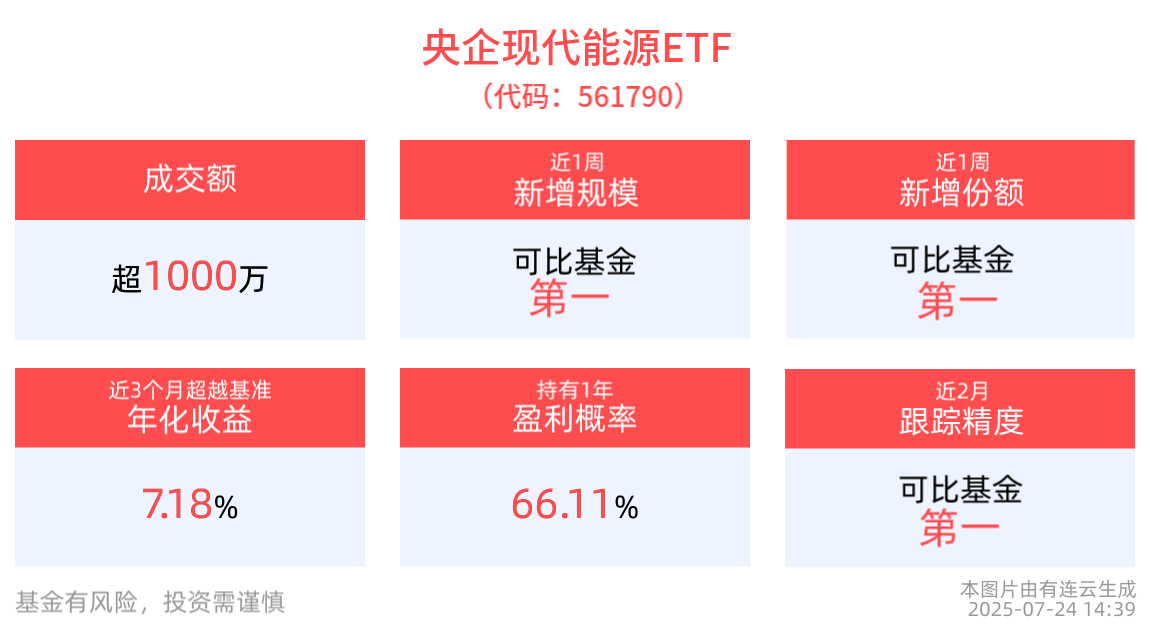
Core Insights - The Central State-Owned Modern Energy ETF (561790) has shown a significant increase, with a 0.69% rise recently and a 5.98% increase over the past week [3][4] Group 1: ETF Performance - As of July 23, 2025, the Central State-Owned Modern Energy ETF has achieved a net value increase of 9.06% over the past six months [5] - The ETF's highest single-month return since inception was 10.03%, with a maximum consecutive monthly gain of 23.43% [5] - The ETF's management fee is 0.50%, and the custody fee is 0.10%, making it one of the lowest in its category [5] Group 2: Market Activity - The ETF experienced a turnover rate of 22.29% during trading, with a total transaction volume of 12.82 million yuan, indicating active market participation [3] - Over the past week, the ETF's scale increased by 11.78 million yuan, ranking it in the top third among comparable funds [4] Group 3: Energy Sector Developments - In the first half of 2025, coal-fired power approvals remained high, with approximately 31 GW of coal power capacity approved, consistent with the previous year [4] - The approval of pumped storage capacity also remained robust, with 19 GW approved in the first half of 2025, exceeding the previous year's figures [4] - The ongoing approvals for coal and pumped storage projects reflect China's urgent need for regulatory power sources during the energy transition [4] Group 4: Index Composition - The Central State-Owned Modern Energy Index (932037) includes 50 listed companies involved in green energy, fossil energy, and energy transmission, reflecting the overall performance of state-owned enterprises in the modern energy sector [6] - As of June 30, 2025, the top ten weighted stocks in the index accounted for 49.93% of the total index weight, including companies like China Power Construction and China Nuclear Power [6]
帮主郑重:指数狂欢下的散户生存法则——看懂新高背后的“冷热温差”
Sou Hu Cai Jing· 2025-07-24 05:55
Group 1 - The core point of the article highlights the disparity between the rising A-share indices and the performance of individual stocks, indicating that a high index does not equate to a bullish market for all stocks [3][4] - Over 2,700 stocks in the market have declined despite the Shanghai Composite Index reaching 3,580 points and the ChiNext Index nearing 2,310 points, suggesting a selective rally primarily benefiting large-cap and cyclical stocks [3][4] - The article emphasizes that retail investors often find themselves in a difficult position, holding stocks in sectors like banking and AI that are underperforming while the index rises [3][4] Group 2 - Three major traps for retail investors are identified: chasing stocks based on trends, ignoring technical indicators, and misjudging the sustainability of policy benefits [4][5] - The article warns against the "hot potato" effect of following speculative stocks, as evidenced by significant net outflows from major funds, leaving retail investors exposed [4][5] - It also points out the historical tendency of A-shares to fill gaps left by price movements, suggesting that recent high openings may not be sustainable [4][5] Group 3 - The article advises retail investors to focus on "policy orders" and the underlying logic of infrastructure investments, as the initial projects are just the beginning of a longer-term trend [5][6] - It highlights the importance of identifying undervalued technology stocks that have been overlooked, particularly in sectors like new energy vehicles and photovoltaics, which continue to attract foreign investment [5][6] - A balanced approach to portfolio management is recommended, with a suggested allocation of 70% in stable investments and a strict stop-loss strategy to protect capital [6][7] Group 4 - The conclusion emphasizes that reaching new index highs is not the end but rather the start of a process of market selection, where patience and discipline are crucial for retail investors [7] - The article encapsulates the essence of successful investing for retail investors as a combination of policy insight, patience, and disciplined position management [7]
突然!A股万亿赛道,传来利好!
天天基金网· 2025-07-24 05:13
Core Viewpoint - The recent capital increase and expansion by State Grid New Source Holdings Co., Ltd. is a significant move to enhance the development capacity of pumped storage projects in China, aiming to support the country's energy transition and achieve carbon neutrality goals [2][5]. Group 1: Capital Increase and Investment - State Grid New Source Holdings has signed a capital increase project worth 36.5 billion yuan, setting a record for cash fundraising in state asset transactions [2]. - The raised funds will be fully invested in pumped storage project construction, expected to leverage over 300 billion yuan in project investments, stimulating related industries such as equipment manufacturing, construction, and technology research [2][3]. Group 2: Industry Development and Capacity - As of 2024, China's cumulative installed capacity of pumped storage is projected to exceed 58 million kilowatts, with an additional 7.75 million kilowatts expected to be added that year [3]. - China has maintained the world's largest installed capacity of pumped storage for nine consecutive years, with ongoing projects showing a trend towards larger single-unit capacities and increased domestic manufacturing of equipment [3][4]. Group 3: Technological and Market Trends - Pumped storage technology is recognized as the most mature large-scale energy storage solution, suitable for peak shaving, frequency regulation, and emergency backup in power systems [4]. - The future of pumped storage is seen as a strategic opportunity, especially with the rapid increase in photovoltaic penetration and the challenges faced by the power system [5]. Group 4: Investment Recommendations - Investment opportunities are suggested in leading pumped storage companies with advantages in resource endowment, project acquisition, technological accumulation, and financial strength [5]. - Water and electricity companies with strong cash flow and active involvement in pumped storage are also highlighted as potential growth points [5].
雅下水电站“巨无霸”工程开工!撬动电力设备市场
Hua Xia Shi Bao· 2025-07-24 02:26
Core Viewpoint - The commencement of the Yarlung Tsangpo River downstream hydropower project is expected to generate significant economic benefits beyond just electricity generation, with a total investment of approximately 1.2 trillion yuan [2][5]. Industry Impact - The project involves the construction of five cascade power stations and is anticipated to reshape China's hydropower industry landscape, benefiting various sectors including power equipment, foundation treatment, and tunnel excavation [2][4]. - The project is projected to create hundreds of thousands of jobs, significantly boosting local economies, particularly in Tibet, where it could generate 20 billion yuan in annual fiscal revenue, equivalent to two-thirds of the region's total fiscal revenue for 2024 [5][6]. Investment and Economic Effects - The total investment of 1.2 trillion yuan may be adjusted upwards, with transmission and transformation investments estimated between 189 billion and 315 billion yuan, benefiting the power equipment industry in the long term [6]. - The project is expected to enhance the overall hydropower capacity in China, with the annual electricity generation projected to reach 300 billion kilowatt-hours, enough to supply 300 million people for a year [4][5]. Company Participation - Several companies, including China Power Construction, SuperMap Software, and XCMG Machinery, have already engaged in the Yarlung Tsangpo hydropower project, indicating broad industry participation [7].