中国中免

Search documents
【18日资金路线图】两市主力资金净流出超290亿元 银行等行业实现净流入
证券时报· 2025-12-18 11:25
12月18日,A股市场整体震荡分化。 截至收盘,上证指数收报3876.37点,上涨0.16%;深证成指收报13053.97点,下跌1.29%;创业板指收报3107.06点,下跌2.17%。两市合计成交 16554.83亿元,较上一交易日减少1556.63亿元。 1. 两市主力资金净流出超290亿元 今日沪深两市主力资金开盘净流出91.88亿元,尾盘净流出53.32亿元,两市全天主力资金净流出291.67亿元。 | | | 沪深两市最近五个交易日主力资金流向情况(亿元) | | | | --- | --- | --- | --- | --- | | 日期 | | 净流入金额 开盘净流入 | 尾盘净流入 | 超大单净买入 | | 2025-12-18 | -291. 67 | -91. 88 | -53. 32 | -112. 97 | | 2025-12-17 | -67. 30 | -64. 62 | 33. 23 | 47.03 | | 2025-12-16 | -520. 66 | -188. 21 | -55.16 | -268. 81 | | 2025-12-15 | -360. 27 | -151. ...


“犒赏经济”火了!情绪消费成A股新主线?
Jin Rong Jie· 2025-12-18 10:49
Group 1: Core Concept of "Reward Economy" - The "Reward Economy" is a new consumption model where consumers purchase non-essential goods or services to gain immediate pleasure and emotional satisfaction in response to work and life pressures [1] - This concept has gained traction on social media and is linked to popular IP consumption trends, with films like "Zootopia 2" generating over 3.6 billion yuan in box office revenue, leading to collaborations with over 70 brands across various sectors [1] - The upcoming release of "Avatar 3" further highlights the potential of IP consumption in driving market activity [1] Group 2: Investment Insights from Securities Firms - Dongxing Securities predicts that continued policy support by 2026 will boost consumer confidence, shifting investment focus in new consumption sectors from short-term narratives to business models and profitability barriers [2] - The report identifies three major trends in the new consumption industry: health-oriented, new pragmatism, and emotional consumption, along with developments in smart technology and overseas consumption [2] - Zhongtai Securities emphasizes that new consumption is fundamentally supply-driven, marking a "new consumption upgrade," with categories like tech sleep products and ergonomic chairs gaining momentum [2] Group 3: A-Share Related Themes - Beauty and personal care sectors reflect "self-reward" consumption, with companies like Betaini focusing on sensitive skin care, aligning with emotional value in the reward economy [3] - Proya, known for its anti-aging products, meets consumer demands for self-investment in appearance, while Huaxi Biological's functional skincare products cater to quality upgrades in skincare [3] Group 4: Tourism, Hospitality, and Dining - Dining and travel are classic forms of self-reward, with companies like China Duty Free benefiting from luxury purchases during travel, directly boosting their performance [4] - Tongqinglou targets celebratory consumption scenarios, while Jinjiang Hotels offers mid-to-high-end accommodations that align with current leisure spending trends [4] Group 5: Trendy Toys and Entertainment - Companies like Pop Mart cater to emotional consumption among younger demographics through collectible blind boxes, which serve as popular self-reward items [5] - Tom Cat is developing AI companion toys, aligning with emotional consumption needs, while Aofei Entertainment is engaging in the IP economy with AI toys and card game services [6] Group 6: Retail and Lifestyle Services - Retail companies like Baida Group are experiencing significant market performance driven by the reward economy, while Nanjing Shunyi reflects strong consumer recovery trends [7] - Meituan provides a platform for various self-reward consumption experiences, including high-end dining and hotel stays [7] Group 7: Other Niche Areas - Langsha, a leader in intimate apparel, aligns with consumer desires for quality and comfort, reflecting small-scale self-reward trends [8] - Zhongchong focuses on high-end pet food, catering to pet owners' emotional needs for rewarding their pets [8] - Deyi Cultural Innovation emphasizes IP operations and collectible products, appealing to young consumers' preferences for self-reward through trendy toys [8]

日上“失标”上海机场!传控股股东中免反对其投标,双方发生争执?
Xin Lang Cai Jing· 2025-12-18 10:44
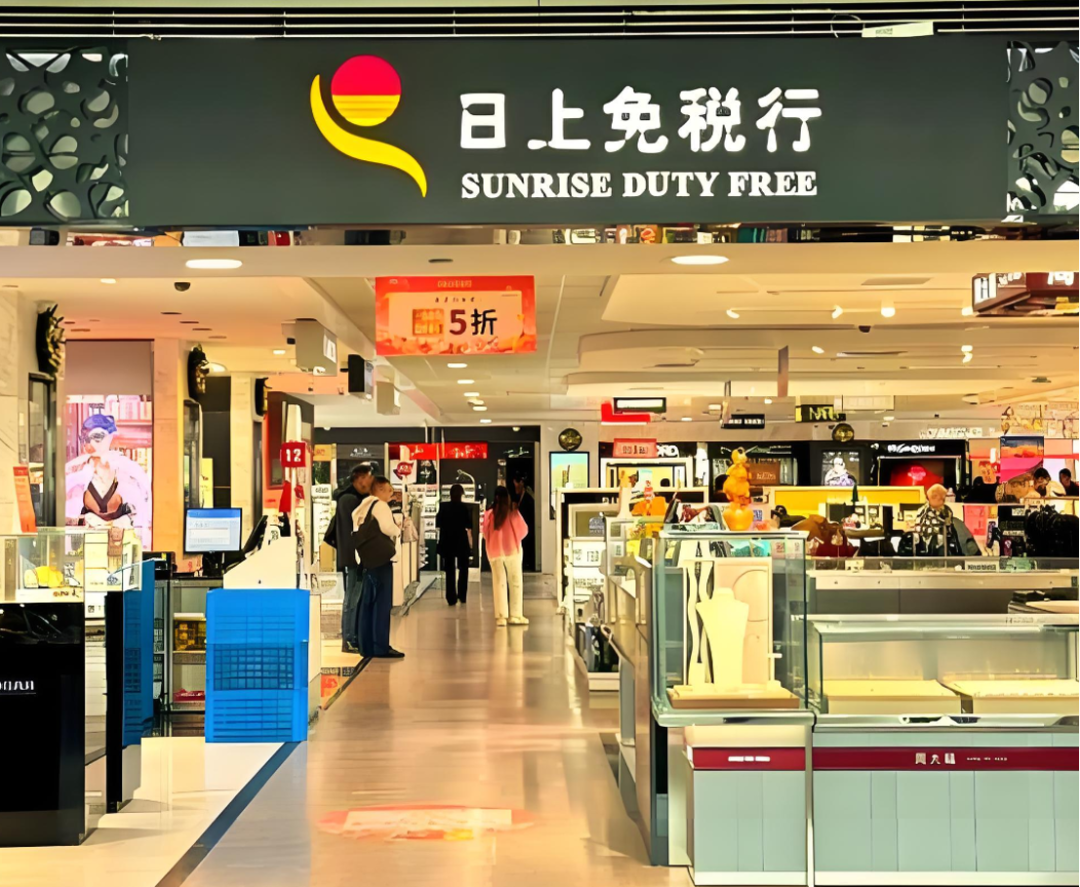
Core Viewpoint - The bidding for duty-free shops at Shanghai airports has concluded, with China Duty Free Group (CDFG) and foreign-owned Dufo Ray winning the contracts, marking the exit of Japan Duty Free (JDF) from the Shanghai airport duty-free business [2][4]. Group 1: Bidding Outcome - CDFG won the rights to operate duty-free shops at Shanghai Pudong International Airport's T2 terminal and Hongqiao International Airport's T1 terminal, while Dufo Ray secured the T1 terminal at Pudong [4]. - JDF attempted to participate in the bidding despite internal opposition from CDFG's board members, leading to a failed bid [3][4]. Group 2: Financial Implications - CDFG's decision to operate the duty-free shops is seen as a strategy to improve its financial performance, as the company has faced declining revenues and profits in recent years [5]. - In 2023, CDFG reported a revenue of 39.862 billion yuan, a decrease of 7.34% year-on-year, and a net profit of 3.052 billion yuan, down 22.13% [5]. Group 3: Historical Context - JDF has been a significant player in China's duty-free market since its establishment in 1999, holding exclusive rights at major airports until recent developments [7]. - The control of JDF shifted over the years, with CDFG acquiring a majority stake in JDF, which has led to conflicts of interest in bidding situations [7]. Group 4: Future Prospects for JDF - JDF is now focusing on its remaining operations, particularly at Beijing Capital International Airport, where it may face similar challenges in upcoming bids [8]. - The company is exploring new avenues for growth, including an online platform and a new membership system, indicating a potential shift in its business strategy [10].


运营商和结算方式全变了,上海机场免税店生意“换血”
Di Yi Cai Jing· 2025-12-18 09:53
Core Viewpoint - The competitive landscape of duty-free projects at major Chinese airports is being reshaped with the new round of duty-free store operations bidding at Beijing Capital Airport and the recent changes at Shanghai airports [1][2]. Group 1: Shanghai Airport Duty-Free Store Changes - Shanghai Airport announced a contract with China Duty Free Group and Dufry for the operation of duty-free stores, marking a significant shift as foreign operators enter the Chinese airport duty-free market [2]. - The new contract allows for an 8-year operation period from January 1, 2026, to December 31, 2033, with a revenue model based on "fixed rent + commission" [3]. - The fixed rents for the duty-free stores at Shanghai Pudong Airport T1 and T2 are set at 3,141 RMB/m²/month and 3,090 RMB/m²/month, respectively, with commission rates ranging from 8% to 24% [3]. Group 2: Changes in Product Offerings and Revenue Model - The new duty-free contract includes an increase in operational area by 1,564 square meters and the addition of new product categories such as mobile phones, drones, and health products [3]. - The revenue model for Shanghai Airport has shifted from a higher commission structure to a fixed rent plus commission model, which is expected to benefit both the airport and the operators [4]. Group 3: Implications for Market Competition - The exit of Sunrise Duty Free from the Shanghai Airport duty-free operations is attributed to a lack of support from its major shareholder, China Duty Free Group, which is now directly competing for the contracts [5]. - The bidding for duty-free operations at Beijing Capital Airport has also commenced, with a submission deadline of December 19, 2023, indicating a potential shift in operational dynamics similar to those at Shanghai Airport [6]. - Following the announcement, Shanghai Airport's stock price increased by over 7%, while China Duty Free's stock fell by more than 4%, reflecting market reactions to the changes [6].
日上“失标”上海机场! 传控股股东中免反对其投标,双方发生争执?
Xin Lang Cai Jing· 2025-12-18 09:46
Group 1 - The bidding for duty-free shops at Shanghai airports has concluded, with China Duty Free Group (CDFG) and foreign-owned Dufo Rui winning the contracts, marking the exit of Japan Duty Free (JDF) from the business [2][5] - JDF's failure to secure the bid was influenced by opposition from CDFG's board members, leading to JDF not being allowed to participate in the bidding process [3][4] - CDFG's victory is seen as beneficial for the company, as it will now operate in higher-quality areas of the airport, potentially increasing overall revenue despite losing one bidding segment [5][6] Group 2 - CDFG's recent performance has been under pressure, with a reported revenue of 39.862 billion yuan, a year-on-year decline of 7.34%, and a net profit of 3.052 billion yuan, down 22.13% [6] - In contrast, JDF has historically been a significant player in China's duty-free market, having secured exclusive rights at major airports since its establishment in 1999 [8][9] - JDF is exploring new avenues for growth, including a potential focus on online operations and the introduction of a new membership system on its platform [12] Group 3 - The bidding process for the duty-free shops was marked by legal disputes, with JDF submitting complaints against CDFG for alleged violations of legal agreements [4] - The outcome of the bidding could have significant implications for JDF, especially if it fails to secure contracts at Beijing Capital International Airport, which would result in the loss of all physical stores in major cities [10] - The competitive landscape in the duty-free market is shifting, with CDFG's strategy reflecting a response to its declining performance and the need to enhance operational efficiency [5][6]
日上“失标”上海机场!传控股股东中免反对其投标,双方发生争执?
新浪财经· 2025-12-18 09:42
Core Viewpoint - The bidding for duty-free shops at Shanghai airports has concluded, with China Duty Free Group (CDFG) and foreign-owned Dufoor winning the contracts, marking the exit of Japan Duty Free (JDF) from the Shanghai airport duty-free business [2][3]. Group 1: Bidding Outcome - CDFG won the rights to operate duty-free shops at Shanghai Pudong International Airport's T2 terminal and Hongqiao International Airport's T1 terminal, while Dufoor secured the T1 terminal and S1 satellite hall at Pudong [9]. - The bidding process saw JDF being blocked from participating due to opposition from CDFG's board members, leading to JDF's eventual withdrawal from the bidding [4][6]. Group 2: Financial Implications - CDFG's decision to operate the duty-free shops is seen as a strategy to address its declining performance, with a reported revenue of 39.862 billion yuan in Q3, down 7.34% year-on-year, and a net profit of 3.052 billion yuan, down 22.13% [10]. - The overall revenue for CDFG is projected to decline further in 2024, with expected revenues of 56.474 billion yuan and a net profit of 4.267 billion yuan, representing year-on-year declines of 16.38% and 36.44% respectively [10]. Group 3: JDF's Future Prospects - JDF, once a dominant player in China's duty-free market, is now facing challenges, especially with the potential loss of its presence at Beijing Capital International Airport if it fails to secure the upcoming tender [15]. - JDF is exploring new avenues for growth, including a focus on online operations and the introduction of a new membership system on its platform "CDFG JDF," which is separate from CDFG's membership system [16][19].

旅游零售板块12月18日跌4.04%,中国中免领跌,主力资金净流出5.24亿元
Zheng Xing Xing Ye Ri Bao· 2025-12-18 09:07
从资金流向上来看,当日旅游零售板块主力资金净流出5.24亿元,游资资金净流入1.38亿元,散户资金 净流入3.86亿元。旅游零售板块个股资金流向见下表: 以上内容为证券之星据公开信息整理,由AI算法生成(网信算备310104345710301240019号),不构成投资建议。 证券之星消息,12月18日旅游零售板块较上一交易日下跌4.04%,中国中免领跌。当日上证指数报收于 3876.37,上涨0.16%。深证成指报收于13053.98,下跌1.29%。旅游零售板块个股涨跌见下表: ...

自由贸易港概念下跌1.35%,6股主力资金净流出超亿元
Zheng Quan Shi Bao Wang· 2025-12-18 08:51
Core Points - The free trade port concept has seen a decline of 1.35%, ranking among the top declines in concept sectors [1] - Within the free trade port sector, notable declines were observed in companies such as China Duty Free Group (-4.04%), Haima Automobile (-9.34%), and Luoyang Longyuan (-9.92%) [2][3] - Conversely, there were 21 stocks that experienced price increases, with Zhongchuang Logistics, Pudong Construction, and Changlian Co., Ltd. leading the gains at 2.51%, 2.30%, and 2.26% respectively [1][2] Market Overview - The free trade port sector experienced a net outflow of 1.547 billion yuan, with 28 stocks seeing net outflows, and 6 stocks exceeding 100 million yuan in outflows [2] - The largest net outflow was from China Duty Free Group, amounting to 474 million yuan, followed by Haima Automobile (238 million yuan) and HNA Holding (176 million yuan) [2][3] - On the other hand, the stocks with the highest net inflows included Shanghai Port Group (28.91 million yuan), Pudong Construction (22.41 million yuan), and Xiamen Port (15.58 million yuan) [2][3] Sector Performance - The free trade port concept was among the sectors with the largest declines, alongside the Hainan Free Trade Zone, which fell by 3.37% [2] - Other sectors that performed well included DRG/DIP, which rose by 3.87%, and Family Doctors, which increased by 3.86% [2] - The overall market sentiment appears to be cautious, as indicated by the significant net outflows from the free trade port sector [2]


海南自贸港全岛封关,哪些方向将受益?
天天基金网· 2025-12-18 08:49
Core Viewpoint - The article discusses the official launch of the Hainan Free Trade Port's full island closure on December 18, which is expected to create a special customs regulatory area and implement a policy of "one line open, two lines controlled, and free within the island" [5][6]. Group 1: Policy Implications - The "one line open" policy allows for more freedom and convenience for people, capital, goods, and data from foreign countries and regions to enter Hainan [6]. - The "two lines controlled" policy means that special policies applicable only within Hainan will be managed by mainland policies when elements enter the mainland [6]. - The closure is anticipated to optimize the development environment for the private economy and stimulate investment activity, providing clear development opportunities for multiple industries [6]. Group 2: Beneficiary Industries - Industries such as import-export trade, international shipping, and logistics will directly benefit from customs facilitation and tax incentives [7]. - The tourism, hotel, exhibition, cultural entertainment, and healthcare sectors are expected to expand due to visa-free and tax-free policies, attracting more international visitors [7]. - High-end manufacturing and technology sectors, including biomedicine and digital economy, will benefit from zero tariffs and low tax rates, reducing R&D costs and attracting businesses [7]. Group 3: Investment Opportunities - The closure is seen as a significant opportunity for the trade sector and will help Hainan accelerate its development as an international tourism consumption center [7]. - Stakeholders in the tourism industry, including scenic spots, hotels, and travel retailers, are expected to benefit in the long term [7]. - Areas such as duty-free shopping, cross-border finance, and international shipping are projected to present investment opportunities post-closure [7].


新浪财经早餐:A股打新收益创纪录 “存款搬家”入市潜力或被低估了丨2025年12月18日
Xin Lang Zheng Quan· 2025-12-18 08:40
Group 1 - Hainan Free Trade Port officially closed today, with financial preparations completed by the central bank, aiming for full island closure operation by December 18, 2025 [3] - Hainan's cross-border capital flow has reached $101.61 billion from January to November 2025, with an annual growth rate of 55% since 2020 [3] - The cross-border RMB settlement in Hainan reached 484.5 billion yuan, a year-on-year increase of 7.8% [3] Group 2 - Large funds are entering the market through ETFs, with multiple ETFs achieving record trading volumes on December 17 [4] - Huatai-PB CSI A500 ETF recorded a trading volume of 14.118 billion yuan, marking a new high since its listing [4] - Other ETFs, including Huaxia and Southern CSI A500 ETFs, also saw significant trading volumes, surpassing 9.754 billion yuan and 8.061 billion yuan respectively [4] Group 3 - Muxi Co., a domestic GPU leader, debuted on the STAR Market with a first-day gain of 692.95%, setting records for the highest profit from a new stock in A-share history [5] - Investors could earn nearly 362,600 yuan on the first day, with the maximum profit reaching 395,200 yuan based on intraday peak [5] Group 4 - Vanke announced a bond extension plan for its 3 billion yuan MTN005 bond, extending the principal repayment date by 12 months to December 28, 2026 [6] - The bond's interest rate remains at 3.00%, with interest payments scheduled for the original payment date [6] Group 5 - CICC, Dongxing Securities, and Xinda Securities announced a major asset restructuring plan, with CICC set to absorb the two companies through a share swap, potentially exceeding 1 trillion yuan in total assets [7] - This merger aims to enhance CICC's capital strength and competitive ability in the financial sector [7] Group 6 - Precious metals are experiencing a price surge, with silver futures rising over 5% to reach a new historical high, and annual gains for silver, platinum, and palladium at 128%, 112%, and 80% respectively [8] - The market is driven by macroeconomic easing expectations and tight supply conditions [8] Group 7 - Institutions estimate that the potential scale of "deposit migration" into the capital market could reach at least 1 trillion yuan, driven by declining deposit rates and increased market interest [9] - The total amount of time deposits maturing before 2024 exceeds 60 trillion yuan, indicating significant potential for capital inflow into equities [9] Group 8 - Oracle's stock price has dropped significantly, with a 48.5% decline over three months, raising concerns about the AI industry's valuation bubble [15] - The company faced negative news regarding a financing plan for a $10 billion data center project, which was later denied by Oracle [15] Group 9 - China Railway Rolling Stock Corporation (CRRC) signed contracts totaling approximately 53.31 billion yuan, including 16.65 billion yuan for wind power and energy storage equipment [39] - These contracts represent about 21.6% of the company's projected revenue for 2024 [39]