欣旺达

Search documents
60亿“国家赌注”,中国为何死磕这场硬仗?
3 6 Ke· 2025-11-06 10:58
Core Insights - Solid-state batteries are currently the hottest segment in the new energy sector, attracting significant market interest and investment [1][17][18] - The Chinese government is actively supporting the development of solid-state batteries through policies and funding, aiming for large-scale production [2][5][19] Market Dynamics - In the secondary market, the solid-state battery concept has seen a dramatic increase, with over 6.5 billion yuan net inflow into the Guangfa Guozheng New Energy Vehicle Battery ETF in the last 20 trading days [1][18] - Major companies like CATL, BYD, and others have received government support for foundational research in solid-state batteries [5] Technological Advancements - Solid-state batteries are considered the "ultimate form" of lithium batteries, offering improved safety and energy density due to the use of solid electrolytes [4][9] - Various companies are exploring different technological routes for solid-state batteries, including sulfide, oxide, and polymer electrolytes, each with its own advantages and challenges [10][11] Industry Collaboration - The establishment of the China All-Solid-State Battery Industry-Academia-Research Collaborative Innovation Platform indicates a concerted effort among academia, industry, and government to advance solid-state battery technology [4] - Companies are accelerating their R&D efforts, with CATL expanding its solid-state battery research team from under 100 to over 1,000 members [6] Product Development - Several companies, including Xinwangda, have begun to release solid-state battery products, with Xinwangda's polymer solid-state battery achieving an energy density of 400 Wh/kg [7][10] - The industry is currently in the product development phase, with expectations for commercial viability to emerge in the coming years [8][19] Future Outlook - The consensus within the industry is that while solid-state batteries are promising, they are still several years away from mass production, with a common delivery timeline set around 2027 for small-scale demonstrations [11][19] - The focus on solid-state batteries is expected to extend beyond automotive applications to sectors like aviation and robotics, where energy density and safety are critical [15][16]



锂电新周期的供需研判
Changjiang Securities· 2025-11-06 08:48
Investment Rating - The report maintains a "Positive" investment rating for the lithium battery sector [4] Core Insights - The demand for lithium batteries is experiencing a strong upward trend, driven by multiple application scenarios [11] - Supply and demand dynamics are showing initial signs of a turning point, with expectations of price increases [9] Demand Analysis - The report highlights that the demand for energy storage is supported by the formation of domestic business models and the global shift towards cost parity in solar storage [13] - In China, the expected bidding volume for energy storage in the second half of 2025 is projected to exceed 190 GWh, with potential annual installations reaching 183 GWh to over 200 GWh depending on the execution rate [17] - Globally, the report estimates that by 2030, the newly installed capacity for energy storage could reach 1,327 GWh, corresponding to a compound annual growth rate (CAGR) of over 30% [17] Supply Analysis - The report indicates that the supply side is beginning to show signs of a turning point, with price expectations strengthening [9] - The introduction of capacity pricing mechanisms across various provinces in China is expected to enhance the revenue assurance for energy storage projects [14] Market Trends - The report notes that the electric heavy truck market in China has seen explosive growth, with sales reaching 96,000 units in the first seven months of 2025, a year-on-year increase of 179% [30] - In Europe, the electric vehicle market is experiencing a surge, with a projected compound annual growth rate of over 20% needed to meet new carbon emission standards [40] Future Projections - The report anticipates that by 2030, China's total installed capacity for renewable energy, including solar and wind, will reach 1,291 GW, with energy storage capacity expected to be 1,327 GWh [19] - The demand for energy storage in the U.S. is projected to grow significantly, with an expected total demand of 1,199 GWh from 2025 to 2030, reflecting a CAGR of 56% [28]



前三季度山东16市经济解读:“头号”压舱,凸显消费主引擎
Feng Huang Wang Cai Jing· 2025-11-06 08:23
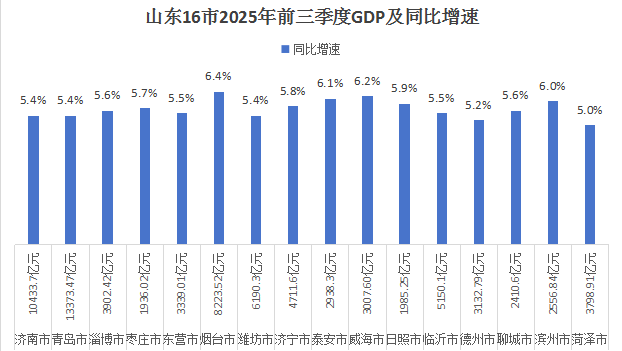
Economic Overview - Shandong's 16 cities reported stable economic performance in the first three quarters, with a provincial GDP growth rate of 5.6% [3] - Seven cities, including Yantai and Weihai, exceeded the provincial average growth rate, while two cities maintained parity with it [3] - Yantai leads the province in economic growth, with a GDP of 8223.52 billion yuan, growing by 6.4% year-on-year [4] Industrial Development - Shandong's industrial sector is a key driver, with industrial added value increasing by 7.8% year-on-year in the first three quarters, surpassing GDP growth [4] - Yantai's industrial added value grew by 13.9%, while Linyi aims for an industrial output exceeding 1 trillion yuan [4] - Zaozhuang has seen consistent economic growth since Q1 2022, attributed to the implementation of significant development plans [5][6] Consumption and Tourism - Cities like Binzhou and Rizhao have shown GDP growth rates exceeding the provincial average, driven by strong retail sales growth [9][10] - The retail sales in Rizhao reached 631.01 billion yuan, with significant increases in categories like home appliances and new energy vehicles [10] - The tourism sector is being developed as a pillar industry, with plans to attract 900 million tourists and generate over 1 trillion yuan in tourism revenue by 2024 [12] Private Economy - The private sector is increasingly significant, with Jinan's import and export volume surpassing 200 billion yuan, a 28% increase year-on-year [13] - In Zaozhuang, fixed asset investment grew by 5.4%, with private investment accounting for 58.8% of total investment [13] - Local governments are focusing on enhancing the business environment and supporting private enterprises to drive economic growth [14][15]

储能产业复盘:10大关键数据
行家说储能· 2025-11-06 08:05
Core Insights - The article discusses the rapid growth and trends in the energy storage industry, highlighting significant revenue increases and the impact of new policies on the sector [2][3][14]. Policy Analysis - In September 2025, the National Development and Reform Commission and the Energy Administration issued a plan aiming for over 180 GW of cumulative installed renewable energy capacity by 2027, with an average annual growth rate of 37% [3]. - The new energy storage projects added 87.5 GWh in the first three quarters of 2025, with 32.7 GWh added in Q3 alone, reflecting a year-on-year growth of 62.97% [10][18]. Market Performance - In the first half of 2025, the combined revenue from energy storage systems, batteries, and PCS reached approximately 1.2 trillion yuan, with a net profit of about 81 billion yuan, showing an overall year-on-year growth rate exceeding 30% [3][14]. - Q3 2025 saw total revenue in the energy storage sector of approximately 282.5 billion yuan, with net profits around 34.1 billion yuan [5]. Profitability Trends - Despite the revenue growth, the average gross margin for energy storage companies declined by about 2 percentage points compared to the previous year, attributed to rising raw material costs and intensified price competition [4][14]. - Notably, some companies reported net profit increases exceeding 900% in Q3, while most companies experienced revenue growth rates between 20% and 75% [6]. Product Pricing - The average price of 314Ah energy storage cells in Q3 was 0.3052 yuan/Wh, which is 8.43% lower year-on-year but shows a slight increase of 0.23% compared to Q2 [8]. - The market price for commercial energy storage cabinets (215 kWh) stabilized around 0.65 yuan/Wh in Q3, with a price range of 0.53-0.75 yuan/Wh [9]. Future Demand Projections - The demand for energy storage batteries in AI data centers is projected to grow approximately 30 times from 10 GWh in 2024 to over 300 GWh by 2030 [12][15]. - The energy storage sector is transitioning from traditional backup power to dynamic energy management platforms, driven by increasing AI computing power and supportive policies [15].




20cm速递|储能头部企业扩产,创业板新能源ETF华夏(159368)上涨1.22%
Mei Ri Jing Ji Xin Wen· 2025-11-06 07:13
2025年11月6日,创业板新能源ETF华夏(159368)上涨1.22%,持仓股当升科技涨超4%,震裕科技、 新宙邦涨超2%。 2025年前三季度,亿纬锂能资本性支出同比增长82%,宁德时代增长40%,欣旺达、鹏辉能源增长均超 20%,头部企业通过大规模扩产与上游原材料锁定巩固优势。 (文章来源:每日经济新闻) 中信证券指出,国内外新能源车销量增长与全球储能需求共振,推动产业链出货端持续亮眼,2025年二 季度多数环节收入同比恢复正向增长,部分供给紧缺环节已开启产能扩张节奏,头部企业加大资本开支 是对行业高景气度的直接响应。从实际需求来看,2025年前三季度全球锂电储能装机超170GWh,同比 增长68%,国内新能源汽车渗透率突破35%,动力电池装机量累计增长43%,终端需求的爆发式增长为 头部企业扩产提供了明确动力。 创业板新能源ETF华夏(159368)是全市场跟踪创业板新能源指数的规模最大ETF基金。创业板新能源 指数主要涵盖新能源和新能源汽车产业,涉及电池、光伏等多个细分领域。创业板新能源ETF华夏 (159368)弹性最大,涨幅可达20cm;费率方面,管理费和托管费合计仅为0.2%;规模同类最大, ...

理想汽车电池公司于江苏成立新公司
Qi Cha Cha· 2025-11-06 07:12
Core Insights - A new company, Jiangsu Li Auto Battery Co., Ltd., has been established, focusing on battery manufacturing and sales, as well as research and development in emerging energy technologies [1] - The registered capital of the new company is 70 million RMB [1] - The company is wholly owned by Shandong Li Auto Battery Co., Ltd., which is jointly held by Beijing Li Auto Co., Ltd. and Xinwanda Power Technology Co., Ltd. [1] Company Overview - Jiangsu Li Auto Battery Co., Ltd. is involved in various operations including battery manufacturing, sales, and electric vehicle charging infrastructure [1] - The establishment of this company indicates Li Auto's strategic move to enhance its capabilities in battery technology and electric vehicle support systems [1] Industry Implications - The formation of this new battery company aligns with the growing demand for electric vehicles and the need for advanced battery solutions in the automotive industry [1] - This development may contribute to the competitive landscape of the electric vehicle market, particularly in battery technology and infrastructure [1]

什邡在京作城市产业推介,擘画“空天智城”新蓝图
Sou Hu Cai Jing· 2025-11-06 06:41
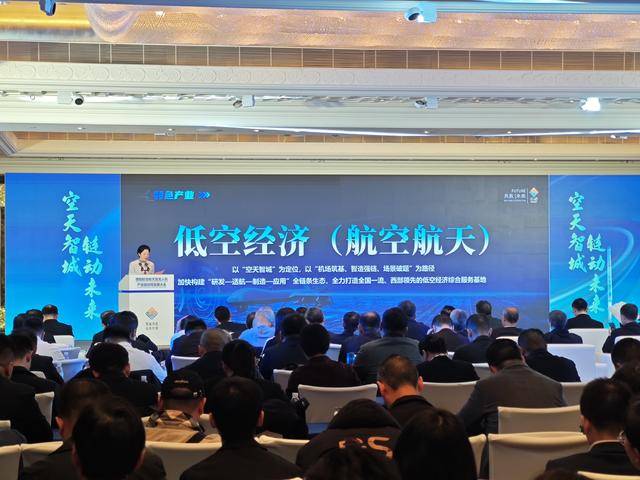
Core Viewpoint - The conference held in Beijing on November 6 focused on the collaborative development of the aerospace and drone industry chain in Deyang, showcasing Shifang's unique advantages and development potential in the low-altitude economy sector [1][8]. Group 1: Industry Development - The establishment of the Beijing-Jinshui-Shifang Industrial Alliance marks a partnership aimed at exploring new opportunities in the low-altitude economy [3]. - Shifang is positioning itself as a "Smart Sky City," with a focus on building a comprehensive ecosystem that includes research, airworthiness, manufacturing, and application [3]. - Shifang has three core strengths in the low-altitude economy: effective flight operations, quality manufacturing, and practical applications [3]. Group 2: Infrastructure and Services - Shifang is home to the only A1-class general airport in the Chengdu metropolitan area, capable of handling 120 takeoffs and landings daily, and supports both manned flights and cargo operations [5]. - A specialized airport operation company has been established, along with the first joint research center for drone airworthiness certification in Southwest China, providing comprehensive airworthiness services [5]. - The total area of the general aviation industrial park in Shifang is 44,300 square meters, equipped with business centers, talent apartments, and living towns, offering convenient services for enterprises [5]. Group 3: Economic Impact - By 2024, Shifang has attracted 23 representative enterprises in the low-altitude economy, achieving a total output value exceeding 5 billion yuan [5]. - The local enterprise, Xinhang Titanium, has grown into a national high-tech enterprise with an annual output value nearing 4 billion yuan [5]. - Shifang's industrial output value is projected to exceed 80 billion yuan in 2024, with industrial added value maintaining a growth rate of over 10% for two consecutive years [6]. Group 4: Talent and Innovation - Shifang has established two double-A-level platform companies and one private equity fund to provide financial support throughout the enterprise lifecycle [6]. - A partnership with Chengdu College of Electronic Science and Technology has been formed to cultivate over 1,000 specialized talents in the aviation sector [6]. - Collaborative platforms with universities such as Beihang University and the Civil Aviation Flight University of China are being developed to enhance research and industry integration [6]. Group 5: Industrial Focus - Shifang's industrial layout emphasizes three main industries: tobacco, food and medicine, and new materials, along with a focus on the low-altitude economy [7]. - The city hosts the only "Three Tobacco Base" in the country and the world's largest single-unit cigar factory, with a market share of over 50% for Great Wall cigars [7]. - Shifang is also the largest producer of plant protein beverages in Southwest China, with the "Weiyi Beverage" brand leading sales in the region for 17 consecutive years [7].
欣旺达涨2.02%,成交额22.72亿元,主力资金净流入5880.96万元
Xin Lang Cai Jing· 2025-11-06 06:26
Core Insights - XINWANDA's stock price increased by 2.02% on November 6, reaching 36.90 CNY per share, with a trading volume of 2.272 billion CNY and a market capitalization of 68.171 billion CNY [1] - The company has seen a year-to-date stock price increase of 66.96%, with a 0.82% rise over the last five trading days and a 70.28% increase over the last 60 days [1] - For the first nine months of 2025, XINWANDA reported a revenue of 43.534 billion CNY, a year-on-year growth of 13.73%, and a net profit attributable to shareholders of 1.405 billion CNY, up 15.94% year-on-year [2] Financial Performance - XINWANDA's main business revenue composition includes consumer batteries (51.47%), electric vehicle batteries (28.18%), other products (16.63%), and energy storage systems (3.72%) [1] - Cumulative cash dividends since the company's A-share listing amount to 1.772 billion CNY, with 755 million CNY distributed over the last three years [3] Shareholder Structure - As of September 30, 2025, the number of XINWANDA's shareholders increased by 18.08% to 135,300, while the average number of circulating shares per person decreased by 15.23% to 12,669 shares [2] - Major shareholders include Hong Kong Central Clearing Limited, which holds 69.279 million shares, a decrease of 21.416 million shares from the previous period [3]
理想汽车电池公司在江苏成立新公司,注册资本7000万
Zhong Guo Neng Yuan Wang· 2025-11-06 05:57
Core Insights - Jiangsu Ideal Automotive Battery Co., Ltd. has recently been established with a registered capital of 70 million RMB [1] - The company is involved in battery manufacturing, battery sales, emerging energy technology research and development, and electric vehicle charging infrastructure operations [1] - The company is wholly owned by Shandong Ideal Automotive Battery Co., Ltd., which is jointly held by Beijing Ideal Automotive Co., Ltd. and Xinwangda Power Technology Co., Ltd. [1]
原小米智驾高管创业机器人一周年:务实、算账、万小时具身定律
3 6 Ke· 2025-11-06 05:49
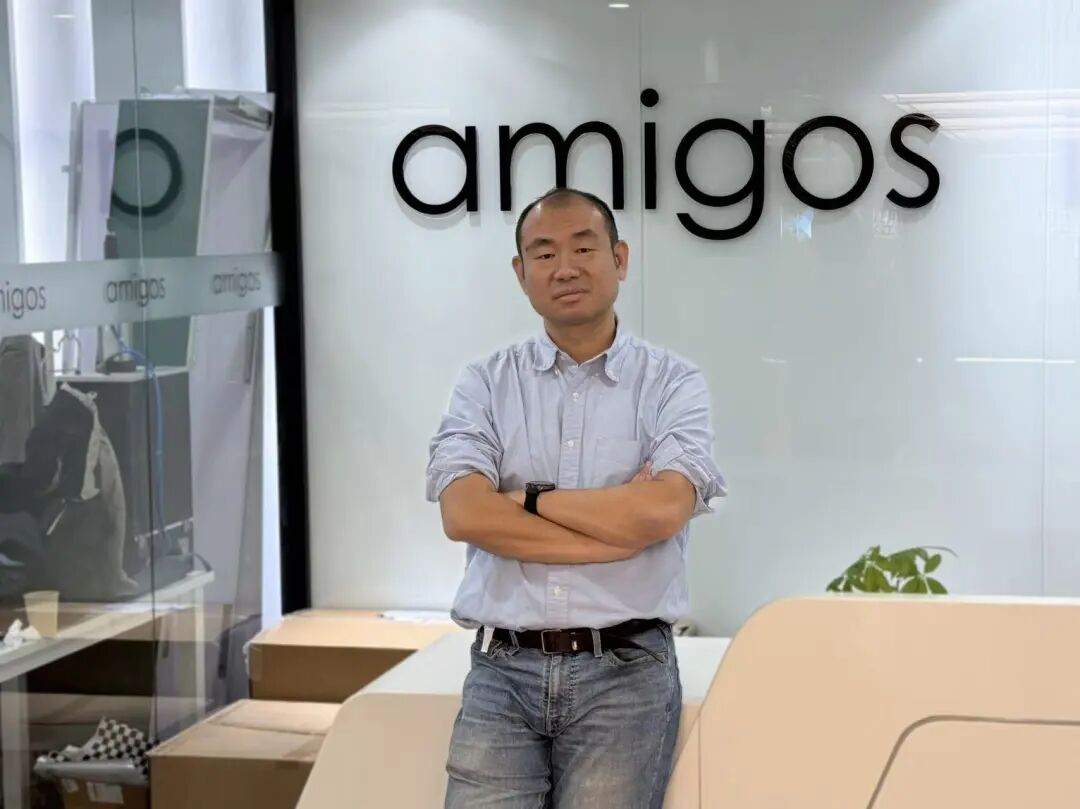
Core Insights - The article discusses the establishment and growth of Amiao, a robotics company founded by Liu Fang, who previously led Xiaomi's smart driving division. The company has successfully deployed its first batch of robots within a year of its founding and has raised nearly 200 million yuan in seed and angel funding [1][2][3]. Group 1: Company Overview - Amiao was founded in September 2024 by Liu Fang, who has extensive experience in various technology sectors, including AI hardware and smart driving [1][2]. - The company has completed nearly 200 million yuan in financing, with participation from notable investors such as Anker Innovation and CICC Capital [1][3]. Group 2: Market Strategy - Liu Fang emphasizes the importance of addressing clear customer needs and ensuring a favorable return on investment (ROI) when developing robotics solutions for factories [2][3][8]. - The company targets the 3C manufacturing sector, where labor costs are significant, and automation has limitations, making it a prime candidate for the introduction of embodied intelligence [3][9]. Group 3: Financial Considerations - The pricing strategy for Amiao's robots is set around 200,000 yuan, with a payback period of 1 to 1.5 years being crucial for customer acceptance [3][9]. - In coastal factories, the annual cost of a worker can reach 300,000 yuan, highlighting the potential cost savings from deploying robots [3][9]. Group 4: Technological Approach - Amiao focuses on creating robots that can quickly learn specific tasks rather than developing a general-purpose robot, utilizing first-person video data for training [14][19]. - The company employs real-machine reinforcement learning to enhance the robots' capabilities in precise tasks and error correction [17][19]. Group 5: Industry Outlook - Liu Fang believes that while large tech companies may dominate the market, there remains a viable space for startups due to the lower profit margins in factory operations [5][6]. - The company plans to expand internationally, driven by client needs for capacity relocation and better ROI in overseas markets [30][31]. Group 6: Future Developments - Amiao has already secured three key accounts, with robots actively operating in client factories and discussions for increased orders underway [24]. - The company aims to refine its technology and service capabilities in China before expanding to international clients [31][32].