三六零

Search documents
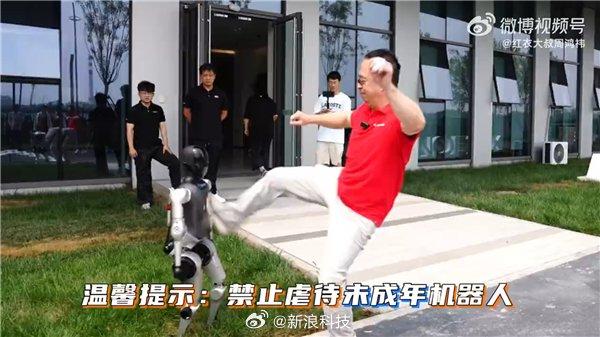
周鸿祎飞踹1.2米高N2机器人,被踹倒后正常行走
Xin Lang Ke Ji· 2025-08-22 07:22
Core Viewpoint - The video released by the founder of 360, Zhou Hongyi, showcases an interaction with a humanoid robot, highlighting its durability despite being kicked by Zhou [1] Group 1 - Zhou Hongyi kicked the 1.2-meter tall N2 robot, causing it to lose balance and fall to the ground [1] - After being assisted back to an upright position, the N2 robot was able to walk normally [1] - Zhou expressed that this was the most resilient robot he had ever kicked [1]


三六零涨2.06%,成交额7.76亿元,主力资金净流入8401.57万元
Xin Lang Cai Jing· 2025-08-22 03:07
Company Performance - The stock price of 360 Security Technology Co., Ltd. increased by 2.06% on August 22, reaching 11.40 CNY per share, with a trading volume of 776 million CNY and a turnover rate of 0.98%, resulting in a total market capitalization of 79.795 billion CNY [1] - Year-to-date, the stock price has risen by 11.22%, with a 6.54% increase over the last five trading days, a 3.26% increase over the last 20 days, and an 11.87% increase over the last 60 days [2] Financial Highlights - For the first quarter of 2025, the company reported revenue of 1.864 billion CNY, representing a year-on-year growth of 8.39% [3] - Cumulative cash dividends since the A-share listing amount to 2.835 billion CNY, with 1.4 billion CNY distributed over the past three years [3] Shareholder Information - As of March 31, 2025, the number of shareholders reached 451,700, an increase of 7.95% from the previous period, with an average of 15,496 circulating shares per shareholder, a decrease of 7.36% [3] - The fourth largest circulating shareholder is Hong Kong Central Clearing Limited, holding 160 million shares, which is a decrease of 47.3832 million shares from the previous period [3] Market Activity - The company has appeared on the "Dragon and Tiger List" once this year, with the most recent occurrence on February 5 [3] - The main capital inflow on August 22 included a net inflow of 84.0157 million CNY from major funds, with large orders accounting for 20.40% of purchases and 19.84% of sales [1]

AI幻觉频现 风险挑战几何
Xin Hua Wang· 2025-08-22 01:58
Core Viewpoint - The article highlights the issue of "AI hallucination" as a significant bottleneck in the development of artificial intelligence, emphasizing the need for a comprehensive governance system that includes technological innovation and regulatory oversight to address this challenge [1][2][3]. Technical Aspects - AI hallucination arises from three main factors: insufficient or biased training data, limitations in algorithm architecture that rely on probabilistic predictions rather than logical reasoning, and the tendency of models to prioritize generating fluent content over accurate information [2][3]. - Hallucinations manifest as factual hallucinations, where models fabricate non-existent facts, and logical hallucinations, where contradictions and logical inconsistencies occur in generated content [2][3]. Impact on Various Sectors - The phenomenon of AI hallucination has already affected multiple fields, including legal, content creation, and professional consulting, leading to significant real-world consequences [1][2]. - In the legal sector, AI-generated false cases have been identified in court documents, undermining judicial processes [4]. - In financial consulting, AI may provide erroneous investment advice, potentially leading to misguided decisions [5]. Governance and Mitigation Strategies - Experts suggest a multi-faceted governance approach to tackle AI hallucination, focusing on technological innovation and regulatory frameworks [6]. - Technological solutions include Retrieval-augmented Generation (RAG) techniques that enhance the accuracy of generated content by integrating real-time access to authoritative knowledge bases [6]. - Regulatory measures proposed include a dual identification system for AI-generated content, incorporating digital watermarks and risk warnings to ensure traceability and accountability [6]. User Awareness and Education - It is essential for users to develop a rational understanding of AI capabilities and limitations, fostering habits of multi-channel verification of information [7]. - Encouraging critical thinking and skepticism when interacting with AI systems can help mitigate the societal impact of AI hallucinations [7].

AI巨头重兵布局,深度解析AI智能体:为什么说它才是AI的终极形态?
3 6 Ke· 2025-08-21 23:24
Core Insights - The article discusses the rising significance of Agentic AI, which is seen as a transformative force in enhancing productivity and business operations, potentially surpassing Generative AI [1][3] - A report from Huatai Securities indicates that Generative AI is entering a new development phase dominated by AI agents [1] Group 1: Understanding Agentic AI - Agentic AI is described as an evolution from Generative AI, where the former acts as an "actor" rather than just a "respondent," enabling autonomous task execution [4][6] - The evolution of AI is moving from single model enhancements to creating a collaborative "intelligent ecosystem" [5] Group 2: Major Players in the Agentic AI Space - Microsoft aims to integrate its Copilot across various platforms, transforming it into a comprehensive assistant capable of complex tasks [8][9] - Google focuses on multi-modal and general AI with its Project Astra, which showcases capabilities in understanding and interacting with the environment [10] - OpenAI views Agentic AI as a pathway to achieving Artificial General Intelligence (AGI), with ongoing developments to create autonomous agents capable of complex tasks [11] - NVIDIA plays a crucial role by providing powerful GPU resources and developing platforms for Agentic AI, including tools for easy model deployment [12] Group 3: Impact on Industries - Agentic AI is expected to revolutionize various sectors by introducing "digital employees" that can perform tasks autonomously, enhancing efficiency and productivity [13] - The potential for intelligent agents to handle customer service and internal operations is highlighted, indicating a shift from traditional automation to more sophisticated AI interactions [13] Group 4: Challenges and Future Outlook - The current lack of standardization among different AI agents poses a challenge for seamless collaboration across platforms [15] - Experts suggest that organizations should start exploring the capabilities of Agentic AI through pilot projects to understand its potential benefits [16][17]




AI眼镜,这次能成吗?
3 6 Ke· 2025-08-21 11:05
Core Insights - The year 2025 is anticipated to be the "year of AI glasses," with significant growth projected in both global and Chinese markets [1] - Major companies like Xiaomi, Alibaba, and China Telecom are entering the AI glasses market, indicating a competitive landscape [1][2][3] - Despite initial consumer enthusiasm, there are notable concerns regarding product quality and functionality, leading to negative feedback from early adopters [1][11] Group 1: Market Overview - IDC forecasts that global smart glasses shipments will reach 14.5 million units in Q1 2025, with China accounting for 2.9 million units, representing year-on-year growth of 42.5% and 121.1% respectively [1] - Xiaomi's AI glasses sold over 10,000 units within 12 hours of launch, topping sales charts [2] - Alibaba's Quark AI glasses will integrate deeply with its ecosystem, offering unique features compared to existing products [2] Group 2: Product Developments - China Telecom launched its Tianyi AI smart glasses, featuring advanced imaging technology and a competitive price point [3] - HTC introduced the VIVE Eagle AI smart glasses, emphasizing long battery life and high-quality audio capabilities [4] - Li Auto is developing AI glasses in collaboration with Goertek, focusing on advanced imaging and payment functionalities [5] Group 3: Supply Chain Dynamics - The AI glasses market is characterized by a "hundred glasses war," with a focus on resolving core technology issues such as chips and AI capabilities [6] - The cost of AI glasses is significantly influenced by the chip, which accounts for 30% to 40% of the total product cost [6] - Various chip architectures are being explored to balance performance and cost, including SoC and dual-core solutions [6][7] Group 4: Challenges and Consumer Feedback - Early sales data indicates a decline in demand for Xiaomi's AI glasses, with a high return rate of 40% to 50% due to performance issues [11] - Common complaints include poor battery life, slow response times, and inadequate user experience [11][12] - Historical precedents, such as Google Glass and Microsoft's HoloLens, highlight ongoing challenges in the wearable tech space [12][13][14] Group 5: Future Outlook - For AI glasses to succeed, manufacturers must address hardware supply chain issues and enhance AI technology [15] - Consumer concerns include high prices, software performance, and data privacy, which need to be addressed for broader adoption [15] - The concept of "killer applications" for AI glasses is still under exploration, with suggestions for a shift from traditional apps to more streamlined interactions [15]



单日“吸金”超亿元,软件ETF(159852)盘中上涨1.08%,机构:预计中国软件市场规模年复合增长率达8%
Sou Hu Cai Jing· 2025-08-21 04:14
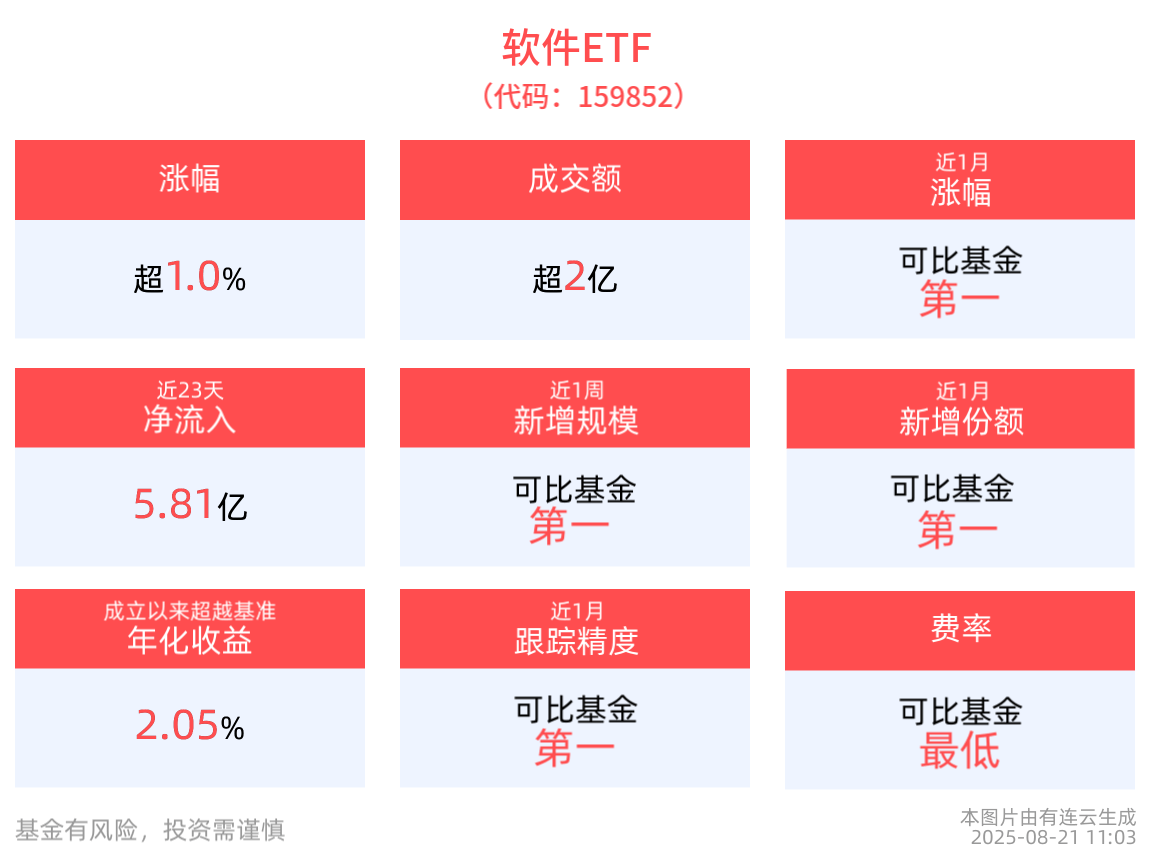
Group 1: ETF Performance - The software ETF has a turnover rate of 5.37% and a transaction volume of 285 million yuan [3] - Over the past week, the software ETF has seen an average daily transaction volume of 569 million yuan, ranking first among comparable funds [3] - The software ETF's scale increased by 23.98 million yuan in the past week, also ranking first among comparable funds [3] - The software ETF's share increased by 641 million shares in the past month, achieving significant growth and ranking first among comparable funds [3] - The latest net inflow of funds into the software ETF is 105 million yuan, with 13 out of the last 23 trading days showing net inflows totaling 581 million yuan [3] - As of August 20, the software ETF's net value has increased by 19.02% over the past three years [3] - The highest monthly return since the inception of the software ETF is 39.35%, with the longest consecutive monthly increase being three months and a maximum increase of 69.40% [3] - The average return in the months of increase is 9.75% [3] Group 2: AI Market Insights - According to Markets and Markets, the AI Agent market is projected to reach 5.1 billion USD in 2024 and 47.1 billion USD by 2030, with a compound annual growth rate (CAGR) of 44.8% [3] - For the Chinese market, the AI Agent market is expected to reach 147.3 billion yuan in 2024, with a penetration rate of less than 5%, and is projected to exceed 3.3 trillion yuan by 2028 [3] - Dongwu Securities indicates that AI is significantly transforming the computer and software development industry, moving from technology validation to large-scale application [4] - The Chinese software market is expected to exceed 3.5 trillion yuan by 2030, with a CAGR of 8%, driven by the acceleration of the digital economy and the demand for enterprise digital transformation [4] - AI is enhancing software development efficiency by 20%-30% through automated code generation, vulnerability detection, and performance optimization [4] - Natural language processing technology is promoting the widespread use of applications such as intelligent customer service and voice assistants [4] - AI technology is transitioning from a marginal tool to a core decision-making system, driving the industry towards efficiency and inclusivity [4] Group 3: Key Stocks and Investment Opportunities - As of July 31, 2025, the top ten weighted stocks in the CSI Software Service Index include iFLYTEK, Kingsoft Office, Tonghuashun, Hang Seng Electronics, Runhe Software, 360, Tuo Wei Information, Yonyou Network, Guiding Compass, and Softcom Power, collectively accounting for 61.39% of the index [4] - Investors can also consider the software ETF linked fund (012620) to capitalize on AI software investment opportunities [4]

鸿蒙5.0设备破千万!信创ETF基金(562030)涨1.1%!机构:AI加速渗透软件行业
Sou Hu Cai Jing· 2025-08-21 03:05
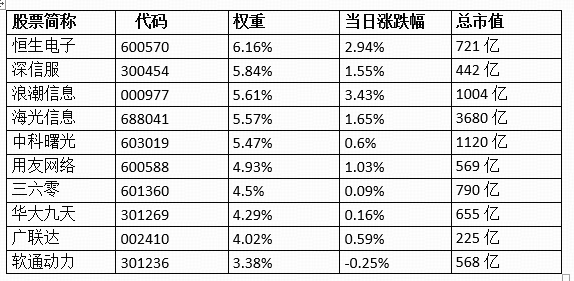
Core Viewpoint - The performance of the Xinchang ETF Fund (562030) is stable, with a 1.1% increase in early trading, reflecting positive market sentiment towards the software development industry and its key stocks [1] Group 1: Fund Performance - The Xinchang ETF Fund (562030) passively tracks the CSI Xinchang Index (931247), which rose by 1.53% on the same day [1] - Key stocks in the fund include Hengsheng Electronics, Zhongke Shuguang, and Haiguang Information, with significant daily increases of 2.94%, 0.6%, and 1.65% respectively [2][1] - Notably, Tianrongxin reached the daily limit increase, while Ruantong Power showed a slight decline of 0.25% [1][2] Group 2: Industry Trends - The software development industry is experiencing a divergence, with AI technology deeply penetrating workflows, leading to a significant reduction in input-output costs and accelerating commercialization in production [3] - The demand for real-time intelligent data services is high, with 75.32% of enterprises prioritizing this need, while 58.86% expect mature AI application scenarios [3] - China's software spending growth rate is higher than the global average, indicating a recovery phase in the industry [3] Group 3: Market Dynamics - The Xinchang industry is transitioning from policy-driven to a dual-driven approach of policy and market, with significant growth expected in the market size, projected to exceed 2.6 trillion yuan by 2026 [4] - The capital expenditure of major US tech firms reached a new high, growing by 77% year-on-year, driven by AI business growth [4] - The domestic software sector is witnessing a rebound, with a growth rate of 13.8% in basic software over the past four months [4] Group 4: Investment Logic - The Xinchang ETF Fund focuses on the self-controllable information technology sector, which is supported by national security and industry safety needs [6] - The government procurement for Xinchang is expected to recover, aided by increased local debt efforts [6] - The advancement of new technologies by domestic manufacturers, exemplified by Huawei, is anticipated to boost market share in the domestic software and hardware sectors [6]
DeepSeek又更新了,期待梁文锋“炸场”
Hu Xiu· 2025-08-21 02:28
Core Insights - DeepSeek has released an updated version of its model, V3.1, which shows significant improvements in context length and user interaction, although it is not the highly anticipated R2 model [2][4][14] - The model now supports a context length of 128K, enhancing its ability to handle longer texts and improving its programming capabilities [5][10] - The update merges the functionalities of V3 and R1, leading to reduced deployment costs and improved efficiency [13][25] Group 1: Model Improvements - The new V3.1 model has a parameter count of 685 billion, showing only a slight increase from the previous version, V3, which had 671 billion parameters [7] - User experience has been enhanced with more natural language responses and the use of tables for information presentation [8][10] - The programming capabilities of V3.1 have been validated through tests, achieving a score of 71.6% in multi-language programming, outperforming Claude 4 Opus [10] Group 2: Market Context - The release of V3.1 comes seven months after the launch of R1, during which time other major companies have also released new models, using R1 as a benchmark [3][16] - Despite the improvements in V3.1, the industry is still eagerly awaiting the release of the R2 model, which has not been announced [4][20] - The competitive landscape includes companies like Alibaba and ByteDance, which have launched models that claim to surpass DeepSeek R1 in various metrics [17][19] Group 3: Future Outlook - There are indications that the merging of V3 and R1 may be a preparatory step for the release of a multi-modal model [25] - Industry insiders suggest that the focus will shift towards innovations in economic viability and usability for future models [24] - The absence of the R2 model in the current update has heightened expectations for its eventual release, with speculation that it may not arrive until later [21][22]

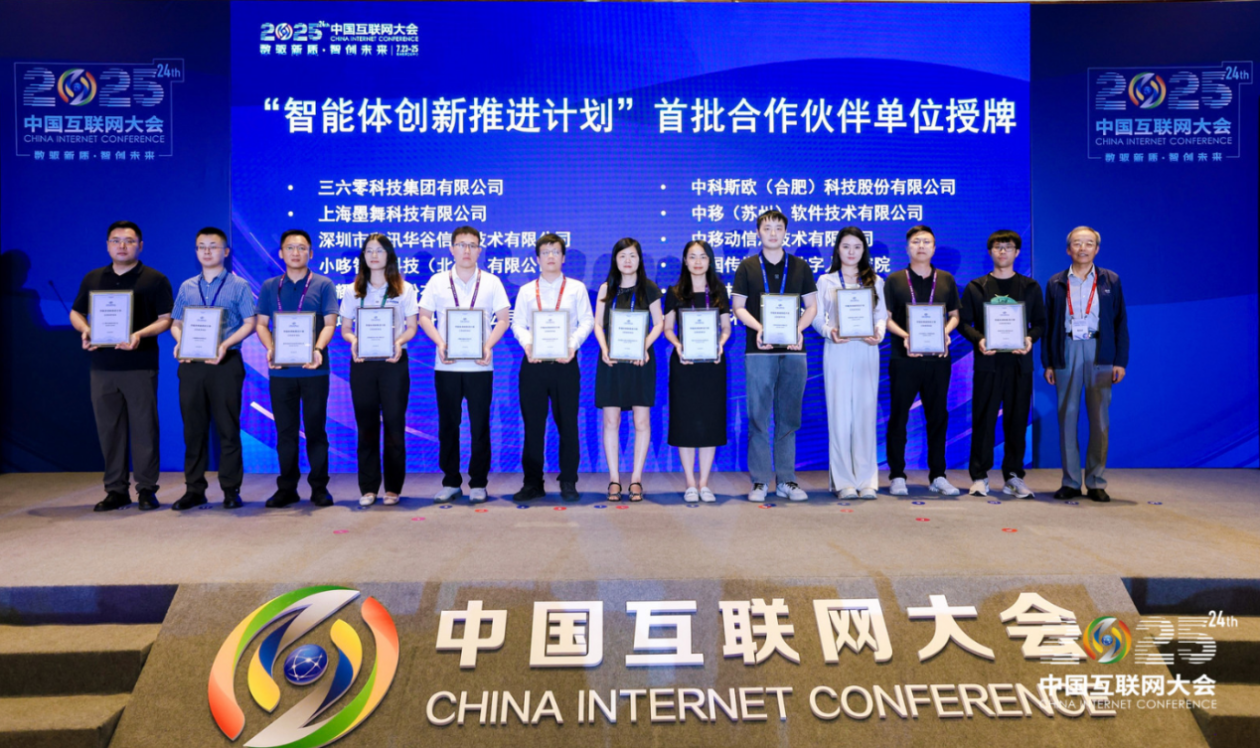
2025中国互联网大会:360入选智能体创新计划首批核心伙伴 聚焦All in Agent战略
Huan Qiu Wang· 2025-08-20 11:14
Core Insights - The "Intelligent Agent Innovation Promotion Plan" has been officially launched, aiming to build a collaborative intelligent agent ecosystem and promote the innovation and application of artificial intelligence technology [1][4] - 360 has become one of the first 24 core partners in this initiative, leveraging its expertise in AI and security to contribute to the development of the intelligent agent industry ecosystem [1][4] Company Strategy - 360's founder, Zhou Hongyi, has announced a strategic focus on the "All in Agent" strategy, positioning AI as the core support for the company's development [3] - The company has developed the leading AI search and intelligent agent application in China, known as Nano AI multi-agent swarm, which categorizes intelligent agent capabilities into five levels (L1 to L5) [3] Technological Advancements - The Nano AI has achieved L3 level reasoning capabilities, executing 100 consecutive tasks with zero errors, handling up to 1 million tokens, and utilizing over 100 tools with a success rate of 98.2% [3] - The L4 multi-agent swarm can complete 1000 consecutive tasks, with token consumption ranging from 5 million to 30 million, and a success rate of 95.4%, capable of generating a 30-minute complete video from a single user command [3] Collaborative Efforts - 360 will actively participate in ten key areas of the "Promotion Plan," including establishing mechanisms, observing trends, building platforms, promoting applications, advocating for open-source, setting standards, facilitating integration, promoting win-win scenarios, nurturing talent, and ensuring security [4] - The company aims to collaborate closely with various sectors, including government, industry, academia, and research, to drive technological innovation, enrich application scenarios, and enhance market demand alignment [5]
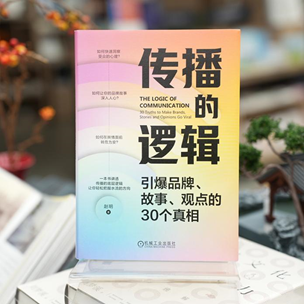
在众声喧哗中掌握舆论密码,周鸿祎力荐《传播的逻辑》解码传播真相
Xin Lang Zheng Quan· 2025-08-20 02:17
Core Insights - The article discusses the transformation of communication in the new media era, emphasizing the challenges and opportunities for companies and individuals in navigating public opinion and information flow [1][3][10]. Group 1: Book Overview - "The Logic of Communication" by Zhao Ming integrates theories from multiple disciplines, including communication studies, psychology, and management, to create a systematic framework for understanding and executing communication strategies [3][4]. - The book addresses the fundamental question of how to effectively convey information in a social media landscape characterized by scarce attention and emotional influence [3][10]. Group 2: Key Themes - The essence of communication is connecting information with people, and understanding audience psychology is crucial for developing effective communication strategies [5][7]. - Successful communication is framed as telling compelling stories that resonate with the audience's existing knowledge and values, utilizing narrative structures to engage effectively [7][8]. Group 3: Practical Applications - The book outlines practical methods for managing public relations and crisis communication, advocating for proactive strategies to mitigate risks and enhance brand perception [8][10]. - It emphasizes the importance of transparency and emotional connection in crisis management, suggesting that companies should adopt flexible communication strategies to maintain public goodwill [8][10]. Group 4: Recommendations and Endorsements - The book has received endorsements from various industry leaders and academics, highlighting its relevance for business professionals, media practitioners, and students in understanding modern communication dynamics [11][13][14].