重庆银行

Search documents
“退名单”平台成信贷新风口,多家银行政务类贷款占比超四成
Xin Lang Cai Jing· 2025-07-23 13:02
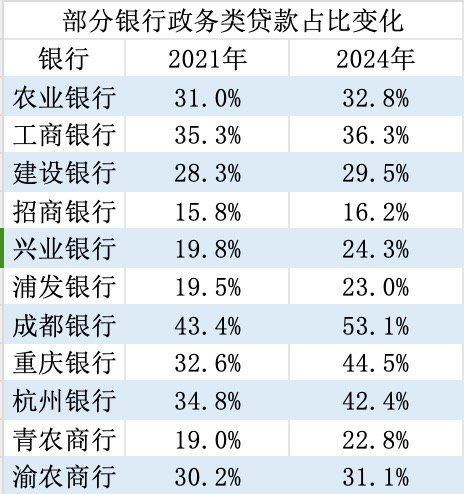
Core Viewpoint - Since 2022, the real estate market has been adjusting, leading to a contraction in real estate loans, while government-related loans have been on the rise, particularly in city commercial banks where the proportion of government loans has exceeded 40% in some cases [1][6] Group 1: Loan Market Dynamics - The "exit list" platform has emerged as a new growth point for bank credit, allowing financing platforms that have exited the list to operate as market entities without financing restrictions [2][3] - Government-related loans have seen a significant increase, compensating for the decline in real estate loans, with banks focusing on infrastructure projects and local government financing [6][10] - The exit of financing platforms from the list is part of a broader reform, with over 7,000 platforms expected to be reduced, which may lead to increased credit demand in the market [3][4] Group 2: Bank Strategies and Performance - Different types of banks have varying strategies for government-related loans, with state-owned banks focusing on major national and provincial projects, while city commercial banks target county-level projects [7][9] - City commercial banks have seen a significant increase in the proportion of government-related loans, with some banks like Chengdu Bank exceeding 53% [7][10] - The capital market has responded positively to banks with a high proportion of government loans, with notable increases in market value for banks like Chengdu Bank and Hangzhou Bank [10]

广发银行杭州分行落地温州中心城区康养产业提升项目
Mei Ri Shang Bao· 2025-07-23 10:50
在此过程中,广发银行杭州分行创新服务模式,一方面通过银团贷款为项目提供长期稳定的资金支持, 降低融资成本;另一方面在授信方案中充分考虑项目应急功能的公益性属性,通过差异化定价机制降低 项目运营成本,助力打造"韧性养老社区"。 据测算,温州中心城区康养产业提升项目运营后,预计年营业收入可达数亿元,带动就业超千人,惠及 老年人群超10万人次。项目不仅将显著提升鹿城区养老服务质量,更将为浙南地区乃至全省医养结合模 式提供可复制的"温州样板"。 根据规划,温州中心城区康养产业提升项目将通过改造提升长者公寓、建设医养结合体验馆、扩容养老 服务中心及老年病医院等设施,打造集医疗、康复、照护、文化于一体的医养服务综合体。项目建成 后,将有效缓解区域养老供需矛盾,助力温州构建"居家社区机构相协调、医养康养相结合"的养老服务 体系。 广发银行杭州分行积极响应国家"实施积极应对人口老龄化国家战略"的号召,主动对接项目融资需求。 授信审批环节,通过总分支行协同联动,高效完成项目尽调、授信方案设计及审批流程,为项目提供专 业、专项的信贷支持。此次银团贷款的落地,不仅体现了分行对养老产业的授信支持,更展现了其通过 金融创新服务实体经济 ...
重庆银行收盘下跌1.69%,滚动市盈率7.01倍,总市值364.48亿元
Jin Rong Jie· 2025-07-22 10:46
Core Viewpoint - Chongqing Bank's stock closed at 10.49 yuan, down 1.69%, with a rolling PE ratio of 7.01 times and a total market value of 36.448 billion yuan, indicating a competitive position within the banking sector [1] Financial Performance - For Q1 2025, the company reported operating revenue of 3.581 billion yuan, a year-on-year increase of 5.30%, and a net profit of 1.624 billion yuan, also up by 5.33% [3] Market Position - The average PE ratio for the banking industry is 7.32 times, with a median of 6.68 times, placing Chongqing Bank at the 27th position among its peers [1][3] - The company's PE (TTM) is 7.01, while the static PE is 7.12, and the price-to-book ratio is 0.683 [3] Shareholder Information - As of March 31, 2025, Chongqing Bank had 35,943 shareholders, a decrease of 4,248 from the previous count, with an average holding value of 352,800 yuan and an average shareholding of 27,600 shares per shareholder [1]

金融股基金仓位回升,银行增配明显
HTSC· 2025-07-22 10:08
Investment Rating - The report maintains an "Overweight" rating for both the banking and securities sectors [6]. Core Insights - Financial stock fund positions have rebounded, with a notable increase in bank allocations driven by public fund reforms and strong performance of quality regional banks [1][2]. - The banking sector saw a quarter-on-quarter increase in fund positions, with a rise of 1.12 percentage points to 4.87% in Q2 2025, surpassing the average level since 2010 [2][14]. - The securities sector also experienced a marginal recovery in fund positions, with a 0.28 percentage point increase to 0.64% in Q2 2025, primarily benefiting from strong earnings growth among major brokerages [3][5]. Summary by Sections Banking Sector - Fund positions in the banking sector increased, with quality city commercial banks and undervalued joint-stock banks attracting significant inflows [2]. - The market capitalization distribution among different types of banks shows that city commercial banks accounted for 46.0%, joint-stock banks 32.0%, and large state-owned banks 15.7% [2][14]. - The top five holdings in the banking sector include China Merchants Bank, Jiangsu Bank, Ningbo Bank, Hangzhou Bank, and Chengdu Bank, with 25 out of 40 major stocks seeing increased holdings [14][53]. Securities Sector - The securities sector saw a significant increase in fund positions, with around 80% of brokerage stocks being increased in holdings, particularly among leading firms like CITIC Securities and Dongfang Securities [3][5]. - Major brokerages reported substantial profit growth, with large firms seeing a year-on-year net profit increase of 50% to 80% [3]. - The A-share brokerage index's price-to-book ratio (PB) reached 1.52x, indicating a valuation uplift [3]. Insurance Sector - The insurance sector's fund positions rose by 0.52 percentage points to 1.10% in Q2 2025, with companies like China Pacific Insurance and Ping An Insurance receiving increased investments [4]. - The sector's price-to-book ratio stands at 1.50x, reflecting a valuation in the 35.6 percentile since 2014 [4]. Investment Opportunities - The report highlights investment opportunities in quality financial stocks, particularly in the securities sector, where high earnings growth and active market trading conditions are expected to drive recovery [5]. - In the banking sector, the report anticipates a stabilization in performance, with a focus on quality regional banks and a notable dividend yield advantage [5]. Key Recommendations - Specific stock recommendations include China Galaxy Securities, Guotai Junan, and CITIC Securities in the securities sector, and Jiangsu Bank, Hangzhou Bank, and China Merchants Bank in the banking sector [9].
银行板块短线跳水,厦门银行跌超4%
news flash· 2025-07-22 02:01
Group 1 - The banking sector experienced a short-term decline, with Xiamen Bank (601187) dropping over 4% [1] - Chongqing Rural Commercial Bank (601077) fell more than 3% [1] - Several other banks, including Xi'an Bank (600928), Jiangsu Bank (600919), Chongqing Bank (601963), and Minsheng Bank (600016), saw declines exceeding 2% [1]
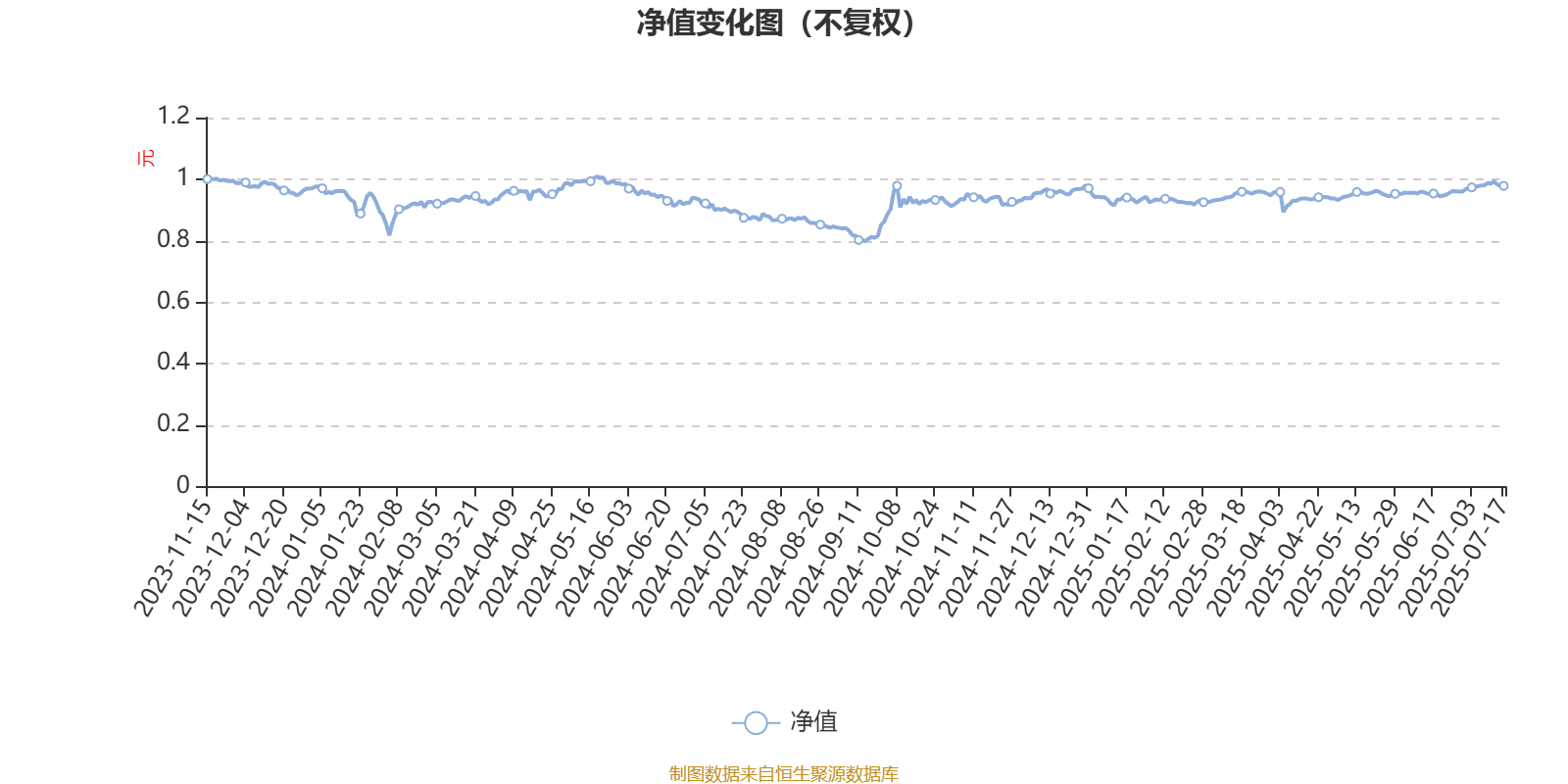
华夏红利混合A:2025年第二季度利润3976.5万元 净值增长率0.83%
Sou Hu Cai Jing· 2025-07-22 01:51
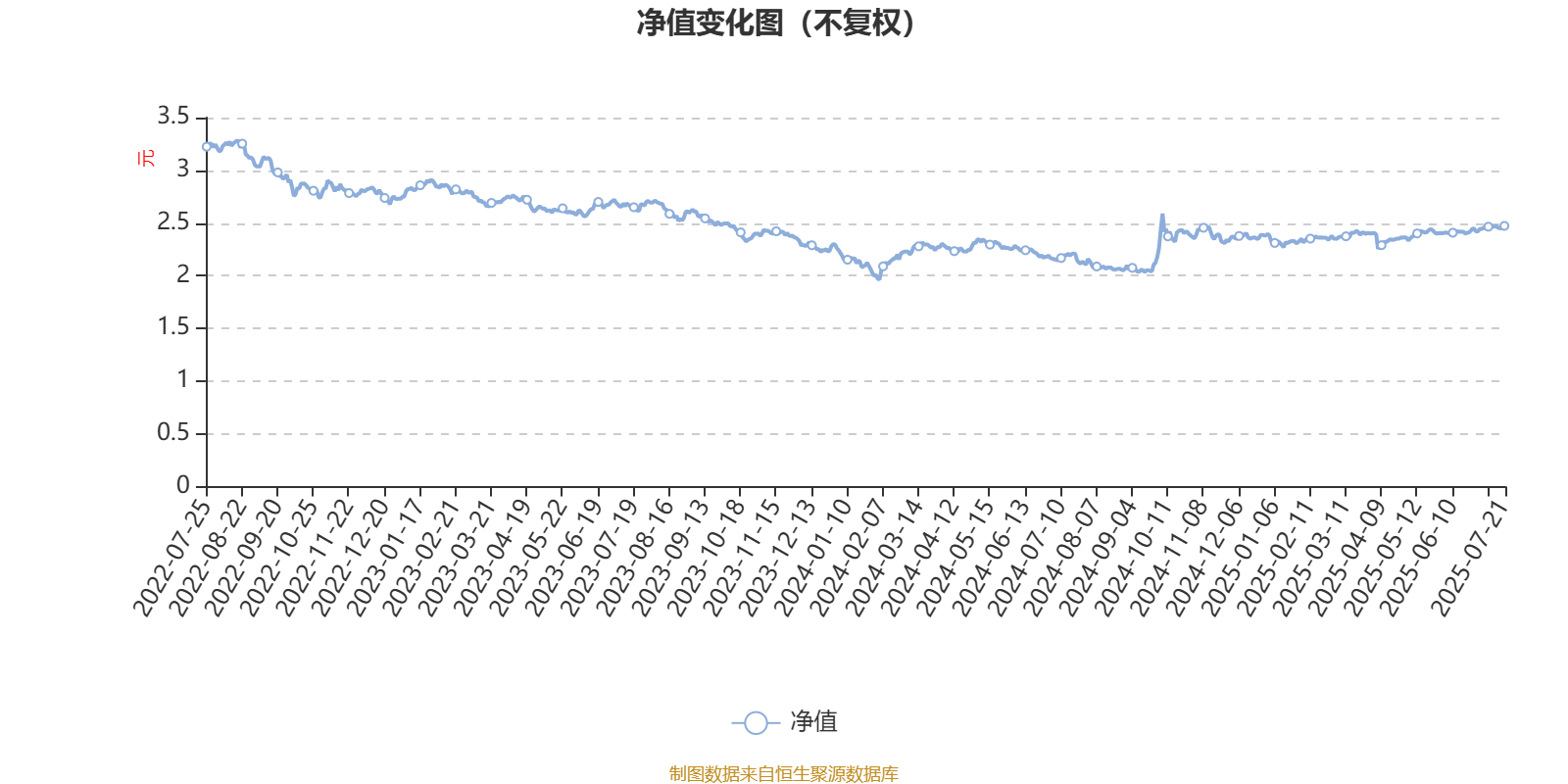
AI基金华夏红利混合A(002011)披露2025年二季报,第二季度基金利润3976.5万元,加权平均基金份额本期利润0.0201元。报告期内,基金净值增长率为 0.83%,截至二季度末,基金规模为47.62亿元。 该基金属于灵活配置型基金。截至7月21日,单位净值为2.473元。基金经理是林晶,目前管理3只基金近一年均为正收益。其中,截至7月21日,华夏收入混 合近一年复权单位净值增长率最高,达24.61%;华夏红利混合A最低,为11.85%。 基金管理人在二季报中表示,本基金投资策略核心围绕红利类资产展开,重点投资于高分红以及具备较强分红利潜力的公司。二季度本基金增加了金融、能 源、公用事业等行业的配置比例,降低了汽车、交运及地产链的配置比例。 截至7月21日,华夏红利混合A近三个月复权单位净值增长率为5.32%,位于同类可比基金693/880;近半年复权单位净值增长率为6.18%,位于同类可比基金 539/880;近一年复权单位净值增长率为11.85%,位于同类可比基金553/880;近三年复权单位净值增长率为-24.21%,位于同类可比基金687/871。 通过所选区间该基金净值增长率分位图,可以观察 ...
2025Q2末银行股机构筹码追踪:主动筹码增幅有限
ZHESHANG SECURITIES· 2025-07-21 10:08
Investment Rating - The industry investment rating is "Positive" (maintained) [8] Core Viewpoints - As of Q2 2025, institutional holdings in bank stocks have increased, primarily driven by passive investments, with limited growth in active public fund holdings. The overall chip structure remains healthy, with shares of state-owned banks and city commercial banks favored due to their low valuations or strong fundamentals [1][2] - The report suggests a continued positive outlook for the banking sector, emphasizing a long-term bullish trend rather than a mid-cycle correction. It recommends focusing on state-owned banks in 2024 and improving banks in economically developed regions in 2025, while also highlighting value-oriented banks with state-owned enterprise backgrounds in the Hong Kong market [5][6] Summary by Sections Overall Holdings - By the end of Q2 2025, the proportion of bank stocks held by public funds and northbound funds increased by 8.5% compared to Q1 2025, with a 0.7 percentage point rise in the proportion of free-floating shares. The main contributors to this increase were passive funds, while active public funds showed limited growth [1] - The holdings of small and medium-sized banks increased, with state-owned banks, joint-stock banks, city commercial banks, and rural commercial banks seeing respective increases of 0.1, 1.2, 1.0, and 0.6 percentage points in their institutional holdings [1] Individual Bank Performance - The banks with the largest increases in institutional holdings include Minsheng, CITIC, Ping An, Chongqing, and Yunnan Agricultural Bank, with respective increases in the proportion of free-floating shares of 3.2, 2.9, 2.7, 2.6, and 2.6 percentage points [2] Northbound Funds - Northbound funds maintained stable holdings, with a 2.3% increase in the number of shares held by the end of Q2 2025. The proportion of holdings in state-owned banks and joint-stock banks increased, while rural commercial banks experienced a notable outflow [3] Passive Public Funds - Passive holdings continued to rise, with a 39.0% increase in the number of bank stocks held by index funds by the end of Q2 2025, driven by index expansions and weight adjustments [4] Active Public Funds - Active public fund holdings increased by 6.3%, with a slight rise in the proportion of free-floating shares. However, the overall growth was below expectations, with significant increases in holdings of low-valuation or fundamentally strong joint-stock banks and city commercial banks [5]



为什么联名信用卡越来越少?
3 6 Ke· 2025-07-21 04:38
Core Viewpoint - The credit card industry in China is experiencing a significant transformation, shifting from expansion to a focus on quality and efficiency, as evidenced by the increasing number of banks discontinuing co-branded credit card products [12][19]. Group 1: Market Trends - Since January 1, 2025, at least seven major banks have announced the discontinuation of at least 22 co-branded credit card products, indicating a trend of product adjustments in the credit card market [2][6]. - Major banks, including China Bank and Citic Bank, have stopped issuing various co-branded credit cards, with reasons primarily cited as "business adjustments" or "contract expiration" [4][6]. Group 2: Product Adjustments - Co-branded credit cards, which are partnerships between banks and profit-oriented institutions, are being phased out due to their unsustainable cooperation models and imbalanced overall returns [9][10]. - Banks are transitioning to standard credit cards for existing co-branded cardholders, with changes in reward structures and benefits [4][6]. Group 3: Regulatory Environment - The regulatory framework has tightened, with new guidelines from the former CBIRC and the People's Bank of China mandating banks to focus on quality over quantity in credit card issuance [10][12]. - The new regulations require banks to limit the ratio of dormant credit cards to no more than 20%, prompting a reevaluation of credit card strategies [10][12]. Group 4: Consumer Behavior - The credit card market is increasingly catering to younger consumers, who have diverse interests and consumption needs, necessitating banks to innovate and tailor products accordingly [18][19]. - The decline in credit card issuance and usage reflects a broader trend of market saturation and the need for banks to refine their customer engagement strategies [12][13]. Group 5: Future Outlook - The discontinuation of co-branded credit cards is seen as a necessary step towards a more refined and efficient credit card business model, focusing on high-value customer segments and innovative product offerings [15][19]. - The industry is expected to evolve towards precision marketing and enhanced customer experiences, leveraging digital technologies and data analytics [7][19].


本周聚焦:25Q2存贷款增长有哪些特征?
GOLDEN SUN SECURITIES· 2025-07-20 09:58
Investment Rating - The report does not explicitly state an investment rating for the banking sector Core Insights - The growth of domestic RMB loans reached 268.6 trillion yuan by the end of June 2025, with a year-on-year growth rate of 7.10%, indicating a downward shift in the loan growth rate since 2024 [1] - The total domestic RMB deposit balance was 320.2 trillion yuan by the end of June 2025, with a year-on-year growth rate of 8.30%, showing an acceleration in deposit growth due to a low base effect from the previous year [3] - The issuance of special refinancing bonds reached 45.87 billion yuan in Q2, with a total issuance of 1.8 trillion yuan in the first half of the year, which is expected to gradually reduce the negative impact on credit growth [1][3] Summary by Sections Loan Growth - In Q1 2025, new loans added amounted to 9.7 trillion yuan, while Q2 saw a decrease to 3.1 trillion yuan, primarily due to a reduction in medium to long-term loans for enterprises [1] - Short-term loans and bill financing for enterprises decreased by 129 billion yuan, with bill financing down by 660.2 billion yuan as banks shifted focus to higher-yielding loans and bonds [1] Deposit Growth - Q1 2025 saw an increase of 13.0 trillion yuan in deposits, while Q2 added 5.0 trillion yuan, with significant contributions from non-bank deposits, household deposits, and government deposits [3] - The structure of deposits is shifting from on-balance-sheet to off-balance-sheet, driven by declining deposit rates [3] Sector Outlook - Short-term impacts from tariff policies may affect exports, but long-term expansionary policies aimed at stabilizing the real estate market and boosting consumption are expected to support economic growth [4] - The banking sector is anticipated to benefit from these policies, with specific banks like Ningbo Bank, Postal Savings Bank, and China Merchants Bank highlighted as potential investment opportunities [7]
万家红利量化选股混合发起式A:2025年第二季度利润5.99万元 净值增长率1.26%
Sou Hu Cai Jing· 2025-07-18 11:07
Core Viewpoint - The AI Fund Wanjiarongli Quantitative Stock Selection Mixed Initiation A (019987) reported a profit of 59,900 yuan in Q2 2025, with a weighted average profit per fund share of 0.0119 yuan, and a net value growth rate of 1.26% during the period [3][4]. Fund Performance - As of July 17, the fund's unit net value was 0.978 yuan, with a three-month net value growth rate of 4.63%, ranking 539 out of 615 in its category [4]. - The fund's six-month net value growth rate was 4.02%, ranking 512 out of 615, and the one-year growth rate was 9.63%, ranking 450 out of 584 [4]. - Since inception, the fund has maintained a high average stock position of 92.4%, compared to the category average of 83.13% [14]. Fund Management Insights - The fund manager, Yin Hang, oversees seven funds and anticipates that market sentiment will focus on the performance of A-share companies as they disclose their semi-annual reports [3]. - The manager believes that sectors with better-than-expected performance or sustained growth will attract short-term attention [3]. - The fund's maximum drawdown since inception was 20.86%, with the largest quarterly drawdown occurring in Q1 2024 at 16.34% [11]. Fund Holdings - As of Q2 2025, the top ten holdings of the fund included Erdos, New China Life Insurance, Gree Electric Appliances, China Shenhua Energy, Huayang Co., China Merchants Highway, Shangu Power, Chengdu Bank, Chongqing Bank, and Qilu Bank [19].