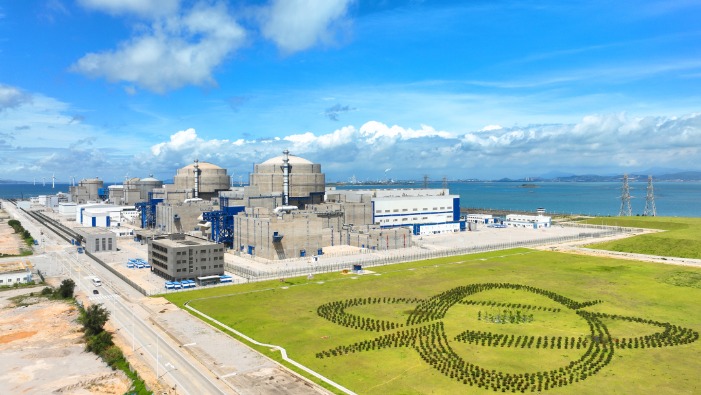
中国核电

Search documents
公用事业行业周报(20260201):理顺容量补贴机制,火电商业模式继续优化-20260201
EBSCN· 2026-02-01 15:17
Investment Rating - The report maintains a "Buy" rating for the public utility sector [6] Core Insights - The commercial model of the power sector is continuously transforming, with a reduced reliance on annual long-term contracts for electricity and prices. The sector is shifting towards mid-to-long-term markets, spot markets, and capacity markets, indicating a comprehensive push for marketization [19][3] - The capacity price mechanism is being refined, with the aim to optimize the electricity market and ensure fair compensation reflecting the contributions of different power plants to peak demand [15][3] - The report highlights the importance of capacity market development, with current subsidies in Gansu and Yunnan reaching 330 RMB/kW·year, which helps offset the decline in electricity prices [19][3] Summary by Sections Market Performance - The SW public utility sector index fell by 1.66% this week, ranking 16th among 31 SW sectors. In comparison, the CSI 300 index rose by 0.08%, while the Shanghai Composite Index and Shenzhen Component Index fell by 0.44% and 1.62%, respectively [33][33] - Within sub-sectors, thermal power decreased by 2.78%, hydropower increased by 0.3%, while solar and wind power fell by 4.53% and 2.49%, respectively [33][33] Price Updates - Domestic and imported thermal coal prices have rebounded slightly, with domestic Qinhuangdao port 5500 kcal thermal coal rising by 4 RMB/ton, remaining below 700 RMB/ton. Imported coal prices also saw a slight increase [12][12] - The average clearing price for electricity in Shanxi and Guangdong has significantly increased due to cold weather, while the monthly agent purchase electricity costs are trending upwards due to rising capacity prices and the entry of renewable energy into the settlement cycle [13][12] Key Events - The National Development and Reform Commission and the National Energy Administration issued a notice to improve the capacity price mechanism for power generation, which includes optimizing compensation for coal and gas power generation [3][15] - Recent policy changes include relaxing the annual long-term contract signing ratio for coal-fired power companies and the cancellation of time-of-use electricity pricing in multiple regions [3][15] Recommendations - The report suggests focusing on national thermal power operators such as Huaneng International and Guodian Power, which are expected to maintain stable cash dividends. The profitability of thermal power is anticipated to gradually detach from coal cost dependency, shifting towards multiple influencing factors [19][3] - For long-term stable investment needs, the report recommends attention to companies like Yangtze Power, State Power Investment Corporation, and China National Nuclear Power [19][3]


核电建设热潮下,设备厂忙到“飞起”
Mei Ri Jing Ji Xin Wen· 2026-02-01 13:03
Core Insights - The nuclear power equipment manufacturing sector is experiencing a surge in demand, with companies reporting full order books extending to 2028 and requiring continuous production to meet orders [1][6] - The rapid expansion of nuclear power construction in China has been evident since 2022, with approvals for 10 or more nuclear units each year, driving significant demand for nuclear equipment [1][14] - The competition for nuclear power plant sites has intensified, as multiple companies are vying for the same strategic locations, highlighting the scarcity of quality sites [2][3] Industry Demand and Supply - The nuclear power equipment market is facing tight supply conditions, particularly for critical components like valves and turbines, leading to a situation where manufacturers are operating at full capacity [6][7] - The market for nuclear-grade valves is projected to exceed 5 billion yuan annually, with demand for each nuclear unit's valves estimated between 800 million to 1.2 billion yuan [6][7] - The production cycle for nuclear equipment is lengthy and complex, with manufacturers striving to reduce delivery times while maintaining safety standards [10][18] Strategic Developments - Companies like China Nuclear Power and Shanghai Electric are actively increasing their site reserves and adjusting strategies to enhance their competitive edge in the nuclear sector [4][17] - The "Hualong One" reactor design has become the leading model for new constructions, supported by government policies promoting nuclear energy as part of a diversified energy strategy [14][16] - The domestic nuclear power industry is expected to see a significant increase in installed capacity, with projections of reaching 120 million kilowatts by 2030 [16] Talent Acquisition and Workforce Challenges - The nuclear industry is facing a talent shortage, leading to aggressive recruitment strategies and competitive salaries to attract skilled professionals [12][13] - Companies report that employees are frequently traveling for project work, with some teams spending over 200 days a year on the road [11][12] - The need for specialized training and certification for new hires adds to the challenges of workforce management in the rapidly growing nuclear sector [11][13] Global Market Expansion - Chinese nuclear companies are looking to expand their presence in international markets, targeting regions like Argentina and Pakistan for nuclear project opportunities [17][18] - The global market share for Chinese nuclear equipment is anticipated to rise to 10% by 2030, driven by both domestic demand and international exports [18][19] - The entry of private capital into the nuclear sector is increasing, as the government encourages private investment in major projects [19]
《关于完善发电侧容量电价机制的通知》(发改价格〔2026〕114号)的点评:容量电价引导调节电源投资精准定价平稳收益
Shenwan Hongyuan Securities· 2026-02-01 12:45
Investment Rating - The report assigns a "Buy" rating to several companies in the power generation sector, including Guodian Power, Huaneng International, and China Power Investment, indicating a positive outlook for these stocks [2]. Core Insights - The report discusses the recent notification from the National Development and Reform Commission and the National Energy Administration regarding the improvement of the capacity price mechanism for power generation, aimed at addressing the challenges of the new energy transition and ensuring the development of regulating power sources [1]. - The notification highlights the need for a balanced approach to "new energy consumption, power security, and regulating power source profitability," which is crucial for the construction of a new power system [1]. - The report emphasizes the differentiated optimization of capacity pricing for four types of regulating power sources, including independent new energy storage and pumped storage, to ensure fair competition and adequate compensation for capacity [1]. Summary by Sections Capacity Price Mechanism - The notification introduces a differentiated capacity pricing mechanism for various regulating power sources, allowing local authorities to set prices based on factors such as coal power capacity standards and peak contribution [1]. - The policy aims to ensure that the capacity value of regulating power sources is adequately recognized and compensated, addressing previous issues of insufficient cost coverage [1]. Unified Compensation Mechanism - A key breakthrough in the notification is the establishment of a reliable capacity compensation mechanism that standardizes compensation across different types of power generation units, promoting rational investment and resource allocation [1]. - This mechanism aims to avoid inefficient resource allocation by linking compensation to the actual contribution of each unit to the power system [1]. Investment Recommendations - The report recommends specific companies for investment based on their integrated operations and stable profit potential, including Guodian Power, Inner Mongolia Huadian, and China Huaneng [1]. - It also highlights the potential for hydropower companies to benefit from increased output and stable dividends, recommending companies like Yangtze Power and State Power Investment [1].


公用事业行业2025年全年电力数据点评:新能源装机创新高用电量结构优化
Yin He Zheng Quan· 2026-02-01 07:07
分析师 陶贻功 ☎:010-80927673 行业点评报告 · 公用事业行业 源装机创新高,用电量结构优化 -- 2025年全年电力数据点评 2026年1月 30 日 公用事亦 推荐 维持评级 网: taoyigong_yj@chinastock.com.cn 分析师登记编码:S0130522030001 梁悠南 ☎:010-80927656 网: liangyounan_yj@chinastock.com.cn 分析师登记编码:s0130523070002 研究助理:马敏 z: mamin_yj @chinastock.com.cn 相对沪深 300 表现图 2026-1-30 资料来源:中国银河证券研究院 资料来源:中国银河证券研究院 相关研究 【银河环保公用】行业点评_风光装机增速分化,用 电量增速放缓 【银河环保公用】行业点评_水电电量降幅扩大,用 电量增速放缓 【银河环保公用】行业点评_风光新增装机下滑,用 电量增速加快 【银河环保公用】行业点评_太阳能单月装机创新高, 火电发电量由降转增 【银河环保公用】行业点评_太阳能装机持续高增长, 水核发电量增速下降 www.chinastock.com.c ...
2025年全年电力数据点评:新能源装机创新高,用电量结构优化
Zhong Guo Yin He Zheng Quan· 2026-01-31 06:24
Investment Rating - The report maintains a "Recommended" investment rating for the industry [5]. Core Insights - The report highlights a record high in new energy installations, with total installed wind power reaching 640.0 GW, a year-on-year increase of 22.9%, and solar power installations at 1201.7 GW, up 35.5% year-on-year [4]. - Total electricity consumption in 2025 was 10,368.2 billion kWh, reflecting a growth of 5.0% compared to the previous year [4]. - The report anticipates that the growth rate of new energy installations will return to rational levels during the 14th Five-Year Plan period, with an expected addition of over 200 GW in 2026 [4]. Summary by Sections New Energy Installations - In 2025, new installations of wind and solar power reached 434 GW, marking a historical high, with year-on-year growth rates of 50.4% and 13.7%, respectively [4]. - The report notes that the growth rate of wind and solar installations is diverging due to the impact of policy changes on electricity pricing and output characteristics [4]. Electricity Consumption Trends - The report indicates that traditional industrial electricity consumption is slowing down, while new infrastructure and emerging industries are showing significant growth [4]. - In 2025, the share of secondary industry in total electricity consumption was 64.0%, a decrease of 0.8 percentage points, while the tertiary industry's share increased to 19.2%, up 0.6 percentage points [4]. Company Recommendations - For thermal power, the report recommends companies with diversified regional layouts and those with relatively small expected price declines in 2026, such as Huaneng International and Datang Power [4]. - For hydropower, it suggests focusing on companies with high dividend yields like Yangtze Power and those with stable pricing mechanisms like Guizhou Power [4]. - In the nuclear power sector, it highlights the growth potential of China General Nuclear Power and China National Nuclear Power despite short-term pricing pressures [4]. - For new energy, it recommends companies like Longyuan Power and Jilin Electric Power, which are positioned to benefit from supportive pricing and consumption trends [4].
An Uncertain But Positive Fed Supports Commodity Rally
Seeking Alpha· 2026-01-30 14:05
Group 1 - Alibaba has formed a joint venture with China National Nuclear Power to secure power supply for AI data centers, aligning with trends among major tech firms like Alphabet, Meta, and Amazon partnering with nuclear energy companies [1] - This collaboration is expected to provide a significant boost to nuclear energy stocks, indicating a growing interest in the sector from large technology companies [1] Group 2 - The Federal Reserve's recent decision to keep interest rates unchanged aligns with market expectations, reflecting a stable outlook for the economy [2] - The macroeconomic analysis suggests that the current environment may present generational investment opportunities, particularly in the green economy sector [2]


国家发改委、国家能源局重磅发布!
中国能源报· 2026-01-30 08:23
Core Viewpoint - The article discusses the implementation of a refined capacity pricing mechanism for power generation, aimed at enhancing the stability and efficiency of the electricity market while supporting the transition to a green energy system [1][2]. Group 1: Overall Strategy - The strategy aims to adapt to the needs of a new power system and market structure, balancing power supply security, green energy transition, and efficient resource allocation [3]. - It emphasizes the need to categorize and improve capacity pricing mechanisms for coal, natural gas, pumped storage, and new energy storage [3]. Group 2: Classification of Capacity Pricing Mechanisms - The capacity pricing mechanism for coal and natural gas power generation will be improved, with a target to recover at least 50% of fixed costs through capacity pricing [4]. - For pumped storage, existing projects will continue to use government pricing, while new projects will have their capacity pricing determined based on average cost recovery principles [5]. - A new capacity pricing mechanism for independent new energy storage on the grid side will be established, based on local coal power capacity pricing standards [6]. Group 3: Establishing Reliable Capacity Compensation Mechanism - A reliable capacity compensation mechanism will be established to compensate power generation units based on their ability to provide stable power during peak demand periods [7]. - The compensation will cover coal, gas, and qualifying new energy storage units, gradually expanding to include pumped storage [8]. Group 4: Supporting Policy Improvements - The article outlines the need to enhance electricity market trading and pricing mechanisms, allowing for flexible pricing in long-term contracts based on market conditions [9]. - It also discusses the need for improved electricity billing policies, ensuring that capacity fees and compensation are integrated into local system operating costs [10]. Group 5: Implementation and Coordination - The article emphasizes the importance of collaboration among provincial pricing authorities and energy departments to effectively implement the capacity pricing policies [11]. - It highlights the establishment of an economic capacity assessment system to guide the determination of reliable capacity compensation standards [12].
重磅!国家首次将新型储能纳入容量电价机制!关于完善发电侧容量电价机制的通知发布
中关村储能产业技术联盟· 2026-01-30 08:12
Core Viewpoint - The article discusses the implementation of a new capacity pricing mechanism for power generation, focusing on the establishment of an independent capacity pricing mechanism for grid-side new energy storage, aimed at ensuring the stable operation of the power system and promoting green development [6][8]. Group 1: Overall Strategy - The strategy aims to adapt to the needs of the new power system and market, balancing power supply security, green energy transition, and efficient resource allocation [8]. - It emphasizes the need to improve capacity pricing mechanisms for coal, natural gas, pumped storage, and new energy storage, optimizing the power market structure [8]. Group 2: Capacity Pricing Mechanism Improvement - The capacity pricing mechanism for coal and natural gas power generation will be enhanced, with a recovery ratio of fixed costs for coal power plants increased to no less than 50% [9]. - A capacity pricing mechanism for natural gas power generation will be established, determining prices based on a fixed cost recovery ratio [10]. - For pumped storage, the pricing will continue to be government-regulated for projects started before the issuance of relevant guidelines, while new projects will have their prices determined based on market participation [10]. Group 3: Establishment of New Energy Storage Pricing Mechanism - An independent capacity pricing mechanism for grid-side new energy storage will be established, with pricing based on local coal power capacity standards and adjusted according to peak capacity [11]. - The management of grid-side new energy storage projects will follow a list-based approach, with specific requirements set by the National Energy Administration [11]. Group 4: Reliable Capacity Compensation Mechanism - A reliable capacity compensation mechanism will be established to compensate power generation units based on their ability to provide stable power during peak demand periods [12]. - The compensation will consider fixed costs that cannot be recovered in energy and ancillary service markets, with adjustments based on supply-demand relationships and market progress [12]. - The compensation scope will include coal, gas, and eligible new energy storage units, gradually expanding to include pumped storage [12]. Group 5: Supporting Policies - The article outlines the need to improve electricity market trading and pricing mechanisms, allowing for flexible pricing in long-term contracts based on market conditions [14]. - It also discusses the integration of capacity fees and compensation into local system operating costs, with specific pricing rules for energy storage [15]. - A shared cost allocation method for regional pumped storage capacity fees will be established, promoting market-based optimization [15]. Group 6: Implementation and Coordination - The article emphasizes the importance of collaboration among provincial price authorities and relevant departments to implement capacity pricing policies effectively [16]. - It highlights the need for an assessment system to evaluate users' economic capacity to bear electricity costs, which will inform compensation standards [16]. - Strengthening capacity fee assessments will guide power generation units to enhance operational efficiency and peak output capabilities [17].

铀市新周期-价格动能-供需重构与全球战略储备展望
2026-01-30 03:11
铀市新周期:价格动能、供需重构与全球战略储备展望? 20260129 摘要 全球铀矿供应受限,未来 5-10 年部分矿山可能枯竭,新增产能短期难 以弥补,而中国核电发展及全球核电机组增加推升需求,导致供需失衡, 是铀价上涨的根本原因。 铀价上涨与资本市场活跃相关,类似于 2006-2007 年大宗商品同步上 涨趋势。美国政府对核能的政策信号及各国对能源安全的重视也推升了 铀价。 长期来看,全球低于 130 美元/磅成本的铀资源储量充足,长期维持 100 美元以上高价困难。短期内,资本市场活跃及多种利好因素叠加可 能推高现货价格,但难以持续。 现货交易量相对较小,长期合同交易量更大。长协价格受供需双方谈判 和政治因素影响,可能与现货价格倒挂,咨询公司数据获取困难和稳定 报价策略也可能导致长协价失真。 美国关键矿产战略储备处于提案阶段,若通过市场采购铀,将挤压市场 价格;若增加国内产能,影响较小。战略储备规模较大,需 5 年以上时 间才能达到。 Q&A 最近天然铀价格上涨的主要原因是什么?未来价格走势如何? 最近天然铀价格上涨的主要原因可以归结为以下几点: 中国核电厂倾向于签订长期合同,目前至 2030 年的需求 ...
核电建设热潮下,设备厂忙到“飞起”!订单已排至2028年,员工三班倒,产线24小时不停
Mei Ri Jing Ji Xin Wen· 2026-01-29 15:09
Core Insights - The nuclear power equipment manufacturing sector is experiencing a significant surge in demand, with companies reporting full order books extending to 2028 and requiring overtime production to meet deadlines [1][3][10] - The current boom in nuclear power equipment production is not a coincidence, as the trend began to emerge in 2022, driven by a consistent approval of 10 or more nuclear reactor units annually in China [2][3] Industry Demand and Supply - The rapid acceleration of nuclear power construction has triggered a chain reaction across the entire industry chain, leading to increased competition for nuclear power plant sites and a pressing need to address capacity constraints [3][7] - The scarcity of quality nuclear power sites is intensifying competition among companies, as a single site can support multiple reactors and generate substantial economic benefits [6][7] - Companies are now compressing the preparation period for site development from six months to as little as three months to keep pace with the growing demand [8][9] Equipment Manufacturing Challenges - The manufacturing of critical nuclear components, such as valves and turbines, is under strain, with suppliers operating at full capacity and facing challenges in meeting delivery timelines [10][11] - The market for nuclear-grade valves is projected to exceed 5 billion yuan annually, with demand for each reactor unit estimated between 800 million to 1.2 billion yuan [11] - Companies are adopting smart manufacturing and modular production techniques to reduce delivery times from 18 months to 12 months [11] Talent Acquisition and Workforce Issues - The nuclear industry is facing a significant talent shortage, with companies competing aggressively for skilled professionals, leading to high salaries and extensive travel requirements for employees [15][18][19] - The average salary for skilled positions, such as CNC operators and welders, exceeds industry averages, reflecting the competitive nature of talent acquisition [19][20] Strategic Industry Developments - The Chinese government has set clear policy directions to support the growth of nuclear energy, emphasizing its role in the national energy strategy [21][23] - The "Hualong One" reactor model is becoming the dominant technology in new nuclear projects, with a focus on enhancing safety and efficiency [23][27] - The nuclear power sector is expected to see sustained growth, with projections indicating a need for 6 to 8 new large-scale reactors annually to meet future energy demands [28][29] International Market Expansion - Chinese nuclear companies are actively pursuing opportunities in international markets, aiming to capture a significant share of the global nuclear power equipment market [29][30] - The involvement of private capital in nuclear projects is increasing, reflecting a shift in the industry landscape as the government encourages private investment [30]