凤凰传媒

Search documents
教辅不进校,新华书店挤进直播间
21世纪经济报道· 2025-09-12 14:18
Core Viewpoint - The article highlights the challenges faced by Xinhua Bookstore due to declining school-age population and strict educational policies affecting the supplementary education materials market, leading to a significant drop in revenue and profit for the company in 2024 [1][9]. Group 1: Revenue and Profit Decline - In 2024, Xinhua Bookstore's revenue was 137.165 billion yuan, and net profit was 10.741 billion yuan, marking the first occurrence of both revenue and profit decline in recent years, with a revenue drop of 5.1% and a profit drop of 27.25% [1][9]. - The decline in revenue is attributed to the reduction in the sales of educational materials due to a decrease in school-age population and changes in educational policies [3][4]. Group 2: Impact of Educational Policies - The Ministry of Education's new policies, which include strict regulations on the subscription of supplementary educational materials, are expected to further pressure the sales of Xinhua Bookstore's educational products [4][7]. - The educational policy changes have led to a significant decrease in the sales of supplementary materials, with companies like Longban Media and Urban Media reporting revenue declines of 24% and 21.4%, respectively, due to these factors [3][4]. Group 3: Shift in Sales Channels - There is a notable shift from traditional sales channels to online platforms, with Xinhua Bookstore exploring live streaming and e-commerce to adapt to changing consumer behavior [16][17]. - The retail market for supplementary educational materials is expanding, with a reported 18.73% increase in retail sales in 2024, indicating a transition from school subscriptions to retail purchases by parents [12][16]. Group 4: Future Strategies - Xinhua Bookstore is compelled to innovate its sales strategies, including the establishment of new media teams and the exploration of various online platforms to enhance its market presence [17][19]. - Despite the challenges, there is an acknowledgment that the demand for educational materials remains, but the sales channels are evolving, necessitating a strategic pivot for Xinhua Bookstore [12][19].


教辅不进校,新华书店挤进直播间
2 1 Shi Ji Jing Ji Bao Dao· 2025-09-12 11:20
Core Viewpoint - The decline in the number of school-age children and the implementation of strict educational materials policies are significantly impacting the revenue of Xinhua Bookstore, which relies heavily on the distribution of educational materials [1][2][5]. Group 1: Financial Performance - In 2024, Xinhua Bookstore reported a revenue of 137.165 billion yuan and a net profit of 10.741 billion yuan, marking the first occurrence of a "double decline" in recent years, with the revenue drop being the largest [2][11]. - Various publishing companies in the educational materials sector have also reported significant revenue declines, with Dragon Media's revenue down 24% and City Media's down 21.4% [4][7]. Group 2: Market Trends - The educational materials market is facing challenges due to a decrease in school-age population and new policies that restrict the distribution of supplementary materials, leading to a shift in sales channels from traditional methods to online platforms [5][16]. - The retail market for educational materials is expanding, with a reported 18.73% year-on-year growth in retail sales of educational materials in 2024 [16]. Group 3: Strategic Shifts - Xinhua Bookstore is increasingly turning to online sales and live streaming to adapt to changing market conditions, with some bookstores even selling non-book items to diversify revenue streams [17][19]. - The shift to online platforms has shown mixed results, with some bookstores achieving significant sales while others lag behind, indicating a disparity in adaptation to the new retail environment [20][21].
出版板块9月11日涨0.48%,龙版传媒领涨,主力资金净流出4.31亿元
Zheng Xing Xing Ye Ri Bao· 2025-09-11 08:50
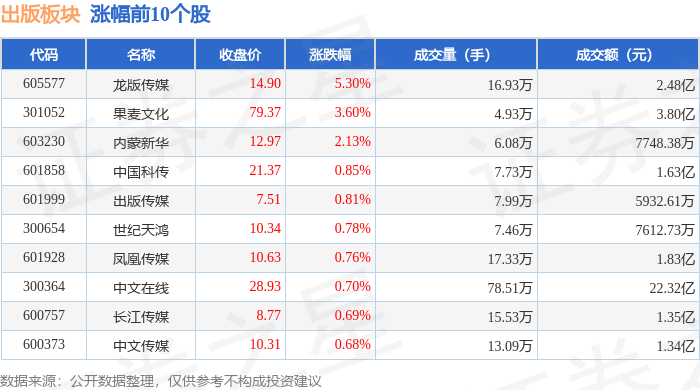
Market Overview - On September 11, the publishing sector rose by 0.48%, with Longban Media leading the gains [1] - The Shanghai Composite Index closed at 3875.31, up 1.65%, while the Shenzhen Component Index closed at 12979.89, up 3.36% [1] Individual Stock Performance - Longban Media (605577) closed at 14.90, up 5.30% with a trading volume of 169,300 shares and a turnover of 248 million yuan [1] - Guomai Culture (301052) closed at 79.37, up 3.60% with a trading volume of 49,300 shares and a turnover of 380 million yuan [1] - Inner Mongolia Xinhua (603230) closed at 12.97, up 2.13% with a trading volume of 60,800 shares and a turnover of 7.75 million yuan [1] - China Science Publishing (601858) closed at 21.37, up 0.85% with a trading volume of 77,300 shares and a turnover of 163 million yuan [1] - Other notable stocks include Phoenix Media (601928) and Chinese Online (300364), with respective turnovers of 183 million yuan and 2.23 billion yuan [1] Capital Flow Analysis - The publishing sector experienced a net outflow of 431 million yuan from institutional investors, while retail investors saw a net inflow of 433 million yuan [2] - The data indicates that retail investors are actively participating in the market despite the overall net outflow from institutional funds [2] Detailed Capital Flow for Selected Stocks - Longban Media had a net inflow of 17.24 million yuan from institutional investors, while retail investors had a net outflow of 23.03 million yuan [3] - Chinese Media (600373) saw a net inflow of 16.56 million yuan from institutional investors, with retail investors also experiencing a net outflow [3] - Other stocks like Changjiang Media (600757) and Tianzhou Culture (300148) showed mixed capital flows, with institutional inflows and retail outflows [3]



震荡市安全边际凸显 红利资产成资金配置焦点
Zheng Quan Shi Bao· 2025-09-10 22:42
Core Viewpoint - The A-share market has experienced fluctuations and adjustments since September, with an increase in risk aversion, leading some funds to shift towards dividend assets characterized by low valuations and high dividends [1] Market Overview - Since September, the Shanghai Composite Index has declined by 1.18%, indicating a volatile market with structural characteristics becoming more pronounced [2] - Industries such as defense, computer, and electronics have seen significant pullbacks, with the defense industry index dropping over 10% [2] - Conversely, cyclical industries like electric equipment, non-ferrous metals, and public utilities have strengthened, with electric equipment industry rising over 5% [2] Stock Performance - Over 3,000 stocks have declined since September, with over 450 stocks falling more than 10%, while over 400 stocks have increased by more than 10% [3] - Stocks that have risen by at least 10% exhibit notable high dividend characteristics, with the average market capitalization of these "big gainers" being below 15 billion, compared to nearly 19 billion for "big losers" [4] Dividend Assets - High dividends are a significant feature of the stocks that have surged in September, with dividend assets attracting considerable capital [5] - As of September 9, the overall stock market saw a net outflow of over 8 billion in stock ETFs, while dividend-themed ETFs experienced a net inflow of over 800 million [5] - Financing balances in industries like electric equipment and non-ferrous metals have increased, with electric equipment seeing a rise of over 15% [5] Stability and Risk Buffer - Dividend assets have shown significant anti-drawdown characteristics during market downturns, outperforming the Shanghai Composite Index in several instances since 2020 [6][7] - The dividend index has a lower price-to-earnings ratio compared to other indices, indicating a more attractive valuation for risk-averse investors [8] Investment Strategy - The dividend sector, characterized by low valuations and high dividend yields, serves as a strong defensive choice in a volatile market [9] - The consumer sector, while undervalued, offers stable dividend returns and growth potential, suitable for long-term investors [9] - The technology sector, despite its high growth potential, presents certain investment risks due to lower dividend yields and relatively high valuations [9]
震荡市安全边际凸显红利资产成资金配置焦点
Zheng Quan Shi Bao· 2025-09-10 18:09
Market Overview - Since September, the A-share market has experienced fluctuations and adjustments, with increased risk aversion leading some funds to shift towards dividend assets characterized by low valuations and high dividends [1] - The Shanghai Composite Index has dropped by 1.18% since September, indicating a structural divergence in the market [2] Sector Performance - The defense, computer, and electronics sectors, which previously led the market, have seen significant corrections, with the defense sector index declining over 10% [2] - Conversely, cyclical sectors such as electric equipment, non-ferrous metals, and public utilities have strengthened, with the electric equipment sector rising over 5% [2] - The strong performance of cyclical sectors is attributed to steady demand recovery and the appeal of high dividend yields in the current market environment [2] Stock Characteristics - Over 3,000 stocks have declined since September, with more than 450 stocks falling over 10%, while over 400 stocks have risen more than 10% [3] - Stocks that have increased by at least 10% exhibit significant high dividend characteristics, with their average market capitalization below 15 billion and average P/E ratios lower than those of declining stocks [4] Fund Flows - Dividend assets have attracted significant capital, with dividend-themed ETFs seeing a net inflow of over 800 million, while other sectors like technology and AI have experienced substantial outflows [5] - Financing balances in sectors such as electric equipment and non-ferrous metals have increased, while sectors like defense and computing have seen declines [5] Stability and Risk Buffer - Dividend assets have shown notable resilience during market downturns, outperforming the Shanghai Composite Index in several instances since 2020 [6][7] - The dividend index has a lower P/E ratio compared to consumer and technology indices, indicating a more attractive valuation for risk-averse investors [8] Investment Strategy - The dividend sector is seen as a strong defensive choice in a volatile market, while the consumer sector offers stable returns and growth potential for long-term investors [9] - The technology sector, despite its high growth potential, carries investment risks due to lower dividend yields and higher valuations [9]
兴业证券:险资入市全拆解
智通财经网· 2025-09-06 07:43
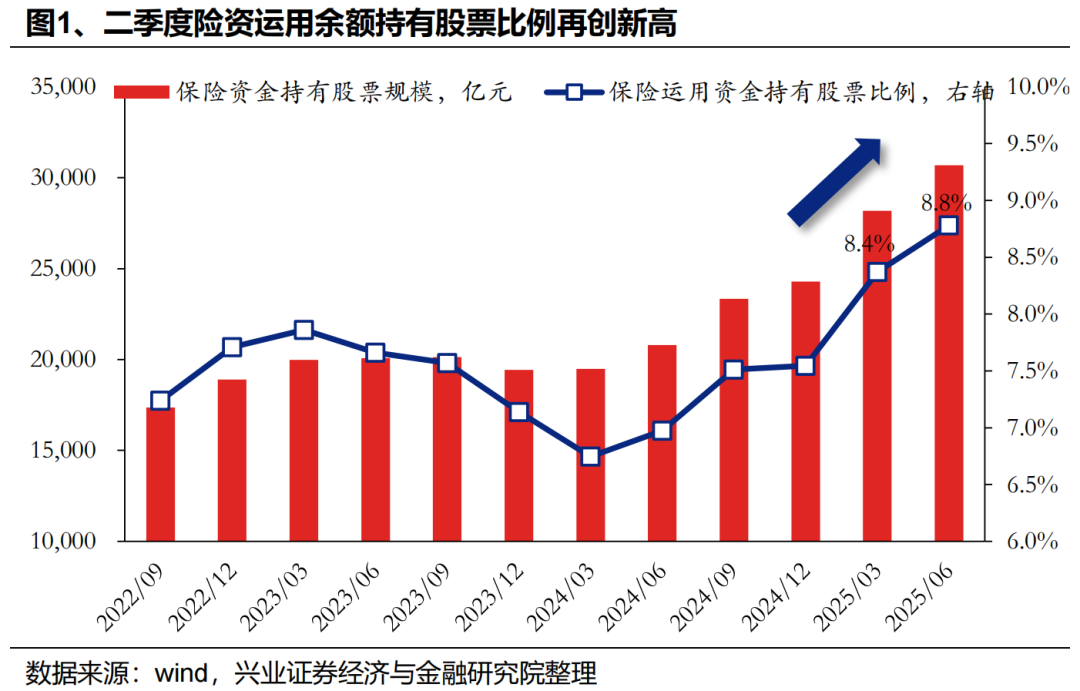
Group 1 - The core viewpoint of the articles indicates that state-owned insurance companies are increasingly optimizing their performance evaluation methods and enhancing their investment in equity assets, leading to a significant increase in stock holdings and a shift towards direct investment strategies [1][2][3]. Group 2 - Insurance funds have accelerated their entry into the market, with a net inflow of approximately 200 billion yuan into stocks in the second quarter, raising the proportion of stocks held to 8.8% [2]. - It is estimated that insurance funds will continue to increase their allocation to A+H stocks by 300 to 400 billion yuan in the second half of the year, driven by a policy encouraging large state-owned insurance companies to invest 30% of new premiums in the stock market [2]. - The shift in investment strategy is evident as insurance funds are moving from external management to direct investment, with a notable increase in stock holdings and a decrease in fund holdings since the fourth quarter of 2024 [2]. Group 3 - In the second quarter, insurance funds increased their allocation to high-dividend stocks while reducing their holdings in energy sectors, with a focus on technology and high-end manufacturing [3]. - The average dividend yield of the top 20 stocks increased to 3.80%, reflecting a preference for high-dividend assets, while the reduction in holdings of cyclical resource stocks indicates a strategic shift in asset allocation [3]. Group 4 - Insurance funds have significantly increased their stake in Hong Kong-listed companies, with 28 instances of shareholding increases this year, 23 of which were in Hong Kong stocks, marking a substantial rise compared to previous years [4]. - The influx of insurance funds into Hong Kong stocks has been a key driver of the rise in dividend assets in the region, particularly after a temporary slowdown due to tariff impacts [4]. Group 5 - In the first half of 2025, insurance funds reduced their allocation to ETFs focused on broad indices while increasing their investment in industry-specific ETFs, particularly in TMT, manufacturing, and financial real estate sectors [5][7]. - The net inflow into industry-themed ETFs reached 609 billion yuan, with insurance funds contributing significantly to this growth [7]. Group 6 - The top insurance companies in the A-share market have accelerated their stock allocations, with a total increase in stock market value of 411.9 billion yuan in the first half of 2025, reflecting a 28.7% increase [8]. - The proportion of FVOCI stocks held by these companies has risen significantly, indicating a strategic focus on long-term investments in dividend assets [8].

险资入市全拆解:连续五个季度大幅增配股票,二季度整体增配红利,整体仍增配科技
Xin Lang Cai Jing· 2025-09-06 07:29
Group 1 - The performance evaluation methods for state-owned insurance companies have been continuously optimized since the beginning of the year, leading to an improved policy environment for insurance fund equity investments, which has accelerated the entry of insurance capital into the market [1] - In the second quarter, insurance companies further increased their stock allocations by approximately 200 billion yuan, with the proportion of stocks held rising by 0.4 percentage points to 8.8% compared to Q1 [1] - It is estimated that insurance capital will continue to increase allocations to A+H stocks by 300 to 400 billion yuan in the second half of the year, based on a 30% investment of new premium income [5] Group 2 - Insurance capital's participation in equity assets is gradually shifting from external management to direct investment, with a notable increase in stock holdings since Q4 2024, while fund holdings have decreased [8] - In the second quarter, insurance capital increased allocations to dividend-paying stocks while reducing holdings in energy sectors, with a focus on technology and high-end manufacturing [11] - The average dividend yield of the top 20 stocks increased to 3.80%, indicating a preference for high-dividend assets [13] Group 3 - Insurance capital has accelerated its stake acquisitions in listed companies, particularly in Hong Kong stocks, with 28 stake acquisitions recorded by August 31, surpassing the total for the previous year [16] - The preference for Hong Kong assets has made insurance capital a core driver of the rise in Hong Kong dividend assets [19] Group 4 - In the first half of 2025, insurance capital's holdings in ETFs saw a slowdown, with a total of 214.9 billion yuan held, reflecting a shift towards direct investments [23] - Despite the slowdown in total ETF allocations, there has been a significant internal structural adjustment, with increased allocations to TMT, manufacturing, and financial real estate sector ETFs [29] Group 5 - The five listed insurance companies in A-shares increased their stock holdings by 411.9 billion yuan in the first half of the year, representing a 28.7% increase [33] - The proportion of FVOCI stocks held by listed insurance companies has significantly increased, with a 62.2% rise in holdings [36]



机构:高股息策略仍需重视,国企红利ETF(159515)规模创近1月新高!
Sou Hu Cai Jing· 2025-09-03 02:35
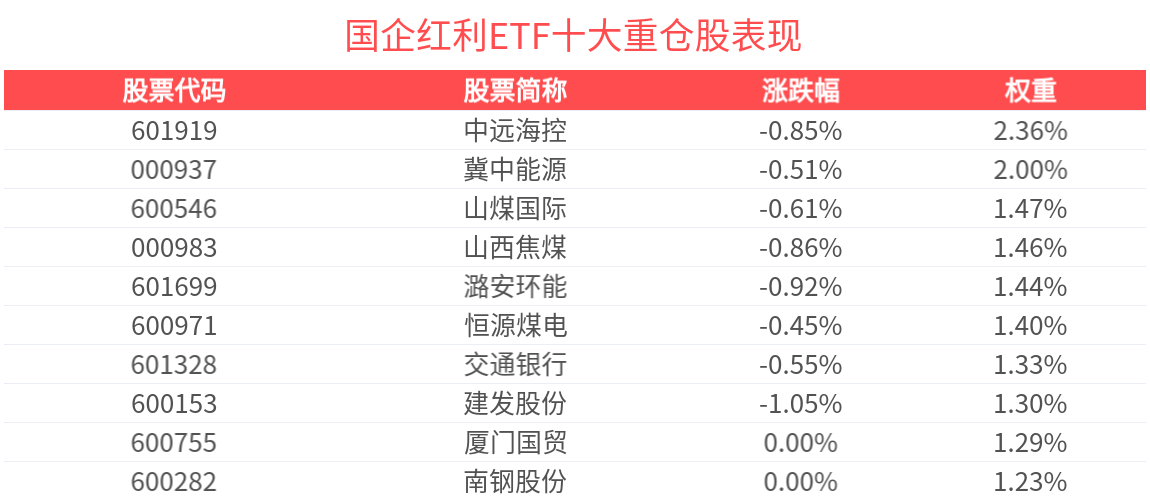
Group 1 - The China Securities State-Owned Enterprises Dividend Index (000824) decreased by 0.65% as of September 3, 2025, with mixed performance among constituent stocks [1] - Huayu Automotive (600741) led the gains with an increase of 3.07%, while Phoenix Media (601928) experienced the largest decline [1] - The latest price for the State-Owned Enterprises Dividend ETF (159515) was adjusted to 1.14 yuan [1] Group 2 - The State-Owned Enterprises Dividend ETF reached a new high in scale at 51.3344 million yuan, marking a significant increase in shares by 3.9 million over the past two weeks [2] - Open Source Securities emphasized the importance of high dividend strategies in the current uncertain environment, recommending stable dividend stocks like banks and public utilities over cyclical ones [2] - The strategy team at Shenwan Hongyuan projected that insurance companies will likely continue to be a key channel for residents' asset investments, estimating an incremental fund of 66.876 billion yuan for the dividend sector by 2025 [2] Group 3 - The China Securities State-Owned Enterprises Dividend Index tracks 100 listed companies with high cash dividend yields and stable dividends, reflecting the overall performance of high dividend securities among state-owned enterprises [3] - As of August 29, 2025, the top ten weighted stocks in the index accounted for 16.84% of the total index weight, with China Merchants Industry Holdings (601919) being the largest [3]
实体书店的死与生
创业邦· 2025-09-02 10:08
Core Viewpoint - The article highlights the paradox of a thriving offline reading demand, as evidenced by the Shanghai Book Fair, contrasted with the ongoing closure of physical bookstores, raising questions about the survival and future of these establishments [5][10][12]. Group 1: Current Market Dynamics - The Shanghai Book Fair attracted over 382,000 visitors, a year-on-year increase of 28.4%, with total book sales reaching 64.727 million yuan, up 31.6%, and cultural product sales hitting 10.17 million yuan, a 100.1% increase [5]. - Despite the apparent demand for physical bookstores, notable closures have occurred, including the recent announcement of the closure of the Tsutaya Bookstore in Chengdu, which reflects the ongoing struggles of physical bookstores [7][10]. - Major publishing companies, such as Phoenix Media and Central South Publishing, are experiencing revenue declines, with around 70% reporting decreased earnings and over 70% facing profit drops, indicating a broader industry downturn [10]. Group 2: Consumer Behavior and Preferences - The retail market for books is projected to decline, with a forecasted market size of 112.9 billion yuan in 2024, a year-on-year decrease of 1.52%, and a more significant drop of 4.83% when excluding educational materials [10][11]. - The distribution of book sales shows a significant shift towards online platforms, with e-commerce accounting for 40.9% of the market, while physical bookstores only capture 14% [11]. - The reading habits of the population are shifting towards digital formats, with 80.6% of adults engaging in digital reading, and the average daily reading time for physical books being only 24.41 minutes [19]. Group 3: Challenges Faced by Physical Bookstores - The price disparity between online and offline book sales is a critical challenge, with online prices often significantly lower due to lower operational costs, making it difficult for physical bookstores to compete [16][18]. - Many bookstores are increasingly relying on non-book sales, such as coffee and cultural products, to sustain their operations, but this strategy often fails to generate sufficient revenue [23]. - The trend of "bookstore+" models, which incorporate additional services and products, has not effectively reversed the decline in book sales, as many consumers visit primarily for the experience rather than purchasing books [21][23]. Group 4: Potential Paths Forward - Successful bookstores, like Beijing Wansheng Book Garden, demonstrate that a focus on specialized book selection and cultural positioning can attract a dedicated customer base without relying on additional services [27][30]. - New bookstore models are emerging that focus on niche markets, catering to specific interests such as feminism or children's literature, which may provide a sustainable path forward [30][32]. - The future of physical bookstores may depend on their ability to innovate and create unique cultural value that resonates with consumers, rather than merely replicating existing models [30].

江苏国企改革板块9月2日跌0.85%,联环药业领跌,主力资金净流出7.2亿元


Sou Hu Cai Jing· 2025-09-02 09:42
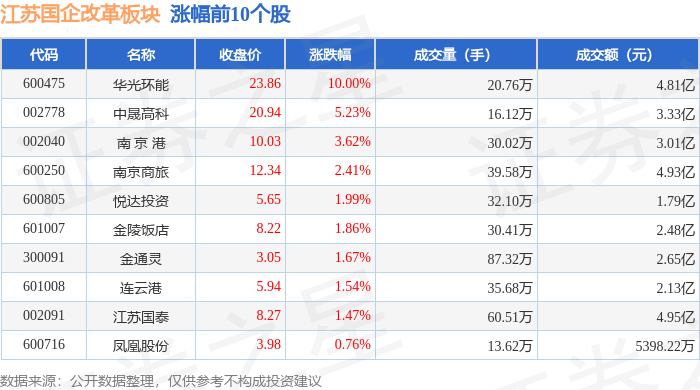
Market Overview - On September 2, the Jiangsu state-owned enterprise reform sector fell by 0.85% compared to the previous trading day, with Lianhuan Pharmaceutical leading the decline [1] - The Shanghai Composite Index closed at 3858.13, down 0.45%, while the Shenzhen Component Index closed at 12553.84, down 2.14% [1] Stock Performance - Notable gainers in the Jiangsu state-owned enterprise reform sector included: - Huami Environmental Energy (600475) with a closing price of 23.86, up 10.00% [1] - Zhongsheng High-Tech (002778) with a closing price of 20.94, up 5.23% [1] - Nanjing Port (002040) with a closing price of 10.03, up 3.62% [1] - Major decliners included: - Lianhuan Pharmaceutical (600513) with a closing price of 21.96, down 6.63% [2] - Tongxingbao (301339) with a closing price of 16.73, down 4.35% [2] - Nanjing Chemical Fiber (600889) with a closing price of 15.16, down 4.29% [2] Capital Flow - The Jiangsu state-owned enterprise reform sector experienced a net outflow of 720 million yuan from institutional investors, while retail investors saw a net inflow of 409 million yuan [2][3] - The capital flow for specific stocks showed: - Huami Environmental Energy (600475) had a net inflow of 1.421 billion yuan from institutional investors [3] - Jiangsu Jinzhu (002091) had a net inflow of 12.13 million yuan from institutional investors [3] - Nanjing Travel (600250) had a net inflow of 10.72 million yuan from institutional investors [3]