中国移动

Search documents
申请超20万颗!下周商业航天还是A股核心主线?
Ge Long Hui· 2026-01-11 10:30
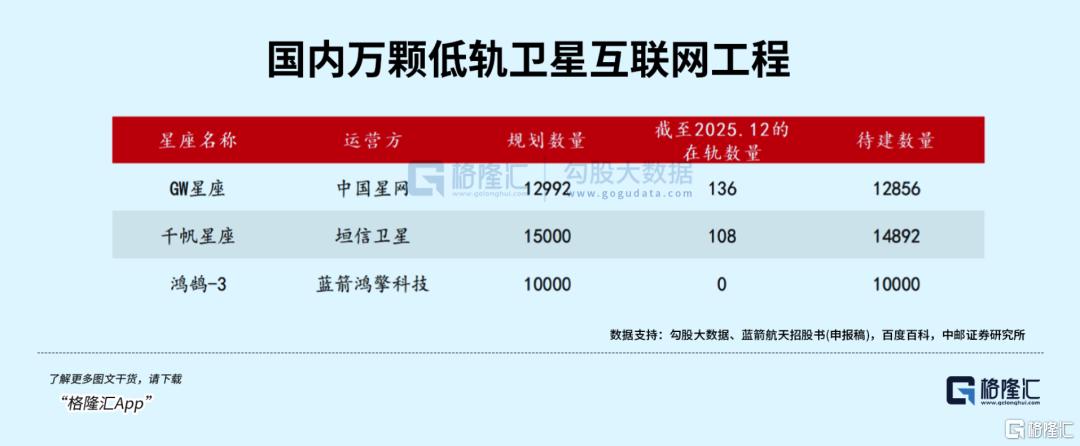
周末,一则关于卫星申报的重磅消息,在投资圈炸开了锅! 01、全球卫星竞赛升级,频轨资源争夺白热化 资料显示,此次申报的运营主体阵容堪称史上罕见,全面扩容至中国星网、上海垣信、中国移动、中国电信、无线电创新院、国电高科、航天驭星、银河 航天等多家知名企业与机构,涵盖国家队、地方国企、民营龙头及科研转化平台,形成全产业链协同申报格局。 1月10日,商业航天赛道传来标志性利好:国际电信联盟(ITU)官网公示显示,中国正式提交新增20.3万颗卫星的频谱轨位申请,覆盖14个卫星星座,申 报规模创下国内单次申报纪录。 其中,无线电创新院牵头的CTC-1和CTC-2两大星座表现尤为突出,各自申报96714颗卫星,合计达193428颗,占本次总申报量的95.3%,成为绝对主力。 无独有偶,周五,美国联邦通信委员会(FCC)同步批准SpaceX新增部署7500颗第二代星链卫星,使其获准运营的第二代卫星总数达到15000颗。此次授 权还包括卫星技术升级与多频段运营许可,并豁免了此前部分覆盖区域与容量方面的限制,为其全球互联网服务扩容扫清障碍。 分析指出,中美两国在短短48小时内密集出台卫星部署重磅政策,标志着全球太空战略资源竞争 ...

商业航天行业点评报告:商业航天:我国新增超20万颗卫星申请,全球太空资源竞争加速
ZHESHANG SECURITIES· 2026-01-11 10:23
Investment Rating - The industry investment rating is "Positive" (maintained) [6] Core Insights - China has submitted applications for over 203,000 satellites, indicating a significant expansion of satellite operation entities [1] - The global competition for space resources is accelerating, with China's new satellite applications aimed at securing frequency and orbital resources [3] - SpaceX has been approved to deploy an additional 7,500 second-generation Starlink satellites, bringing the total approved satellites to 15,000, enhancing network coverage both domestically and internationally [2] Summary by Sections Satellite Applications - In the last week of 2025, China reported multiple satellite constellation plans to the International Telecommunication Union (ITU), totaling 203,000 satellites [1] - The applications cover 14 satellite constellations and involve various operators, including traditional telecom companies and commercial space enterprises [1] Global Competition - The limited capacity for low Earth orbit satellites and the requirement for prior frequency resource applications are intensifying global competition in the space sector [3] - The core objective of China's new satellite applications is to secure frequency and orbital resources, further solidifying the domestic commercial space industry [3] Investment Recommendations - Focus on leading companies in the rocket and satellite sectors, including: - Rocket sector: Hangyang Co., Srey New Materials, Aerospace Power, and others [4] - Satellite sector: China Satellite, Maiwei Co., Zhenyou Technology, and others [4]
20万颗!下周A股核心主线来了!
格隆汇APP· 2026-01-11 09:43
Core Viewpoint - The article highlights a significant development in the commercial space sector, with China submitting a record application for 203,000 satellite frequency orbits, indicating an intensifying global competition for space resources [2][4]. Group 1: Satellite Deployment and Strategic Intent - China has submitted an application for 203,000 satellites, covering 14 satellite constellations, marking the largest single application in the country’s history [2]. - The CTC-1 and CTC-2 constellations, led by the Radio Innovation Institute, account for 193,428 satellites, representing 95.3% of the total application [2][4]. - The strategic intent behind this large-scale application is to secure satellite frequency and orbit resources, which are limited and follow a "first come, first served" principle [5]. Group 2: Competitive Landscape - The competitive landscape is highlighted by the simultaneous approval of SpaceX's deployment of 7,500 second-generation Starlink satellites by the FCC, bringing the total to 15,000 [2]. - The article notes that the U.S. currently has about 75% of the global satellite count, while China holds approximately 9%, indicating a significant gap and the urgency for China to enhance its satellite capabilities [5]. Group 3: Industry Growth and Future Projections - The commercial space sector in China is expected to see a rapid increase in satellite launches, with an estimated annual launch requirement rising from hundreds to over a thousand to meet existing applications [8]. - By 2025, China is projected to complete 92 space launches, surpassing 300 satellites and spacecraft, indicating a shift towards a dual-driven model of state and private sector collaboration [10]. - The year 2026 is anticipated to be pivotal for the commercial space industry, with advancements in rocket technology and increased launch capacity expected to drive significant growth [16][18]. Group 4: Investment Opportunities - The article suggests that sectors such as satellite manufacturing, rocket launch services, and ground equipment are likely to attract investment as the industry matures [13][14]. - Companies with technological or production advantages in critical areas like phased array antennas and satellite computing are expected to have greater growth potential [15].
突发,603359或终止重组!科技巨头获爆买
Zheng Quan Shi Bao· 2026-01-11 07:46
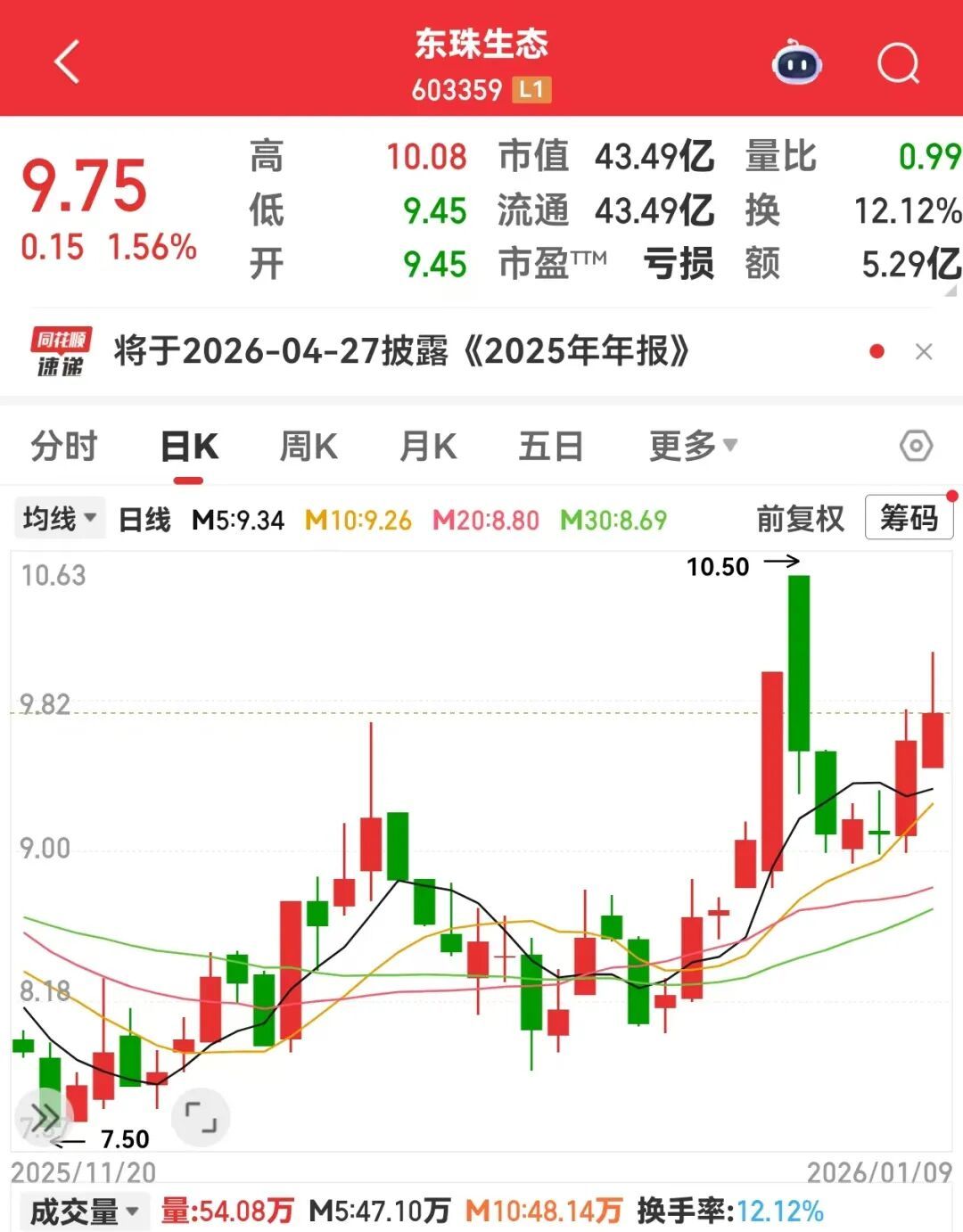
Group 1 - Dongzhu Ecological announced the potential termination of a major asset restructuring involving the acquisition of Kairuixing Information Technology (Nanjing) Co., Ltd. due to failure to reach preliminary agreement on valuation and commercial terms [1] - The target company specializes in satellite communication technology and systems, and the acquisition was expected to facilitate Dongzhu's strategic transformation into the satellite communication and space information technology sector [1] - Following the announcement of the acquisition plan, Dongzhu Ecological's stock price experienced a significant increase, rising by 16.35% compared to the price before the announcement [1] Group 2 - Dongzhu Ecological is involved in a lawsuit concerning a construction contract dispute with Huai'an Baima Lake Investment Development Co., Ltd., seeking 320 million yuan in damages [2] - The lawsuit's impact on the company's current or future profits remains uncertain as the case has not yet been heard in court [2] Group 3 - Southbound funds recorded a net inflow of 32.694 billion HKD during the first week of January, despite a decline in major Hong Kong stock indices [4] - Notable stocks with significant trading volumes included Alibaba-W, which had a total transaction amount of 53.514 billion HKD, and SMIC with 31.296 billion HKD [4] - Major technology stocks saw increased investment from southbound funds, with Xiaomi Group-W receiving the highest net buy amount of 5.089 billion HKD [5] Group 4 - Xiaomi Group-W's shareholding by southbound funds has increased for 15 consecutive weeks, reaching 4.716 billion shares valued at 178.375 billion HKD [5] - China Mobile experienced a net sell-off of 3.45 billion HKD, marking a decline in shareholding for six consecutive weeks [5] - The International Telecommunication Union reported that China has initiated a large-scale satellite constellation plan, with China Mobile applying for two constellations totaling 2,664 satellites [5] Group 5 - The stock of Jingtai Holdings has risen by 32.56% year-to-date, following the announcement of a strategic cooperation agreement with JinkoSolar for the development of AI-driven solar cell manufacturing [7] - Southbound funds have increased their holdings in several autonomous driving stocks, with Zhongwei New Materials seeing a remarkable 98.99% increase in shareholding [8][9] - The Guangzhou government has recently released policies to support autonomous driving applications in public transportation, aiming to create world-class demonstration cases [10]

中国上市公司“第一大省”:拥有889家,总市值超过浙江+江苏
Sou Hu Cai Jing· 2026-01-11 06:08
Group 1 - The capital market serves as a "barometer" for China's economy, with listed companies acting as the "locomotive" for economic development. By the end of 2025, there will be 5,469 listed companies in China, with a total market capitalization of 123 trillion yuan. In 2025, 116 new companies are expected to be listed, representing a 16% increase compared to 2024, raising a total of 131.77 billion yuan, primarily in sectors like computer, communication, and electronic equipment manufacturing [1] Group 2 - Shanghai ranks fifth with 452 listed companies, adding 8 new companies last year. Notably, the company Muxi Co., which specializes in high-performance GPU chips, has sold over 25,000 units by the end of March 2025 [3] - Beijing holds the fourth position with 481 listed companies and a total market capitalization of 30.6 trillion yuan, the highest in the country. It has 48 companies with a market value exceeding 100 billion yuan, primarily consisting of state-owned enterprises and large tech and financial firms [3] Group 3 - Jiangsu ranks third with 721 listed companies and a total market capitalization of 8.95 trillion yuan. It added 29 new companies last year, the highest in the country, with a focus on manufacturing and strategic emerging industries [5] - Suzhou has become the leading city for new listings, with 12 new companies, supported by a robust industrial ecosystem and a systematic service mechanism for companies preparing to go public [5] Group 4 - Zhejiang is in second place with 731 listed companies and a total market capitalization of 9.18 trillion yuan. The capital city, Hangzhou, has 231 listed companies, followed by Ningbo with 124 [5] - By the end of last year, Zhejiang had 10 companies with a market value exceeding 100 billion yuan, with four located in Hangzhou [6] Group 5 - Guangdong remains the top province with 889 listed companies and a total market capitalization of 19.32 trillion yuan, reflecting a 29% year-on-year growth. It added 21 new companies last year, including notable firms like Marco Polo and Stone Innovation [8] - Guangdong has 30 companies with a market value exceeding 100 billion yuan, with Industrial Fulian leading at 1.2322 trillion yuan [8] Group 6 - The distribution of listed companies across various exchanges shows Guangdong leading with 32 on the Beijing Stock Exchange, 92 on the Shanghai Stock Exchange's Sci-Tech Innovation Board, and 324 on the Shenzhen Stock Exchange's Growth Enterprise Market [9] - Jiangsu follows with 56 on the Beijing Stock Exchange and 222 on the Shanghai Stock Exchange's main board [9]
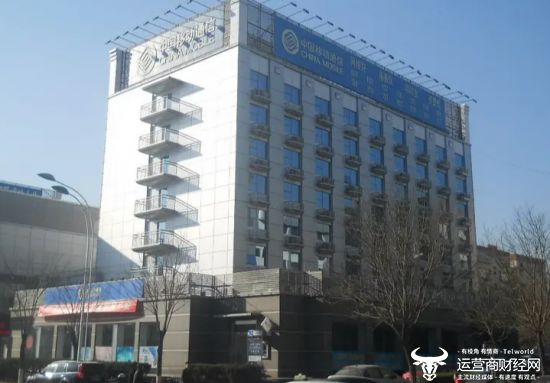
独家:唐山移动原总经理张磊2026年底出狱 当年受贿400多万判了12年半
Xin Lang Cai Jing· 2026-01-11 05:54
Core Viewpoint - The article discusses the case of Zhang Lei, a former general manager of Tangshan Mobile, who was sentenced to 12 years and 6 months in prison for corruption, highlighting the details of his illegal activities and the significant amounts involved [1][3]. Group 1: Background and Position - Zhang Lei was a prominent figure in Hebei Mobile, having served as the financial department director and later as the general manager of Langfang Mobile and Tangshan Mobile, achieving a vice-ministerial level position [3]. - His criminal activities occurred between 2002 and 2013 while he held these managerial roles [3]. Group 2: Corruption Details - Zhang Lei illegally accepted bribes totaling approximately 4.436 million RMB, which included profits from gift procurement, construction project kickbacks, and "thank you" fees from employees [3][4]. - A significant portion of the bribes came from a gift company, where he profited 3.2 million RMB from contracts worth over 20 million RMB between 2006 and 2008 [3]. - During his tenure, he also received 50,000 RMB in kickbacks related to a construction project for the Bazhou Mobile Company [4]. Group 3: Early Signs of Corruption - Zhang Lei's corrupt practices began as early as 2002 when he was still the financial department director, receiving 27,000 RMB as a sponsorship fee for his son's education from a company he assisted [5]. - His willingness to accept various forms of money increased over time, indicating a pattern of escalating corruption [5].

从科幻走向现实:中国“算力高地”赋能千行百业
Zhong Guo Xin Wen Wang· 2026-01-11 05:13
Group 1 - The core concept of the articles highlights the rapid growth of computing power as a driving force for the intelligent upgrade of various industries, particularly in Langfang, Hebei, which has ranked first in China's comprehensive computing power index for two consecutive years [1][2] - Langfang is positioned as a key hub for artificial intelligence and computing power, benefiting from its geographical advantages and infrastructure, which includes low-latency networks and high-bandwidth connections to Beijing [2][3] - The establishment of the Hebei Artificial Intelligence Computing Center has led to the creation of over 170 industry solutions and attracted more than 12 AI-related companies to Langfang, showcasing the city's role as a national innovation platform [2][3] Group 2 - Langfang has attracted major companies such as China Mobile, China Unicom, Huawei, and JD.com, with five of these companies ranking among the top ten computing service providers in China for 2024, indicating a growing industrial cluster effect [3] - The city has outlined plans for the construction of an AI industry cluster, aiming to develop at least ten industry models or high-quality datasets by 2027, and to establish a comprehensive AI computing hub by 2030 [3] - The integration of AI technology with modern logistics and electronic information industries is expected to enhance the application of computing power across various sectors, moving from science fiction to practical applications [3]
突发,603359或终止重大资产重组!科技巨头获爆买超50亿港元
Xin Lang Cai Jing· 2026-01-11 04:57
Group 1: East Pearl Ecology - East Pearl Ecology (603359) announced the potential termination of a major asset restructuring involving the acquisition of control over Kai Rui Xing Tong Information Technology (Nanjing) Co., Ltd. due to failure to reach preliminary agreement on valuation and commercial terms [1][11][12] - The target company specializes in satellite communication technology and systems, with products including satellite communication baseband products, terminals, network management systems, and application systems [1][11][12] - If the transaction had been completed, East Pearl Ecology would have achieved a strategic transformation into the satellite communication and space information technology sector, creating a second growth curve [1][12] - Following the announcement of the restructuring plan, East Pearl Ecology's stock price experienced a significant increase, rising 16.35% by January 9 compared to before the announcement [1][12] Group 2: Legal Issues - East Pearl Ecology is involved in a lawsuit against Huai'an Baima Lake Investment Development Co., Ltd. and Huai'an Baima Lake Planning and Construction Management Office over a construction contract dispute, seeking 320 million yuan in damages [2][12] Group 3: Southbound Capital Flow - During the week of January 5 to January 9, southbound capital saw a net inflow of 32.694 billion HKD despite a decline in major Hong Kong stock indices, with the Hang Seng Index falling 0.41% [4][14] - Notable stocks with significant southbound capital inflow included Alibaba-W (53.514 billion HKD), SMIC (31.296 billion HKD), and Tencent Holdings [4][15] - Xiaomi Group-W received the highest net buy amount from southbound capital at 5.089 billion HKD, while China Mobile faced a net sell of 3.45 billion HKD [4][15] Group 4: Stock Performance - Xiaomi Group-W's shareholding by southbound capital has increased for 15 consecutive weeks, reaching 4.716 billion shares valued at 178.375 billion HKD [4][15] - The stock performance of various companies showed mixed results, with notable gains for Kuaishou-W (up 12.75%) and Ping An Insurance (up 4.79%), while China Mobile saw a decline of 3% [6][15] Group 5: Automotive and Technology Sector - Southbound capital has increased holdings in several autonomous driving-related stocks, with notable increases in holdings for Zhongwei New Materials (up 98.99%) and Youjia Innovation (up 84.07%) [18][21] - Zhongwei New Materials has reported over a 30% increase in stock price over the past month, focusing on solid-state battery technology and establishing partnerships with leading clients [19][20]
中国新增20万颗卫星申请,专家:卫星频轨资源申请已上升至国家战略层面
Xuan Gu Bao· 2026-01-11 04:18
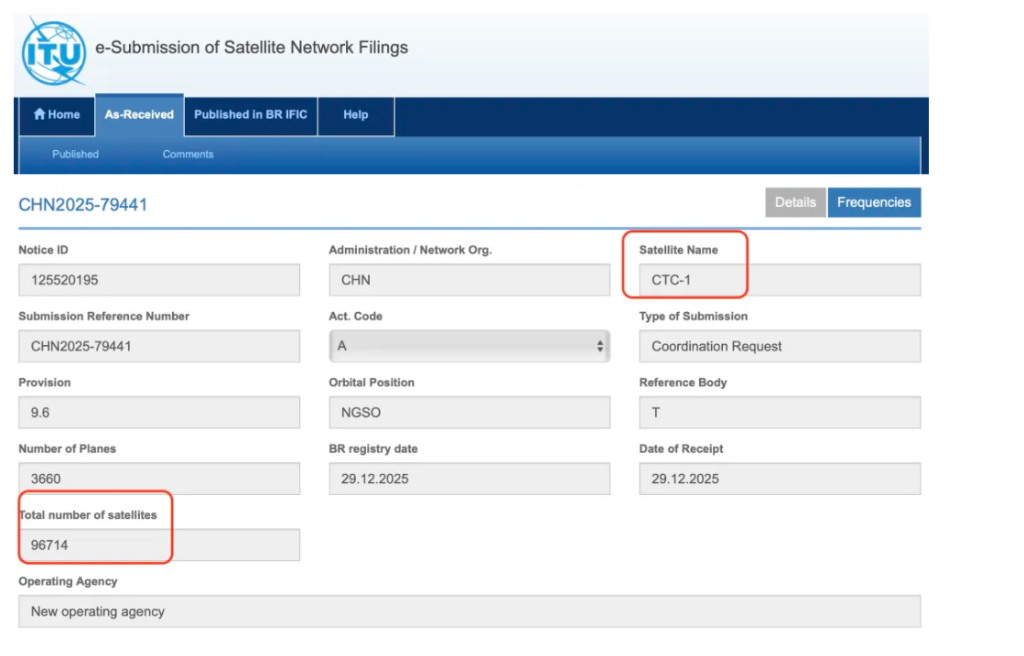
Core Viewpoint - China's application for over 200,000 satellite frequency resources to the ITU marks a strategic move in the satellite internet sector, indicating a national-level commitment to compete with global players like SpaceX [1][4]. Group 1: Satellite Resource Application - The application includes over 190,000 satellites from the newly established Radio Innovation Institute, with significant contributions from various satellite constellations [1][2]. - The largest constellations in the application are CTC-1 and CTC-2, each comprising 96,714 satellites [2][3]. - Other notable constellations include CHINAMOBILE-L1 with 2,520 satellites, SAILSPACE-1 with 1,296 satellites, and TIANQI-3G with 1,132 satellites [2]. Group 2: Establishment of Radio Innovation Institute - The Radio Innovation Institute was registered on December 30, 2025, in Xiong'an New Area, Hebei, as the first R&D institution in China's radio management technology field focused on innovation and results transformation [4]. - The institute is a collaborative effort involving seven entities, including the National Radio Monitoring Center and China Satellite Network Group, aiming to enhance satellite internet services and explore spectrum resource potential [4]. Group 3: Strategic Implications and Industry Impact - The application reflects China's determination to establish a large-scale, systematic presence in low Earth orbit and compete directly with Western nations, particularly the U.S., which currently dominates satellite resources [4][5]. - The "first come, first served" rule by the ITU necessitates timely applications and satellite launches to secure frequency rights, emphasizing the importance of this strategic reserve [5]. - Experts suggest that the application increases expectations for satellite launches, potentially influencing frequency allocation methods within the industry [7].
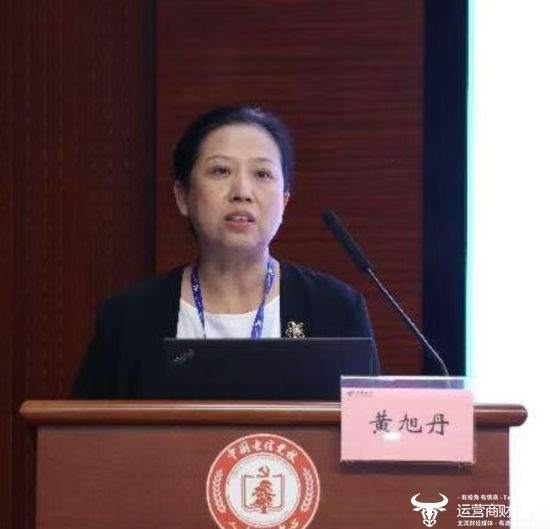
独家:中国电信审计部原总经理黄旭丹动态曝光 任这家央企外部董事
Xin Lang Cai Jing· 2026-01-11 03:47
运营商财经网 吴碧慧/文 其实,黄旭丹这样的职业经历业内还有好几位。比如上海联通原总经理沈洪波2025年初改任央企专职外 部董事,如今也兼任香 港中旅(集团)外部董事; 中国移动投资公司原董事长范冰也同样2025年中转任央企专职外部董事,后来也兼任国家开发投资集团 有限公司外部董事。 运营商财经网副总编刘平表示,他们的受重用,也意味着运营商行业的人才越来越受到其他央企的重 视。 据官方消息,黄旭丹出任中国机械工业集团院外部董事。这也是黄旭丹自2025年11月从中国电信调走后 的又一新动态。 黄旭丹此前是运营商知名的财务女干将,曾先后担任中国联通集团财务部副总经理、中国电信集团财务 部副总经理、天翼融资租赁公司总经理、中国电信财务公司总经理、集团审计部总经理等职。 2025年11月,黄旭丹调离行业,出任央企专职外部董事。该职务与央企外部董事有所区别,是有实职 的,通常享有与央企副总经理同等的待遇。 (责任编辑:吴碧慧) ...