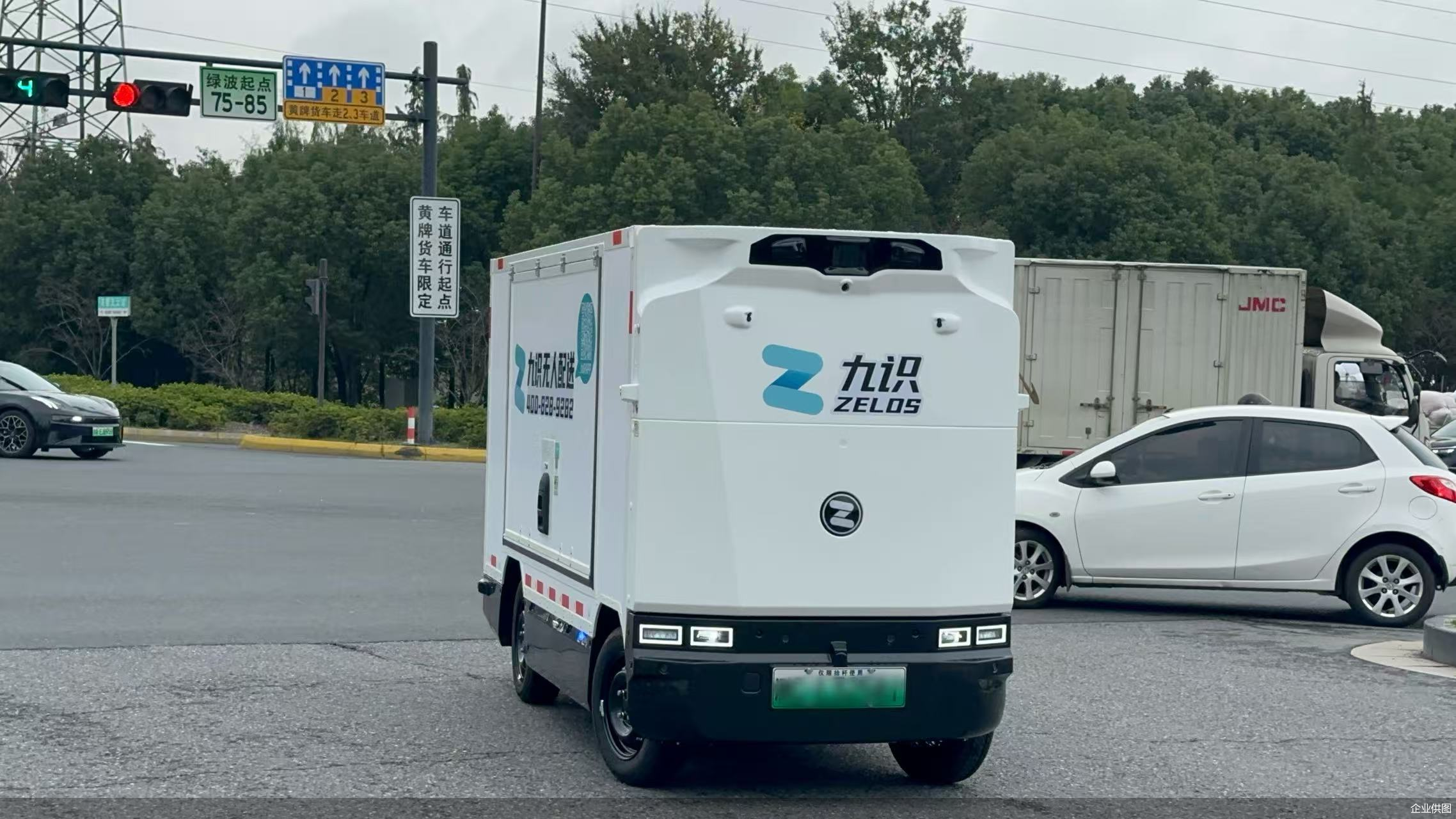
九识智能

Search documents
你的快递,是无人车送的
Jing Ji Guan Cha Wang· 2025-11-22 04:40
Core Insights - The article highlights the rapid adoption and operational efficiency of unmanned delivery vehicles in the logistics sector, particularly in remote areas where traditional delivery methods are less viable [2][3][4][5][6]. Group 1: Unmanned Vehicle Adoption - Unmanned delivery vehicles are increasingly being deployed across various provinces, with over 6,000 units expected to be operational by the end of 2024, surpassing the number of unmanned taxis [3][10]. - Major logistics companies like Zhongtong, Jitu, and Shunfeng have invested heavily in unmanned vehicles, with Zhongtong deploying nearly 3,000 units and plans for further expansion [3][4]. - The cost of unmanned vehicles has significantly decreased, with prices dropping from over 1 million yuan in 2018 to a range of 40,000 to 70,000 yuan by 2025, making them more accessible for logistics companies [13][14]. Group 2: Operational Efficiency and Cost Savings - Unmanned vehicles can operate in sparsely populated areas, reducing delivery costs significantly. For instance, one operator reported saving 200 yuan daily on fuel and labor costs [2][4]. - In rural areas, unmanned vehicles can deliver packages even when not fully loaded, making operations more cost-effective compared to traditional delivery methods [4][5]. - The use of unmanned vehicles has allowed logistics companies to address labor shortages, particularly in regions where attracting delivery personnel is challenging [5][6]. Group 3: Technological Advancements - Continuous improvements in unmanned vehicle technology, including better sensors and algorithms, have enhanced their operational reliability in various weather conditions [7][14]. - Companies like Jiushi Intelligent are iterating their vehicle models annually to adapt to different climates and road conditions, ensuring stable performance [7][12]. - The integration of software updates and real-time data collection is helping to optimize the performance of unmanned vehicles in real-world scenarios [7][12]. Group 4: Regulatory Environment and Challenges - The deployment of unmanned vehicles is contingent on local government regulations, with over 100 cities having opened road rights for these vehicles, though the distribution remains uneven [10][12]. - Companies are actively engaging with local authorities to establish operational frameworks and ensure compliance with safety standards [9][10]. - Despite the growing acceptance of unmanned vehicles, concerns about liability and accident management remain, necessitating clearer legal frameworks [15][16]. Group 5: Future Outlook - The logistics industry is optimistic about the long-term integration of unmanned vehicles, viewing them as a transformative force in delivery operations [16][17]. - Recent government initiatives are promoting the use of unmanned vehicles, indicating a supportive policy environment for their continued expansion [16][17]. - The consensus within the industry is that the introduction of unmanned vehicles marks the beginning of a new phase in logistics, rather than an endpoint [17].


新型马路判官上路,无人物流车狂奔
3 6 Ke· 2025-11-20 01:53
Core Insights - The rise of unmanned logistics vehicles is transforming the delivery landscape, showcasing a clash between advanced technology and traditional agricultural practices [1] - The demand for unmanned logistics vehicles has surged, driven by technological advancements and the need for contactless delivery solutions during the pandemic [8][13] - Major logistics companies are heavily investing in unmanned logistics vehicles, indicating a significant market potential estimated to be worth hundreds of billions [15][18] Demand Explosion - Unmanned logistics vehicles are not new; they have evolved from early tests by companies like JD.com and Suning, which began in 2016 [8][11] - The pandemic accelerated the adoption of unmanned logistics vehicles, as companies like Meituan and SF Express adapted to new delivery challenges [13] - The technology has matured, with L4-level autonomous delivery vehicles being deployed in urban environments, expanding their operational scope [11][19] Industry Growth - The unmanned logistics vehicle market is projected to be a trillion-yuan industry by 2025, driven by increasing demand and technological advancements [15][20] - Major logistics firms are ramping up their investments, with China Post planning to procure 7,000 unmanned vehicles and JD Logistics aiming for 1 million units in five years [18] - The operational model of logistics is shifting from traditional methods to a more efficient system utilizing unmanned vehicles for direct delivery [19] Technological and Policy Support - The Chinese government has been supportive of unmanned logistics vehicle development, issuing guidelines to promote their use in various environments [17] - The cost of producing unmanned logistics vehicles has significantly decreased, making them more accessible for logistics companies [28] - The industry is witnessing a surge in investment, with leading companies securing substantial funding to enhance their capabilities [21][23] Future Outlook - The commercial application of unmanned logistics vehicles is expected to expand beyond delivery services, integrating into a broader autonomous transportation network [30] - The successful trials of unmanned heavy-duty trains and mining vehicles indicate the potential for widespread adoption across various sectors [32][35] - The development of unmanned logistics vehicles is seen as a critical component of China's strategic goals in industrial modernization and technological advancement [39]



无人配送产业爆发,但还抢不了快递员饭碗
首席商业评论· 2025-11-19 03:34
Core Insights - The article highlights the rapid growth and commercialization of unmanned logistics delivery, predicting 2025 as a pivotal year with significant deliveries expected [2][4][11] - The industry is experiencing unprecedented activity, with major logistics companies accelerating the deployment of unmanned delivery services and securing substantial financing despite a challenging capital environment [4][12][19] Group 1: Industry Overview - Unmanned delivery is defined as an intelligent logistics system that automates the transportation of goods from warehouses to consumers [5] - As of September 2025, over 1,900 out of 3,600 districts in China support unmanned vehicles, indicating a 53% coverage rate [7] - Major cities like Beijing, Shanghai, and Shenzhen are leading the adoption of unmanned vehicles due to supportive policies and financial incentives [8][10] Group 2: Market Dynamics - The market for urban unmanned delivery is projected to reach 12.8 billion yuan by 2025 and surge to 97.7 billion yuan by 2030 [4] - The collective entry of logistics giants into the unmanned delivery space is a significant factor driving industry growth, with companies like Zhongtong and Shentong planning to deploy thousands of unmanned vehicles [12][14] - The industry is characterized by a competitive landscape, with startups like New Stone and Nine Senses capturing approximately 80% of the market share [20] Group 3: Technological and Policy Factors - Government policies have played a crucial role in facilitating the growth of unmanned delivery, with over 200 cities opening road rights for unmanned vehicles [11] - Technological advancements and declining hardware costs have made unmanned delivery vehicles more accessible, with prices dropping from 200,000-300,000 yuan to around 50,000 yuan [11][12] - The integration of unmanned delivery vehicles into existing logistics frameworks is seen as a solution to address core pain points in the logistics industry, such as high personnel costs and low vehicle utilization rates [15][17] Group 4: Challenges and Future Outlook - Despite the rapid growth, the industry faces challenges in finding a sustainable profit model, with many companies still struggling to achieve profitability [29] - The competition is shifting from hardware capabilities to operational efficiency, emphasizing the importance of managing large fleets effectively [36][38] - The article suggests that the future of unmanned delivery will likely see a consolidation of power among a few dominant players, potentially leading to a monopolized infrastructure [25][27]
10月VC/PE,新基金偏好投智能
投中网· 2025-11-18 03:14
VC/PE Market Fundraising Analysis - The fundraising market has significantly decreased month-on-month due to holiday impacts, but year-on-year growth remains above 10% [7][8] - In October 2025, a total of 375 new funds were established, a decrease of 39% month-on-month but an increase of 11% year-on-year [8] - The number of institutions participating in fund establishment increased, with 89% of institutions setting up one fund [8] - Early-stage investments are favored by capital, while later-stage transactions have declined due to market conditions [7][29] Fund Establishment and Completion - A new strategic emerging industry fund initiated by the State-owned Assets Supervision and Administration Commission has a first-phase scale of 51 billion yuan, focusing on AI, aerospace, and quantum technology [17][18] - The fund aims to support state-owned enterprises in enhancing core competitiveness and addressing industrial weaknesses [17] - Other notable funds include the Suzhou New Future Fund with a target of 17.15 billion yuan and the Inner Mongolia Key Industry Cultivation Fund with 8.675 billion yuan [18] VC/PE Market Investment Analysis - In October 2025, there were 723 investment cases, a decrease of 24% month-on-month but an increase of 19% year-on-year, with a total investment scale of 110.031 billion yuan [22][24] - The investment market shows a mild recovery trend, with overall investment scale and case numbers higher than the same period in 2024 [22] - Jiangsu province led in financing cases with 128, followed by Guangdong with 124 [24] Investment Hotspots - The electronic information sector led with 211 investment transactions totaling 41.444 billion yuan, followed by advanced manufacturing and healthcare [27][28] - Semiconductor and AI sectors showed significant activity, while the investment heat in biomedicine and new materials was slightly lower compared to the previous year [27] Investment Rounds - A-round investments dominated with 322 cases, accounting for 44.5% of the market, while B-round financing represented 23% of the total scale [29][30] - Early-stage investments are more favored, while later-stage transactions have seen a decline due to market conditions [29] Key Investment Cases - Neolix, a provider of L4 autonomous delivery solutions, completed over 600 million USD in D-round financing, indicating strong investor interest in AI and autonomous driving sectors [33][34] - Other significant investments include Didi's 2 billion yuan in autonomous driving technology and Tianbing Technology's nearly 2.5 billion yuan in aerospace propulsion systems [34]

2025年中国无人物流车行业调研简报-20251111
Tou Bao Yan Jiu Yuan· 2025-11-11 12:36
Investment Rating - The report does not explicitly state an investment rating for the unmanned logistics vehicle industry Core Insights - The unmanned logistics vehicle is defined as an intelligent transport tool based on autonomous driving technology, primarily used in logistics scenarios for express delivery, with applications expanding to industrial parks, airports, and medical centers [3][5] - The primary application scenario for unmanned logistics vehicles is the delivery service from express points to community stations, which helps logistics companies reduce costs and improve efficiency [5][8] - As of 2024, the scale of unmanned logistics vehicles in China has exceeded 6,000 units, with urban end delivery being the fastest-growing core scenario [18] - The price of unmanned logistics vehicles has significantly decreased from millions to tens of thousands due to technological breakthroughs, scale production, and market competition [25] Summary by Sections Application Scenarios - Unmanned logistics vehicles are mainly used for short-distance transportation (5-20 km) between express points and community stations, replacing traditional delivery vehicles and reducing labor costs [5][8] - The urban delivery market is the fastest to adopt unmanned logistics vehicles, with cities like Shenzhen achieving daily transport volumes of 80,000 packages and a cost reduction of 1.32 yuan per package [18] Market Segmentation - The market application distribution of unmanned logistics vehicles includes 70% in urban delivery, 15% in rural delivery, and 10% in cold chain logistics [12][13] - The cold chain logistics demand is projected to reach 365 million tons, with a year-on-year growth of 4.3%, driven by fresh e-commerce and medical delivery scenarios [18] Cost Dynamics - The price of unmanned logistics vehicles is expected to continue decreasing due to advancements in technology, particularly in the localization of key components like LiDAR and batteries [25] - The operational costs of unmanned logistics vehicles are significantly lower than traditional fuel vehicles, with reduced labor and energy consumption [25] Policy Impact - China's supportive policies have transitioned the unmanned logistics vehicle industry from pilot exploration to large-scale implementation, with sales increasing eightfold in the past three years [31] - In contrast, the U.S. and EU face limitations due to regional policies and high adaptation costs, affecting market promotion [31] Competitive Landscape - The market is characterized by a "head-led, scenario-segmented, ecosystem-coordinated, and standard-unified" competitive structure, with major suppliers categorized into three types: autonomous driving technology firms, delivery scenario-focused companies, and automotive background firms [38] - The competition is shifting from a focus on technology to ecosystem collaboration, with logistics giants and tech companies forming alliances [38]
独家丨轻舟智航已组建无人物流车业务,在苏州、金华等地运营
雷峰网· 2025-11-11 10:06
Core Insights - The article discusses the expansion of Qizhou Zhihang into the unmanned logistics delivery sector, marking a significant shift in its business model from passenger vehicles to logistics, creating a dual commercial layout of "mobility + logistics" [2][6]. Group 1: Business Development - Qizhou Zhihang has begun internal preparations for its unmanned logistics delivery business, with operations already initiated in cities like Suzhou and Jinhua [2][3]. - The company is actively recruiting for L4 logistics positions, indicating a strategic focus on enhancing its capabilities in this area [3]. Group 2: Market Trends - The year 2025 is projected to be a pivotal year for unmanned delivery vehicles, with multiple companies achieving over 100 million yuan in financing since the beginning of the year [5]. - As of mid-2025, 103 cities in China have opened road rights for unmanned delivery vehicles, covering over 80% of major logistics hub cities, which is crucial for the commercial viability of these vehicles [5]. Group 3: Partnerships and Collaborations - A key partner for Qizhou Zhihang in the unmanned logistics vehicle sector is Chery Automobile, which, along with Luxshare Precision, invested 100 million USD in Qizhou Zhihang [6]. - The collaboration has led to the development of the Chery iBar, which features the Falcon 900 intelligent driving system, capable of autonomous driving in urban and park scenarios [6]. Group 4: Technological Advancements - Qizhou Zhihang's experience in intelligent driving and L4 autonomous driving is expected to accelerate the commercialization of L4 technology in the logistics sector [7].

对话九识智能孔旗:九识不焦虑丨L4十人谈
雷峰网· 2025-11-11 07:14
Core Viewpoint - The article discusses the recent controversy surrounding Jiushi Intelligent, a company in the autonomous logistics vehicle sector, which faced allegations of intellectual property infringement from JD.com. However, it clarifies that no formal case has been filed against Jiushi, and the impact of the allegations on its IPO process is overstated [2][3][7]. Group 1: Company Background and Growth - Jiushi Intelligent, founded in 2021, has rapidly grown into a leading player in the autonomous logistics vehicle market, completing four rounds of financing totaling over $500 million [2]. - The company recently achieved unicorn status and is on the verge of an IPO, but faced negative media attention regarding alleged IP infringement by JD.com [2][3]. Group 2: Allegations and Market Response - The allegations against Jiushi center on three main points: the poaching of JD.com's autonomous vehicle team, the rapid filing of numerous patents, and the quick production of their first autonomous vehicle [3][4]. - Insiders suggest that the allegations are part of a planned smear campaign against Jiushi, likely orchestrated by a competitor [3]. Group 3: Market Position and Performance - Jiushi claims to hold a market share of approximately 75% in the autonomous vehicle sector, with significant orders from major clients like China Post [10][12]. - The company has delivered over 10,000 vehicles to clients, with a high repurchase rate from small B clients nearing 100% [13][15]. Group 4: Business Model and Pricing Strategy - Jiushi has adjusted its pricing strategy to accommodate customer needs, moving from a one-time payment model to a more flexible payment structure that allows clients to pay as they use the service [20][24]. - The company emphasizes that it does not engage in price wars but rather leverages economies of scale to reduce costs and pass savings onto customers [17][18]. Group 5: Operational Strategy and Future Plans - Jiushi is expanding its production capacity with factories in Jiaxing and Zigong, aiming for an annual output of 45,000 to 50,000 vehicles [16]. - The company plans to establish around 500 maintenance stations across China to ensure regular vehicle upkeep and enhance customer service [30][31].

“全生命周期”服务培育创新标杆
Su Zhou Ri Bao· 2025-11-10 22:47
Core Insights - The Suzhou Industrial Park provides comprehensive support for businesses, facilitating their growth from initial funding to operational success, emphasizing a full lifecycle service model [1][9] Group 1: Policy Support and Services - The park actively matches policies to businesses, offering significant financial incentives such as three years of rent-free office space and up to 10 million yuan in investment [2] - A dedicated AI policy matching mechanism generates customized policy reports for companies, ensuring they receive timely and relevant support [3] - The park's service center has streamlined the policy application process, enhancing efficiency and ensuring that businesses can easily access necessary resources [3][6] Group 2: Real-World Testing and Innovation - The park has opened real-world testing scenarios for autonomous vehicles, allowing companies like Jiushi Intelligent to conduct regular operational tests, which is crucial for product optimization [4][5] - Jiushi Intelligent has achieved an 88% market share in the national urban distribution unmanned vehicle sector, highlighting the effectiveness of the park's supportive environment [5] Group 3: Comprehensive Lifecycle Services - The park employs a "three ones" service system, focusing on seamless administrative processes and support for businesses at every stage of development [6] - The park's service center resolves a high volume of requests efficiently, with a 99.9% success rate in minimizing the need for multiple visits [7] - The park has developed a "one-stop" service model for companies looking to expand internationally, significantly reducing the time and effort required for overseas operations [8] Group 4: Success Stories and Impact - Jiushi Intelligent and Zhizhi Technology exemplify the park's successful support for businesses, showcasing how tailored assistance can lead to significant achievements in the market [9] - The park's approach fosters a collaborative environment, positioning itself as a partner rather than just a landlord, which enhances the overall business ecosystem [8][9]
不再只是送快递 无人车加速进入各行各业
经济观察报· 2025-11-09 04:19
Core Viewpoint - The unmanned delivery vehicle industry is transitioning from a testing phase to large-scale commercial operations, with significant investment and technological advancements driving this change [2][3]. Investment and Market Growth - In October, significant financing events occurred in the unmanned delivery sector, with New Stone Technology raising over $600 million in Series D funding, marking the largest financing in China's autonomous driving sector [2] - The total disclosed financing in the unmanned driving sector exceeded 14.6 billion RMB (approximately $2.1 billion) in the third quarter of 2025, indicating a shift towards large-scale commercial applications [2] - The delivery vehicle market is projected to see a shipment of approximately 6,600 units in 2024, with over 12,000 units shipped in the first half of 2025 [3] Market Potential and Business Expansion - The market for unmanned delivery vehicles is expanding from single-use cases in express delivery to broader applications in instant logistics and urban delivery, targeting over 30 million urban delivery vehicles in China [3] - New Stone Technology reported that the proportion of sales from the express delivery sector has decreased from 100% to 50%, indicating diversification into non-express scenarios [3] Cost Efficiency and Technological Advancements - The operational cost per kilometer for unmanned vehicles is approximately 0.4 RMB, with delivery costs potentially dropping below 0.04 RMB, showcasing a significant cost advantage over traditional delivery methods [4] - New Stone Technology has developed an L4-level driverless technology that has begun commercial deployment, enhancing operational efficiency and expanding use cases [4] Regulatory and Operational Challenges - The unmanned delivery vehicle industry faces challenges related to road rights, with a lack of unified management regulations and entry standards hindering growth [6][7] - The absence of a comprehensive standard system for low-speed unmanned vehicles complicates cross-regional operations and interoperability [7] - Safety concerns and public acceptance remain critical issues as the number of unmanned vehicles in urban areas increases [8] Policy and Future Outlook - As of mid-2025, 103 cities in China have opened road rights for unmanned delivery vehicles, covering over 80% of major logistics nodes [9] - The industry is at a pivotal point for transformation and large-scale commercialization, with ongoing efforts to address regulatory, standardization, and safety challenges [9]

交通数字信号首次上车无人驾驶装备 九识智能助力“车路云一体化”建设
Bei Jing Shang Bao· 2025-11-09 04:15
Core Insights - The successful integration of traffic signal data with autonomous driving technology in Tongxiang marks a significant advancement in China's vehicle-road-cloud integration efforts [2][4][6] - The "vehicle-road-cloud" system enhances the capabilities of autonomous vehicles, allowing them to process real-time traffic signal information alongside their own sensory data, improving safety and traffic efficiency [4][5] Group 1: Technological Advancements - The test demonstrated that autonomous vehicles can operate smoothly even when traffic signals are obstructed, showcasing the effectiveness of real-time data sharing [2][4] - The integration allows for better risk perception and path planning, addressing limitations of traditional single-vehicle intelligence systems [4][6] Group 2: Industry Implications - The deployment of this technology in functional autonomous vehicles provides a replicable model for broader application across various cities and vehicle types, promoting scalability in vehicle-road-cloud integration [5][6] - The initiative is part of a national push towards smart transportation, with the Ministry of Industry and Information Technology and the Ministry of Public Security supporting pilot projects to establish standards for vehicle-road collaboration [7]