SPDR

Search documents
贵金属期货周报:美联储年内有望降息三次,黄金白银屡创新高-20250915
Zheng Xin Qi Huo· 2025-09-15 14:09
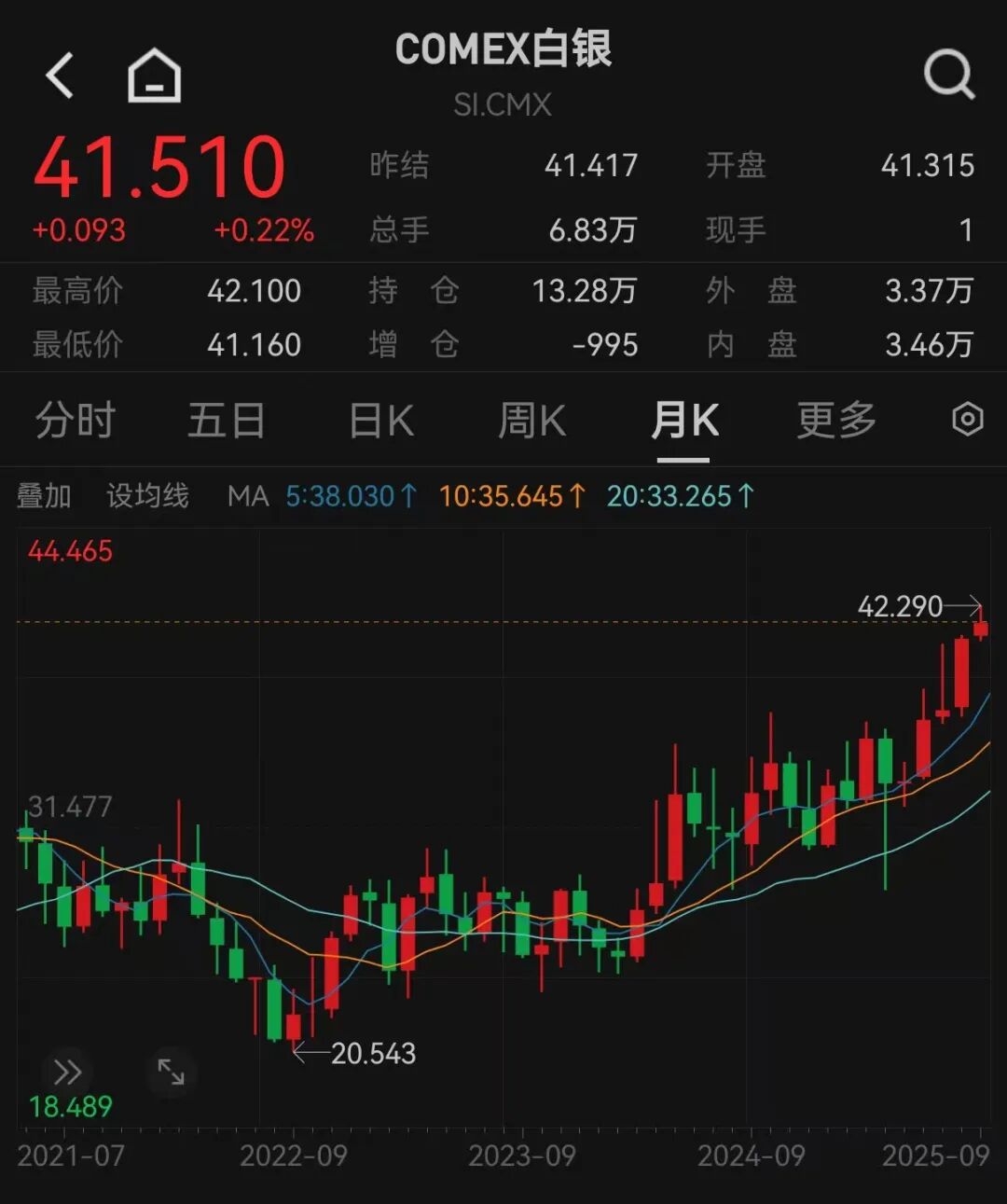
Report Industry Investment Rating No relevant content provided. Core Viewpoints - Last week, US inflation data showed that PPI turned negative month - on - month and CPI was slightly higher than expected. The inflation pressure on the production side eased, and consumer - side price increases were mainly driven by cars, clothing, and housing costs. The labor market significantly cooled, and the market increased bets on Fed rate cuts, expecting three cuts this year. Precious metals continued to rise, with COMEX gold futures breaking through $3,700 per ounce and COMEX silver futures breaking through $43 per ounce [3]. - In terms of capital, last week, COMEX gold inventory declined while COMEX silver inventory increased. The inflow of funds into gold and silver ETFs slowed down, and hedge funds increased their long positions in gold and silver [3]. - Geopolitical factors such as the Trump tariff case and Fed personnel changes continued to disrupt the market. If Trump's tariffs are ruled illegal, the US will face huge tax refunds, increasing fiscal pressure. The search for a new Fed chair is ongoing, and future Fed leadership will face major adjustments. Inflation may gradually show the impact of tariffs, and there is uncertainty in the second - half rate - cut path. With the continued Russia - Ukraine conflict, central banks and investors are increasing their holdings of precious metals, providing bottom support for precious metals. It is expected that precious metals will continue to fluctuate upward. The price of Shanghai gold is bullish in the long - term, oscillatory in the short - term, and it is recommended to hold long positions or buy low and sell high in the medium - term. Shanghai silver is oscillatory in the short - term, and it is recommended to buy on dips in the medium - term [3]. Summary by Directory 1. Market Review - **Price Changes**: The spot price of gold in the London market increased by 1.57% to $3,651.10 per ounce, COMEX gold futures rose 1.12% to $3,680.70 per ounce, the Shanghai gold main contract increased by 3.72% to 834.22 yuan per gram, and gold A (T + D) (spot) rose 2.30% to 830.34 yuan per gram. The spot price of silver in the London market increased by 3.72% to $42.26 per ounce, COMEX silver futures rose 2.82% to $42.68 per ounce, the Shanghai silver main contract increased by 2.27% to 10,035 yuan per kilogram, and silver A (T + D) (spot) rose 2.51% to 10,034 yuan per kilogram [5]. - **Inventory and Position Changes**: COMEX gold inventory decreased by 0.11% to 3,891.45 million ounces, and COMEX silver inventory increased by 1.75% to 52,742.32 million ounces. COMEX gold total positions increased by 3.39% to 150,000 lots, and COMEX gold speculative net long positions increased by 4.89% to 261,700 lots. COMEX silver total positions decreased by 1.05% to 156,700 lots, and COMEX silver speculative net long positions decreased by 3.55% to 53,900 lots [5]. - **Gold - Silver Ratio**: Last week, the domestic gold - silver ratio fell to around 83, and the overseas gold - silver ratio fell to around 86, still higher than their long - term historical averages. Supported by Fed rate - cut expectations and risk - aversion sentiment, silver continued to rise with gold and has room for catch - up growth due to its industrial attributes and the repair of the gold - silver ratio [7]. - **Domestic - Overseas Price Difference**: The domestic - overseas price difference of gold increased compared to the previous week, while that of silver slightly decreased. Gold and silver continued to rise and broke historical highs last week [10]. 2. Macroeconomic Aspects - **Dollar Index**: Last week, US inflation and employment data showed moderate inflation and high employment downside risks, boosting Fed rate - cut expectations. Coupled with the continuous disruption of the Trump tariff case and Fed personnel changes, the dollar index was under pressure, providing bottom support for precious metal prices [13]. - **US Treasury Real Yields**: Last week, the real yields of 5 - year and 10 - year US Treasury bonds continued to decline, mainly due to moderate inflation and a weakening labor market, further strengthening Fed rate - cut expectations and expecting three rate cuts this year [16]. - **US Key Economic Data** - **CPI**: In August, US CPI increased by 2.9% year - on - year, core CPI increased by 3.1% year - on - year. Core commodity price increases accelerated, and service - sector price increases were mainly driven by housing costs, indicating moderate inflation [21]. - **PPI**: In August, US PPI was 2.6% year - on - year, lower than expected, and - 0.1% month - on - month, turning negative for the first time in four months, indicating that inflation pressure on the production side is easing [21]. - **Core PCE**: In July, the US core PCE increased by 2.88% year - on - year, and 0.3% month - on - month, both in line with market expectations. The PCE increased by 2.6% year - on - year and 0.2% month - on - month, also meeting expectations [25]. - **PMI**: In August, the US ISM manufacturing PMI was 48.7, below expectations, and the service PMI was 52, showing that the manufacturing sector was in contraction while the service sector expanded [28]. - **Retail Sales**: In July, US retail sales increased by 0.51% month - on - month, and core retail sales increased by 0.27% month - on - month, indicating improved consumer activity [28]. - **Employment Data**: In August, US ADP employment increased by only 54,000, non - farm payrolls increased by only 22,000, and the unemployment rate rose to 4.3%. The number of initial jobless claims last week reached a nearly four - year high, indicating a significant cooling of the labor market [31]. - **Fed Rate Cuts**: Last week's US inflation data was moderate, and the labor market was weak, strengthening the expectation of a Fed rate cut in September and expecting three rate cuts this year. Geopolitical conflicts such as the Trump tariff case and the Russia - Ukraine conflict continued to disrupt the market, and the path of rate cuts in the second half of the year remains uncertain [32]. 3. Position Analysis - **Hedge Fund Positions**: As of September 9, 2025, CMX gold speculative net long positions increased by 32,300 lots to 261,700 lots, and CMX silver speculative net long positions increased by 9,700 lots to 53,900 lots [35]. - **ETF Positions**: As of September 12, 2025, the SPDR gold ETF holdings decreased by 7.17 tons to 974.80 tons, and the SLV silver ETF holdings decreased by 124.25 tons to 15,069.60 tons, indicating a slowdown in the inflow of funds into gold and silver ETFs [36]. 4. Other Elements - **Inventory**: Last week, COMEX gold inventory was 3,891.45 million ounces, a 0.11% decrease, and COMEX silver inventory was 52,742.32 million ounces, a 1.75% increase [42]. - **Demand** - **Gold**: In September 2025, global gold reserves increased by 15.24 tons to 36,359.73 tons, and China's gold reserves increased by 1.87 tons to 2,300.40 tons. In Q2 2025, global gold demand increased by 3% year - on - year, and in August, gold ETFs had a net inflow of $5.5 billion [45]. - **Silver**: The global silver market is expected to be in a structural shortage for the fifth consecutive year in 2025. Industrial demand for silver remains strong, and silver has room for catch - up growth [45]. - **This Week's Key Events**: This week, focus on the Fed's September interest - rate meeting, expecting a rate cut. Also, pay attention to the release of US August retail sales data to see if consumer demand maintains its resilience [48].
S&P 500 Snapshot: 4-Day Win Streak Snapped
Etftrends· 2025-09-12 22:32
Group 1: S&P 500 Performance - The S&P 500 posted four consecutive days of gains before a slight decline on Friday, finishing the week up 1.6%, marking its fifth weekly gain in the past six weeks [1] - The index reached a record high of 1565.15 on October 9, 2007, before experiencing a significant drop of approximately 57% to 676.53 on March 9, 2009, during the Global Financial Crisis [1] - It took over five years for the index to reach a new all-time high of 1569.19 on March 28, 2013 [1] Group 2: Volatility and Moving Averages - The S&P 500 has been above the 50-day moving average since May 1 and above the 200-day moving average since May 12, with the 50-day moving average surpassing the 200-day moving average since July 1 [2] - The index experienced its largest intraday price volatility of 10.77% on April 9, 2023, since December 24, 2018, when it was 19.10% [3] - The average percent change from the intraday low to the intraday high over the past 20 days is 0.71% [3] Group 3: Comparison with Equal Weight Index - The S&P 500 is up 12.20% year to date, while the S&P Equal Weight Index is up 7.81% year to date [4]
SPY and VOO ETF forecasts: Here's why the S&P 500 Index may retreat soon
Invezz· 2025-09-10 13:02
Core Viewpoint - The Vanguard S&P 500 Index (VOO) and the SPDR S&P 500 Index (SPY) ETFs have reached all-time highs this month, driven by strong demand for equities in anticipation of US inflation trends [1] Group 1 - The VOO and SPY ETFs are currently experiencing significant price increases, reflecting a robust interest in equity investments [1] - The ongoing demand for these ETFs indicates a positive market sentiment among investors [1] - The performance of these ETFs is closely linked to broader economic indicators, particularly inflation expectations in the US [1]


How the Vanguard High Dividend Yield ETF Stacks Up Against These 2 Popular ETFs
Yahoo Finance· 2025-09-09 09:57
Group 1 - The Vanguard High Dividend Yield ETF (VYM) is a dividend-centric ETF that competes with SPDR Portfolio S&P 500 High Dividend Yield ETF (SPYD) and Schwab U.S. Dividend Equity ETF (SCHD) [1] - VYM has a yield of approximately 2.6%, which is higher than the S&P 500 index's 1.2%, but lower than SPYD's 4.5% and SCHD's 3.9% [2] - The Vanguard ETF employs a simple approach by selecting the highest-yielding 50% of dividend-paying stocks in the U.S. market, resulting in a diversified portfolio of over 550 stocks [4][5] Group 2 - The SPDR ETF focuses on the 80 highest-yielding stocks within the S&P 500 index, adding a layer of selectivity to its portfolio [6] - The Vanguard ETF's low expense ratio of 0.06% makes it an attractive option for investors seeking diversification [5] - The SPDR ETF has a slightly higher expense ratio of 0.07% but offers a more concentrated approach to high-yield stocks [8]
金银双双创新高 基金经理解读机会
Zhong Guo Ji Jin Bao· 2025-09-08 01:29
Core Viewpoint - The recent surge in gold and silver prices is driven by multiple factors, including expectations of interest rate cuts by the Federal Reserve and concerns over the independence of the Fed, with silver showing greater price elasticity due to its industrial demand [3][6][12]. Group 1: Price Movements and Drivers - Gold reached a peak of $3655.5 per ounce, with a year-to-date increase of over 30%, while silver peaked at $42.29 per ounce, with a year-to-date increase exceeding 40% [1]. - The primary drivers for the recent price increases include weaker-than-expected U.S. economic data, which has led to market pricing in rate cut expectations, and the Fed's perceived loss of independence [5][6]. - The global largest gold ETF (SPDR) has seen continuous increases in holdings, contributing to the upward momentum in precious metal prices [5]. Group 2: Long-term Outlook - Both gold and silver have potential for further price increases, but gold is expected to have more sustainable investment value in the long term due to its status as a reserve asset [4][17]. - The ongoing trend of central banks purchasing gold is expected to continue, driven by a desire for monetary sovereignty and risk diversification away from the U.S. dollar [10][11]. Group 3: Silver's Unique Position - Silver's price increase is supported by its industrial demand, particularly in sectors like renewable energy and 5G technology, which accounts for over 49% of its demand [13][14]. - The supply-demand dynamics for silver are tightening due to rigid mining supply and increasing industrial usage, suggesting that silver may outperform gold if the global economy does not enter a deep recession [16]. Group 4: Investment Strategies - Various investment avenues for precious metals include physical gold and silver, gold ETFs, futures, and mining stocks, each catering to different risk appetites and investment goals [18][23]. - Gold ETFs are highlighted as a convenient and cost-effective way for investors to gain exposure to gold prices, while futures are more suitable for experienced investors willing to take on higher risks [20][21][24].
【广发宏观陈礼清】宽度下降后的叙事流转:大类资产配置月度展望
郭磊宏观茶座· 2025-09-04 14:56
Core Viewpoint - The macroeconomic environment since August 2025 has been characterized by a strong performance in high-growth sectors, particularly in China's technology stocks, alongside a backdrop of rising global bond yields and shifting currency dynamics [1][3][4]. Group 1: Asset Performance - In August 2025, major asset performances ranked as follows: Sci-Tech 50 > ChiNext Index > CSI 300 > Gold > Hang Seng Tech > Dow Jones > LME Copper > European Stocks > NASDAQ > Hang Seng Index > RMB > 0 > China Bond > Nanhua Composite > USD > Crude Oil > Long VIX [1][14]. - Risk assets generally rose in August, with notable performance in Chinese assets, a concurrent appreciation of the RMB, and pressure on government bonds [2][14]. - The domestic equity market saw a broad increase, with the Wind All A Index rising by 10.9% in August, while the 10-year government bond yield increased by 13.4 basis points to 1.84% [2][27]. Group 2: Macro Trading Themes - The primary macro trading themes since August 2025 include a "high-growth narrative" led by the Sci-Tech 50 and ChiNext Index, a "rate cut trade" in the U.S. following downward revisions in employment data, and a rise in "risk aversion" reflected in increasing global bond yields [3][57]. - The U.S. employment data revision has opened a window for potential Fed rate cuts, influencing various asset classes to align with this "rate cut trade" [3][57]. Group 3: Economic Indicators - The macroeconomic indicators show that the U.S. hard data has remained stable while soft data has slightly improved since August, contrasting with Europe and Japan, where economic outlooks are mixed [4][70]. - China's economic indicators suggest a slowdown, with an estimated actual GDP growth of approximately 4.76% for August, aligning with seasonal economic characteristics [4][70]. Group 4: Real Estate Market - The real estate market in China has shown a narrowing year-on-year decline in sales, with second-hand housing performing better than new homes, indicating a trend of "price for volume" [2][42]. - The rental yield in major cities has remained above the 30-year government bond yield, although the leading margin has narrowed compared to previous periods [2][42]. Group 5: Market Volatility and Sentiment - The volatility in the market has seen a decrease in August, with the number of daily ranking changes among 19 asset classes dropping from 124 to 114 [15][62]. - The VIX index has shown signs of recovery, indicating increased market uncertainty and potential adjustments in global risk assets [15][63].

创年内新高!8月美国上市ETF狂吸金1193亿美元 全年万亿关口在望
Zhi Tong Cai Jing· 2025-09-04 05:52
Group 1: ETF Market Overview - In August, U.S. listed ETFs saw a net inflow of $119.3 billion, surpassing July's $115.9 billion and marking the highest monthly record of the year [1] - Year-to-date, the cumulative net inflow for ETFs has surged to $792.6 billion, with the potential to exceed $1 trillion for the second consecutive year [1] - Equity ETFs led the market with a net inflow of $46.5 billion, followed by fixed income ETFs with $40.2 billion [1] Group 2: Performance of Specific ETFs - The S&P 500 ETF - Vanguard (VOO.US) has increased by 11.4% year-to-date, attracting a net inflow of $9.2 billion in August, totaling $81.8 billion in cumulative net inflows [1] - The S&P 500 ETF - iShares (IVV.US) also performed well, with a monthly net inflow of $7.9 billion [1] Group 3: Bond and Alternative Asset ETFs - Bond ETFs gained popularity, with the Short-Term Corporate Bond ETF - Vanguard (VCSH.US) and the 0-3 Month U.S. Treasury ETF - iShares (SGOV.US) among the top inflows for the month [2] - The iShares iBoxx Investment Grade Corporate Bond ETF (LQD.US) saw a net inflow of nearly $3 billion, influenced by narrowing investment-grade bond spreads [2] - The SPDR Gold ETF (GLD.US) attracted a net inflow of $2.6 billion as gold prices approached historical highs, driven by increased demand for safe-haven assets [2] - The Ethereum ETF - iShares (ETHA.US) benefited from Ethereum reaching a four-year high, resulting in a net inflow of $3.4 billion in August [2]
贵金属日评:美联储理事沃勒日9月开启降息美国7月职位空缺低于预期前值-20250904
Hong Yuan Qi Huo· 2025-09-04 05:50
Report Industry Investment Rating - Not provided in the report Core View of the Report - The expectation of a Fed rate cut in September, combined with Trump's continuous pressure and potential replacement of Fed officials, and the continuous gold purchases by central banks of many countries around the world, may make precious metal prices more likely to rise than fall. It is recommended that investors mainly take long positions when prices decline [1]. Summary by Relevant Categories Precious Metal Market Data - **Gold**: Shanghai gold's closing price on 2025 - 09 - 02 was 809.97 (yuan/gram), with a trading volume of 70268.00 and an open interest of 221198.00; COMEX futures active contract's closing price was 3619.70, with a trading volume of 94317.00 and an open interest of 360647.00; London gold spot price was 3556.20 (USD/ounce); SPDR gold ETF holding was 984.26, and iShare gold ETF holding was 456.92 [1]. - **Silver**: Shanghai silver's closing price on 2025 - 09 - 02 was 9377.00 (yuan/kilogram), with a trading volume of 627101.00 and an open interest of 270592.00; COMEX futures active contract's closing price was 41.73, with a trading volume of 22029.00 and an open interest of 88833.00; London silver spot price was 40.86 (USD/ounce); US iShare silver ETF holding was 15288.82, and Canadian PSLV silver ETF holding was 6065.79 [1]. Price Difference and Basis - **Gold**: The spread between near - month continuous and far - month active contracts was - 1.58, and the basis between spot and futures prices was - 3.36 [1]. - **Silver**: The spread between near - month continuous and far - month active contracts was - 12.00, and the basis between spot and futures prices was - 40.00 [1]. Macroeconomic and Policy Information - **US**: In July, TOLTS job openings dropped to a 10 - month low; in August, tariffs exceeded $31 billion, a record high; Fed Governor Waller suggested starting rate cuts this month and multiple cuts in the next 3 - 6 months; the Fed's Beige Book showed flat or declining consumer spending and price increases in all districts; due to weak employment supply and demand, Fed Chairman Powell hinted at a possible policy adjustment, making a September rate cut almost certain [1]. - **Eurozone**: In August, the PMI final value was slightly revised downwards, and Germany's service sector unexpectedly shrank; the ECB may cut rates at most twice before the end of 2025 [1]. - **UK**: In August, the key interest rate was cut by 25 basis points to 4.0%, and the Bank of England may cut rates at most once before the end of 2025 [1]. - **Japan**: The central bank may raise rates before the end of 2025, with the earliest possible time in October [1]. Trading Strategy - For precious metals, it is recommended that investors mainly take long positions when prices decline. For London gold, focus on the support level around 3200 - 3300 and the resistance level around 3600 - 3700; for Shanghai gold, focus on the support level around 760 - 770 and the resistance level around 840 - 850; for London silver, focus on the support level around 36 - 37 and the resistance level around 41 - 43; for Shanghai silver, focus on the support level around 9000 - 9400 and the resistance level around 10000 - 10500 [1].
Gold's Record Surge Above $3,500: ETFs to Consider
ZACKS· 2025-09-03 15:45
Core Insights - Gold prices have reached a new all-time high, surpassing $3,500, driven by expectations of Federal Reserve rate cuts and strong safe-haven demand, with a year-over-year increase of approximately 41.49% [1] - Analysts attribute the record rally in gold to portfolio diversification away from the U.S. dollar, currency weakness, and safe-haven inflows amid geopolitical and trade tensions [2] - Strong fundamental indicators suggest that gold's gains could extend into late 2025 and 2026, with potential prices reaching $4,250 by the end of next year [3] Economic Factors - The U.S. dollar's value typically moves inversely with interest rate adjustments by the Federal Reserve, making gold more attractive as the dollar weakens [4][5] - Market expectations indicate a 91.7% likelihood of a rate cut in September, 96% in October, and 99.1% in December, according to the CME FedWatch tool [4] Market Trends - The U.S. Dollar Index (DXY) has decreased by approximately 5.63% over the past six months and around 9.47% year-to-date, contributing to higher gold demand [6] - Political uncertainty and macroeconomic volatility are expected to sustain gold's rally, making it an appealing investment strategy [7] Investment Strategies - Investors are encouraged to enhance their exposure to gold through ETFs, which serve as a hedge against increasing macroeconomic uncertainty and geopolitical volatility [8] - Recommended ETFs for gold exposure include SPDR Gold Shares (GLD), iShares Gold Trust (IAU), SPDR Gold MiniShares Trust (GLDM), abrdn Physical Gold Shares ETF (SGOL), and iShares Gold Trust Micro (IAUM) [9] ETF Performance - GLD is noted for its liquidity with an average trading volume of 9.08 million shares, making it suitable for active trading strategies, although a long-term passive investment approach is recommended [10] - GLD has an asset base of $109.18 billion, the largest among gold ETFs, with overall fund performance showing a gain of about 0.33% over the past month and approximately 35.6% over the past year [11] - GLDM and IAUM are highlighted as the most cost-effective options for long-term investing, with annual fees of 0.10% and 0.09% respectively [11]

Billionaires Buy 2 Magnificent Index Funds That a Wall Street Analyst Says Could Soar 132%
The Motley Fool· 2025-08-31 08:00
Core Insights - Several billionaire fund managers have recently invested in S&P 500 index funds, indicating a strong belief in the potential for significant growth in the index by the end of the decade [1][2] - Tom Lee from Fundstrat Global Advisors predicts the S&P 500 will reach 15,000 by 2030, representing a 132% increase from its current level of 6,460 [2][15] - The S&P 500 index is considered a reliable benchmark for the overall U.S. stock market, encompassing 500 large companies across various sectors [1] Investment Activity - Notable billionaire hedge fund managers have made substantial purchases of S&P 500 index funds in the second quarter, including: - Cliff Asness acquired 72,200 shares of SPDR S&P 500 ETF Trust and 134,800 shares of Vanguard S&P 500 ETF [5] - Israel Englander added 1.2 million shares of SPDR S&P 500 ETF Trust, making it his seventh-largest position [5] - Paul Tudor Jones purchased 1.8 million shares of SPDR S&P 500 ETF Trust, now his largest position, along with 36,700 shares of Vanguard S&P 500 ETF [5] - Tom Steyer bought 5.5 million shares of SPDR S&P 500 ETF Trust, also his largest position [5] Comparison of Index Funds - The Vanguard S&P 500 ETF and SPDR S&P 500 ETF Trust both track the same index, covering about 80% of U.S. stocks and 40% of global stocks by market value [6] - SPDR S&P 500 ETF Trust is noted for its higher liquidity and narrower bid-ask spread, while Vanguard S&P 500 ETF has a lower expense ratio of 0.03% compared to SPDR's 0.0945% [7] Investment Thesis - The S&P 500 has historically provided strong returns, advancing 1,910% over the last three decades, with an annual compounding rate of 10.5% [9] - The index has never declined over any 15-year period since its inception in 1957, ensuring profitability for long-term investors [10] - A significant majority of professional investors have underperformed the S&P 500, with nearly 85% of large-cap funds lagging behind over the last decade [11] Future Outlook - Tom Lee attributes the potential rise of the S&P 500 to two main factors: - The millennial generation, which is entering peak earnings years and is set to inherit over $40 trillion, influencing economic dynamics [15] - A projected global labor shortage of 80 million workers by 2030, driving demand for AI and technology, which constitutes 34% of the S&P 500 by market value [16]