中国平安

Search documents
终结高费用乱象,非车险“报行合一”落地
Hua Xia Shi Bao· 2026-01-13 13:37
Core Viewpoint - The non-auto insurance sector in China's property insurance market is evolving from a supplementary role to a primary growth driver, prompting regulatory changes to address irrational competition and ensure industry health [2][9]. Regulatory Changes - The China Banking and Insurance Regulatory Commission (CBIRC) has introduced significant documents in 2025 to enhance non-auto insurance regulation, applying the "reporting and operation in unison" principle previously effective in auto insurance [2][3]. - The recent issuance of the "Q&A on Comprehensive Governance of Non-Auto Insurance" provides detailed clarifications on policy execution, covering various aspects such as applicable insurance types, company classification, premium collection, and policy issuance timing [3][4]. Insurance Type Exclusions - Short-term health insurance and accident insurance are explicitly excluded from the non-auto insurance governance scope, recognizing their unique attributes [3][4]. - However, any health insurance that combines with property insurance must adhere to the "reporting and operation in unison" requirements, closing potential loopholes [3]. Company Classification - The regulatory framework categorizes companies into three groups based on market share: large companies (e.g., PICC, Ping An, Taikang), medium companies (e.g., China Life, Zhonghua United), and small companies [4][5]. - This classification allows for differentiated regulatory standards, providing smaller companies with a 5% higher buffer on premium rates compared to larger firms, facilitating their transition [4][5]. Premium Collection and Policy Issuance - The "reporting and operation in unison" principle aims to address high accounts receivable issues by ensuring that premium collection aligns with insurance liability timing [5][6]. - Specific provisions clarify that premiums collected by intermediaries do not count as "reporting and operation in unison," compelling insurers to regain control over premium collection [5][6]. Flexibility in Special Cases - The regulations allow for flexible recognition of payment methods in complex scenarios, such as accepting verifiable payment receipts for policy issuance [5][6]. - For public interest insurance using government funds, the strict "reporting and operation in unison" requirement is relaxed under certain conditions, ensuring continuity in policy-related services [6]. Market Dynamics and Company Strategies - The new regulations are expected to reshape the competitive landscape of the property insurance market, favoring large firms with strong capital and brand influence while posing challenges for smaller companies [7][9]. - Smaller companies must pivot towards specialization and differentiation rather than competing solely on price, as the regulatory environment discourages traditional scale-driven growth [7][8]. Shift in Industry Focus - The regulations encourage insurers to abandon the "scale-first" mentality, emphasizing value and efficiency over mere growth [8][9]. - Internal assessment metrics within companies are expected to shift focus from premium volume to compliance, quality, and customer satisfaction [8][9]. Long-term Implications - The comprehensive implementation of "reporting and operation in unison" is anticipated to enhance market transparency and accountability, ultimately fostering a healthier competitive environment [9][10]. - Experts believe that while short-term adjustments may be painful for some, the long-term benefits will include improved risk management and customer trust [10].


中国平安:截至2025年9月30日股东总数为696248户
Zheng Quan Ri Bao· 2026-01-13 13:13
(文章来源:证券日报) 证券日报网讯 1月13日,中国平安在互动平台回答投资者提问时表示,根据公司发布的2025年第三季度 报告,截至2025年9月30日,公司股东总数共计696248户。 ...

险资新年第一举!太保举牌上海机场,去年险资41次举牌创十年新高
Di Yi Cai Jing· 2026-01-13 12:38
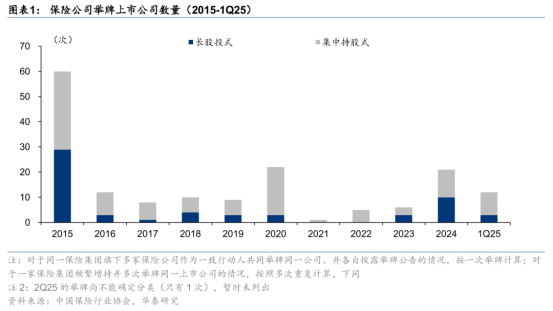
Core Viewpoint - The trend of insurance capital "shareholding" is expected to continue into 2026, driven by the focus on high dividend stocks and the need for long-term equity investments to enhance return on equity (ROE) [2][18]. Group 1: Recent Trends in Insurance Capital Shareholding - In 2025, insurance capital shareholding reached 41 instances, a significant increase from 20 in 2024, marking a new high in the past decade [2][3]. - The current wave of shareholding differs from the past, as it is influenced by a low interest rate environment and the need for stable cash returns through high dividend stocks [5][14]. - Analysts indicate that the demand for high dividend and high ROE stocks will persist, suggesting that the shareholding trend will continue [18]. Group 2: Characteristics of the Current Shareholding Wave - The shareholding activities are more diversified compared to previous years, with "Ping An" leading with 15 instances, primarily targeting bank and insurance stocks [11][12]. - Bank stocks were the most favored, being targeted 17 times, accounting for 41.5% of total shareholding instances in 2025 [13][14]. - The average dividend yield of the targeted companies was approximately 5.0%, higher than previous waves, indicating a preference for high-yield investments [15]. Group 3: Investment Strategies and Regulatory Environment - The new accounting standards implemented in 2023 require insurance companies to choose between FVTPL and FVOCI for stock investments, influencing their investment strategies [6][7]. - The regulatory environment has encouraged long-term capital market participation, enhancing the attractiveness of shareholding for insurance companies [7][18]. - The investment strategy includes a focus on high ROE assets, particularly state-owned enterprises with stable business models, to improve the overall ROE of insurance capital [17].


深圳这场盛会,TCL李东生、小鹏汽车何小鹏等企业家都说了啥?
Sou Hu Cai Jing· 2026-01-13 12:35
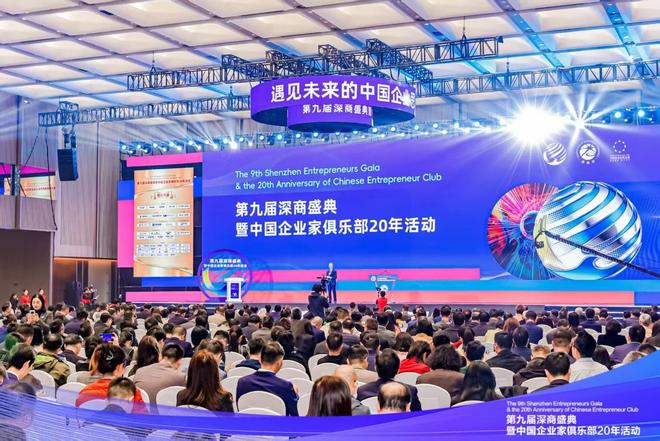
Group 1 - The event "The 9th Shenzhen Business Convention and 20 Years of China Entrepreneurs Club" focused on themes such as industrial innovation, technological breakthroughs, ecological construction, and social responsibility [1] - Notable entrepreneurs shared insights on technology innovation and development paths, highlighting China's evolution from a follower in the global supply chain to a pioneer in new strategic industries [3] - The global competition in technology is intensifying, with artificial intelligence transitioning from concept to deep industrialization, becoming a key driver of future economic growth [3] Group 2 - Companies like TCL, iFlytek, and XPeng Motors discussed their advancements in AI, automotive technology, and the importance of core technology autonomy for long-term success [3][4] - The Chinese automotive industry is moving from "electrification" to "intelligent competition," with breakthroughs in autonomous driving and smart cockpit technologies being crucial for gaining a competitive edge globally [3] - The concept of ESG (Environmental, Social, and Governance) has become a significant guiding principle for high-quality corporate development, emphasizing the integration of sustainability into business strategies [4]




中国平安:公司高度重视股东回报
Zheng Quan Ri Bao Zhi Sheng· 2026-01-13 11:40
证券日报网讯 1月13日,中国平安在互动平台回答投资者提问时表示,公司于2025年3月19日召开第十 三届董事会第七次会议,审议通过了《关于注销回购A股股份、减少注册资本并相应修订〈公司章程〉 的议案》,并于2025年9月完成了对102592612股A股股份的注销。公司高度重视股东回报,一直在寻找 对市值管理最佳的平衡,回购和分红都是股东回报的重要组成部分,目前来看,绝大部分投资者更重视 现金分红,公司现金分红水平已经超过10年保持上涨。公司将保持稳定、一致的分红政策。 (编辑 任世碧) ...
遭排挤被架空,平安怒而掀桌:向华夏幸福索要64亿对赌补偿
Guan Cha Zhe Wang· 2026-01-13 10:33
Core Viewpoint - The Ping An Group, as the largest shareholder of Huaxia Happiness, has initiated legal arbitration against Huaxia Holdings and its actual controller Wang Wenxue, claiming a compensation of 6.4 billion yuan due to unmet performance guarantees from a 2018 investment agreement [1][16]. Group 1: Background of the Investment - In 2018, Huaxia Happiness was expanding rapidly and needed capital, while Ping An was looking for quality real estate investments, leading to a partnership [2][3]. - The partnership involved two rounds of share transactions, with Ping An acquiring a total of 25.25% of Huaxia Happiness through investments exceeding 17.9 billion yuan [4]. - The investment included strict performance guarantees, requiring Huaxia Happiness to achieve specific net profit growth rates for 2018, 2019, and 2020 [4][5]. Group 2: Performance and Consequences - Huaxia Happiness met the profit targets for 2018 and 2019 but failed dramatically in 2020, achieving only 36.65 billion yuan against a target of 180 billion yuan, triggering compensation clauses [5][6]. - The failure to meet performance targets led to a prolonged delay in Ping An's compensation claims, which were not pursued until five years later [7][16]. Group 3: Changes in Shareholding and Governance - Following the 2020 performance failure, Huaxia Happiness faced a liquidity crisis, leading to a shift in shareholding dynamics where Ping An became the largest shareholder [8]. - Despite being the largest shareholder, Ping An's influence in governance diminished, with its representatives often sidelined in decision-making processes [9][10]. - In late 2025, Ping An attempted to regain governance control through five proposals, all of which were rejected by Huaxia Happiness's board [12][13][14]. Group 4: Legal Actions and Current Developments - After the rejection of its proposals, Ping An escalated the situation by filing for arbitration to claim the 6.4 billion yuan in compensation, intertwining the legal dispute with ongoing governance issues [16].

港股13日涨0.9% 收报26848.47点
Xin Hua She· 2026-01-13 10:17
Market Performance - The Hang Seng Index increased by 239.99 points, a rise of 0.9%, closing at 26,848.47 points [1] - The total turnover for the day on the main board was HKD 315.92 billion [1] - The National Enterprises Index rose by 65.33 points, closing at 9,285.41 points, with a gain of 0.71% [1] - The Hang Seng Tech Index saw a slight increase of 6.59 points, closing at 5,869.79 points, reflecting a gain of 0.11% [1] Blue-Chip Stocks - Tencent Holdings rose by 0.72%, closing at HKD 627.5 [1] - Hong Kong Exchanges and Clearing increased by 1.31%, closing at HKD 431.8 [1] - China Mobile decreased by 0.25%, closing at HKD 80.95 [1] - HSBC Holdings rose by 1.85%, closing at HKD 126.4 [1] Local Hong Kong Stocks - Cheung Kong Holdings fell by 0.19%, closing at HKD 42.56 [1] - Sun Hung Kai Properties increased by 1.22%, closing at HKD 107.9 [1] - Henderson Land Development rose by 2.99%, closing at HKD 31.72 [1] Chinese Financial Stocks - Bank of China increased by 0.9%, closing at HKD 4.48 [1] - China Construction Bank rose by 1.17%, closing at HKD 7.81 [1] - Industrial and Commercial Bank of China increased by 0.96%, closing at HKD 6.3 [1] - Ping An Insurance rose by 2.19%, closing at HKD 70 [1] - China Life Insurance increased by 3.51%, closing at HKD 33 [1] Oil and Petrochemical Stocks - Sinopec increased by 0.65%, closing at HKD 4.65 [1] - PetroChina rose by 1.36%, closing at HKD 8.22 [1] - CNOOC increased by 2.58%, closing at HKD 21.48 [1]




2025年中国保险业回顾与展望——在政策护航下探索高质量发展新路径
13个精算师· 2026-01-13 10:08
Core Insights - The article emphasizes that 2025 is a pivotal year for the Chinese insurance industry, marking a transition from scale expansion to value creation, aligning with the strategic goals of the 14th and 15th Five-Year Plans [2][4]. Group 1: Industry Growth and Transformation - In 2025, the insurance industry is expected to achieve approximately 57.6 trillion yuan in original premium income from January to November, reflecting a year-on-year growth of 7.6%, indicating a resilient recovery and stabilization at healthier growth levels [4][5]. - The growth rate of premium income is projected to show a downward trend overall, transitioning from a focus on scale to quality, confirming the industry's shift towards value creation [5][6]. - The insurance sector is entering a new cycle characterized by more stable growth, improved structure, and stronger sustainability, driven by regulatory policies aimed at risk prevention and structural adjustment [7][9]. Group 2: Regulatory Policies and Their Impact - The regulatory framework for 2025 is driven by both guiding and normative policies, addressing market pain points while aligning with the strategic goals of the 15th Five-Year Plan [18][19]. - The guiding policies aim to channel insurance funds into national strategic areas, enhancing the industry's capacity to serve the real economy and creating new business growth points [18][19]. - Normative policies focus on rectifying market anomalies and ensuring the industry returns to its core function of risk protection, thereby promoting sustainable development [25][26]. Group 3: Market Dynamics and Competitive Landscape - The health insurance market is experiencing rapid growth, with property insurance companies leading the charge, while life insurance companies face challenges in growth and profitability [11][24]. - The "Matthew Effect" is evident, with market resources increasingly concentrating among top-tier institutions, as evidenced by the profitability of leading companies in both life and property insurance sectors [12][13]. - The solvency adequacy ratio for the insurance industry stands at 186.3%, with significant structural differentiation between property and life insurance companies, highlighting the challenges faced by smaller firms [13][15]. Group 4: Future Outlook and Strategic Alignment - The regulatory practices of 2025 are not isolated but are part of a broader strategy that aligns with the 15th Five-Year Plan's requirements for the financial and insurance sectors [31][32]. - The focus on enhancing the insurance industry's role in supporting social security and addressing demographic challenges is evident, with policies aimed at deepening pension finance reform and promoting health insurance development [31][32]. - The future competitive landscape will require companies to integrate regulatory compliance into their risk management and product innovation capabilities, ensuring alignment with national strategic directions [34].
收盘市值锁定万亿!“有色茅”股价历史新高,“万亿俱乐部”扩容,这一方向占比近半
Xin Lang Cai Jing· 2026-01-13 09:53
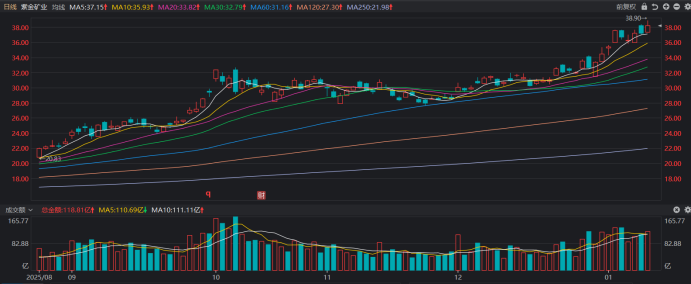
智通财经1月13日讯(编辑 梓隆),今日(1月13日),有色金属龙头股紫金矿业再度拉升,收盘涨幅 近2.63%,盘中股价一度冲至38.90元,创历史新高。同时,其全天成交额118.81亿元,较昨日继续放 量,同时也已连续3个交易日成交额维持在百亿规模。 融资余额持续新高,万亿俱乐部添一员 自去年年末以来,紫金矿业股价持续走高,截至今日收盘,其近20个交易日累计共上涨近21%。受连日 攀升提振,紫金矿业的市值规模不断上升,以收盘数据统计,其今日首次站上万亿市值关口,总市值 (证监会算法)达10044亿元,成为"万亿俱乐部"中的一员。其中,紫金矿业A股市值近7878亿元,在 整个A股市场中位居第十位。 注 1:紫金矿业总市值规模变动情况(截至1月13日收盘) 注2:总市值以证监会算法统计(A股股本*A股股价+其他市场股本*其他市场股价*汇率) 以资金面层面统计,紫金矿业近期持续获融资客加仓。截至1月12日数据,其目前融资余额已达91.59亿 元,不仅为首次突破90亿元关口,同时也创历史新高,其年内累计获增持近10.24亿元,增幅近12.6%。 其中,融资客在12月29日(2025年)、1月7日、1月12日大举增持 ...

李东生、马蔚华发声!一批大咖齐聚深圳共探高质量发展路径
Nan Fang Du Shi Bao· 2026-01-13 09:49
Group 1 - Shenzhen's "14th Five-Year Plan" proposes the establishment of five "centers" to guide the next phase of economic and social development [1] - The 9th Shenzhen Business Convention emphasizes the theme of "Encountering the Future of Chinese Enterprise Thought," focusing on key issues such as industrial innovation, technological breakthroughs, ecological construction, and social responsibility [1][3] - Entrepreneurs shared insights on how technology empowers industrial upgrades, reflecting on the achievements of the China Entrepreneur Club over the past 20 years and analyzing industry trends for the "14th Five-Year" period [3] Group 2 - AI is identified as a key driver of future economic growth, transitioning from concept to deep industrialization amid increasing global technological competition [3][5] - The founder of iFlytek, Liu Qingfeng, highlights the rapid arrival of the era of general artificial intelligence, which is fundamentally reshaping industrial forms [5] - By 2025, over 40% of the 203 new unicorn companies will be closely related to AI, with a projected 1000-fold increase in China's per capita token model consumption by the end of 2025 [5] Group 3 - The wealth management market in China is expected to grow significantly, with household assets projected to reach 440 trillion by 2030, indicating a structural change in financial markets [6] - The medical services market is anticipated to reach 30 trillion by 2030, with personal out-of-pocket medical expenses accounting for approximately 27% of total medical costs in 2024 [6] - The future of insurance is seen as a crucial payment method for healthcare, presenting significant growth opportunities for insurance companies [6] Group 4 - Financial services should focus on supporting the real economy, with financial technology driving upgrades in industrial chain finance [7] - The CEO of BGI emphasizes the importance of core technology in the life and health industry, advocating for the integration of cutting-edge technologies into everyday life [7] Group 5 - The ESG (Environmental, Social, and Governance) concept is becoming a vital guideline for high-quality corporate development, with a focus on sustainable practices [9] - Shenzhen entrepreneurs are recognized for their commitment to ESG principles, which align with the spirit of innovation and responsibility inherent in the Shenzhen business community [9][10] - The Shenzhen business community aims to balance economic benefits with social responsibility, fostering sustainable development through various initiatives [10]