OPPO

Search documents
拍月亮变“P月亮”,当手机摄影被AI算法入侵
创业邦· 2025-10-27 03:28
Core Viewpoint - The article discusses the evolution of smartphone imaging technology, emphasizing the increasing integration of AI algorithms in flagship smartphones to enhance photo quality while raising concerns about the authenticity of images produced [5][14][19]. Group 1: Smartphone Imaging Technology - Flagship smartphones in 2025 will focus on imaging capabilities, with models like Xiaomi 17 Pro and OPPO Find X9 Pro featuring advanced camera systems [5][14]. - The integration of AI in smartphone photography has become prevalent, with many brands embedding AI algorithms to optimize image quality automatically [15][16][19]. - Users are increasingly concerned about the "algorithmic flavor" in photos, questioning the balance between realistic representation and algorithmic enhancement [14][20]. Group 2: User Experience and AI Integration - Many users prefer "foolproof" photography experiences, leading manufacturers to default to AI algorithms for photo enhancement [15][19]. - The vivo X300 Pro exemplifies the successful application of AI in enhancing user experience, with users reporting superior photo quality compared to traditional smartphone cameras [18][19]. - The article highlights a shift in user expectations, where the quality of images produced by AI-enhanced smartphones is prioritized over strict adherence to realism [19][20]. Group 3: Challenges and Future Directions - Despite advancements, challenges remain, particularly in extreme shooting conditions where AI may distort images [20][25]. - The physical limitations of smartphone hardware necessitate a reliance on software algorithms to meet user demands for high-quality images [27][28]. - The industry is moving towards a balance between AI enhancements and authentic representation, with companies like OPPO and vivo aiming to refine their AI applications to respect the integrity of real-world scenes [44][45].



雷军回应K90价格质疑;余承东职位更新丨新鲜早科技
2 1 Shi Ji Jing Ji Bao Dao· 2025-10-27 01:40
Group 1: Xiaomi's Pricing Strategy - Xiaomi's President Lu Weibing addressed concerns regarding the pricing of the Redmi K90 series, attributing the price differences to increased costs from upstream supply chains [2] - The 12GB + 512GB version will see a price reduction of 300 yuan during its first month of sales, bringing the price to 2899 yuan [2] - The company emphasized that the global storage supply chain prices have risen unexpectedly, impacting their pricing strategy [2] Group 2: Kuaishou's Business Restructuring - Kuaishou is restructuring its local life services business, transitioning service providers to take on more advertising responsibilities [3] - The local life division has been renamed to the Life Services Division, indicating a commitment to expanding this business area [3] - The restructuring aims to integrate local merchant operations and marketing efforts for more efficient service delivery [3] Group 3: Huawei's Leadership Update - Huawei announced that Yu Chengdong has been appointed as the head of the Product Investment Committee while retaining his role as Executive Director and Chairman of the Terminal BG [3] - The Product Investment Committee is a key decision-making body responsible for evaluating resource allocation and project approvals [3] Group 4: OPPO's Response to Screen Issues - OPPO addressed the "green line" issue reported by users on various smartphone models, offering free screen replacements for devices under four years old [4] - For devices older than four years, OPPO will provide a discounted screen replacement service [4] Group 5: Huagong Technology's Product Delivery - Huagong Technology has begun delivering its 800G LPO optical modules from overseas factories in October, with expectations for increased production in Q4 [5] - The company anticipates a growing demand in the overseas market, estimating a total demand of 40 to 50 million units [5] Group 6: Strategic Partnerships - Ningbo Fangzheng signed a strategic cooperation agreement with Shandong Future Robotics to collaborate on deep-sea robot components and applications [6] - The agreement is valid for three years and focuses on various deep-sea operational scenarios [6] Group 7: Green Energy Collaboration - Grinmei signed a strategic cooperation framework agreement with Xiamen Xatung New Energy for the supply of advanced battery materials [7] - The agreement outlines a long-term partnership for supplying various battery materials, with an expected annual supply of 150,000 tons from 2026 to 2028 [7] Group 8: Breakthroughs in Lithography Technology - A research team from Peking University has made significant advancements in lithography technology, which is crucial for semiconductor manufacturing [8] - The team successfully analyzed the micro-3D structure of photoresist molecules, leading to a new industrial solution to reduce lithography defects [8] Group 9: Wolfspeed's Executive Appointment - Wolfspeed appointed former Infineon executive Matthias Buchner as the Senior Vice President of Global Sales and Chief Marketing Officer [9] - This move indicates Wolfspeed's strategy to strengthen its position in high-growth sectors such as electric vehicles and AI data centers [9] Group 10: Stock Market Activity - Shannon Chip announced significant stock price fluctuations, with a cumulative increase of over 200% in the past 30 trading days [10] - The company noted that its business fundamentals remain stable despite the stock price volatility, indicating potential irrational market behavior [10] Group 11: Mergers and Acquisitions - Yintang Smart Control is planning to acquire 100% of Guanglong Integrated Technology and 76% of Ao Jian Microelectronics [11] - The company has applied for a trading suspension as it negotiates the acquisition details, which are not expected to constitute a major asset restructuring [11] Group 12: Termination of Asset Restructuring - Visionox announced the termination of its major asset restructuring plan to acquire a stake in Hefei Visionox Technology due to changing market conditions [12] - The company confirmed that its operational status remains normal and the termination will not adversely affect its business [12] Group 13: Financing Update - Songyan Power has completed nearly 300 million yuan in Pre-B round financing, led by Fanggu Capital [13] - The financing round included participation from several other investment firms, indicating strong investor interest in the company [13]
HMD Fusion 2续作来了,然而用户并不需要模块化手机
3 6 Ke· 2025-10-27 01:20
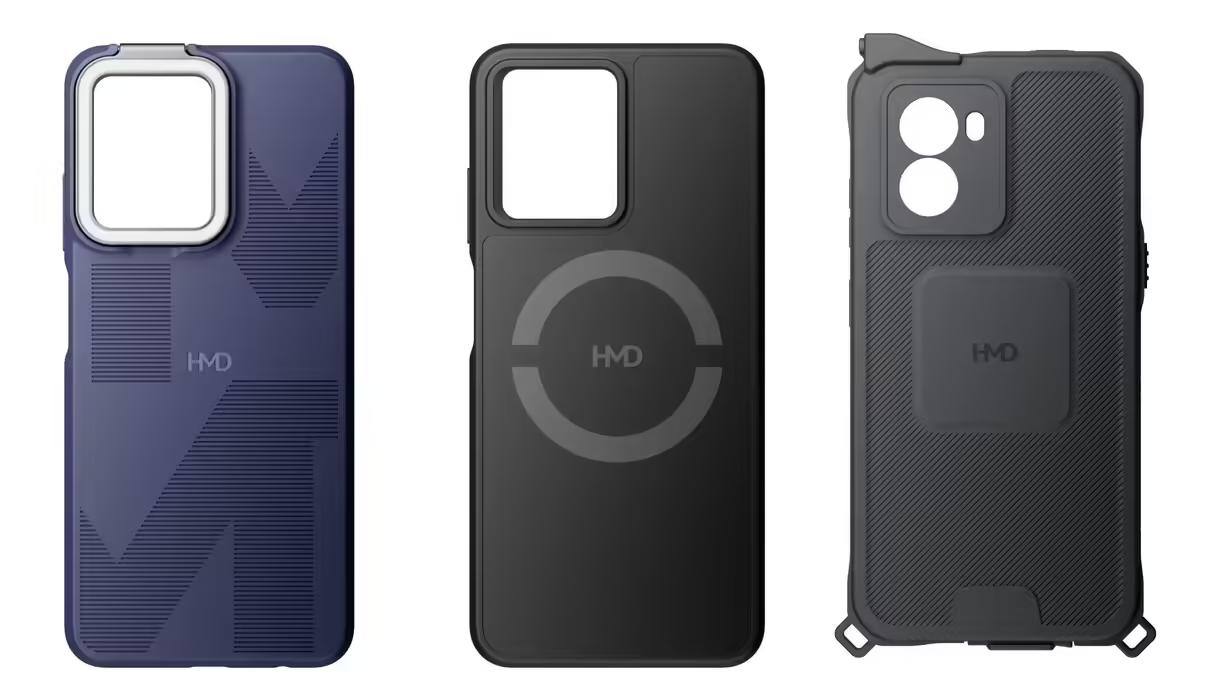
Core Viewpoint - HMD is launching its second modular smartphone, HMD Fusion 2, which continues the modular design concept of its predecessor, aiming to enhance device longevity and reduce electronic waste through user-replaceable components [1][3][11]. Group 1: Product Features - HMD Fusion 2 will allow users to easily replace camera modules, batteries, back covers, and some interface modules, promoting a more sustainable approach to smartphone usage [3][11]. - The modular design aims to address issues like battery aging and damaged components without requiring a full device replacement [11][13]. Group 2: Market Context - The concept of modular smartphones has been around for over 20 years, with early attempts like Google's Project Ara aiming to create customizable hardware ecosystems [3][5]. - Previous modular phones, such as LG G5 and Moto Z, faced poor sales and ultimately abandoned their modular features, indicating a lack of market acceptance [5][6][19]. Group 3: Challenges and Considerations - The high production and maintenance costs associated with modular designs, along with the complexity of smartphone internals, pose significant challenges for HMD Fusion 2 [6][13]. - The current market trend favors integrated designs that prioritize thinness, compactness, and durability, which conflict with the modular concept [17][19]. Group 4: Environmental and Consumer Trends - The rise of "repairability" and "sustainability" concepts in the tech industry, particularly in Europe and North America, has influenced HMD's approach to modularity [9][11]. - Despite the push for repairable devices, consumer habits lean towards convenience, with many preferring to replace rather than repair their smartphones [17][19].
青木科技20251026
2025-10-27 00:31
Summary of Newmu Technology Conference Call Industry and Company Overview - **Company**: Newmu Technology - **Industry**: Health and Pet Food Consumption Key Points and Arguments 1. **Business Transformation**: Newmu Technology is transitioning from a distribution agency model to a joint venture model, holding 70% equity to ensure long-term partnerships and attract talent through equity incentives, aiming to create multiple brands with annual revenues exceeding 1 billion yuan [2][5][13] 2. **AI Investment**: The company has invested approximately 150 million yuan in AI technology for applications such as intelligent customer service, image processing, and short video generation, resulting in a 20% year-on-year increase in technical service revenue [2][6][14] 3. **2025 Performance Outlook**: Newmu Technology expects overall performance in 2025 to exceed last year's results, with the agency business maintaining a growth rate of 15-20%, and technical services projected to grow by about 20% [2][7][8] 4. **Brand Development**: The company plans to develop 5 to 10 brands with annual revenues exceeding 1 billion yuan within the next 5 to 10 years, utilizing a joint venture model to rapidly establish brands like Keman Duo and Youka Rui [2][9][12] 5. **Revenue Growth**: In Q3 2025, Newmu Technology reported a 26% year-on-year revenue increase and a nearly 50% increase in net profit, driven by strong growth from leading brands and AI investments [3][4] 6. **Marketing Efficiency**: The company has improved marketing efficiency through AI, with promotional expenses increasing by about 50% in the first nine months of the year, but revenue growth outpacing this increase [4][25] 7. **Product Diversification**: Newmu Technology plans to launch new products across different price ranges in the health and pet food sectors and is considering acquiring established overseas brands using approximately 800 million yuan in cash [4][13] 8. **Brand Comparison**: Keman Duo, a leading foreign brand, focuses on preventive care, while domestic brand Fu Yan Jie is more treatment-oriented, indicating a strategic differentiation in market positioning [17][20] 9. **Employee Incentives**: The company plans to implement a stockholding model to incentivize employees, aligning the interests of shareholders, the company, and core employees to drive performance and share growth [23] Additional Important Information 1. **Channel Distribution**: Keman Duo and Youka Rui have a sales distribution of approximately 30% on Tmall and 30-40% on Douyin, with an expected net profit margin of 7-8% for the year [11] 2. **Future Brand Potential**: Newmu Technology anticipates that emerging brands will significantly improve profitability as they scale, with net profit margins reaching 10% when revenues hit 300-500 million yuan [12] 3. **AI Applications**: Specific applications of AI include customer service automation and data-driven marketing, which have improved operational efficiency by 30% [16][19] 4. **Pet Food Market**: The company is focusing on high-margin functional pet food products and plans to expand into the pet health product market [22] 5. **Q4 and Future Revenue Goals**: The company expects strong performance in Q4 2025, with internal revenue targets set at over 200 million yuan for the year [24]
小米OPPO又有骚操作:用饭锅盖着换机更快?我们实测了一番
3 6 Ke· 2025-10-26 23:47
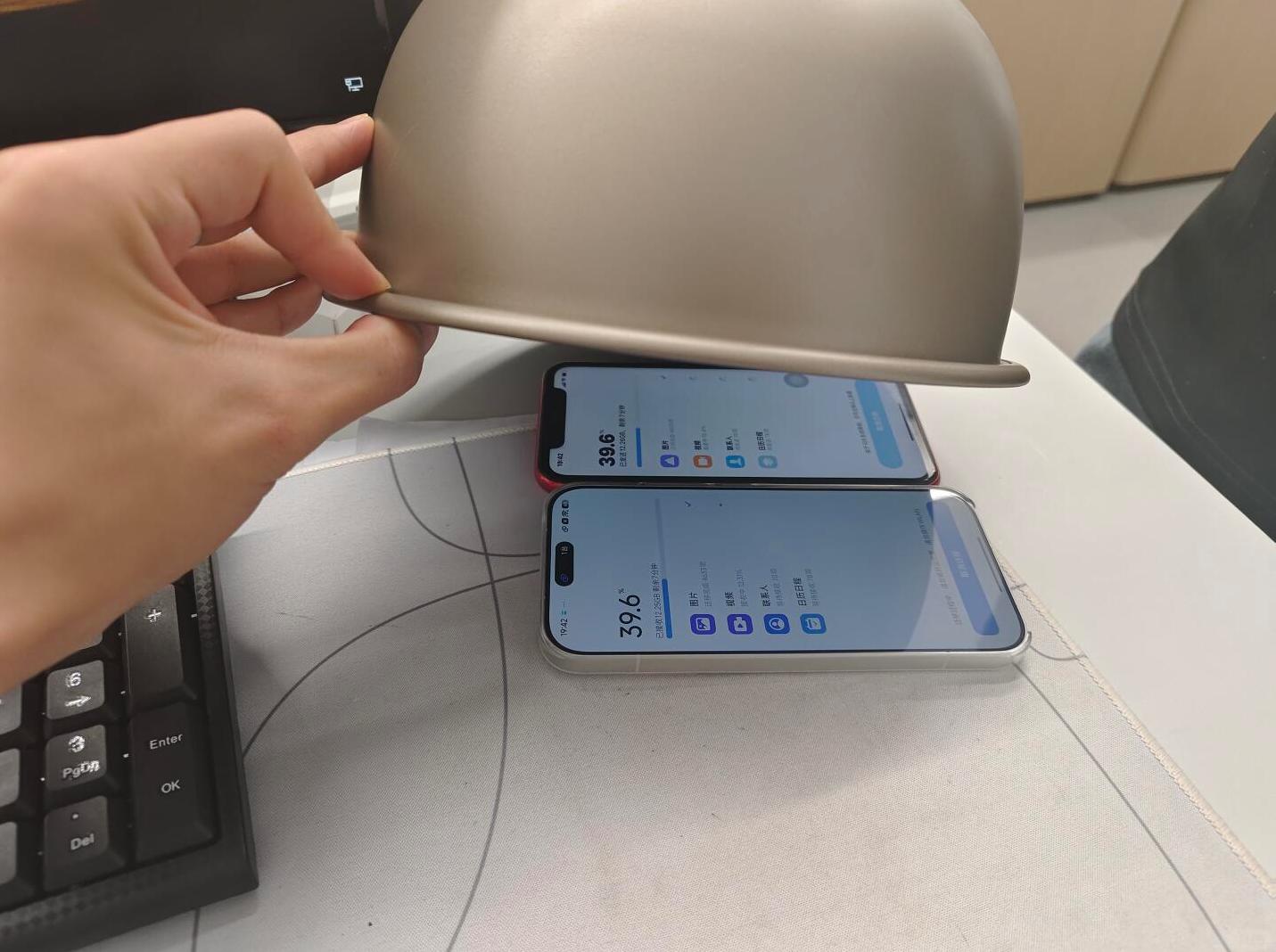
Core Viewpoint - The article discusses innovative methods for data migration during smartphone upgrades, highlighting the emergence of unique solutions from major brands like Xiaomi and OPPO to enhance user experience in data transfer [1][26]. Group 1: Data Migration Challenges - The traditional wireless data transfer methods are slow, especially in crowded environments like stores, leading to user frustration [1][3]. - Users often face the challenge of transferring large amounts of data, ranging from tens to hundreds of gigabytes, which can take an excessive amount of time [1]. Group 2: Innovative Solutions - OPPO has introduced a service called "O Flash Move," which utilizes an aluminum alloy box with thermal silicone padding to significantly speed up data transfer [8][10]. - Xiaomi's approach involves using various metal containers, such as rice cooker inner pots, to achieve similar results, showcasing a more informal and creative method [5][20]. Group 3: Performance Comparison - Testing showed that using a metal box for data transfer can increase speeds to approximately 130MB/s to 140MB/s, reducing transfer time from 52 minutes to 19 minutes in a challenging wireless environment [16][19]. - In a more ideal environment, the performance improvement was less pronounced, indicating that the effectiveness of these methods is more significant in noisy signal environments [19]. Group 4: Underlying Principles - The effectiveness of these methods is based on the principles of a Faraday cage, which shields devices from external electromagnetic interference, allowing for clearer and faster data transmission [20][24]. - The metal box not only blocks external signals but also enhances internal signal quality by reflecting and concentrating the Wi-Fi signals between devices [24]. Group 5: Market Trends - The shift towards enhancing user experience through innovative services reflects a broader trend in the smartphone industry, where hardware innovation is reaching a saturation point [28][29]. - Companies are increasingly focusing on service and experience improvements, recognizing that a seamless data migration process can significantly impact user satisfaction and brand perception [29].
OPPO回应屏幕绿线问题:购机4年内提供免费更换屏幕服务
Xin Lang Ke Ji· 2025-10-26 01:51
Core Viewpoint - Recent reports indicate that multiple OPPO users have experienced green lines appearing on the screens of their smartphones, particularly in the Find X series, Reno series, and OnePlus series, with most devices being less than four years old [1] Company Response - OPPO has stated that for devices with screen line issues purchased within four years, they will provide free screen replacement services; for devices older than four years, a discounted screen replacement policy will still be offered, significantly below market prices [1]
大厂蜂拥入局掀智能眼镜热潮,雷鸟创新继续以“首发”换声量
Hua Xia Shi Bao· 2025-10-25 13:40
Core Insights - The competition in the smart glasses market is intensifying, with both technological advancements and price wars occurring simultaneously [2] - Thunderbird Innovation has launched the Thunderbird Air 4 series, featuring HDR10 display and self-developed Vision 4000 chip, aiming to popularize high-performance products at competitive prices [2][3] Market Position and Performance - Thunderbird Innovation achieved a 39% market share in the global AR glasses market by Q2 2025, surpassing Apple to become the third in the global XR market [3] - The global smart glasses market is projected to ship 2.555 million units in Q2 2025, reflecting a year-on-year growth of 54.9%, although this volume is still significantly lower than that of smartphones, which are expected to reach 295.2 million units with a 1% year-on-year growth [4] Competitive Landscape - The AR glasses market is crowded with major players like Huawei, Baidu, Xiaomi, Apple, and Alibaba, leading to a highly competitive environment [6] - Despite the competition, smaller companies express optimism, viewing the entry of large firms as a means to expand the overall market rather than as direct competition [6][7] Product Strategy - Thunderbird Innovation's strategy focuses on integrating supply chain efficiencies to lower costs while enhancing user experience through technological iterations, aiming to make AR glasses accessible to a broader audience [5] - The pricing for the Thunderbird Air 4 is set at 1,599 yuan, and the Air 4 Pro at 1,699 yuan, reflecting a commitment to quality without increasing prices [4] Future Outlook - The smart glasses market is expected to evolve into a multi-product, multi-scenario hardware ecosystem, where differentiation will be key, and both leading and mid-tier companies will coexist [7] - The market is anticipated to undergo further restructuring as more manufacturers enter, intensifying the competitive dynamics [7]

挑西瓜、比价格、开盲盒告别“参数内耗” 手机AI开始集体接地气
Mei Ri Jing Ji Xin Wen· 2025-10-25 10:44
Core Insights - The mobile industry is shifting focus from competing on AI model parameters to practical applications of AI in real-world scenarios [2][4] Group 1: Industry Trends - Major smartphone manufacturers are emphasizing the importance of making AI functional and user-friendly, moving away from merely increasing model parameters [2][3] - Companies like Honor, Vivo, and OPPO are reporting significant advancements in AI capabilities, with Honor's AI assistant capable of over 3000 automated tasks and Vivo's AI assistant covering approximately 2500 high-frequency scenarios [2][3] - The industry is increasingly prioritizing "scene-based" and "practical" AI applications, as highlighted by executives from various companies [2][3] Group 2: Technological Support - The implementation of AI in smartphones is supported by a three-tiered technological framework: internal technology development, perception capabilities based on underlying models, and ecosystem-driven service integration [3] - Honor's AI Connect platform aims to open its AI capabilities to ecosystem partners, fostering collaboration across various industries [3][4] Group 3: Ecosystem Collaboration - The realization of "full-scene intelligence" requires collaboration among multiple ecosystem partners, as highlighted by OPPO and Vivo's emphasis on the importance of developer contributions [3][4] - Honor's "1×3×N" ecosystem strategy aims to create a cross-brand, cross-scenario, and cross-device intelligent interconnected ecosystem, with partnerships already established with major companies [3][4] Group 4: Competitive Landscape - Leading manufacturers are adopting comprehensive strategies that integrate AI experiences with ecosystem development, moving beyond mere hardware specifications [4][5] - The competition among smart devices is evolving into a contest of "AI experience + ecosystem," as seen in strategies from Huawei, OPPO, and Apple [4] Group 5: Interoperability Challenges - Achieving seamless cross-device collaboration remains a challenge due to differences in protocols and systems among brands [5] - Honor is addressing this by implementing a "tap-to-connect" standard, allowing devices to communicate easily, with current connectivity achieved with 80% of smart air conditioners and 70% of smart cars in the Chinese market [5]
OPPO回应“屏幕绿线”问题:购机4年内免费换屏
Ju Chao Zi Xun· 2025-10-25 07:35
Core Viewpoint - OPPO has responded to the "green line" issue affecting its smartphones by offering free screen replacements for devices purchased within four years and discounted replacement options for devices older than four years, aiming to address consumer concerns and uphold brand responsibility [1][3]. Group 1: Issue Overview - The "green line" issue, characterized by vertical green or purple lines appearing on screens without external impact, has been reported by numerous OPPO and OnePlus users since the second half of this year [3]. - Affected models include OPPO Find X2, X3, X5 series, OPPO Reno 5, 6, 9 series, and OnePlus 8, 9, 10, 11, and Ace series, primarily released between 2019 and 2023 [3]. - Complaints have surged, particularly from users whose devices showed issues just after the warranty period, leading to dissatisfaction with OPPO's after-sales policy [3]. Group 2: Company Response - In response to growing public pressure, OPPO announced on October 24 that it would provide free screen replacements for devices purchased within four years and discounted options for those older than four years [3]. - This policy is seen as a direct response to consumer demands, aiming to bridge the gap between standard warranty periods and the exposure of potential product defects [3]. Group 3: Market Context - The "green line" incident occurs amid intense competition in the smartphone market, with major brands like Apple, Xiaomi, vivo, and Honor launching new products since September [4]. - OPPO recently launched its flagship OPPO Find X9 series, which features the first domestic eSIM functionality, making the timing of the quality issue particularly critical [4]. - According to QuestMobile, OPPO has a high brand loyalty rate, with 45% of users opting for brand upgrades, making the resolution of the "green line" crisis vital for maintaining its market position [4]. - Market research from Omdia and IDC indicates that the sales gap among the top five smartphone manufacturers in China is within 6 million units, highlighting the competitive landscape [4].
理想回应MEGA 行驶中起火,车主发声/雷军谈K90定价质疑:内存涨价太多/苹果着手调查部分iPhone 17 Pro褪色
Sou Hu Cai Jing· 2025-10-25 02:09
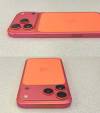
Group 1 - Apple is investigating reports of the iPhone 17 Pro's "Starry Orange" color fading to pink, potentially due to flaws in the anodizing process [3][4] - Users have shared images of the color change on social media, and some have already received replacements from Apple [3] - The issue is believed to affect only a small batch of products, and Apple may correct the process in future production [3] Group 2 - Li Auto responded to a fire incident involving the Li MEGA vehicle in Shanghai, stating that the driver and passengers escaped safely [4][9] - The company emphasized that rumors regarding battery pack damage causing the fire are false, and the incident is under investigation [9][10] - The Li MEGA has been a leading model in the electric MPV market, despite previous controversies affecting its sales [10] Group 3 - Xiaomi's executives addressed concerns over the pricing of the Redmi K90 series, attributing it to a significant increase in global memory supply chain costs [11][14] - Major suppliers like Samsung and SK Hynix have raised prices, with DRAM prices expected to rise by 25% to 26% in Q4 [14][15] Group 4 - Microsoft introduced a new AI character named "Mico" during its Copilot fall event, designed to enhance user interaction and learning experiences [19] - Mico will be integrated into the Edge browser, which is evolving into an "AI browser" capable of summarizing and comparing information [19] Group 5 - OpenAI has acquired Software Applications Incorporated, the developer of the macOS AI tool Sky, to enhance AI integration in desktop environments [27][29] - The acquisition aims to improve user experiences in writing, planning, and programming by leveraging Sky's capabilities [29] Group 6 - Intel reported a return to profitability in Q3 2025, aided by funding from major companies and the government, while facing ongoing chip supply challenges [61][63] - The company plans to prioritize AI server chip production and will not revert to its previous "Tick-Tock" development model due to increasing complexity in advanced processes [63][64] Group 7 - Nokia's CEO expressed confidence in the long-term prospects of AI investments, stating that the sector is in a "super cycle" and will continue to grow despite short-term fluctuations [66][68] - The CEO highlighted the low penetration of AI applications in various fields, indicating significant growth potential [68]