世界银行

Search documents
世界银行预测2025年加纳财政收入增量有望达GDP的0.6%
Shang Wu Bu Wang Zhan· 2025-08-15 16:01
Core Insights - The World Bank predicts that if the Ghanaian government fully implements the tax measures proposed in the 2025 budget report, the increase in fiscal revenue could reach 0.6% of GDP by 2025, aligning with the IMF's targets for economic assistance programs [1] Group 1: Fiscal Measures - The World Bank encourages the Ghanaian government to enhance the capacity of the tax authority, including conducting tax audits at all levels of government [1] - Recommendations include the introduction of a comprehensive tax management system and an electronic procurement system [1] - The government is advised to consolidate all spending accounts into a single treasury account to improve fiscal transparency and enhance the efficiency of fund utilization [1]
亚洲基础设施投资银行为摩洛哥提供2亿美元贷款
Shang Wu Bu Wang Zhan· 2025-08-14 15:07
Core Viewpoint - The Asian Infrastructure Investment Bank (AIIB) plans to provide a loan of $200 million to Morocco by the end of 2025 to support projects aimed at mitigating climate change impacts and improving ecosystems under the "Nationally Determined Contributions" (NDC) framework [1] Group 1: Loan Details - The loan from AIIB will be part of a total investment plan of $900 million for Morocco's NDC, which includes various climate resilience projects [1] - The funding will complement a commitment of $350 million from the World Bank in results-based financing (PforR) [1] - The remaining $350 million will be financed by the Moroccan government [1] Group 2: Project Focus - Projects funded by the loan will include the procurement of weather radar to enhance weather and natural disaster forecasting [1] - Establishing agricultural cooperatives to promote date palm cultivation and developing plant species that adapt to climate change to enhance ecosystem resilience [1]
潘功胜:完善全球金融治理 需要各方加强对话与合作
Jin Rong Shi Bao· 2025-08-08 07:57
Group 1: Global Financial Governance - The core message emphasizes the need for dialogue and cooperation among all parties to improve global financial governance, advocating for reform, openness, and multilateralism [1] - The discussion on the international monetary system has evolved, with current debates focusing on reducing reliance on a single sovereign currency and exploring the role of a supranational currency like the IMF's Special Drawing Rights (SDR) [2][3] Group 2: Cross-Border Payment Systems - There is a growing demand for improvements in the traditional cross-border payment systems, with emerging payment infrastructures and settlement methods driving the evolution towards more efficient, secure, and inclusive systems [3] - Three major trends in cross-border payments are identified: diversification of payment systems, enhanced interoperability, and accelerated application of new technologies [3] Group 3: Global Financial Stability - Post-2008 financial crisis, the global financial safety net has been strengthened, with the IMF enhancing its crisis response capabilities and various regional financial stability mechanisms being established [4] - China has signed bilateral currency swap agreements with over 30 countries, contributing to the global financial safety net [4] Group 4: Challenges in Financial Stability - The current regulatory framework is fragmented, with risks of regulatory arbitrage and insufficient oversight in emerging areas like digital finance [5] Group 5: Governance of International Financial Organizations - The governance of international financial organizations like the IMF and World Bank needs reform to better reflect the actual economic standing of emerging markets and developing countries [6][7] - The IMF's quota system, which determines its crisis response capacity and member voting rights, requires adjustments to enhance its legitimacy and representation [7]


美债半年飙涨3.8万亿,日增20亿利息超加经济,危机何去何从
Sou Hu Cai Jing· 2025-08-06 03:59
Group 1 - The core issue is the astronomical U.S. debt of $36.8 trillion, with annual interest payments exceeding $1 trillion, which is equivalent to the economic output of two Canadas [1] - The U.S. debt has surged from $33 trillion to $36.8 trillion in just six months, marking a historic growth rate, with an increase of $2 billion daily [1][39] - The U.S. government has struggled to implement effective measures to manage this debt, facing resistance from various interest groups and political challenges [4][6] Group 2 - Trump's initial strategies to reduce spending, such as cutting military expenses and welfare, faced significant pushback from military contractors and Congress, leading to minimal savings [4][6] - Efforts to increase revenue through tariffs on imports have not yielded the desired results, as trade deficits remained unchanged and retaliatory measures from other countries exacerbated the situation [10][11][13] - The Federal Reserve, holding $7.5 trillion in U.S. debt, has resisted Trump's calls for interest rate cuts, further complicating the debt repayment situation [15][27] Group 3 - The U.S. is caught in a vicious cycle of borrowing to pay interest, with rising interest rates making it increasingly difficult to manage debt [17][39] - Trump's public accusations against government data integrity, including claims of falsified employment statistics, have raised concerns about the credibility of U.S. economic data [31][33] - The erosion of institutional credibility could lead to significant shifts in global capital flows, with countries like China reducing their holdings of U.S. debt [35][37] Group 4 - The International Monetary Fund has warned that U.S. debt risks are nearing critical levels, with potential implications for global financial markets [39] - Moody's analysis suggests that the U.S. debt crisis could lead to a decline in global GDP by 1.2% to 2.8% [41] - The U.S. debt growth rate is significantly higher than that of other developed nations, raising alarms about the sustainability of its fiscal policies [54][56] Group 5 - The current debt crisis is viewed as a pivotal moment in the decline of U.S. global dominance, with the emergence of a multipolar world order [43][57] - China's strategic responses, including diversifying trade and enhancing domestic production capabilities, contrast sharply with the U.S. approach to debt management [48][50] - The potential for a new global economic order is being shaped by the U.S.'s internal challenges and the strategic resilience demonstrated by China [57]
医疗保健预算执行从瓶颈到解决方案
Shi Jie Yin Hang· 2025-08-05 07:04
Investment Rating - The report does not explicitly provide an investment rating for the healthcare sector in the Democratic Republic of the Congo (DRC) Core Insights - The DRC aims to achieve Universal Health Coverage (UHC) by 2030, but faces significant challenges due to limitations in budget execution and allocation, leading to a reliance on household and donor funding rather than government support [5][23] - Government health budget execution rates are low, with an average execution rate of 47.6% from 2016 to 2020, significantly below the overall government spending average of 80% [39][40] - The health budget is heavily skewed towards personnel costs, which account for 60% of total health budget expenditures, limiting the ability to execute other spending categories [53] Summary by Sections 1. Health Financing Background - From 2016 to 2021, household payments and donor contributions accounted for over 80% of total healthcare spending, while government financing ranged from 10% to 16% [23][24] - Total healthcare spending was estimated between $19 and $22 per capita from 2013 to 2019, far below the $86 per capita needed for UHC [24] 2. Health Budget Execution - The average execution rate of the health budget was 47.6% compared to the initial budget allocation, with significant variations across budget categories [39][40] - The execution rate for personnel costs was 103%, while other categories, such as provincial allocations and hospital funding, had execution rates below 20% [40][41] - In 2019, only six out of over fifty departments achieved budget execution for operational costs, highlighting severe inefficiencies [45] 3. Public Financial Management Controls in Health Expenditure - The report identifies a lack of integration between strategic planning and budget preparation, leading to challenges in resource allocation [58] - Budget management rules are often ignored, with some agencies systematically overspending their allocations, which reduces available resources for other departments [55][72] - The procurement process is cumbersome, leading to delays and inefficiencies in budget execution [56][68] 4. Good Practices and Bottlenecks - The establishment of a tripartite health-budget-finance committee aims to monitor budget execution and improve coordination among stakeholders [70] - Key bottlenecks include unrealistic revenue forecasts, a highly centralized budget execution process, and a lack of respect for budget management rules [72][73]
尼泊尔将于2026年脱离最不发达国家行列,奥利总理详解机遇与挑战
Shang Wu Bu Wang Zhan· 2025-08-01 08:13
Core Viewpoint - Nepal is set to transition from a Least Developed Country (LDC) to a developing country by November 2026, ending a 55-year status, which is expected to enhance its international image and investment environment [1] Group 1: Economic Implications - The transition is anticipated to improve Nepal's credit rating and attract foreign investment [1] - The World Bank will increase loan interest rates for Nepal from 0.75% to 1.5% starting July 2025, with repayment terms reduced from 40 years to 30 years [1] - Nepal will lose trade preferences, international aid, and low-interest loans associated with its LDC status, potentially impacting funding in health and education sectors [1] Group 2: Government Strategies - The Nepalese government has developed a "smooth transition strategy" and established multiple committees to oversee its implementation [1] - Measures to enhance national competitiveness include legal revisions, procurement policy optimization, and infrastructure development [1] - The government aims to transform Nepal from a "landlocked" to a "land-linked" country to attract more foreign investment [1]
世界银行暂缓向肯发放7.5亿美元贷款
Shang Wu Bu Wang Zhan· 2025-07-29 15:19
(原标题:世界银行暂缓向肯发放7.5亿美元贷款) 肯《商业日报》7月23日报道,因肯尼亚政府在落实关键改革方面进展缓慢, 世界银行决定暂缓向其发放7.5亿美元贷款,该笔资金原定于本月通过"发展政 策操作"(DPO)工具拨付。DPO工具要求肯政府推动一系列财政和治理改 革,包括通过《利益冲突法案》、实施统一公共财政账户以及政府采购流程自 动化等,以消除串通、内部交易和操控合同等行为。肯财政部已将上述资金纳 入2025/26财年预算,暂缓发放可能导致财政缺口,迫使政府通过新增借款或 压缩支出来维持预算平衡。世界银行表示,贷款发放需以肯政府完成所有改革 承诺并维持稳健的宏观经济政策为前提。 ...
欧明刚:世界银行改革及前景|国际
Jin Shi Shu Ju· 2025-07-28 12:06
来源:清华金融评论 文/外交学院国际经济学院院长欧明刚 作为布雷顿森林机构的多边开发银行,世界银行已从一个单一的机构发展成为一个多边开发集团。80多年来,世行顺应时代的需要做出了多轮改革。特 朗普重返白宫后,其单边主义的行为对世界银行的改革进程的推进和目标的实现可能会造成阻扰。同时,考虑到当前不稳定的国际形势,世行正在进行 的有关变革的效果也值得观察。 作为布雷顿森林机构的多边开发银行,世界银行已从一个单一的机构发展成为一个多边开发集团,包括国际复兴开发银行(IBRD)、国际开发协会 (IDA)、国际金融公司(IFC)、多边投资担保机构(MIGA)和国际投资争端解决中心(ICSID)。80多年来,世行顺应时代的需要做出了多轮改革。 由于美国持有世行的一票否决权,世行行长由美国人来任命,因此,世行的重大改革大多是由美国发起和推动或得到美国认可的。但美国政府的更迭自 然会对世行改革产生溢出效应。发轫于新冠疫情并由2023年拜登政府任命的彭安杰(Ajaypal Singh Banga)行长推动的世行改革正在逐步实施之中,但特 朗普政府关于世行的看法有所不同,相应改革能否按期推进不得不引起各方的关注。 世行改革的主要 ...
欧明刚:世界银行改革及前景|国际
清华金融评论· 2025-07-28 11:00
Core Viewpoint - The World Bank, as a multilateral development bank, is undergoing significant reforms to adapt to global challenges such as public health crises, geopolitical conflicts, climate issues, and food security, while facing potential disruptions from the return of unilateralism under the Trump administration [1][4]. Group 1: Structure and Evolution of the World Bank - The World Bank has evolved from a single institution to a multilateral development group, including IBRD, IDA, IFC, MIGA, and ICSID, and has undergone multiple reforms over the past 80 years [2]. - The leadership of the World Bank is influenced by the U.S. due to its veto power, with major reforms often initiated or approved by the U.S. government [2]. Group 2: Key Reforms and Initiatives - The World Bank's vision and mission have been expanded to address global challenges, changing its vision from "a world free of poverty" to "creating a world free of poverty on a livable planet" [5]. - The World Bank plans to increase its financing capacity by $100 billion through a reduction in its capital adequacy ratio from 20% to 19%, allowing for an annual release of $4 billion for climate-related projects [6]. - The World Bank aims to mobilize private capital and domestic resources to support sustainable development goals, with potential financing capacity increases of up to $50 billion over the next decade [7]. - A historic agreement for capital increase was reached in 2018, allowing for an increase of $75 billion in paid-in capital for IBRD, enhancing its total lending capacity by approximately $100 billion [8][10]. Group 3: Operational Changes - The World Bank is focusing on improving loan operational efficiency and enhancing coordination within its group to achieve synergies [10]. - A new framework for joint financing with the Asian Development Bank aims to streamline project processes and provide quicker results for borrowers [11]. - The World Bank has implemented a scoring method for international procurement to assess quality and sustainability, promoting environmentally and socially responsible practices [11]. Group 4: Impact of U.S. Political Changes - The return of Trump to the White House may hinder the progress of World Bank reforms, as his administration favors a reduction in funding and a focus on core functions of poverty alleviation and economic growth [12][13]. - The Trump administration's approach contrasts with the Biden administration's willingness to increase funding for the World Bank, raising concerns about the future direction of the institution [12][13].
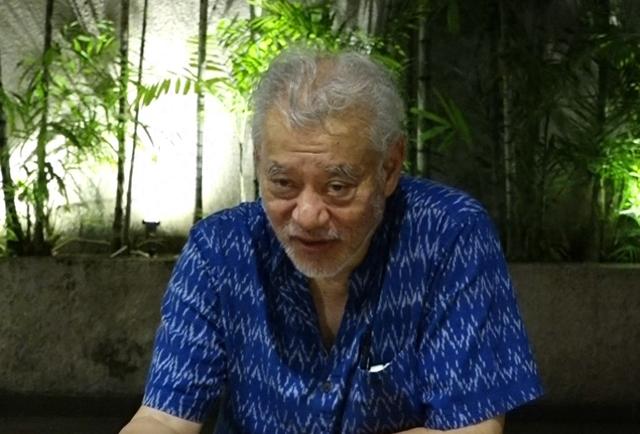
乔莫·夸梅·孙达拉姆:东南亚的经济问题,不能靠“自由贸易”解决
Guan Cha Zhe Wang· 2025-07-16 07:05
Group 1 - The concept of the "middle-income trap" is debated, with some arguing it is a real issue while others see it as a scapegoat for poor political and economic structures [1][8] - The International Monetary Fund (IMF) has historically encouraged countries to relinquish control over their capital accounts, contributing to financial crises [3][4] - Developing countries face significant challenges due to capital outflows, which often result in wealth being extracted by elites rather than being reinvested domestically [4][6] Group 2 - Malaysia's reliance on imported rice highlights vulnerabilities in food security, exacerbated by a lack of incentives for local farmers to produce staple crops [6][7] - The slow growth of Malaysia's GDP per capita, stagnating between $11,000 and $12,000 from 2010 to 2023, raises concerns about productivity and economic dependency on low-value manufacturing [8][9] - The need for a more diversified agricultural policy is emphasized, as current practices favor cash crops over food production [7][8] Group 3 - The transition to green energy in Malaysia is hindered by high costs and a historical reliance on coal, despite the potential for renewable energy sources to be more cost-effective [9][11] - The global push for renewable energy is complicated by geopolitical factors, including the dominance of Chinese manufacturing in solar technology [11][12] - Malaysia's energy transition could benefit from government intervention and support for renewable energy initiatives [9][12] Group 4 - The importance of regional cooperation, particularly through frameworks like RCEP, is highlighted as a means to enhance economic resilience and mutual benefits among Southeast Asian nations [16][17] - The current international financial system, particularly the dominance of the US dollar, is seen as problematic, with calls for reform to ensure greater stability and equity [19][20] - The historical context of the Bretton Woods system is discussed, emphasizing the need for a new framework that addresses the shortcomings of the current monetary system [19][20]