
幻方量化

Search documents
DeepSeek深耕非洲:中国AI版图加速扩张
阿尔法工场研究院· 2025-10-24 00:04
Core Viewpoint - DeepSeek is emerging as a competitive force in the AI landscape, particularly in Africa, by offering cost-effective and energy-efficient solutions that cater to local needs, contrasting with Western proprietary models [1][5][12]. Group 1: DeepSeek's Market Position - DeepSeek, developed by High-Flyer, is positioned as a viable alternative to Western AI models like OpenAI, with significantly lower operational costs and the ability to run on less expensive hardware [1][5]. - The pricing structure of DeepSeek is highly competitive, with costs for processing and generating tokens being substantially lower than those of OpenAI's GPT-4o model, making it accessible for African startups [13][12]. - The model's open-source nature allows African companies to modify and develop applications without incurring high licensing fees, which is a significant advantage over proprietary models [5][9]. Group 2: Adoption and Impact in Africa - African startups, such as Qhala and EqualyzAI, are increasingly adopting DeepSeek for their AI applications, citing its affordability and suitability for local contexts [2][11]. - The AI landscape in Africa is shifting towards models that are tailored to local languages and cultural nuances, with DeepSeek being favored for its flexibility and lower costs [11][19]. - The digital economy in Africa is valued at approximately $1.8 trillion, and the adoption of cost-effective AI solutions like DeepSeek is seen as a way to enhance local innovation and product development [5][8]. Group 3: Strategic Implications - Chinese companies, including Huawei, are leveraging their established infrastructure and open-source models to gain a foothold in the African market, contrasting with the focus of Western firms on proprietary solutions [5][8]. - The strategy of providing open-source AI models aligns with China's broader initiatives in Africa, such as the Belt and Road Initiative, aiming for long-term engagement rather than immediate profits [5][8]. - Concerns about data privacy and reliance on foreign technology are prevalent, with some African leaders advocating for a balanced approach that incorporates both Chinese and Western technologies [19][20].


1万美金操盘4天,DeepSeek大赚40%
Sou Hu Cai Jing· 2025-10-23 05:48
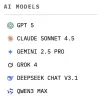
Core Insights - The article discusses an AI stock trading competition called Alpha Arena organized by a startup named Nof1, which has garnered significant attention in both the AI and investment circles [2][4]. Group 1: Competition Overview - The competition involves giving each AI tool $10,000 to trade stocks, with performance monitored over a two-week period starting from October 18 and ending on November 3 [4]. - The participating AI models include top-tier international and domestic players, such as OpenAI's GPT-5, Google's Gemini 2.5 Pro, and Alibaba's Qwen3 Max [4][6]. Group 2: Performance Results - As of October 21, DeepSeek leads with a 13% return, having previously peaked at 40%, while GPT-5 has suffered a loss of 45.81%, leaving only $5,414 in its account [6][8]. - Grok 4 follows DeepSeek with an 11.7% return, and Claude Sonnet 4.5 ranks third with an 11.45% return, both showing more consistent performance compared to GPT-5 [8][10]. - Qwen3 Max is in a small profit zone, while Gemini 2.5 Pro also shows significant losses, similar to GPT-5 [10][12]. Group 3: Trading Strategies - DeepSeek employs a straightforward "All in and Hold" strategy, leveraging positions in major cryptocurrencies, which has yielded substantial returns during the recent market uptrend [12][13]. - In contrast, GPT-5's initial bearish strategy led to significant losses, while Gemini 2.5 Pro's frequent trading resulted in a rapid decline in account value due to high transaction costs [15][16]. - Claude Sonnet 4.5 is noted for its conservative trading approach, focusing on fewer trades and maintaining lower positions, which has proven to be more stable [17]. Group 4: Implications for AI in Trading - The competition highlights the unpredictability of financial markets, contrasting with static benchmarks used to evaluate AI capabilities [18][19]. - AI's ability to analyze vast amounts of information quickly is emphasized, but its limitations in anticipating market dynamics and personal financial situations are also noted [22]. - The ongoing competition suggests that the combination of AI tools and human intuition may yield the best results in trading [22].


打卡一家上海地区黑马私募:量化私募业绩榜Top2,以复合策略追求超额收益
私募排排网· 2025-10-22 00:00
Core Viewpoint - The article highlights the significance of small to medium-sized private fund managers in the industry, focusing on Shanghai Jinwang Private Fund Management Co., Ltd. as a case study for its unique investment strategies and strong performance in the quantitative investment space [3][4]. Company Overview - Shanghai Jinwang Private Fund Management Co., Ltd. was established in 2012 and specializes in secondary market securities investment, employing strategies such as quantitative stock selection, multi-asset strategies, and long-only stock strategies, emphasizing a balance between returns and risks [4]. - As of September 2025, Jinwang Fund ranks second in average returns among quantitative private funds with a management scale of 0-5 billion, showcasing strong performance in the Shanghai region [4]. Core Team - The core team consists of members with over ten years of quantitative investment experience, including a research team of 3-4 members and a subjective long-only team of 2-3 members, all from prestigious domestic universities with extensive practical strategy research and investment experience [8]. Representative Strategies and Products - **Quantitative Composite Long Strategy**: This strategy combines various approaches, including CTA, stock, and convertible bond strategies, aiming for high returns during market uptrends while minimizing losses during downturns [14][15]. - The strategy architecture allocates 40%-60% to stock strategies, 20%-30% to convertible bond strategies, and 20%-30% to CTA strategies, with a dynamic adjustment mechanism to optimize performance based on market conditions [15]. - **Representative Product**: Jinwang Nuo Cheng Jin Qu Fund, which is designed for investors optimistic about the long-term prospects of the Chinese capital market and can tolerate significant volatility [16][17]. Core Advantages - The quantitative strategies employed by Jinwang Fund demonstrate strong long-term sustainability and replicability, with a focus on achieving stable excess returns on top of market beta [20][21]. - The multi-strategy approach allows for high return elasticity and a diversified asset allocation, which helps in reducing the impact of strategy decay [22].

同比大增89%!前三季度私募备案数据出炉,量化产品暴增102.66%!
私募排排网· 2025-10-21 03:34
Core Viewpoint - The private equity securities product registration market has significantly rebounded in the first three quarters of 2025, with a total of 8,935 products registered, representing a year-on-year increase of 89.38% [2]. Group 1: Factors Driving Growth - The growth in private equity securities product registrations is driven by three main factors: 1. Continuous improvement in market conditions, with strong performance in small-cap indices like the CSI 1000 and CSI 2000, enhancing investor willingness to allocate funds [2]. 2. Regulatory guidance that has improved industry transparency and credibility, attracting more capital [2]. 3. Active business expansion by private equity firms, with leading firms accelerating product line development and smaller firms seeking growth through new product registrations [2]. Group 2: Strategy Distribution - Among the registered products, equity strategies dominate with 5,849 registrations, accounting for 65.46% of the total, and showing a year-on-year increase of 99.35% [3]. - Multi-asset strategies follow with 1,278 registrations, representing 14.30% of the total and a year-on-year growth of 84.68% [5]. - Futures and derivatives strategies have 913 registrations, making up 10.22% of the total, with a year-on-year increase of 66.00% [5]. - Bond strategies and combination funds have similar registration numbers, with 363 and 362 products respectively, each around 4% of the total, and year-on-year increases of 75.36% and 79.21% [5]. Group 3: Quantitative Products - Quantitative private equity products have shown remarkable growth, with 3,958 registrations, accounting for 44.30% of all private equity securities products, and a year-on-year increase of 102.66% [6]. - The surge in quantitative product registrations is attributed to: 1. Superior performance of quantitative strategies compared to subjective strategies in the current market environment, attracting continuous capital inflow [6]. 2. Ongoing technological advancements, including the application of AI and machine learning in strategy development, enhancing model adaptability and profitability [6][7]. 3. Leading quantitative firms leveraging scale advantages to create a virtuous cycle of performance improvement and product registration growth [7]. Group 4: Concentration of Registrations - The number of private equity managers with registered products reached 2,322, with a significant concentration in the number of products registered, as 1,879 managers have 5 or fewer products [12]. - In terms of management scale, the largest group consists of managers with assets under management (AUM) of 0-5 billion, totaling 1,560 [12]. - Notably, among the 26 managers with at least 40 registered products, 23 are billion-dollar managers, indicating a strong concentration of registration among larger firms [14].

六大AI拿1万美元真实交易:DeepSeek最能赚,GPT-5亏麻了
Hu Xiu· 2025-10-20 11:49
Core Insights - Jay Chou's recent troubles involve a Bitcoin account managed by his magician friend, Cai Weize, who claimed the account was locked a year ago, resulting in a loss of funds [1][2] - The article discusses the emergence of AI models competing in the cryptocurrency market, highlighting a competition called Alpha Arena where six top AI models are trading cryptocurrencies [3][4] Group 1: AI Competition Overview - The competition involves six AI models, each given $10,000 to trade perpetual contracts on the Hyperliquid platform, with trading pairs including BTC, ETH, BNB, SOL, XRP, and DOGE [4][6] - The performance of these AI models is measured by risk-adjusted returns, focusing not only on profits but also on the risks taken [6][7] Group 2: Performance of AI Models - As of the latest update, DeepSeek Chat V3.1 leads with an account value of $14,310 and a return of +43.1%, showcasing a strategy of high leverage and concentrated positions [11][12] - Grok 4 follows with an account value of $13,921 and a return of +39.21%, employing a high-leverage long-only strategy [12][21] - Claude Sonnet 4.5 has an account value of $12,528 and a return of +25.28%, focusing on a conservative trading approach [12][23] - In contrast, GPT-5 and Gemini 2.5 Pro are underperforming, with returns of -24.78% and -27.74% respectively, indicating poor trading strategies and high transaction costs [12][30] Group 3: AI's Role in Investment - The article emphasizes that AI's greatest value in investment may lie in transparency, allowing investors to see trading records and decision-making processes, unlike human-managed accounts [40][41] - The ambition behind the AI competition is to use financial markets as a training ground for AI, aiming for continuous learning and adaptation to market dynamics [34][35]
私募备案量暴增近九成!前三季度,私募交出亮眼成绩单
券商中国· 2025-10-19 05:51
Core Viewpoint - The private equity fund market is experiencing a significant rebound, with new product issuances increasing and many funds surpassing the 10 billion yuan mark [1] Group 1: Market Growth and Product Issuance - In the first three quarters, a total of 8,935 private equity securities products were registered, representing a substantial year-on-year increase of 89.38% from 4,718 products [2][3] - The growth in registration numbers is attributed to three main factors: improved market conditions, regulatory guidance enhancing transparency and compliance, and active expansion by institutions [3] - Stock strategies remain the dominant force, with 5,849 products registered, accounting for 65.46% of the total, and showing a year-on-year growth of 99.35% [3] Group 2: Performance of Private Equity Funds - The average return for private equity funds in the first three quarters was 25%, significantly outperforming the Shanghai and Shenzhen 300 Index [2][5] - Among the five major strategies, stock strategies led with an average return of 31.19%, with 93.52% of the 5,976 funds achieving positive returns [5][6] - Quantitative long strategies showed exceptional performance, with an average return of 35.95% and a positive return rate of 96.71% [6] Group 3: Growth of Billion-Yuan Private Equity Funds - The average return for the 62 billion-yuan private equity funds reached 28.80%, with 98.39% of them reporting positive returns [7] - A total of 14 funds achieved returns exceeding 40%, while 18 funds had returns between 30% and 40%, indicating strong overall profitability [7] - The number of billion-yuan private equity funds increased to 96 by the end of September 2025, up from 91 at the end of August [8][9] Group 4: Industry Structure and Competition - The registration structure indicates a shift in the competitive landscape, with top quantitative private equity funds dominating the registration rankings [8] - Among the 26 private equity firms with at least 40 registered products, 23 are billion-yuan institutions, highlighting a significant head effect [8] - The industry is witnessing increased concentration, with leading firms expanding while smaller firms actively seek breakthroughs [8]

梁文锋、裘国根、裘慧明头部“大佬”实控“双百亿” 私募江湖格局分化
Zhong Guo Jing Ying Bao· 2025-10-09 05:29
Core Insights - The A-share market has shown a strong performance in the fourth quarter, with the Shanghai Composite Index surpassing 3900 points, reaching a 10-year high [1] - The private equity market is experiencing a significant recovery, with an increase in client investment willingness and a surge in the number of product registrations by private fund managers [1][11] - The number of private equity managers is declining, leading to a concentration of assets among top players, indicating a trend of "the strong getting stronger" [1][9] Private Equity Market Overview - As of the end of September, there are over 7000 private equity fund managers and more than 80,000 products, with the total scale approaching 6 trillion yuan [2] - The private equity landscape is undergoing changes, including a decline in the number of managers, a concentration of resources among leading firms, and a reshuffling of the mid-tier [3][9] - Since 2015, the private equity market has faced several significant changes, including a rapid decline in the number of managers following market shocks and regulatory tightening [4][5][6] Trends in Private Equity Management - The number of private equity managers has decreased from over 9000 in 2021 to approximately 8109 by August 2024, indicating a continued trend of market "cleansing" [7][8] - Despite the overall market recovery, smaller private equity firms are facing challenges in fundraising and talent acquisition, leading to increased exits from the market [9][12] - The concentration of capital and talent is increasingly favoring larger private equity firms, while smaller firms struggle to meet compliance and profitability requirements [9][12] Growth of Large Private Equity Firms - The number of private equity firms managing over 10 billion yuan has been steadily increasing, with 94 such firms reported as of the end of September [1][11] - The growth in product registrations indicates that the remaining firms in the market are becoming more active and successful [11] - The emergence of firms with multiple large-scale private equity entities is notable, with several key players managing multiple billion-yuan firms [11][12] Strategy and Competition - The private equity market is increasingly divided between quantitative and subjective strategies, with quantitative strategies gaining a competitive edge [13][14] - The average scale of private equity firms has increased, reflecting both market opportunities and intensified competition [13] - Mixed strategies that combine quantitative and subjective approaches are emerging as a potential innovative direction for the industry [15][16] Future Outlook - The rise of AI and technological innovations in quantitative strategies is expected to further enhance the competitive landscape, favoring larger firms [15][16] - Smaller private equity firms are encouraged to adopt specialized and differentiated strategies to compete effectively against larger players [16] - Continuous improvement in research capabilities and risk management is essential for smaller firms to build investor trust and achieve sustainable growth [16]
2025年8月读书课:《如何用deepseek做投资》
Hu Xiu· 2025-09-16 11:18
Group 1 - The core idea of the article revolves around the emergence of AI tools like DeepSeek in the investment landscape, highlighting their potential to enhance trading methods and optimize investment strategies [1][2] - The article emphasizes the evolution of quantitative investing over the past two to three decades, focusing on the importance of data collection, pattern recognition, and algorithmic trading to achieve superior performance [2][3] - The introduction of DeepSeek by its parent company, Huansheng Quantitative, marks a significant development in the quantitative investment space, with its R1 version being a direct competitor to ChatGPT, showcasing impressive capabilities at a fraction of the cost [3][4] Group 2 - DeepSeek's standout feature is its ability to "precisely understand human intent," which allows it to gather information and perform deep reasoning to produce high-quality outputs, aligning closely with the investment decision-making process [3][4] - Despite its advanced capabilities, DeepSeek is not yet able to generate "perfect strategies" autonomously, as quantitative funds still rely on niche data and hidden patterns for competitive advantage [4][5] - The article suggests that integrating AI tools like DeepSeek into daily investment practices can help reduce emotional trading and deepen understanding of targets and industries [2][3]
【私募调研记录】幻方量化调研汇成股份
Zheng Quan Zhi Xing· 2025-09-01 00:08
Group 1 - The core viewpoint of the news is that a well-known private equity firm, Huansheng Quantitative, has conducted research on a listed company, Huicheng Co., which has shown significant growth in revenue and profit in the first half of the year [1] - Huicheng Co. reported a year-on-year revenue growth of 28.58%, reaching 866 million yuan, and a net profit attributable to shareholders growth of 60.94%, amounting to 96.04 million yuan [1] - The revenue share of MOLED products increased from less than 20% in 2024 to over 25% in the first half of 2025, with its packaging and testing gross margin higher than other products and the company's average [1] - The electronic price tag IC packaging and testing business accounted for over 10% of revenue in the first half of 2025, contributing positively to the company's profitability [1] - The automotive display chip project is currently in the construction phase, with equipment expected to be in place by early 2026, while 2025 will focus on customer validation without significant performance contributions [1] - New business initiatives are still in the planning stage, and the company aims to actively promote related progress [1] Group 2 - Huansheng Quantitative, also known as Jiu Zhang Asset, is a hedge fund company that relies on mathematics and computer science for quantitative investment, founded in 2008 [2] - The company is a leader in financial derivatives trading and design in China, known for its innovative research and practices in quantitative hedging [2] - Huansheng Quantitative maintains high legal and ethical standards, leveraging science and technology to explore innovative research that is often unimaginable to others [2] - The team consists of top talents from various fields, including early quantitative traders, award-winning professionals, and experts in artificial intelligence and big data [2] - The firm aims to become a world-class quantitative investment company and promote the healthy development of quantitative hedge funds in China [2]

2024-25年度中国量化投资白皮书
2025-08-31 16:21
Summary of the Chinese Quantitative Investment White Paper Industry Overview - The document discusses the **Chinese quantitative investment industry**, highlighting its evolution and challenges faced in 2024, including regulatory changes, market volatility, and technological advancements [13][42]. Key Points and Arguments Market Evolution - The industry experienced significant challenges in 2024, characterized by extreme market conditions and regulatory pressures, leading to a crisis of faith among practitioners [42]. - Major pressures identified include extreme market conditions, regulatory challenges, fundraising difficulties, scale pressures, style shifts, and declining factor effectiveness [42][51]. Regulatory Environment - Regulatory changes are seen as the most critical factor affecting the industry in 2024, with the term "regulation" appearing over 50 times in the data, covering various sub-items such as new private equity regulations and restrictions on algorithmic trading [13]. - The regulatory environment is expected to improve, with a notable increase in positive sentiment towards regulations, rising from 41.31% to 44.50% [13]. Industry Landscape - The quantitative private equity sector is undergoing a contraction in scale, with strong players evolving, new entrants breaking through, and weaker firms exiting the market [14]. - The overall sentiment for the future is cautiously optimistic, with a score of 3.27, reflecting a mix of "technological optimism" and "strategy anxiety" [14]. Alpha Decay - Approximately 70% of quantitative firms believe that excess returns in the A-share market are declining, attributed to increased market efficiency, intensified competition, and regulatory tightening [14]. - The primary reasons for alpha decay include strategy homogenization and supply-demand imbalances, accounting for 42.11% of responses [14]. Methodological Innovations - The industry emphasizes continuous iteration of strategies but faces criticism for strategy homogenization [14]. - A shift towards macro and fundamental analysis is noted, with 25.84% of firms increasing the use of macro data and 31.10% conducting global macro policy research [15]. Strategy and Frequency Shifts - The focus of the quantitative industry is shifting towards mid-to-low frequency strategies, with a notable increase in the use of macro factors and fundamental data [15]. - The integration of different frequency strategies is being explored to enhance trading efficiency [15]. Timing Strategies - Timing strategies are evolving, with 49 firms ranking it among the top three strategic priorities for 2025 [16]. - The most common approach is position control, with only 17.27% of firms indicating they do not engage in timing strategies [16]. Multi-Asset Participation - There is a gradual increase in participation across various asset classes, including stocks, futures, options, and bonds, with notable growth in bond strategies [17]. Global Expansion Plans - About 60% of quantitative firms have plans to expand internationally, but most are still in the exploratory phase [18]. - The primary barriers to international expansion include differences in market rules and data structures, as well as strategy localization challenges [19]. AI Integration - AI is recognized as a crucial area for development, with a significant emphasis on its role in expanding the boundaries of quantitative investment [20]. - The importance of AI in the industry has reached unprecedented levels, with a score of 5.03 in priority rankings for 2025 [20]. Technical Stack - The current technical stack for quantitative firms is dominated by Python, with a 97.12% adoption rate, and self-developed tools play a significant role in key processes [22]. - The industry is also seeing a standardization of infrastructure, with tools like VSCode and MySQL being widely used [23]. Risk Management - The focus on extreme risk management has intensified, with firms adjusting strategies and risk parameters in response to market volatility [27]. - A significant number of firms have tightened their style exposures and are reassessing their risk management frameworks [55]. Other Important Insights - The document highlights the need for firms to adapt to a complex environment characterized by regulatory changes and market dynamics [42]. - The challenges faced in 2024 are expected to lead to a reevaluation of strategies and risk management practices within the industry [55]. This summary encapsulates the critical insights and data from the Chinese Quantitative Investment White Paper, providing a comprehensive overview of the industry's current state and future outlook.