雷鸟创新

Search documents
雷鸟创新第三季度海外增长近四倍,蝉联全球AR智能眼镜销量第一
IPO早知道· 2025-12-15 04:57
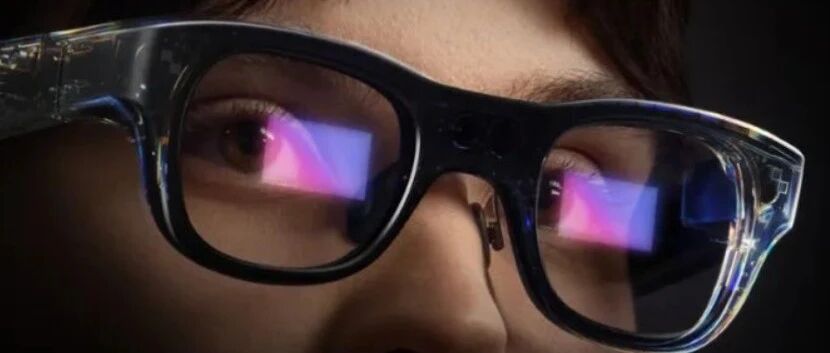
Core Insights - RayNeo has achieved a 24% market share in the global AR smart glasses market, maintaining its position as the leader for two consecutive quarters [2] - The company has also secured the top sales position in the Chinese mainland market, achieving a "double crown" in both global and domestic markets [2] Market Context - The AR market has become increasingly competitive since the second half of 2025, with major players like Meta, Alibaba, and Google launching new products [5] - Despite the heightened competition, RayNeo has demonstrated strong growth resilience, with international sales increasing by 3.8 times year-on-year [6] Product and Technology - RayNeo is one of the few companies with a fully self-developed and mass-produced core optical solution, creating a comprehensive product matrix [8] - The RayNeo X3 Pro is recognized as the world's smallest mass-produced dual-lens full-color MicroLED AR glasses, while the Air 4 series features the Vision 4000 chip, supporting HDR10 quality and AI 3D content [8] Industry Transition - The AR industry is transitioning from niche markets to mainstream consumer adoption, with major companies driving competition towards a focus on technology, user insights, product experience, and ecosystem capabilities [8] - RayNeo's achievements reflect the strategic foresight and correctness of its approach, positioning it as a significant player in the global AR industry [8]

专访张崟:解码“软硬融合”的广东AI与机器人产业路径
2 1 Shi Ji Jing Ji Bao Dao· 2025-12-13 00:14
Core Insights - Guangdong's artificial intelligence and robotics industry is rapidly advancing, highlighted by the recent showcase of innovative technologies at the 2025 Guangdong-Hong Kong-Macao Greater Bay Area AI and Robotics Industry Conference [1][4] - The establishment of the Guangdong AI and Robotics Industry Alliance aims to foster collaboration among enterprises, universities, and research institutions, focusing on ten key initiatives to enhance industry development [2][3] Industry Development - The Guangdong AI and Robotics Industry Alliance was formed in June, bringing together various stakeholders to promote collaboration and innovation within the industry [2] - The alliance's "Ten Ones" initiative includes the development of an industry index, a comprehensive industry chain map, a white paper, application scenarios, an innovation and entrepreneurship competition, an award, an industry conference, an expo, an information platform, and an industry fund [2][3] Competitive Advantage - Guangdong's unique "soft-hard integration" capability is a significant advantage, providing vast industrial data for AI and a robust hardware supply chain for robotics [3] - The province leads the nation in the production of smart terminals, with 40.9% of mobile phones, 24.6% of computers, 57.7% of televisions, and 35.3% of smartwatches produced in 2024 [3] - Guangdong accounts for 44% of China's industrial robot production, maintaining its position as the leading manufacturing base and supply chain hub for the robotics industry [3] Technological Breakthroughs - Guangdong has made significant advancements in humanoid robots and industry-specific AI models, with notable achievements in generative AI and core technologies like AR waveguides and high-precision force control [4][5] - The province has completed 105 registrations for generative AI services, representing approximately 17% of the national total, showcasing its leadership in the sector [5] Commercialization and Application - Leading companies in Guangdong, such as GAC and Xpeng, have successfully commercialized advanced technologies in smart connected vehicles and intelligent manufacturing [6] - The alliance is focused on accelerating the transition of research outcomes from laboratories to production lines through innovative application scenarios [7] Funding and Support - The Guangdong Intelligent Industry Fund aims to support high-tech sectors with a target size of 10 billion yuan, focusing on long-cycle, high-barrier areas such as embodied intelligence and AI chips [10] - The fund has already secured 6 billion yuan in its first phase and is designed to act as "patient capital" to support critical technology development [10] Future Outlook - In the next 3-5 years, Guangdong aims to integrate AI technology into consumer electronics, enhancing product functionality and value [11] - The alliance plans to release the "AIR Pearl River Index" and a white paper to guide industry development and avoid homogenization, focusing on high-growth sectors [11]

10万亿!超越京沪,中国“第一城”易主了
Qian Zhan Wang· 2025-12-12 04:33
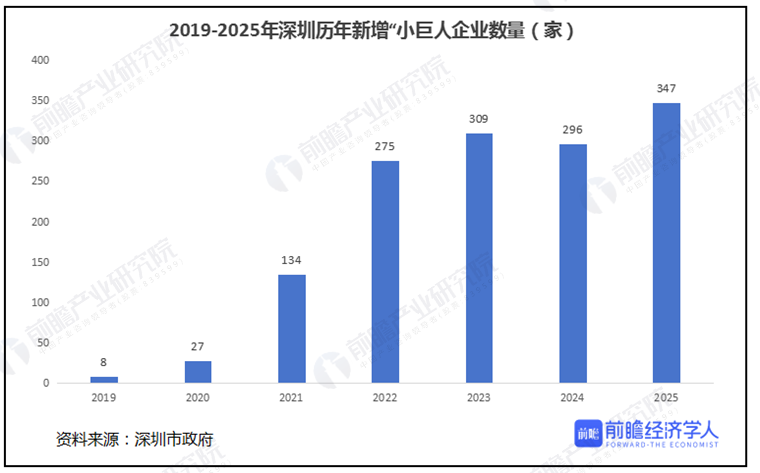
Core Viewpoint - Shenzhen has officially become China's "first city" for specialized and innovative "little giant" enterprises, surpassing Beijing and Shanghai in quantity and economic value [2][3][19]. Group 1: Overview of "Little Giants" - By the end of 2025, Shenzhen will have 1,333 "little giant" enterprises, leading the nation with 347 new additions, compared to Beijing's 1,210 and Shanghai's 1,032 [2][3]. - The total market value of these enterprises is estimated to be close to 10 trillion yuan, based on an average market value of 71 million yuan per listed "little giant" [3][8]. - These enterprises are concentrated in key areas of national focus, such as "manufacturing power" and "strengthening supply chains," with high entry barriers requiring domestic leadership in niche sectors and significant R&D investment [3][8]. Group 2: Growth and Innovation - Shenzhen's "little giants" exhibit remarkable growth, with an average time of 13 years from establishment to becoming a national-level "little giant," which is 1.71 years faster than the national average [8]. - The average R&D intensity of these enterprises is 7.63%, with annual R&D expenditure averaging 33.39 million yuan, significantly higher than the national average [8][19]. - These companies are also active in patent applications, averaging 152 patents per enterprise, with nearly 30% involved in setting international or national standards [8][19]. Group 3: Ecosystem and Support - Shenzhen's "20+8" industrial cluster strategy serves as a core engine for nurturing "little giant" enterprises, providing a structured ecosystem for growth and collaboration [9][10]. - The government facilitates connections between large and small enterprises through mechanisms like "chain leader" and "chain master" systems, resulting in over 500 technical cooperation agreements in 2024 alone [12][14]. - The city combines effective market strategies with government support, creating a comprehensive market support system that includes local validation and global expansion initiatives [14][15]. Group 4: Financial Support - Shenzhen has developed a "bold capital" approach to support innovative enterprises, allowing for long-term investments in high-tech sectors despite initial project risks [16][19]. - The city has established four major equity investment platforms to back innovative enterprises, with significant investments in numerous "little giants" [16][19]. Group 5: Future Implications - Achieving the title of "first city" for specialized and innovative enterprises marks a new starting point for Shenzhen, strengthening its industrial foundation and enhancing its resilience against global market fluctuations [19][20]. - The pathway from "little giants" to potential global leaders indicates a clear trajectory for future economic growth, with these enterprises expected to contribute significantly to Shenzhen's high-quality development [19][20].


应用端暖风频吹 机构AI投资策略悄然转向
Zhong Guo Zheng Quan Bao· 2025-12-11 22:23
Core Insights - The AI application sector currently presents more narrative appeal and growth potential compared to the computing power layer, which has established a solid "value base" and clearer valuation logic [1] - Investment strategies are shifting towards AI applications, with fund managers increasingly focusing on companies that can translate technology into profits [2][3] Investment Trends - Fund managers are adjusting their AI investment strategies, maintaining a strong position in computing power while increasing focus on AI applications, particularly with the emergence of edge AI products [2] - Notable funds have begun to accumulate semiconductor stocks and reduce holdings in certain sectors, indicating a strategic shift towards AI-related investments [2][3] Market Developments - The edge AI field is witnessing significant advancements, with new products like ByteDance's Doubao mobile assistant and Alibaba's Quark AI glasses entering the market [4] - Major funding rounds are occurring in the edge AI hardware sector, with companies like Thunder Innovation and Hangzhou Guangli Technology securing substantial investments [4] Policy Support - The Chinese government has set ambitious targets for AI application penetration, aiming for over 70% by 2027 and over 90% by 2030, which is expected to drive growth in the consumer electronics sector [5] - Recent policies emphasize the development of trillion-level consumption fields, including consumer electronics and smart wearable products, further supporting the growth of AI applications [5] Future Outlook - The investment focus is expected to shift from infrastructure to application-driven opportunities, with edge AI products likely to become a significant investment theme by 2026 [6] - The integration of computing power and applications is anticipated to drive rapid ecosystem expansion, positioning 2026 as a potential "big year" for edge AI [6]
从“卖铲子”转向“挖金子”,谁已提前下注?
Zhong Guo Zheng Quan Bao· 2025-12-11 14:33
Core Insights - The investment logic is shifting from focusing on hardware and infrastructure ("selling shovels") to prioritizing actual applications and commercialization ("mining gold") in the AI sector [1][7] - The AI application layer is seen as having greater potential for growth and innovation compared to the more stable and predictable computing power layer [1][2] Market Trends - In the primary market, venture capital is heavily investing in next-generation AI hardware companies, while in the secondary market, fund managers are positioning themselves to benefit from emerging AI products [1][2] - Fund managers are increasingly optimistic about AI applications, particularly with the rise of edge AI products, leading to a gradual increase in investments in this area [2][4] Fund Manager Strategies - For example, Dongwu Fund's manager significantly increased investments in semiconductors while reducing holdings in AI optical modules and PCBs, indicating a strategic shift towards hardware that supports AI applications [3] - Managers are focusing on mid-term opportunities in AI terminal applications, including foldable screens, 3D printing, AI glasses, and robotics [3][4] Primary Market Activity - The edge AI market is witnessing new developments, such as the launch of the Doubao mobile assistant and the Quark AI glasses, indicating a growing consumer interest in AI-integrated devices [5] - Significant funding rounds have been completed in the edge AI hardware sector, with record investments in companies like Thunderbird Innovation and Guangli Technology [5] Consumer Electronics Outlook - The Ministry of Industry and Information Technology has outlined plans for significant growth in consumer electronics, with expectations for AI devices to drive performance in related companies [6] - The investment focus for 2026 is anticipated to be on the consumer electronics chain driven by edge AI innovations, as the industry shifts towards application-based value creation [7]
AI 眼镜,距离大众市场还有多远?
3 6 Ke· 2025-12-10 09:12
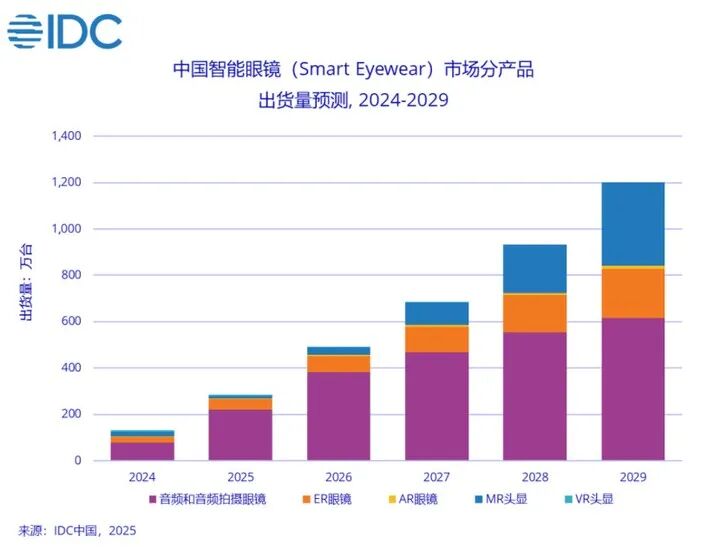
看到天上的灿烂云霞,点一点眼镜就能拍照留念;参加一场会议,点一点眼镜就能录音总结。 2025年,AI眼镜成了不少人的娱乐搭子。 这些眼镜外观类似普通黑框眼镜,重量在39克~50克之间,比近视眼镜(20g-25g)略重,普遍配有摄像头、麦克风、扬声器,搭载大模型和AI助手,可以 录音录像、拍照识物,续航6h-8h。价格则500-8000元不等,有无AR设备成为价格分水岭,无AR的AI眼镜价格在500-2000元不等,单目AR眼镜价格2000 元以上,双目AR眼镜价格3000元以上。 这是一个再次热闹起来的市场。2021年Roblox爆火带起一波AR眼镜热,Rokid、雷鸟创新、影目科技、Xreal等厂商相继入局(参考阅读《失信难产跳水 月赚1400亿!竟在这件事上输于起跑线》);2023年底Meta Ray-Ban带起一波AI眼镜热,AR厂商顺利转型,同时互联网大厂带资进组,行业热情被彻底 点燃。 IDC预计,2025年全球智能眼镜市场出货量将达到1451.8万台,同比增长42.5%;中国市场的增长更为迅猛,出货量预计达290.7万台,同比暴涨121.1%。 618期间,京东平台AI眼镜成交量同比增长7倍;"双 ...
AI眼镜取代不了手机,它想“干掉”传统眼镜
3 6 Ke· 2025-12-08 00:50
Core Insights - The current trend in AI glasses is not to replace smartphones but to replace traditional glasses with smart features. The focus is on creating high-quality eyewear that integrates AI technology [7][4]. Market Overview - In the past two months, 20 AI glasses have been launched in the Chinese market, including products from major companies like Baidu, Lenovo, and Alibaba, as well as startups like Rokid and Yingmu Technology [1]. - There are approximately 5 billion smartphone users globally, while the number of people who wear glasses is around 2 billion, indicating a significant market opportunity for AI glasses [2]. - The decision-making process for purchasing AI glasses is simplified for nearsighted individuals, as many are already spending hundreds to thousands of yuan on traditional glasses [3]. Competitive Landscape - The AI glasses market is becoming increasingly competitive, with five main categories of participants: smartphone manufacturers, internet giants, established AR glasses companies, new automotive players, and traditional eyewear brands collaborating with tech companies [4]. - IDC predicts that global shipments of smart glasses will reach 12.8 million units by 2025, with a 26% year-on-year growth, and the Chinese market alone is expected to exceed 2.75 million units, growing by 107% [4]. Product Development - The current AI glasses lack a "killer application" that makes them indispensable, which is a challenge for widespread adoption [6]. - A good pair of glasses must meet basic requirements of comfort and style, and partnerships between tech companies and traditional eyewear brands are a direct approach to achieving this [8][9]. - The weight of AI glasses is a critical factor; for instance, Ray-Ban Meta weighs 49 grams, significantly lighter than previous AR devices, while traditional prescription glasses weigh between 20-30 grams [13]. User Experience - AI glasses currently offer limited functionality, primarily focused on navigation and translation, and there is a gap between user expectations and the current capabilities of these devices [17]. - The most clear and irreplaceable function of AI glasses is hands-free recording, which is particularly useful in scenarios where users need to capture video without using their hands [19][21]. - Battery life remains a concern, with mainstream products offering 7-18 hours of usage, but improvements are being made, such as charging cases and replaceable components [17]. Future Outlook - The future of AI glasses is seen as a combination of AI and AR, aiming for a seamless integration of virtual and real-world experiences [28]. - The potential for AI glasses to become a primary interface for AI interaction is significant, with the possibility of them replacing smartphones in the long term [30]. - The market for specialized AI glasses, such as those designed for visually impaired users, represents an untapped opportunity that could address specific needs without requiring major technological breakthroughs [29].




投资人今年用40亿元给AI智能眼镜加热,有公司一年拿下3轮融资
3 6 Ke· 2025-12-04 10:57
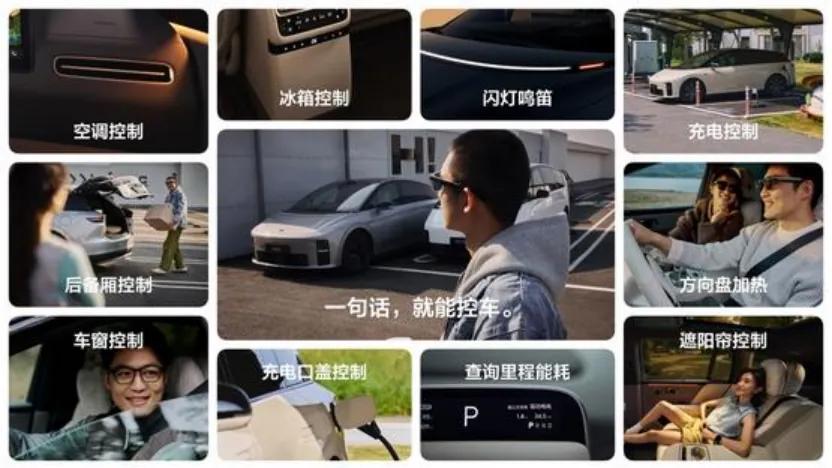
Group 1 - The VR headset market is declining while the smart glasses sector is experiencing a resurgence, particularly with major companies entering the space, attracting significant attention [1][3] - Alibaba has launched the Quark AI glasses S1, integrating advanced AI capabilities such as real-time translation and payment, marking its entry into the consumer wearable device market [1] - Li Auto has introduced its first Livis AI glasses, which can control various functions of its vehicles through voice commands, showcasing the integration of smart glasses with automotive technology [1] Group 2 - The smart glasses industry has evolved significantly, enhanced by AI, resulting in lighter designs and a broader range of applications, positioning AI glasses as a potential new entry point for consumer engagement [3][8] - Major tech giants like Meta, Google, and Apple are focusing on AI/AR glasses, indicating the strategic importance of this technology in the AI era [3] - The investment landscape for AI smart glasses has become active, with over 4 billion yuan invested in the sector this year, highlighting opportunities for startups due to the maturity of the supply chain and AI model integration [4][5] Group 3 - In 2025, the smart glasses sector recorded 36 financing events totaling approximately 4.367 billion yuan, involving 26 startups across various industry segments [5] - The distribution of financing rounds shows that early-stage investments (pre-A rounds) and later-stage investments (B rounds and beyond) each account for 40%, indicating ongoing innovation and market validation [7][8] - The geographical distribution of companies shows that Guangdong (mainly Shenzhen) and Beijing dominate, reflecting manufacturing advantages and R&D clusters, with many companies also targeting international markets [10] Group 4 - Thunderbird Innovation has emerged as a leader in the consumer AR glasses market, completing three rounds of financing in one year, with a total amount exceeding several hundred million yuan [11][13] - INMO has raised over 150 million yuan in recent financing rounds, focusing on creating an AI+AR content ecosystem with its INMO Go3 AI glasses [14] - Gyges Labs has developed innovative secret display technology and completed a Pre-A+ round of financing, with its first product expected to launch next year [17] Group 5 - Light Particle Technology has secured B round financing and focuses on AR smart swimming goggles, successfully entering international markets [20] - Liangliang Vision has transitioned from enterprise services to consumer markets, launching a new translation glasses product with high accuracy in noisy environments [21][24] - Micro Light Electronics has adopted a modular approach to AR smart glasses, allowing users to utilize AR without needing additional prescription glasses [24] Group 6 - The smart glasses sector is expected to see new technological validations in 2025, leading to consumer product innovations, with a projected maturation phase from 2026 to 2030 [28] - The integration of AR and AI is becoming a trend, with new functionalities like translation and health monitoring emerging as key selling points [28] - Chinese local companies with a global perspective are better positioned to capitalize on overseas markets, supported by established supply chains [29]
科技金融专题跟踪报告:科技金融专题跟踪月报(2025.11)-20251204
Jianghai Securities· 2025-12-04 05:22
Investment Rating - The report provides a neutral investment rating for the technology finance sector, indicating a relative performance within -10% to 10% compared to the benchmark index [34]. Core Insights - The report emphasizes the importance of enhancing financial support for technology innovation, as outlined in the State Council's guidance on strengthening financial backing for achieving high-level technological self-reliance and building a strong technology nation [3]. - There is a notable trend of increasing financing activities in the technology sector, with significant records being set in various fields such as AI+AR glasses and Micro LED technology [12][13]. - The report highlights the performance of major indices in November 2025, noting a decline in A-share indices due to weak macroeconomic data and external market influences, while the communication and media sectors showed positive growth [19][29]. Summary by Sections 1. Financing News - Thunderbird Innovation completed a record financing round in the AI+AR glasses sector, marking the highest single financing amount in 2025 [8]. - JBD Shanghai completed over 1 billion RMB in B2 financing, setting a record in the Micro LED micro-display field [9]. - GAC High Domain's flying car project secured 200 million RMB in Pre-A financing, with total financing for the year reaching 500 million RMB [10]. - Dexmal, a company focused on embodied intelligence, announced several rounds of financing totaling nearly 10 billion RMB, indicating strong investor interest in advanced technology [11][12]. 2. Market Performance - In November 2025, major A-share indices experienced declines, with the Shanghai 50, ChiNext, and Sci-Tech 50 dropping by 1.39%, 4.23%, and 6.24% respectively [16]. - The technology growth sectors saw mixed results, with the communication and media industries recording positive growth, while other sectors such as machinery and pharmaceuticals faced declines [19]. 3. Loan Data - As of Q3 2025, the loan balance for technology SMEs reached 3.56 trillion RMB, reflecting a steady increase in financial support for this sector [21]. - The number of technology SMEs receiving loan support also rose, reaching 275,400 by Q3 2025 [24]. 4. IPO Activity - The report notes a stable number of IPOs in the domestic capital market, with the Hong Kong Stock Exchange seeing a peak of 15 IPOs in June 2025 [28]. 5. Overseas Financing - Sakana AI, a Japanese AI startup, raised approximately 20 billion JPY in B-round financing, achieving a post-financing valuation of about 400 billion JPY [13]. - Flexion, a US robotics startup, completed a 50 million USD financing round, with plans to expand its operations [13].
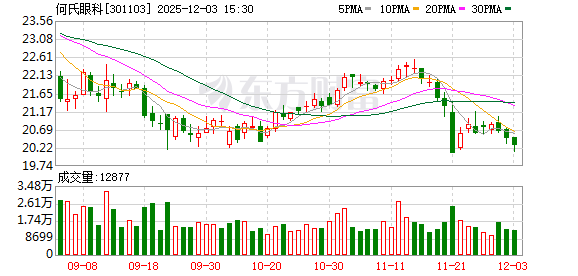
何氏眼科:公司部分下属门店已引入雷鸟创新智能眼镜产品进行销售
Zheng Quan Ri Bao· 2025-12-03 11:13
证券日报网讯 12月3日,何氏眼科在互动平台回答投资者提问时表示,目前,公司部分下属门店已引入 雷鸟创新智能眼镜产品进行销售,并为相关用户提供配套的专业验光服务。该合作系基于市场需求的常 规业务布局,对公司财务状况及经营成果未构成重大影响。未来,若双方合作涉及重大事项达到信息披 露标准,公司将严格按照监管要求及时履行信息披露义务,敬请投资者理性投资。 (文章来源:证券日报) ...