Figure AI

Search documents
损失软银150亿,被宇树碾压,抢跑30年“机器人灯塔”陨落
Tai Mei Ti A P P· 2025-10-21 11:23
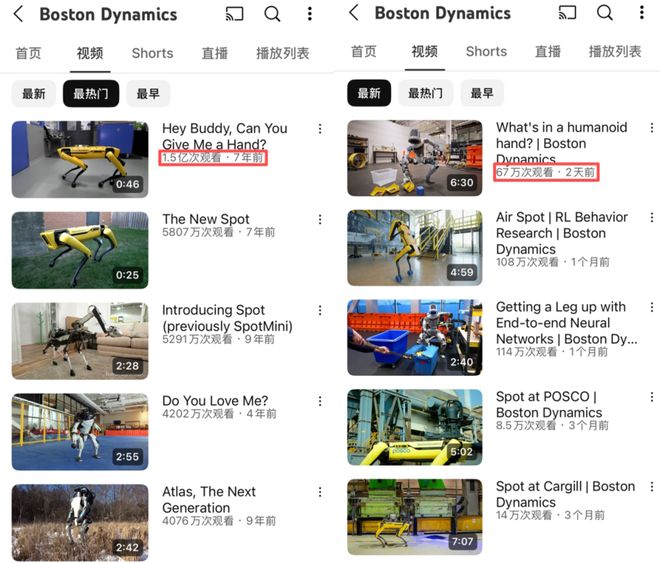
Core Insights - Boston Dynamics, once a leader in robotics, is experiencing a decline in popularity and engagement, with recent video views dropping significantly compared to past successes [1][22] - The company has struggled to commercialize its technology effectively, leading to a series of ownership changes and financial losses [17][28] Company History - Founded in 1992 by Marc Raibert after leaving MIT, Boston Dynamics initially focused on military applications and received significant funding from DARPA [4][5] - The company gained attention with its BigDog robot, which was designed for military use, but faced challenges with its hydraulic systems, leading to the termination of military contracts [7][10] - Google acquired Boston Dynamics for $3 billion in 2013, but the company continued to struggle with commercialization, leading to its sale to SoftBank in 2017 [8][11] Commercialization Efforts - Under SoftBank, Boston Dynamics attempted to commercialize its Spot robot, offering rental services and selling units at high prices, but sales were disappointing, with fewer than 400 units sold [13][15] - The company faced significant financial losses, leading to its sale to Hyundai for $9.21 billion, a substantial decrease in valuation from its previous acquisition by Google [17][18] Competitive Landscape - The rise of competitors like Tesla's Optimus and Figure AI has accelerated the evolution of humanoid robots, with these companies focusing on cost control and AI capabilities [20][21] - Figure AI has quickly gained traction in the market, achieving a valuation of $39.5 billion within a year, showcasing the rapid advancement in the humanoid robotics sector [21] - Chinese companies are emerging as strong competitors, leveraging robust supply chains and practical applications, further challenging Boston Dynamics' market position [24][25][27] Current Status - Boston Dynamics is now seen as a "has-been" in the robotics space, struggling to find a clear direction for commercialization while competitors advance rapidly [22][28] - The company has recently updated its Atlas robot, but its pricing and capabilities do not compare favorably with emerging competitors [30][31]


头部玩家开始结盟,消费机器人的“iphone时刻”来了?
3 6 Ke· 2025-10-21 04:12
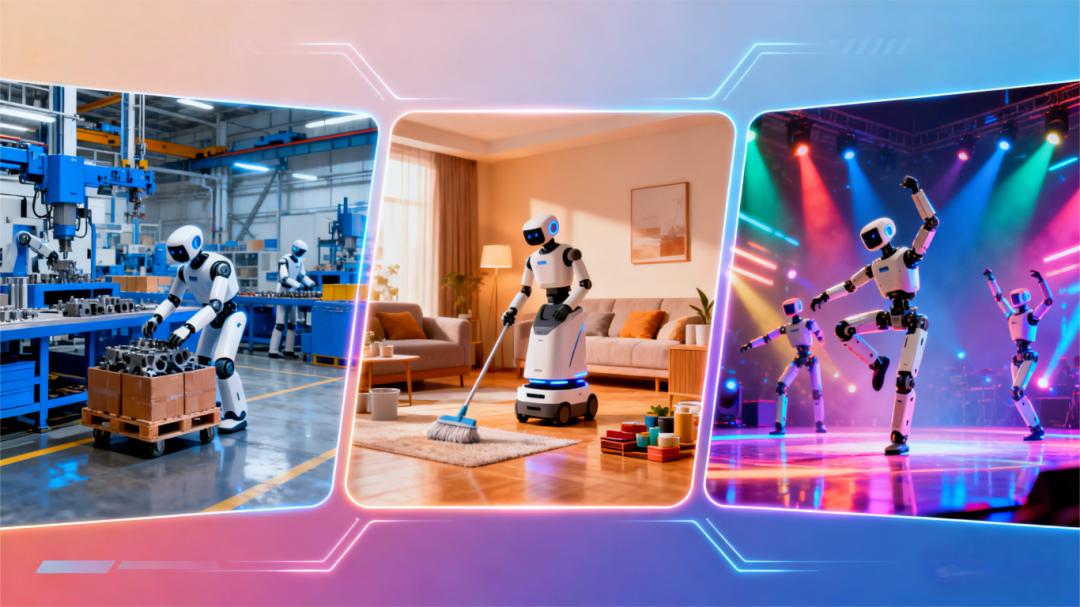
Core Insights - The robotics industry is experiencing a significant shift from theoretical concepts to practical applications, driven by advancements in technology and increased capital investment [3][11] - Collaborative strategies among companies are becoming essential for success, as firms seek to leverage each other's strengths to accelerate product development and market entry [10][12] Industry Developments - Companies like Tesla and UBTECH are setting ambitious production targets, with Tesla planning to produce 50,000 units of its humanoid robot, Optimus 3, by next year [3] - The market for humanoid robots is attracting substantial investment, with over 83 financing events and total funding exceeding 14 billion yuan in 2025, indicating strong investor confidence [11] Strategic Collaborations - Partnerships are forming across the industry, such as the collaboration between TUS and UBTECH, which combines hardware expertise with advanced AI capabilities [8] - Kepler Robotics and Loushow Technology are working together to streamline the transition from advanced algorithms to market-ready products, focusing on the North American family market [10] Technological Advancements - The robotics sector is moving towards "embodied intelligence," which aims to replicate human-like perception and action capabilities, presenting significant technical challenges [7] - Key component manufacturers are forming alliances to share technology and reduce costs, with reports indicating a 30% reduction in R&D cycles and a 20% decrease in costs following the formation of such alliances [3] Market Challenges - Despite the optimism, the industry faces challenges such as the need for mass production capabilities, cost control, and the establishment of standardized operating systems [11] - Concerns regarding data security, ethical considerations, and user trust are critical for the successful commercialization of robots, especially in sensitive environments like homes and healthcare [11]
宇树上新!机器人指数ETF(560770)连续7日累计“吸金”超5.6亿元,规模近19亿元再创上市新高
2 1 Shi Ji Jing Ji Bao Dao· 2025-10-21 02:52
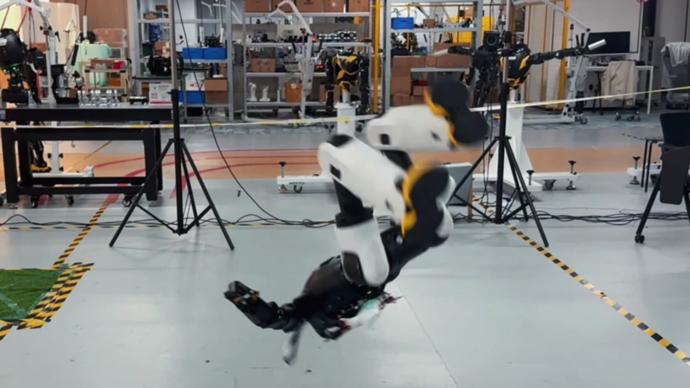
Core Insights - The robotics sector is experiencing increased attention from investors, driven by new product launches and significant orders from leading companies [1][3] - The robot index ETF (560770) has seen substantial inflows, indicating strong market interest and confidence in the sector's growth potential [1][2] Group 1: Company Developments - Yushu Technology launched a new bionic robot, showcasing skills such as dancing and martial arts, which highlights innovation in the sector [1] - Figures AI released its third-generation humanoid robot, Figure03, targeting household applications, marking a shift towards practical applications of humanoid robots [2] - Recent product launches and important orders from leading humanoid robot companies indicate rapid commercialization within the domestic market [3] Group 2: Market Trends - The robot index ETF (560770) has attracted over 5.6 billion yuan in inflows over the past seven trading days, with a total net inflow of 9.88 billion yuan since September, reaching a new high of 18.91 billion yuan [1][2] - The domestic robotics industry is entering a phase of integrated development, with a growing ecosystem that includes R&D, manufacturing, and application [2] - The projected growth rates for the net profit of the index constituents are 43.70%, 35.41%, and 24.42% for the years 2025, 2026, and 2027, respectively [2] Group 3: Policy Support - Cities like Hangzhou and Chengdu are reaffirming their commitment to support the development of robotics companies, with specific targets for industrial output and legislative support [1] - Hangzhou aims for a total industrial output of over 20 billion yuan for various intelligent robot manufacturers by 2027 [1] - Chengdu has launched a venture capital fund with an initial scale exceeding 10 billion yuan, focusing on humanoid robots and other future industries [1]
AI与机器人盘前速递丨180cm的宇树H2来袭,70kg负载力+70%国产化,智元精灵G2开启工业新篇!
Mei Ri Jing Ji Xin Wen· 2025-10-21 02:14
Market Review - The Huaxia Sci-Tech AI ETF (589010) rose by 0.58% on October 20, with a trading volume of approximately 163 million yuan, indicating stable market activity. The constituent stocks showed a mixed performance, with 22 stocks rising and 8 falling, led by Youke Technology, Daotong Technology, and Fudan Microelectronics, while Foxit Software experienced the largest decline [1] - The Robot ETF (562500) increased by 1.33%, showing a pattern of "rising then stabilizing." It reached a peak of 1.004 yuan during the day, with 63 out of 73 constituent stocks rising. Notable gainers included CITIC Heavy Industries, which hit the daily limit, and several others with gains between 4.5% and 6.5%. The trading volume over the past five days exceeded 1.29 billion shares, reflecting strong market recovery [1] Hot News - Yushu Technology launched a full-size humanoid robot H2, standing 180 cm tall and capable of carrying 70 kg, with a domestic component localization rate of 70%. The robot utilizes products from Suoteng Juchuang for laser radar and Tsinghua Tianji core for motion control, with a local procurement cost of approximately 180,000 yuan per unit [2] - Zhiyuan Robotics announced a multi-million yuan order for the G2 robot framework, set to deploy nearly 1,000 units in industrial manufacturing scenarios. Additionally, UBTECH secured a 126 million yuan contract for an intelligent project in Guangxi and over 32 million yuan in procurement contracts from an automotive technology company, with total orders for the Walker series exceeding 630 million yuan for the year [2] - Figure AI in the U.S. launched the Figure 03, designed for the Helix large model, featuring high-precision tactile perception and enhanced visual systems, with a weight reduction of 9%. The establishment of the BotQ factory aims for an initial annual production capacity of 12,000 units, marking a shift from demonstration to large-scale implementation for humanoid robots [2] Institutional Views - CITIC Construction Investment Securities expressed optimism regarding the accelerated industrialization of Tesla's Optimus and the high valuation financing of Figure, indicating that the sector is entering a period of continuous catalytic validation. The release and production guidance for the third-generation Optimus prototype are positive, and the overall market liquidity remains loose, favoring a return to technology growth configurations in robotics [3] - The preferred investment direction includes the Tesla supply chain, followed by Yushu and Zhiyuan, which have mass production capabilities. Recommendations focus on segments with technological upgrades, substantial product client samples, and expected differentiation [3] Popular ETFs - The Robot ETF (562500) is the only ETF in the market with a scale exceeding 20 billion yuan, offering the best liquidity and comprehensive coverage of the Chinese robotics industry chain, facilitating investor access to the sector [4] - The Huaxia Sci-Tech AI ETF (589010) is described as the "brain" of robotics, with a 20% price fluctuation limit and small-cap elasticity, aimed at capturing the "singularity moment" in the AI industry [4]
会叠衣服的中美机器人,谁离具身智能更近?
3 6 Ke· 2025-10-20 12:43
Core Insights - The Chinese humanoid robot industry is rapidly advancing, leveraging manufacturing advantages and significantly reducing costs, making robots more accessible to consumers [1][2][4] - While China excels in hardware production and cost control, the U.S. maintains an edge in software ecosystems and AI capabilities, particularly in developing intelligent robots that can understand and interact with their environment [10][11][59] - The competition between Chinese and American humanoid robots is intensifying, with both sides focusing on different aspects of development: China on market penetration and cost reduction, and the U.S. on advanced AI and software integration [13][15][60] Industry Overview - The humanoid robot market is projected to experience explosive growth, with estimates suggesting that the global market could reach 1.1 trillion yuan by 2035, and the Chinese market alone could achieve 300 billion yuan [23][24] - As of mid-2025, over 220 humanoid robot companies exist globally, with Chinese firms accounting for more than half of this total [27] - The Chinese humanoid robot sector is witnessing a surge in enterprise registrations, with over 105 new companies established in the first half of 2025, reflecting a significant shift towards commercialization [42] Technological Developments - Chinese companies are focusing on specific industrial applications for humanoid robots, such as quality inspection in automotive manufacturing and precision tasks in agriculture [5][6][60] - Despite advancements, Chinese humanoid robots still face challenges in basic capabilities like motion control and autonomy, indicating a need for further technological development [31][34] - The U.S. is making strides in creating humanoid robots with advanced AI capabilities, such as Tesla's Optimus, which is designed to perform complex tasks and adapt to various environments [38][50][55] Market Dynamics - The competition is characterized by a divergence in strategies: Chinese firms prioritize cost-effective production and market capture, while American firms emphasize software innovation and AI integration [15][62] - Significant investments are flowing into the humanoid robot sector, with over 14 billion yuan raised globally in the first half of 2025, and Chinese companies securing a substantial portion of this funding [24][66] - The regional concentration of humanoid robot companies is notable, with the Yangtze River Delta region housing a significant share of enterprises, indicating a trend towards industrial clustering [43] Future Outlook - The humanoid robot industry is at a critical juncture, transitioning from basic mobility to functional task execution, with the potential for widespread application in various sectors due to labor shortages in aging societies [37][66] - The ultimate competition will hinge on the development of "embodied intelligence," which combines advanced AI with humanoid robotics, determining which country can produce robots that not only move but also think and adapt [19][64]


机械设备行业周报:智元发布精灵G2,优必选新获订单-20251020
Donghai Securities· 2025-10-20 09:41
Investment Rating - The report assigns an "Overweight" rating for the mechanical equipment industry, indicating a positive outlook compared to the broader market index [1]. Core Insights - The report emphasizes the increasing importance of embodied intelligent robots in both policy and research sectors, with a focus on commercial deployment and large-scale manufacturing [3][17]. - The "Shanghai Intelligent Terminal Industry High-Quality Development Action Plan (2026-2027)" has been released, aiming for the industry to exceed 300 billion yuan by 2027 and to cultivate globally influential consumer brands [3][18]. - The report highlights significant advancements in humanoid robots, including the launch of new products and procurement contracts, indicating a robust growth trajectory in the sector [19][20]. Summary by Sections Company Announcements - Inveke reported a revenue of 4.026 billion yuan for the first three quarters of 2025, a year-on-year increase of 40.19% [11]. - Huace Testing anticipates a net profit growth of 8.26%-9.51% for the same period, driven by service upgrades and innovation [12]. - Linyi Zhizhao expects a net profit of 1.890 billion to 2.120 billion yuan, reflecting a growth of 34.10%-50.42% [13]. Robotics Industry Dynamics - The report notes a heightened focus on the commercialization of embodied intelligent robots, with significant R&D activity expected to drive industry growth [17]. - The introduction of the Zhiyuan Spirit G2 robot, designed for industrial applications, showcases advancements in operational capabilities and precision [19]. - The Figure03 humanoid robot has been launched, featuring enhanced sensory and operational capabilities, indicating a shift towards practical applications in everyday environments [20][21]. Industrial Automation - Siemens is actively expanding its industrial software capabilities through multiple acquisitions, enhancing its position in the digital industrial software market [23][24]. - Domestic leaders are integrating AI into industrial automation, with companies like Huichuan Technology and Zhongkong Technology making strides in software development for smart manufacturing [29][30]. Market Review - The report notes a decline in the mechanical equipment sector, with a drop of 5.84%, underperforming the broader market index [30].
万亿机器人赛道:宇树和figure谁才能代表未来?
3 6 Ke· 2025-10-20 09:26
Core Viewpoint - The humanoid robot industry is entering a commercialization phase, with a shift in investment focus from general technology to practical application scenarios. Companies with production capabilities and self-sustaining business models are favored, while others struggle to secure funding and market presence [1][3][4]. Group 1: Industry Dynamics - This year marks a significant increase in orders for humanoid robot companies, with notable contracts such as UBTECH's Walker series securing nearly 500 million yuan in contracts, and ZhiYuan Robotics' G2 receiving several hundred million yuan in orders [3][4]. - YuShu Technology leads the industry with 25 public procurement projects this year, nearing its total for 2024, and has been recognized as a standard equipment provider in many projects [3][4]. - Despite YuShu's leadership, there are growing concerns about its technological advancements, particularly in AI and robotics, compared to competitors like Figure AI, which recently achieved a post-financing valuation of 39 billion USD [4][8]. Group 2: Competitive Landscape - Figure AI's third-generation humanoid robot, Figure 03, has been highlighted for its design and potential for mass production, boasting a production capacity of 100,000 units annually [8][9]. - The industry faces skepticism regarding the actual capabilities of humanoid robots, with many companies, including Figure, criticized for overpromising and underdelivering on their technological advancements [11][13]. - The market is characterized by a lack of standardized applications, making it difficult for humanoid robots to achieve widespread commercial viability [20][21]. Group 3: Research and Development - YuShu's R&D spending over the past three years totals approximately 350 million yuan, with a significant portion allocated to hardware rather than algorithm development, raising concerns about its competitive edge in AI [5][7]. - The company has introduced its own world model architecture, but it is seen as lagging behind current mainstream models, which may hinder its ability to lead the industry [7][8]. - The humanoid robot sector is still in the experimental phase, with many products not yet achieving stable operational status or generating significant commercial value [22][23].
FigureAI发布人形机器人新品,重点关注产业链龙头奥比中光、柯力传感
Tianfeng Securities· 2025-10-20 03:14
Investment Rating - Industry Rating: Outperform the Market (maintained rating) [2][7] Core Insights - The report highlights the significant advancements in humanoid robotics, particularly with the launch of Figure AI's third-generation humanoid robot, Figure03, which is designed for home applications and mass production. The robot features enhanced sensory capabilities and a specialized manufacturing facility to support production [3] - The Shenyang Robot Conference showcased a robust growth in China's robotics industry, with 59 projects signed, amounting to approximately 4.346 billion RMB. This indicates a shift towards an integrated development phase in the domestic robotics sector, with increasing sales of autonomous brand robots from about 22,000 units in 2015 to 177,000 units projected for 2024 [4] - The report suggests focusing on key players in the industry, such as Aobo Zhongguang, a leader in 3D visual perception technology, and Keli Sensor, a leader in strain sensors, both of which are well-positioned to benefit from the growing demand in the robotics market [5] Summary by Sections Investment Rating - The industry maintains a rating of "Outperform the Market" [2][7] Humanoid Robotics Developments - Figure AI's Figure03 robot features upgraded sensory systems and is aimed at home use, marking a transition from demonstration to practical application [3] Robotics Industry Growth - The Shenyang Robot Conference reported 59 signed projects with a total value of approximately 4.346 billion RMB, indicating a maturing robotics ecosystem in China [4] Key Companies to Watch - Aobo Zhongguang dominates the domestic 3D visual sensor market with over 70% market share, while Keli Sensor has developed a comprehensive product line for humanoid and collaborative robots [5]


资本“疯抢”机器人 3个月订单破13亿元中国独角兽离百亿美元估值还有多远?
机器人大讲堂· 2025-10-19 04:03
Core Insights - The capital heat in the robotics sector continues to rise, with Shenzhen startup Zhifang achieving a valuation of over $1 billion after a series A financing round in September 2025, marking its entry into the "unicorn" club [1] - Several other companies, including Zhiyuan Robotics and Yushu Technology, have also reached the $1 billion valuation threshold, indicating a broader trend in the industry [3] - The global humanoid robot market is projected to reach a cumulative deployment of 1 billion units by 2050, with an estimated market size exceeding $5 trillion, which is approximately double the total revenue of the 20 largest automotive manufacturers in 2024 [3] Financing and Valuation Trends - Zhifang completed seven rounds of financing within a year, a rare achievement in the history of robotics financing [1] - The valuation of Chinese robotics companies is generally considered to be undervalued compared to their American counterparts, with significant discrepancies noted [7][8] - Morgan Stanley's report suggests that the upcoming IPO of Yushu Technology could serve as a critical catalyst for financing activities in the humanoid robotics sector [6] Policy and Industry Support - The second China Embodied Intelligence Conference (CEAI2025) released key directions for the industry, including a 20 billion yuan fund to support core component research [5] - The Chinese government is actively promoting the development of the robotics industry through various initiatives and funding [5] Market Developments and Orders - Domestic humanoid robotics companies have secured over 1.3 billion yuan in large orders in just three months, indicating a clear path for business deployment [11] - Zhifang has entered a strategic cooperation with Huike Co., aiming to deploy over 1,000 AlphaBot series robots in the semiconductor display sector [13] - UBTECH has expanded its business focus on automotive manufacturing and logistics, securing significant contracts and setting records for single order amounts in the humanoid robotics sector [15] Future Outlook - The humanoid robotics sector has not yet reached a financing ceiling, with ongoing technological advancements and diverse business models [18] - The industry is characterized by a competitive landscape, with leading companies maintaining an edge but facing potential challenges from emerging startups [18]
分析NVIDIA的近百笔AI投资:什么是AI行业的现在和未来?
创业邦· 2025-10-18 10:15
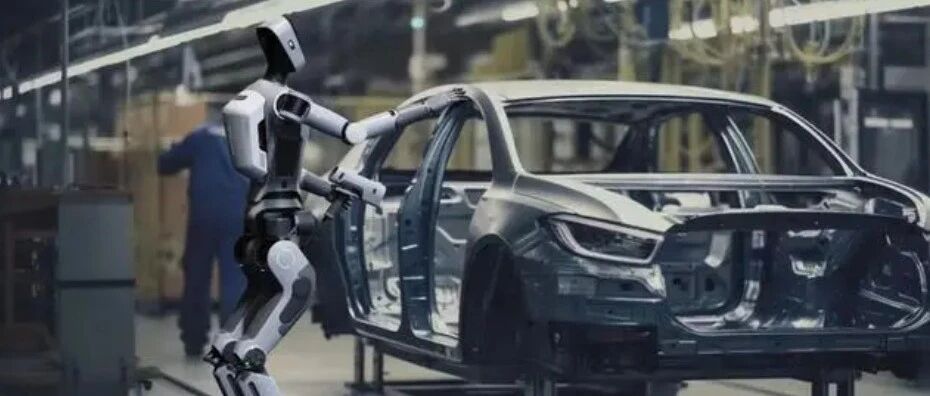
Core Insights - NVIDIA is a leading player in the AI sector, investing nearly $10 billion in around 100 AI startups across various fields in 2024 and 2025 [5] - The company focuses on building an ecosystem centered around its GPU and CUDA technology, which locks in a global developer community [8] - NVIDIA's investments in AI model companies and cloud platforms are strategic to solidify its position in the AI industry [29] Investment in AI Models - NVIDIA has invested in several cutting-edge AI model companies, including OpenAI, xAI, Mistral AI, and Runway, to enhance its AI capabilities [9][10][11][12] - The investment in OpenAI includes a $1 billion contribution to a $6.6 billion funding round and a commitment of up to $100 billion for deploying NVIDIA's AI computing systems [9] - Mistral AI received significant funding, with its valuation reaching €11.7 billion after a €1.7 billion C round investment [11] Investment in AI Cloud Platforms - NVIDIA is also investing in advanced AI cloud platforms and data center operators, such as CoreWeave, Together AI, and Nscale, to expand its ecosystem [14] - CoreWeave, which NVIDIA invested $100 million in, has a market valuation of approximately $70 billion and is a major customer with 250,000 NVIDIA GPUs [15] - Nscale received $1.1 billion in funding, with NVIDIA contributing $683 million, focusing on high-performance data centers [17] Investment in Innovative Chip Companies - NVIDIA is enhancing its capabilities by investing in innovative chip companies like Ayar Labs and Enfabrica, which focus on high-speed communication and memory solutions [18][19][20] - Ayar Labs' technology allows for high bandwidth and low latency communication between chips, while Enfabrica's solutions address GPU memory bottlenecks [19][20] Focus on Physical AI - NVIDIA is preparing for the next wave of AI, termed Physical AI, which aims to integrate AI with the physical world [22][23] - The company has invested in various Physical AI companies, including Figure AI, Wayve, and Bright Machines, to establish a future-oriented ecosystem [24][25][26] - Physical AI is seen as the next frontier, enabling AI to interact with and understand physical laws and environments [28][29]