
大疆

Search documents
常友科技2025年半年度业绩说明会问答实录
Quan Jing Wang· 2025-09-15 01:35
Core Viewpoint - 常友科技 is focusing on expanding its product applications in the drone and humanoid robot sectors, recognizing the significant market potential in logistics, agriculture, security, and surveying [1][2]. Business Performance - The company reported a year-on-year revenue growth of 18.72% in the wind turbine nacelle segment, while the revenue from lightweight sandwich materials reached 206 million yuan, accounting for 41.40% of total revenue, with a 2.80% increase compared to the previous year [1][3]. - The company is currently in a strategic investment phase, which has led to increased operational costs, impacting profit margins [3][10]. Market Strategy - 常友科技 is actively exploring market opportunities for composite materials across various sectors, including non-metal molds, aerospace, military, and drones, aiming to leverage its technological strengths [1][4]. - The company emphasizes the importance of value management through enhancing internal value, seizing industry opportunities, and utilizing various tools to improve investment value [1][3]. Future Outlook - The company is optimistic about its operational status, with a strong order backlog, and plans to adjust resource allocation based on market demand and competitive landscape [1][10]. - The management is committed to improving profitability through cost control measures and enhancing operational efficiency as new production capacities come online [3][12].
福日电子2025年半年度业绩说明会问答实录
Quan Jing Wang· 2025-09-15 01:32
Core Viewpoint - The company held a successful half-year performance briefing, demonstrating effective communication with investors and addressing various inquiries regarding its operations and strategies [1] Group 1: Business Operations - The company collaborates with Huawei through its subsidiary, providing ODM/JDM services for smart terminals, including smartphones [2][10] - The company offers JDM/OEM services for service robots, with a focus on hotel and inspection robots, although their revenue contribution remains relatively small [3] - The company is focusing on high-quality clients and deepening strategic cooperation, which has led to stable business orders and initial success in cost reduction and efficiency improvement, resulting in an increase in gross margin [5][11] Group 2: Strategic Initiatives - The company is exploring the application of AI technology in product development and management, with plans to prioritize its integration into smart wearable products [6] - The company emphasizes understanding customer needs and providing customized solutions to enhance service quality, while also working on cost reduction through R&D and supply chain collaboration [6] Group 3: Financial Performance - The company reported a turnaround to profitability in the first half of 2025, attributing this success to stable business orders and improved management practices [11] - The company has implemented measures to manage market volatility and is committed to enhancing its core business foundation and profitability [6]

美国真是人傻钱多的地方吗?
Hu Xiu· 2025-09-14 03:53
Market Overview - The U.S. market is perceived as a "gold mine" due to its high consumer purchasing power and large market size, despite having a smaller population compared to China [1][4][34] - The U.S. GDP is approximately $27 trillion with a per capita GDP of $79,000, significantly higher than China's $18.5 trillion GDP and per capita GDP of $13,000 [4][34] Market Characteristics - The U.S. consumer market is multi-layered, accommodating both high-end luxury goods and low-cost products, indicating diverse consumer preferences [6][8] - Successful Chinese e-commerce platforms like Temu and Shein thrive in the U.S. by offering low prices, while high-end products like DJI drones succeed through innovation and quality [7][8] Cost Considerations - High operational costs in the U.S. include labor, logistics, and customer service, which can be burdensome for startups [10][11] - The average salary for customer service representatives ranges from $40,000 to $50,000, while engineers can earn over $100,000 annually [11][12] Legal and Compliance Challenges - The U.S. market has stringent legal and compliance requirements, with severe penalties for violations, as illustrated by high-profile cases like Volkswagen's emissions scandal and Facebook's privacy issues [16][17][18][24] - Companies must prioritize compliance to avoid catastrophic consequences, contrasting with more flexible practices in other markets [24][34] Collaboration and Networking - Asian entrepreneurs in the U.S. often form collaborative networks, leveraging shared resources and mutual support to reduce risks and enhance efficiency [25][28] - Despite being a small demographic, Asian communities, particularly Chinese, have high educational attainment and income levels, providing a unique advantage in technology and innovation sectors [26][27] Market Entry Strategies - Entering the U.S. market requires a focus on specific niches rather than viewing it as a single entity, as regional and demographic differences are significant [30][31] - Companies should adopt a long-term perspective, understanding that success in the U.S. market may take years of sustained effort and investment [33][34] Conclusion - The U.S. market presents both opportunities and challenges, characterized by high consumer spending and intense competition, necessitating a nuanced understanding of its complexities [34][35] - The potential for success lies in recognizing the market's diversity, managing high costs, adhering to legal standards, and leveraging community networks [34][39]
超万款尖货低至5折,京东MALL深圳南山店开业
Nan Fang Du Shi Bao· 2025-09-13 13:48
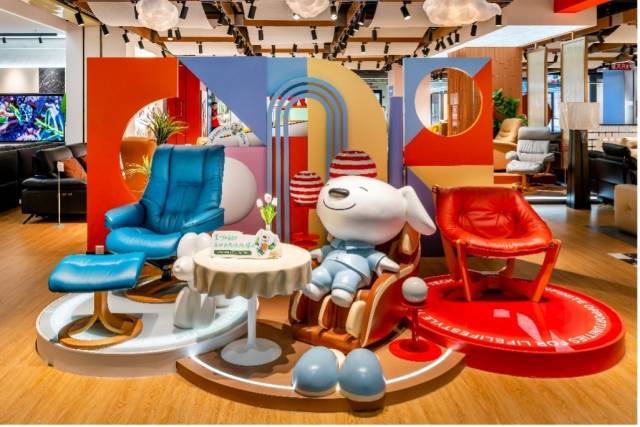
Core Insights - JD MALL Shenzhen Nanshan Store officially opened on September 12, featuring over 200,000 trendy products and aiming to become a key destination for home appliances, home goods, and 3C products in the Shenzhen area and the Greater Bay Area [1][2][12] Group 1: Store Features and Offerings - The store spans 30,000 square meters and includes over 200 core brands such as Huawei, Apple, and DJI, offering a wide range of products in home appliances, home goods, and digital technology [2][5] - JD MALL introduces an innovative "scene-selling" model with over 30 immersive experience zones, including coffee workshops and DIY e-sports areas, creating an integrated shopping experience [5][12] - All products in the store support free trials and come with a 30-day return policy, enhancing consumer confidence in their purchases [5][12] Group 2: Opening Promotions and Events - During the opening period from September 12 to 14, the store offered substantial discounts, with savings of up to 60% and over 10,000 products available at half price [6][11] - Special events included the "JOY TIME" music festival and an e-sports festival, featuring performances by popular artists and competitions with professional e-sports players [6][12] - The store also provides tax refund services for international travelers, enhancing shopping convenience and solidifying the Greater Bay Area's status as an international consumption hub [5][12] Group 3: Strategic Importance - JD MALL Shenzhen Nanshan Store represents a significant step for JD in the Greater Bay Area, contributing to local commercial development and leading the transformation of retail in home appliances and digital technology [12] - The store's model of "scene innovation + omni-channel integration" aims to enrich local commercial offerings and set a new standard for retail experiences in the region [12]


人工智能成果云集!2025中国国际消费电子博览会下周开幕
Qi Lu Wan Bao Wang· 2025-09-13 11:35
Core Viewpoint - The 2025 China International Consumer Electronics Expo will be held in Qingdao from September 19 to 21, focusing on the theme "Connecting Everything, AI Empowering the Future" and showcasing over 300 renowned brands across six exhibition areas covering 60,000 square meters [1][2]. Group 1: Focus on Artificial Intelligence - The expo emphasizes the transformation of artificial intelligence achievements, aligning with the State Council's initiative to integrate AI with six key sectors, including technology and consumption [1]. - Qingdao produces approximately 9.6% of the national smart home appliance output, with 1 in 10 appliances manufactured there. In the first seven months of this year, Qingdao's electromechanical product exports reached 161.6 billion yuan, a 7.8% increase, accounting for 51.8% of total exports [1]. Group 2: International Brand Participation - This year's expo features an international comprehensive exhibition area exceeding 10,000 square meters, with 52 international brands from 17 countries and regions, making up over one-sixth of the exhibitors [2]. - Notable returning brands include Tesla, Hexagon, Toshiba, and Sony, alongside new participants like AIXR (UK), Hanshil (Germany), and Konica Minolta (Japan) [2]. Group 3: New Product Launches - The expo will host product launches from 57 companies, including Huawei, Gree, and ASUS, highlighting the importance of the "first launch economy" in boosting consumption [3]. - Innovative products include a consumer-grade AI glasses from Dapeng VR and a sleep aid product series from DENBA Health, showcasing advancements in technology [3]. Group 4: Exhibition and Trade Linkage - The expo aims to create a full-service system for "display—negotiation—transaction," facilitating trade connections and global procurement [4]. - Collaborations with over 40 domestic and international industry associations will enhance the interaction between exhibitors and buyers, promoting overseas market expansion [4]. Group 5: Interactive Experience - The expo will enhance visitor engagement through various formats, including competitions and immersive experiences, such as VR and humanoid robot interactions [5]. - A live streaming area will be set up to integrate online and offline sales, broadening the reach of the exhibition [5].
美媒悟了:买中国货有利国安啊,谁会跟最大客户过不去?
Guan Cha Zhe Wang· 2025-09-13 07:45
Core Argument - The article argues that banning Chinese drones under the guise of national security is detrimental to the U.S. economy and ultimately threatens national security itself [1][5]. Group 1: Economic Impact of Banning Chinese Drones - The article highlights that the ban on Chinese drones, such as those produced by DJI, will harm U.S. businesses that rely on these products, leading to job losses and reduced productivity [3][4]. - An example is provided of nuWay Ag, a company that has had to lay off employees due to the inability to procure enough DJI drones, which are essential for their operations [3][4]. - The article emphasizes that importing foreign products, like Chinese drones, enhances the productivity and living standards of Americans, contradicting the protectionist stance of the U.S. government [4][5]. Group 2: National Security Implications - The article posits that no country would attack its most important customer, suggesting that trade relationships contribute to national security [1][5]. - It argues that the Trump administration's protectionist policies weaken the U.S. economy, which is crucial for maintaining a strong national defense [5][6]. - The article concludes that the ban on Chinese drones could lower the costs for China to engage in hostile actions against the U.S. by reducing their economic ties [5][6]. Group 3: Critique of U.S. Government's Position - The article criticizes the U.S. government's lack of evidence for claims regarding the national security risks posed by Chinese imports, labeling these assertions as unfounded [6]. - It points out that the U.S. is significantly reliant on Chinese components for drone technology, indicating a gap in domestic production capabilities [6]. - The article suggests that if the ban is enforced, U.S. companies may resort to illegal means to obtain drones and parts, ultimately burdening American consumers with higher costs [6].

天翼智库:低空经济发展趋势与路径研究报告 2025
Sou Hu Cai Jing· 2025-09-12 17:21
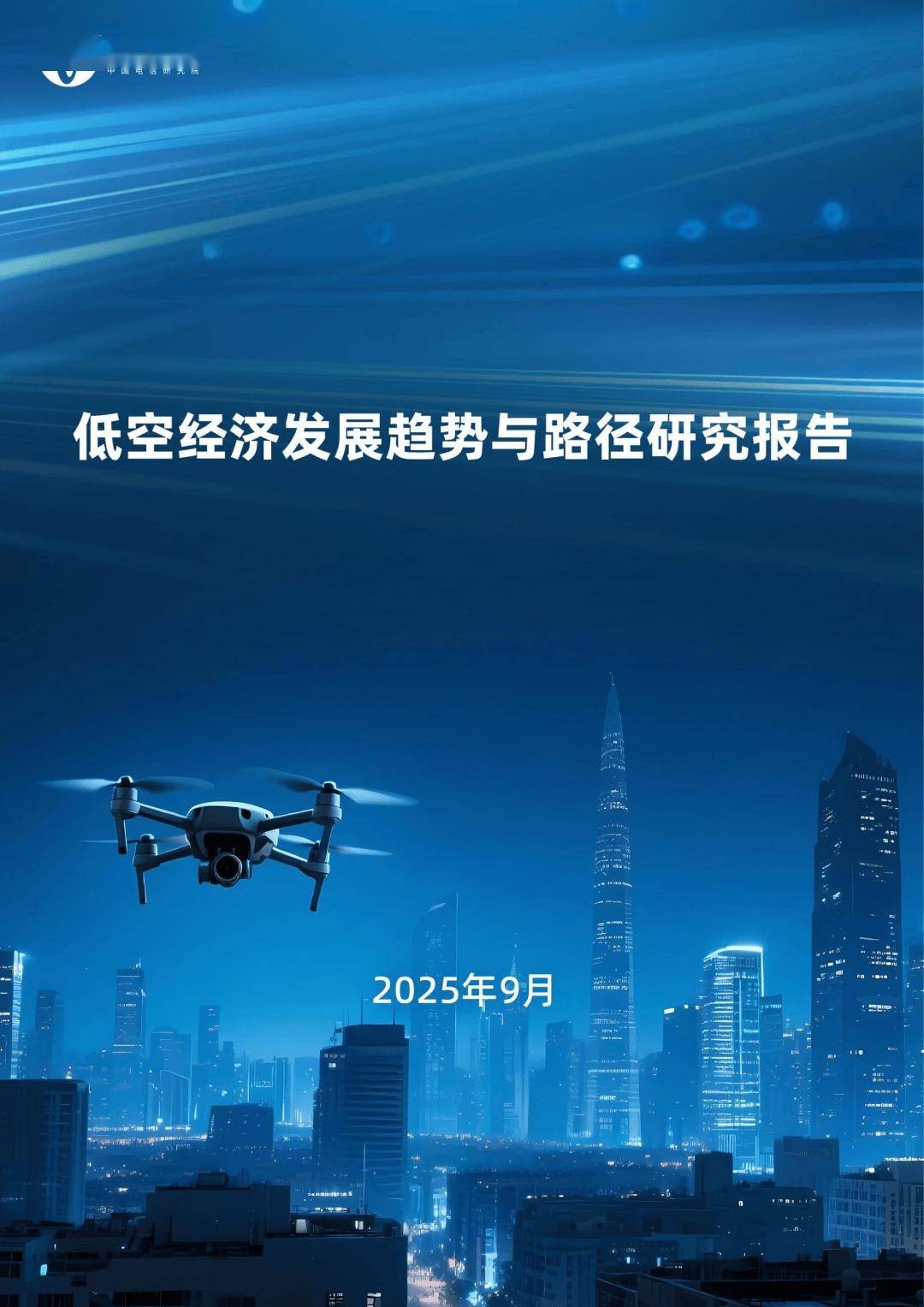
Core Insights - The report focuses on the development trends and pathways of China's low-altitude economy, highlighting its strategic importance and the challenges it faces in terms of uneven regional development and structural imbalances within the industry [1][2]. Group 1: Current Status and Challenges - The low-altitude economy has become a strategic emerging industry, with numerous national and local policies being introduced, such as the inclusion of low-altitude economy in the 2025 Civil Aviation Law revision [1]. - The industry structure shows a contradiction of "strong upstream, weak midstream, and hot downstream," with innovation resources concentrated in the Yangtze River Delta and Pearl River Delta regions, leading to uneven regional development [1][2]. - The report predicts that by 2030, the low-altitude economy will enter an explosive growth phase, reaching a scale of over 1 trillion yuan and contributing nearly 3% to GDP [1][2]. Group 2: Regional Assessment and Characteristics - A three-dimensional evaluation system categorizes the country into four tiers, with Guangdong, Jiangsu, and Beijing in the first tier, showcasing distinct regional development characteristics [2]. - Typical regional pathways include Shenzhen's startup-driven infrastructure upgrades, Beijing's reliance on innovation resources to build a full industry chain, and Jiangsu's establishment of a drone operation management system [2]. Group 3: Investment Trends - Investment in the low-altitude economy is increasing, with 156 financing events in 2024 amounting to approximately 24.54 billion yuan, a 47.7% increase year-on-year [15]. - The focus of investment is primarily on early-stage projects, particularly in the eVTOL and drone manufacturing sectors, which accounted for over 50% of financing events [16][18]. Group 4: Innovation and Technology - The number of patents related to low-altitude economy technologies has been increasing since 2021, with a significant rise expected in 2024 due to an improved policy environment [10][12]. - The report emphasizes the need for a collaborative mechanism among policy, technology, scenarios, and capital to drive innovation and address challenges such as the maturity of eVTOL technology [2][22]. Group 5: Future Outlook - The low-altitude economy is expected to experience rapid growth, with a projected market size of 1.3 trillion yuan by 2030, contributing approximately 2.8% to GDP [26]. - The development will be characterized by cross-industry integration, with applications in agriculture, energy inspection, and passenger transport forming a diverse development pattern across different regions [30].
想跳槽去具身,还在犹豫...
自动驾驶之心· 2025-09-12 16:03
Core Viewpoint - The article discusses the ongoing developments and challenges in the autonomous driving industry, emphasizing the importance of community engagement and knowledge sharing among professionals and enthusiasts in the field [1][5]. Group 1: Community Engagement - The "Autonomous Driving Heart Knowledge Planet" serves as a comprehensive community for sharing knowledge, resources, and job opportunities related to autonomous driving, aiming to grow its membership to nearly 10,000 in the next two years [5][15]. - The community has over 4,000 members and offers various resources, including video content, learning routes, and Q&A sessions to assist both beginners and advanced practitioners [5][11]. Group 2: Technical Discussions - Key topics discussed include the transition from rule-based systems to end-to-end learning in autonomous driving, the potential of embodied intelligence versus intelligent driving, and the current state of companies excelling in smart driving technologies [2][3][19]. - The community has compiled over 40 technical routes covering various aspects of autonomous driving, including perception, simulation, and planning control [15][27]. Group 3: Industry Trends - The article highlights the ongoing shifts in the industry, such as the exploration of end-to-end algorithms and the importance of data loops in enhancing autonomous driving capabilities [2][19]. - There is a focus on the employment landscape, with discussions on the stability of hardware-related positions compared to rapidly evolving software roles in the autonomous driving sector [2][19]. Group 4: Learning Resources - The community provides structured learning paths for newcomers, including comprehensive guides on various technical stacks and practical applications in autonomous driving [11][15]. - Members can access a wealth of resources, including datasets, open-source projects, and insights from industry leaders, to facilitate their learning and career development [27][28].

超2100家采购商赴粤“扫货”,广东优品展成内外贸对接强枢纽
2 1 Shi Ji Jing Ji Bao Dao· 2025-09-12 13:37
Group 1 - The first Guangdong Quality Products Exhibition opened in Guangzhou, attracting 1,086 participating companies and 2,175 domestic and international professional buyers [1][2] - The exhibition covers an area of 50,000 square meters and includes five industry exhibition areas: home appliances and electronics, clothing and beauty, toys and cultural creativity, health food, and furniture and home [1][2] - The event aims to accelerate the integration of domestic and foreign trade, support enterprises in expanding domestic sales markets, and strengthen the domestic circulation [2] Group 2 - The exhibition features nearly 10,000 consumer products from well-known and emerging Guangdong enterprises, including brands like Midea, TCL, and Wanglaoji [2] - Guangdong has a complete industrial system with high-quality products, and it is a major province for quality product output, with a real-time population of 150 million and a retail sales total that has ranked first in the country for 42 consecutive years [2] - The event is expected to enhance the visibility of Guangdong's quality products and meet the growing demand for high-quality and high-value products among consumers [2]



超2100家采购商赴粤“扫货” 广东优品展成内外贸对接强枢纽
2 1 Shi Ji Jing Ji Bao Dao· 2025-09-12 13:28
Group 1 - The first Guangdong Quality Products Exhibition opened in Guangzhou, attracting 1,086 participating companies and 2,175 domestic and international professional buyers [1][2] - The exhibition covers an area of 50,000 square meters and includes five industry exhibition areas: home appliances and electronics, clothing and beauty, toys and cultural creativity, health food, and furniture and home [1][2] - The event aims to accelerate the integration of domestic and foreign trade, support enterprises in expanding domestic sales markets, and strengthen the domestic circulation [2] Group 2 - Guangdong is a major producer of quality products with a complete industrial system, having cultivated two trillion-level, one 500 billion-level, four hundred billion-level, and five hundred billion-level export industrial clusters [2] - The province has a real-time population of 150 million, with a massive market demand, and has ranked first in the country for retail sales of consumer goods for 42 consecutive years [2] - The exhibition features nearly 10,000 consumer products from well-known and emerging companies in various sectors, including Midea, TCL, and Wanglaoji [2]