OPPO

Search documents
突破物联边界 eSIM技术迈入商用新阶段
Zhong Guo Zheng Quan Bao· 2025-10-19 22:21
Core Insights - Apple CEO Tim Cook announced the official launch of the iPhone Air in China on October 22, following the approval of eSIM services by major telecom operators in China [1][2] - The introduction of eSIM technology marks a significant shift in the mobile communication landscape, enabling a new phase of commercial use for smartphones in China [1][3] eSIM Technology and Market Trends - eSIM is predicted to be a major trend, with GSMA forecasting that global eSIM smartphone connections will reach 1 billion by 2025 and 6.9 billion by 2030, accounting for 76% of total smartphone connections [2][3] - The iPhone Air, being eSIM-only, is Apple's thinnest model at 5.6 mm and 165 grams, allowing for enhanced design possibilities and improved battery life [2][3] User Experience and Convenience - eSIM technology simplifies the process of changing phone numbers, particularly benefiting travelers who can easily switch to local numbers without needing physical SIM cards [3][4] - Over 400 global operators are expected to provide eSIM services by July 2025, with a 29% adoption rate among 5G users [3][4] Industry Implications and Innovations - The shift to eSIM is anticipated to drive significant investment across the entire supply chain, including wearables, IoT devices, tablets, and laptops, as the Chinese market sees annual smartphone sales of 300 million units [4][5] - eSIM's remote number-switching capability poses challenges for telecom operators, necessitating enhancements in marketing strategies and customer service to retain user loyalty [6][7] Future Applications and Developments - eSIM technology is expected to expand into various applications, including pet devices and robotics, further enhancing connectivity in the IoT landscape [5][6] - Telecom operators are actively participating in the development of eSIM standards and technology, ensuring compatibility and security for users [7]




突破物联边界eSIM技术迈入商用新阶段
Zhong Guo Zheng Quan Bao· 2025-10-19 20:13
Core Insights - Apple CEO Tim Cook announced the official launch of the iPhone Air in China on October 22, following the approval of eSIM services by major telecom operators in China [1][2] - eSIM technology is seen as a key infrastructure for transforming the communication industry, enhancing user experience, and driving digital economic growth in China [1][3] eSIM Technology Adoption - eSIM is predicted to be a significant trend, with GSMA forecasting that global eSIM smartphone connections will reach 1 billion by 2025 and 6.9 billion by 2030, accounting for 76% of total smartphone connections [2] - The iPhone Air, being the thinnest iPhone at 5.6 mm and weighing 165 grams, benefits from the removal of the physical SIM card, allowing for a larger battery and increased battery life by approximately 2 hours [2] User Experience and Convenience - eSIM simplifies the process of writing user identities, making it easier for travelers to manage communication needs abroad without needing physical SIM cards [3] - Over 400 global operators are expected to provide eSIM services by July 2025, with a 29% adoption rate among 5G users [3] Industry Impact and Future Applications - The introduction of eSIM is anticipated to drive significant investment across the entire industry chain, including wearables, IoT devices, tablets, and laptops, as the Chinese market sees annual mobile phone sales of 300 million units [4] - eSIM is expected to play a crucial role in the IoT sector, with GSMA predicting that over 50% of IoT applications will utilize eSIM by 2030 [4] Challenges for Telecom Operators - The remote number-switching capability of eSIM may increase user autonomy in changing service providers, posing challenges for telecom operators in terms of revenue stability and necessitating enhancements in marketing strategies and service offerings [4][6] - Telecom companies are focusing on optimizing eSIM services to meet diverse user needs and improve overall user experience [5][6]
国内eSIM手机商用破冰运营商加速迈向“无卡”时代
Zheng Quan Shi Bao· 2025-10-19 17:57
Core Insights - The introduction of eSIM technology marks a significant shift towards a "cardless" era in mobile communication, with eSIMs expected to gradually replace physical SIM cards in the long term [1][4][8] Industry Overview - eSIM technology allows for flexible network switching, space-saving in devices, and seamless connectivity across multiple devices and scenarios, indicating a trend towards "cardless" solutions [1][4] - The global market for eSIM-enabled smartphones is projected to reach approximately 1 billion by the end of 2025, with an expected growth to 7 billion by 2030, representing three-quarters of total smartphone connections [4] Market Developments - Major Chinese telecom operators have recently restarted eSIM services for mobile phones after a two-year pause, officially launching eSIM mobile services across 31 provinces [2][3] - The Chinese market's entry into eSIM mobile services is seen as a catalyst for global eSIM development, with Apple leading the charge by launching eSIM-only devices [4][5] Competitive Landscape - Domestic smartphone manufacturers are rapidly adapting to eSIM technology, with high-end flagship models being the first to support eSIM [6][7] - The shift to eSIM is expected to enhance device waterproofing and internal space utilization, providing opportunities for innovation in smartphone design [7] Future Trends - The transition to eSIM is anticipated to occur in phases, with flagship models and IoT devices driving initial adoption, followed by broader market penetration by 2028 [8] - The eSIM market is expected to face challenges related to security, consumer awareness, and standardization among different operators, which could impact user experience and adoption rates [10][11] Strategic Implications - The shift from physical SIM cards to eSIMs will likely compel telecom operators to transition from a "selling cards" model to a "selling services" model, enhancing competition and user flexibility [11][12] - The introduction of eSIMs is expected to lower the barriers for users to switch networks, potentially increasing churn rates and prompting operators to optimize pricing and services [11][12]
【太平洋科技-每日观点&资讯】(2025-10-20)
远峰电子· 2025-10-19 13:21
Market Performance - The main board led the gains with notable increases in stocks such as RuiNeng Technology (+10.02%), HuaTian Technology (+10.02%), and Dongxin Peace (+10.02%) [1] - The ChiNext board saw significant growth, particularly in stocks like Absen (+20.00%) and Haixia Innovation (+19.96%) [1] - The Sci-Tech Innovation board was also up, with ZhongKe Tongda increasing by 8.11% [1] Domestic News - Parallel Vision announced the launch of the world's first polarization holographic waveguide pilot production line, with an annual capacity of 500,000 units planned [1] - The first products from the fully automated 8-inch MEMS wafer production line in Bengbu, built by China Electronics Corporation, have successfully rolled off the production line [1] - MediaTek unveiled its new flagship cockpit chip, the Dimensity Cockpit S1 Ultra, which features a 3nm process and is set to be used in the Changan Automobile Group's Deep Blue L06 [1] - OPPO released the Find X9 series, with the Pro satellite communication version being the first domestic phone to support eSIM technology [1] Company Announcements - LianYun Technology reported total revenue of 921 million yuan for the first three quarters of 2025, a year-on-year increase of 11.59%, with a net profit of 90 million yuan, up 23.05% [3] - Cambricon announced total revenue of 4.607 billion yuan for the first three quarters of 2025, a staggering year-on-year increase of 2386.38%, with a net profit of 1.605 billion yuan, up 321.49% [3] - Hikvision reported total revenue of 65.758 billion yuan for the first three quarters of 2025, a year-on-year increase of 1.18%, with a net profit of 9.319 billion yuan, up 14.94% [3] - Guangting Information reported total revenue of 421 million yuan for the first three quarters of 2025, a year-on-year increase of 23.05%, with a net profit of 45 million yuan, up 308.53% [3] International News - Nexperia informed automotive manufacturers that it can no longer guarantee chip deliveries due to disputes between China and the Netherlands, potentially disrupting U.S. automotive production [2] - SEMI reported that the global semiconductor equipment market grew by 24% year-on-year in Q2, reaching $33.07 billion, driven by demand for advanced logic processes and high-bandwidth memory [2] - AP Systems, a South Korean OLED equipment company, announced the acquisition of a cleanroom production facility to double its production area in response to the investment surge in 8.6-generation OLED panels in China [2] - The FCC is considering revoking the operating license of HKT International in the U.S. due to national security concerns regarding telecommunications equipment produced by Chinese companies [2]


手机厂商密集发新品,AI更强了?丨南财合规周报(第211期)
2 1 Shi Ji Jing Ji Bao Dao· 2025-10-19 11:38
Group 1: AI Competition and Mobile Devices - Recent smartphone launches by vivo, OPPO, and Honor highlight advancements in AI capabilities, suggesting that mobile devices are becoming crucial entry points in the AI competition [2] - The integration of various AI functions directly into smartphones poses a threat to the software ecosystem, as AI has become a key selling point for mobile manufacturers [2] Group 2: Apple and AI Copyright Issues - Apple is facing a lawsuit from two neuroscientists who allege that the company used thousands of copyrighted books without authorization while training its AI model, Apple Intelligence [3] - The lawsuit claims that Apple utilized tools like "shadow libraries" and "web crawlers" to access pirated books, including the plaintiffs' own works [3] Group 3: Microsoft and OpenAI Allegations - Microsoft is under a new consumer class-action lawsuit, accused of entering a secret agreement with OpenAI to artificially inflate the market prices of generative AI products [5] - The lawsuit argues that this collaboration gives Microsoft an unfair competitive advantage in the generative AI market, limiting innovation and consumer choice [5] - If accepted by the court, this case could set a precedent regarding AI infrastructure monopolies, cloud resource control, and pricing of AI services [5] Group 4: Broader AI Copyright Conflicts - The AI copyright disputes are intensifying, with companies like OpenAI and Midjourney also embroiled in legal challenges over copyright infringement [4] - Warner Bros. Discovery recently filed a lawsuit against Midjourney for allegedly using its classic IP characters without permission [4]
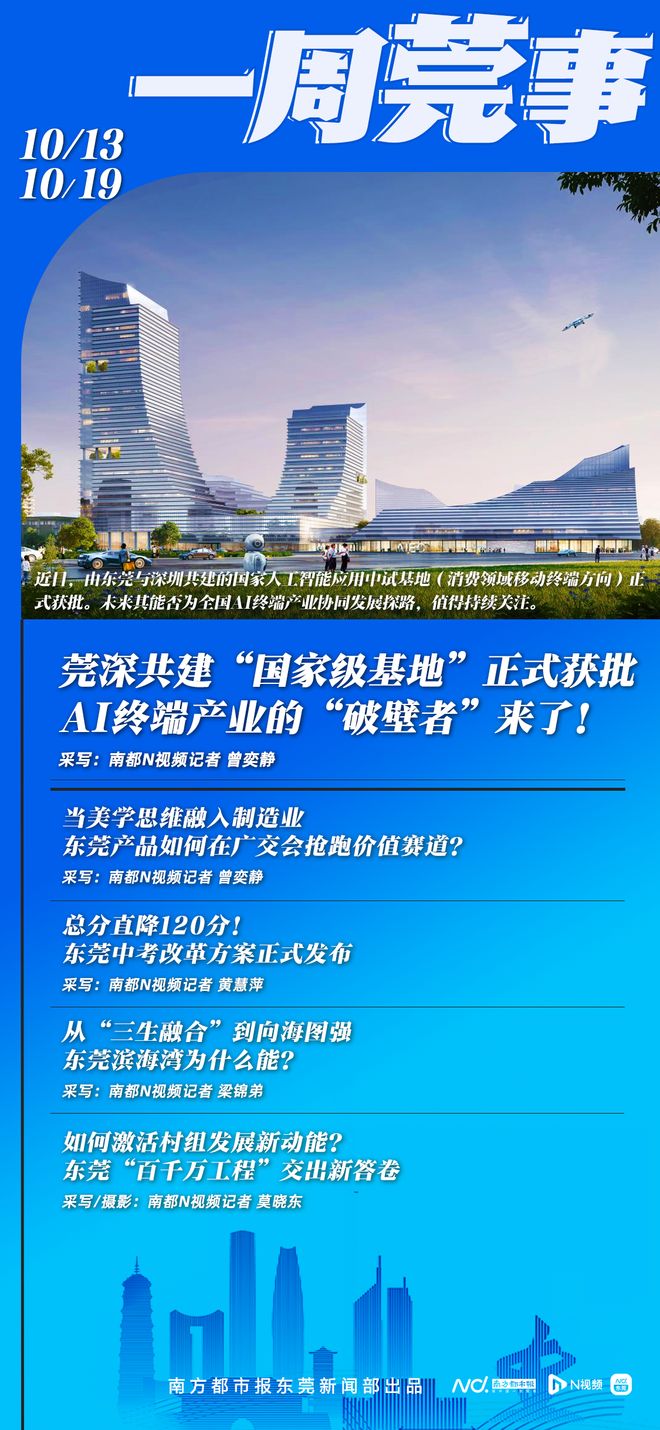
剑指AI终端产业,东莞和深圳携手再放大招|东莞一周
Nan Fang Du Shi Bao· 2025-10-19 10:44
Group 1: AI Industry Development - The establishment of a national AI application pilot base in Dongguan and Shenzhen aims to address common challenges in the large-scale application of AI technology, leveraging Dongguan's manufacturing supply chain and Shenzhen's R&D advantages for synergistic effects [4][6]. Group 2: Manufacturing Aesthetics - Dongguan showcased its "Manufacturing Aesthetics City" image at the 138th Canton Fair, emphasizing the integration of aesthetics into manufacturing to enhance product value and shift from cost competition to value creation [6][7]. Group 3: Education Reform - Dongguan's education bureau announced a reform plan for high school entrance examinations, reducing the total score from 800 to 680 starting in 2027, and implementing a grading system for biology and geography exams to alleviate academic pressure on students [9]. Group 4: Coastal Development - The Dongguan Binhai Bay area has transformed from wetlands to a vibrant urban space, with significant developments such as the OPPO global computing center and ongoing construction of the Shenzhen-Jiangmen railway, aiming to enhance connectivity within the Greater Bay Area [11]. Group 5: Rural Development Initiatives - The "Hundred-Thousand-Ten Thousand Project" in Dongguan focuses on diversifying village economies and shifting emphasis from real estate to technology and industry to achieve sustainable high-quality development [14]. Group 6: Listing Preparation - Dongguan announced its 19th batch of listing backup enterprises, with 19 companies recognized across various sectors, including high-end equipment manufacturing and semiconductors, indicating a robust pipeline for future public offerings [16][17]. Group 7: Audit Report - The latest audit report for Dongguan revealed a 95.54% completion rate for addressing 202 issues identified in the previous year's budget execution, with a total rectification amounting to 14.34 billion yuan [18].
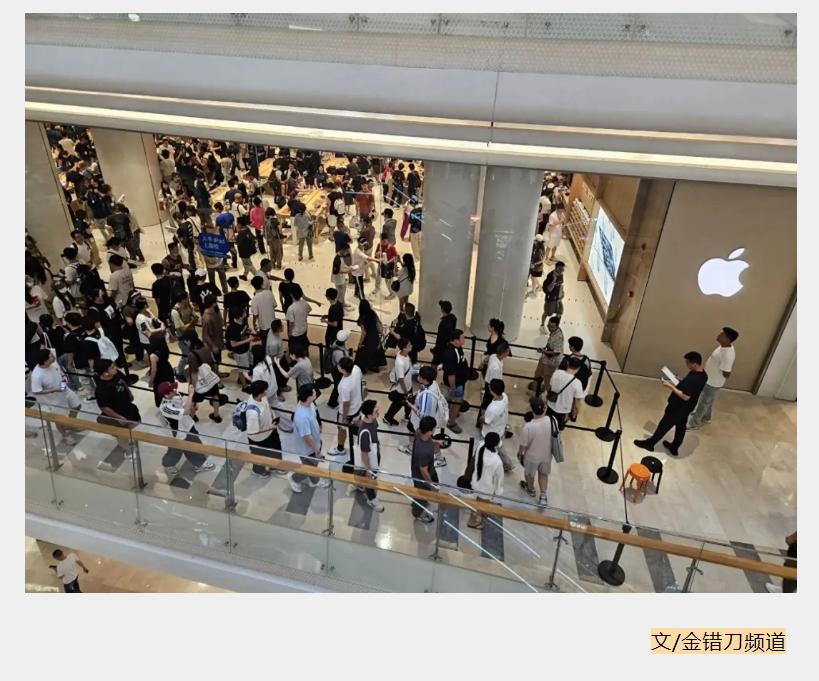
总挤牙膏的iPhone,这次终于开了个好头
3 6 Ke· 2025-10-19 07:43
Core Insights - Apple has been implementing strategies like "squeezing toothpaste" and "cutting a knife" to enhance its product offerings while maximizing profits, such as eliminating the headphone jack and standard chargers, and now removing the SIM card slot for the iPhone Air [2][6] - The launch of the iPhone Air, which supports eSIM technology, has generated significant consumer interest, selling out within five minutes of pre-order [2][3] Group 1: eSIM Technology - eSIM, or Embedded-SIM, is a small chip embedded in devices, eliminating the need for a physical SIM card [3] - Apple has been a pioneer in promoting eSIM, starting with the iPhone XS and fully adopting it in the iPhone 14 series in the U.S. [16][20] - The global eSIM market is expanding, with North America holding a 43% market share as of last year, largely driven by Apple [18] Group 2: Market Dynamics - The introduction of eSIM is seen as a response to the growing demand for more integrated and compact devices, allowing for better battery life and advanced features [20][24] - Despite the advantages of eSIM, there are concerns regarding its implementation in China, where operators have been slow to adapt, requiring users to visit physical stores for eSIM activation [25][28] - The convenience of eSIM, such as the ability to store multiple carrier profiles, is countered by the current limitations imposed by Chinese telecom operators [22][30] Group 3: Industry Implications - The shift to eSIM technology may disrupt traditional telecom business models, as it allows users to switch carriers more easily, potentially leading to increased competition [14][30] - The necessity for telecom operators to embrace eSIM is underscored by the growing importance of connectivity in the era of IoT and AI [30][32] - The initial resistance from operators may hinder the full realization of eSIM's potential benefits for consumers [28][30]
科技周报|库克年内二度访华、国产示波器突破
Di Yi Cai Jing· 2025-10-19 04:48
Group 1: Apple Developments - Apple CEO Tim Cook announced the launch of the iPhone Air in China, the first model to support only eSIM, set to go on sale on October 22 [1] - The iPhone Air pre-orders began on October 17, selling out within five minutes on Apple's website, with over 332,000 reservations on JD.com by noon the same day [2] - Market research indicates that while the iPhone Air may not be the main model in the new series, consumer interest remains high, with 195,000 eSIM reservations noted by China Unicom [2] Group 2: Semiconductor and Technology Innovations - New Kai's subsidiaries launched advanced products at the Bay Area Semiconductor Industry Expo, including EDA design software and a new high-speed oscilloscope with a bandwidth exceeding 90 GHz [3] - The new EDA products improved performance by 30% over industry benchmarks, while the oscilloscope achieved a 500% performance enhancement, marking a significant leap in domestic technology [3] Group 3: AI and Translation Technology - iFLYTEK upgraded its AI simultaneous translation technology, showcasing real-time low-latency dialogue capabilities at the Gitex Global tech event [4] - This advancement highlights China's progress in AI translation technology, aiming to connect with global markets [4] Group 4: Display Technology Advancements - BOE, OPPO, and OnePlus jointly released a 165Hz ultra-high refresh rate OLED smartphone screen, featuring low brightness capabilities and adaptive refresh technology [5] - The trend towards high refresh rate displays is becoming a competitive focus in the smartphone industry, with significant growth expected in shipments of high refresh rate devices by 2025 [6] Group 5: AI in Governance - Shenzhou Holdings launched an AI governance project in Zhangzhou, featuring an AI assistant capable of intelligent consultation and approval assistance [13] - The AI system utilizes a comprehensive knowledge base and deep learning to enhance government service efficiency [13] Group 6: Unicorn Companies and Market Trends - The global unicorn count saw a decrease in new additions, with 42 new unicorns in the first half of 2025, reflecting a more cautious investment environment [10] - The majority of new unicorns are concentrated in AI, enterprise services, and healthcare sectors, indicating ongoing interest in these areas despite overall declines [10] Group 7: Content and IP Development - Reading Literature announced multiple business upgrades focusing on short dramas, trendy toys, and AI applications, aiming to create a second growth curve through IP integration [11] - The company identified key trends in content creation, emphasizing the importance of original storytelling and the potential of Chinese IP on a global scale [11][12] Group 8: Entertainment and Experience Innovation - Sony opened a new experiential entertainment venue in China, integrating advanced technologies and entertainment IP to enhance user engagement [8] - This initiative aims to reshape public perception of Sony as a comprehensive creative entertainment company rather than just a hardware manufacturer [8]



科技周报|杨振宁逝世、库克年内二度访华、国产示波器突破
Di Yi Cai Jing· 2025-10-19 04:33
Group 1: Industry Developments - Renowned physicist Yang Zhenning passed away at the age of 103, recognized for his significant contributions to modern physics, including the Yang-Mills theory and the concept of parity violation in weak interactions [1] - Apple CEO Tim Cook visited China for the second time this year, announcing the launch of the iPhone Air, which is the first model in China to support only eSIM technology [2] - The iPhone Air saw strong pre-order demand, selling out within five minutes on the Apple website, with over 33.2 million reservations on JD.com by noon on the first day of pre-orders [3] - New Kai's subsidiaries launched new high-performance products at the Bay Area Semiconductor Industry Expo, including EDA software and a new generation of high-speed oscilloscopes, marking significant advancements in domestic technology [4] - iFlytek upgraded its AI simultaneous translation technology, showcasing real-time cross-language dialogue capabilities at the Gitex Global tech event [5] - BOE, OPPO, and OnePlus launched a 165Hz ultra-high refresh rate OLED smartphone screen, indicating a trend towards high refresh rates in mobile displays [6] - The 15th China Management Global Forum focused on "AI + Management," emphasizing the need for management transformation in the AI era [7] - Sony opened a new immersive entertainment venue in China, integrating various advanced technologies to enhance user experience [8] - Weibo reported a shift in its active user demographics, with a growing proportion of users aged 31-40, indicating potential market opportunities [9] - The global unicorn count saw a decrease in new additions, with a focus on AI and enterprise services remaining strong [10][11] - Reading Group announced multiple business upgrades, focusing on the integration of IP, AI, and consumer trends [12] - Shenzhou Holdings launched an AI government project in Zhangzhou, showcasing the capabilities of its AI assistant [13] - OneStar Robotics is reportedly in the process of dissolution, highlighting the challenges in the embodied intelligence sector [14] - SpaceX's Starship program concluded its second generation with a successful launch, marking a significant milestone in reusable heavy-lift space vehicles [15]
AI试水“抢购物券”,手机厂商转向:不拼参数拼应用
Di Yi Cai Jing Zi Xun· 2025-10-18 15:41
Core Insights - The article discusses the evolving landscape of AI in the smartphone industry, particularly focusing on the shift from large model parameters to practical applications in China, contrasting with the U.S. approach led by companies like OpenAI and NVIDIA [2][12] - Chinese smartphone manufacturers are prioritizing practical AI applications over competing in model parameter rankings, emphasizing cost-effectiveness and usability [2][10] Group 1: AI Development Strategies - Chinese companies are moving away from the "burning money" strategy of developing large AI models, recognizing the high costs associated with such investments [2][10] - The focus is shifting towards smaller models that can be effectively integrated into specific applications, enhancing user experience and operational efficiency [2][12] Group 2: Practical Applications of AI - Companies like Honor are showcasing AI capabilities that allow smartphones to predict user actions and streamline interactions, significantly improving user experience [3][6] - AI is being integrated into various high-frequency scenarios, such as real-time flight updates and automated purchasing, demonstrating its practical utility [6][10] Group 3: Challenges in AI Implementation - The smartphone industry faces challenges related to power consumption, computational demands, and cost pressures, which have hindered significant sales growth despite AI advancements [9][10] - The need for additional investments in specialized hardware, such as NPU chips, increases costs and impacts profit margins for smartphone manufacturers [10][12] Group 4: Future Trends and Market Potential - The number of AI-supported scenarios in smartphones is rapidly increasing, with companies reporting significant growth in the capabilities of their AI systems [12] - By 2029, it is projected that 57% of smartphones will support generative AI, indicating a growing trend towards AI integration in high-end devices, with Chinese brands playing a crucial role in this shift [12][13]