
台达

Search documents
2025中国离散自动化(FA)市场白皮书
格物致胜· 2025-08-05 06:17
Investment Rating - The report indicates a positive outlook for the discrete automation market in China, with an expected market growth rate of 3.2% in 2025 and a compound annual growth rate (CAGR) of 7.5% over the next five years [24][50]. Core Insights - The discrete automation market is projected to recover starting in 2025, driven by both domestic and international demand, with significant growth expected in emerging industries such as industrial robotics and flexible production lines for new energy vehicles [24][37]. - The market is characterized by a shift towards digitalization and integration, with a focus on high-quality development [24][50]. - The competitive landscape is evolving, with domestic players gaining market share and increasingly replacing foreign brands, particularly in the mid to low-end segments [55]. Summary by Sections Market Size and Trends - The discrete automation market in China is expected to grow significantly, with a market size projected to reach 230 billion yuan by 2030, reflecting a CAGR of 7.5% from 2025 to 2030 [50]. - The market is anticipated to experience a recovery starting in 2025, with internal and external demand driving growth [24][50]. Product Segmentation - Key product segments include low-voltage motors, industrial sensors, low-voltage frequency converters, and machine vision systems, with varying growth rates and market dynamics [27][30]. - The low-voltage motor segment is expected to maintain a high market share, while machine vision is projected to grow significantly due to new application scenarios [27][30]. Competitive Landscape - The report highlights the dominance of foreign brands in high-end markets, while domestic brands are rapidly increasing their market share, particularly in low to mid-range products [55]. - Major players include Siemens, Huichuan, ABB, and Mitsubishi, with Huichuan being the leading domestic brand [31][32]. Emerging Industries - The report identifies significant growth potential in emerging industries such as humanoid robotics and low-altitude aircraft, with substantial market opportunities expected in the coming years [42][46]. - The humanoid robotics market is projected to expand as technology advances and costs decrease, driven by collaboration among traditional industrial robot manufacturers and AI companies [45]. Localization and Market Dynamics - The localization process in the discrete automation market is accelerating, with domestic manufacturers increasing their presence and capabilities in various product segments [30][55]. - The report notes that foreign brands are adapting to local market conditions by enhancing their product offerings and localizing production [55].

AIDC电源&液冷观点更新
2025-08-05 03:19
Summary of Conference Call Records Industry Overview - The conference call focuses on the **data center power supply and liquid cooling industry** and discusses the evolving trends and opportunities within this sector [1][2][3]. Key Points and Arguments 1. **Power Supply Demand Upgrade**: The demand for power supply units (PSUs) has significantly increased, evolving from 3.3 kW to 5.5 kW, with many companies now pushing for 12 kW or higher. This upgrade raises the technical barriers, providing opportunities for domestic companies to enter overseas markets [1][2][3]. 2. **HVDC Technology Adoption**: Meta plans to implement a ±400V HVDC solution in its Prometheus data center project by 2026, which is ahead of market expectations. This presents a significant opportunity for domestic power supply companies to penetrate the overseas market [1][2][3]. 3. **NVIDIA's Future Plans**: NVIDIA's Ruben Ultra, set for mass production in the second half of 2027, will utilize an 800V HVDC architecture. The rapid advancement in HVDC technology by overseas clients exceeds market expectations, necessitating early positioning by domestic companies [1][3]. 4. **HVAC Trends**: The trend towards HVAC systems is clear, with NVIDIA's Robin Ultra achieving over 600 kW per cabinet. The adoption of HVAC can reduce costs and current losses, indicating a shift in power supply architecture [1][6]. 5. **Solid-State Transformer (SST) Benefits**: SST technology can significantly reduce cable usage in data centers by converting 10 kV input directly to 800V DC supply, potentially saving about 50% in cable usage. SST also improves overall efficiency by approximately 0.5% compared to traditional solutions [1][8]. 6. **Liquid Cooling Technology Growth**: The penetration rate of liquid cooling technology is expected to rise from 20% to around 50% by the end of 2025, driven by high-performance chip demand, system efficiency improvements, and energy-saving needs [1][10]. 7. **Domestic Companies' Competitive Edge**: Companies like HeWang, OuluTong, and MaiMi are actively developing relevant products. Those with established high-voltage, high-power technology will have a competitive advantage in the overseas market [1][5]. 8. **Market Catalysts**: Upcoming events, such as quarterly earnings reports from major companies and the global OCP conference in October, may serve as catalysts for industry development and market confidence [1][11]. Additional Important Insights - **Domestic Policy Support**: Shanghai has introduced a 600 million yuan subsidy policy for computing power, encouraging the establishment of new data centers. This support is expected to facilitate the adoption of flexible architectures in response to demand changes [1][15]. - **Investment Opportunities**: Companies that provide advanced cooling solutions and have strong competitive positions are recommended for investment. Notable mentions include Yingweike, Sixuan New Materials, and Shenli Environment [1][17][18]. This summary encapsulates the critical insights and developments discussed in the conference call, highlighting the opportunities and challenges within the data center power supply and liquid cooling industry.

AIDC 电气设备报告
2025-08-05 03:15
Summary of AIDC Electric Equipment Report Industry Overview - The report focuses on the AIDC (Artificial Intelligence Data Center) market, highlighting the rapid growth in demand due to global data center capacity constraints and the anticipated compound annual growth rate (CAGR) of over 30% in data center development over the next few years, with clear growth expected by 2025 [1][2][3]. Key Insights - **Impact of AI Development**: The rapid advancement of the global AI industry has significantly driven the demand for AIDC. The need for infrastructure support is increasing as the demand for tokens is expected to multiply by 2025, leading to a tight supply of computing power in data centers [2][20]. - **Capital Expenditure Plans**: Major overseas internet companies have revised their capital expenditure (CAPEX) plans upwards, indicating optimism about data center construction. For instance, Microsoft expects its 2025 CAPEX to exceed $80 billion, while Amazon's budget is projected to be around $110-120 billion [3]. - **Domestic Competitive Advantage**: Domestic electric equipment companies possess competitive advantages in the AIDC market, particularly in low and medium voltage equipment. The trend towards localization is evident, with domestic firms increasingly able to match the performance and quality of established foreign brands [4][5]. Equipment and Market Dynamics - **Types of Electrical Equipment**: AIDC electrical equipment is categorized into power supply-related devices (transformers, switchgear) and backup devices (diesel generators, UPS). The transition from traditional UPS to HVDC (High Voltage Direct Current) solutions is noted, driven by higher power density and energy-saving demands [6][11]. - **Market Structure**: The domestic UPS market is stable, dominated by companies like Huawei and Weidi, while the HVC market is still in a growth phase with leading companies such as Zhongheng and Zhongda [13][14]. - **Power Supply Equipment**: Key components include transformers and switchgear, which are crucial for ensuring stable operations in data centers. Domestic companies are making significant progress in this area [8]. Emerging Trends - **Shift to HVDC**: The market is witnessing a shift from traditional UPS systems to HVDC solutions, which are expected to become more prevalent as power demands increase. Major companies are beginning to adopt this technology [11][12]. - **High-Power Server Power Supplies**: Server power supplies are evolving from 3 kW to higher capacities, with expectations of reaching 8 kW or 12 kW, necessitating advancements in design and production capabilities [17]. - **High-Speed Copper Cables**: The demand for high-speed copper cables is increasing due to their efficiency in power transmission, driven by the rising power requirements of computing cards [19]. Conclusion - The AIDC market is poised for significant growth driven by advancements in AI and increased capital expenditure from major tech companies. Domestic electric equipment manufacturers are well-positioned to capitalize on these trends, particularly as the industry shifts towards more efficient power solutions and higher power density requirements [1][20].
招商证券:海外AIDC需求强劲 HVDC逐步成为共识
智通财经网· 2025-08-04 07:27
Group 1 - The core viewpoint is that overseas cloud service providers (CSPs) are experiencing significant growth in capital expenditure, with a projected increase of 45% year-on-year to reach $334 billion by Q2 2025, driven by the demand for AI computing infrastructure [1][2] - Major CSPs such as Google Cloud, Microsoft Azure, and Amazon AWS reported double-digit revenue growth in Q2, exceeding market expectations, and have raised their capital expenditure targets for the year [2][3] - The AI-related infrastructure remains the primary focus for investment among these companies, indicating a strong commitment to enhancing their capabilities in this area [2] Group 2 - The performance of key players in the AI data center (AIDC) sector has been impressive, with companies like Vertiv exceeding market expectations in revenue and profitability, and achieving a record backlog of $8.5 billion in orders [3] - Vertiv has raised its full-year revenue guidance to $10 billion for the second time this year, reflecting strong demand and order conditions [3] - The trend of increasing power requirements for AI server racks is shifting from kilowatt to megawatt levels, highlighting the need for advanced power solutions [4] Group 3 - The HVDC (High Voltage Direct Current) solution is gaining recognition as an effective response to the limitations of traditional power systems in terms of space, copper usage, and efficiency [4] - The +/-400V HVDC solution is expected to leverage the established supply chain from the electric vehicle industry, potentially becoming a mainstream development in the future [4] - Companies like Nvidia and various upstream suppliers are actively promoting HVDC solutions, indicating a growing consensus in the industry regarding its advantages [4]

折戟之后优邦材料重启A股IPO!
Ju Chao Zi Xun· 2025-08-02 07:54
Core Viewpoint - Dongguan Youbang Materials Technology Co., Ltd. has officially restarted its initial public offering (IPO) process after previously withdrawing its application in December 2023, indicating a renewed confidence in its market position and growth potential [1] Company Overview - Youbang Materials specializes in the research, production, and sales of electronic assembly materials and related automation equipment, with four main business segments: electronic adhesives, electronic soldering materials, wet chemicals, and automation equipment [1] - The company has established a comprehensive product matrix and a robust production, research, and sales service system, earning a strong reputation in the electronic assembly materials industry [1] Market Position and Partnerships - Youbang Materials has formed stable partnerships with well-known companies such as Foxconn, Delta, and others, providing products that serve major global brands like Apple, Sony, and Dell [2] - The company holds approximately 3% market share in the electronic adhesive sector and ranks among the top three domestic companies in the solder paste market, with a production volume of 964.45 tons in 2022, representing 5.36% of the total domestic market of 18,000 tons [2] - Youbang Materials' semiconductor cleaning agents are utilized in RF chip applications, with successful deliveries to clients including Changdian Technology and Tongfu Microelectronics [2]
优邦材料再启IPO
Sou Hu Cai Jing· 2025-07-31 11:14
Core Insights - Dongguan Youbang Materials Technology Co., Ltd. (referred to as "Youbang Materials") has recently disclosed its initial public offering (IPO) guidance report, with Shenwan Hongyuan as the advisory institution [1] - This is not the company's first attempt at an IPO; the previous application was accepted by the Shenzhen Stock Exchange on September 6, 2023, but was withdrawn on December 14, 2023, leading to the termination of the review process [1] - The company initially planned to raise 1 billion yuan through the IPO for projects related to semiconductor and new energy materials, special adhesive upgrades, R&D center, information technology upgrades, and working capital [1] Company Overview - Established in September 2003, Youbang Materials is a high-tech enterprise specializing in the R&D, production, and sales of electronic assembly materials and related automation equipment [1] - The company’s product offerings include electronic adhesives, soldering materials, semiconductor-specific materials, and automated dispensing equipment, providing solutions for welding, bonding, and surface treatment in electronic packaging [1] - The products are widely used in smart terminals, communications, new energy, and semiconductor sectors [1] Market Position and Partnerships - Youbang Materials has established stable partnerships with well-known industry players such as Foxconn, Delta, and others, with its products serving major global brands like Apple, Sony, HP, Dell, Amazon, and General Motors [2] - The company has achieved recognition for several products, particularly solder paste, which has entered the supply chains of notable clients, gradually achieving domestic substitution for similar products [2] Shareholder Structure - According to the IPO guidance report, the controlling shareholder of Youbang Materials is Zheng Jianzhong, who directly holds 21.10% of the shares and controls a total voting power of 38.15% through direct, indirect holdings, and concerted action [2]
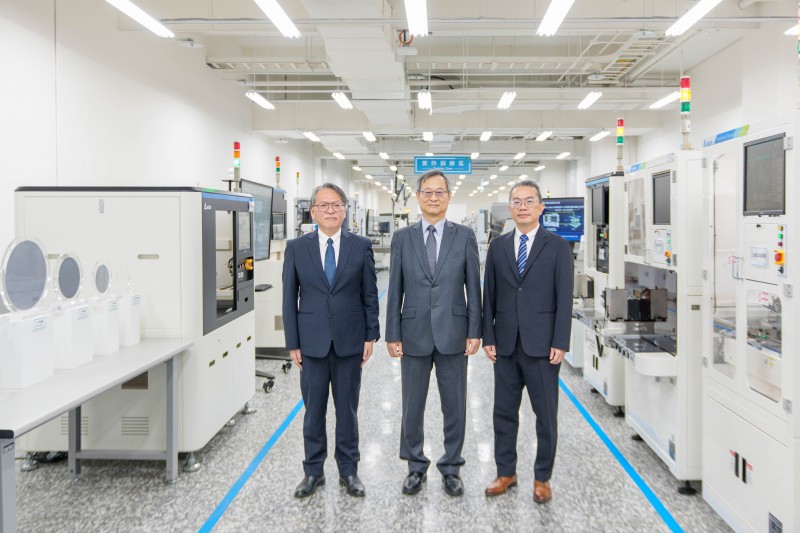
台达智能制造创新中心启用 打造实机验证与培训一站式场域 助产业应对全球制造挑战
Zhong Guo Chan Ye Jing Ji Xin Xi Wang· 2025-07-31 03:20
Core Insights - Delta has launched the "Delta Smart Manufacturing Innovation Center" to address the global trend of decentralized manufacturing and centralized management, providing a comprehensive platform for hands-on training, testing, and certification in industrial automation [1][3] - The center has established a partnership with NVIDIA to create the "Delta NVIDIA Virtual-Real Integration Learning Center," focusing on digital twin and AI model applications, offering training courses that cover hardware and software integration from single machines to entire factories [1][3][6] Group 1 - The Delta Smart Manufacturing Innovation Center is located in Delta's Zhongli plant, covering approximately 500 square meters and showcasing complete solutions for single machines and production lines [5] - The center features a 3D situation room for monitoring equipment data and operational status, as well as hands-on training, sample production, and debugging to shorten machine setup and production line startup times [5][6] - Delta aims to assist partners in the electronics and semiconductor industries in creating efficient machine and production line planning solutions that can be rapidly replicated in new manufacturing bases [3][5] Group 2 - The Delta NVIDIA Virtual-Real Integration Learning Center will provide systematic, tiered training courses and workshops to address challenges from design to mass production, including digital simulation and AI model applications [6] - Future courses will focus on NVIDIA Omniverse and Isaac Sim applications, emphasizing digital twin and robotic equipment simulation to explore the latest trends and practical technologies in AI applications [6] - Delta's first innovation center was established in Dongguan and officially opened in early October 2023, serving as a platform for technology exchange and solution demonstration, covering over 1,300 square meters [6] Group 3 - Delta, founded in 1971, provides power management and thermal solutions, playing a significant role in various fields such as industrial automation, building automation, and renewable energy [7] - The company is committed to sustainable development and has received numerous international accolades for its achievements in operational excellence, technological innovation, and corporate sustainability [8] - Delta has been recognized in the Dow Jones Best-in-Class World Index for 14 consecutive years since 2011 and has received top ratings from CDP for climate change and water security [8]

AIDC系列-海外大厂引领高压直流革命,800V产业化进程有望加速
2025-07-16 06:13
Summary of Conference Call Transcript Industry Overview - The report discusses the evolution of power supply architectures in data centers, focusing on High Voltage Direct Current (HVDC) systems and their adoption by major overseas companies such as Microsoft, Google, and Meta [1][10]. - The increasing demand for AI computing power is driving the need for more efficient power supply solutions in data centers, impacting both energy consumption and operational costs [1][10]. Key Points on Power Supply Architecture Evolution of Power Supply Systems 1. **First Generation**: Utilized Uninterruptible Power Supply (UPS) systems, converting AC from the grid to DC for server use, with a power capacity of 10-15 kW [2]. 2. **Second Generation**: Introduced an open pricing power supply model, integrating power sources directly into the system [2]. 3. **Third Generation**: Features a high-voltage direct current (HVDC) solution that separates power supply from IT cabinets, allowing for better scalability and efficiency [3][4]. Major Companies' Initiatives - **Microsoft**: Launched the Mount Diablo power architecture, separating power and server units, currently using a 50V DC supply [4]. - **Google**: Presented a two-phase power architecture at the OCP conference, with a transition plan to a direct DC supply of ±400V for data centers [5]. - **Meta**: Announced a three-step approach to high-power rack solutions, gradually moving towards HVDC systems [6][7]. - **NVIDIA**: Introduced an 800V power architecture capable of supporting over 600 kW, focusing on future-proofing against increasing power demands [9]. Domestic vs. Overseas Trends - Domestic HVDC systems in China are primarily at 240V, with a focus on compatibility with existing equipment, while overseas systems are moving towards 400V and 800V solutions [17][18]. - Chinese companies like Alibaba and Tencent are still utilizing 240V systems, with some planning for higher voltage systems in the future [19][20]. Supply Chain and Market Dynamics - The supply chain for 400V systems is mature, making it cost-effective, while 800V systems are newer and face higher costs and safety concerns [13][14]. - The transition to HVDC will be gradual, with existing systems needing to adapt to new power supply standards [10][22]. Investment Opportunities - Companies such as Zhongheng, Kehua, and others are positioned to benefit from the increasing penetration of HVDC systems in both domestic and international markets [22]. Additional Insights - The report highlights the importance of solid-state transformers (SST) in future power supply solutions, which can enhance efficiency and reduce size [15][16]. - The compatibility of existing servers with new power supply systems remains a critical factor in the transition to higher voltage solutions [22][23]. This summary encapsulates the key insights from the conference call, focusing on the evolution of power supply systems in data centers, the initiatives of major companies, and the implications for investment in the sector.



Nvidia 定义电力电子的未来
半导体行业观察· 2025-07-14 01:16
Core Viewpoint - Nvidia is redefining the characteristics and functionalities of power electronic devices for AI data centers, despite not designing or manufacturing power devices itself [2][9]. Group 1: Nvidia's Influence on Power Electronics - Nvidia's push for AI data centers is creating momentum for Gallium Nitride (GaN) technology, similar to how Silicon Carbide (SiC) benefited from Tesla's early adoption [6]. - Nvidia is collaborating with various partners, including Infineon, MPS, Navitas, and others, to transition to an 800V High Voltage Direct Current (HVDC) power infrastructure for data centers [3][10]. - The company is moving away from traditional 54V rack power distribution technology due to its inability to meet the increasing power demands of large GPU clusters [8][9]. Group 2: Technical Requirements and Innovations - The new 800V HVDC architecture will necessitate a range of new power devices and semiconductors, with a focus on converting 800V to lower voltages for server motherboards [10]. - Infineon indicates that SiC is leading in high power and voltage solutions, while GaN is more suited for high-frequency applications due to space constraints [11]. - New semiconductor-based relays will be required for the high voltage DC AI data centers to ensure safe control of overcurrent and surge currents [12]. Group 3: Competitive Landscape and Market Dynamics - Nvidia's proactive approach in announcing its power infrastructure plans is driving industry dialogue and may render existing standards like the Open Compute Project (OCP) obsolete [16]. - The market for GaN is expected to grow faster than SiC, with GaN devices having higher voltage potential and applications in both DC/DC and AC/DC conversions [19].
海外大厂引领高压直流革命,800V产业化进程有望加速
2025-07-09 02:40
Summary of Conference Call Records Industry Overview - The data center power supply architecture is evolving towards High Voltage Direct Current (HVDC) systems, with major overseas companies like Microsoft, Google, Meta, and Nvidia leading the charge in adopting 400V and 800V architectures to enhance energy efficiency and reduce costs in response to the growing energy demands of AI computing [1][6][8]. Key Points and Arguments HVDC Adoption - Microsoft is implementing the Mont Diablo separated power architecture, which can be upgraded to 400V HVDC in the future [1][4]. - Google is designing a positive and negative 400V DC distribution solution, aiming for data center-level integration [1][4]. - Meta is following a three-step approach to achieve megawatt-level positive and negative 400V HVDC [1][4]. - Nvidia plans to launch an 800V power supply architecture after 2027, supporting higher rack power [1][5]. Cost and Efficiency Benefits - HVDC systems improve transmission efficiency and reduce costs by minimizing copper usage, which is crucial given the significant energy consumption increase in data centers [6][7]. - The integration of HVDC with renewable energy sources can form microgrids, optimizing energy management and achieving sustainability goals [1][7]. Transition Phases - Short-term upgrades will focus on enhancing Power Supply Units (PSUs) from 3.3 kW to 12 kW, suitable for existing data center retrofits [1][9]. - Mid-term transitions will move towards positive and negative 400V or 800V HVDC systems, while long-term plans involve direct adoption of 10 kV medium voltage to high voltage DC [1][9][10]. Additional Important Insights Domestic vs. Overseas Developments - Domestic HVDC systems primarily use 240V DC for compatibility reasons, but some companies are planning to develop 400V or 800V products due to the limitations of 240V in high-power server applications [3][13]. - Companies like Alibaba, Baidu, and Tencent are also exploring HVDC solutions, with Alibaba's Panama power supply being a notable example [3][15]. Company Strategies - Delta, Zhongheng, and Kehua are actively developing HVDC products, covering both positive and negative 400V and 800V systems [3][16]. - Investors are advised to focus on companies like Zhongheng, Kehua, and Oulu Tong, which are expected to benefit from the increasing penetration of HVDC systems [18]. Future Market Trends - The market is expected to see a shift towards higher power density requirements, particularly in the overseas market, driven by the need for efficient AC/DC and DC/DC converters [17][18]. - The integration of 800V to 50V DC/DC converters directly into server motherboards may reduce the need for external converters in the future [17][18]. This summary encapsulates the key developments and strategic directions in the HVDC sector, highlighting the ongoing transition in data center power supply architectures and the implications for industry players and investors.