
Figure AI

Search documents
交付成拐点,智元与figure正赛开始?
Di Yi Cai Jing· 2025-10-17 07:23
Core Insights - The current landscape of humanoid robotics emphasizes the importance of delivery and practical applications over theoretical advancements, with companies like Zhiyuan focusing on compliance and stability for industrial B-end clients [1][10] - Zhiyuan is accelerating its overseas market expansion, aiming for 30% of its revenue to come from international business by next year, indicating a competitive stance against global players like Figure and Optimus [1][2] Group 1: Product Development and Market Strategy - Zhiyuan's G2 robot has received significant orders, including a multi-billion yuan framework order from Longqi Technology and a procurement order exceeding 100 million yuan from Junsheng Group, with deliveries already underway [2] - The G2 features a redesigned structure with a seven-degree-of-freedom force-controlled arm, enhancing its application scenarios and increasing the complexity of transitioning from demonstration to delivery [3][5] - The company emphasizes "automotive-grade" standards for stability and consistency in industrial applications, collaborating with Junsheng Group to ensure a robust supply chain for G2 production [5][11] Group 2: Technological Advancements - G2 is equipped with NVIDIA's Jetson Thor chip, providing a peak computing power of 2070 TFLOPS, which supports lower latency in operations and is crucial for high-speed industrial interactions [6] - The design of G2 incorporates redundancies to allow for future expansion into various scenarios, contrasting with competitors that focus on niche applications [7][10] Group 3: Competitive Landscape - The humanoid robotics market is witnessing diverse strategies, with Zhiyuan opting for a pragmatic approach of securing immediate orders, while competitors like Figure AI and Tesla's Optimus pursue more ambitious, long-term goals [8][10] - Recent challenges faced by competitors, such as production delays and technical issues with Optimus, highlight the risks associated with high expectations in the robotics sector [8][10] Group 4: Market Dynamics and Future Outlook - Zhiyuan's strategy of focusing on practical applications and real-world data collection is expected to enhance its competitive edge, especially in overseas markets where labor costs are higher and profit margins are more favorable [10] - The company has reported thousands of units delivered in the first three quarters of the year, indicating a growing scale of operations while still navigating supply chain challenges [11]

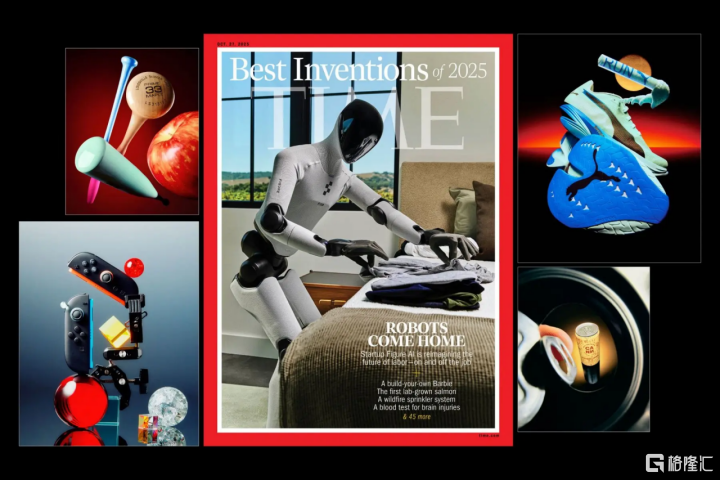
《时代》周刊公布年度最佳发明榜单:Figure、宇树、卧安机器人等公司产品上榜
Ge Long Hui· 2025-10-17 00:49
Core Insights - The 2025 Best Inventions list by Time magazine highlights significant advancements in robotics, featuring products from Figure AI, Unitree Technology, and Woan Robotics, indicating a breakthrough in embodied intelligent robots for consumer applications [1][7] Company Highlights - Woan Robotics' Acemate is the first AI tennis robot to make it to the Best Inventions list, marking a milestone for embodied intelligence in sports [3] - Acemate demonstrates a 90% success rate in returning balls, closely matching human player performance, showcasing the integration of embodied intelligence in sports training [3][6] - Figure AI, Unitree Technology, and Woan Robotics' recognition on the Best Inventions list signifies a high-quality growth phase in the global AI and robotics sector, with embodied intelligent robots entering real-life scenarios such as home services and sports companionship [7] Technology and Innovation - Acemate combines AI visual recognition algorithms, complex scene perception modules, and a 4K dual-camera system to accurately track ball trajectories, speed, and spin [6] - The robot employs advanced algorithms for real-time decision-making and personalized strategy evolution, enabling it to move across various court types like clay, grass, and hard courts [6] - Woan Robotics leverages its extensive experience in AI embodied technology to create a robust technical barrier for Acemate, facilitating a complete training loop of perception, judgment, execution, and feedback [6]

分析NVIDIA的近百笔AI投资:什么是AI行业的现在和未来?
3 6 Ke· 2025-10-17 00:47
Core Investment Strategy - NVIDIA has invested nearly $10 billion in around 100 AI startups across various sectors in 2024 and 2025, establishing a broad ecosystem in AI [1] - The company focuses on investing in AI model companies to secure customers and anticipate the next generation of computing capabilities [1][3] - NVIDIA's investments extend to next-generation network chips to enhance the efficiency and speed of its GPU capabilities [1] Key Investments in AI Model Companies - NVIDIA participated in a $6.6 billion funding round for OpenAI in October 2024, investing $100 million, and plans to deploy up to 10 gigawatts of AI computing systems in collaboration with OpenAI [4] - The company has invested $2 billion in xAI, participating in multiple funding rounds, and has a long-term partnership providing H100 GPUs for xAI's supercomputer [5] - NVIDIA invested in Mistral AI, achieving a valuation of €11.7 billion after a €1.7 billion funding round, and plans to establish AI computing infrastructure in France [6] - Runway received $308 million in D-round funding from NVIDIA, achieving a post-investment valuation of over $3 billion [7] Investments in AI Cloud Platforms - NVIDIA invested $100 million in CoreWeave's B-round funding in 2023, which has a market valuation of approximately $70 billion post-IPO [9] - Together AI received $305 million in B-round funding from NVIDIA, achieving a valuation of $3.3 billion, focusing on unique technologies for enterprise clients [10] - Nscale, specializing in high-performance data centers, received $683 million from NVIDIA in a funding round, supporting large-scale language model training [11] Investment in Innovative Chip Companies - NVIDIA has invested in Ayar Labs and Enfabrica to enhance its computing capabilities, focusing on high-speed communication between chips [12] - Ayar Labs' technology allows for high bandwidth and low latency, with NVIDIA participating in multiple funding rounds [13] - Enfabrica's technology integrates advanced memory architecture, and NVIDIA acquired its core team and technology for $900 million in 2025 [14] Focus on Physical AI - NVIDIA is preparing for the next wave of AI, termed Physical AI, which involves interaction with the physical world [15] - The company has invested in various Physical AI companies, including Figure AI, Dyna Robotics, and Wayve, to establish a future-oriented ecosystem [16] - Figure AI received $1 billion in C-round funding, while Wayve secured $1.05 billion, focusing on humanoid robots and autonomous driving systems, respectively [17][18] Strategic Ecosystem Development - NVIDIA's investments in AI models and cloud platforms are strategically aimed at solidifying its position in the AI industry, with many of these companies also being customers of NVIDIA GPUs [19] - The focus on Physical AI represents a long-term growth strategy, aiming to reshape the interaction between AI and the physical world [19]

“AI盛世”还是“AI泡沫”?10家AI独角兽,估值1年增长1万亿,VC一年投入超2000亿美元,利润为0
Hua Er Jie Jian Wen· 2025-10-16 12:39
Core Insights - The surge in AI investments has led to a dramatic increase in valuations of unprofitable AI startups, totaling nearly $1 trillion in the past year, marking the fastest wealth expansion in history [1] - U.S. venture capital (VC) investments in AI are projected to exceed $200 billion this year, significantly surpassing previous tech bubbles, indicating a strong market focus on AI [2] - The current investment climate is characterized by a "winner-takes-all" mentality, with expectations that only a few companies will dominate the market, reminiscent of the internet era [3] Investment Trends - The AI sector has attracted over $200 billion in VC funding this year, which is more than the $135 billion invested during the SaaS bubble in 2021 [2] - AI companies are experiencing inflated valuations, with some startups valued at 100 times their annual revenue, driven by a fear of missing out (FOMO) among investors [2] - The expectation is that while a significant amount of AI investment may be wasted, the technology could ultimately create tenfold value [3] Market Dynamics - The valuations of private AI companies are beginning to impact public markets, with major tech firms like AMD and NVIDIA seeing substantial market cap increases due to their associations with AI startups [3] - The competition among AI companies, particularly between OpenAI and tech giants like Microsoft and Google, is intensifying, leading to high operational costs and uncertain profitability timelines [4] - The current capital frenzy in AI resembles previous market bubbles, with valuations detached from actual earnings, raising concerns about the sustainability of this growth [5]


MPS人形机器人解决方案|“芯片+算法+系统”三位一体的创新驱控
机器人圈· 2025-10-15 10:22
Core Viewpoint - The humanoid robot industry is experiencing rapid development driven by technological advancements, policy support, and market demand, with MPS introducing innovative solutions to address key challenges in this field [3][5][54]. Group 1: Current Development Status of Humanoid Robots - Since the 21st century, humanoid robots have entered a phase of rapid development, with notable advancements from companies like Boston Dynamics and Tesla [2]. - The domestic market shows strong vitality, with companies like Yushu Technology and ZhiYuan launching humanoid robots with advanced capabilities [2]. - The global market for humanoid robots is expected to reach 6.339 billion by 2025 and may exceed 400 billion by 2035, with industrial applications leading the way [5]. Group 2: Technical Challenges - The humanoid robot industry faces significant technical challenges, including insufficient motion capabilities and stability, limited perception and cognitive abilities, and high manufacturing costs [6][8][11]. - Achieving embodied intelligence remains a long-term goal, with manufacturers increasingly relying on semiconductor suppliers to succeed in this competitive landscape [6][7]. Group 3: MPS Humanoid Robot Solutions - MPS has launched humanoid robot solutions that focus on high-performance motor drives, high-precision sensors, and integrated motor control systems to help manufacturers achieve embodied intelligence [13][54]. - The MP(Q)6547A and MP6543 motor driver chips are designed to enhance motion capabilities and stability, with features such as a wide voltage range and integrated fault detection mechanisms [14][16]. - MPS has introduced advanced sensors like the MA600A and MA900 to improve the precision and reliability of robotic movements, addressing the challenges of external interference and providing high accuracy [18][24]. Group 4: High-Performance Integrated Solutions - MPS offers a high-performance, highly integrated motor drive solution that combines MCU, driver, and power devices into a single module, catering to the compact design requirements of humanoid robots [32][33]. - The micro servo control algorithm embedded in MPS's driver chips enhances motion smoothness and reduces noise, crucial for achieving human-like movements [35][36]. - MPS's solutions include safety features such as overcurrent protection and fault reporting, ensuring reliable operation in humanoid robots [42][54].
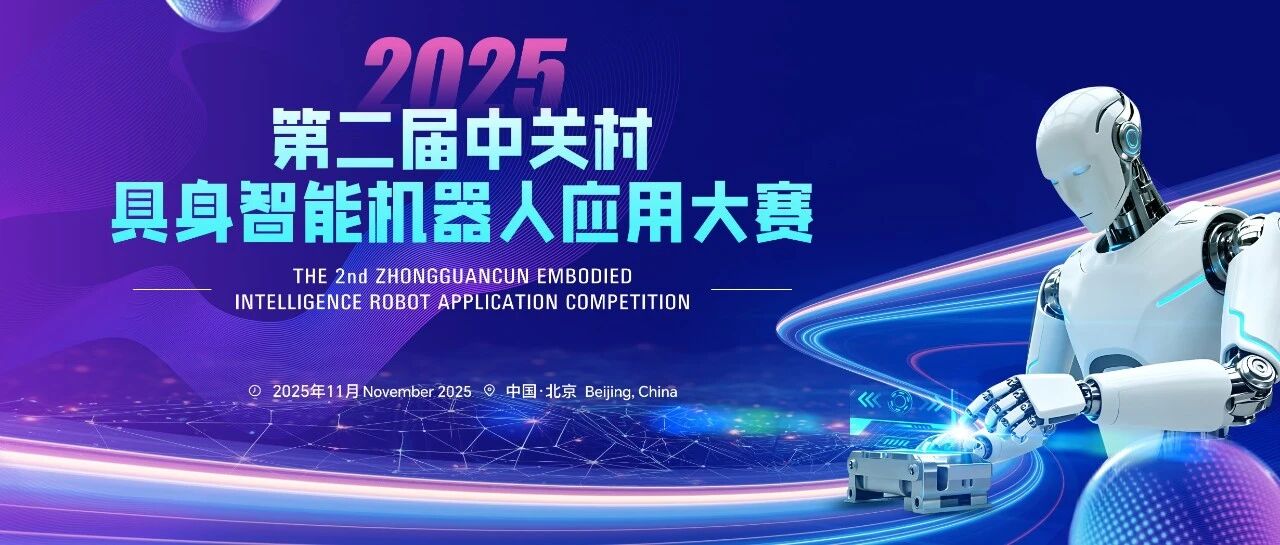
人形机器人落地潮,2025年第二届中关村具身智能机器人应用大赛聚焦落地,持续征集报名中
机器人大讲堂· 2025-10-15 09:00
Core Viewpoint - The humanoid robot industry is entering a critical opportunity period, transitioning from "laboratory exploration" to "scene application," driven by policy design, market demand, technological advancements, and capital support [1] Industrial Scene - The industrial sector is becoming a testing ground for the large-scale application of humanoid robots, focusing on repetitive labor tasks that require flexibility and precision, such as material handling in engine assembly and quality inspection in 3C manufacturing [2][3] - In 2025, global orders for industrial humanoid robots are expected to exceed 10,000 units, with companies like UBTECH and Zhiyuan securing orders worth hundreds of millions [3] Commercial Service Scene - The commercial service sector is poised for significant humanoid robot applications, with over 80 projects awarded in the first half of 2025, totaling more than 330 million yuan, covering retail, dining, and healthcare [5][7] - The rental model is emerging as a solution to cost challenges, with the domestic service robot rental market expected to surpass 2 billion yuan in 2025, lowering entry barriers for small businesses [7] Home Scene - The home scene presents substantial consumer potential but also faces the highest technical challenges and commercialization difficulties, focusing on elderly care, daily chores, and educational companionship [8] - Despite the potential, the commercialization of humanoid robots in home settings is still in its early stages, hindered by issues such as insufficient technology maturity and high costs [8] Upcoming Events - The second Zhongguancun Embodied Intelligent Robot Application Competition will take place in November 2025, focusing on the practical application of humanoid robots and providing a platform for testing their capabilities in various scenarios [10][12] - The competition will feature multiple tracks, including challenges for embodied intelligence models and applications in family services, commercial services, and industrial manufacturing [13]
汽车与工业科技- 人形机器人及其对汽车与工业科技的利润影响-Autos & Industrial Tech_ Platforms & Power - Part II_ Humanoids and profit implications for autos & industrial tech
2025-10-15 03:14
Summary of Key Points from the Conference Call Industry Overview - The humanoid robot market is projected to grow from approximately 20,000 units in 2025 to around 1.4 million units by 2035, generating about $38 billion in revenue [3][35] - Humanoids are expected to play a significant role in various sectors, including manufacturing, elderly care, and home chores, with a potential market size of $205 billion in optimistic scenarios [8][39] Core Companies Discussed Tesla - Tesla is developing the Optimus robot for internal use and external sales, with the CEO suggesting that humanoids could account for 80% of the company's future value [1][58] - The company aims to produce 1 million humanoid robots annually by 2030, with potential EPS contributions ranging from $0.10 to $3.00 by 2030, and $0.20 to $13.00 by 2035, depending on shipment volumes and margins [10][66] Jabil - Jabil is positioned to benefit from manufacturing humanoids and providing necessary data for AI training, with potential EPS impacts of up to $1 by 2030 and $4 by 2035 [11][73] - The company has partnerships with Apptronik and has experience in manufacturing and automation, which could facilitate its entry into the humanoid market [11][72] Flex - Flex is expected to generate similar EPS impacts as Jabil, with estimates of up to $0.25 by 2030 and $1 by 2035, depending on humanoid shipments and labor savings [14][74] - The company is focusing on automation and efficiency, with a significant portion of its revenue coming from datacenters and automotive sectors [14][74] Other Notable Companies - Companies like Boston Dynamics, Agility Robotics, Apptronik, and Figure AI are also highlighted for their contributions to humanoid technology and partnerships with larger firms [2][11][23] Technological Challenges and Developments - Current challenges in humanoid robotics include hardware limitations (e.g., precision, battery life) and software development for varied tasks [2][20] - Companies are focusing on gathering data for AI training, with tools like Nvidia's GR00T model being utilized to enhance humanoid capabilities [2][23] - The industry anticipates that it may take several years before humanoids can be deployed at scale in controlled environments like factories [57] Market Dynamics - The global market for industrial robots is approximately 550,000 units per year, suggesting that the humanoid market could grow significantly as adoption increases in both industrial and consumer settings [42][56] - The labor shortage in manufacturing and other sectors in the U.S. presents a strong case for the adoption of humanoid robots to fill gaps [39] Financial Projections - The financial outlook for humanoid robots includes various scenarios (base, bear, bull, blue-sky) with significant revenue potential, particularly in optimistic cases where humanoids become widely adopted [38][39] - The EPS contributions from humanoid robots for companies like Tesla, Jabil, and Flex are contingent on successful scaling and market adoption [10][66][73][74] Conclusion - The humanoid robot market presents substantial growth opportunities for companies involved in manufacturing, AI, and robotics, with Tesla, Jabil, and Flex positioned to capitalize on this emerging sector. However, technological challenges and market dynamics will play a crucial role in determining the pace of adoption and financial success.

人形机器人商业化落地可期
Zheng Quan Shi Bao Wang· 2025-10-15 01:23
Core Insights - Shanghai's Economic and Information Technology Commission has issued the "Action Plan for High-Quality Development of the Intelligent Terminal Industry (2026-2027)", emphasizing the enhancement of robotic terminal capabilities and the development of humanoid robots with emotional and cognitive skills [1] - The humanoid robot industry is entering a phase of rapid commercialization, with significant advancements in technology and increased participation from both domestic and international players [1][2] - The recent launch of Figure03 by FigureAI marks a significant step towards general intelligence in robotics, featuring upgraded perception systems and dexterous hands, indicating a shift towards mass production capabilities [2] Group 1 - The action plan aims to support the research and mass production of humanoid robots, focusing on core components like edge chips, dexterous hands, and batteries [1] - The emergence of AI companies like DeepSeek is driving the development of general-purpose humanoid models, leading to a diverse and competitive landscape in the humanoid robot industry [1] - The commercial viability of humanoid robots is becoming increasingly evident, with industrial applications gaining traction both domestically and internationally [1] Group 2 - FigureAI's Figure03 can autonomously handle household tasks such as laundry, cleaning, and dishwashing, showcasing advancements in sensory systems and dexterous manipulation [2] - The production capacity for Figure03 is projected to reach 10,000 units annually within four years, indicating a robust manufacturing strategy that moves away from CNC processing to more efficient methods [2] - The humanoid robot industry is expected to officially enter commercialization by 2026, with a focus on identifying high-quality companies within the supply chain for long-term investment opportunities [2]
机构:人形机器人商业化落地可期
Zheng Quan Shi Bao Wang· 2025-10-15 00:22
Group 1 - The Shanghai Municipal Economic and Information Commission has issued the "Action Plan for High-Quality Development of the Intelligent Terminal Industry (2026-2027)", emphasizing the enhancement of robotic terminal capabilities and the development of humanoid robots with emotional intelligence and skills [1] - The report highlights a surge in domestic and international industry catalysts, with an increase in participants in the humanoid robot sector, and companies like Tesla and Figure AI accelerating their commercialization efforts [1] - The emergence of AI companies such as DeepSeek is driving the development of general-purpose robotic models, indicating a vibrant and competitive humanoid robot industry, with a clear trend towards industrial applications [1] Group 2 - Figure AI has officially launched Figure03, which can autonomously handle household tasks like laundry and cleaning, featuring upgrades in its perception system and dexterous hands [2] - The company has shifted its manufacturing approach from CNC processing to mold/injection/pressing techniques, with a production capacity of 12,000 units per year for the first generation and a target of 100,000 units over the next four years [2] - The humanoid robot industry is experiencing significant advancements, with a focus on short-term event-driven industry fluctuations and long-term attention on quality companies within the supply chain [2]