
峰飞航空

Search documents
无人机电池也疯狂!宁德、赣锋已开启“跨界混战”
Hua Xia Shi Bao· 2025-07-13 00:03
Group 1: Industry Trends - The application of lithium batteries is expanding from electric vehicles to emerging industries such as drones, manned aircraft, and robots, with leading battery manufacturers accelerating their layouts in these areas [1][7] - The low-altitude economy in China is projected to reach a scale of approximately 1.3 trillion yuan by 2027, with the drone manufacturing and operation services accounting for 55% of the total scale [2] - The civil drone industry in China reached a scale of 117.43 billion yuan in 2023, with consumer drones holding 74% of the global market share [3] Group 2: Battery Technology and Requirements - High-performance batteries, particularly solid-state and semi-solid batteries, are seen as essential for the development of drones and manned aircraft, with safety and energy density being critical factors [1][10] - The cost of batteries can account for over 60% of the total operating costs of certain drones, indicating the significant impact of battery technology on the overall economics of these vehicles [7] - Current battery requirements for drones are relatively low, with many using soft-pack batteries similar to those used in smartphones, although performance may not meet ideal standards [3][9] Group 3: Investment and Collaboration - Major battery manufacturers like CATL and BYD are actively investing in and collaborating with drone and robotics companies, indicating a strategic focus on these emerging markets [1][5] - The investment landscape for humanoid robots has seen significant funding, with companies like Figure AI and Boston Dynamics attracting substantial capital, highlighting the growing interest in robotics [4][5] - The collaboration between battery manufacturers and drone companies is still in the testing phase, with many products not yet ready for mass production [7][10]
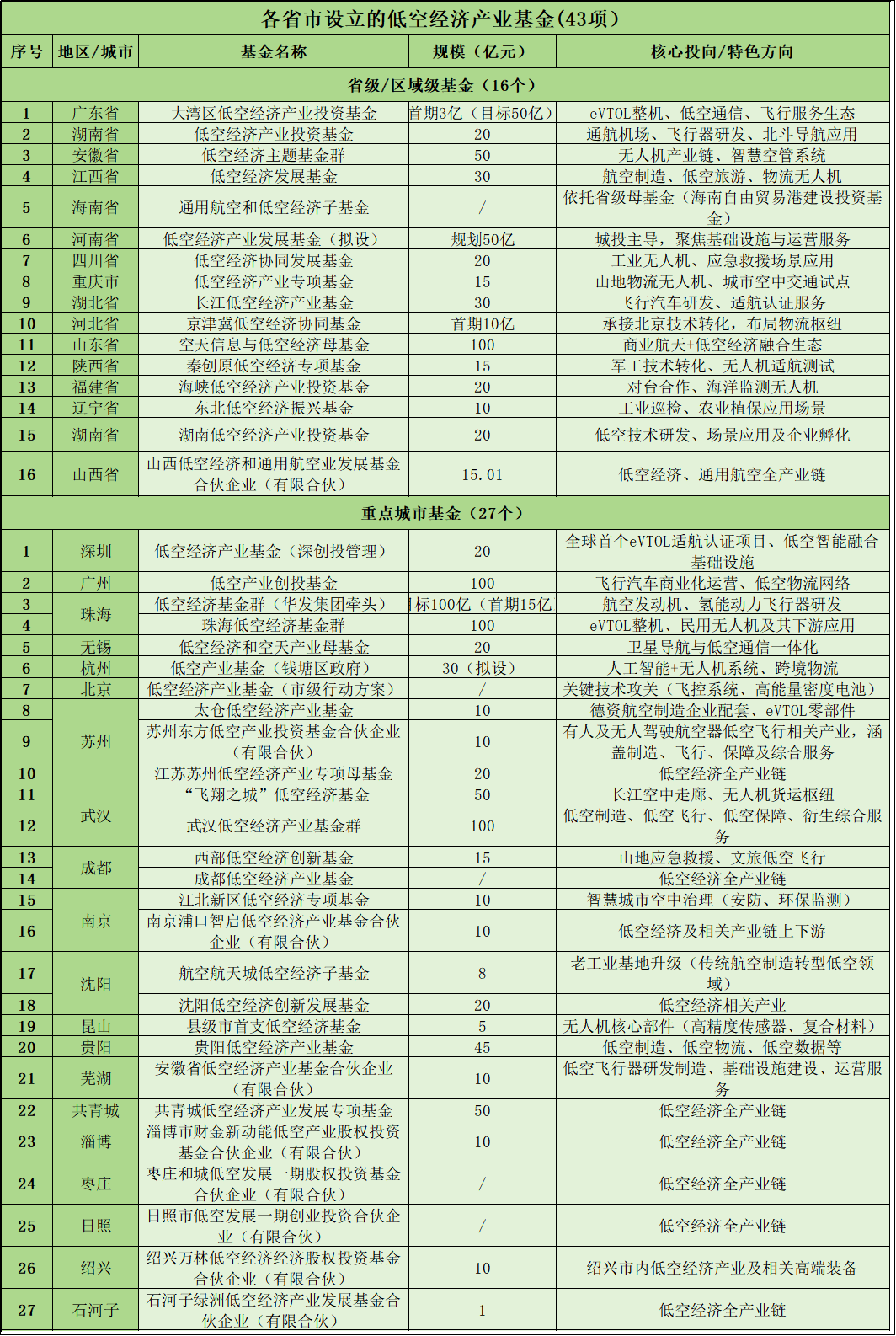
超40省市设低空基金,总金额超千亿,低空经济或成万亿级赛道
Sou Hu Cai Jing· 2025-06-26 16:39
Core Insights - Capital is rapidly flowing into the low-altitude economy sector, with over 40 provinces and cities in China establishing low-altitude economic industry funds, totaling over 100 billion yuan by June 18, 2025 [1][2][4] - The establishment of these funds aims to leverage more resources and efforts to participate in local low-altitude economic development [1][4] Fund Establishment and Scale - Various provinces have set up low-altitude economic industry funds, with notable examples including: - Jiangxi Province's special fund of 5 billion yuan for low-altitude economic development [1] - Guangdong's Bay Area low-altitude economic investment fund with a target of 5 billion yuan [2] - Sichuan's collaborative development fund of 20 billion yuan [2] - A total of 43 low-altitude economic industry funds have been established across the country [3] Investment Trends - In 2024, there were 161 investment events in the low-altitude economy, with a significant focus on low-altitude aircraft manufacturing, accounting for 76.4% of the events [4][6] - The majority of these investment events are in early funding rounds, indicating a growing interest in the sector [4] Project Implementation - Major cities like Suzhou and Nanjing have signed numerous low-altitude economic projects, with total investments exceeding 900 billion yuan and 306 billion yuan respectively [6][4] - The active participation of state-owned enterprises and government investment funds is driving the development of low-altitude economic projects [7][8] eVTOL Sector Focus - eVTOL companies are attracting significant capital, with several firms securing external financing in 2024 [8] - The increase in orders for eVTOL aircraft indicates a shift towards commercialization and market acceptance [8] Application Scenarios - The low-altitude economy is expanding into various application scenarios, including drone delivery, emergency services, and tourism [9][10] - By the end of 2024, the number of registered drones in China reached 2.177 million, reflecting a 98.5% increase from the previous year [9] Market Potential - The low-altitude economy is projected to reach a market size of 1.5 trillion yuan by 2025 and 3.5 trillion yuan by 2035 [11] - The sector is seen as a potential trillion-yuan market, comparable to the growth trajectory of the electric vehicle industry [11][13]


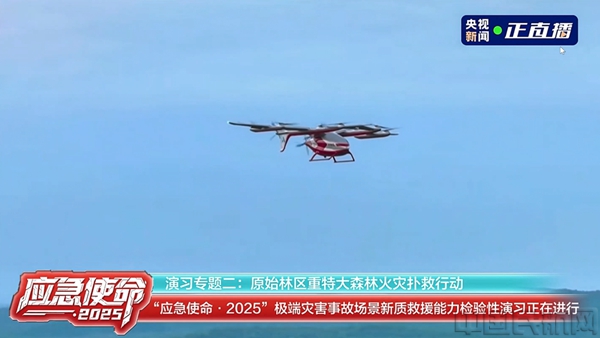
8分钟22公里 吨级以上eVTOL首次参加国家级应急演习
Zhong Guo Min Hang Wang· 2025-06-25 05:30
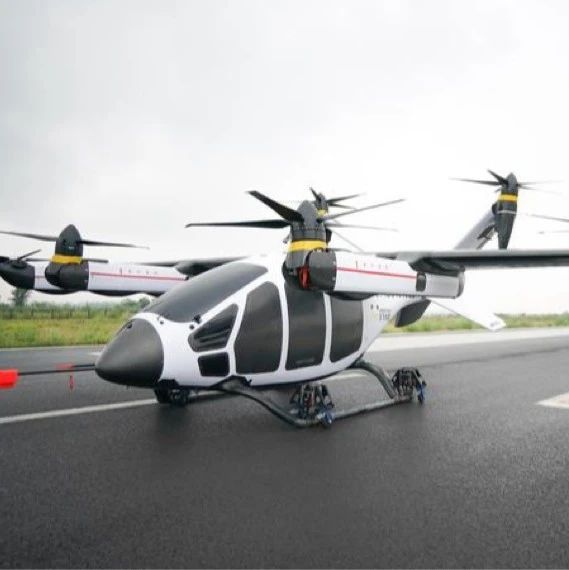
Core Viewpoint - The article highlights the participation of the Peak Flying Aviation's 2-ton eVTOL (electric Vertical Take-Off and Landing aircraft) model, the Kerry O Firefighting version, in a national emergency rescue drill, marking a significant advancement in emergency response capabilities in extreme disaster scenarios [1][3]. Group 1: Event Overview - The "Emergency Mission 2025" drill was organized by the National Disaster Reduction and Relief Committee and the State Council's Work Safety Committee, with participation from various governmental departments and local authorities [5][6]. - The drill aimed to enhance emergency rescue capabilities and was open to public submissions of new equipment, materials, technologies, and tactics, receiving 1,456 applications [5]. Group 2: Performance of Kerry O Firefighting Model - The Kerry O Firefighting model successfully demonstrated its capabilities by flying 22 kilometers in just 8 minutes to deliver firefighting supplies during a forest fire drill [3]. - The model showcased its ability to conduct dynamic exercises, including the aerial delivery of water and food supplies [3]. Group 3: Technical Specifications and Advantages - The Kerry O model is the first ton-class eVTOL to receive type certification (TC) and production license (PC) from the Civil Aviation Administration of China, with all core modules developed domestically [7]. - It features a maximum payload of 400 kilograms, a range of 200 kilometers, and a speed of 180-200 kilometers per hour, allowing for rapid deployment and operations beyond visual line of sight [7]. - The aircraft can operate day and night, breaking the limitations of visual range and expanding its application scenarios [7]. Group 4: Broader Implications - The successful demonstration of the Kerry O model in emergency scenarios paves the way for the integration of new rescue capabilities with emergency response teams, establishing a solid foundation for the promotion and application of eVTOLs in firefighting [3][6].
吨级eVTOL首次入围国家级应急演习
第一财经· 2025-06-25 05:01
在国家防灾减灾救灾委员会、国务院安全生产委员会开展"应急使命·2025"演习中,峰飞航空2吨级 eVTOL(电动垂直起降)航空器凯瑞鸥消防版机型参加演习,成为首个参与国家级应急消防演习的 吨级以上eVTOL,为应急救援工作开辟了新路径,实现了大型 eVTOL 航空器在消防应急领域实际 应用场景的突破性示范。 ...
探展MWC|机器人“上岗”忙,5G-A赋能低空未来
Guo Ji Jin Rong Bao· 2025-06-19 11:34
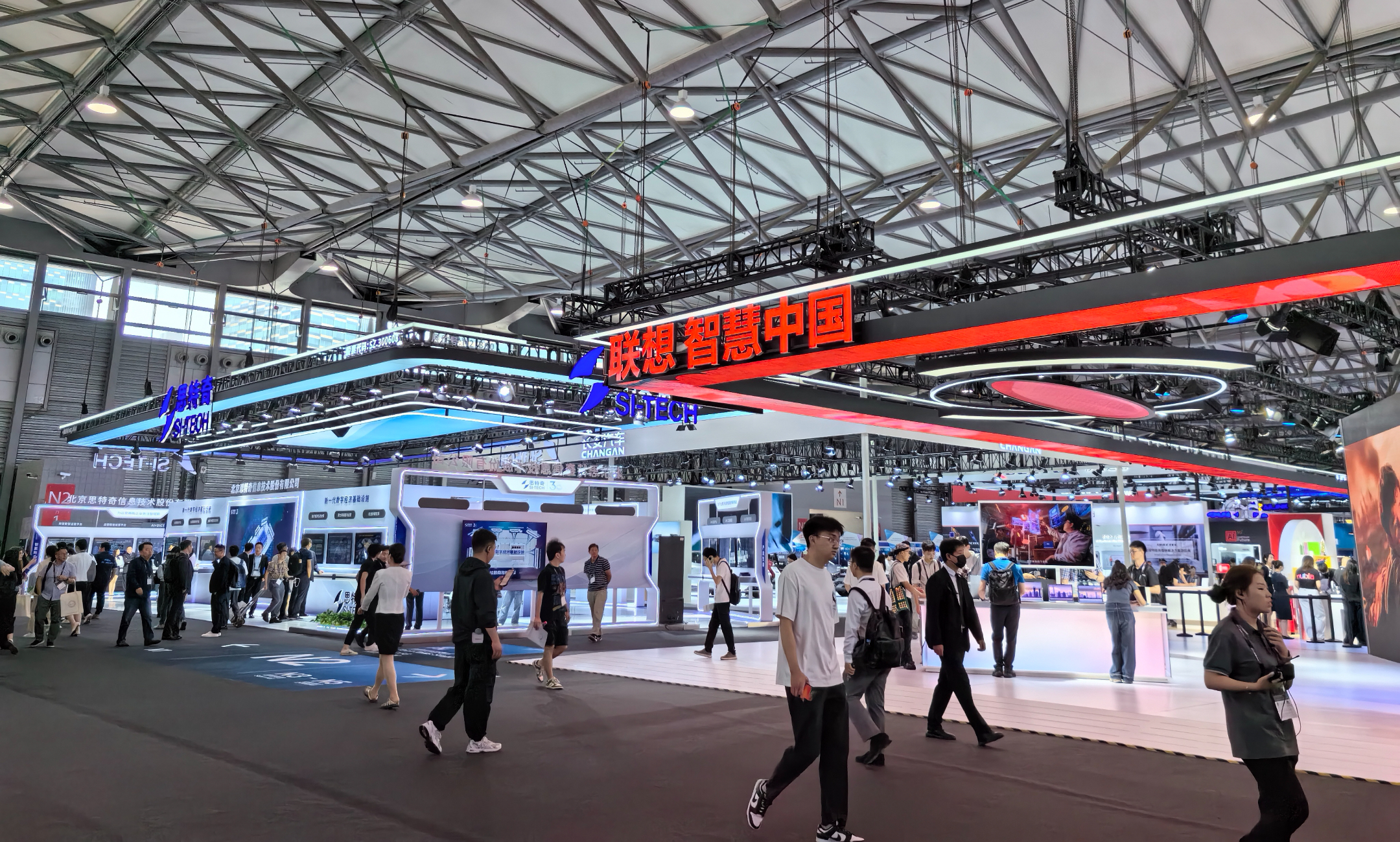
Core Insights - The 2025 World Mobile Communication Conference (MWC Shanghai 2025) showcased advancements in robotics and AI, emphasizing a "robotic world" experience [1][3] - The conference focused on four main themes: "AI+", "Empowering Connectivity", "Industry Interconnection", and "5G Integration", serving as a platform for new technology demonstrations and industry standards [3] Group 1: Low Altitude Economy and 5G-A Integration - The low altitude economy emerged as a hot topic at the conference, highlighting its integration with 5G-A technology [4][6] - China Mobile's chairman, Yang Jie, announced plans to accelerate the evolution of next-generation communication networks, focusing on a comprehensive network layout that includes low altitude capabilities [6] - Shanghai Tejin introduced the world's first base station-based low-altitude perception device utilizing TDOA technology, aimed at enhancing low-altitude safety management [11][12] Group 2: Robotics and AI Innovations - Various companies showcased humanoid robots and AI applications, with ZhiYuan Robotics presenting models like the "Expedition A2" designed for interactive services [18][22] - The "Expedition A2" robot features over 50 degrees of freedom and advanced interaction capabilities, including multilingual dialogue and emotional recognition [22] - Other companies, such as Guanghe Tong, displayed AI toy solutions and AI glasses, demonstrating the versatility of AI in consumer products [25][28] Group 3: Industry Collaboration and Global Presence - The conference facilitated deeper exchanges and collaborations between Chinese companies and international counterparts, enhancing the global presence of Chinese AI technologies [31] - Companies like iFLYTEK reported significant international interest in their products, indicating a growing demand for customized and secure AI solutions [31]

湖北武汉多区协同勾勒中部"空中经济"增长极
Zhong Guo Chan Ye Jing Ji Xin Xi Wang· 2025-06-16 14:20
在全球经济不断寻求新增长点的背景下,低空经济快速崛起,正成为城市高质量发展的新赛道。 武汉低空经济的快速推进,得益于顶层设计的系统布局。今年5月8日,武汉市委召开专题会议研究低空 经济发展,强调要打造全国低空经济发展高地,推动科技创新与产业创新融合,做好规划编制、政策制 定,推动产业链建链延链补链强链,拓展应用场景、夯实发展基础。 据了解,目前湖北省已在武汉市打造了东湖高新(600133)区、武汉经开区、汉阳区、洪山区、武昌 区、黄陂区、东西湖区、硚口区八个低空经济综合试验区,计划到2027年低空经济核心产业规模突破 200亿元,2030年突破千亿元。 据中国民航局预测,2025年我国低空经济市场规模达1.5万亿元,2035年有望达到3.5万亿元。全国已有 30个省份将"低空经济"发展规划写入2025年地方政府工作报告。武汉的探索为中部地区乃至全国的低空 经济发展提供了实践样本。(黎丹丹 成昱勋 何思颖) 低空经济具有高科技、高效能、高质量发展的鲜明特征,是新质生产力的重要组成部分。武汉市作为全 国重要的交通枢纽和科技创新中心,拥有自然地理条件、科教实力和产业空间等多重优势,具备发展低 空经济的独特优势。武汉 ...
eVTOL重塑文旅体验 从政策元年到规模化应用年升级
Bei Jing Shang Bao· 2025-06-10 14:50
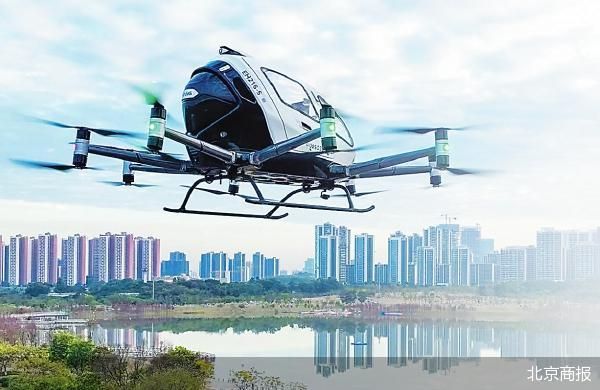
Core Insights - The low-altitude economy in China is transitioning from a "policy year" in 2024 to a "year of large-scale application" in 2025, with significant advancements in eVTOL (electric Vertical Take-Off and Landing) aircraft certification and commercialization in the tourism sector [1][3][5] Industry Development - The establishment of a three-tier management system ("national-industry-local") is expected to guide the differentiated development of the low-altitude economy, which is projected to reshape the spatial landscape of China's tourism industry [1][3] - The government has recognized low-altitude economy in its work report, leading to a surge in related regulations and initiatives, thus fostering a diverse and competitive market environment [3][4] eVTOL Applications - eVTOL aircraft are being prioritized for applications in the tourism sector, serving as a preliminary step towards regular air commuting and enhancing public understanding of low-altitude travel [7][8] - The integration of eVTOL into tourism is expected to create new economic benefits and improve the overall travel experience by providing direct aerial connections between scenic spots [7][9] Commercial Ecosystem - A complete "low-altitude + tourism" commercial ecosystem requires collaboration among manufacturers, operators, infrastructure developers, and service providers to ensure a seamless travel experience [10][11] - Key elements for a successful ecosystem include stimulating new consumer demand, establishing regular operational standards, and achieving large-scale development to unlock the economic potential of low-altitude travel [10][11] Regulatory Framework - The development of the low-altitude economy necessitates a balance between unified standards and local characteristics, with a focus on gradual exploration and adaptation based on practical experiences [11][12] - A three-tier framework for standardization is proposed, involving national safety rules, industry operational standards, and localized implementation guidelines to ensure effective management of airspace [11][12]
新车云集人气旺 展现市场新动向 2025粤港澳大湾区车展前三日已吸引45万人次,成交预计40亿元
Shen Zhen Shang Bao· 2025-06-02 22:33
Core Insights - The 2025 Guangdong-Hong Kong-Macao Greater Bay Area Auto Show has attracted a large number of car enthusiasts, leading to increased foot traffic and sales, with an expected 450,000 visitors and a projected sales volume of 4 billion RMB, marking increases of 27.84% and 8.1% respectively compared to the previous event [1] - The event's theme focuses on technology, future, and market orientation, showcasing over 1,039 vehicle models from 112 brands across a space of more than 260,000 square meters [1][2] - Shenzhen is positioning itself as a global leader in the automotive industry by establishing four key centers: innovation and R&D for new energy vehicles, high-end component design and manufacturing, cutting-edge technology application demonstration, and international trade hub [2] Industry Developments - The auto show features numerous significant new car launches, including the luxury model Zun Jie S800 and the Xiaomi SUV YU7, highlighting the industry's strong R&D capabilities and market trends [3] - NIO's global debut of the NWM model and its self-developed smart automotive components indicate advancements in automotive intelligence [4] - Huawei and BYD have established a strong presence at the show, showcasing their commitment to creating a new ecosystem for mobility [5][6] Technological Innovations - The event emphasizes the importance of technological breakthroughs, with various companies presenting innovations such as NIO's smart driving chips and battery swap stations [4] - The "Hongmeng Smart Mobility Pavilion" and BYD's dedicated exhibition area highlight the integration of smart technology within the automotive sector [6] - The "Future Mobility Space Station" showcases a collaborative effort among companies to present an integrated transportation ecosystem, including low-altitude flying vehicles [6]


第一张飞行汽车驾照落地:新能源又换了个马甲卷?
Tai Mei Ti A P P· 2025-05-29 01:38
Core Insights - The emergence of flying cars and eVTOLs represents a significant evolution in the low-altitude economy, transitioning from science fiction to reality [3][4] - The current landscape shows a division between flying cars and eVTOLs, with eVTOLs dominating the commercial market due to lower development costs and regulatory hurdles [10][19] - The industry is heavily reliant on existing electric vehicle technology, raising questions about the true innovation behind these aerial vehicles [5][14] Industry Overview - The first operational certificate for a manned autonomous aircraft was issued in March 2025, marking a milestone in the industry [4] - eVTOLs are primarily focused on vertical takeoff and landing, while flying cars require dual systems for both ground and air travel, complicating their development [10][12] - The eVTOL market is projected to grow significantly, with companies like EHang reporting revenues of 456.2 million yuan, a 288.5% increase year-on-year [19] Market Dynamics - The current market for flying cars is still in the conceptual phase, while eVTOLs have begun to see commercial viability, with over 70% market share [19] - Companies are facing challenges in meeting aviation safety standards, which differ significantly from automotive regulations, leading to increased costs and development time [16][17] - The infrastructure for low-altitude operations is lagging, with only 23 out of 1000 planned takeoff and landing points completed by 2025 [17] Customer Segmentation - The primary customers for eVTOLs are government entities, with commercial applications still limited [22][23] - The high cost of flying cars makes them accessible only to affluent individuals, with prices exceeding one million yuan and additional operational costs [23] - Companies are exploring various business models, including cargo transport and emergency services, to validate their technologies and achieve profitability [19][24] Future Outlook - The next decade will be crucial for the low-altitude economy, with a focus on identifying real market needs and pain points [24] - The industry is expected to consolidate, with many flying car projects likely to fail, leaving only those that address genuine market demands [24] - The evolution of this sector will continue to draw from the supply chains established in the electric vehicle industry, indicating a strong interconnection between these two markets [24]

“千亿产业新势能”系列之低空经济篇: 多城蓄势协同共进 长三角编织“4小时低空产业圈”
Zheng Quan Shi Bao· 2025-05-26 18:13
Core Viewpoint - The low-altitude economy is rapidly reshaping urban development patterns, particularly in the Yangtze River Delta region, with significant advancements in infrastructure, technology research, and application services [1][2][3]. Group 1: Development and Policy - The Yangtze River Delta is expanding its low-altitude economy with various cities leveraging their industrial foundations and talent resources for forward-looking layouts [1]. - Shanghai aims to establish a complete industrial system for low-altitude new aircraft by 2027, targeting a core industry scale exceeding 50 billion yuan [2]. - Hangzhou plans to build over 275 drone takeoff and landing sites and open more than 500 low-altitude routes by 2027, with an industry scale target of over 60 billion yuan [3]. Group 2: Application Scenarios - Low-altitude economy applications are expanding into urban life, including logistics, emergency rescue, tourism, and agricultural protection [4]. - The first aerial blood delivery route in Jiangsu has been operational, significantly reducing delivery times for medical supplies [4]. - Companies like Fengfei Aviation are focusing on developing more low-altitude application scenarios, leveraging the region's robust industrial chain [5]. Group 3: Collaborative Development - The Yangtze River Delta cities are adopting differentiated policies to stimulate low-altitude economic innovation, with Shanghai attracting leading companies in the drone and eVTOL sectors [6][7]. - A 20 billion yuan special fund has been established to support key segments of the low-altitude industry chain [7]. - The collaborative model among cities enhances operational efficiency and resource sharing, creating a comprehensive low-altitude economic ecosystem [7][9]. Group 4: Challenges and Future Outlook - Safety remains a critical concern for the low-altitude industry, necessitating enhanced monitoring systems and regulations to prevent unauthorized flights [8]. - The development of advanced technologies is essential, as current limitations in drone endurance, payload capacity, and intelligence levels pose challenges [9]. - There is a significant talent gap in the industry, highlighting the need for focused training and development of skilled professionals [9].