易方达基金

Search documents
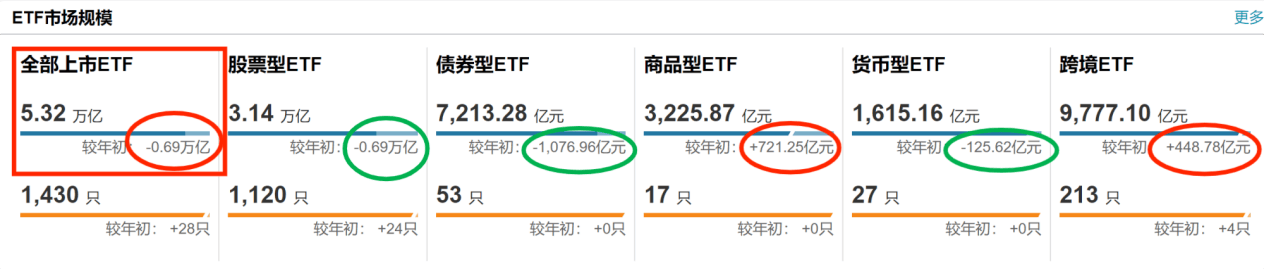
两市ETF两融余额减少10.85亿元丨ETF融资融券日报
2 1 Shi Ji Jing Ji Bao Dao· 2026-02-11 04:32
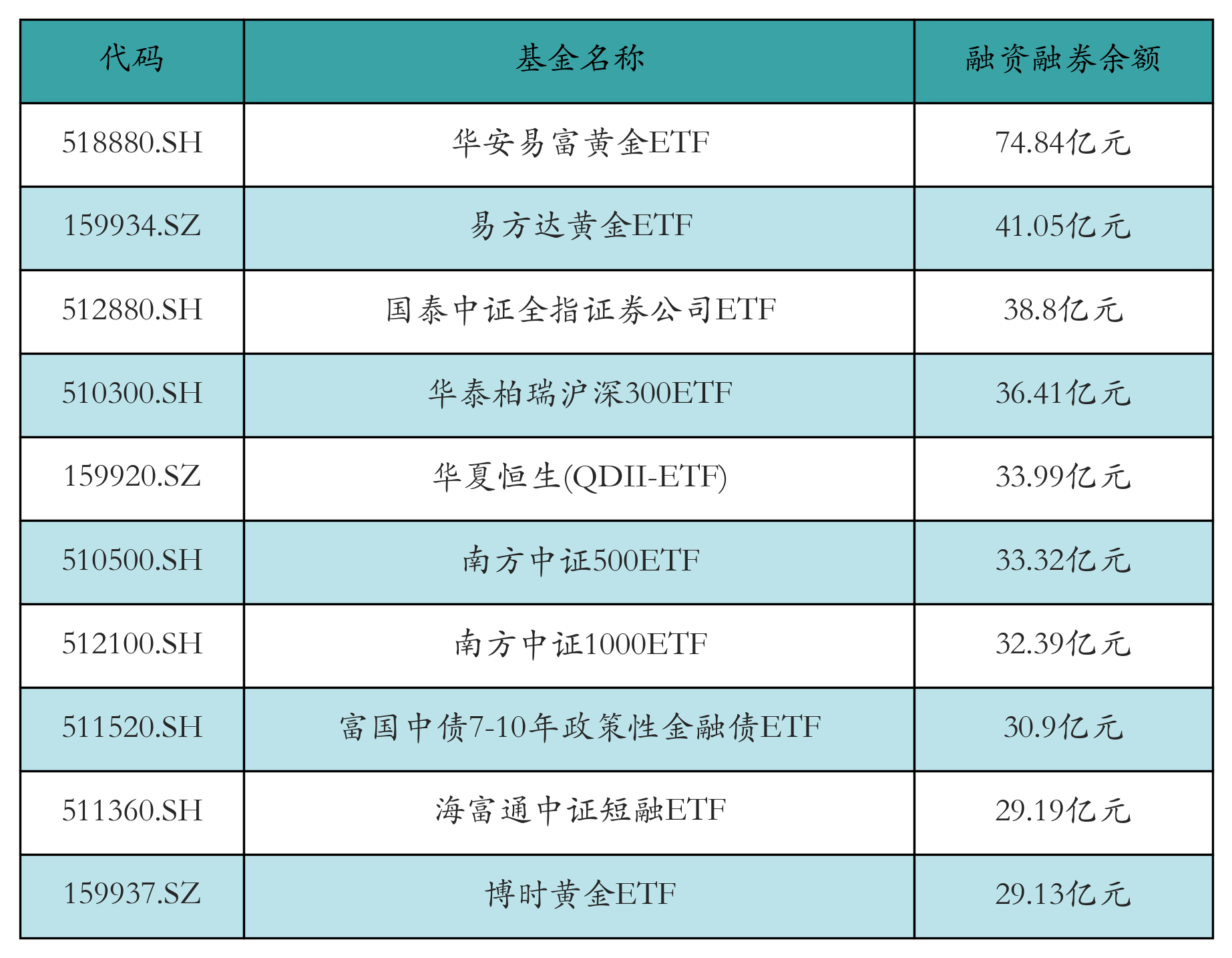
2月10日两市ETF两融余额为1200.01亿元,较前一交易日减少10.85亿元。其中融资余额为1124.56亿元,较前一交易日减少10.86亿元;融券余额为75.45亿 元,较前一交易日增加141.45万元。 ETF融资买入额 市场概况 分市场来看,沪市ETF两融余额为843.29亿元,较前一交易日减少8.95亿元。其中融资余额为777.49亿元,较前一交易日减少9.08亿元;融券余额为65.8亿 元,较前一交易日增加1320.89万元。深市ETF两融余额为356.72亿元,较前一交易日减少1.89亿元。其中融资余额为347.07亿元,较前一交易日减少1.78亿 元;融券余额为9.65亿元,较前一交易日减少1179.44万元。 ETF融资融券余额 2月10日ETF两融余额前三位分别为:华安易富黄金ETF(74.84亿元)、易方达黄金ETF(41.05亿元)和国泰中证全指证券公司ETF(38.8亿元),前10具体 见下表: | 代码 | 基金名称 | | --- | --- | | 518880.SH | 华安易富黄金ETF | | 159934.SZ | 易方达黄金ETF | | 512880.SH | 国 ...

大股东频繁增资“输血”挂牌“清仓” 中小型公募基金面临生存危机
Xin Lang Cai Jing· 2026-02-11 01:13
转自:经济参考报 近日,弘毅远方基金管理有限公司发布公告,公司股东弘毅投资(北京)有限公司再次"输血",向其增 加出资2900万元,成为今年首家实施增资的公募基金;此前被大股东挂牌"清仓"股权的华宸未来基金管 理有限公司,则发布了旗下基金华宸未来价值先锋的清算报告。 无论是增资"输血",还是挂牌"清仓",都凸显出了中小型基金管理机构时下的生存危机。记者梳理同花 顺iFinD数据发现,截至2025年末,全市场167家公募基金管理机构当中,基金管理规模不足1000亿元的 有101家、占比超六成,规模合计2.75万亿元,占市场总规模比重约7.60%。 记者注意到,随着公募基金行业竞争日趋激烈,像弘毅远方基金这样增资自救的中小型基金公司并不少 见。据不完全统计,2025年,湘财基金、红土创新基金、南华基金、先锋基金、汇泉基金、恒越基金、 联博基金等多家机构获股东"输血",股东频繁"输血"的背后是中小机构普遍面临的生存危机。 今年1月,华宸未来基金正式迎来"生死劫"。因触及规模红线,华宸未来价值先锋宣布清盘,2025年年 底时该基金规模只有0.03亿元;不久之后,华宸未来基金公告称,经中国证监会许可,华宸未来稳健添 利 ...
基金早班车丨机构齐声“持股过节”,哑铃策略备战春节红包
Sou Hu Cai Jing· 2026-02-11 00:44
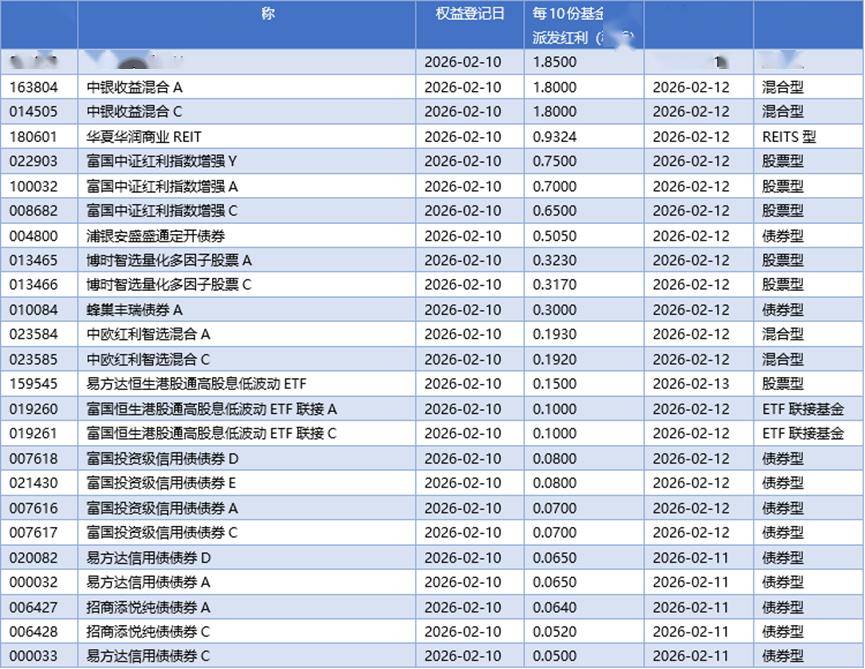
Group 1: Market Overview - The last trading week before the Spring Festival sees brokerages, public funds, and private equity leaning towards "holding stocks for the festival" with expectations for a positive post-holiday market driven by portfolio structure [1] - A "barbell strategy" is emerging as a consensus among institutions, focusing on high-dividend, low-valuation defensive assets on one end and technology growth offensive varieties on the other to prepare for potential spring market excitement [1] - On February 10, A-shares exhibited a "structural differentiation" pattern, with the Shanghai Composite Index rising by 5.28 points (0.13%) to 4128.37 points, while the Shenzhen Component Index increased by 2.19 points (0.02%) to 14210.63 points, and the ChiNext Index fell by 12.23 points (0.37%) to 3320.54 points [1] Group 2: Fund News - No new funds were launched on February 10, but 43 funds distributed dividends, primarily bond funds, with the highest dividend payout from the Bank of China Income Mixed Securities Investment Fund at 1.8500 yuan per 10 fund shares [2] - From February 3, there was a reversal in net outflows from stock ETFs, with a significant inflow of over 10 billion yuan into the market, particularly favoring small-cap ETFs like the CSI 1000 and CSI 2000, while ETFs related to non-ferrous metals faced net outflows [2] - By the end of 2025, the total scale of domestic ETFs is expected to exceed 6 trillion yuan, with an annual growth rate of 62%, increasing their share of A-share market capitalization to 6.1% [2]
百亿资金入场!投资方向变了
Shang Hai Zheng Quan Bao· 2026-02-10 16:39
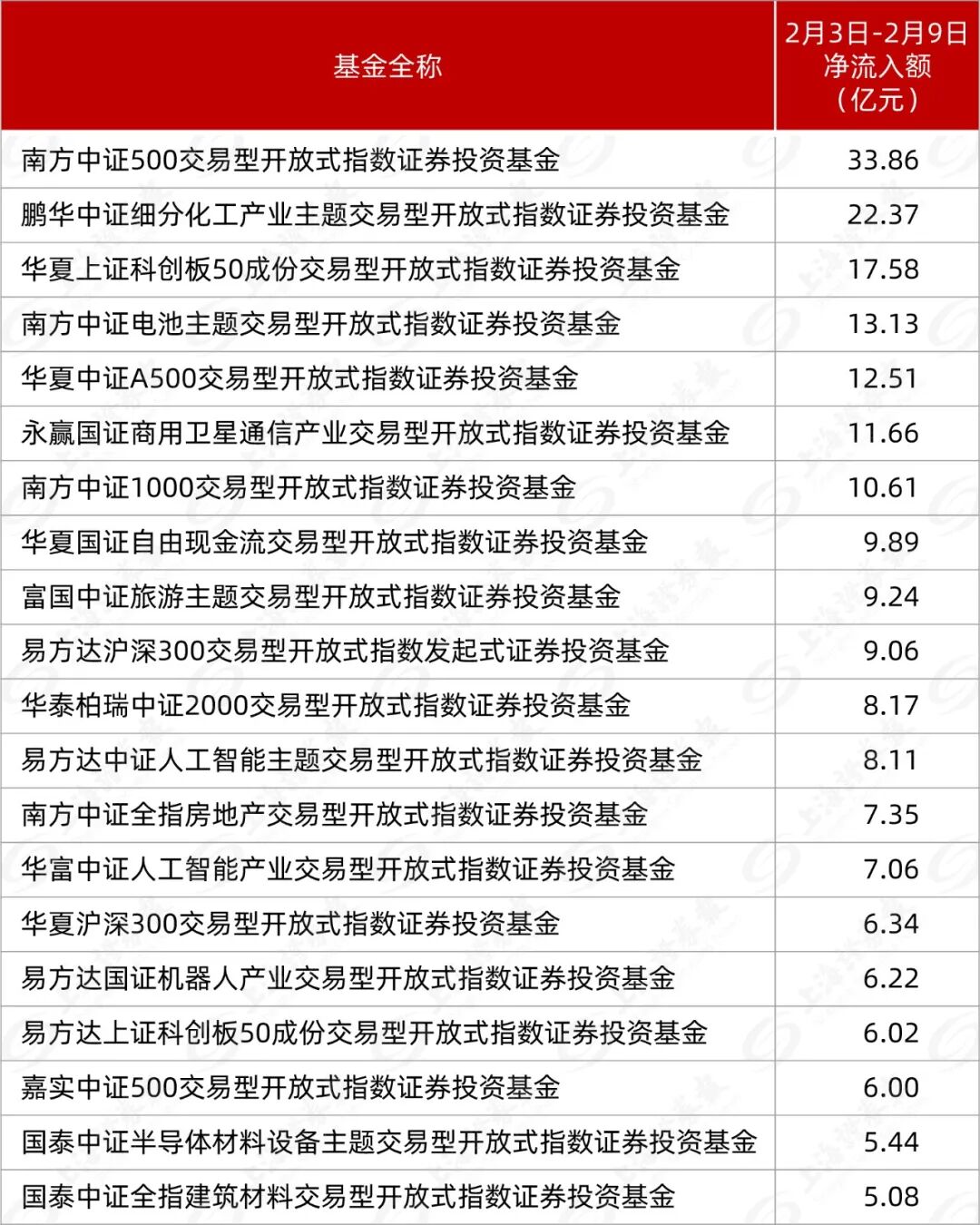
Group 1 - The core viewpoint of the articles indicates a significant shift in ETF fund flows, with a reversal from net outflows to substantial inflows, particularly in small and mid-cap style ETFs [1][2] - From February 3 to February 9, stock ETFs experienced a net inflow of 83.89 billion yuan, with notable contributions from the Southern CSI 500 ETF and other sector-specific ETFs [2][3] - The Southern CSI 500 ETF alone saw a net inflow of 33.86 billion yuan during this period, highlighting investor interest in mid-cap stocks [3] Group 2 - New ETFs are being launched, contributing to market liquidity, with four ETFs listed on February 9-10 and eight more scheduled for listing soon [4] - As of February 10, there are three ETFs in the issuance process and seven with confirmed issuance dates, focusing on industry themes such as technology and agriculture [5] - The number of new fund accounts opened in January 2026 surged by 168.72% year-on-year, reflecting increased investor enthusiasm for public funds [5] Group 3 - The market sentiment is improving, with expectations of stabilized risk appetite and reduced selling pressure from large funds, particularly in cyclical sectors [6] - There is a notable recovery in the demand for actively managed equity funds, with several funds exceeding 20 billion yuan in issuance scale [5][6]
突然大爆发 这只ETF冲涨停
Zhong Guo Ji Jin Bao· 2026-02-10 16:05
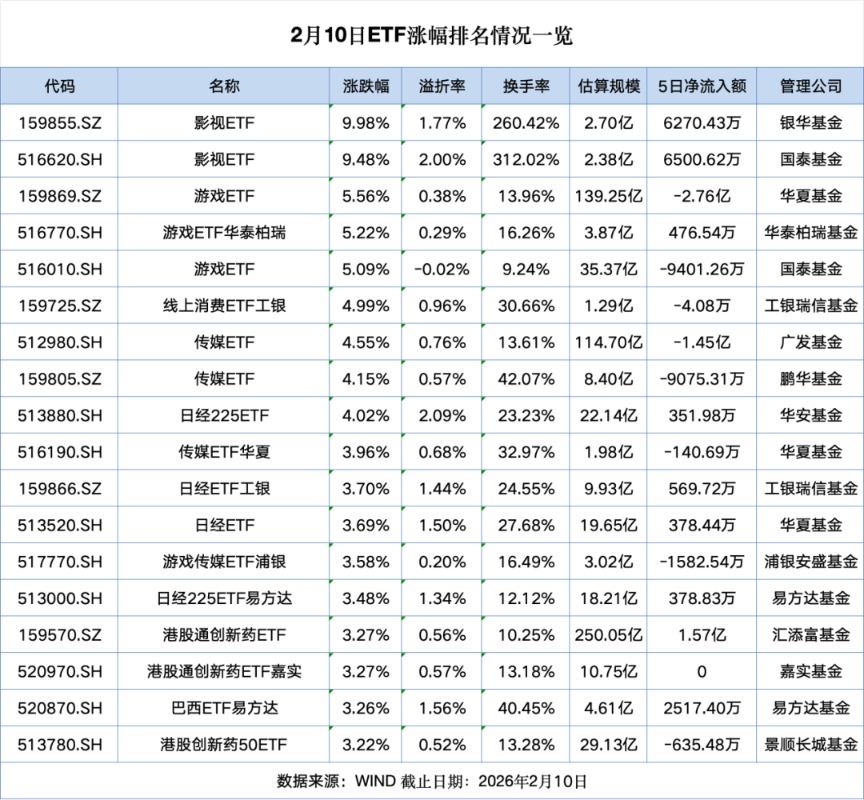
Market Overview - On February 10, 2026, A-shares showed mixed performance with the three major indices fluctuating. The AI application and film sectors experienced a surge, while the photovoltaic, real estate, and consumer sectors weakened [1] - A total of 847 ETFs rose in the market, with the film and gaming ETFs seeing significant increases of 9.98% and 5.56%, respectively [1] ETF Performance - The top-performing ETFs included: - Film ETF (159855.SZ) with a rise of 9.98%, estimated scale of 270 million, and a turnover rate of 260.42% [2] - Gaming ETF (159869.SZ) increased by 5.56%, with an estimated scale of 139.25 billion [2] - Conversely, 468 ETFs declined, with the satellite, real estate, and photovoltaic ETFs leading the losses [2][3] Film Sector Insights - The film sector saw a remarkable rally, with the CSI Film Index (930781) soaring by 9.25%. Major stocks like Jiechuan Co. and Huayi Brothers hit the daily limit [5] - The Silver华 Film ETF (159855) reached its daily limit with a 9.98% increase, while the Guotai Film ETF (516620) rose by 9.48%. Both ETFs experienced significant capital inflows [5][6] Gaming Sector Insights - The gaming sector also performed well, with the Animation and Gaming Index (930901) rising by 5.26%. Key stocks such as Light Media and Aofei Entertainment reached their daily limits [12][13] - The top gaming ETFs included: - 华夏 Gaming ETF (159869) with a 5.56% increase and an estimated scale of 2.93 billion [15] - 华泰柏瑞 Gaming ETF (516770) with a 5.22% increase [14] Fund Flow Analysis - On February 9, the A-share market saw a strong rally, with a net outflow of over 28 billion across all stock ETFs. The top inflow sectors included the CSI 500 Index, which saw a net inflow of 27.3 billion [16] - The CSI 500 ETF was highlighted as a core broad-based index reflecting mid to small-cap stocks in the A-share market [19]
149只权益基金净值创新高!押注AI者与稳健派谁更胜一筹?
2 1 Shi Ji Jing Ji Bao Dao· 2026-02-10 14:36
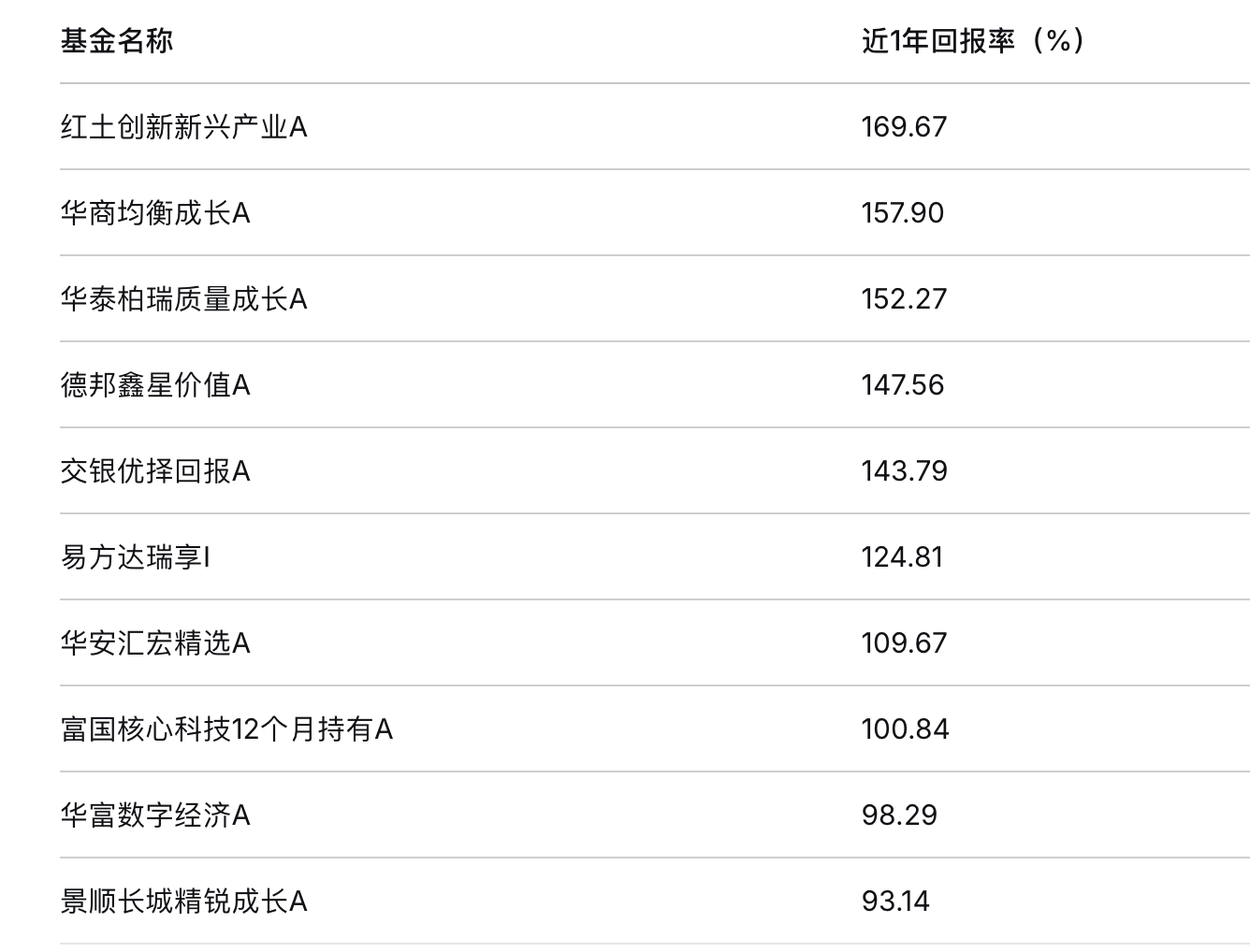
Core Viewpoint - The active equity funds in the A-share market have regained attention as 149 funds reached new net asset value highs, with some achieving over 100% returns in the past year, reflecting a structural market trend [1][3][8]. Fund Performance - As of February 9, 2026, 191 active equity funds recorded new highs in net asset value since inception, including 113 equity mixed funds, 56 flexible allocation funds, 20 active stock funds, and 2 balanced mixed funds [2]. - Excluding funds established for less than one year, 149 active equity funds achieved record highs in net asset value [3]. Investment Styles - The funds that reached new highs exhibit diverse investment styles, with some focusing on concentrated positions in AI-related sectors, leading to high returns but also significant volatility [4][5]. - Conversely, other funds prefer diversified holdings to mitigate risks, with examples showing low concentration in top holdings across various sectors [7]. Sector Preferences - Among the 149 funds, some have concentrated holdings in specific industries, resulting in notable performance when market conditions align. For instance, 7 funds had daily returns exceeding 7%, primarily those heavily invested in AI computing and applications [5][6]. - Funds like Jianxin Flexible Allocation and Huaxia Industry Prosperity have diversified their top holdings across multiple sectors, maintaining lower concentration ratios [7]. Long-term Performance - Several funds have consistently generated excess returns, particularly those heavily invested in the AI sector, with some achieving over 100% returns in the past year [8]. - Notable funds include Red Soil Innovation Emerging Industry A and Huashang Balanced Growth A, which have shown strong long-term performance [9]. Future Outlook - Fund managers express differing investment strategies moving forward. Some focus on the AI industry's expansion, while others emphasize balanced allocations across technology growth and manufacturing recovery [10][11]. - Specific strategies include targeting opportunities in AI applications, undervalued small-cap growth stocks, and the global manufacturing recovery linked to industrial metals [10][11].
红利板块集体上行,恒生红利低波ETF易方达(159545)、红利ETF易方达(515180)标的指数“三连阳”
Sou Hu Cai Jing· 2026-02-10 13:39
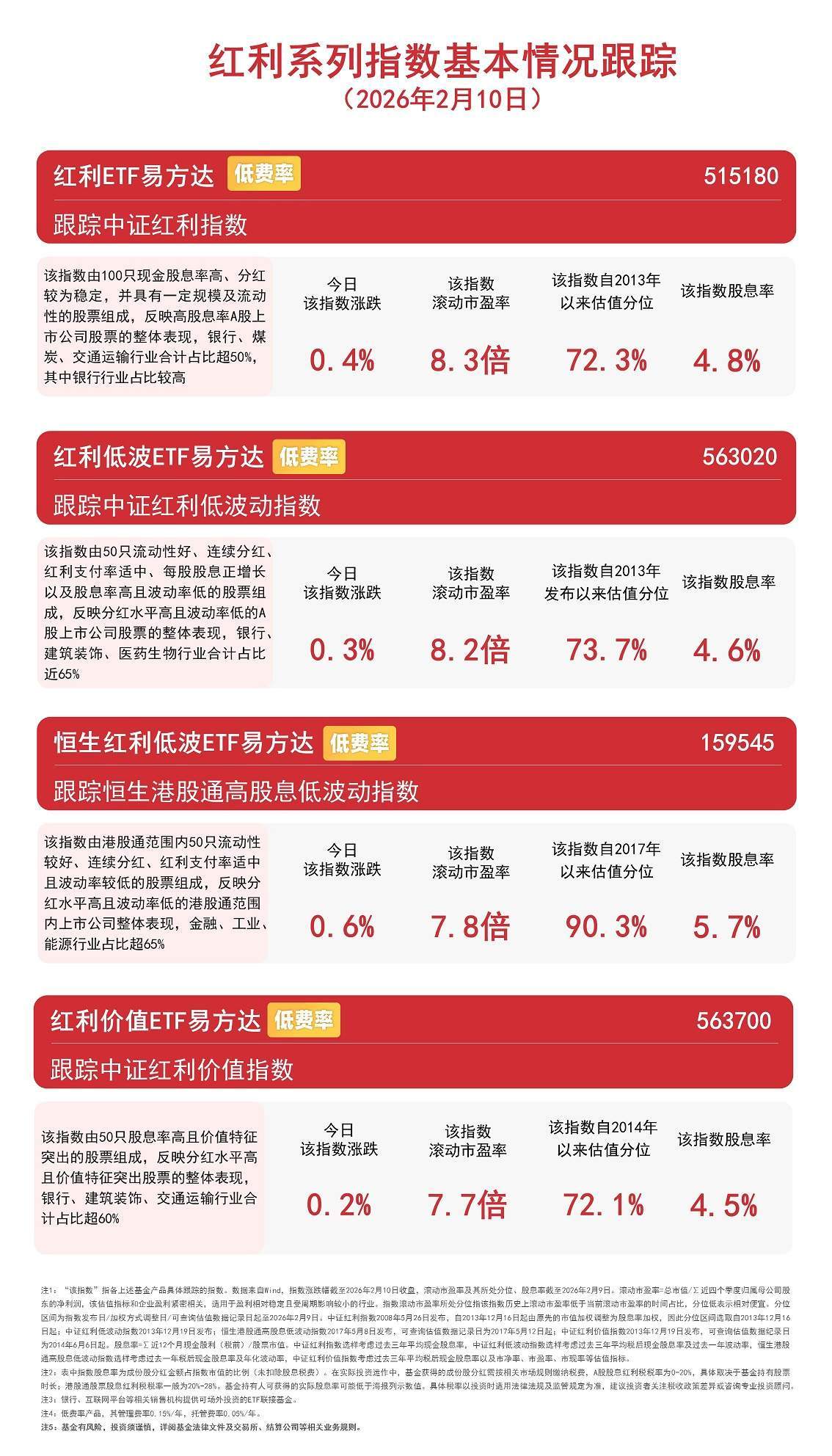
Group 1 - The Hang Seng High Dividend Low Volatility Index rose by 0.6%, while the CSI Dividend Index increased by 0.4%, achieving a "three consecutive days of gains" [1] - The E Fund Hang Seng High Dividend Low Volatility ETF (159545) saw a net subscription exceeding 10 million units today [1] - E Fund's dividend ETFs, including the Hang Seng High Dividend Low Volatility ETF and the Dividend ETF, received net inflows of 190 million yuan and 490 million yuan respectively over the past week [1] Group 2 - E Fund is currently the only fund company that implements low fee rates for all its dividend ETFs, with a management fee rate of 0.15% per year for its products [1] - The CSI Dividend Index consists of 100 stocks with high cash dividend yields and stable dividends, with over 50% of its composition from the banking, coal, and transportation sectors [3] - The CSI Low Volatility Dividend ETF tracks stocks with good liquidity, continuous dividends, and low volatility, with nearly 65% of its composition from the banking, construction decoration, and pharmaceutical sectors [3]
风止高息处,用红利资产坚守长期现金流
Jin Rong Jie· 2026-02-10 13:09
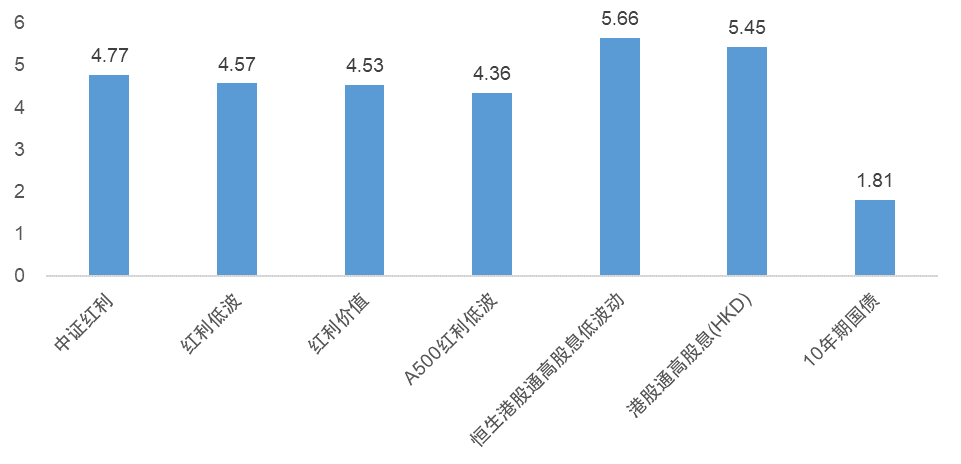
Group 1 - The core viewpoint emphasizes the importance of dividend assets that provide stable cash flow and defensive resilience in a low interest rate environment, particularly for ordinary investors seeking to navigate market fluctuations [1] Group 2 - Dividend indices are not merely single stock selections but a sophisticated toolbox that caters to diverse investment needs, with various indices in the A-share market focusing on different aspects and complementing each other [2] - The CSI Dividend Index is recognized as the benchmark for A-share dividend investment, selecting companies with stable dividends over the past three years and high dividend yields, comprising 100 quality stocks willing to share profits with shareholders [2] - The CSI Dividend Low Volatility Index combines high dividend characteristics with low volatility, resulting in better performance stability, while the CSI Dividend Value Index focuses on undervalued, fundamentally solid high dividend stocks to enhance valuation safety [2] - Data shows that the annualized volatility of the CSI Dividend Low Volatility Index over the past year is 11.34%, lower than that of the other two indices, and the rolling P/E ratio of the CSI Dividend Value Index is 7.73 times, lower than the other indices [2] Group 3 - The newly launched CSI A500 Dividend Low Volatility Index in 2025 achieves a dual breakthrough by focusing on quality leading companies while expanding industry coverage, significantly increasing weights in sectors like pharmaceuticals, oil and gas, and public utilities compared to previous indices [3] Group 4 - The Hong Kong dividend indices, influenced by market liquidity and dividend tax rules, generally exhibit higher dividend yields, with two core indices complementing A-share indices: the CSI Hong Kong Stock Connect High Dividend Investment Index focuses on high dividend characteristics, while the Hang Seng Hong Kong Stock Connect High Dividend Low Volatility Index combines high dividends with low volatility [6] - In a low interest rate environment, relying solely on deposits may not meet the rigid cash flow needs of daily expenses or support long-term asset appreciation, making dividend indices with stable dividends and solid fundamentals a suitable choice for ordinary investors [6] Group 5 - The "Dividend+" strategy aims to enhance the quality and sustainability of dividends by focusing on companies with stable profitability and ample free cash flow, ensuring that investors can anchor their returns more on long-term value [8] - The National Value 100 Index targets undervalued, high-margin quality stocks, while the National Free Cash Flow Index captures "cash cow" companies with sustainable cash flow generation capabilities [8] Group 6 - E Fund has diversified its dividend product line, offering four differentiated investment solutions tailored to various investor needs [10] - For investors seeking regular cash flow, E Fund offers ETFs with different dividend schedules, allowing for monthly dividends [11] - For those focused on long-term compounding value, the E Fund Dividend ETF, which tracks the CSI Dividend Index and has a scale exceeding 100 billion, provides opportunities for reinvestment of annual dividends [12] - Investors looking to enhance long-term returns can consider high-growth indices while maintaining a solid dividend base, balancing stability and potential returns [13] - For investors pursuing lower volatility and more stable performance on a high dividend basis, E Fund offers specific ETFs, while those seeking stronger valuation safety can consider value-focused ETFs [14]
从ETF巨震看中国式市场下一站
Sou Hu Cai Jing· 2026-02-10 12:10
Core Viewpoint - The A-share market has experienced significant fluctuations in early 2026, with a notable reduction of over 690 billion yuan in the overall ETF market, indicating a shift in capital preferences and regulatory intentions [1][2]. Group 1: ETF Market Overview - As of February 6, 2026, the total market size of ETFs has decreased by over 690 billion yuan since the beginning of the year, with stock ETFs accounting for a reduction of 690 billion yuan and bond ETFs decreasing by 107.6 billion yuan [2]. - The issuance of new ETFs has been limited, with only 24 new stock ETFs and 4 cross-border ETFs launched, while no new bond, commodity, or money market ETFs were issued [2]. Group 2: ETF Performance by Theme - The top 25 ETFs with the highest growth rates in terms of share volume include sectors such as oil and gas, general aviation, and semiconductor technology, with some ETFs showing growth rates exceeding 800% [4]. - In terms of absolute value increase, the leading ETFs are in the chemical, communication, and software sectors, indicating strong investor interest in these themes [5]. Group 3: ETF Outflows - The ETFs with the highest reduction rates in share volume include those in financial technology, engineering machinery, and solar energy, reflecting a trend of capital withdrawal from these sectors [6]. - The ETFs with the largest absolute value decrease are also concentrated in financial technology and engineering machinery, suggesting a significant shift in investor sentiment away from these themes [7].
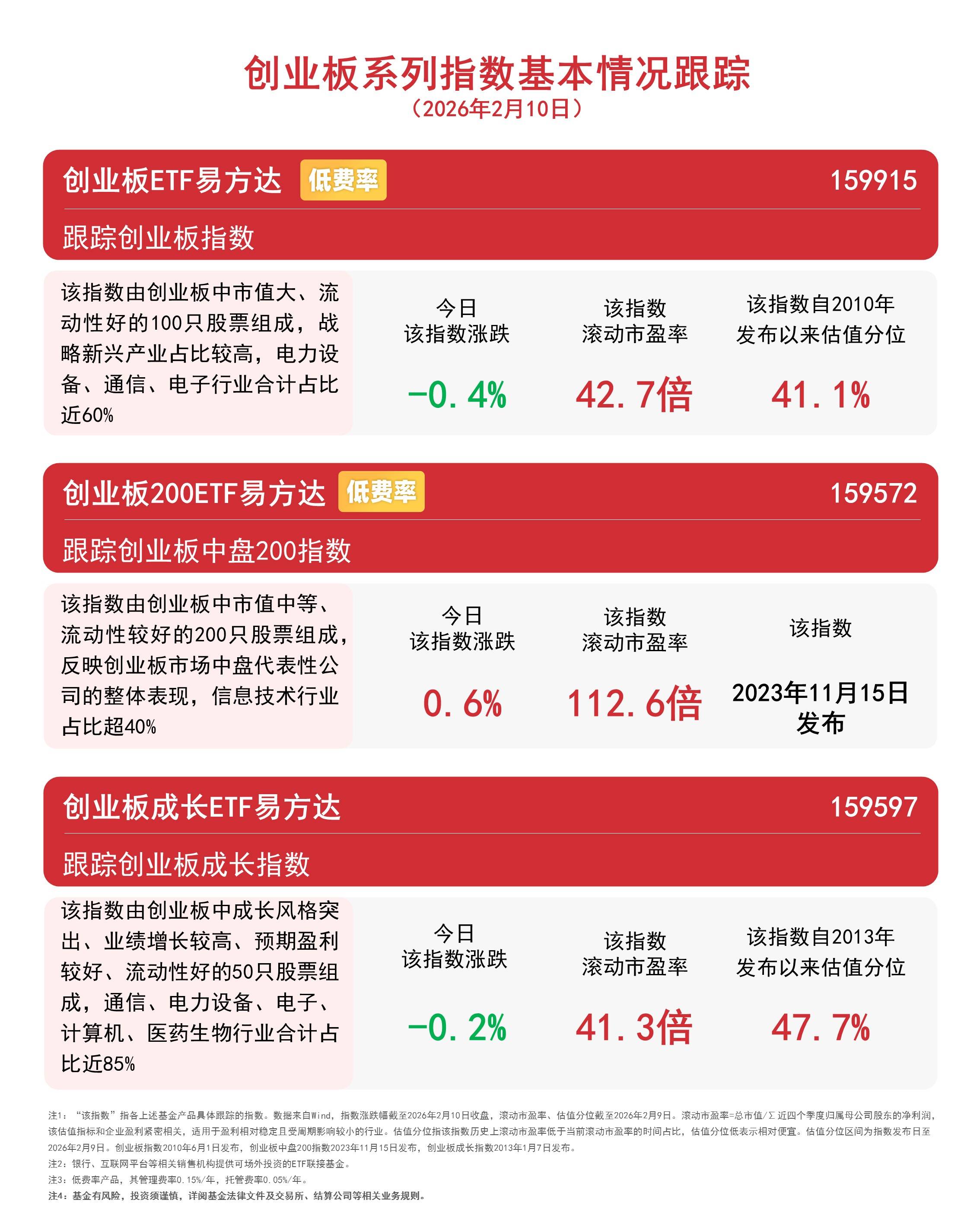
创业板指数小幅调整,创业板ETF易方达(159915)全天净申购超3000万份
Sou Hu Cai Jing· 2026-02-10 10:36
Group 1 - The article discusses the recent financial performance of a leading technology company, highlighting a revenue increase of 15% year-over-year, reaching $50 billion [5] - The company has reported a net income of $10 billion, which represents a 20% increase compared to the previous year [5] - The growth is attributed to strong demand for its cloud services and an increase in subscription-based revenue [5] Group 2 - The article notes that the company's stock price has risen by 25% over the past six months, reflecting positive investor sentiment [5] - Analysts predict continued growth in the upcoming quarters, with an expected revenue increase of 12% for the next fiscal year [5] - The company is also expanding its market presence in Asia, aiming to capture a larger share of the growing technology market in the region [5]