
华夏有色金属ETF

Search documents
百亿资金入场!投资方向变了
Shang Hai Zheng Quan Bao· 2026-02-10 16:39
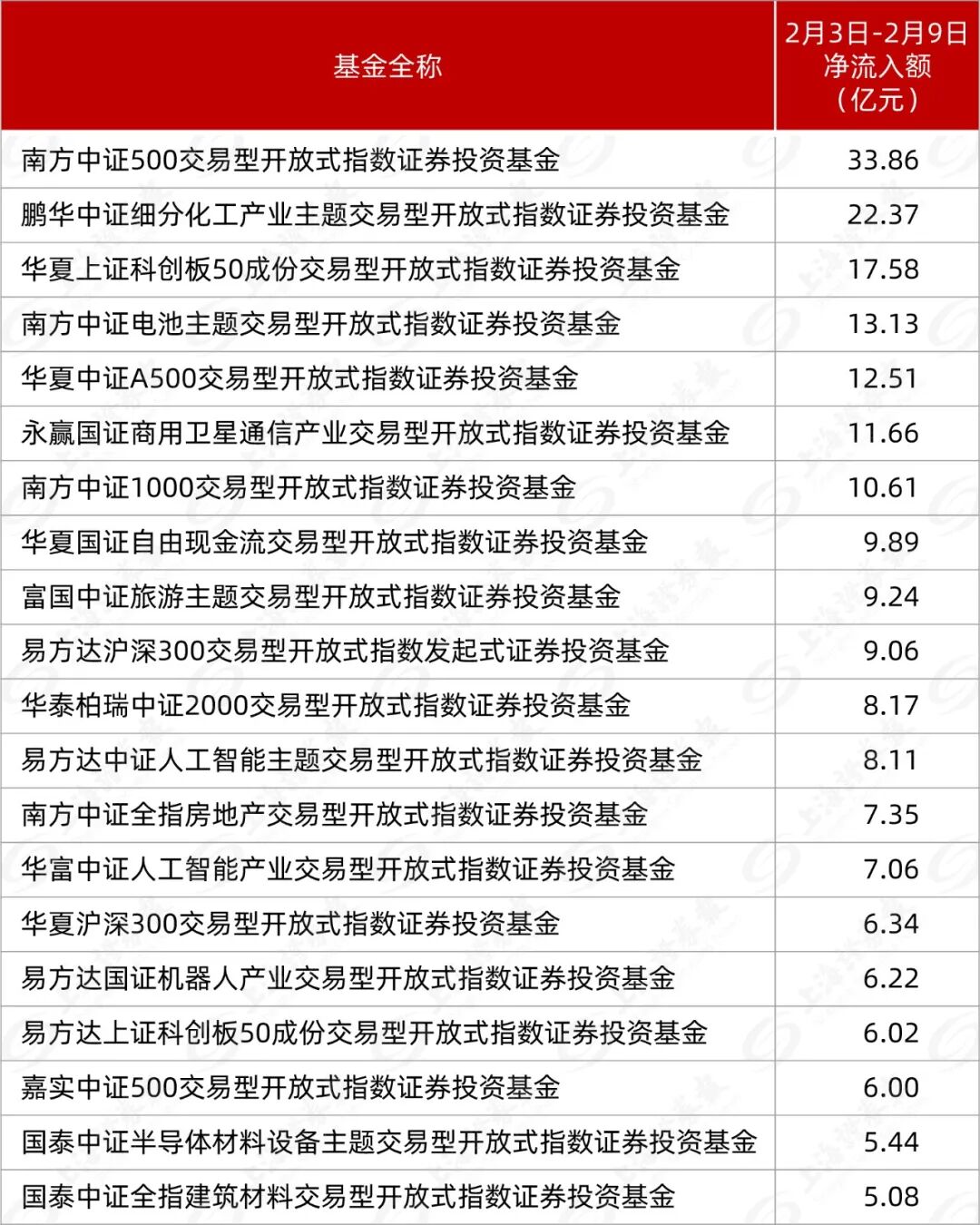
Group 1 - The core viewpoint of the articles indicates a significant shift in ETF fund flows, with a reversal from net outflows to substantial inflows, particularly in small and mid-cap style ETFs [1][2] - From February 3 to February 9, stock ETFs experienced a net inflow of 83.89 billion yuan, with notable contributions from the Southern CSI 500 ETF and other sector-specific ETFs [2][3] - The Southern CSI 500 ETF alone saw a net inflow of 33.86 billion yuan during this period, highlighting investor interest in mid-cap stocks [3] Group 2 - New ETFs are being launched, contributing to market liquidity, with four ETFs listed on February 9-10 and eight more scheduled for listing soon [4] - As of February 10, there are three ETFs in the issuance process and seven with confirmed issuance dates, focusing on industry themes such as technology and agriculture [5] - The number of new fund accounts opened in January 2026 surged by 168.72% year-on-year, reflecting increased investor enthusiasm for public funds [5] Group 3 - The market sentiment is improving, with expectations of stabilized risk appetite and reduced selling pressure from large funds, particularly in cyclical sectors [6] - There is a notable recovery in the demand for actively managed equity funds, with several funds exceeding 20 billion yuan in issuance scale [5][6]

资金流向逆转 新发ETF纷纷上市
Shang Hai Zheng Quan Bao· 2026-02-08 17:31
Group 1 - The reversal of significant net outflows from stock ETFs occurred, with a net inflow of 6.965 billion yuan on February 3, marking the first net inflow since January 14 [1] - From February 3 to 6, multiple broad-based ETFs saw substantial net inflows, including 2.549 billion yuan into the Huaxia Science and Technology Innovation 50 ETF and 1.763 billion yuan into the Huaxia CSI A500 ETF [1] - Conversely, resource-themed ETFs experienced notable outflows, with the Huaxia Nonferrous Metals ETF seeing a net outflow of 4.364 billion yuan [1] Group 2 - A total of 10 new ETFs were launched from February 2 to 6, with an additional 6 ETFs set to list between February 9 and 11, contributing to market liquidity [2] - Significant investments in newly launched ETFs were made by entities such as China Shipbuilding Group, which purchased 100 million yuan worth of shares in the Fortune CSI Selected Shipbuilding Industry ETF [2] - The ETF market is expected to continue expanding, with numerous new products being reported by fund companies, including the Hang Seng A-share Power Grid Equipment ETF [2]
1月14只ETF扩容逾百亿 释放什么信号?
2 1 Shi Ji Jing Ji Bao Dao· 2026-02-03 13:07
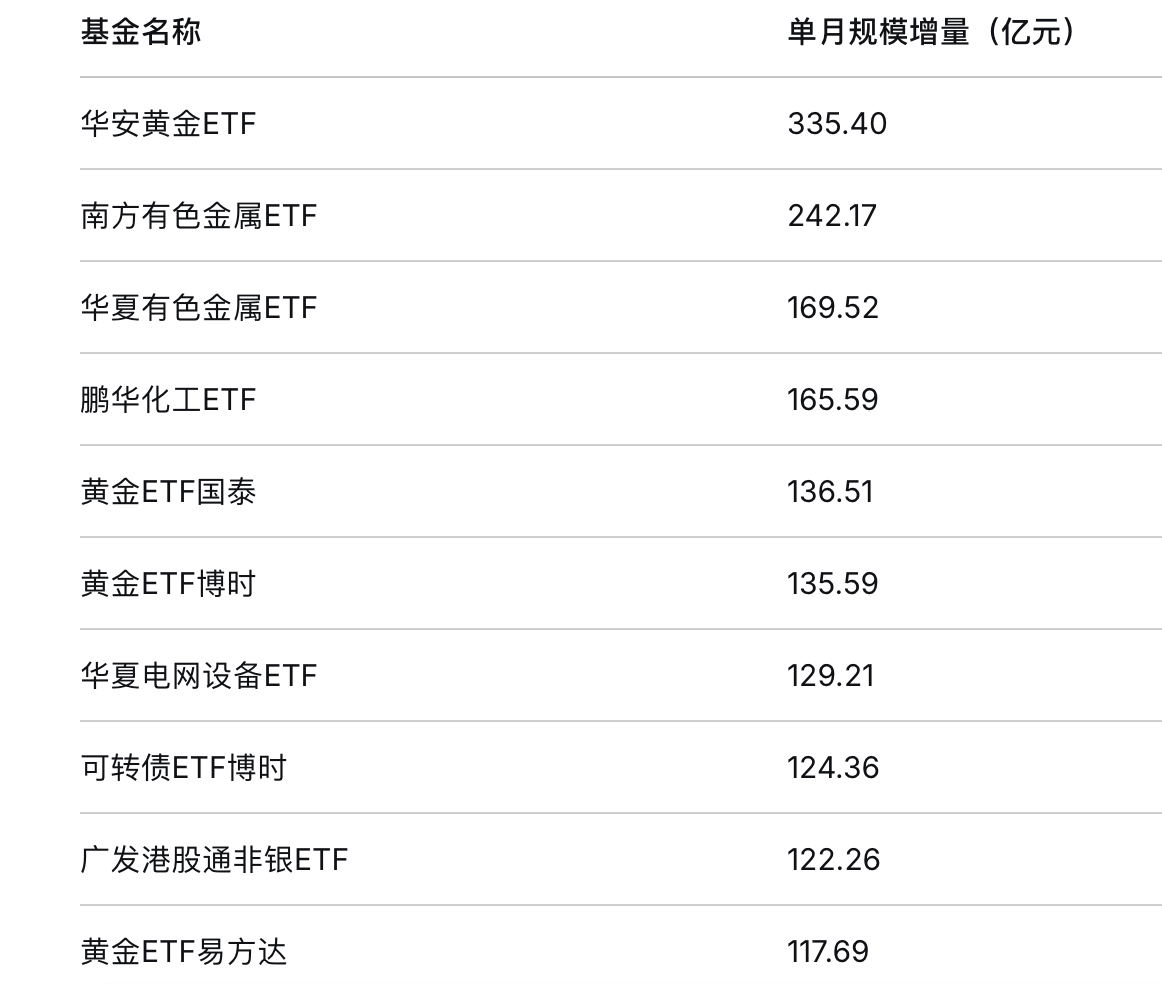
Core Insights - In early 2026, ETF fund flows showed significant divergence, with core broad-based ETFs experiencing large net outflows, while industry-themed ETFs gained popularity and saw substantial inflows [1][9] - The preference for industry-themed ETFs highlights a consensus among investors regarding the support from industrial policies and the positive fundamentals in specific sectors [1][6] ETF Performance - As of January 31, 2026, 14 ETFs had their scales increase by over 10 billion yuan, including 7 stock ETFs, 4 commodity ETFs, 2 cross-border ETFs, and 1 bond ETF [3] - Notable increases in scale included the Huaan Gold ETF (335.4 billion yuan), Southern Nonferrous Metals ETF (242.17 billion yuan), and Huaxia Nonferrous Metals ETF (169.52 billion yuan) [4][7] - The stock ETFs that saw significant scale growth were primarily industry-focused, indicating a market signal for bullish sentiment in related sectors [5][6] Market Trends - The overall ETF fund flow in January 2026 reflected a structural shift, with significant net outflows from core broad-based ETFs and inflows into industry-specific ETFs and gold [9][10] - The A-share market experienced a transition from exuberance to cooling, with the Shanghai Composite Index surpassing 4100 points before entering a consolidation phase [9][11] Investment Strategies - Institutions suggest that the market in February will likely experience volatility, with a focus on "growth and cyclical" dual strategies while being cautious of overheating sectors [11][12] - Recommended investment strategies include focusing on global manufacturing recovery, traditional industry improvements, and technology growth, particularly in AI applications and robotics [12][13]
新发ETF,背后“买主”浮出水面
Sou Hu Cai Jing· 2026-02-03 13:06
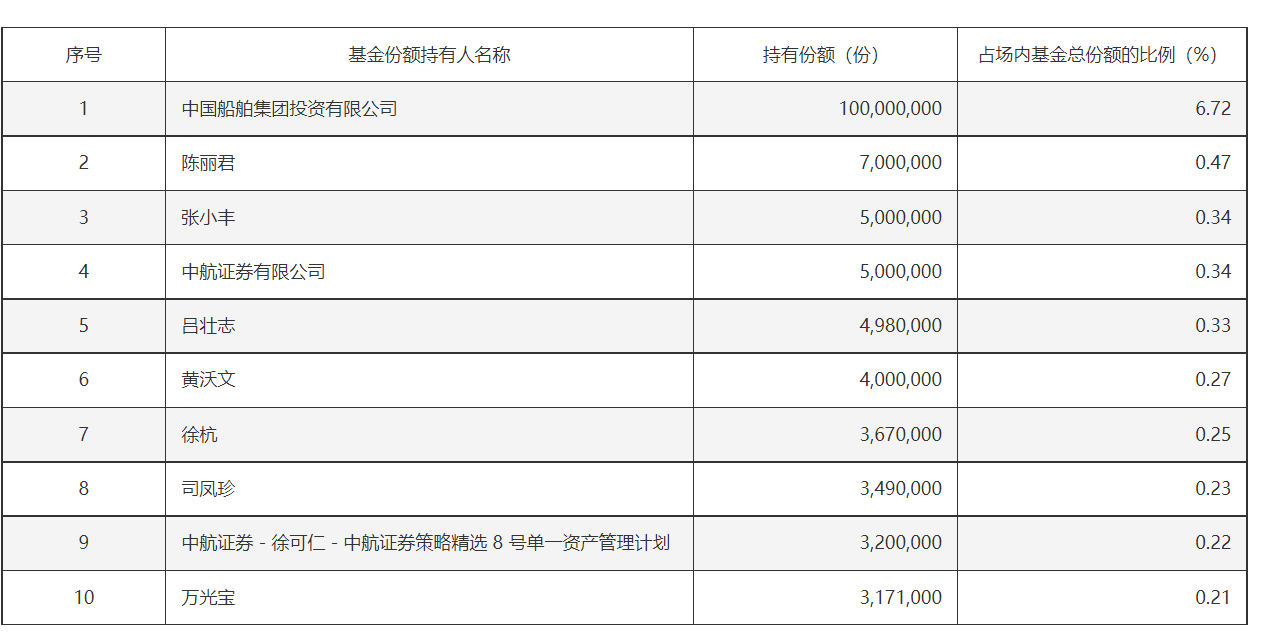
Group 1 - The core point of the article highlights the recent surge in newly launched ETFs, with significant investments from institutional players like China Shipbuilding Group Investment Co., which purchased 100 million yuan in the Fortune China Securities Intelligent Shipbuilding Industry ETF [2][3] - The Fortune China Securities Intelligent Shipbuilding Industry ETF is the first ETF focused on shipbuilding, comprising 40 representative listed companies in the shipbuilding industry, reflecting the overall performance of the sector [4][5] - As of February 2, 2023, the top ten holdings of the ETF include major companies such as China Power, China Shipbuilding, and China Ship Defense, indicating a strong focus on the industrial sector [5][7] Group 2 - Recent data shows a significant outflow from broad-based ETFs, with a net outflow of 16.349 billion yuan on February 2, 2023, particularly affecting the Southern CSI 500 ETF and Huatai-PB CSI 300 ETF [10] - In contrast, certain thematic industry ETFs have attracted substantial inflows, with the Guotai Communication ETF seeing a net inflow of 1.399 billion yuan on the same date [10] - From January 14 to February 2, 2023, stock-type ETFs experienced a cumulative net outflow exceeding 830 billion yuan, while some thematic ETFs attracted over 10 billion yuan each [10][11] Group 3 - The number of ETFs with assets exceeding 100 billion yuan has significantly decreased, with only three ETFs surpassing this threshold as of February 2, 2023 [11] - The market outlook suggests that sectors such as AI, solid-state batteries, robotics, and innovative pharmaceuticals are expected to present investment opportunities, with AI being a key focus area for 2026 [12]
1月权益类ETF净流出近8000亿元
Shang Hai Zheng Quan Bao· 2026-02-01 18:14
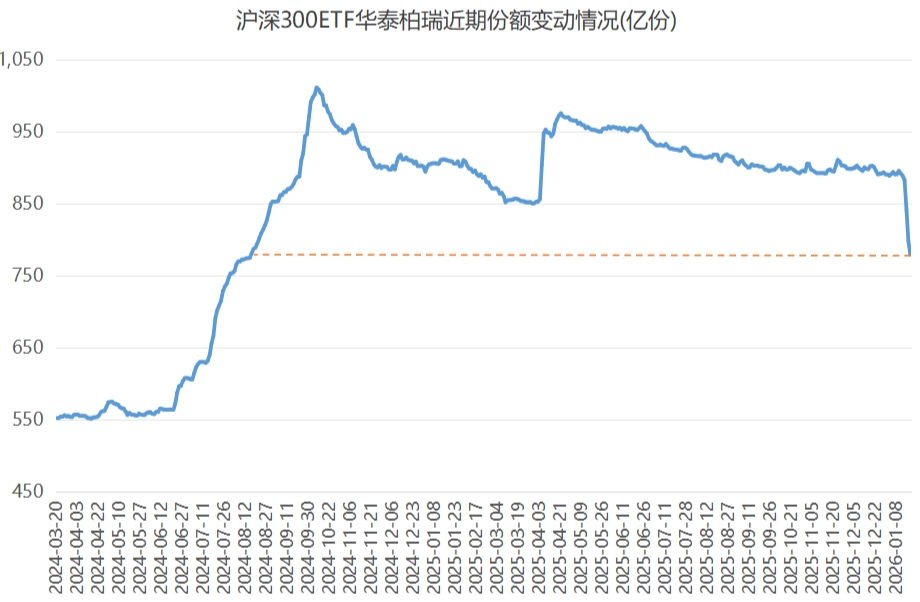
Core Viewpoint - The A-share market has experienced significant outflows from equity ETFs, with nearly 800 billion yuan withdrawn in January, primarily attributed to Central Huijin's reduction in holdings [1][3]. Group 1: ETF Outflows - In January, equity ETFs saw a total net outflow of approximately 800 billion yuan, with 12 broad-based ETFs experiencing outflows exceeding 110 billion yuan, totaling 939.74 billion yuan [1][2]. - The largest outflows were observed in the Huatai-PineBridge CSI 300 ETF, which saw a net outflow of 190.84 billion yuan, followed by the E Fund CSI 300 ETF with 152.66 billion yuan, and the Huaxia CSI 300 ETF with 137.59 billion yuan [2]. Group 2: Fund Size Changes - The affected ETFs have significantly decreased in size compared to the end of 2025, with the Huatai-PineBridge CSI 300 ETF shrinking from over 400 billion yuan to 229.5 billion yuan by the end of January [2]. - The E Fund CSI 300 ETF's size dropped from over 300 billion yuan to 148 billion yuan, while the Huaxia CSI 300 ETF fell from nearly 230 billion yuan to 95.3 billion yuan [2]. Group 3: Central Huijin's Role - Central Huijin is identified as the primary holder in 11 of the 12 ETFs that faced large redemptions, indicating a potential significant reduction in their holdings [3][5]. - For instance, Central Huijin held 735.13 billion shares of the Huatai-PineBridge CSI 300 ETF at the end of 2025, which decreased to 486.88 billion shares by January 30 [4]. Group 4: Market Trends and Inflows - Despite the outflows from broad-based ETFs, sectors such as non-ferrous metals, chemicals, and satellites have attracted substantial inflows, with new funds entering the market [1][6]. - In January, specific thematic ETFs like the Penghua Non-Ferrous Metals ETF and the Huaxia Non-Ferrous Metals ETF saw net inflows of 18.26 billion yuan and 14.84 billion yuan, respectively [6].
净值和规模共振 资源主题ETF疾驰
Shang Hai Zheng Quan Bao· 2026-01-28 18:38
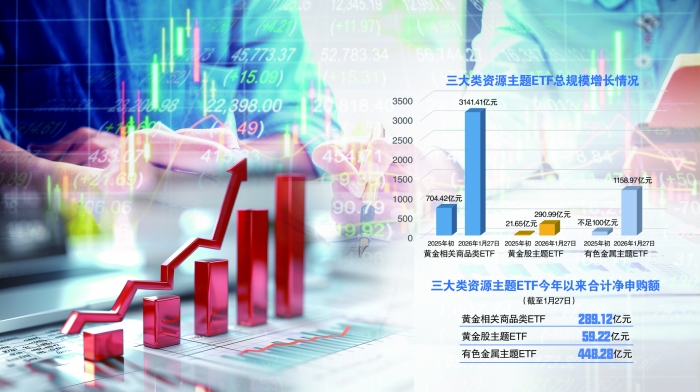
Group 1: Gold ETF Investment Surge - International gold prices have reached new highs this year, leading to a significant increase in gold-related ETFs, with the largest domestic gold ETF surpassing 120 billion yuan [2] - As of January 27, the net inflow into domestic gold-related ETFs reached 28.912 billion yuan, with a total scale of 314.141 billion yuan, up from 70.442 billion yuan at the beginning of 2025 [2] - Major gold ETFs include Huaxin Gold ETF at 120.572 billion yuan, Bosera Gold ETF at 52.177 billion yuan, and E Fund Gold ETF at 45.087 billion yuan [2] Group 2: Gold Stock Theme ETFs - Gold stock theme ETFs, focusing on companies related to the gold industry, have seen annual growth rates exceeding 50%, with a total net inflow of 5.922 billion yuan as of January 27 [3] - The scale of gold stock theme ETFs has increased from 2.165 billion yuan at the beginning of 2025 to 29.099 billion yuan by January 27, 2026, with Yongying Gold Stock ETF reaching 19.463 billion yuan [3] Group 3: Surge in Non-Ferrous Metal ETFs - Non-ferrous metal theme ETFs, which invest in resources like gold, copper, and aluminum, have also experienced significant growth, with net inflows of 44.828 billion yuan as of January 27 [5] - The total scale of non-ferrous metal theme ETFs reached 115.897 billion yuan, up from less than 10 billion yuan at the beginning of 2025, with notable ETFs including Southern Non-Ferrous Metal ETF at 41.444 billion yuan and Huaxia Non-Ferrous Metal ETF at 19.876 billion yuan [5] Group 4: Fund Manager Sentiment and Market Outlook - Fund managers have increased their focus on the non-ferrous metal sector, with a 2.3 percentage point increase in holdings as of the end of Q4 2025 compared to Q3 [6] - Factors driving the strong performance in the non-ferrous metal sector include low cycles in overseas real estate, manufacturing, and inventory, along with expectations of demand recovery post-Fed rate cuts [6] - The high profitability of the non-ferrous metal industry is expected to persist, with a shift towards growth attributes, although caution is advised regarding copper and aluminum in the short term [7]
股票ETF成交活跃 行业主题产品“吸金”显著
2 1 Shi Ji Jing Ji Bao Dao· 2026-01-27 13:18
Core Viewpoint - The A-share market is experiencing a cooling trend, leading to a significant shift in ETF investments from broad-based ETFs to sector-specific ETFs, with substantial net outflows from major broad-based ETFs and inflows into thematic ETFs [1][2][3] Summary by Sections ETF Market Dynamics - As of January 23, 2026, the total net outflow from the CSI 300 ETF and the CSI 1000 ETF reached 336.9 billion and 78 billion respectively since the beginning of the year, while thematic ETFs, particularly in resources and technology, attracted a total of 158.5 billion in net inflows [1][4] - The week of January 12-16 saw a net outflow of 141.6 billion from stock ETFs, which increased to 333.1 billion in the following week, marking a historically significant outflow [1][2] Performance of Broad-based vs. Thematic ETFs - From January 19-23, the CSI 300 ETF experienced a net outflow of 237.3 billion, while the CSI 1000 ETF and the SSE 50 ETF saw outflows of 71.7 billion and 36.1 billion respectively [2] - The net outflows for the CSI 300 ETF, CSI 1000 ETF, and SSE 50 ETF from January 5-23 were approximately 336.9 billion, 78 billion, and 56.2 billion respectively [2] Institutional Investor Behavior - Institutional investors hold a significant portion of ETFs, with over 1.5 trillion in ETF holdings reported as of the end of Q4 2025, primarily in the CSI 300 ETF [3] - Despite the outflows, the CSI 300 ETF remains a major holding for institutional investors, with an estimated 1 trillion still held in ETFs by these investors [3] Sector-specific ETF Inflows - Thematic ETFs, particularly in sectors like non-ferrous metals and chemicals, have seen strong inflows, with 50 ETFs collectively attracting 158.5 billion from January 5-23 [4][5] - Notably, three ETFs exceeded 10 billion in net inflows, including the Southern Non-ferrous Metals ETF (12.6 billion), Huaxia Power Grid Equipment ETF (11.9 billion), and Penghua Chemical ETF (10.3 billion) [5] Market Outlook - Analysts suggest that the shift in ETF investments indicates a structural rebalancing rather than a complete exit from the market, which may lead to deeper market trends and structural opportunities [7][8] - The current market dynamics suggest a transition from valuation recovery to a phase driven by fundamentals, with a focus on sectors with clear industry trends and performance support [8]
A股重磅!宽基ETF连续出现净赎回,有“巨无霸”份额回落至“924”行情之前,多只科创、创业板系ETF份额缩水,发生了啥?
Jin Rong Jie· 2026-01-20 08:57
Group 1 - Recent net redemptions in A-share broad-based ETFs have drawn market attention, with significant outflows recorded on January 15 and 16, totaling 687 billion and 863 billion respectively, marking the highest single-day outflows in history [1] - As of January 19, four out of six major broad-based ETFs saw their shares decline by over 10% in the last three trading days, with the largest, Huatai-PB CSI 300 ETF, dropping to 778.63 billion shares, a scale of approximately 369.2 billion, the lowest since August 2024 [1] - The ChiNext and STAR Market ETFs also experienced significant declines, with the E Fund STAR 50 ETF and E Fund ChiNext ETF seeing share reductions of 34.55% and 20.22% respectively [3] Group 2 - In contrast to the outflows from broad-based ETFs, certain commodity, cross-border, and narrow-based ETFs attracted significant inflows, with the Southern Nonferrous ETF being the only product to receive over 10 billion in net inflows, totaling 100.87 billion, driven by rising base metal prices [3] - Other ETFs such as Yongying Satellite ETF, Harvest Software ETF, and GF Media ETF also received net inflows exceeding 6 billion [3] - According to CITIC Securities, the impact of ETF redemptions on individual stocks was significant, with main board, ChiNext, and STAR Market stocks experiencing sell-offs of 946 billion, 334 billion, and 265 billion respectively during the peak outflow days [3] Group 3 - Regulatory measures have been implemented to cool down the market following rapid price increases and overheated sentiment, including raising the minimum margin requirement for margin trading from 80% to 100% [5][6] - The China Securities Regulatory Commission emphasized the need for comprehensive market monitoring and timely counter-cyclical adjustments to maintain market stability and prevent excessive volatility [6] - There are differing views on the long-term outlook for A-shares, with some analysts suggesting the potential for a slow bull market due to reforms, while others remain skeptical about escaping historical volatility patterns [7]





资金涌入有色板块,“金属风暴”席卷全球商品市场
Di Yi Cai Jing· 2026-01-15 02:26
Group 1: Market Overview - The global metal futures market has started 2026 strongly, with significant inflows into the non-ferrous metal sector driven by supply concerns and capital market dynamics [1] - Prices of copper and nickel have surged due to supply disruptions, with analysts indicating that the sustainability of this price increase will depend on global economic recovery and supply-demand rebalancing [1][2] Group 2: Nickel Market Dynamics - Nickel prices have reached a new high, primarily due to production cuts in Indonesia, the world's largest nickel supplier, which plans to reduce its output target from 379 million tons to 250 million tons, a decrease of 34% [2] - Despite the anticipated demand of 3.82 million tons and production of 4.09 million tons in 2026, the market is currently experiencing a supply surplus, with high inventory levels exerting long-term pressure on prices [2][3] Group 3: Copper Market Dynamics - Copper prices have also reached record highs, with a cumulative increase of over 5% since the beginning of 2026, driven by structural supply shortages and accelerating demand from sectors like electrification and data centers [4] - Events such as strikes at Canadian copper mines and delays in production at other sites have heightened concerns over copper supply [4][5] Group 4: Investment Trends - Significant capital has flowed into the non-ferrous metal sector, with various ETFs seeing substantial net inflows, indicating strong investor interest [7][8] - The domestic market has seen a historical breakthrough in the non-ferrous metal sector, with a 94.73% increase in the sector's A-share market in 2025, and many stocks doubling in value [7] Group 5: Future Outlook - Analysts suggest that macroeconomic factors, including lower-than-expected U.S. inflation data and geopolitical uncertainties, will continue to support the valuation of the non-ferrous metal sector [8] - The Chinese government's encouragement of mergers and restructuring in key industries like aluminum and copper smelting is expected to enhance industry concentration and pricing power, providing a long-term boost to the sector [8]
两大赛道,猛烈“吸金”
Shang Hai Zheng Quan Bao· 2026-01-09 04:51
Group 1: Non-ferrous Metals Sector - The non-ferrous metals sector has seen significant inflows into ETFs, with notable funds like Wanji Industrial Non-ferrous ETF surpassing 10 billion yuan in scale [1][3] - As of January 7, 2026, major non-ferrous metal ETFs received substantial net inflows: Southern Non-ferrous Metal ETF (2.39 billion yuan), Huaxia Non-ferrous Metal ETF (1.44 billion yuan), and Dachen Non-ferrous ETF (0.93 billion yuan) [3] - Factors driving the non-ferrous metals sector include improved supply-demand dynamics and the global trend of "re-industrialization," alongside geopolitical tensions affecting resource supply [1][4] Group 2: Commercial Aerospace Sector - The commercial aerospace sector has also attracted significant investment, with the Yongying Satellite ETF rising by 6.2% and leading the market [5][6] - As of January 7, 2026, the Yongying Satellite ETF and the Zhaoshang Satellite Industry ETF each gained over 1 billion yuan in net inflows since the beginning of the year [6] - The commercial aerospace sector is expected to accelerate in 2026, driven by policy support, IPOs of leading companies, and heightened strategic value due to geopolitical factors [6]