礼来

Search documents
恒瑞医药:HRS9531注射液、HRS-5817注射液获得药物临床试验批准通知书
Zhi Tong Cai Jing· 2026-01-05 13:32
Core Viewpoint - Company has received approval from the National Medical Products Administration for clinical trials of HRS9531 and HRS-5817 injection solutions, which are expected to enhance its product pipeline in the obesity treatment market [1][2] Group 1: HRS9531 Injection - HRS9531 is a novel dual agonist targeting GLP-1R and GIPR, designed to regulate glucose and lipid metabolism, suppress appetite, and enhance insulin sensitivity, thereby improving blood sugar levels and aiding weight loss [1] - The global sales forecast for ZEPBOUND, a similar drug by Eli Lilly, is approximately $4.926 billion for 2024, indicating a significant market opportunity for HRS9531 [1] - Cumulative R&D investment for HRS9531 has reached approximately 51.854 million yuan [1] Group 2: HRS-5817 Injection - HRS-5817 is a self-developed Class 1 chemical drug, showing weight loss effects in preclinical studies on obese animal models with good safety profiles [2] - Currently, there are no approved drugs targeting the same receptor as HRS-5817 in both domestic and international markets, highlighting its potential uniqueness [2] - Cumulative R&D investment for HRS-5817 has reached approximately 2.489 million yuan [2]

恒瑞医药(01276):HRS9531注射液、HRS-5817注射液获得药物临床试验批准通知书
智通财经网· 2026-01-05 13:29
Core Viewpoint - Heng Rui Medicine has received approval from the National Medical Products Administration for clinical trials of HRS9531 and HRS-5817 injection solutions, indicating progress in their drug development pipeline [1][2] Group 1: HRS9531 Injection - HRS9531 injection is a novel dual agonist targeting GLP-1R and GIPR, aimed at regulating glucose and lipid metabolism, suppressing appetite, and enhancing insulin sensitivity, which can improve blood sugar levels and aid in weight loss [1] - The only other drug targeting the same indications globally is Eli Lilly's Zepbound, which is expected to generate approximately $4.926 billion in global sales in 2024 [1] - The total R&D investment for the HRS9531 project has reached approximately 51.854 million yuan [1] Group 2: HRS-5817 Injection - HRS-5817 injection is a self-developed Class 1 chemical drug, showing weight loss effects in preclinical studies on obese animal models with good safety profiles [2] - Currently, there are no approved drugs targeting the same receptor as HRS-5817 in both domestic and international markets [2] - The cumulative R&D investment for HRS-5817 injection has reached approximately 2.489 million yuan [2]
诺和诺德赢得司美在华核心专利:不改变专利今年到期后对销售增长负面影响的预期
Xin Lang Cai Jing· 2026-01-04 10:33
Core Insights - Novo Nordisk won a favorable ruling from the Supreme People's Court of China regarding the core patent for semaglutide, which is significant for the company's operations in China and reflects the government's support for pharmaceutical innovation [1][2] - Despite the legal victory, Novo Nordisk faces challenges with the expiration of the semaglutide patent, which is set to expire in March 2026, potentially impacting global sales growth [2] Patent and Legal Developments - The patent dispute began in June 2021 when East China Pharmaceutical filed a request to invalidate the core patent for semaglutide, which was initially ruled invalid by the National Intellectual Property Administration in September 2022 [1] - The Supreme People's Court's ruling confirms the validity of the patent, concluding a legal battle that lasted over four years [2] Market Performance and Competition - Semaglutide generated $25.5 billion in revenue in the first three quarters of 2025, positioning it to become the top-selling drug in the global pharmaceutical industry [2] - In China, there are currently 10 domestic applications for semaglutide biosimilars under review, with several companies, including East China Pharmaceutical and Lijun Group, advancing their products through clinical trials [3] - The competitive landscape is intensifying with the emergence of biosimilars and other GLP-1 drugs, such as Eli Lilly's tirzepatide, which has been offered at significantly reduced prices [3]
亚洲资产爆发 港股百度涨超8% GPU新贵狂飙110% 人民币升破6.97 贵金属反弹
2 1 Shi Ji Jing Ji Bao Dao· 2026-01-02 03:14
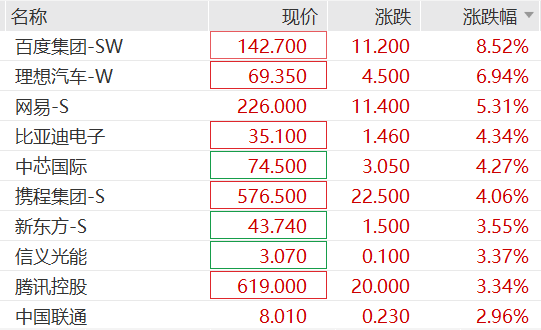
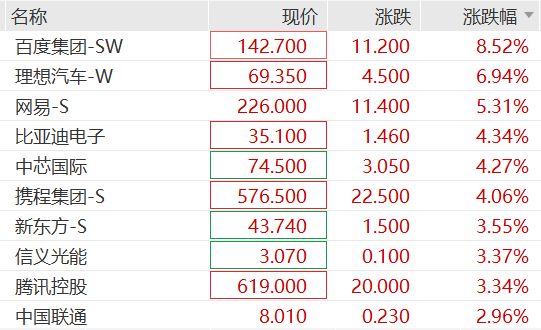
Market Overview - Asian assets experienced a significant surge at the beginning of 2026, with the offshore and onshore RMB both breaking the 6.97 mark against the USD, reaching the highest level since May 2023 [4] - The Hang Seng Index opened high on the first trading day of the year, rising nearly 1.8%, while the Hang Seng Tech Index increased by 3.4% [1] Company Performance - Baidu Group saw a notable increase of over 8.5%, surpassing last year's high, following the announcement of plans to spin off Kunlun Chip for a Hong Kong listing [1] - Other notable performers included Li Auto, which rose nearly 7%, and NIO and Leap Motor, both increasing by over 1% [1] - NetEase and Tencent also experienced gains, with NetEase up over 5% and Tencent up over 3% [1] Stock Highlights - The following companies showed significant stock performance: - Baidu Group-SW: Current price 142.700, up 8.52% [2] - Li Auto-W: Current price 69.350, up 6.94% [2] - NetEase-S: Current price 226.000, up 5.31% [2] - BYD Electronics: Current price 35.100, up 4.34% [2] - Semiconductor Manufacturing International Corporation: Current price 74.500, up 4.27% [2] New Listings - The newly listed company, Biren Technology, saw its stock surge by 110% after revealing significant revenue growth from 62 million yuan in 2023 to 337 million yuan in 2024, with a backlog of 822 million yuan in orders [2] Global Market Trends - The KOSPI index in South Korea opened higher, with Samsung Electronics reaching a historical high, increasing by 3.2% [3] - The biopharmaceutical company Celltrion's stock rose by 10% following a $473 million manufacturing agreement with Eli Lilly [3] Precious Metals - Precious metals experienced a collective rise, with spot gold increasing by 0.7% and achieving a 64% increase for the entire year of 2025, marking the largest annual gain since 1979 [7] - Spot silver rose by 1.8%, reaching a historical high of $83.62, with a 147% increase in 2025, the largest recorded annual gain [7] - Platinum and palladium both rose by 1.6%, with platinum reaching a historical high and annual gains of 127%, while palladium saw a 76% increase, the best in 15 years [7] Investment Sentiment - There is a growing interest from overseas "long money" in Chinese assets, with a notable shift towards technology and biotechnology sectors [7] - Major financial institutions like Goldman Sachs, UBS, and JPMorgan predict a sustained rebound for Chinese assets in 2026, driven by profit growth, accelerated innovation, and attractive valuations [7]

亚洲资产爆发,港股百度涨超8%,GPU新贵狂飙110%,人民币升破6.97,贵金属反弹
2 1 Shi Ji Jing Ji Bao Dao· 2026-01-02 03:00
Group 1 - Asian assets experienced a significant surge at the beginning of 2026, with the Renminbi breaking the 6.97 mark against the US dollar, reaching its highest level since May 2023 [3] - The Hang Seng Index opened high on the first trading day of the year, rising nearly 1.8%, while the Hang Seng Tech Index increased by 3.4%, driven by strong performances from companies like Baidu, which rose over 8.5% [1] - New energy vehicle companies saw a broad increase, with Li Auto rising nearly 7% and NIO and Leap Motor both gaining over 1% [1] Group 2 - The stock of Wall Street's new company, Bilan Technology, surged by 110% after announcing significant revenue growth from 62 million yuan in 2023 to 337 million yuan in 2024, with a backlog of orders worth 822 million yuan [2] - Samsung Electronics' stock reached a historical high, increasing by 3.2%, as the CEO highlighted the competitive edge of their HBM4 technology [2] - The KOSPI index in South Korea also opened higher, reflecting positive market sentiment [2] Group 3 - Precious metals saw a collective rise, with spot gold increasing by 0.7% and achieving a remarkable annual gain of 64% in 2025, the largest since 1979 [7] - Spot silver rose by 1.8%, reaching a historical high of $83.62, with a staggering annual increase of 147% in 2025 [7] - Platinum and palladium both rose by 1.6%, with platinum hitting a historical peak and achieving a 127% annual increase, while palladium recorded a 76% gain, marking its best performance in 15 years [8] Group 4 - The FTSE China A50 index futures surged past the 15,360 mark, gaining over 0.5% during the trading session [5] - Overseas "long money" is actively positioning in Chinese assets, with a notable increase in interest towards the Chinese stock market, particularly in technology and biotechnology sectors [9] - Major financial institutions like Goldman Sachs, UBS, and JPMorgan predict a sustained rebound for Chinese assets in 2026, driven by profit growth, accelerated innovation, and attractive valuations [9]
亚洲资产爆发,港股百度涨超8%,GPU新贵狂飙110%,人民币升破6.97,贵金属反弹
21世纪经济报道· 2026-01-02 02:50
Market Overview - Asian assets experienced a significant surge at the beginning of 2026, with the Renminbi breaking the 6.97 mark against the US dollar, reaching a new high since May 2023 [1][2] - The Hang Seng Index opened high on the first trading day of the year, rising nearly 1.8%, while the Hang Seng Tech Index increased by 3.4% [1] Company Highlights - Baidu Group saw a notable increase of over 8.5%, reaching a new high after announcing plans to spin off Kunlun Chip for a Hong Kong listing [1] - Other companies in the new energy vehicle sector, such as Li Auto, NIO, and Leap Motor, also experienced gains, with Li Auto rising nearly 7% [1] - NetEase increased by over 5%, while Alibaba and Tencent both rose approximately 3% [1] Stock Performance - Baidu Group's stock price reached 142.70, with a rise of 11.20, reflecting an 8.52% increase [2] - Li Auto's stock price was 69.35, up by 4.50, or 6.94% [2] - New stock Biran Technology saw a dramatic increase of 110% after its hearing materials indicated a revenue growth from 62 million yuan in 2023 to 337 million yuan in 2024, with a backlog of 822 million yuan in orders [2] Currency and Commodity Trends - The offshore and onshore Renminbi both surpassed the 6.97 mark against the US dollar, marking a significant appreciation [3] - Precious metals saw a collective rise, with spot gold increasing by 0.7% and silver by 1.8%, with silver reaching a historical high of $83.62 [5] - Platinum and palladium both rose by 1.6%, with platinum achieving a 127% increase in 2025, the highest in 15 years for palladium [5] Institutional Insights - There is a growing interest from overseas investors in Chinese assets, particularly in technology and biotechnology sectors [6] - Major financial institutions like Goldman Sachs, UBS, and JPMorgan predict a sustained rebound for Chinese assets in 2026, driven by profit growth, accelerated innovation, and attractive valuations [6]

医药生物行业周报(12月第4周):医疗器械有望开启大航海时代-20251229
Century Securities· 2025-12-29 10:39
Investment Rating - The report does not explicitly state an investment rating for the industry, but it suggests a positive outlook for the medical device sector, indicating potential for growth and innovation [2][3]. Core Insights - The medical device sector is expected to enter a "great sailing era" with the initiation of centralized procurement for drug-coated balloons and urological intervention consumables, indicating a significant policy shift that could benefit domestic manufacturers [3]. - The report highlights that after extensive centralized procurement, domestic medical device manufacturers have gained substantial market share, leading to a concentration of the industry towards leading enterprises, which are expected to benefit from scale effects and favorable export policies [3]. - The report emphasizes the potential for domestic medical device companies to replicate the path of domestic pharmaceutical companies, using centralized procurement to drive innovation and enhance global competitiveness [3]. Market Weekly Review - The pharmaceutical and biotechnology sector experienced a slight decline of 0.18% from December 22 to December 26, underperforming compared to the Wind All A index (2.78%) and the CSI 300 index (1.95%) [8]. - Among sub-sectors, raw materials (2.05%), blood products (1.28%), and medical research outsourcing (0.77%) showed gains, while hospitals (-2.82%), pharmaceutical distribution (-1.8%), and offline pharmacies (-1.3%) faced declines [8]. - Notable individual stock performances included Hongyuan Pharmaceutical (59.4%), Luyuan Pharmaceutical (37.3%), and Huakang Medical (21.1%) with significant gains, while ST Bailin (-18.5%), Huaren Health (-15.8%), and Haiwang Biological (-14.9%) saw substantial losses [11]. Industry News and Key Company Announcements - The National Medical Products Administration announced new regulations for the management of medical device export sales certificates, effective May 1, 2026, which aims to facilitate the export of Chinese medical devices [13]. - The centralized procurement for high-value medical consumables has officially started, marking a significant policy development in the industry [13]. - Sanofi reached an acquisition agreement with Dynavax for $2.2 billion, highlighting ongoing consolidation in the pharmaceutical sector [13]. - Notable collaborations and agreements were reported, including licensing agreements and partnerships among various pharmaceutical companies, indicating active M&A and collaboration trends in the industry [16][17].
从“借船出海”到“造船远航”:2025药企出海十大关键词
Xi Niu Cai Jing· 2025-12-29 09:34
Core Insights - The article discusses the transformation of Chinese pharmaceutical companies from merely selling products to actively participating in global value chains, with a significant increase in outbound licensing deals reaching over $100 billion by November 2025, a 75% increase year-on-year [3][4]. Group 1: Major Transactions - In 2024, major deals like Hengrui's $5 billion GLP-1 product and a $12.5 billion upfront payment from Pfizer to 3SBio for a dual antibody drug highlight the trend of billion-dollar collaborations becoming standard [4][6]. - Hengrui's partnership with GSK for $12.5 billion includes not only current products but also options for 11 early-stage projects, indicating a shift towards long-term strategic partnerships [4][10]. Group 2: Licensing Strategies - Chinese companies are moving from "one-off sales" to retaining rights in core markets while sharing rights in other regions, allowing them to benefit from both local and global markets [5][6]. - The new strategy involves keeping rights for the Greater China region while sharing development costs and rights for other markets, enhancing long-term revenue potential [6][10]. Group 3: Innovative Drug Categories - Antibody-drug conjugates (ADCs) and dual antibodies are emerging as key areas for Chinese companies, with significant deals reflecting their growing importance in the global market [6][7]. - The shift from traditional cancer drugs to innovative metabolic drugs like GLP-1 is notable, with companies like FOSUN and Hansoh making substantial deals in this area [14][15]. Group 4: Independent Global Expansion - Companies are increasingly opting for "self-driven" global expansion rather than simply licensing out, as seen with Kangfang Biopharma's approach to leading its own global clinical trials [8][9]. - This strategy, while riskier, offers higher potential returns compared to traditional licensing agreements [9]. Group 5: Platform-Based Collaborations - The trend is shifting from selling individual products to offering entire R&D platforms, as demonstrated by Hengrui's collaboration with GSK, which includes options for future projects [10][11]. - This model allows companies to monetize their ongoing research capabilities, enhancing their value proposition to partners [10][11]. Group 6: Regulatory and Pricing Developments - The introduction of a drug pricing registration system by China's National Healthcare Security Administration is expected to alleviate concerns about domestic pricing affecting global pricing strategies [12][13]. - This regulatory change has led to increased foreign investment in Chinese R&D, with a 28% year-on-year growth in 2025 [13]. Group 7: Market Valuation Changes - The market's evaluation criteria for Chinese innovative drug companies have shifted from focusing on generic drug revenues to assessing the value of outbound pipelines and global clinical progress [19][21]. - The average price-to-earnings ratio for innovative drug companies in China has risen significantly, reflecting a revaluation of their market potential [21].


ETF盘中资讯|跨国药企发起降价潮?港股通创新药逆市走低,520880溢价高企!机构力挺国产创新药:重点关注2026年Q1
Sou Hu Cai Jing· 2025-12-29 03:25
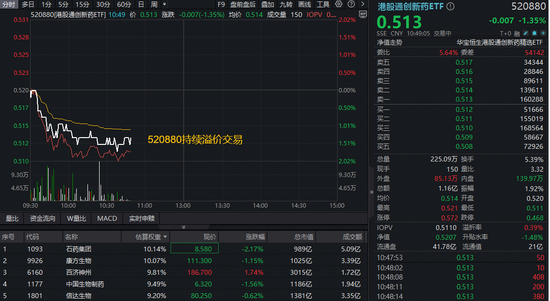
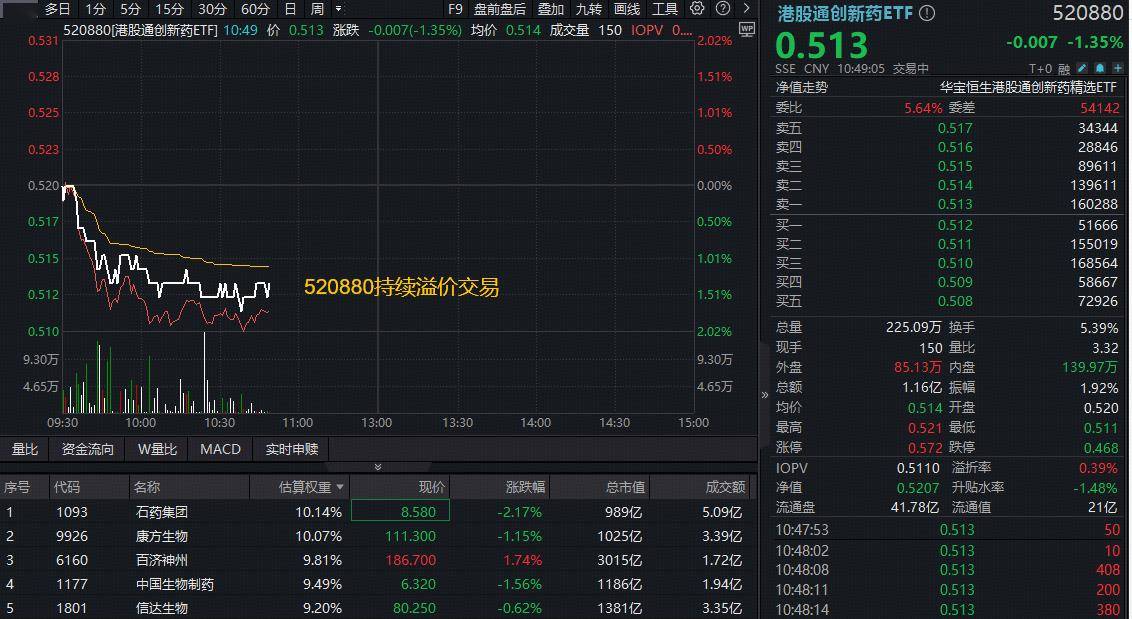
Core Viewpoint - The Hong Kong stock market opened positively, with the Hang Seng Index rising, but the innovative drug sector unexpectedly declined, indicating potential volatility in this segment [1]. Group 1: Market Performance - The Hang Seng Index showed a rise, with the Hang Seng Technology Index increasing by over 2% at one point [1]. - The Hong Kong Stock Connect innovative drug ETF (520880) fell by more than 1.5% during trading, with major stocks like CSPC Pharmaceutical Group and CanSino Biologics dropping over 1% [1]. Group 2: Investment Sentiment - Despite the decline, the Hong Kong Stock Connect innovative drug ETF (520880) continued to trade at a premium, suggesting that there may be investors looking to buy on dips [2]. - Analysts remain optimistic about domestic innovative drugs, noting that the past two years have been significant for Chinese innovative drugs entering international markets, with record highs in both the number and value of licensing deals [3]. Group 3: Future Outlook - The industry is expected to see continued positive catalysts in 2026, including major industry conferences, significant business development transactions, and breakthroughs in new technologies [3]. - The innovative drug sector has been in a phase of adjustment since September, with risks being sufficiently released, leading to improved cost-effectiveness for investments [3]. Group 4: ETF Characteristics - The Hong Kong Stock Connect innovative drug ETF (520880) has a significant concentration in leading companies, with the top ten stocks accounting for over 72% of its weight, indicating a strong representation of the innovative drug sector [4]. - The ETF is designed to exclude CXO companies, focusing solely on innovative drug firms, which enhances its appeal to investors seeking pure exposure to this segment [3][4].
跨国药企发起降价潮?港股通创新药逆市走低,520880溢价高企!机构力挺国产创新药:重点关注2026年Q1
Xin Lang Cai Jing· 2025-12-29 03:11
Core Viewpoint - The Hong Kong stock market opened positively on December 29, with the Hang Seng Index rising, but the innovative drug sector unexpectedly declined, indicating potential investment opportunities amidst market fluctuations [1][7]. Group 1: Market Performance - The Hang Seng Index and the Hang Seng Tech Index saw gains, with the latter rising over 2% at one point [1][7]. - The Hong Kong Stock Connect Innovative Drug ETF (520880) experienced a drop of over 1.5%, with major stocks like CSPC Pharmaceutical Group falling more than 2% [1][7]. - Despite the decline, the Innovative Drug ETF continued to trade at a premium, suggesting that there may be buying interest from investors looking to capitalize on lower prices [1][8]. Group 2: Industry Developments - A price reduction trend initiated by multinational pharmaceutical companies Novo Nordisk and Eli Lilly is expected to take place by the end of 2025, with actual transaction prices nearly halved compared to six months ago [3][10]. - Experts suggest that this price setting is a defensive strategy ahead of the expiration of the patent for semaglutide in 2026 and the impending competition from domestic innovative drugs and biosimilars [3][10]. - Many institutions remain optimistic about domestic innovative drugs, highlighting that the past two years have been significant for Chinese innovative drugs entering international markets, with record-high licensing transactions [3][10]. Group 3: Investment Opportunities - The Hong Kong Stock Connect Innovative Drug sector has been in a phase of adjustment for over three months, with high-level risks being fully released, thus improving the cost-effectiveness of investments [3][10]. - The Hang Seng Stock Connect Innovative Drug ETF (520880) and its associated funds are recommended for investors, as the underlying index has unique advantages, including a focus on pure innovative drug companies and a high concentration of leading firms [3][10][11]. - The top ten holdings in the ETF account for over 72% of the index, indicating a strong representation of leading innovative drug companies [4][11].