
联发科

Search documents
三大客户,抢爆台积电2nm
半导体行业观察· 2026-01-11 04:23
公众号记得加星标⭐️,第一时间看推送不会错过。 科技新闻网站《wccftech》报导,台积电2纳米投片(tape-out)量已达3纳米制程的1.5倍,苹果、 高通与联发科是主要客户。分析师指出,台积电2纳米制程的空前需求,使台积电在人工智能(AI) 加速器市场上维持95%市占率。 报导说,今年下半年,台积电2纳米制程的量产芯片将上市。联发科宣布,已于去年完成其首款2纳米 制程系统单芯片(SoC)的投片。如同这家台湾IC设计公司,一些其他客户也排队下单台积电新一代 制程,最新消息指出,台积电2纳米制程的投片量已是3纳米制程的1.5倍,显示其需求十分强劲。 知名半导体爆料人士@jukan05分享摩根大通的报告指出,台积电2纳米制程需求动能强劲,投片量是 3纳米制程的1.5倍。拜2纳米时代来临之赐,台积电预料在AI加速器市场,仍维持逾95%的市占率。 即使是英特尔,也在其自家产品中增加采用台积电2纳米制程。英特尔近期才在拉斯维加斯举行的消 费性电子展(CES)上,首度展示采用其18A技术的Panther Lake Core Ultra系列3芯片。 报导说,由于AI狂潮,预定今年底,台积电2纳米制程晶圆的月产量将达1 ...


AI眼镜群雄并起 带旺台积电、联发科、玉晶光、达迈等运营
Jing Ji Ri Bao· 2026-01-10 23:15
Group 1 - The demand for AI smart glasses is increasing due to the growing popularity of AI applications and the maturity of lightweight technology, prompting major tech companies like Meta, Google, Samsung, Xiaomi, and Baidu to accelerate product launches [1] - Meta has announced a pause on international market expansion for its AI smart glasses due to high demand in North America and limited production capacity, indicating that consumer demand exceeds market expectations [1] - The introduction of AI language models and advancements in lightweight technology have significantly improved previous pain points of AR and VR glasses, making them more appealing to consumers [1] Group 2 - Major players in the AI smart glasses market include Meta, Google, Samsung, Xiaomi, and Baidu, with Meta leading the market by integrating silicon-based liquid crystal technology and expanding multimodal visual AI features [2] - Meta's use of mature LCoS technology in its new AI smart glasses addresses past issues faced by AR and VR glasses, resulting in a market share of 70% for Meta [2] - Other brands are expected to follow Meta's technological advancements, although they will need to overcome patent barriers set by Meta, indicating a competitive landscape in the AI smart glasses market [2]

抢攻Wi-Fi 8
3 6 Ke· 2026-01-10 09:03
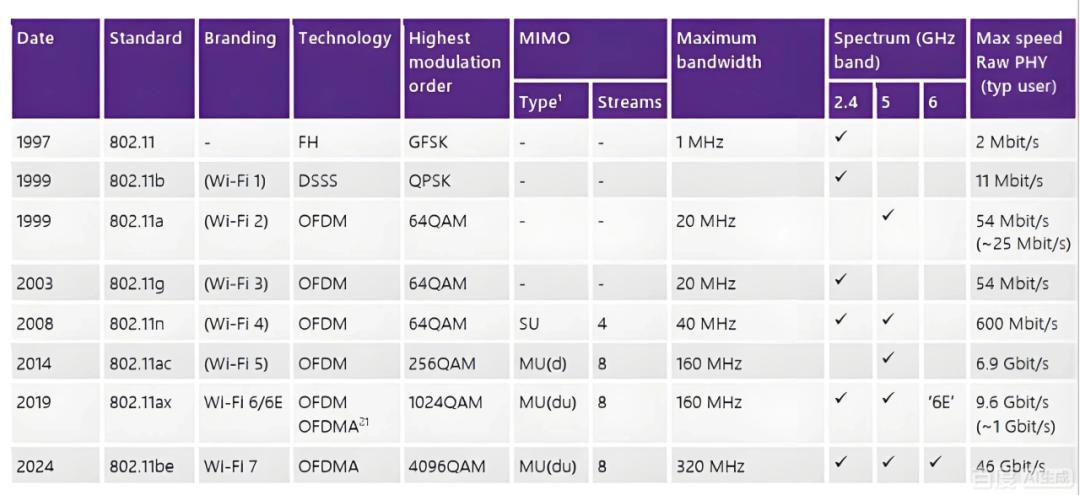
Group 1 - The CES 2026 showcased products labeled "Wi-Fi 8" from major industry players like MediaTek, Broadcom, and ASUS, indicating a strong interest in this emerging technology despite the standard not being finalized yet [1] - The Wi-Fi technology has evolved significantly since its inception in 1991, with various standards being introduced over the years, each improving speed and reliability [2][3][4] - The introduction of Wi-Fi 7 (802.11be) is expected to revolutionize wireless communication with features like 320MHz channels and a theoretical peak speed of 46Gbps, catering to high-bandwidth applications [5][10] Group 2 - Wi-Fi 8 is being developed to focus on "Ultra High Reliability" (UHR), addressing the need for stable connections in complex environments, which is crucial for applications like remote surgery and industrial automation [13][15] - Major companies are already preparing for Wi-Fi 8, with MediaTek launching its Filogic 8000 series solutions, which enhance signal coverage and reduce latency for various devices [23][25][26] - Broadcom is adopting a dual-track strategy by offering complete Wi-Fi 8 chip solutions and licensing its IP to accelerate the adoption of edge AI technologies [27][30] Group 3 - Qualcomm is leading the standardization efforts for Wi-Fi 8, focusing on enhancing reliability and low latency in complex environments, with plans to release a full suite of Wi-Fi 8 products by 2026 [32][33] - Intel is in the prototype validation stage for its Wi-Fi 8 chips, emphasizing AI integration to improve network performance in high-density scenarios [34] - The successful adoption of Wi-Fi 8 will depend on a robust ecosystem involving chip manufacturers, device makers, and standard organizations, with various companies already showcasing Wi-Fi 8 compatible products [35][36]


抢攻 Wi-Fi 8
半导体行业观察· 2026-01-10 03:37
Core Viewpoint - The article highlights the evolution of Wi-Fi technology, focusing on the upcoming Wi-Fi 8 standard, which aims to enhance reliability and performance in wireless communication, addressing the growing demand for stable connections in various applications such as IoT, AR/VR, and industrial automation [11][14][40]. Group 1: Wi-Fi Technology Evolution - Wi-Fi technology originated in 1991 with the creation of "WaveLAN" by NCR, leading to the establishment of the 802.11 standard by IEEE in 1997, which initially offered a maximum speed of 2 Mbps [2]. - The introduction of 802.11b and 802.11g standards in the early 2000s increased speeds to 11 Mbps and 54 Mbps respectively, facilitating the initial adoption of Wi-Fi in home environments [2]. - The 802.11n standard (Wi-Fi 4) released in 2009 significantly improved speeds to 600 Mbps and introduced MIMO technology, paving the way for multi-device connectivity [3]. - The 802.11ac standard (Wi-Fi 5) launched in 2013 further enhanced speeds to 6.9 Gbps, catering to high-definition content needs [4]. - Wi-Fi 6 (802.11ax) introduced in 2019 improved network efficiency by supporting multiple devices simultaneously, achieving speeds of 9.6 Gbps [5]. Group 2: Wi-Fi 7 and Market Adoption - Wi-Fi 7 (802.11be) was officially commercialized in December 2023, supporting theoretical peak speeds of 46 Gbps and low latency for applications like cloud gaming and XR [5][8]. - The adoption of Wi-Fi 7 is expected to accelerate, with shipments projected to rise from 26.3 million units in 2024 to 66.5 million in 2025, and reaching 117.9 million by 2026 [8][9]. - By 2026, total shipments of Wi-Fi 7 devices are anticipated to reach 1.1 billion units, including significant contributions from IoT and healthcare devices [9]. Group 3: Wi-Fi 8 Development and Features - Wi-Fi 8, defined by the IEEE 802.11bn task group, aims to provide ultra-high reliability (UHR) and is expected to address the limitations of previous standards in complex environments [11][14]. - Key features of Wi-Fi 8 include enhanced coordination between access points, congestion avoidance mechanisms, and improved modulation schemes, which collectively aim to ensure stable connections even under high-density conditions [17][18]. - The standard is projected to be finalized by March 2028, with industry players already beginning to develop products based on its draft specifications [19][20]. Group 4: Industry Players and Strategies - MediaTek has launched its Filogic 8000 series for Wi-Fi 8, focusing on applications in gateways and various devices, with plans for mass production by the end of 2027 [21][25]. - Broadcom is employing a dual-track strategy by offering complete Wi-Fi 8 chip solutions while also licensing its IP to accelerate adoption across various sectors [26][31]. - Qualcomm is leading the standardization efforts and plans to unveil a comprehensive Wi-Fi 8 product lineup at the 2026 Mobile World Congress, emphasizing reliability and low latency [33][34]. - Intel is focusing on AI integration within Wi-Fi 8, enhancing network performance in high-density environments through intelligent resource management [35].
康希通信:Wi-Fi 8技术标准预计于2027年底确立、2028年正式发布
Zheng Quan Ri Bao Wang· 2026-01-09 13:15
证券日报网1月9日讯 ,康希通信在接受调研者提问时表示,据行业公开信息,Wi-Fi8技术标准预计于 2027年底确立、2028年正式发布,近期行业内已开始讨论Wi-Fi8的初步愿景,为未来万物智联进一步奠 定基础。从目前的认知来看,Wi-Fi8相比Wi-Fi7的核心提升不完全在峰值速率,而聚焦于高密度/长距离 场景下的可靠性、覆盖与并发效率。根据以往惯例推演,业界通常会在2028年协议标准正式批准之前就 采取行动,草案规范和早期Wi-Fi8芯片和原型机已处于陆续研发和推出阶段。近日,部分头部SoC厂商 纷纷在2026年1月举行的国际消费电子展(CES)上发布初期版本的Wi-Fi8相关芯片和设备,为未来 2028年协议的最终落地提前布局和准备。如联发科推出Wi-Fi8芯片平台,可广泛应用于网关、终端设备 等场景并赋能AI应用,为各类产品带来高可靠性的连接能力;博通则发布Wi-Fi8接入点芯片,不仅可支 撑工业环境中机器人、传感器的可靠连接,也能为消费级Mesh网络提供更流畅的漫游体验。公司已前 瞻性布局Wi-Fi8,于2025年正式启动Wi-Fi8FEM预研工作;计划2026年推出支持相关协议的样品,同步 配合 ...

115万片晶圆,决定2026年的“芯片战”,苹果、联发科、OpenAI火线入局
3 6 Ke· 2026-01-09 12:15
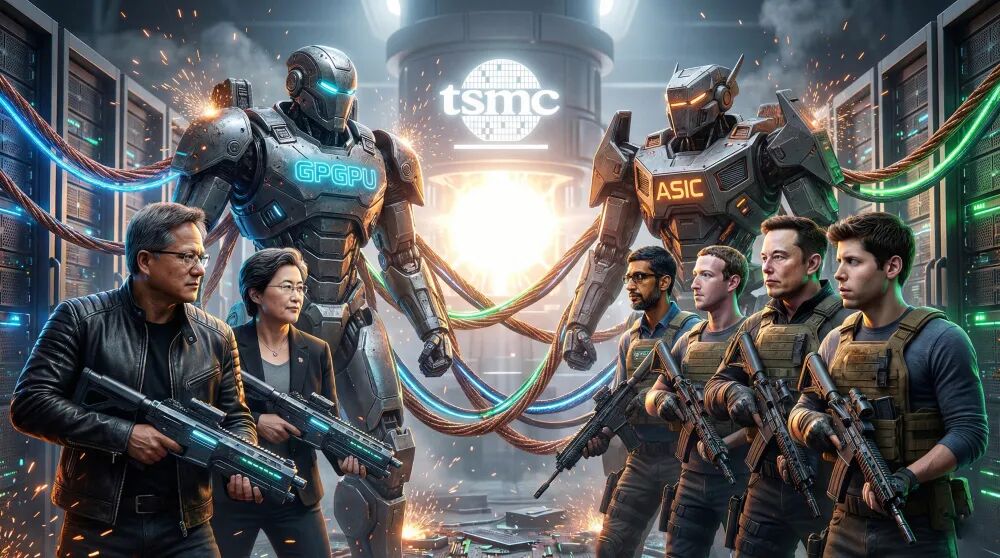
Core Insights - The article discusses the ongoing competition between GPGPU (General-Purpose Graphics Processing Units) and ASIC (Application-Specific Integrated Circuits) in the AI chip market, emphasizing the critical role of TSMC's CoWoS (Chip on Wafer on Substrate) advanced packaging capacity in determining the future landscape of AI computing power [1][10][36] - Huang Renxun predicts that data center revenues will reach $500 billion over the next six quarters, highlighting the significant financial stakes involved in this competition [1] Group 1: Competition Dynamics - The demand for computing power in AI is expanding, with advanced architectures, process technologies, and advanced packaging being the three key paths to progress [3][4] - NVIDIA has established itself as the leader in GPGPU through its CUDA ecosystem, while Google’s TPU represents a successful ASIC approach, showcasing the efficiency of custom architectures for specific algorithms [3][4] - The competition between GPGPU and ASIC is not merely about performance but also involves considerations of total cost of ownership (TCO) and the ability to optimize financial outcomes for large-scale users [27][28] Group 2: CoWoS Capacity and Supply Chain - TSMC's CoWoS capacity is projected to increase significantly, from approximately 12,000 wafers per month in December 2023 to an estimated 120,000 wafers per month by December 2026, equating to a total capacity of about 1.15 million wafers for AI chips [12][13] - The allocation of CoWoS capacity will be influenced by a complex interplay of technology, business, and geopolitical factors, with NVIDIA expected to secure nearly 60% of the capacity due to its early investments and strong demand [13][15] - The distribution of CoWoS wafers among major clients indicates that NVIDIA will receive around 660,000 wafers, while AMD and the ASIC camp will receive significantly less, highlighting the competitive advantage held by NVIDIA [16][20] Group 3: Performance and Revenue Implications - The performance of AI chips is closely tied to the area of the silicon interposer, with larger interposer areas allowing for more transistors and higher performance [25][26] - NVIDIA's GPUs are expected to command higher prices, with projections of $30,000 to $50,000 per unit, while ASICs like Google's TPU are priced significantly lower, impacting revenue dynamics in the AI chip market [26] - The article concludes that NVIDIA, leveraging its CoWoS capacity, is positioned to capture over 70% of the AI acceleration chip market revenue and more than 90% of the profits, reinforcing its dominant market position [26][34] Group 4: Future Outlook - The future of AI computing is likely to be a hybrid model combining both GPGPU and ASIC technologies, with cloud giants using NVIDIA GPUs for cutting-edge model training and self-developed ASICs for cost-sensitive large-scale inference [35] - The ongoing competition is characterized as a "boundary war," where both GPGPU and ASIC ecosystems will coexist, with TSMC as the ultimate beneficiary due to its critical role in providing CoWoS capacity [36]

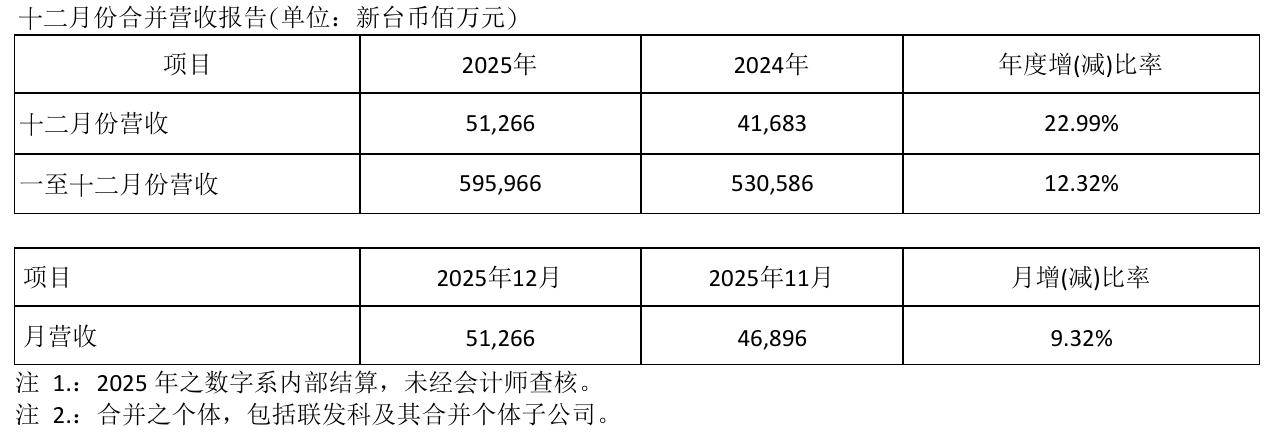
联发科2025年营收5959.66亿元新台币,同比增长12.32%
Sou Hu Cai Jing· 2026-01-09 09:57
IT之家 1 月 9 日消息,联发科今日发布公告,2025 年 12 月营收 512.66 亿元新台币(IT之家注:现汇率约合 113.81 亿元人民币),同比增长 22.99%,环比 增长 9.32%。 | 项目 | 2025年 | 2024年 | 年度增(洞 | | --- | --- | --- | --- | | 十二月份营收 | 51,266 | 41,683 | 22.99 | | 一至十二月份营收 | 595,966 | 530,586 | 12.32 | 天 8500 2026 联发科天玑芯片新品发布会将于 1 月 15 日 15:00 举行,双芯齐发,预计推出天玑 8500、9500s 两款芯片。 天玑 8500 强势来 芯启高端新格局 MEDIATEK | 项目 | 2025年12月 | 2025年11月 | 月增(减) | | --- | --- | --- | --- | | 月营收 | 51,266 | 46,896 | 9.32 | 联发科 2025 年累计营收 5959.66 亿元新台币(现汇率约合 1323.04 亿元人民币),同比增长 12.32%。 | 目份 | 月营收 | ...
台积电3nm,暂停接单?
半导体芯闻· 2026-01-08 10:36
Core Viewpoint - TSMC's advanced 3nm process is experiencing high demand, leading to a temporary halt in new project kick-offs for this technology, as existing capacity is fully utilized and cannot meet the influx of orders [2] Group 1: TSMC's 3nm Process - TSMC has raised prices for its 3nm process and has stopped new project kick-offs due to full order books and limited capacity [2] - The company is strategically encouraging clients to shift their product planning towards the 2nm process, which offers better cost structures and efficiency [2] - The 3nm family of products is currently filled with orders from AI GPUs, cloud data center ASICs, and high-end mobile processors [2] Group 2: Transition to 2nm Process - The 2nm process is seen as a critical turning point for TSMC, introducing nanosheet transistor architecture that significantly improves performance, power consumption, and density [3] - The introduction of atomic layer deposition (ALD) in the 2nm process does not significantly increase the number of EUV exposure layers, making the overall manufacturing cost more competitive compared to the 3nm process [3] - The GAAFET process represents a significant upgrade in wafer manufacturing, requiring advanced techniques to overcome challenges in material layering and etching [3]
新基讯亮相2026 CES:让消费级AI走向无处不在
半导体行业观察· 2026-01-08 02:13
Core Viewpoint - The article emphasizes the transition in consumer AI from a focus on extreme computing power to a balanced approach that prioritizes cost-effectiveness, energy efficiency, and scenario adaptability, with customized ASIC chips becoming essential for inference tasks [1][3]. Group 1: Market Demand and Technological Advancements - The demand for consumer-grade AI has shifted towards integrated capabilities that offer better cost-performance ratios and energy consumption metrics [1]. - New基讯科技有限公司 leverages its self-developed 5G communication chips with edge AI capabilities to address interaction pain points, aiming to provide AI solutions that are cheaper, more reliable, and easily deployable [1][3]. - The company is positioned as a leader in the consumer AI market by integrating cloud and edge AI ecosystems, moving from cloud dependency to native terminal solutions [3]. Group 2: Application Scenarios - The focus is on high-frequency consumer scenarios such as home, office, and mobile travel, utilizing 5G chip connectivity to achieve seamless integration across various applications, including AIOT, wearable health monitoring, and smart home systems [5]. - The explosion of large model applications is expected to significantly increase the demand for inference chips, making AI a practical tool for widespread use [5]. Group 3: Technical Innovations - New基讯's 5G chips provide low-latency, wide-coverage connectivity, combined with local inference frameworks and cloud model access, utilizing model distillation and tiered storage technologies to enhance efficiency [7]. - Customized chips can significantly improve energy efficiency through hardware-level optimizations, addressing consumer demands for size, power consumption, and security [8]. Group 4: Ecosystem Development - The synergy between AI and 5G is highlighted as a means to accelerate the implementation of inference technologies, with a focus on creating a "China technology + global service" model for international markets [10]. - The first product featuring New基讯's AI solutions, an AI guardian terminal, is set to launch globally this year [10].

联发科抢攻WiFi 8商机
Jing Ji Ri Bao· 2026-01-07 23:39
Group 1 - MediaTek aims to capture a significant share of the WiFi chip market, with a projected market opportunity of $11 billion for WiFi 7 chips, expecting a penetration rate increase from 15% last year to 30% this year [1] - The company plans to launch its next-generation WiFi 8 chip, utilizing a 6nm process, with mass production expected to begin in Q4 of this year, which will further enhance its market position [1] - MediaTek's WiFi 7 chip currently holds over 30% market share, with an estimated demand for 4 billion devices to upgrade, indicating strong growth potential in the WiFi market [1] Group 2 - MediaTek is not affected by the rising prices of DRAM, as the cost increase is absorbed by chip customers, and the company will continue to use DDR4 DRAM with its WiFi chips in the short term [2] - The demand for high-reliability connections is at an unprecedented peak, driven by the rapid growth of AI and low-latency applications [2]